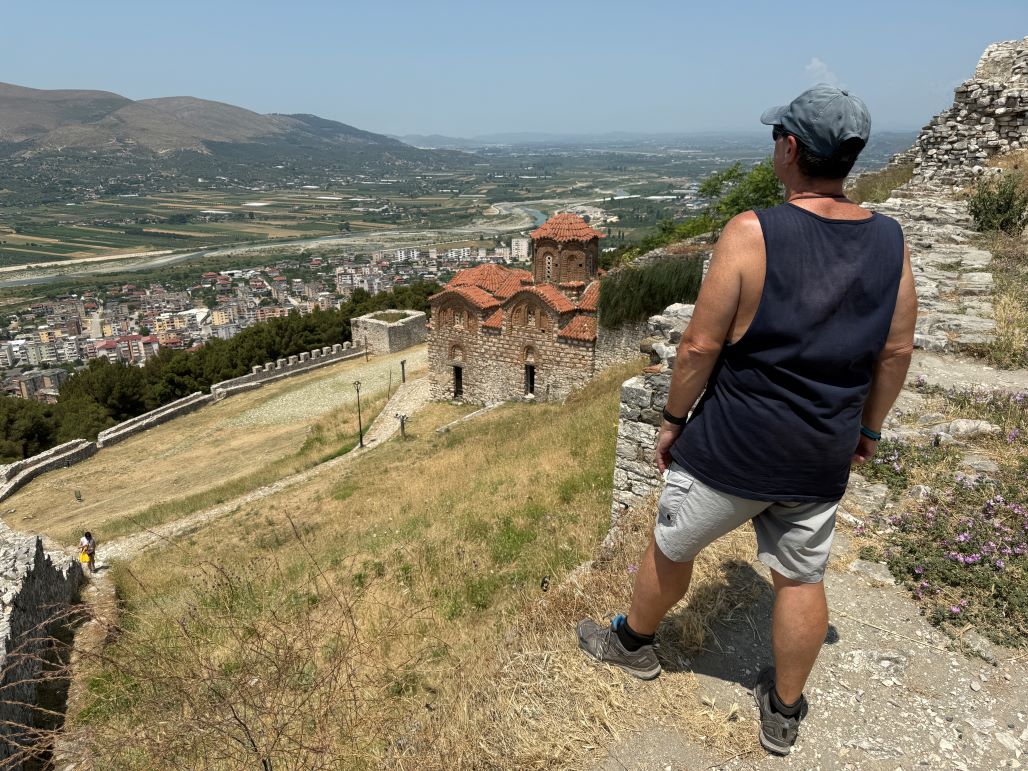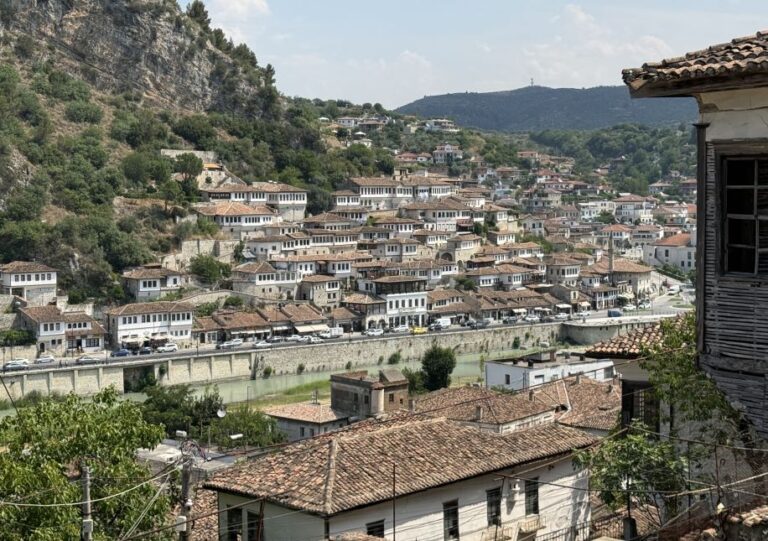
Albania is undoubtedly one of Europe’s most underrated countries. With its extensive and pristine Mediterranean coastline, it’s surprising that many people overlook the inland areas and miss out on the beautiful, historically rich medieval towns, such as the UNESCO World Heritage Site of Berat. Located just two hours south of Tirana, Berat is famous for its elegant hilltop castle and Ottoman-style houses that cascade down towards both sides of the Osum River, often called the “City of a Thousand Windows” because of the many large windows built into each house.
Founded in the 4th century BC by the Greeks, Berat later became part of the Roman and Byzantine Empires. These successive rulers strengthened the city’s strategic position, allowing it to flourish while fortifying the fortress walls of Kalaja e Beratit (Berat Castle). Within these walls was the heartbeat of Berat, where homes, markets and churches reveal the city’s deep religious and artistic roots, evident in the beautiful frescoes that can still be seen today. During the Ottoman rule in the 15th century, the city transformed into a cultural centre where Muslims and Christians coexisted harmoniously, architecturally blending Ottoman houses with Byzantine churches.
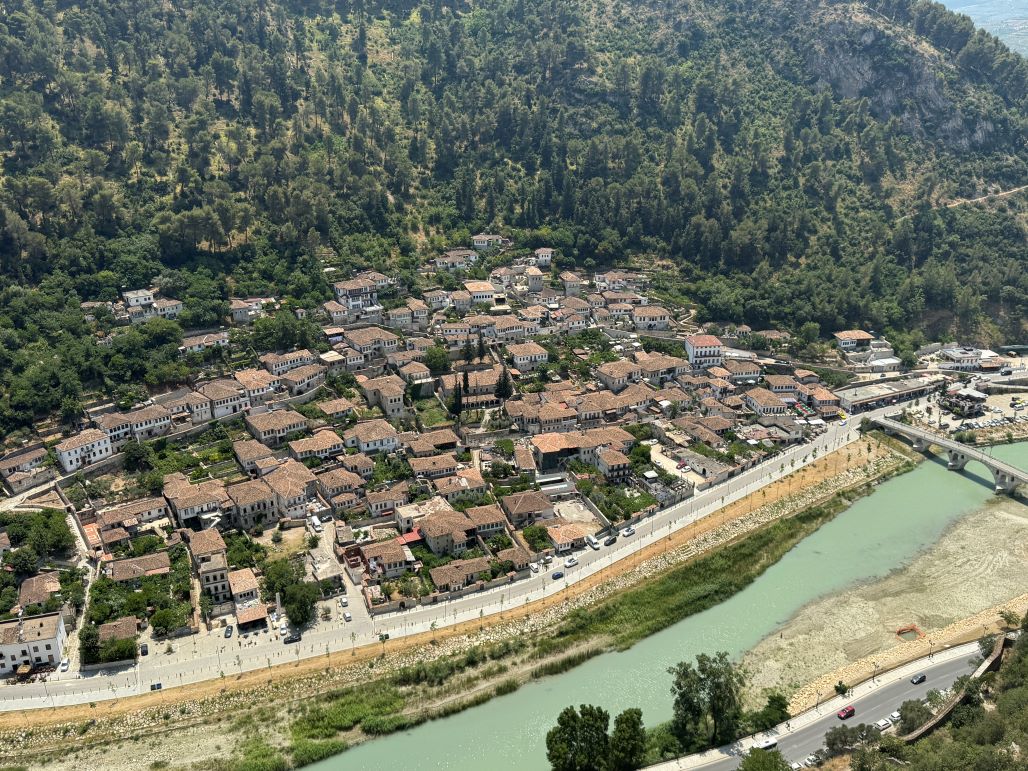
This fusion produced two distinct neighbourhoods that still stand today: Mangalem (the Muslim Quarter) and Gorica (the Christian Quarter). These communities sit on opposite sides of the Osum River, reflecting one another as a symbol of the city’s peaceful past. Despite the economic upheavals and communist rule of the 20th century, Berat has thankfully maintained its historical charm, standing as a testament to Albania’s layered history.
My Highlights
With a medieval bazaar, places of worship precariously perched on hillsides, a labyrinth of charming cobbled alleyways combined with spectacular valleys and canyons, wineries, and a variety of outdoor activities, Berat is a captivating destination. Exhausting as this list may sound, there was only one place to start my exploration of the city – Berat Castle.
Explored Berat Castle
Without a doubt, exploring the 13th century Berat Castle was my favourite experience in Berat and one of the best things I did in Albania. Perched atop a cliff, the castle not only offered incredible views but also provided a unique opportunity to learn about the region’s history and traditions.
The area is often referred to as the ‘Castle Quarter’ because over 100 residents still live within the castle walls, with several homes converted into guesthouses, restaurants, or souvenir shops. It was therefore not unusual to see sheep being herded, and women selling lace and embroidered tablecloths from makeshift stalls set up in front of their homes. Unlike other castles I have seen in the Balkans, Berat Castle isn’t just a relic; it still has a vibrant community that interacts with the growing tourist trade.
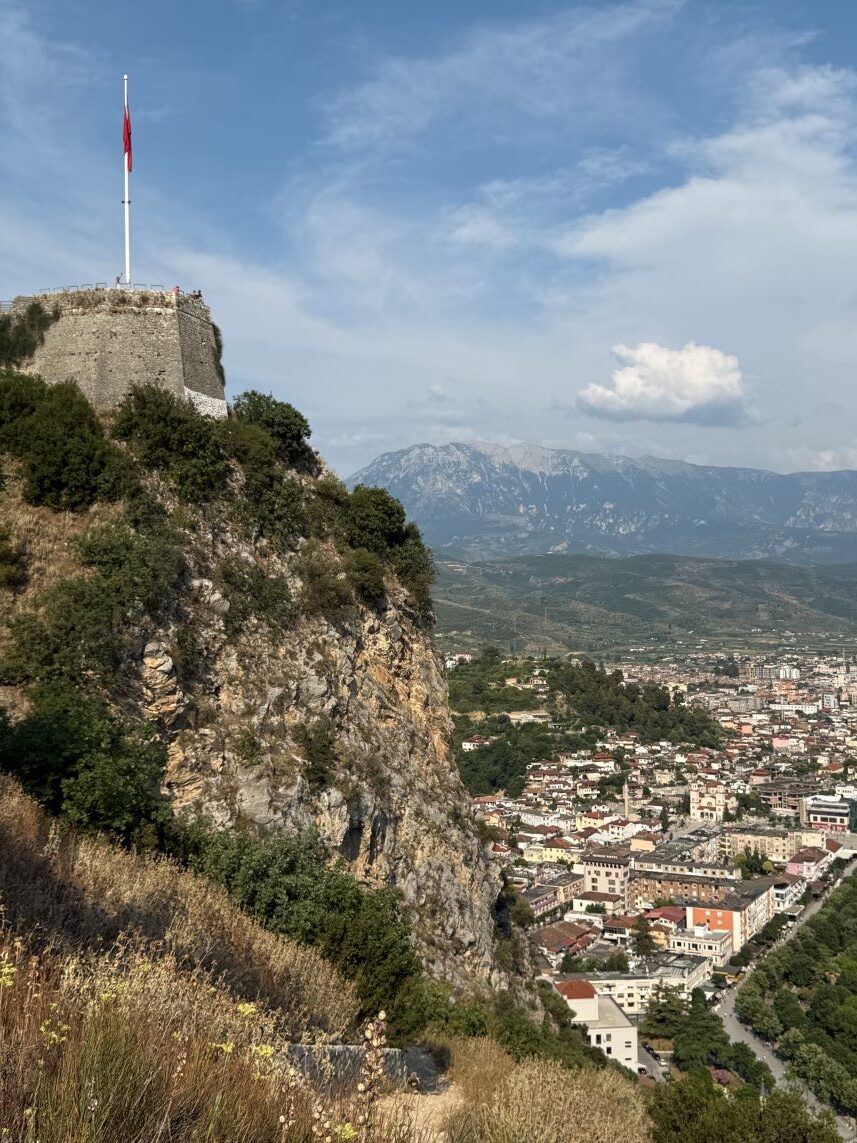
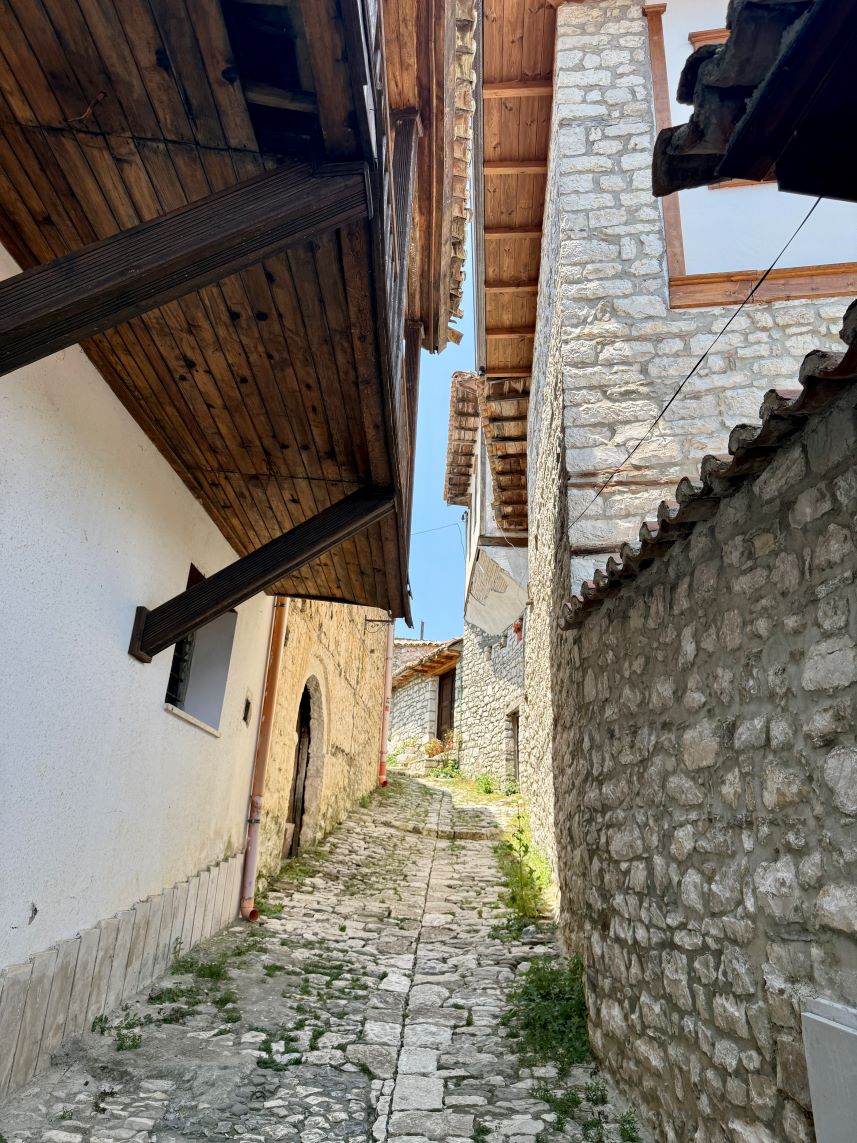
In addition to the walls, ramparts and narrow cobblestone streets, I also visited a few Byzantine churches, most of which still had their original frescoes. I also explored the ruins of two mosques, intriguingly named the Red Mosque and the White Mosque, as well as the remnants of an old acropolis, which includes a subterranean water cistern that has now become home to a colony of bats. Another great feature is the viewing platform, which provides the best panoramic views of Berat.
Overall, I spent 4 to 5 hours at the castle, captivated by the atmosphere, friendliness, breathtaking viewpoints, and of course, so many paths leading to unknown ruinous structures – just my cup of tea!
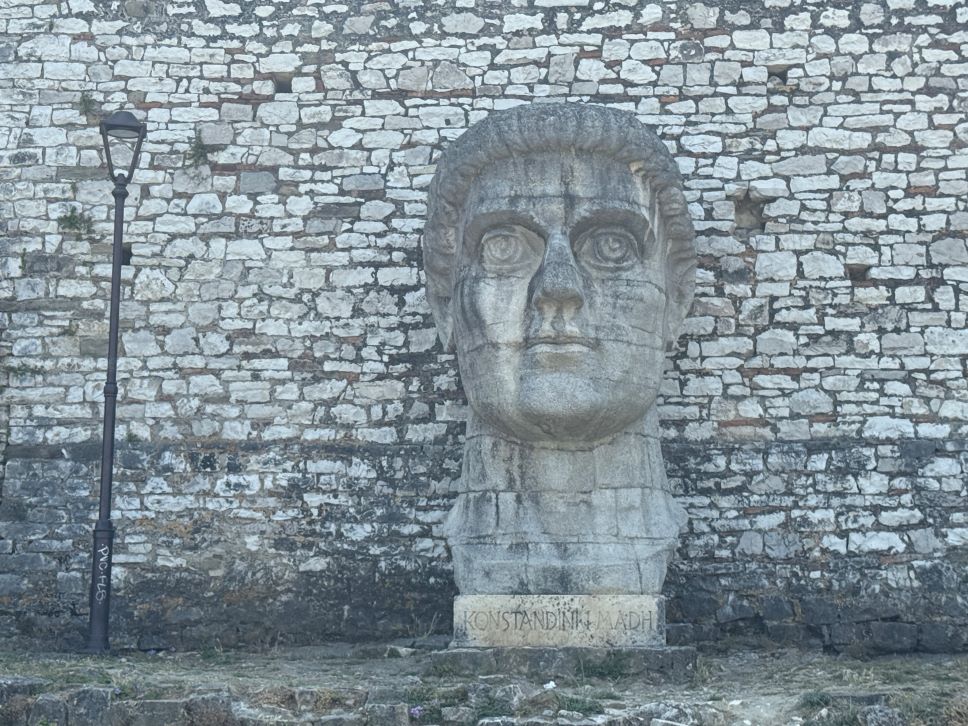
Reaching the castle was an adventure in itself. The more common route involves walking up from Mangalem, but I chose a different path. I ascended Rruga Shkembi, which led me to the back of the castle, near the entrance to St. Mary of Blachernae Church. There, I discovered the iconic massive headstone of Constantine the Great. The next day, I took another route from St. Michael’s Church that steeply wound its way up toward the castle’s viewpoint, offering unparalleled vistas of Gorica and the surrounding mountain scenery.
Engrossed at the Iconographic Museum
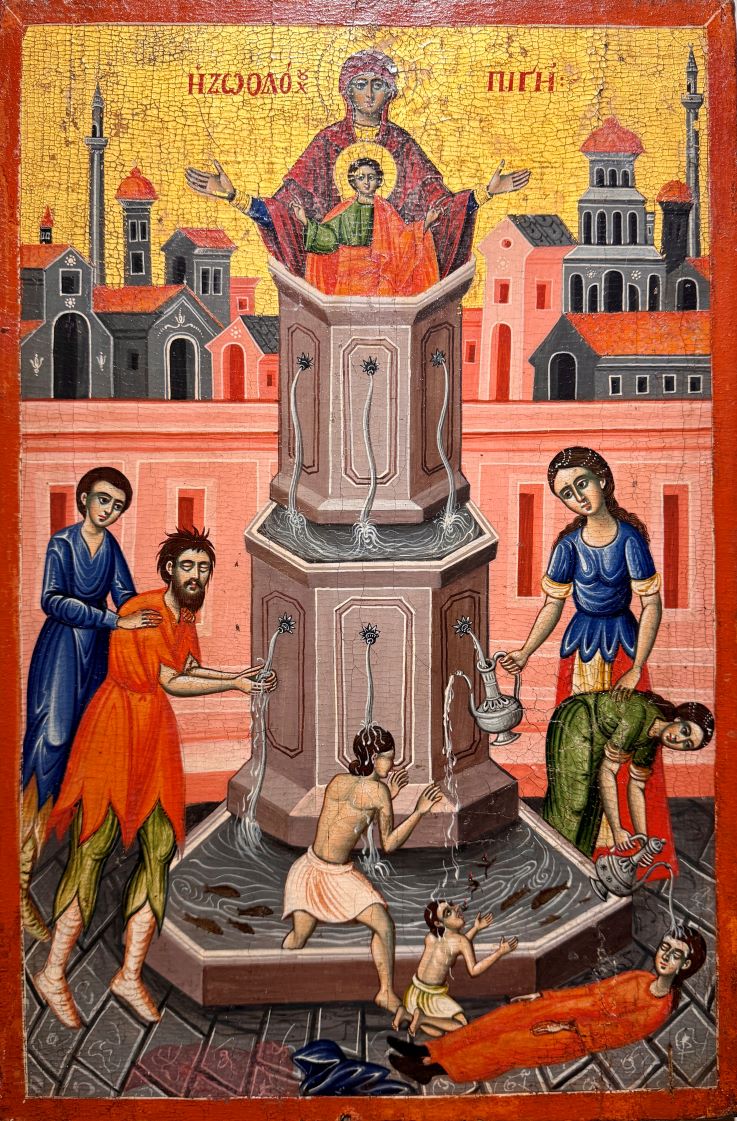
The Iconographic Museum, situated within the fortress walls, is dedicated to the renowned 16th-century icon painter, Onufri. This museum is a hidden gem, showcasing a remarkable collection of Byzantine icons and liturgical objects. It was originally established to protect over 200 icons and artefacts rescued from the ruins of churches in Berat during the communist regime. Today, it stands as one of Albania’s most significant collections of ecclesiastical art, making it a must-visit for anyone interested in the rich cultural and religious history of the region.
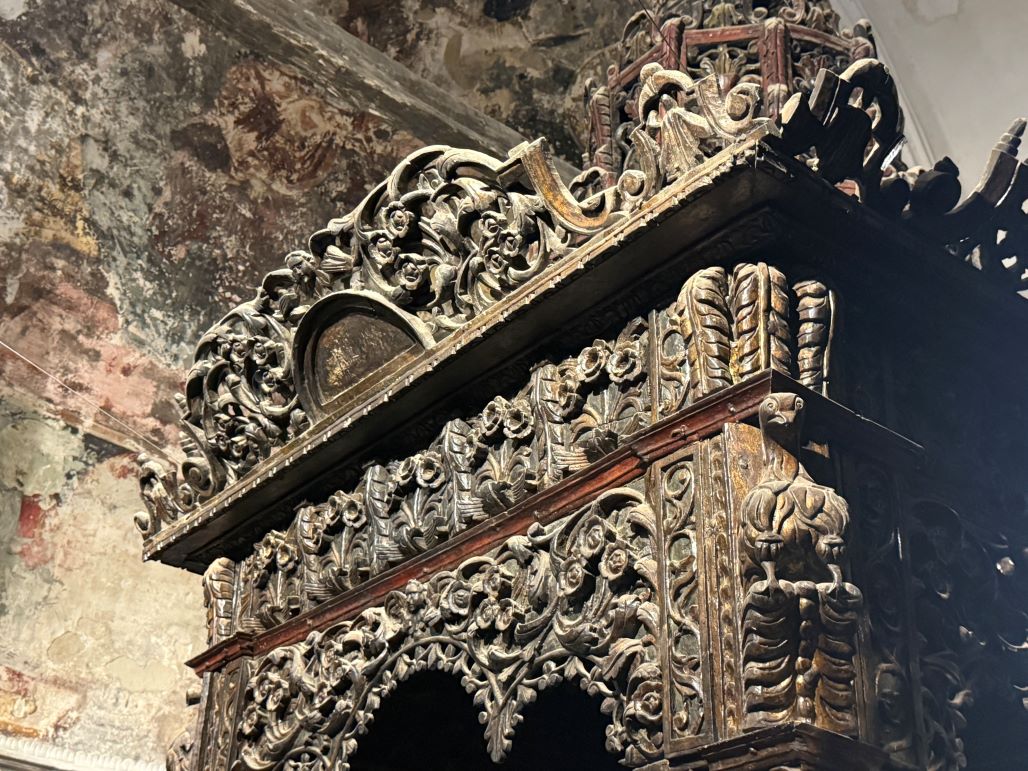
The first section of the museum is located inside the 18th century triple nave Dormition of St. Mary Church, where a gorgeous iconostasis showcases exquisite Albanian silversmithing and woodcarving. The second part is arranged gallery-style, featuring some of the region’s most prominent icon painters, recognised for their vibrant colours, expressive features, and intricate details. The audio guide I purchased truly brought the icons to life by explaining the gestures and postures depicted, as well as the meanings behind the various colours and shades used at that time.

Traversed the Narrow Streets of Mangalem
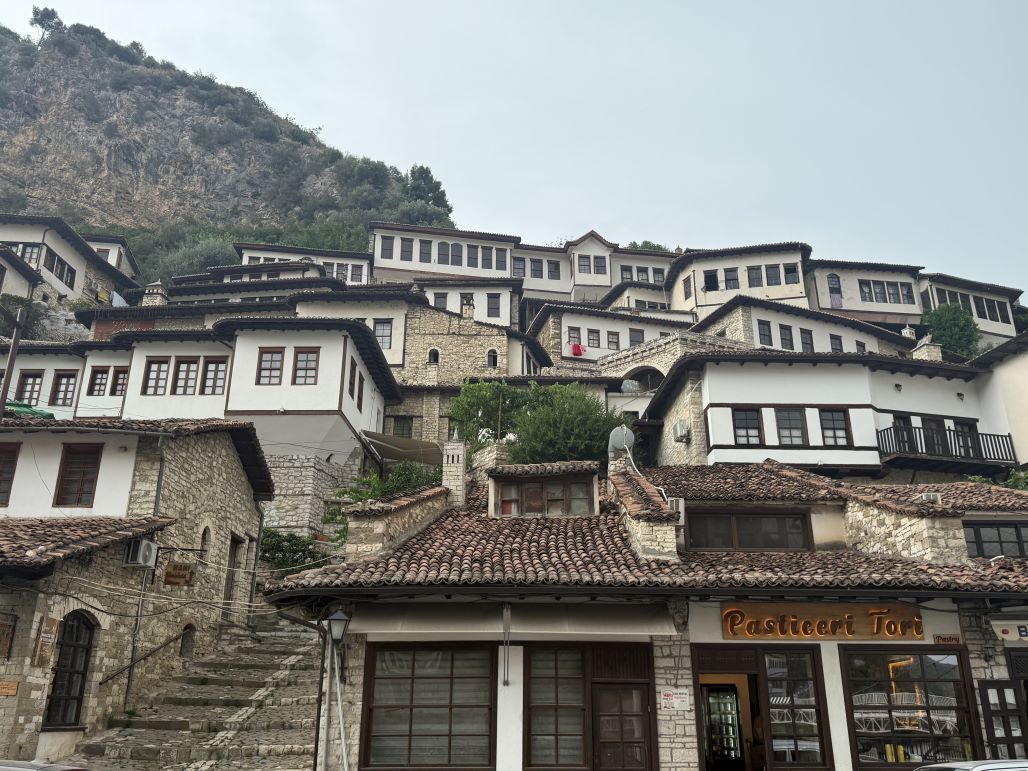
Mangalem, the historic quarter of Berat, is one of the most picturesque areas of the city, known for its iconic white Ottoman houses that cling to the hillsides. It is larger than its neighbour Gorica and presents a magnificent sight, appearing like creeping vines drawn towards the castle perched above.
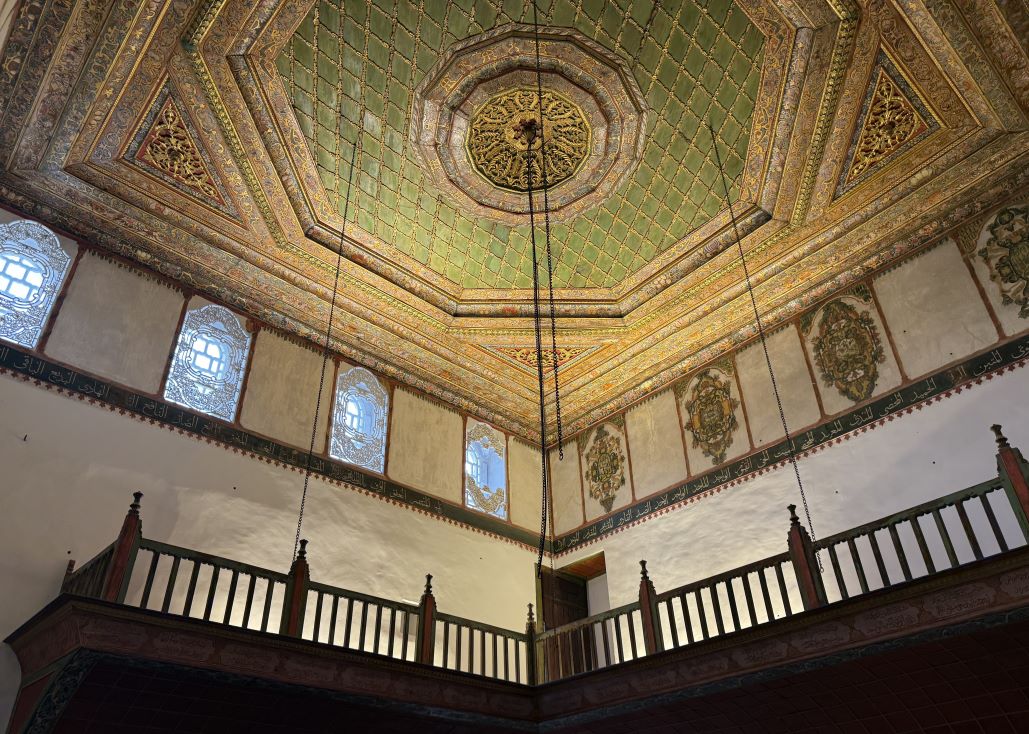
The area features winding stone alleyways that connect traditional Ottoman-style houses, along with several notable buildings. One of these is the Halveti Tekke, a Dervish House built in 1782. It showcases a stunning wooden balcony and a spectacular ceiling adorned with gold leaf. Next door is the Xhamia Mbret Mosque (King Mosque), which has a plain interior but boasts a beautifully decorated ceiling in various colours and shades.
Nearby, there is the 18th-century Gate of the Pasha, a stone gateway that leads into the ruins of the Saray of the Pasha, the palace once belonging to the city’s Ottoman ruler, Ahmet Kurt Pasha. Virtually next door is the Bachelor’s Mosque, which features exquisite murals both on the interior and unusually around the top of its exterior walls, reminiscent of the design found in the Et’Hem Bey Mosque in Tirana.
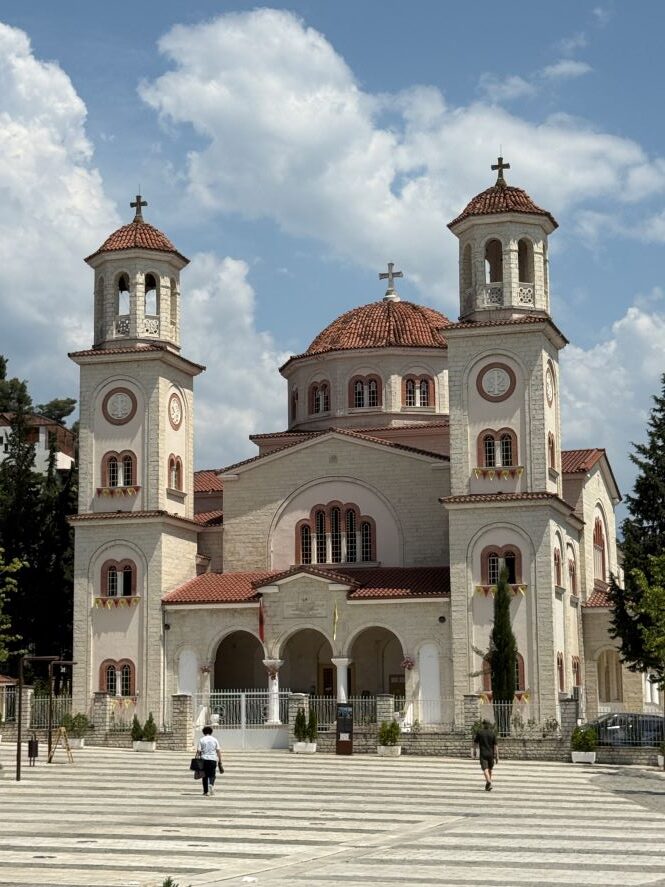
Although the Ethnographic Museum was temporarily closed for refurbishment, further along the Osum River into the modern part of the city is the majestic three-nave reconstructed 18th century St. Demetrius Cathedral. With two bell towers and a very modern appearance, unfortunately, the impressive iconostasis just looked quite ordinary when compared to the one inside the Iconographic Museum.
Climbed Gorica Hill
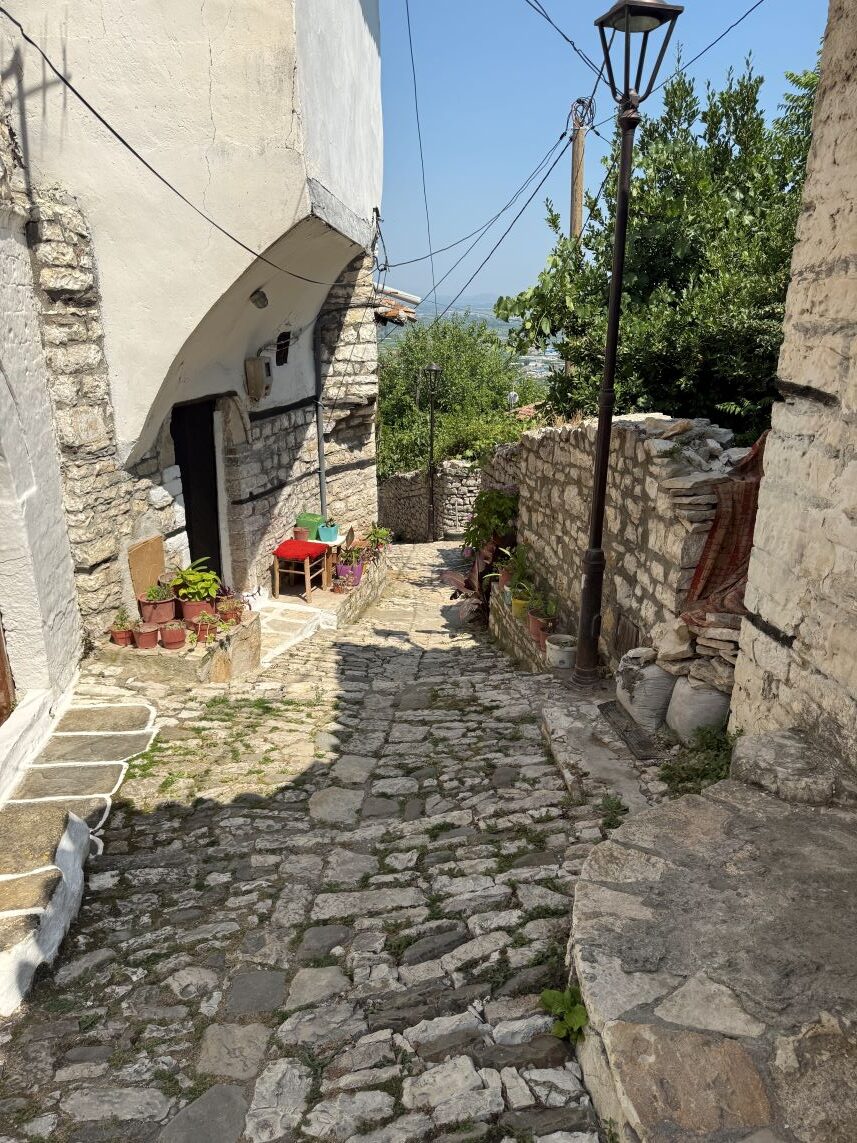
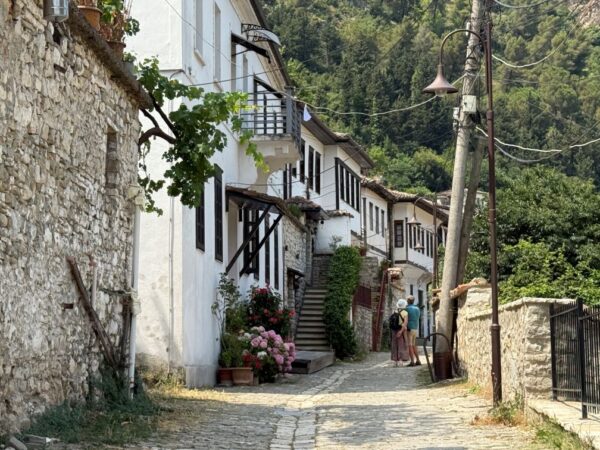
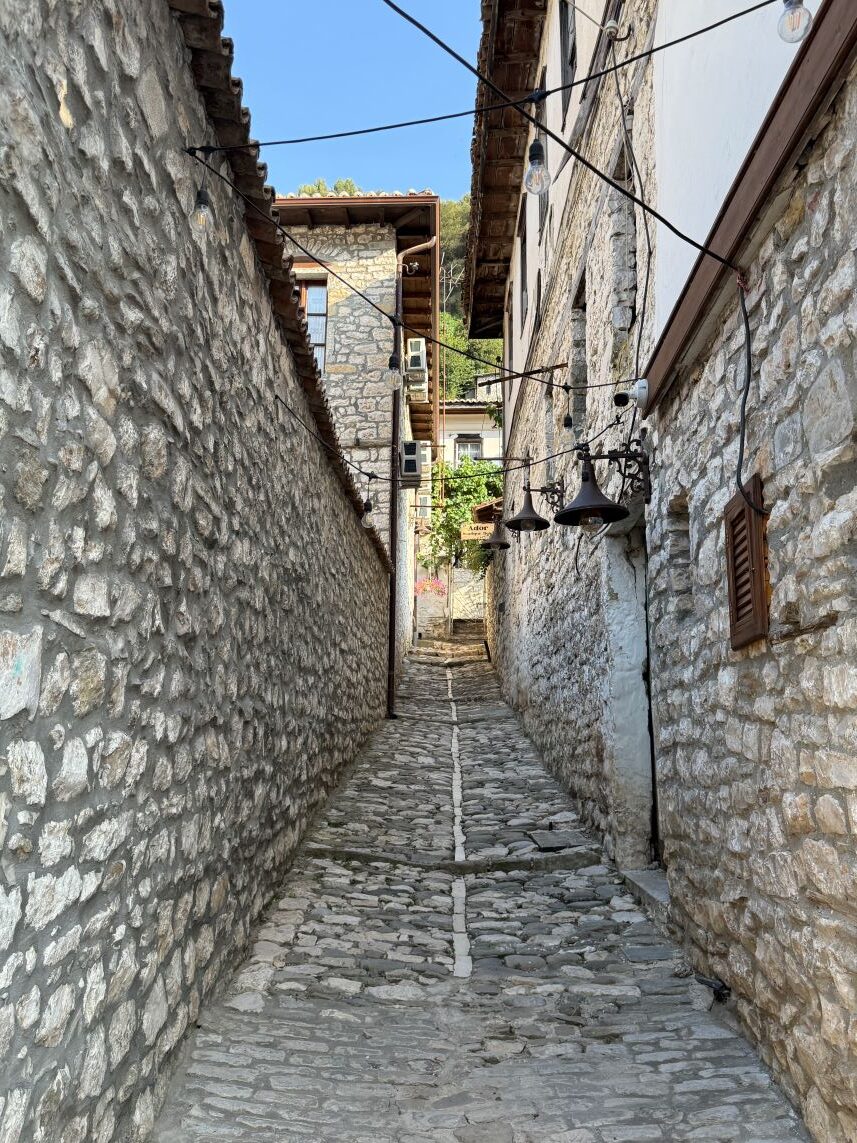
Wandering around the steep neighbourhood of Gorica felt like stepping back in time when the Ottomans and Christians lived side by side in harmony. I climbed (probably ‘scaled’ would be a better word) the cobblestoned streets, passing many charming examples of 18th-century Ottoman architecture and enchanting narrow alleyways on my way to the top of Gorica Hill. Along the route, there were plenty of cosy restaurants, guesthouses, and boutiques. From the top (behind Hotel Muzaka), the views of Mangalem’s white houses, Berat Castle, and the mountains in the background were impressively spectacular.
Crossed Berat’s Bridges
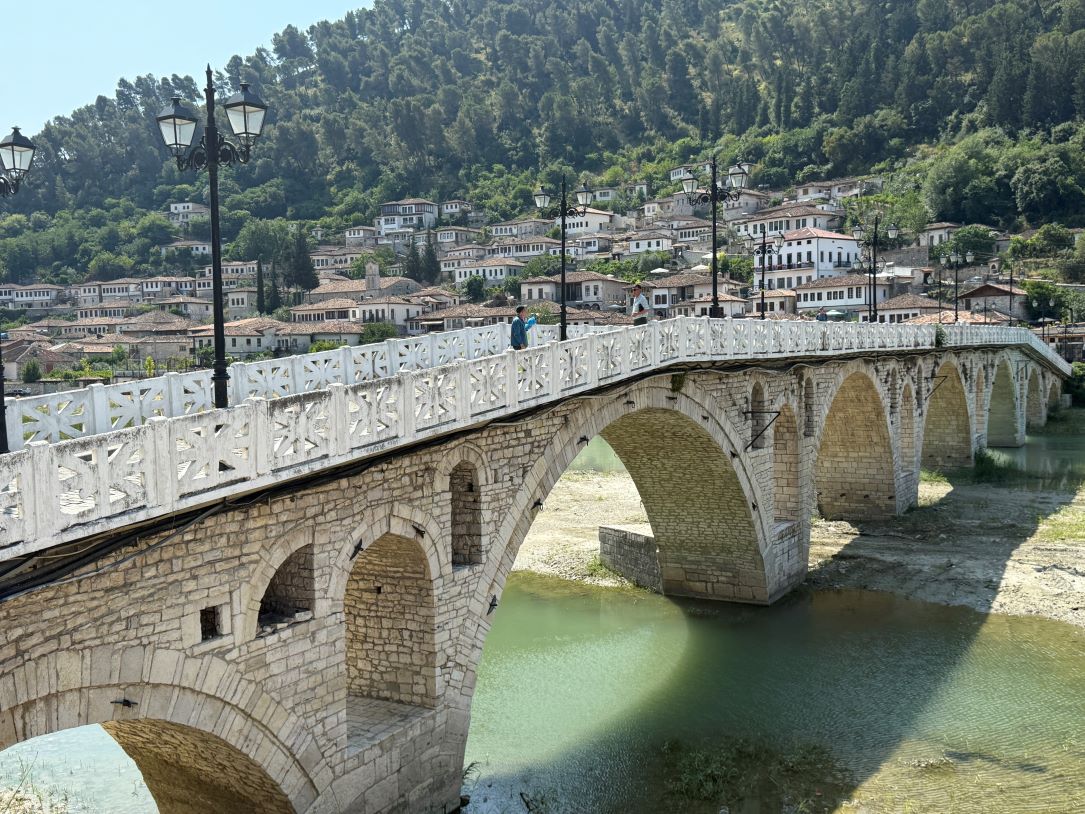
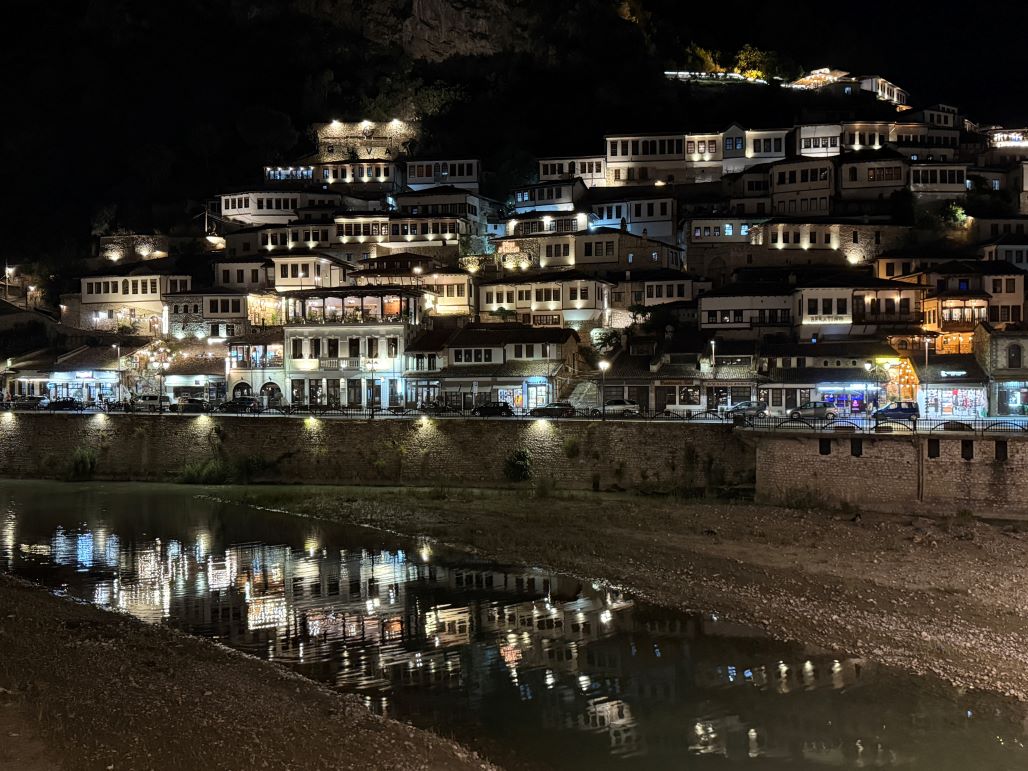
To travel between the two neighbourhoods, I needed to cross the Osum River at either of the two bridges: the New Bridge at Mangalem or the Gorica Bridge, also known as the Old Bridge. The Old Bridge is a historic seven-arched stone bridge built in the Ottoman style, similar to the Mesi Bridge in Shkodër. While the Old Bridge is an attraction in its own right, the newer bridge offers the best views of the Ottoman-style houses in Mangalem. Both are lit up at night and offer the most gorgeous night-time illumination imaginable.
Discovered Berat’s Byzantine Churches
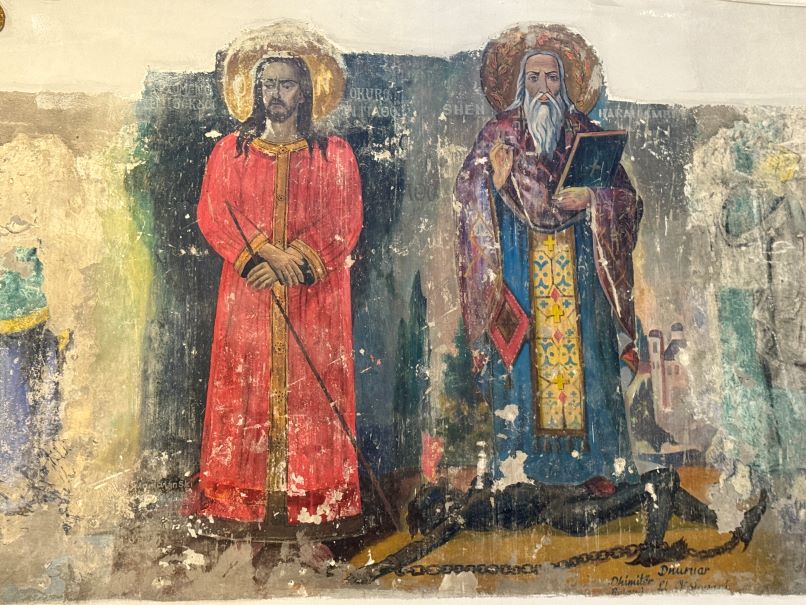
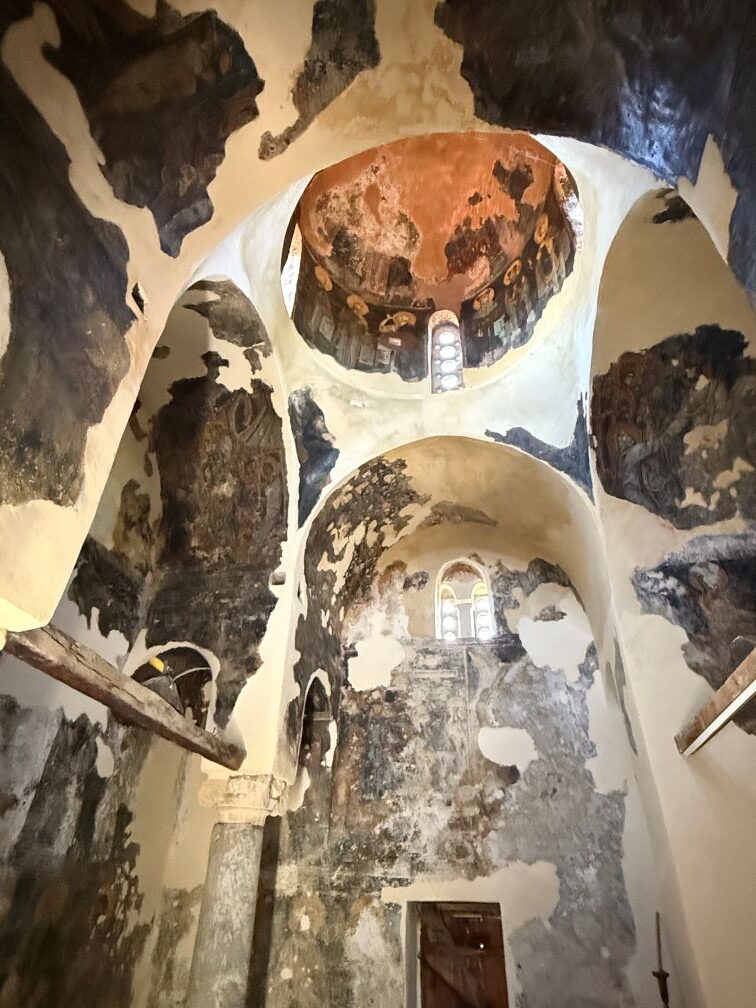
Aside from the castle and the quaint neighbours, I came across quite a few interesting Byzantine Churches whose murals provided biblical imagery that shaped the culture and traditions of the city. Here is a list of my favourites
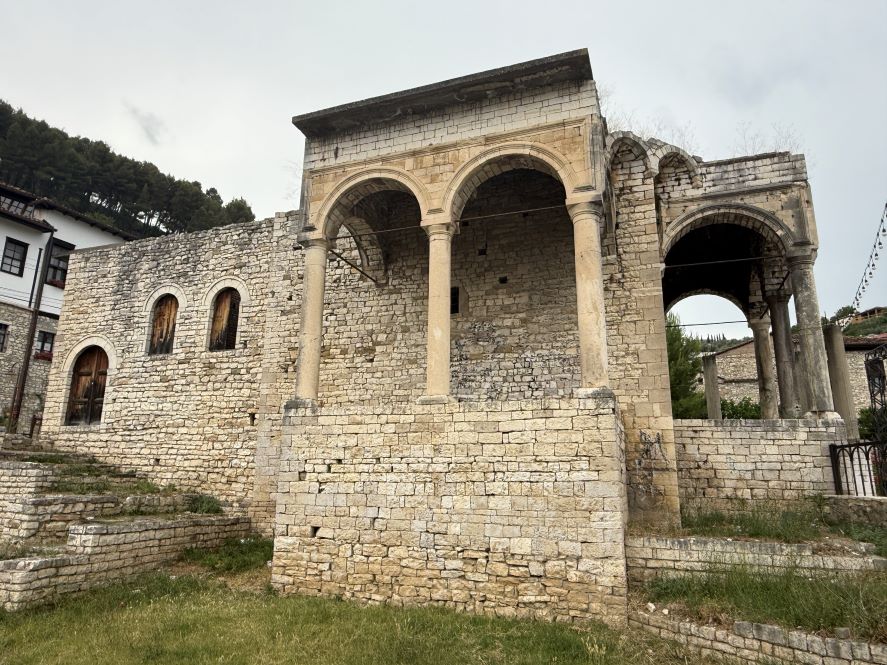
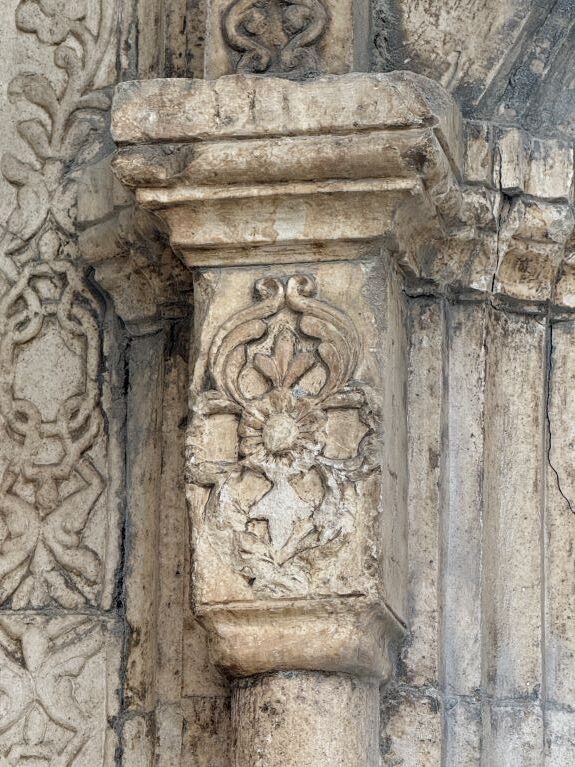
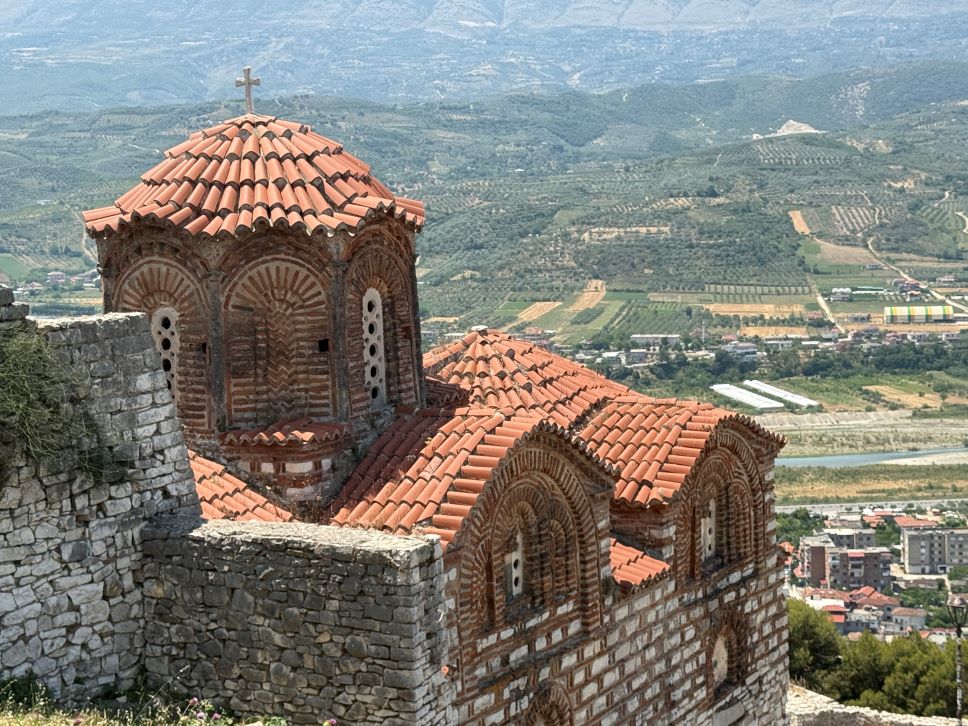
- Church of Holy Trinity: An iconic landmark inside the castle grounds offering incredible photographic opportunities inside and out. Although little is known of this church, it combines Byzantine and Western church features, with several decorative columns that were taken from nearby ruins and repurposed.
- St Mary of Blachernae Church: This 13th century church is considered the oldest in Berat, with most of its original 16th-century frescoes remaining intact. Although the church is said to open daily from 9 AM to 6 PM, it was only on my third attempt that there was a guardian to open it, probably due to a very large tour party, whereupon a donation box swiftly appeared! Nearby, I found the 16th-century Church of St. Nicholas and the 17th-century Church of Saint Constantine and Helen, both of which were temporarily closed, but they also held beautifully adorned frescoes inside.
- Church of St Spiridon: Located in the heart of Gorica, this 18th-century Orthodox Church is dedicated to St. Spiridon, known for his miracles and devotion. While it may not be as spectacular as the other churches in Berat, possibly due to the many murals being painted over during the communist era, the intimate winding alleyways surrounding it add to the cultural richness of the historic city.
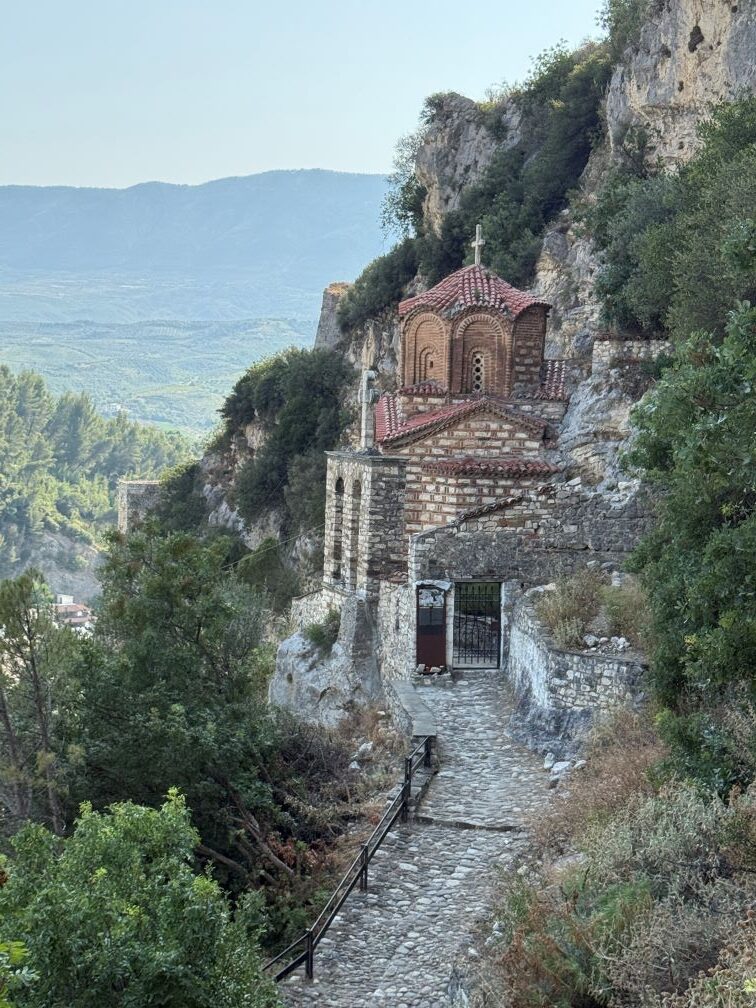
- Church of St Michael: For stunning views of the Gorica Quarter, I took a short hike along a steep, loose-gravelled path up to the 13th century St. Michael’s Church, which is beautifully perched on a cliff beneath the castle. I arrived just after 1 PM (not the most sensible time to hike!) only to find it had just closed for the day. As I climbed further towards the castle, I met some travellers who showed me photos from inside the church, which featured a gorgeous wooden and metal iconostasis and many small grottoes cut within the cliff face with loads of icons and burning votive candles, creating solace for its followers.
Strolled along Boulevard Republika for the Evening’s Xhiro
Xhiro is an Albanian tradition where, at sunset, locals come out onto pedestrian streets to socialise. They may take a family stroll, stop to chat with friends, play a game of chess, enjoy their favourite ice cream, or sip coffee at the numerous outdoor cafes. Boulevard Republika, which connects the old and new parts of town, is the best place to experience an Xhiro in Berat. I spent a good amount of time in charming cafes enjoying coffee and pancakes, or relaxing in the green space between the river and the car-free road, simply watching locals enjoy life.
In addition to the Xhiro, I had the rewarding experience of watching the sunset over the city. With a delicious glass of wine (or, in my case, a bottle of Albanian beer, Korça), the golden hour in Berat was a wonderful time to relax, take photos, and witness the daylight fade away.
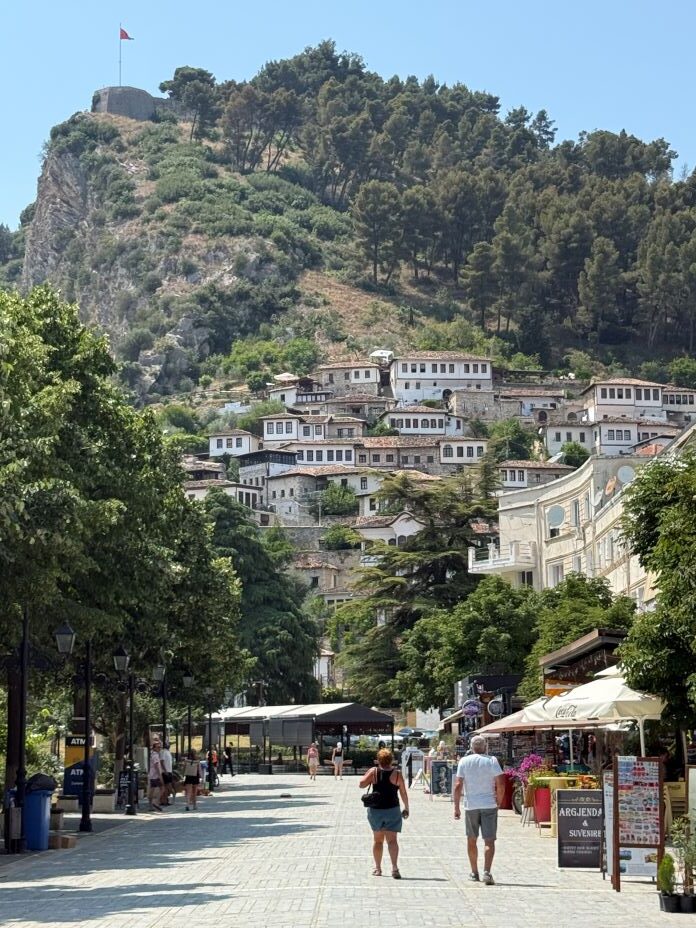
If I had more time, I would have explored the following places and activities:
- Go Wine Tasting (a popular excursion/tour that can be arranged through hostels or hotels, with some wineries providing camping on-site, in case one gets carried away!)
- Explored Osum Canyon and Bogove Waterfall (endless outdoor opportunities surrounded by a dramatic mountain range, deep gorges and breathtaking viewpoints. Ideal for swimming, kayaking, hiking and white-water rafting).
- Visited the Ethnological Museum (looking at the size and shape of it from the outside, it’s obvious that this is going to be an amazing attraction when it reopens)
Accommodation in Berat
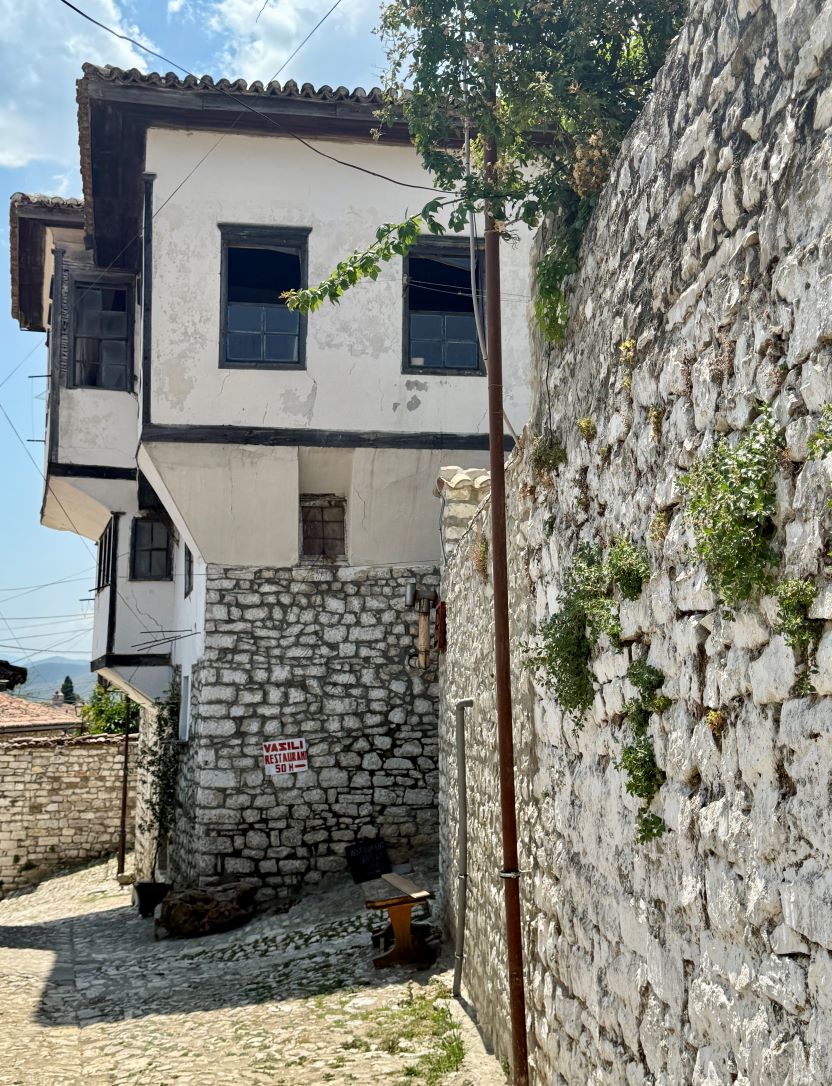
After spending a few days exploring the city, finding a suitable place to stay in Berat is not difficult at all. Options include charming traditional Ottoman-style guesthouses, boutique hotels and several excellent hostels offering budget-friendly dormitory and private rooms, along with camping grounds suitable for large campervans.
I stayed at the brilliant Maya Hostel Berat. Predominantly run by friendly volunteer staff, the hostel provided spacious rooms with a great breakfast and a very well-resourced kitchen. The tours were cheaper than in town, and the information board with bus connections and costs of attractions were up-to-date. Cannot recommend this hostel enough – it was that good.
Eating in Berat
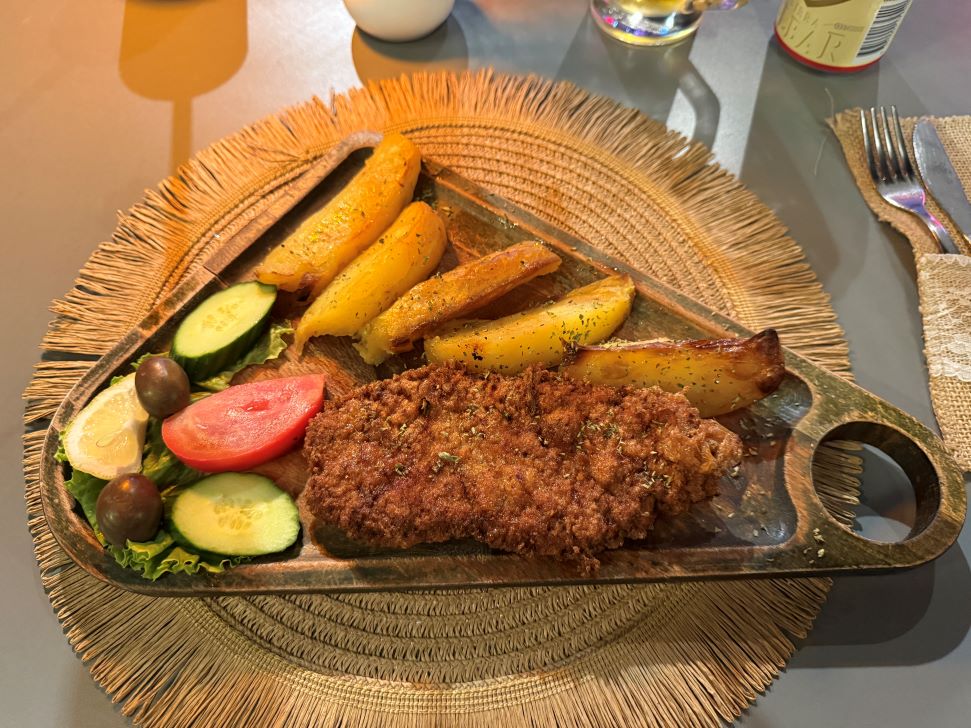
Berat’s cuisine features a fresh and delicious blend of meats and grilled or baked vegetables. It’s particularly known for moussaka made with potatoes and a famous MonBlan meringue dessert. I opted for the mouthwatering Romstek, fried meatballs covered in breadcrumbs, with a layer of cheese inside, served with baked potatoes and doused in herbs. It was so delicious that I had it twice, once at Restaurant Kapllani and again at Zonja Gjene. I also discovered a popular fast food spot called LUNDRA Fast Food, which served amazing vegetarian Gyros with tasty sauces and fries for just a couple of euros. However, if I were a vegetarian, I might have concerns about the shared utensils used between the veggie and meat dishes.
Almost every guesthouse in Berat had an attached restaurant, ranging from those with extensive menus to others with just a few small tables. Nearly all of them offered Raki, beer, or homemade wine. Some places, like Homemade Food Lili, relied on word-of-mouth recommendations for their quality meals. A few also boasted superb views from their terraces, such as the colourful Tradita e Beratit in Gorica, or the summit of the castle grounds, Te Zalua.
Travellingterry Berat Tips
- Berat is only two hours from Tirana and 3 hours from Sarandë – on the Albanian Riviera. However, because of the timings of local buses, making it a day return does not leave much time to fully explore Berat. The best way is to take an organised tour from Tirana or Sarandë, or if travelling independently, stay at least one night. Better still, travelling through Albania with a hired car can provide more flexibility when visiting interesting towns like Berat.
- Like all cities in Albania, Berat’s bus station is a good 3-4 km outside the central area. I used the very good Gjirafa to plan bus journeys, as well as the excellent offline mapping app: Maps.me, which seems to be more accurate than Google maps for getting me to the bus stations, walking between the sights in town and following hiking pathways
- The castle is primarily residential and is therefore open 24/7, allowing visitors to explore in the early morning or evening, thus avoiding large tour groups during the day. Visiting at these times also offers gorgeous views of Berat in varying light conditions.
- The Iconographic Museum within the castle provides handy free lockers for day packs. Entrance is €4, and for an additional euro, you can get an audio guide that explains the features of the Orthodox Church and the meanings behind the displayed icons, effectively drowning out loud tour group guides! The museum is open Tuesday to Saturday from 9 AM to 4 PM and Sunday from 9 AM to 2 PM (closed Mondays). However, since many attractions in Albania do not always align with Google search results, it’s best to check their website first.
- A couple of useful websites to start planning a trip to Berat would be Visit Berat, Berat Tours and the awesome Guruwalk.
Onward travel: Bus from Berat to Sarandë
Berat’s bus terminal, located 3 km outside of town, has frequent daily connections to Tirana and the rest of the country. My 4-hour minibus journey to Sarandë (€14) was comfortable and scenic, although we encountered a tremendous hailstorm midway, with ice balls the size of marbles! From Sarandë, there are ferry connections to Corfu, and frequent bus connections to all parts of Albania.