Shkodër serves as the gateway to the adventures of northern Albania. Located close to the Montenegro border, it is an excellent base for exploring the rugged yet stunning landscapes of the Accursed Mountains, also known as the Albanian Alps. The city is rich in cultural heritage and offers a wide array of unique sights and activities. With its bohemian atmosphere, vibrant coffee culture, bicycles, emotional museums, and historic yet dilapidated structures, Shkodër is also the starting point for hiking the famous Valbona Pass.
As the most historic town in Albania, parts of Shkodër’s castle wall date back to the 1st century BC. Over the past 2,000 years, the town has been ruled by various powers and empires, including the Illyrians, Romans, Byzantines, Serbs, Turks, and Venetians. After a series of rebellions in the 15th century led by Skanderbeg, Albania’s national hero, the town eventually fell to the Ottomans, under whose influence it remained for the next 400 years. It was later occupied by the Austrians during World War I and was administered by the Allied Powers until 1921, when Shkodër was finally reunited with independent Albania.
MY HIGHLIGHTS
Shkodër is not only about adventure; it is also a fascinating destination in its own right. Surrounded by lakes, an impressive castle, and a stunning stone bridge, the city offers a perfect blend of history, culture, and adventure, which I found immensely appealing.
Wandered Through Shkodër’s Old Town
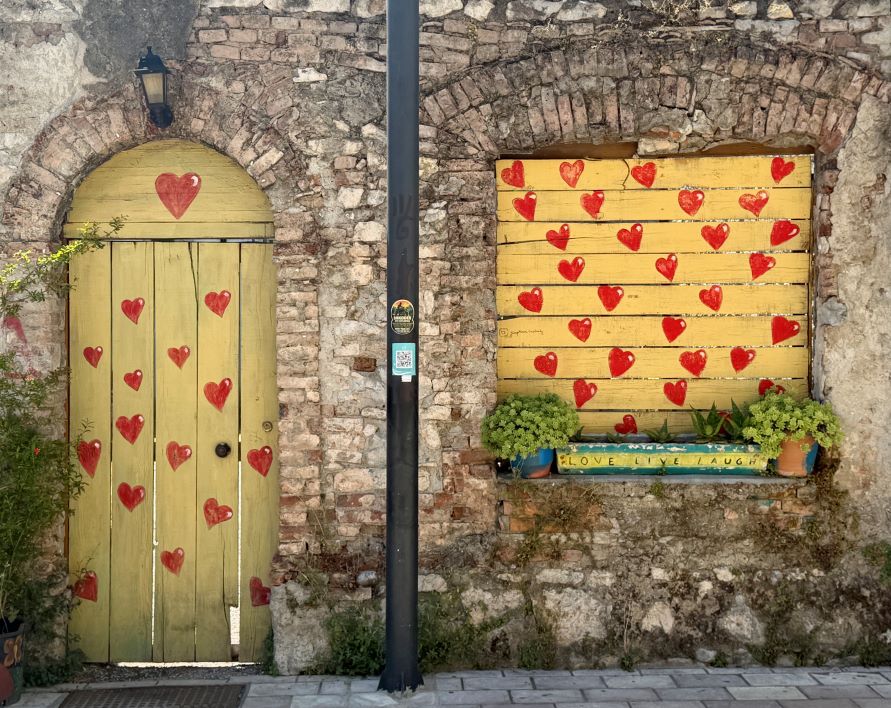
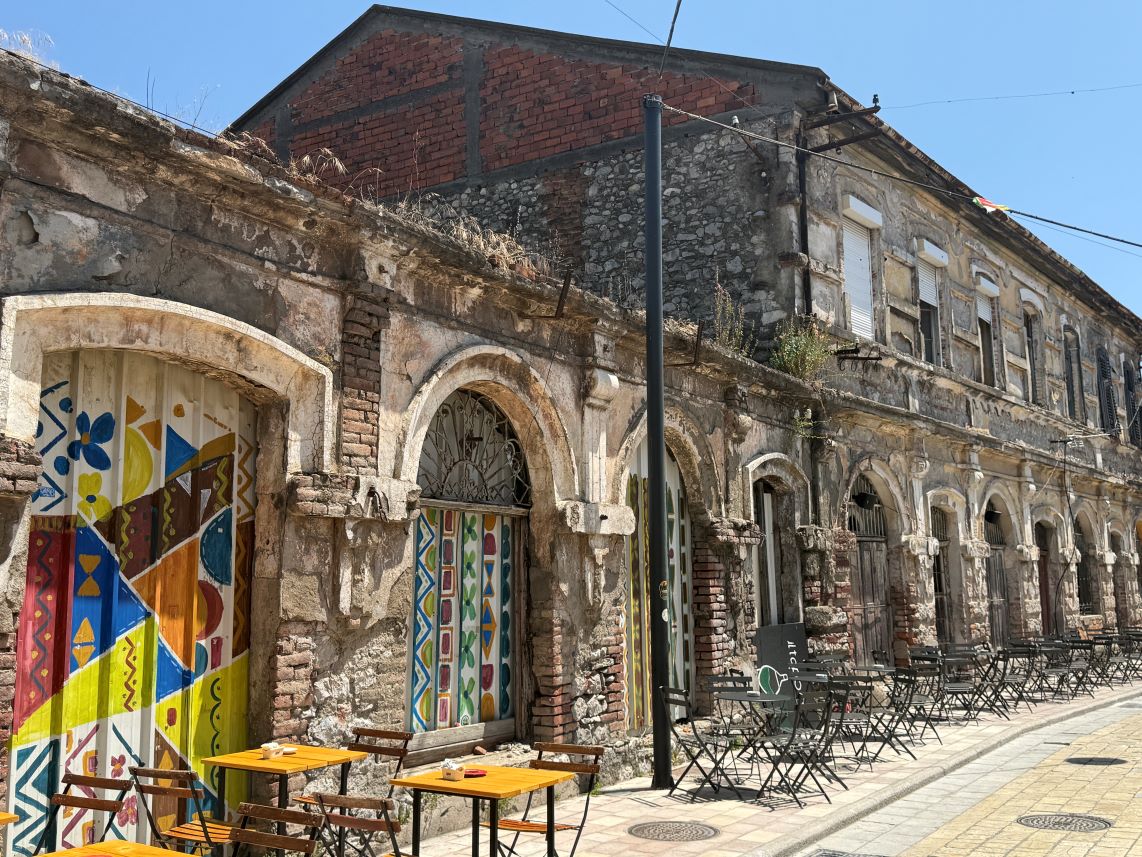
The first thing I did was explore the Old Town, a must-see attraction in Shkodër. Since the fall of communism in 1991, the city has seen significant change, yet it has managed to preserve its historical heritage by blending the old with the new. The cobblestone streets, pastel-colored buildings, and vibrant café culture remain intact. The residential area around Rruga Kole Idromeno, the main street at the heart of the city, features a mix of boutique shops and gelato stands – my favourite being M’Kanda Gelateria – alongside charming Ottoman, Venetian, and modern architecture.
I lost track of time as I wandered through this enchanting area, admiring the dilapidated buildings and vibrant street art. Locals chatted outside cafés, while families strolled by, enjoying the music of street performers playing modern hits. With little encouragement, I slowed down to absorb the atmosphere, savouring each moment while sipping a macchiato and watching the world go by.
Climbed Rozafa Castle
Around 4,000 years old, Rozafa Castle stands tall on a hill and is rich in history and legends. Having witnessed the rule of various civilisations, including the Illyrians, Romans, Venetians, and Ottomans, this ancient fortress is still remarkably intact. However, it is not just the old stones and ruins that make it fascinating; the castle is also associated with a wild legend. It is said to be named after the unfortunate wife of a man who was building the castle, who was sacrificed within the thick walls to prevent them from collapsing. Interestingly, the builders left holes in the brickwork so she could continue feeding her baby – quite a bizarre story!
Despite the legends, my main reason for visiting the castle was to take in the breathtaking views, possibly rivalling the views from the fortress in Prizren, Kosovo. From the top, I was treated to a stunning panorama of Lake Shkodër, with the River Drin and River Buna winding around the fortress, and the mountains of Montenegro visible in the distance. There is a small museum inside the castle that requires a small fee, but I decided to skip it as it didn’t seem particularly special.
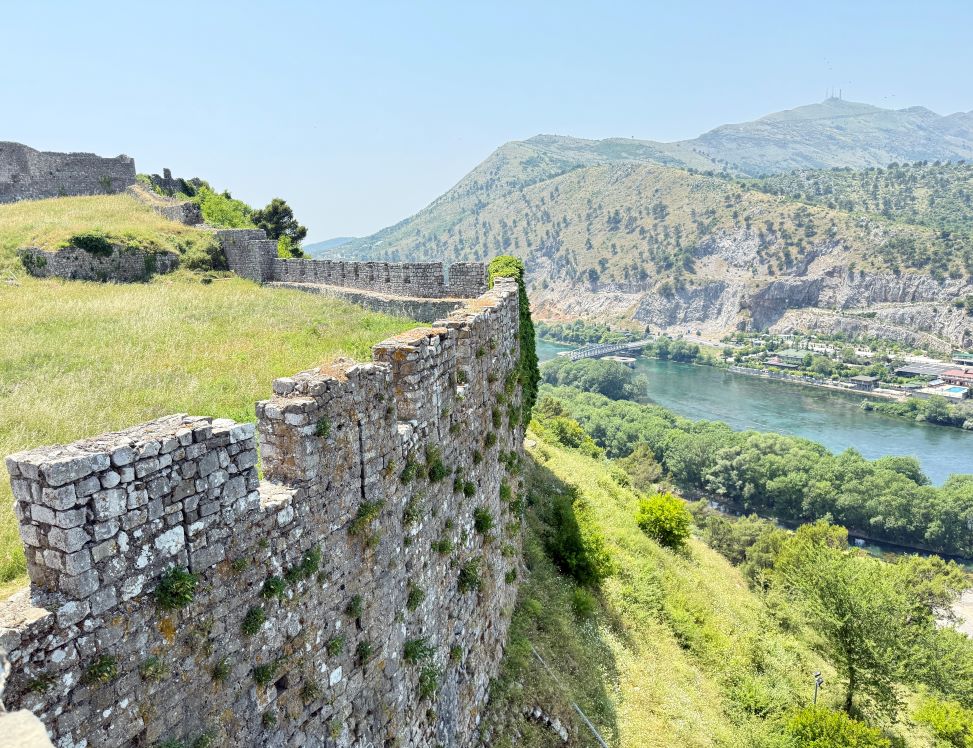
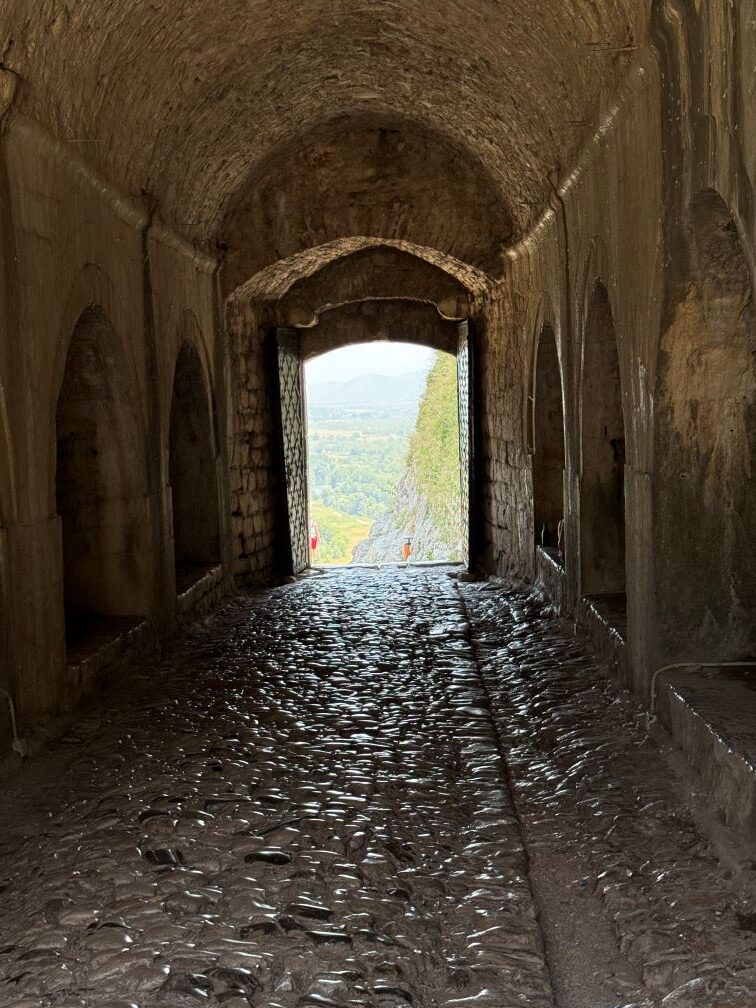
Getting to the castle was straightforward; I hired a bike for the day and combined visits to Mesi Bridge and Shkodër Lake as well. However, towards the base of the fortress, the cobbled road became too steep, so I locked the bike to the nearest lamppost and walked the last 300-400 metres.
After a jaunt around the castle, I jumped back on the bike and rode over River Buna along a rickety green wooden bridge (with more than a few broken planks, I would like to add!) and followed the road around towards Shkodër Lake.
Pootled around Shkodër Lake
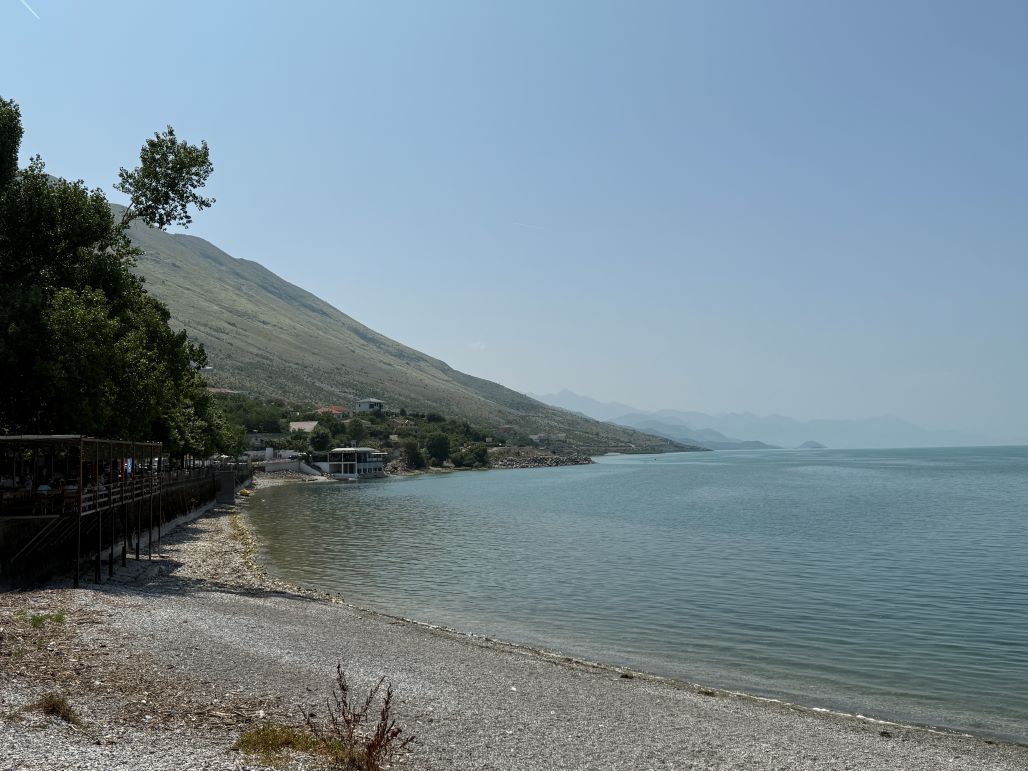
Shkodër Lake is the largest lake in the Balkans, extending all the way into Montenegro. It offers a perfect mix of calm waters, fresh air, and a relaxed vibe. Cycling around the shoreline was a refreshing change, allowing me to pass through many small villages. I made my way to the village of Shiroka, which is not particularly special but serves as an ideal location for a leisurely boat tour, a seat at a lakeside restaurant, or even a dip in the water, despite most of the beaches being quite pebbly.
Admired the Historic Mesi Bridge
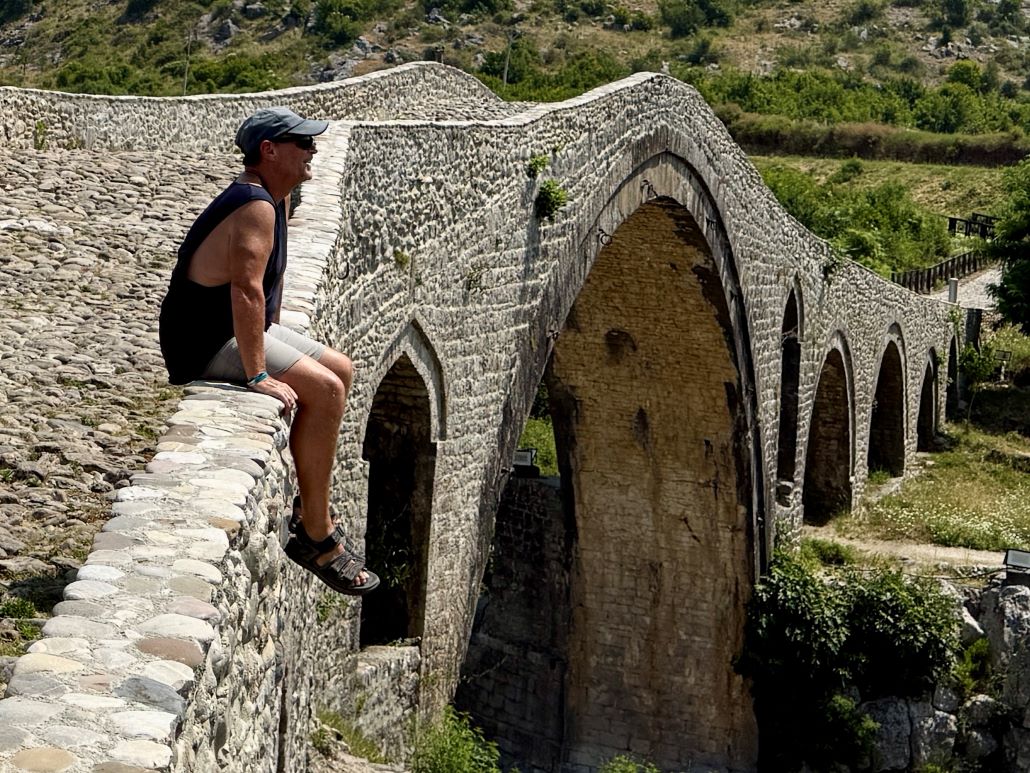
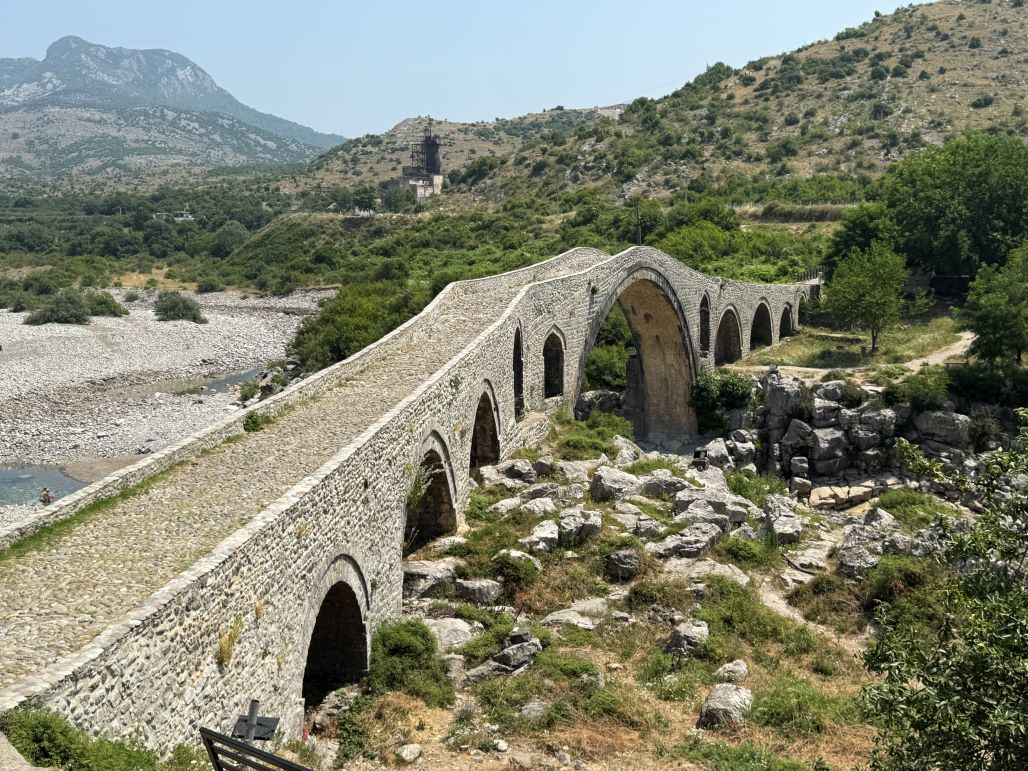
For something a little different, I took a gentle bike ride to visit the Mesi Bridge, arguably the best-preserved Ottoman-style bridge in Albania. Located approximately 9 km northeast of the city centre, Mesi Bridge was one of the surprising highlights of my time in Shkodër. The short ride there passed through beautiful countryside with stunning mountain views and peaceful, traditional villages. Although the bridge has undergone renovations several times over the past 400 years, its design has remained largely unchanged. With 13 stone arches spanning the River Kiri, it felt as though I had stepped into a scene straight out of a 16th-century fairytale.
Experienced the Artsy Side of the Marubi Photography Museum
Apart from the epic landscapes and adventurous hikes, Shkodër also offers a bit of culture. None more so than the Marubi National Museum of Photography, which turned out to be one of those unexpected gems that occasionally turn up whilst travelling. The museum houses thousands of photographs that showcase Albania’s history through the lens of some pioneering photographers. Many of these images date back to the 1850s, capturing cultural and historical events as well as traditional Albanian costumes. There were also fascinating exhibits demonstrating early photographic equipment, along with an intriguing mock-up of one of the first darkrooms ever used. It is a small museum, and compared to other attractions in the Balkans, it was quite pricey, but it was a great way to connect with the past and to see how Albanian has changed over the years.
Visited the Site of Witness and Memory
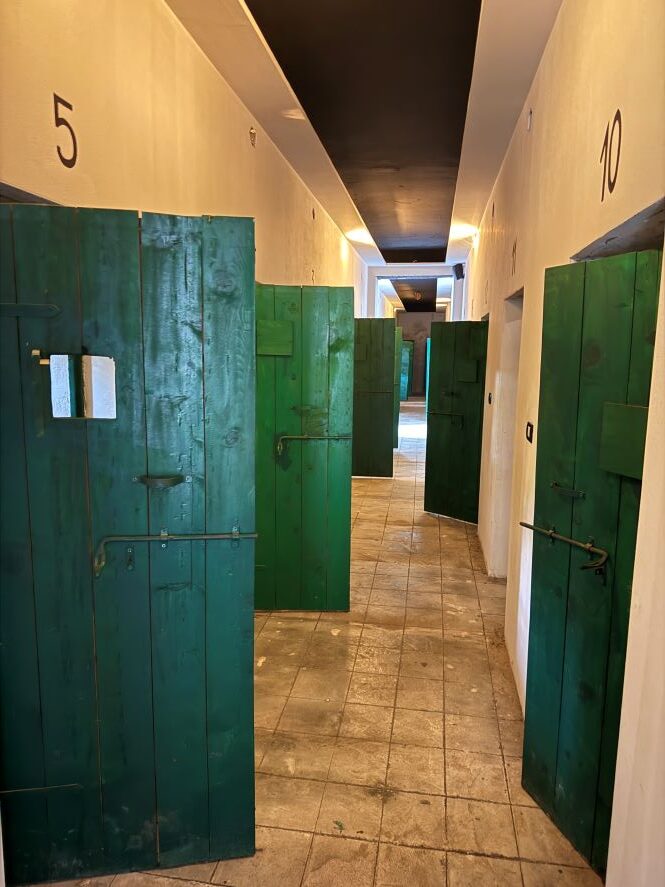
While Shkodër has several museums, including the Shkodër History Museum, I would always recommend the Site of Witness and Memory. This museum chronicles the resistance movement against the communist dictatorship that ruled Albania from the end of World War II until 1991, when the country was finally liberated. Serving as a memorial, it is dedicated to the victims of this regime, providing a graphic portrayal of the severe hardships and fears experienced by the Albanian people, especially those who were tortured and killed during such brutal authoritarian rule. The museum features two haunting floors that include the original prison cells and a torture room.
Watched the Evening’s Xhiro
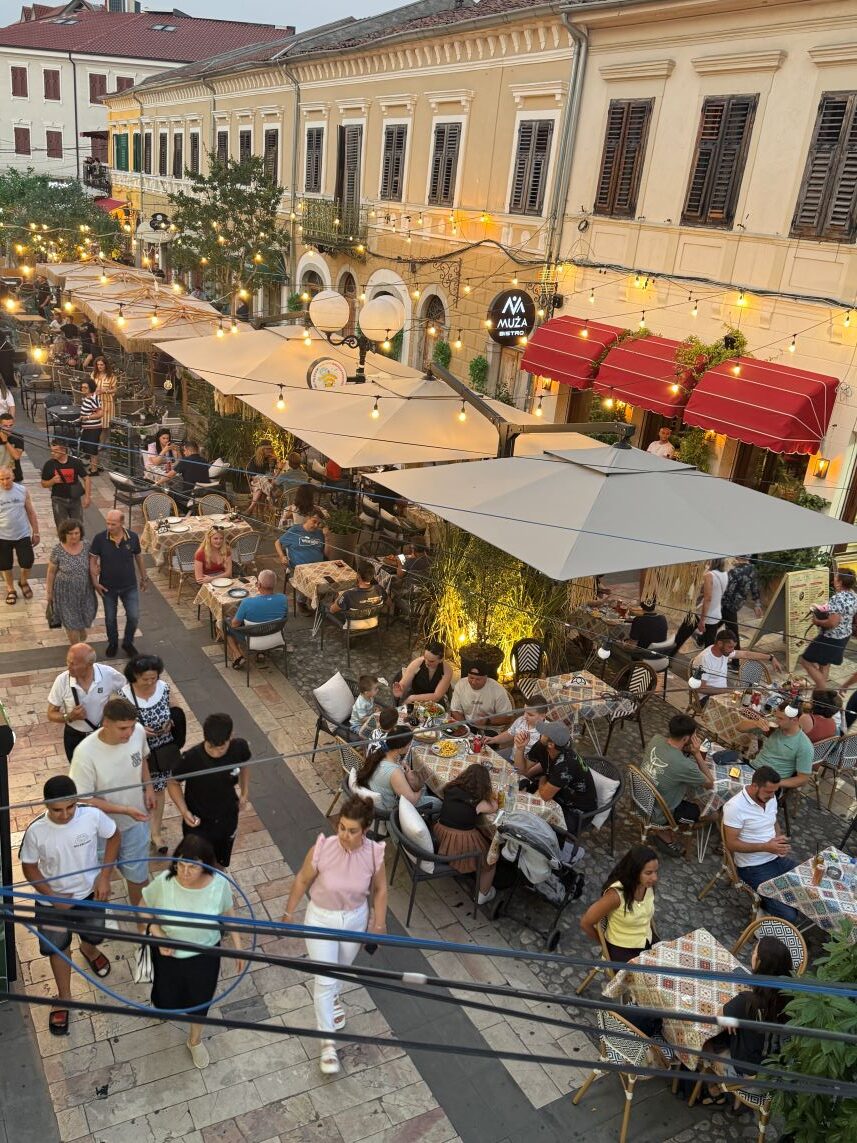
The vibrant café scene during the evening’s Xhiro, a tradition that many Albanian families cherish, was undoubtedly an attraction not to miss. Each evening, usually between 7 pm and 8 pm, the pedestrian streets come alive. Locals walk with friends and family, children engage in endless games, and vendors sell corn, ice cream, and other delicious snacks. Xhiro means “walk” in Albanian, and it is a time when the city of Shkodër bursts with social interaction and joyful activity.
Hiked from Valbonë to Theth
Hiking from Valbonë to Theth was undoubtedly the highlight of my time in Albania and likely the best experience I’ve had in the Balkans. The hike featured some of the most breathtaking landscapes I’ve ever encountered, rivalling the stunning vistas I’ve seen in Kyrgyzstan and Tajikistan. However, the adventure began even before the hike itself, as getting to the starting point was equally memorable.
This 3-day, 2-night trip was easy to plan independently, but it could have been arranged just a day in advance through the numerous travel agencies, hotels, and hostels in Shkodër that can organise transportation and accommodation options. However, since my hike took place on a weekend in mid-June, I decided to book my tickets online a few weeks ahead, using Koman Lake Ferry for transport, and booking.com for lodgings.
To simplify things, I organised the trip into six legs, with each of the three days offering unique experiences:
- Leg 1 (Friday 6:30 AM – 8:45 AM) Bus – Shkodër to Koman Lake Ferry Terminal: Boarded minibus outside Rozafa Hotel on Rruga Teuta (central Shkodër), which stopped at the Ferry Dock in Koman Lake.
- Leg 2 (Friday 9:00 AM – 12:10 PM) Ferry – Koman Lake Ferry Terminal to Fierzë: Ferried along the Drini River to Frienz.
- Leg 3 (Friday 12:30 PM – 2:00 PM) Bus – Fierzë to Valbonë: Boarded minibus at the dock towards Valbonë.
- Leg 4 (Saturday 7:45 AM – 3:30 PM) Hike – Valbonë to Theth: The duration included loads of photo stops, 2 long cafe breaks and a mountain peak side hike!
- Leg 5 (Sunday 11:00 AM – 1:00 PM) Bus – Theth to Shkodër: Boarded minibus at central Minimarket Jezerca in Theth, and arrived at Rozafa Hotel on Rruga Teuta (central Shkodër).
- Leg 6 (Sunday 2:00 PM – 4:30 PM) Bus – Shkodër to Tirana: Boarded the minibus outside Rozafa Hotel on Rruga Teuta (central Shkodër) and arrived at Skanderbeg Square, Tirana.
DAY 1: Transport – Shkodër to Volbonë
I left my large luggage in Shkodër, where most guesthouses, hotels, and hostels store bags for free. I packed lightly and hopped on the minibus for the scenic ride to Koman Lake Ferry Terminal.
The ferry dock was quite busy, with numerous boats making the same trip but with slightly different stops. Some boats only took pedestrians, while others accommodated cars. Thankfully, staff were on hand to assist passengers in finding their assigned boat. Once on board, I positioned myself to get a good view as I embarked on what turned out to be a spectacular journey.
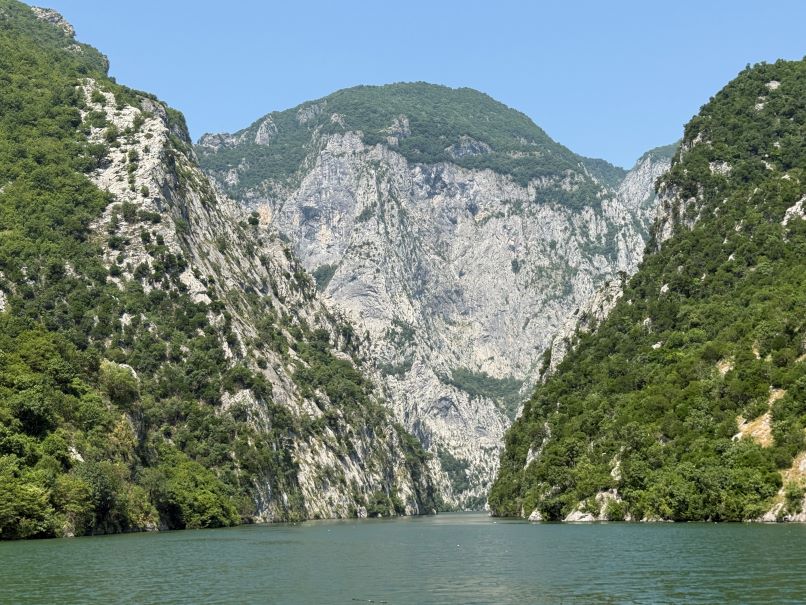
For three hours, I sailed across calm waters, surrounded by massive cliff faces that jutted out of the lake, creating a fjord-like atmosphere. At various points during the trip, the ferry would stop along the grassy banks. Packages of goods, including food, tools, and crates of beer, were exchanged, and families would disembark, seemingly vanishing into thin air as they wandered off toward unknown destinations.

When I arrived at Fierzë, a small town with a population of 1,150, a bus was conveniently waiting to take passengers to Valbonë. The cherry on top was that the driver dropped off passengers at their pre-booked accommodations, which was quite helpful since Valbonë is essentially a single road stretching for over 3 km.
DAY 2: Hike – Valbonë to Theth
I have hiked many Caminos de Santiago in my time, and I have to say, this hike was challenging, rating an 8/10 for difficulty, but it was 100% worth the effort. Most people make the trek from Valbonë to Theth (or vice versa) within six to seven hours, but the varying terrain, including rocky loose gravel and slippery, steep dirt paths, can quickly affect the pace. This hike definitely required good hiking boots and a cautious approach to the steep descents.
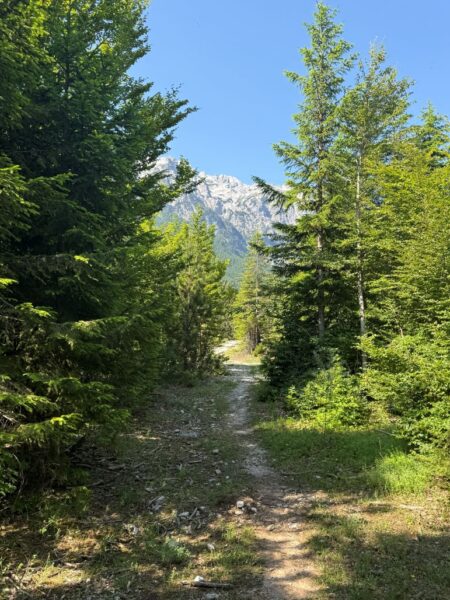
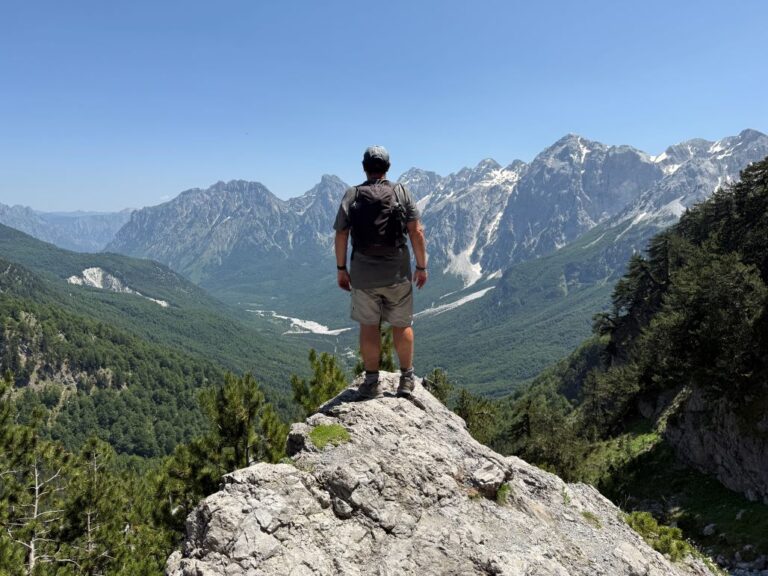
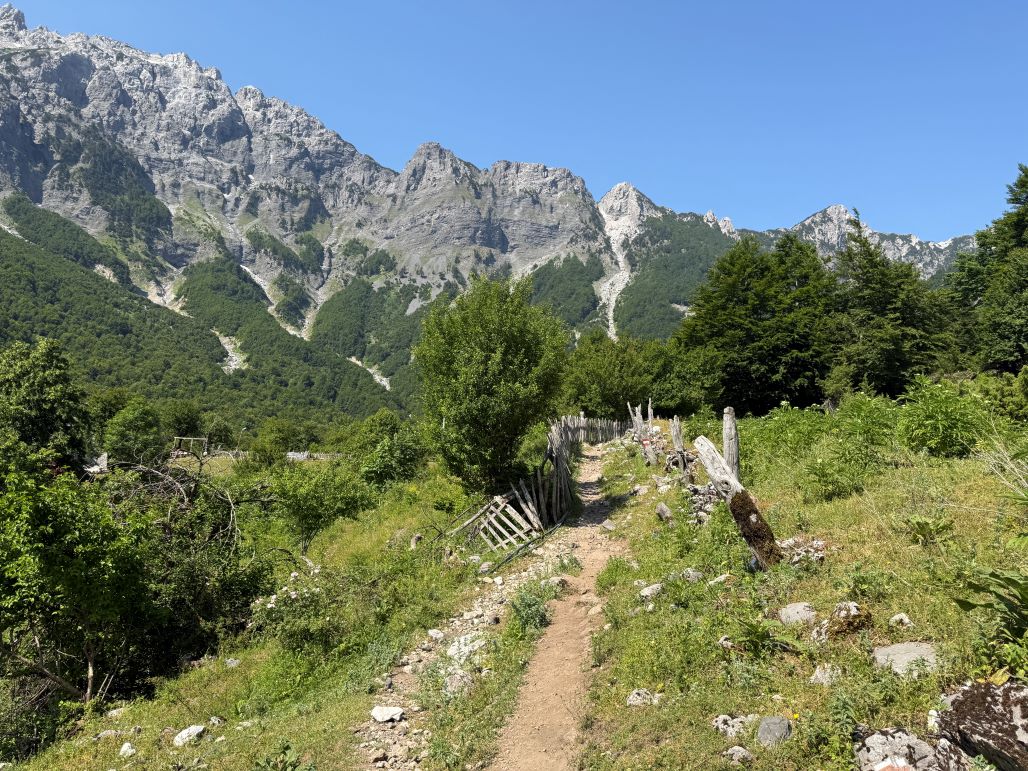
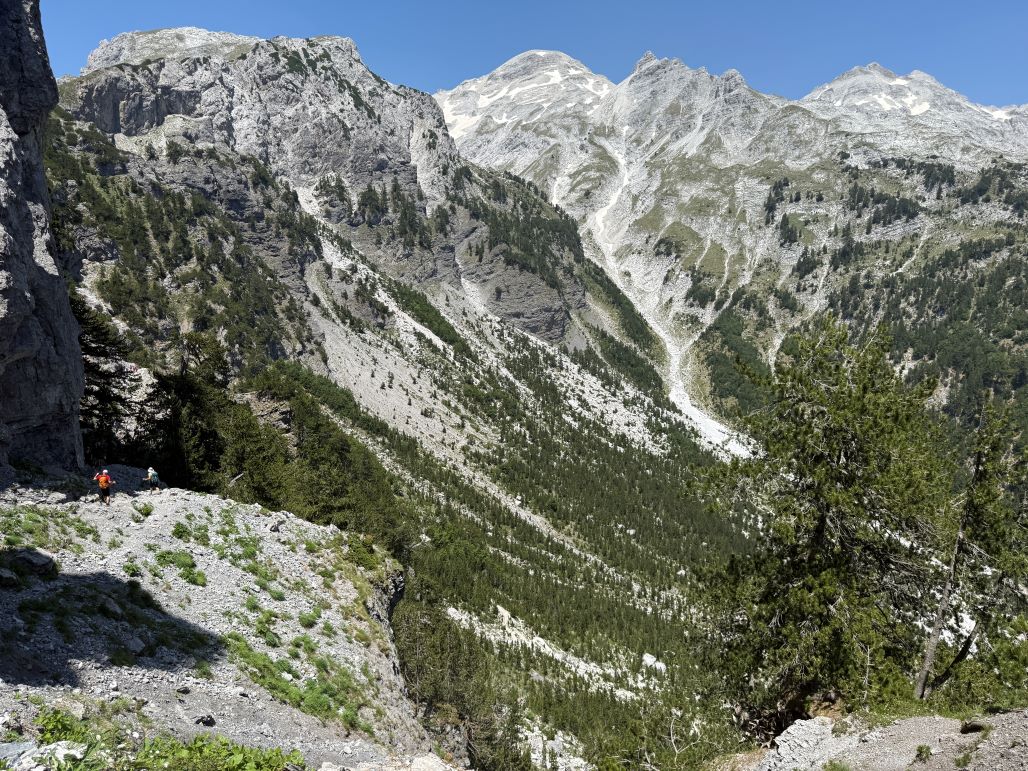
Starting from the open valley of Valbonë, I was soon rewarded with a few hours hiking through mountain ridges with incredible views of deep valleys, endless greenery, and countless mountain peaks. Once I reached the Valbona Pass, I simply stood in awe, soaking up all the stunning natural beauty. From here, I couldn’t resist the urge to stray from the trail and climb an additional 90 metres higher (25 minutes) to reach a rocky peak overlooking the Pass below. From this vantage point, I was treated to breathtaking views of the snow-capped mountain range, showcasing its rugged and sharp peaks. Below, the valley floor unfolded into a diverse landscape that included forests, meadows, isolated cabins, and dried rivers, all characteristic of an alpine tundra.
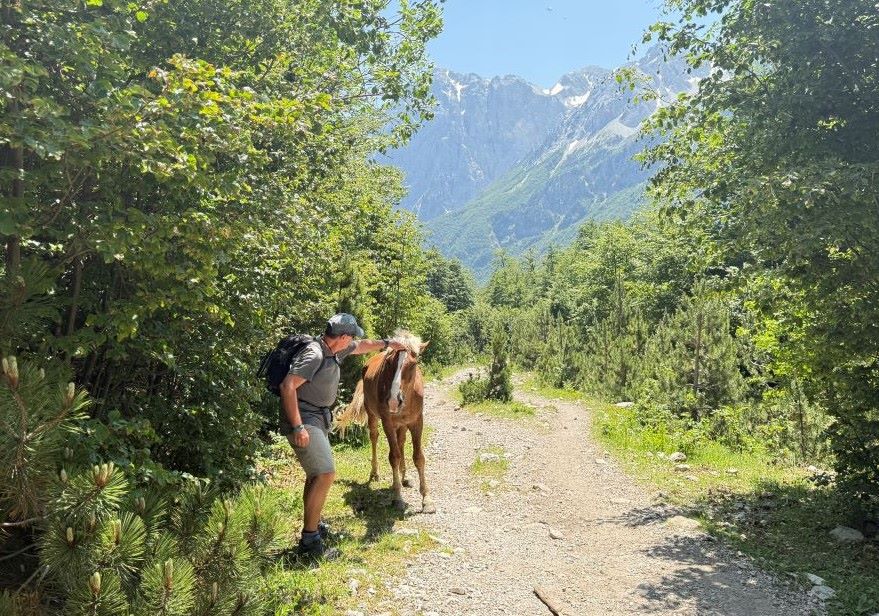
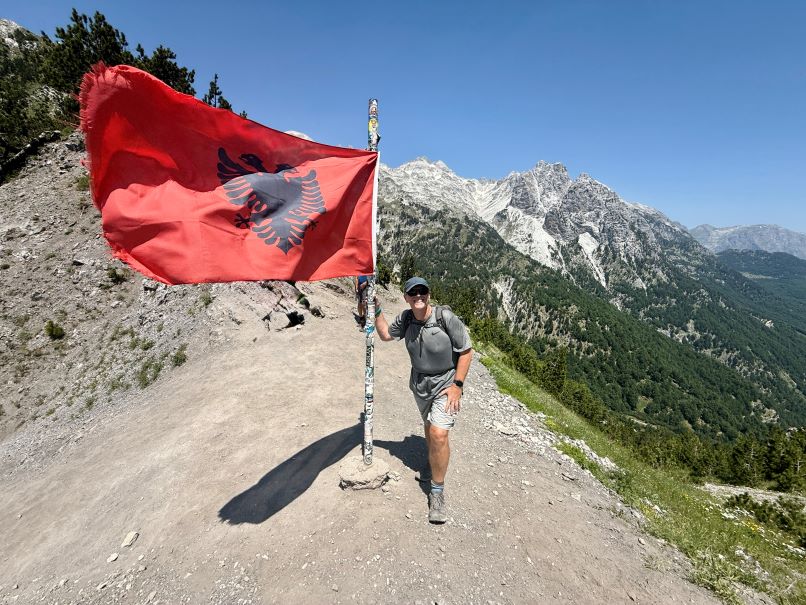
At the start of the hike, the signage from Valbonë was not very clear as the markers were too far apart, and many other paths close by created some uncertainty. I found the offline mapping app, maps.me, to be a great resource, as it was more reliable than the inconsistent Google Maps. Although at times parts of the path seemed to venture into people’s back gardens, the general direction was accurate enough. After a couple of kilometres, the trail became easier to follow, and the signage improved significantly.
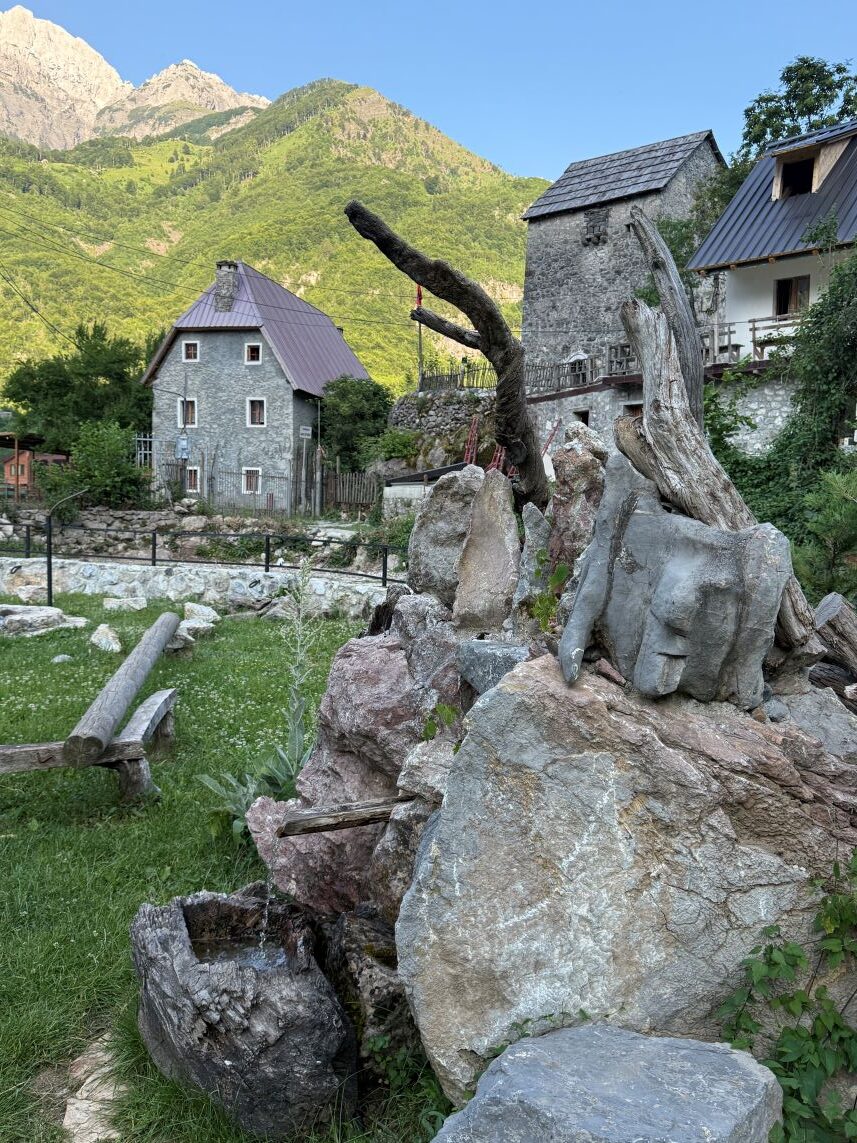
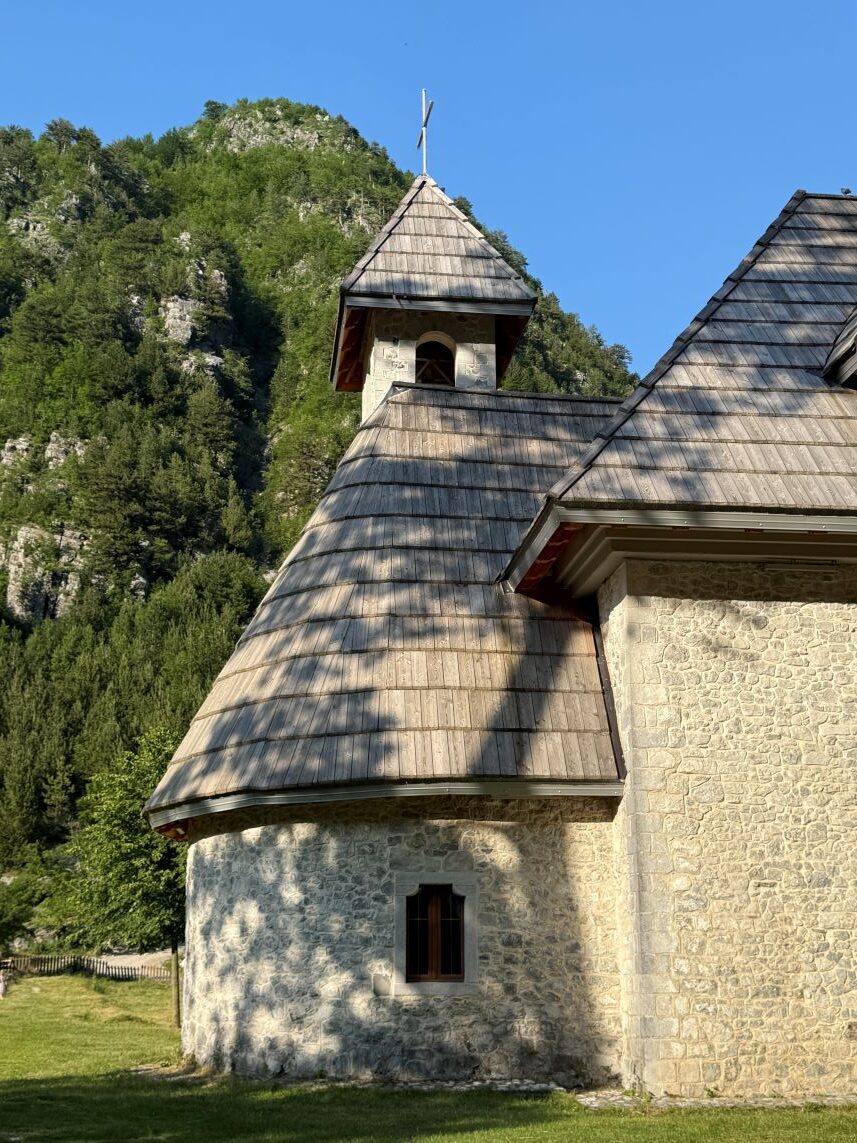
After hiking 21 km (13 miles), I finally arrived in the remote mountain village of Theth and straight into a scene from an ancient alpine village. The village featured clusters of stone houses, gravel roads, hedged fences, and a wooden church (Kisha e Thethit), all set against a backdrop of towering peaks in every direction. It was truly an out-of-this-world experience, despite the presence of Wi-Fi and satellite dishes!
DAY 3: Transport – Theth to Shkodër
With the bus leaving at 11:00 am, I enjoyed a relaxing morning that included a walk through town and an extra coffee or two at breakfast. To be honest, I’m not entirely sure how the transportation system works here. I arrived at 10:30, showed my ticket for the 11:00 departure, but by 10:40, I was on my way back to Shkodër. With numerous public minibuses waiting at the stop, I think the system is that they each leave as soon as it is full – bit like a taxi rank. The two-hour scenic trip was a wonderful conclusion to a memorable weekend, where most passengers were editing their photos and eagerly making plans for their next visit.
Accommodation and Eating in the Albanian Alps
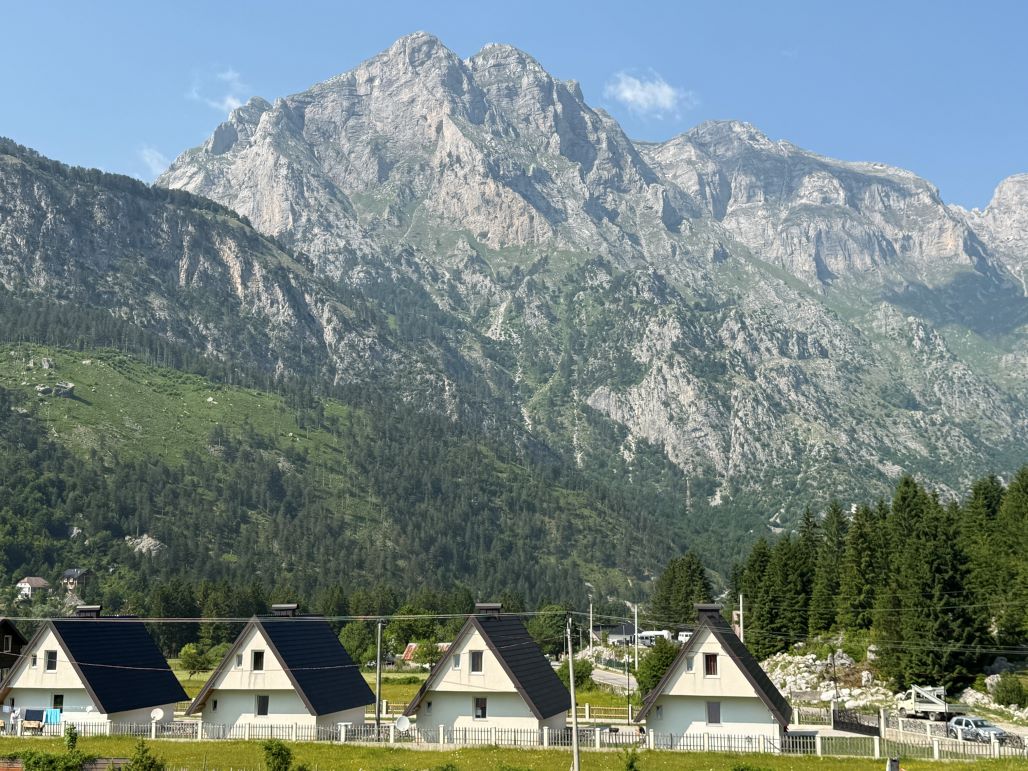
As expected, accommodation prices rose significantly in both Valbonë and Theth. In Valbonë, I stayed at an alpine lodge Bujtina Izet Selimaj, which offered breathtaking mountain views. In Theth, I enjoyed a homely stay at Bujtina Pllumi Theth, where I had a cosy wooden cabin complete with wonderful hot showers and one of the most comfortable beds I’ve ever slept in. Both places had private bathrooms and, like all lodgings in the region, only accepted cash as payment.
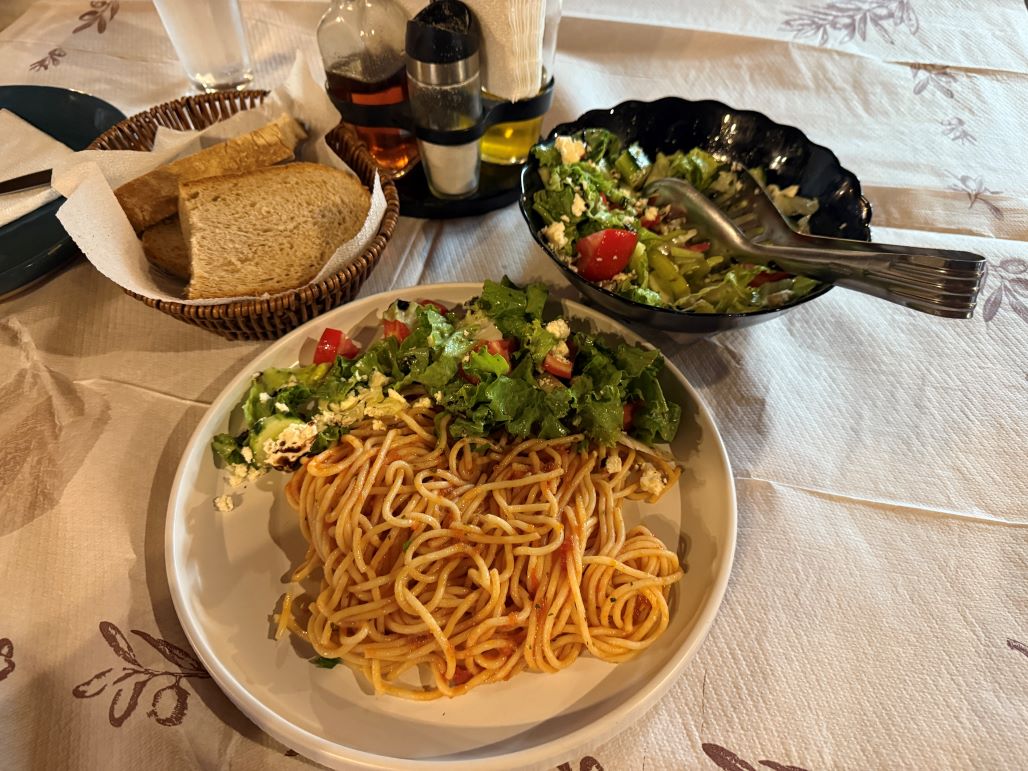
Most guesthouses and hotels include breakfast and offer evening meals. For an additional cost, they also provide a very basic packed lunch for hiking. I wasn’t too surprised to find that evening meals and snacks were about three times the price I would normally pay in cities across Albania. However, in Valbonë, I did discover a fantastic restaurant, Tradita Vabone, which is situated just off the main square. For a bargain price of €8, I enjoyed a delicious pasta dish with Greek salad and plenty of fresh bread- definitely a great place to build up carbs for the next day’s hike.
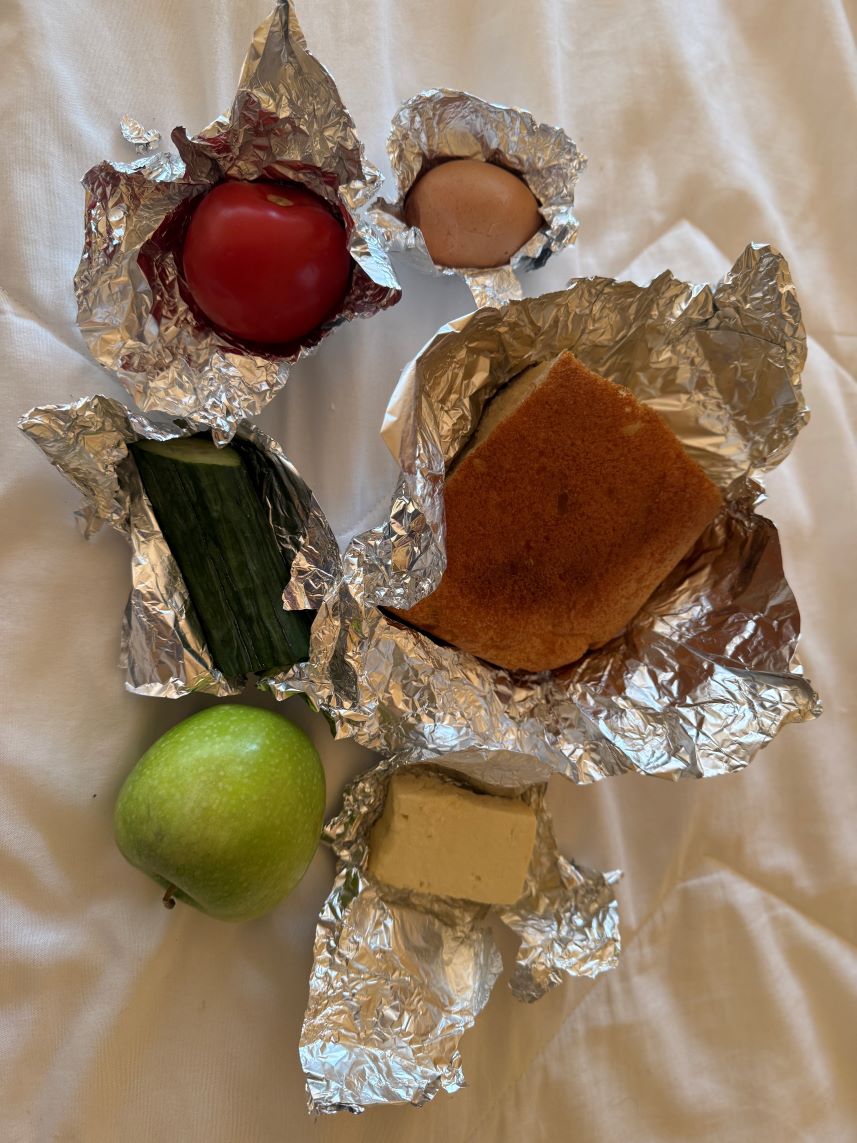
In Theth, there were more eateries than in Valbonë, many of which were stand-alone bars and restaurants. With aching limbs and a tired mind, I ate at the nearest restaurant (about 20 metres from my accommodation!) and had a simple, but tasty burger meal washed down with a well-deserved, cold draft beer.
If I had more time, I would have explored the following places and activities;
- Blue Eye of Theth (a natural freshwater spring/pool, 2 hours hike from Theth in the Albanian Alps)
- Lake Shkoder (explore a couple of beaches in the direction towards Montenegro)
- Sunset at Rozafa Castle (check opening times first – it’s a steep walk up for disappointment)
- Albanian meal at Arti’ Zanave (serves platters of traditional vegetarian meals with a high proportion of the meal cost going towards a charity that looks after women and girls suffering domestic abuse)
Accommodation in Shkodër
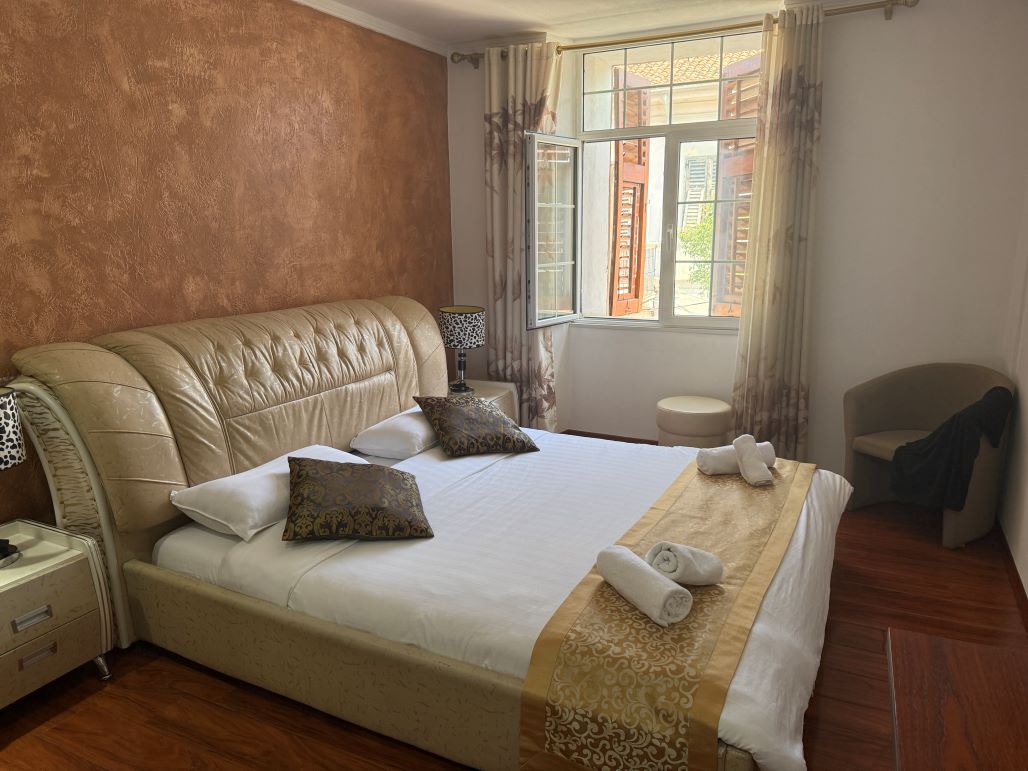
Shkodër offers a wide range of accommodation options for all budgets, including excellent hostels, hotels and cosy family-run guesthouses located in beautiful old stone houses with leafy courtyards that serve homemade meals. I stayed at the Durham Hotel right in the middle of the lively Rruga Kol Idromeno. It was centrally located and within 300 metres of buses heading towards the Albanian Alps. With a large comfy bed, great view across town and a very good breakfast, I had no complaints whatsoever.
Eating in Shkoder
If only I had more time in Shkodër, I could justify comments on the food scene. What I can say is that there are plenty of patisseries and restaurants offering flaky byrek to savoury tave kosi (a delicious meat and yoghurt dish). I did notice quite a lot of vegetarian restaurants, with Fisi restaurant receiving rave reviews for its vegetarian/vegan options. EKO Club is all high on the review list with its array of teas and sandwiches in a cosy, if somewhat quirky, atmosphere. I ate a couple of times at the Peja Grill. Simple, but tasty burgers and kebabs, with huge portions for ridiculously cheap prices. However, the crème de la crème has to be M’Kanda Gelateria and its awesome cheesecakes and flavoursome ice cream – believe me, three visits in two days just weren’t enough!
Travellingterry Shkoder tips
- The Marubi Photography Museum is open until 19:00 in the summer but is closed on Mondays. Entrance costs €7, but if bought online, it’s reduced to €6.
- The Site of Witness and Memory cost €2 and was open late until 19:00.
- Google Maps suggests that Rozafa Castle closes at 7 pm, but during my visit in June, it stayed open till 8 pm, even though the sun set (the main purpose for visiting the castle at that time) occurred after the official closing time! Some posts have stated that in July-August, it does stay open till 9 pm. Tourist office, or hostels, always seem to be in the know of the true timings. The entrance fee for the castle was 400 Lek (€4) and could only be paid in cash.
- If visiting the Albanian Alps, transport can be booked to Valbonë or Theth the day before the visit quite easily via the numerous agencies in town, at the accommodation or any hostel. Minivans depart for Theth or Valbonë around 06:30 am.
- A great offline mapping app is Maps.me, especially useful for walking in the Albanian Alps. Gjirafa is another good online resource, offering bus timetables and locations of bus stations. Xhiro n’Shkodër provides up-to-date information on the sights in and around the city, including prices and opening and closing times for all the attractions.
Onward Travel: Bus from Shkodër to Tirana
I booked my bus ticket online with Kamalakeferry.com as part of the bus and ferry package for the Valbonë to Theth hike (see above). The bus stop for Tirana is just beside Hotel Rozafa, right in the centre of Shkodër. It turned out to be a great surprise not having to troll 3 km out of town to the bus terminal. On a not-so-busy coach, I arrived in Tirana 2.5 hours from departure, and with a bit of luck and kindness, the driver drove past Tirana’s North and South Regional Bus Terminal (5 km outside of the city centre) directly into the city centre at Skanderbeg Square.