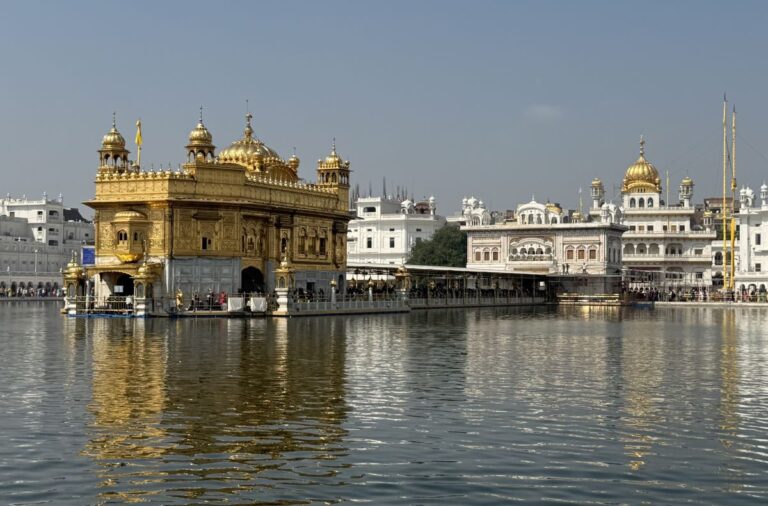
Amritsar is a city rich in experiences and attractions, blending sacred sites with historical landmarks. From the majestic Golden Temple complex to the poignant Jallianwala Bagh, each site offers unique insights into the courage, resilience, and spirituality that define the city. Thousands of pilgrims, wearing turbans of all colours, line the streets of this holy city, home to the holiest Gurudwara (temple) for Sikh devotees. Amritsar is not just a place to visit; it is a place to feel, whether by enjoying the serene beauty of Sri Harmandir Sahib (Golden Temple) on its island in the Amrit Sarovar (pool of nectar), savouring the flavours at Guru Ka Langar, or soaking in the patriotism at the Wagah Border Ceremony.
Located in India’s Punjab state, Amritsar is centrally linked to Sikhism. Founded by Guru Ram Das in 1577, it became the heart of the Sikh faith and gradually evolved into a major trading and cultural hub. Sikhs, viewed as a minority in India, have faced conflicts with both the British Empire and the Indian government, resulting in tragic events such as the Jallianwala Bagh massacre in 1919 and Operation Blue Star in 1984, which involved military operations within the Golden Temple complex to remove militants, leading to approximately 1,000 deaths.
Our Amritsar Highlights
This was Terry’s third visit to India. During his earlier trips in 1992 and 2005, there were tensions at the India-Pakistan border, leading to warnings for travellers to avoid Amritsar. However, during our visit, there was a brief period of improved relations between the two countries, allowing us to explore this vibrant and friendly city. We planned three days filled with memorable experiences that showcased the city’s rich cultural and historical heritage, starting with the Golden Temple as our first stop.
Wonderstruck at The Golden Temple
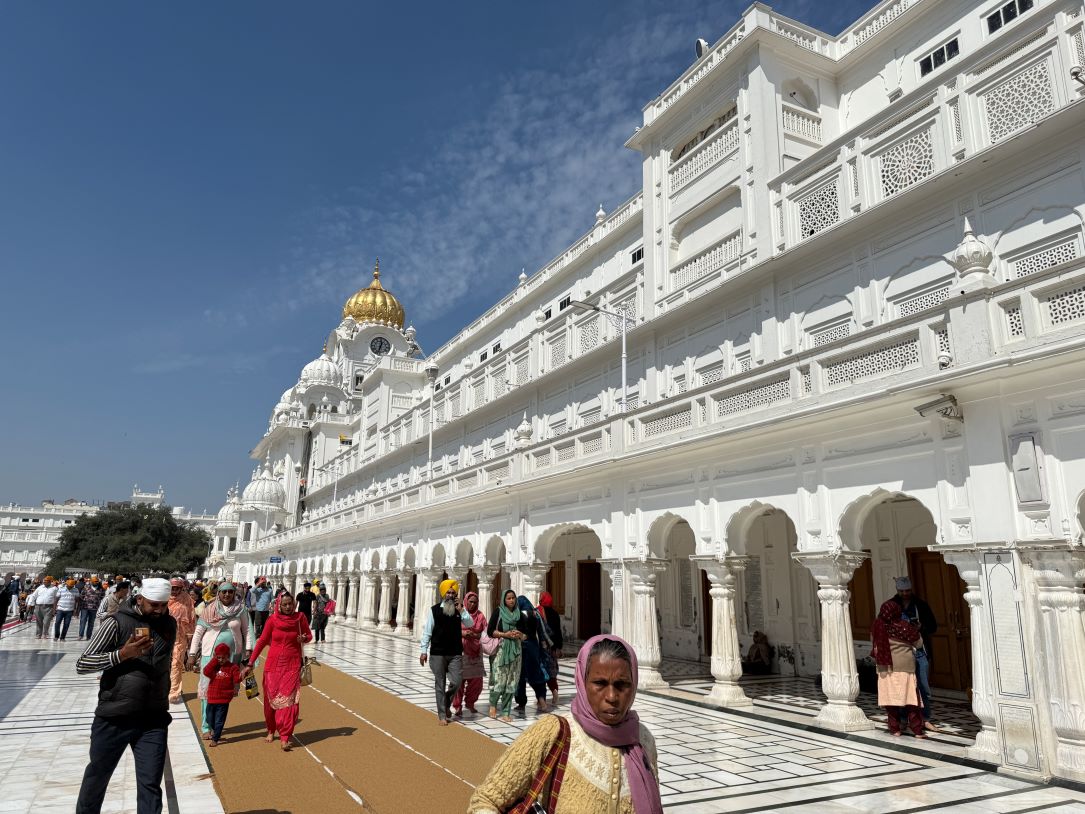
The Golden Temple is the most revered temple for Sikh followers and one of the most famous temples in the world. Built in 1577, it is perhaps one of the most beautiful structures we have ever seen. The temple features a dome and exterior encrusted with 750 kg of gilded gold, housing the holy scriptures of the Sikh faith. People come from all over the world, whether on pilgrimage or for tourism, to glimpse this stunning temple complex, which sees over 100,000 visitors every day. With so many big crowds, we anticipated an overwhelming experience, but instead we found ourselves being absorbed in the serene and peaceful ambience of the Amrit Sarovar (pool of holy water surrounding the Temple itself), exchanged pleasantries with strangers and marvelled at the incredible marble and gold architecture – truly something to behold.
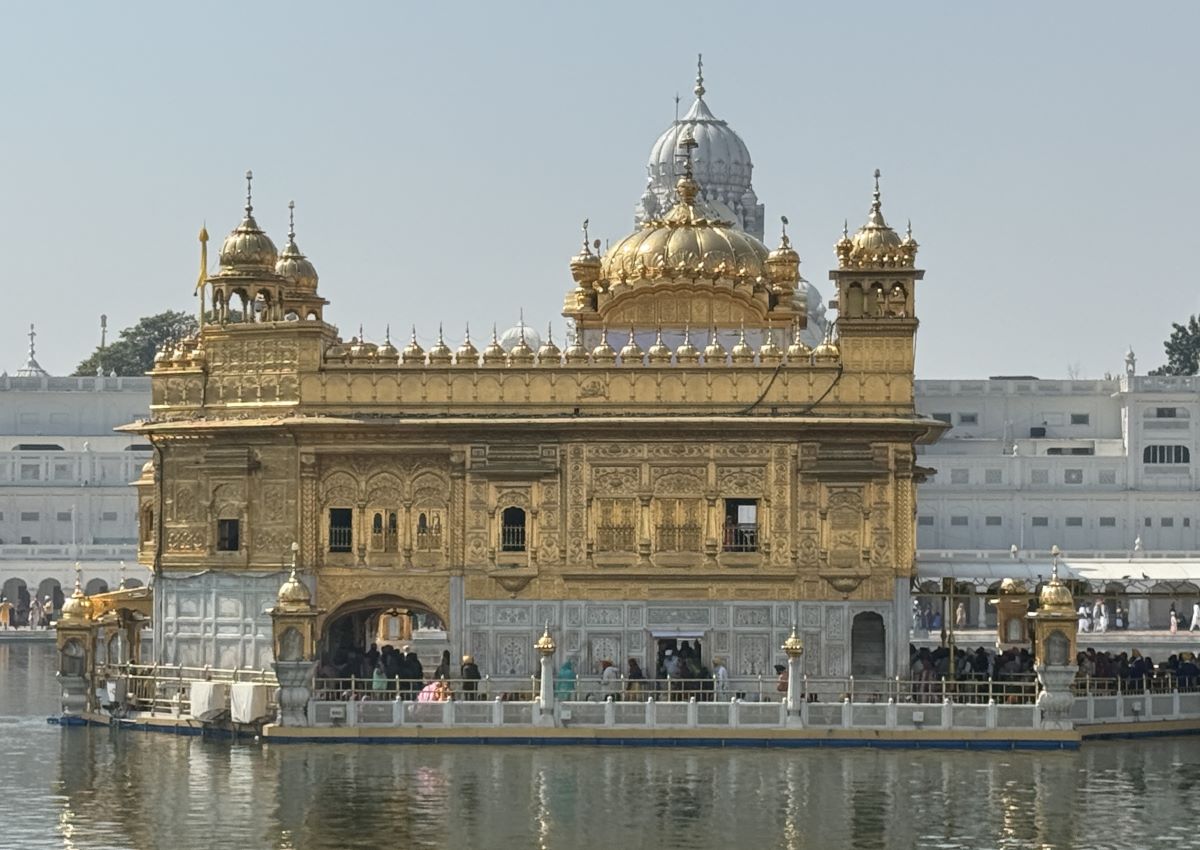
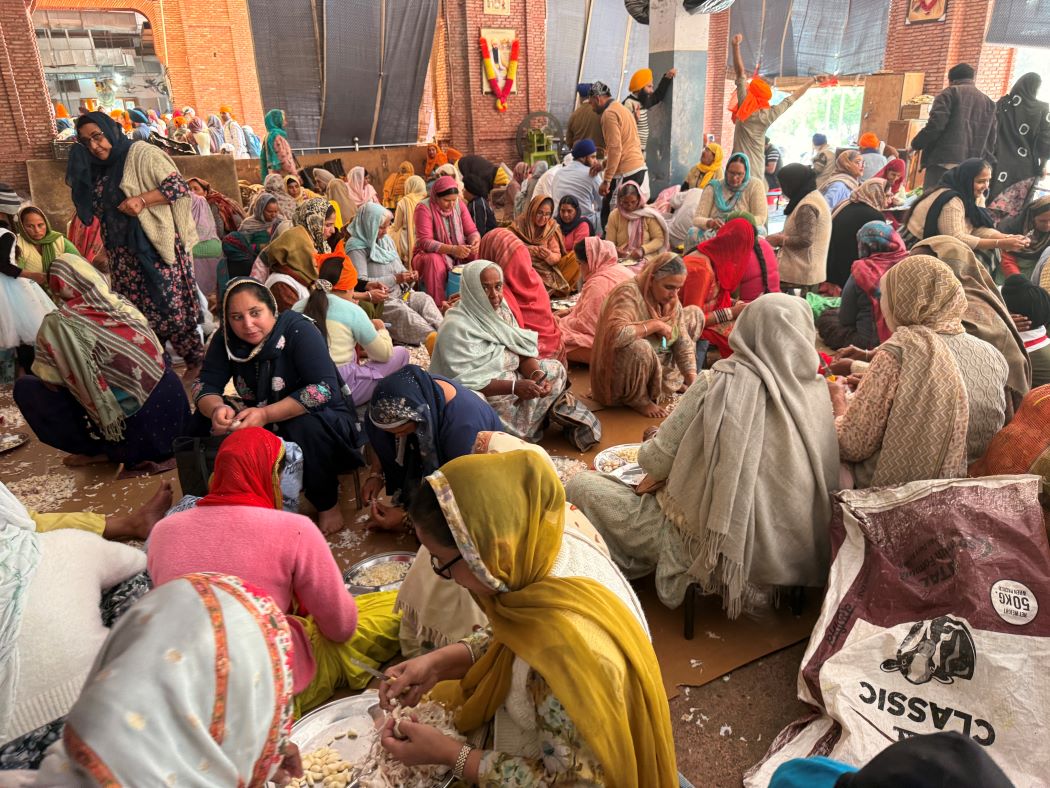
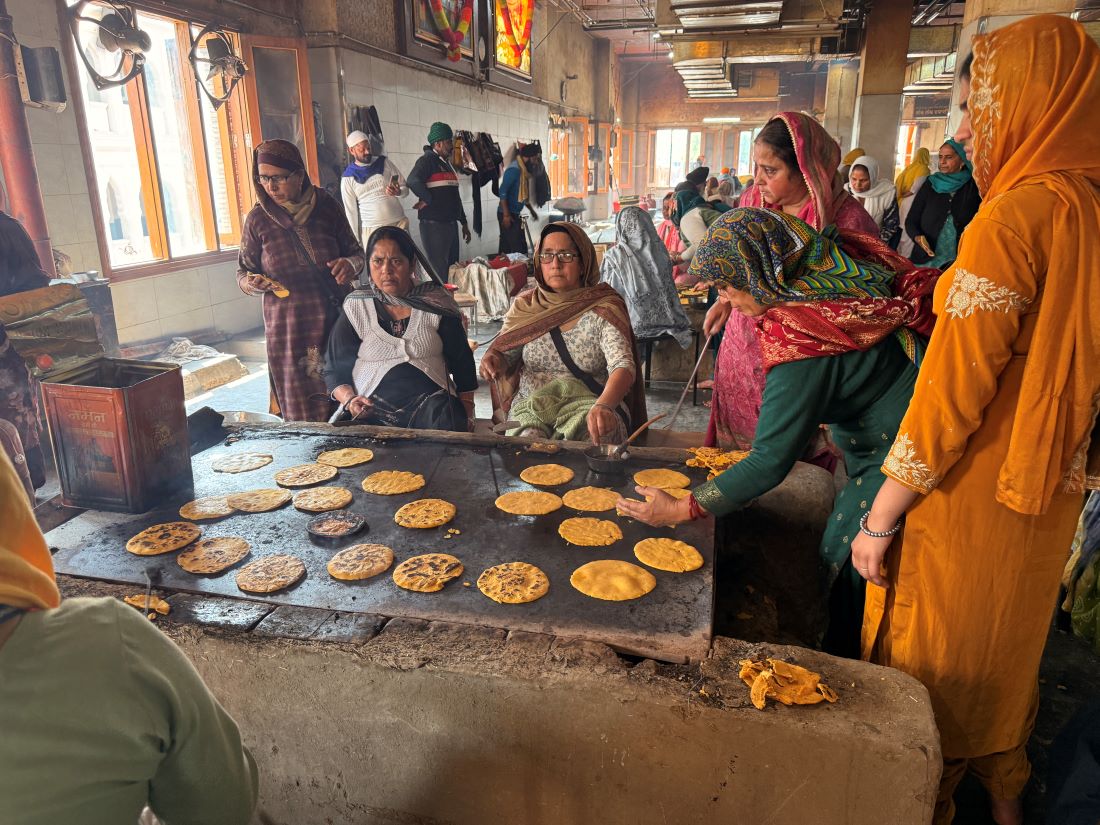
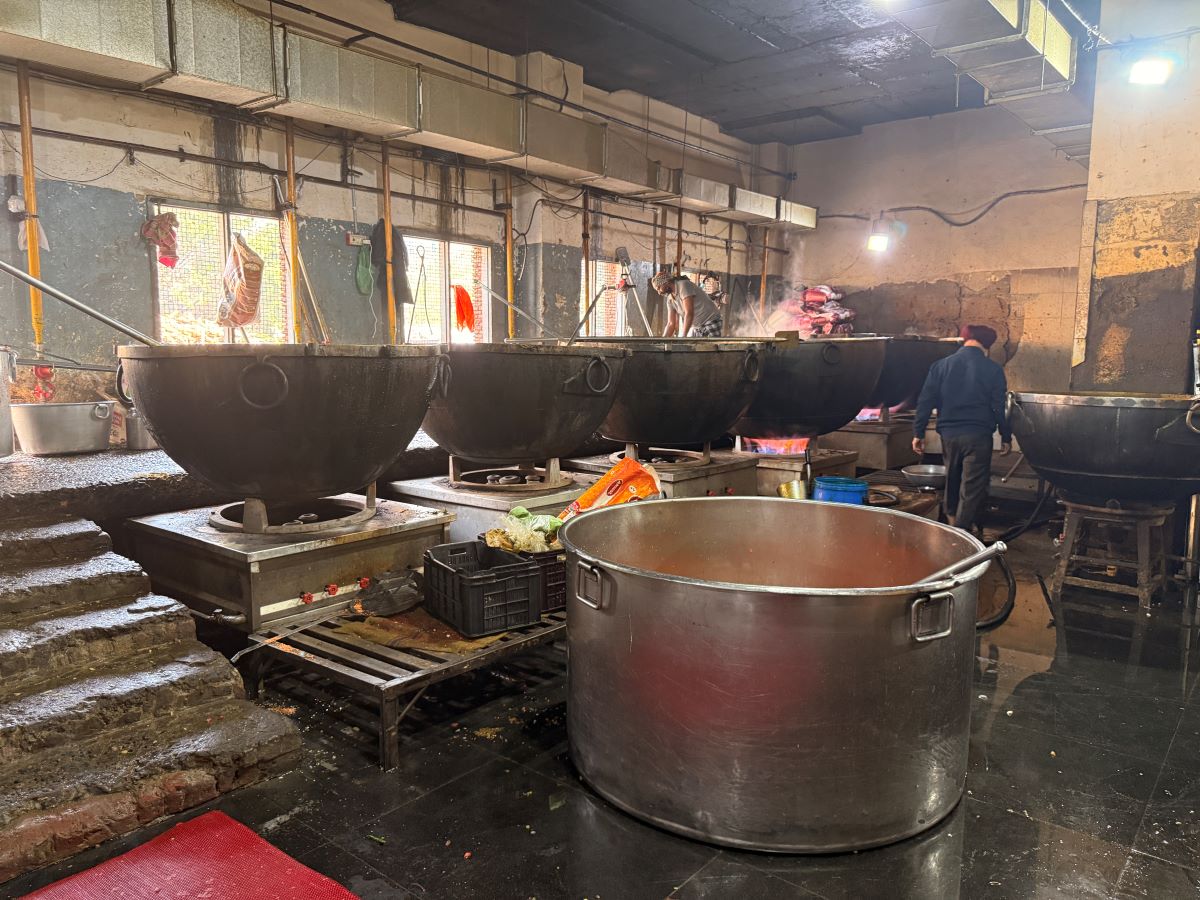
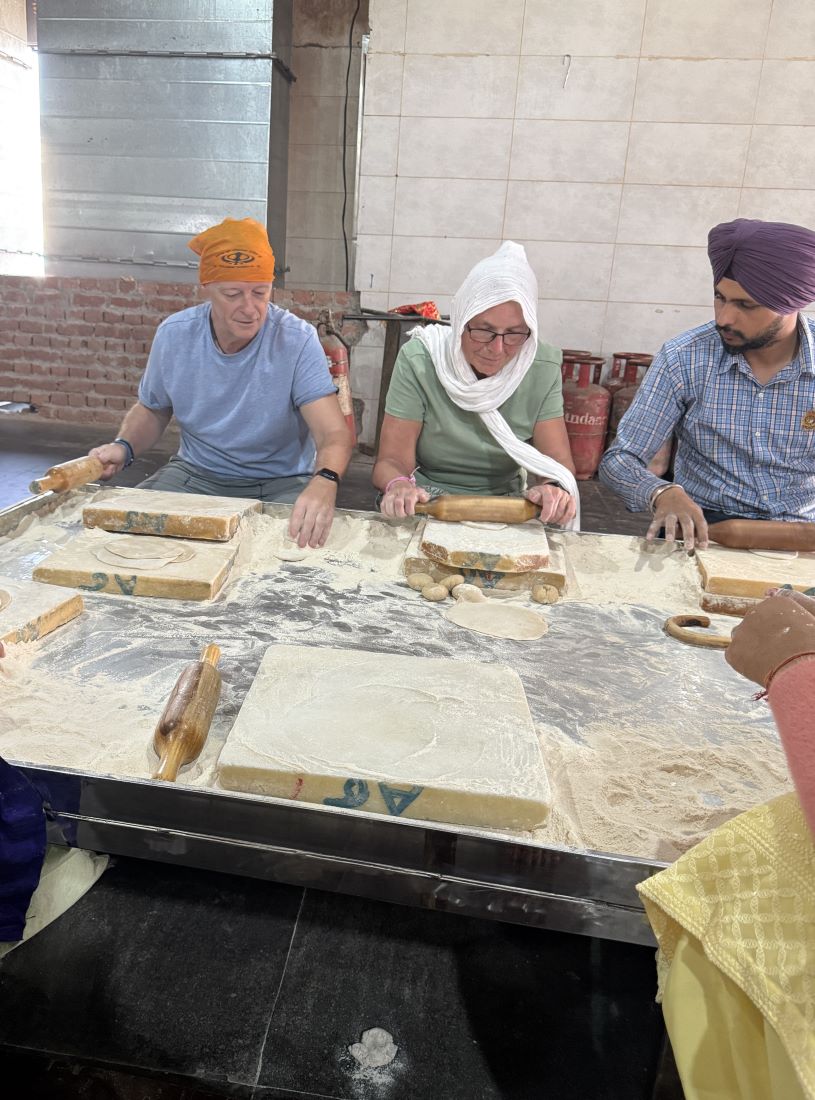
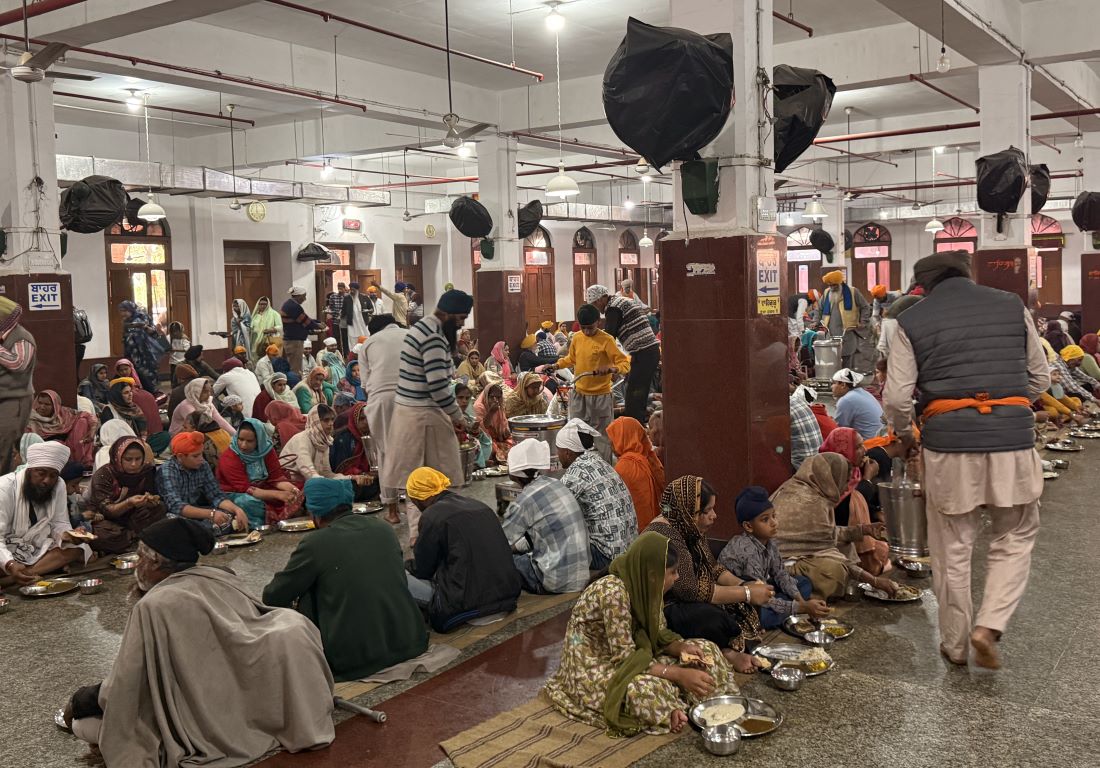
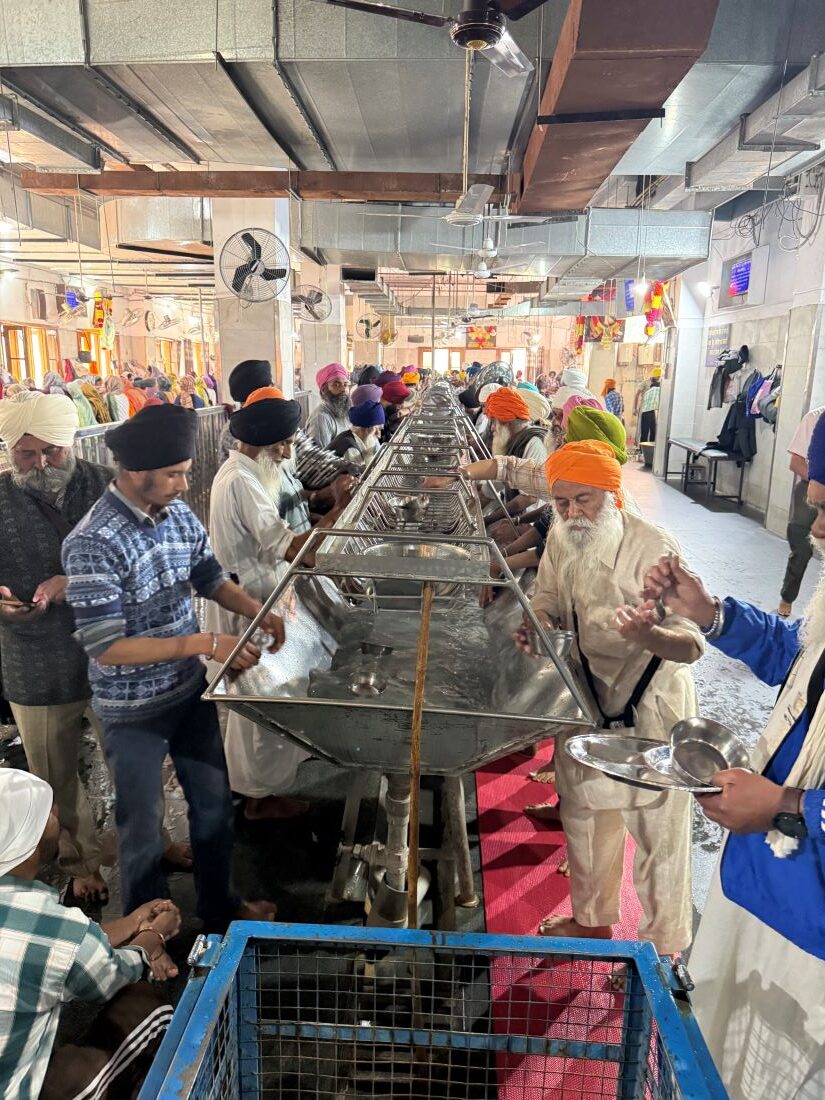
We also visited the ‘langar,’ commonly known as the community kitchen, which serves free meals to all visitors, accommodating up to 100,000 people a day, regardless of their background. This service embodies the Sikh principles of equality and selfless service. Remarkably, it operates around the clock, 24/7, every day. We were amazed by the number of volunteers and the speed with which they prepared tens of thousands of meals, all within a harmonious and friendly atmosphere. It was a truly humbling experience. Aside from the spiritual aspects, we had a lot of fun too! We joined in food preparation by rolling out chapattis and got a bit wet washing plates and cutlery (which is cleaned five times per item before passing quality control!). This tradition has been serving people for centuries, and witnessing hundreds of people eating together was a truly memorable experience.
Although our tour did not include a visit to Akal Takht, one of the five seats of Sikh religious authority symbolising justice and sovereignty, we admired its majestic architecture featuring intricate marble work, gold leafing, and detailed frescoes that narrated historical events. To be honest, the queues for both Akal Takht and the Golden Temple (Sri Harmandir Sahib) were so long that we would probably have needed another full day tour to fully explore them both.
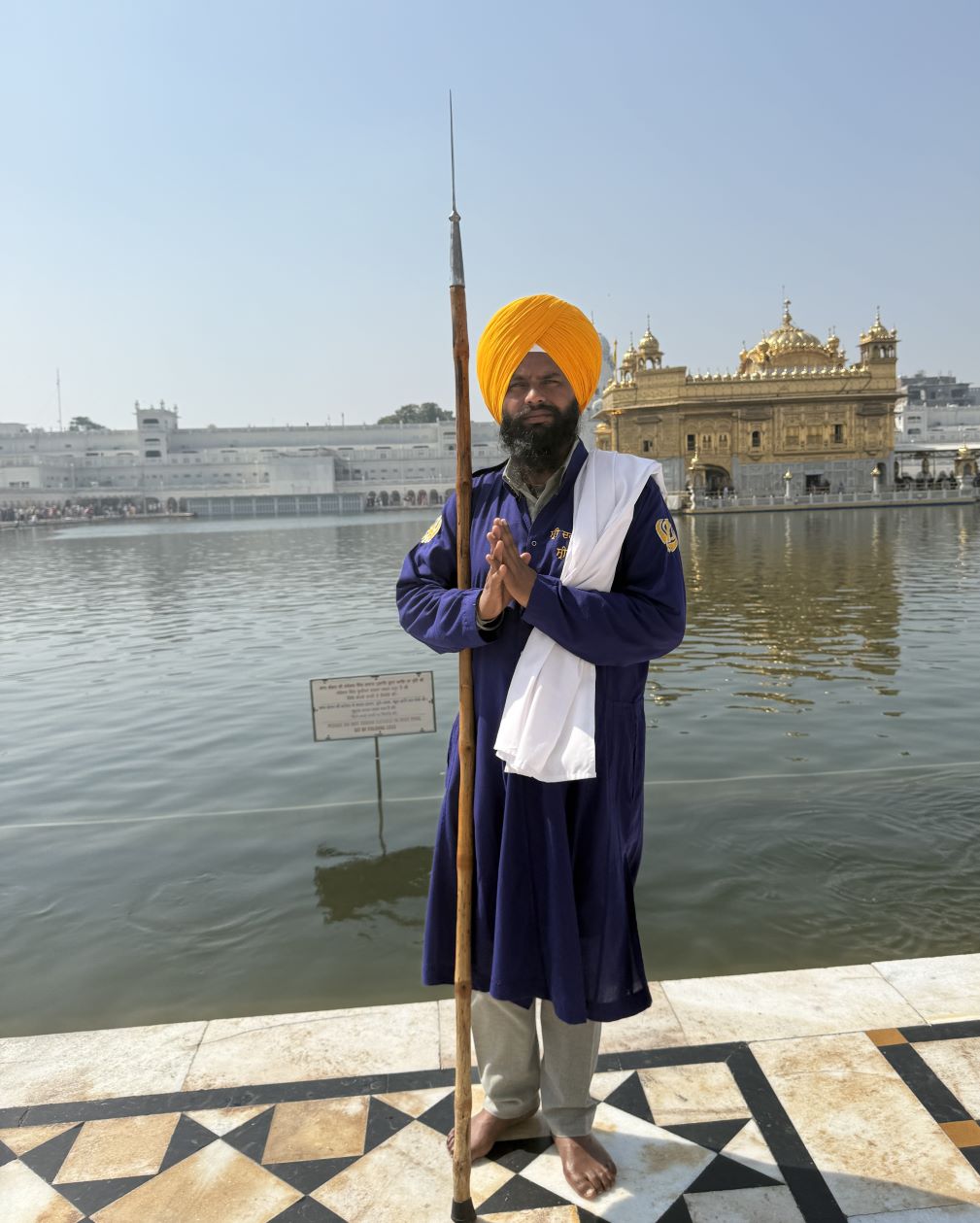
I found the Sikh Guardians fascinating; I couldn’t take my eyes off them! These imposing figures are definitely not to be messed with. Many guardians are situated in and around the temple, ensuring that the principles of the Sikh faith are upheld and protected – some would say by whatever means. Their turbans, uniforms, and intimidating spears, which represent sacred colours, reflect their devout faith and bravery.
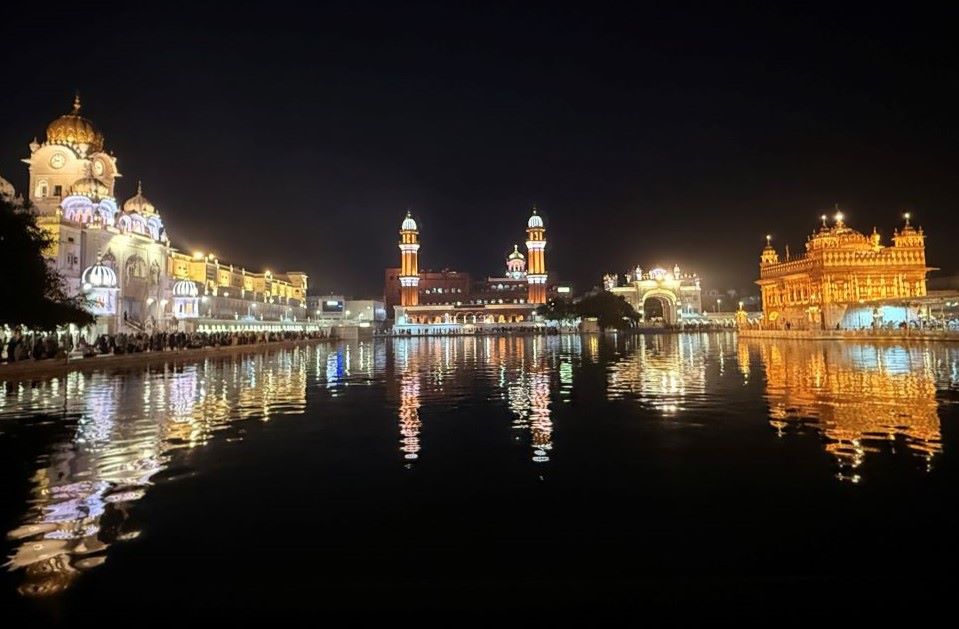
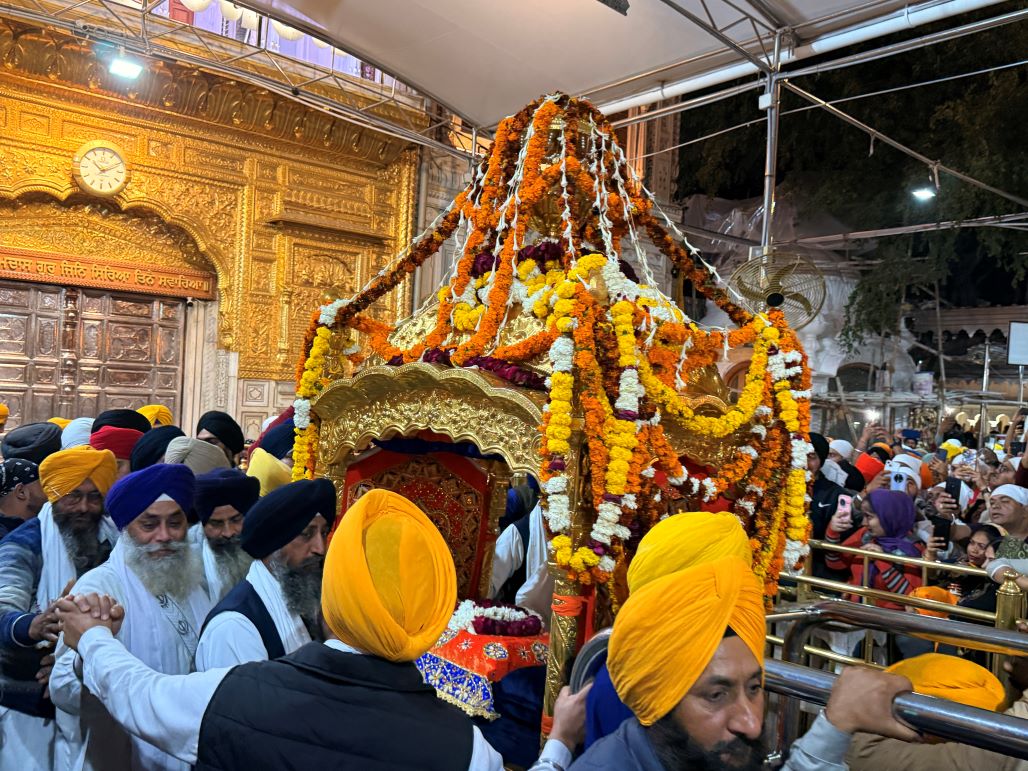
Returning in the evening, when it was much cooler and with fewer visitors, offered us a completely different experience. We watched the spectacular ‘Closing of Book’ ceremony, where every evening the Guru Granth Sahib (Sikh holy book) is carried in a ceremonial procession on a beautifully cushioned palanquin (Palki) from the main shrine within the Golden Temple to the Akal Takht – a designated resting place, symbolising the end of the day’s spiritual activities. Although we managed to get a good view, the large crowd walking alongside the Palki made it difficult to fully appreciate its beauty. However, the recitations of hymns, sermons, and chants created an electric atmosphere, unlike anything we had seen or heard in any other place of worship.
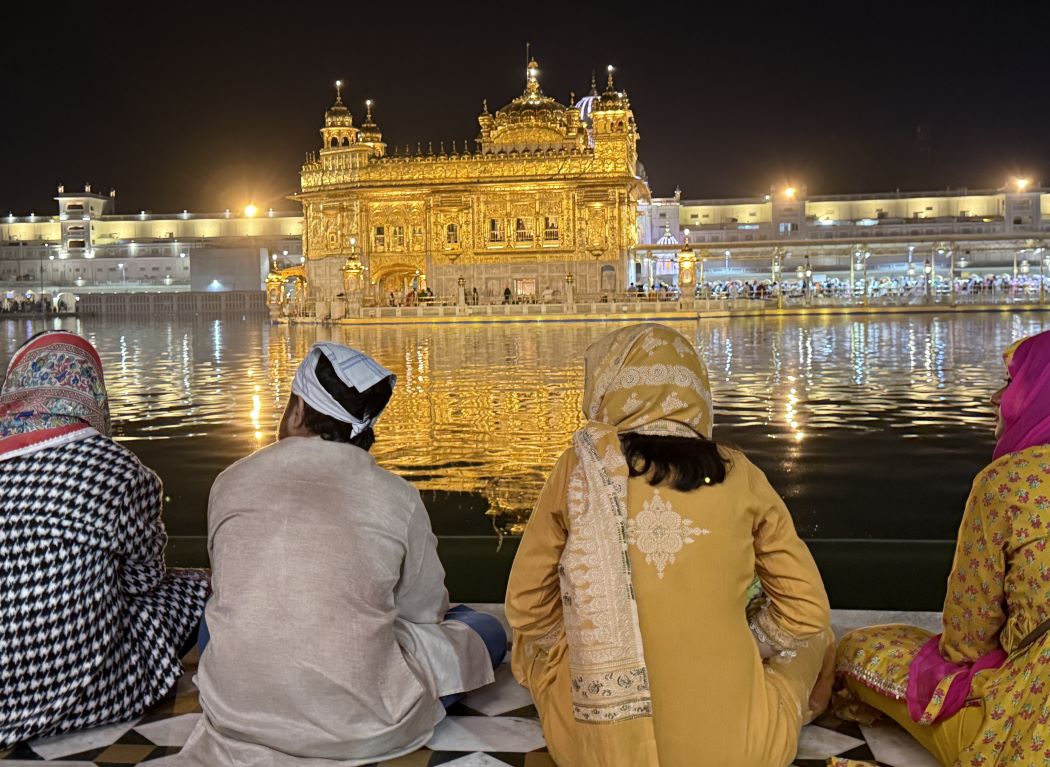
The setting of the ceremony made the experience even more memorable. The marble and gold structures sparkled beautifully against the night sky, reflecting on the holy waters of Amrit Sarovar. The Golden Temple itself shone like a star on the surface of the pool – an image that literally took our breath away.
Saddened by events at Jallianwala Baghdad
This historic and beautiful garden serves as a poignant reminder of a tragic massacre that occurred here in 1919, where innocent men, women, and children were killed by the British Army in an event that has come to be known as the Amritsar Massacre. At that time, the British feared a public uprising, so to control gatherings, they imposed a temporary law that forbade groups of four or more people from congregating. However, since the gardens were located next to a community mosque, it was impossible to follow this law effectively. Without warning, the British opened fire on all those present, resulting in over 300 defenceless deaths. The site serves not only as a memorial for those who lost their lives but also as a reminder of the senseless brutality of the event.
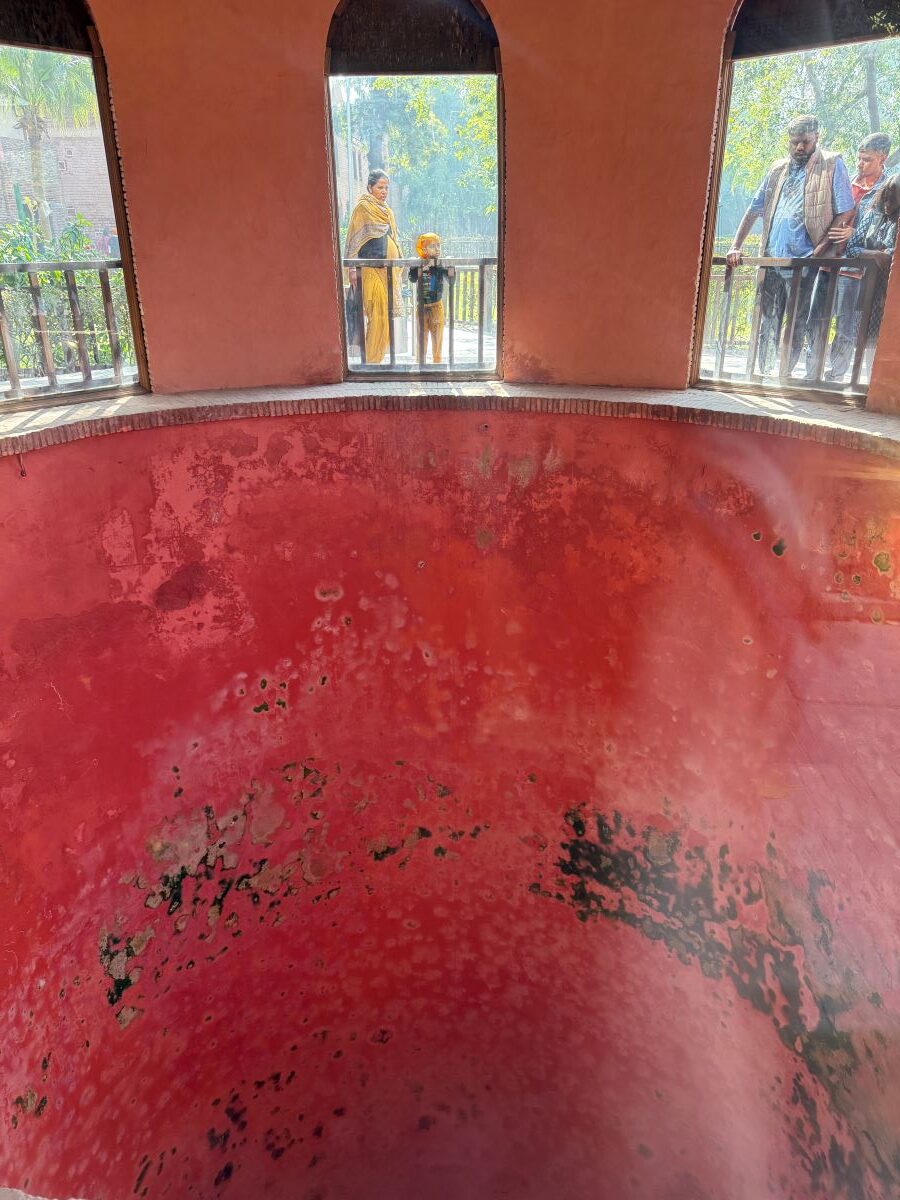
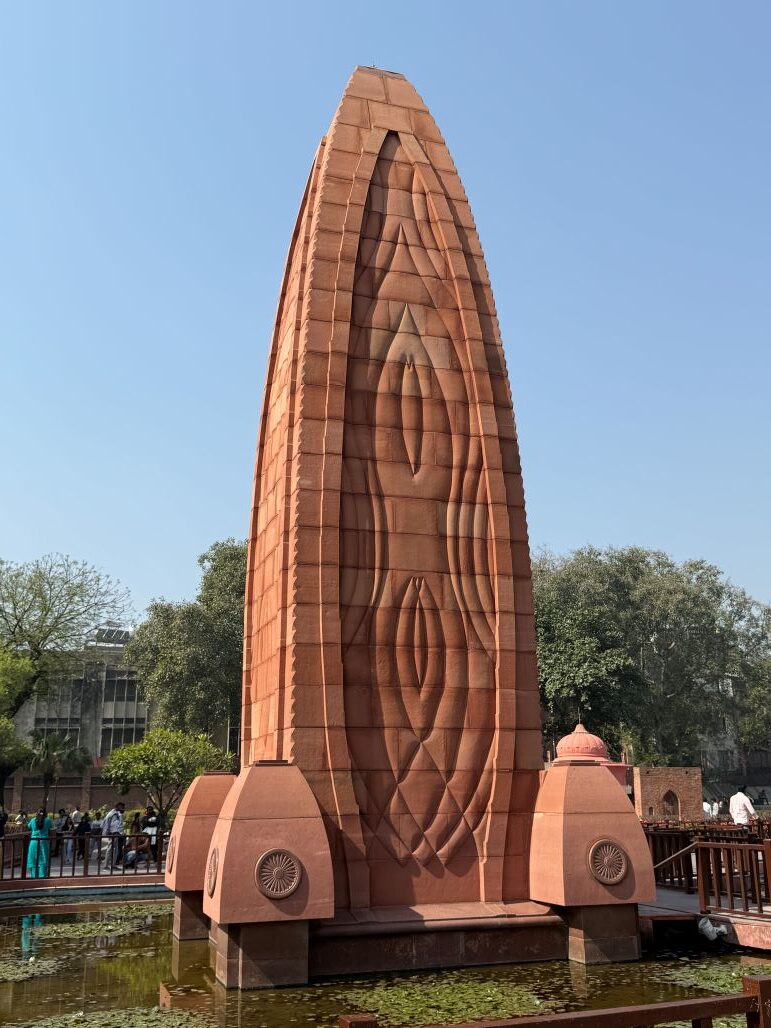
The garden features numerous memorials and plaques that provide detailed accounts of the events. It offers a peaceful backdrop for reflection, with bullet-pocked walls, an eternal flame of remembrance, a deep well which hundreds jumped into to save themselves, and fence-off old trees that stand as a silent witness to the past.
Experienced painful accounts at the Partition Museum
This museum is dedicated to the Partition of India in 1947, chronicling the events that led to the division of British India into two independent nations: India and Pakistan. This partition marked one of the most significant and turbulent chapters in India’s history. The audiovisual exhibits, photographs and panels depicting personal accounts offered a comprehensive overview of the lead-up to partition and the devastating consequences that followed. When the British departed, they left with little infrastructure in place to manage the safety of the 18 million displaced migrants who had left behind loved ones, homes, jobs, and personal belongings. During this tumultuous period, some parts of the border were not even established at the time, so many migrants were not even sure if they were in India or Pakistan. An estimated 1 million lives were lost during this tragic historical event.
Entertained at Wagah Border
One of the most memorable moments of our visit to Amritsar, and indeed our entire journey through India, was attending the Wagah Border Ceremony. Here, the armed forces of Pakistan and India face off at the end of each day to mark the closing of the border. Our full-day tour in Amritsar included transportation to and from the border, which made it easy for us, as we didn’t have to worry about finding a taxi or tuk-tuk for the 35-kilometre journey or securing good seats. The ceremony was free to attend, but we had to present our passports to enter the area allocated for foreigners. Only water and cameras were permitted inside, so we had to leave bags and electronic devices behind.
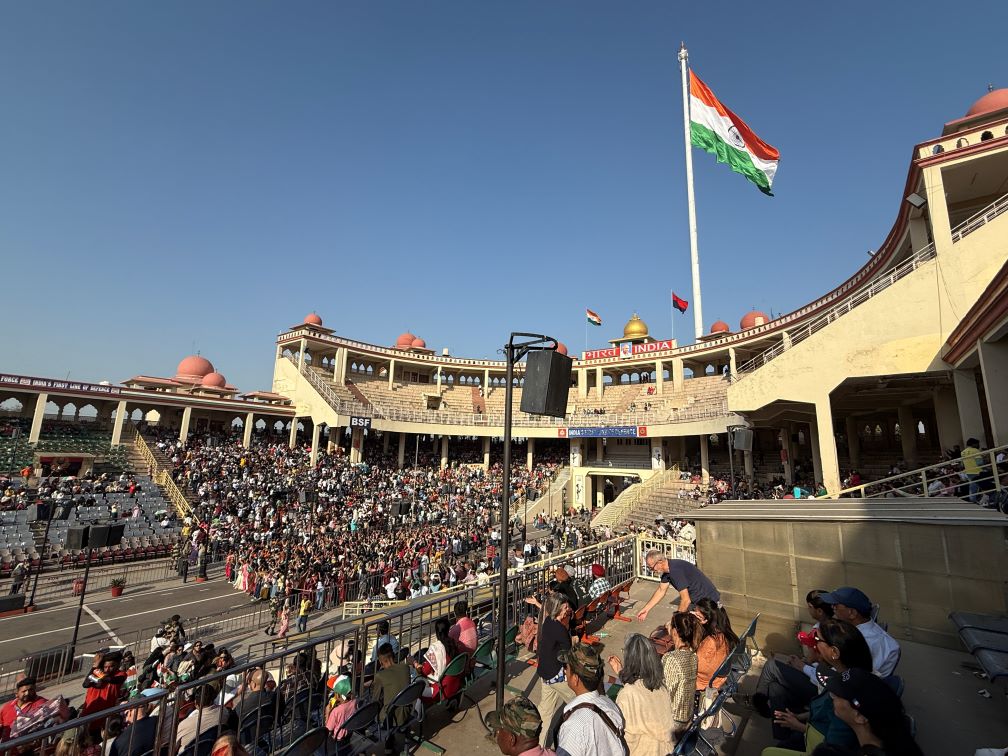
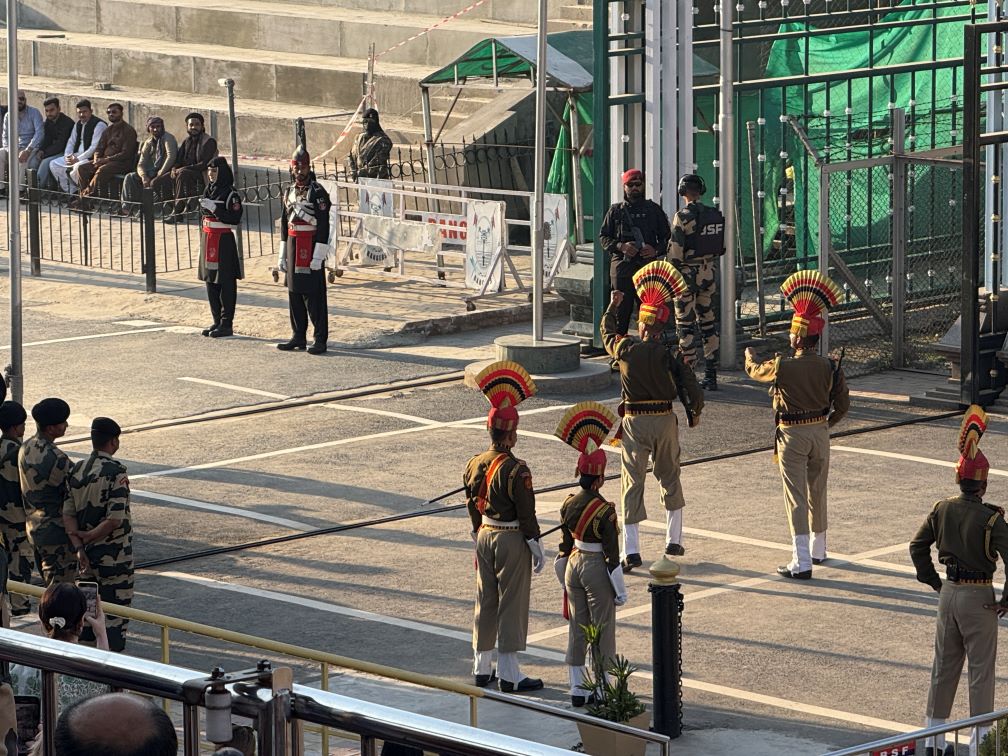
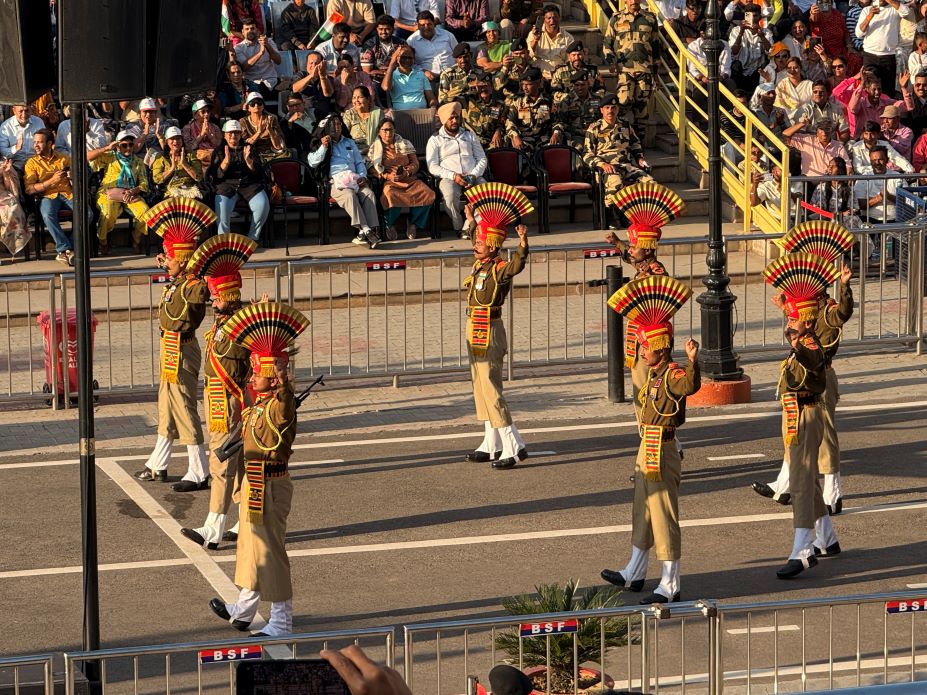
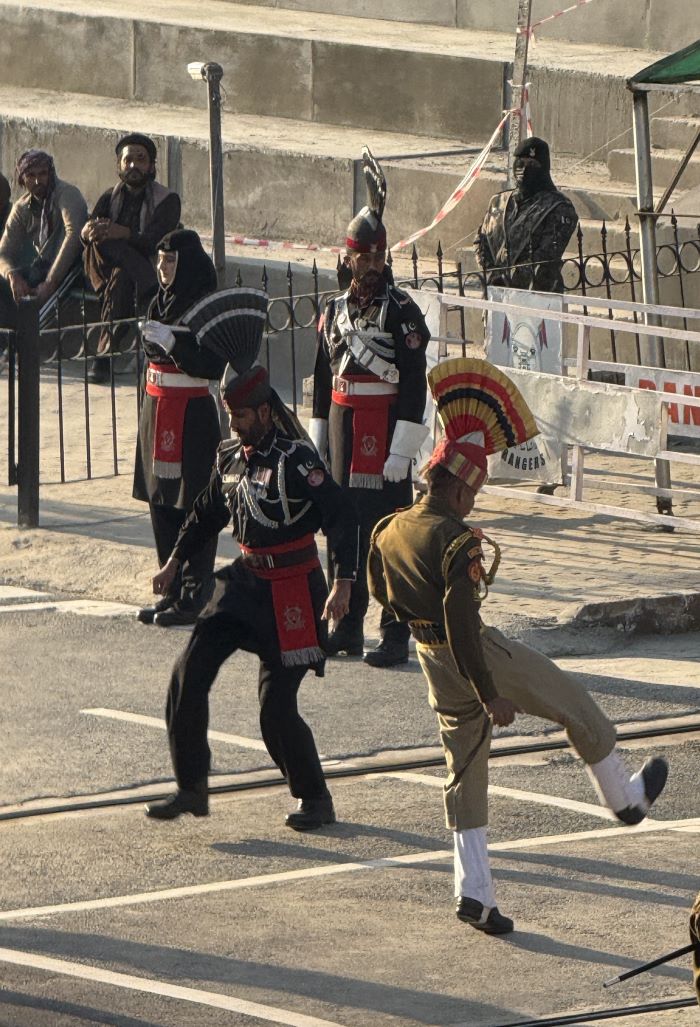
The incredible ceremony takes place daily and is a thrilling display of high-energy performances, military precision, and patriotism. It is an impressive spectacle, held in stadiums built on either side of the border gate, with the Indian audience significantly outnumbering the Pakistani crowd. The ceremony, officially known as the ‘Beating Retreat Border Ceremony,’ features the lowering of both nations’ flags, as soldiers from each side meet in the middle, enthusiastically performing synchronised parades, brisk marching, warrior-like expressions, and very athletic high kicks, all of which generate extreme excitement among the spectators. The ceremony was not just a visual spectacle but a fully immersive experience, resonating with the buzz of patriotic fervour as thousands of spectators cheered and participated in chants and songs celebrating the spirit of both countries.
Wandered the Bazaars
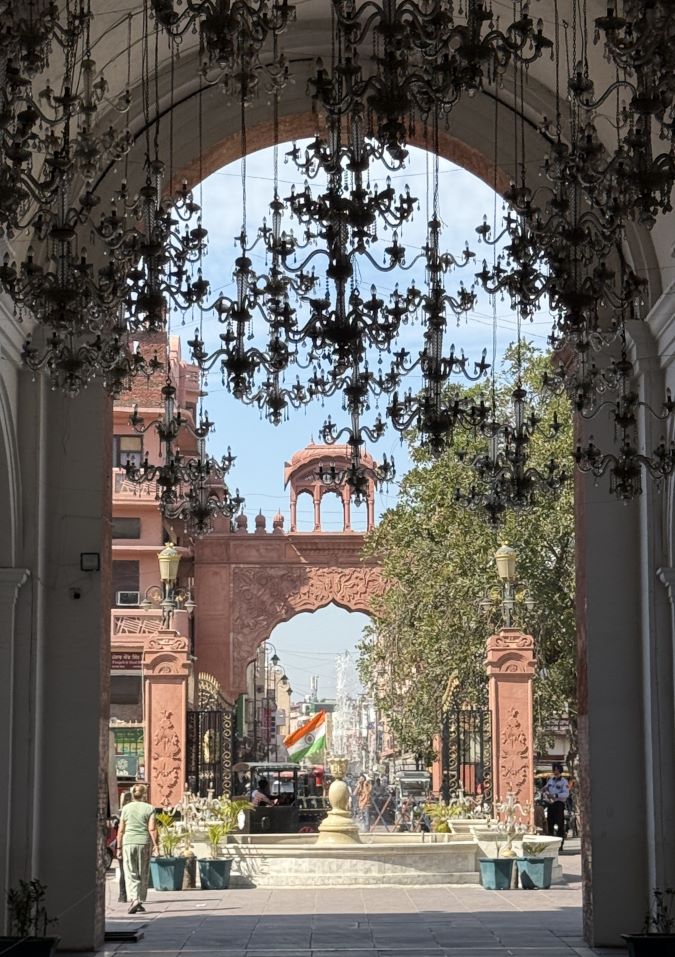
As we explored the main attractions, we frequently navigated through rows of tourist shops and quaint bazaars, each enticing us with handicrafts, textiles, and a variety of souvenir trinkets. Hall Road offered more upscale boutiques, complemented by intriguing bazaars that branched off from the main street. In contrast, Golden Temple Road, also referred to as Heritage Street, was especially lively in the evenings, bustling with shoppers. Families in beautiful attire strolled along, contributing to the vibrant atmosphere filled with both locals and tourists mingling together in the crowds.
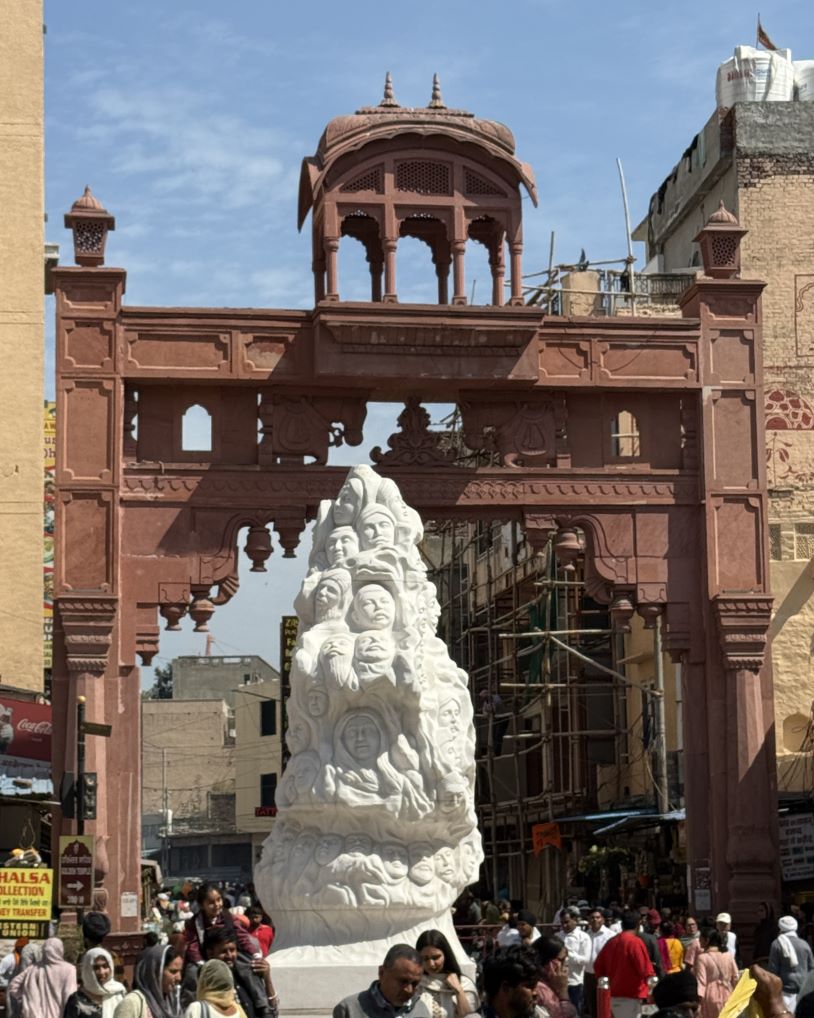
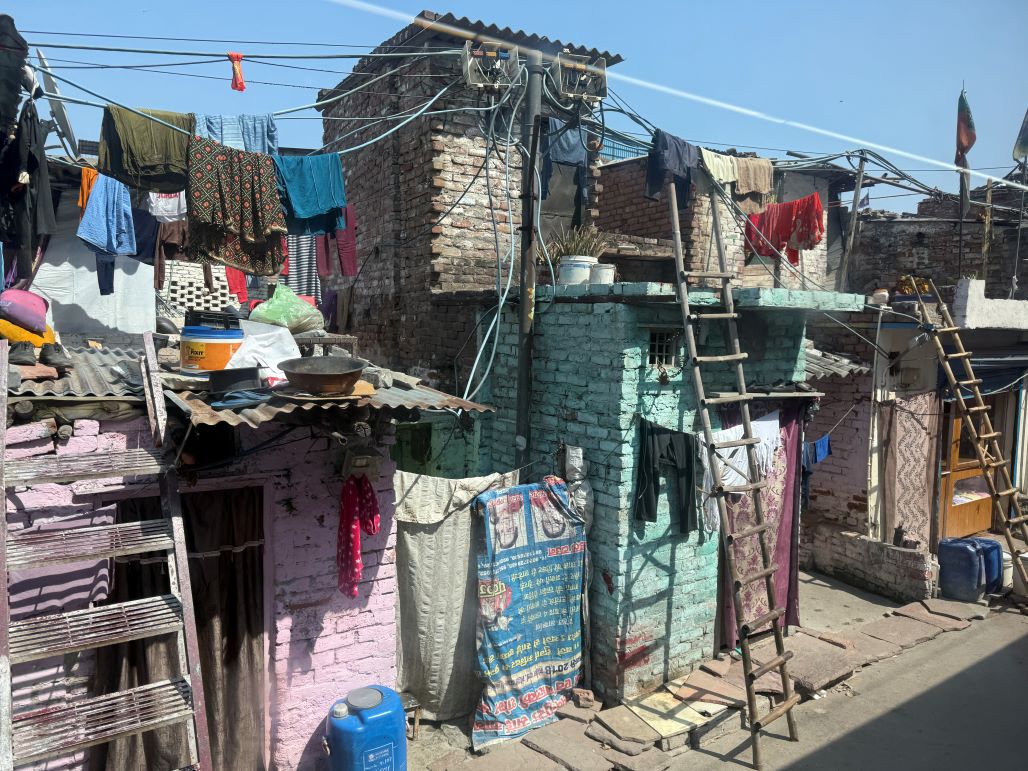
We observed that the vendors in Amritsar were less aggressive in their sales tactics compared to those in Jaipur and Agra, although we were still approached countless times with offers for a taxi to the Wagah Border! As we meandered through the labyrinth of narrow streets, teeming with small shops and stalls – often crowded with cars, mopeds, tuk-tuks, and fellow travellers – it felt like traversing a dazzling mosaic of colours, sounds, and scents. However, in contrast to the experience at Chandni Chowk in Delhi, this was far more enjoyable.
Other Attractions we Experienced in Amritsar
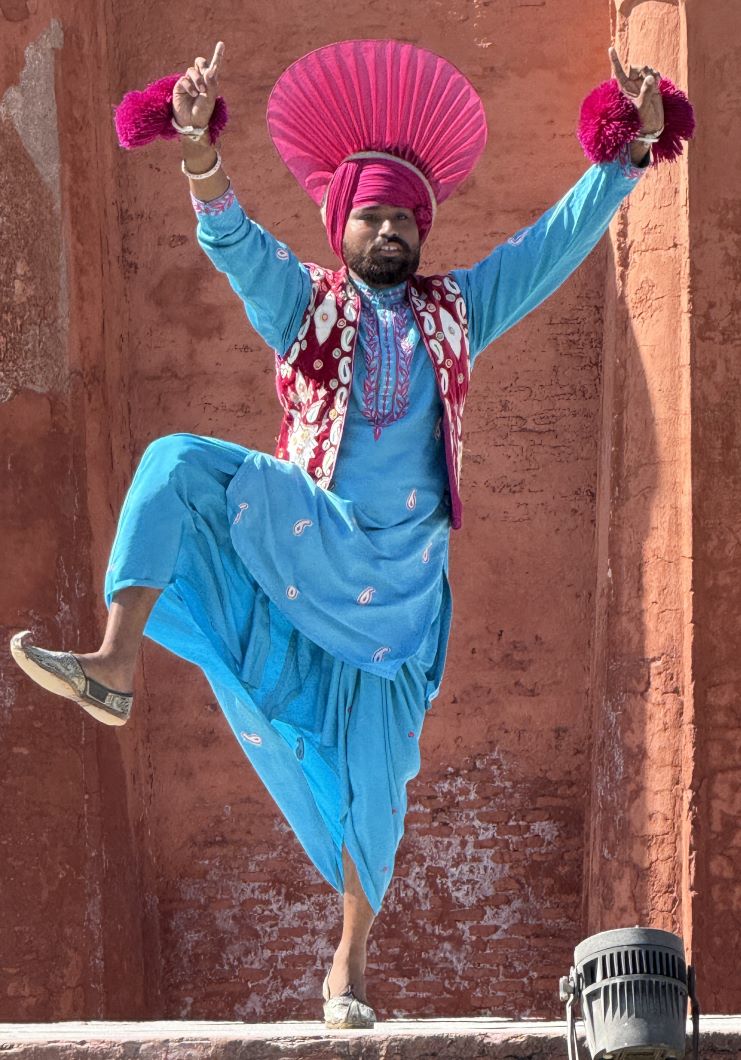
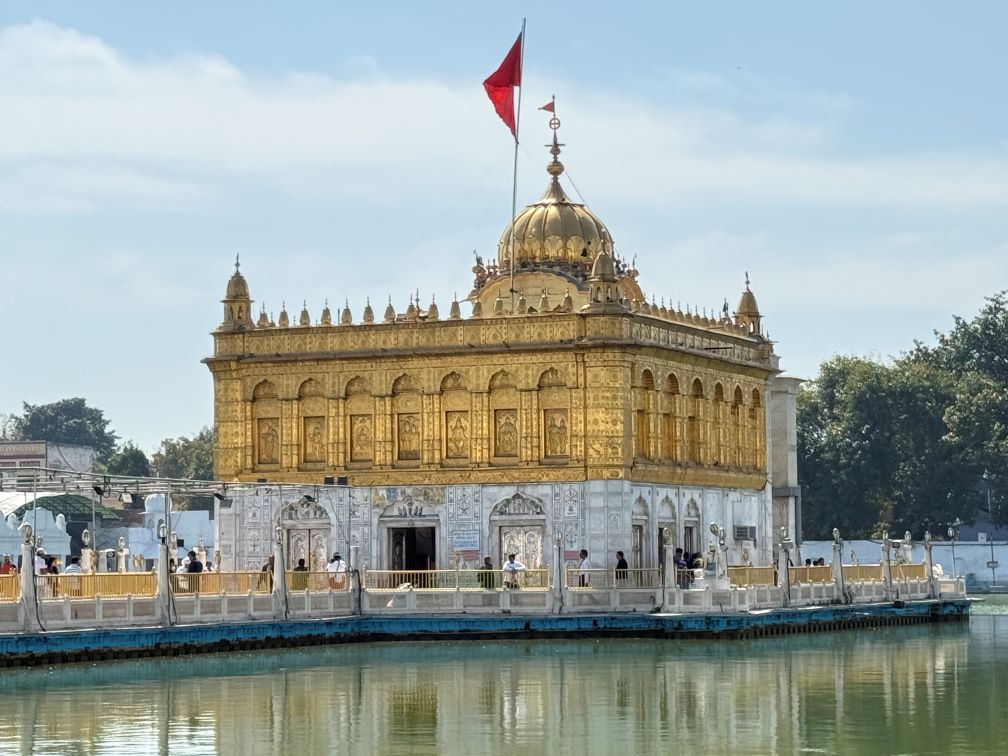
We visited a couple of lesser-known places, including the Gobingarh Fort, which has recently been transformed into a cultural park. Although the views from the fort were disappointing, the armoury museum was fascinating, featuring many exhibits with excellent explanations and graphic pictures. The grand Durgiana Temple, dedicated to Goddess Durga, was also worth a visit. It is a stunning piece of architecture often compared to the famous Golden Temple due to its strikingly similar design, which includes a golden dome and a marble façade that beautifully reflects in the surrounding holy water tank.
If we had more time, we would have explored the following places and activities:
- Maharaja Ranjit Singh Museum (a former summer palace of the legendary Maharaja Ranjit Singh, this museum offers an interesting look into his life and the Sikh Empire)
- Ram Bagh Gardens (a lush, green space, ideal for great views over the city and a welcome break from the bustling commotion outside in the city)
- Heritage Walking Tour (learn about Amritsar’s historic buildings and watch local craftsmen at work in local bazaars)
Accommodation in Amritsar
Amritsar is a popular pilgrimage site with numerous accommodation options, including plenty of 4* and 5* hotels. While there are several hostels available, they are often a couple of kilometres away from the city centre. Tourists can also stay for free in the Sarai accommodation within the Golden Temple itself, although this might not provide a peaceful night’s sleep, as visitors would be constantly coming and going at all hours.
During our 3-day stay, we wanted to be within walking distance of the main attractions. We chose to stay at a modern hotel to the east of the old part of town, which helped us avoid spending time in Amritsar’s traffic. We stayed at the Hotel Exotic, where the receptionists were exceptionally helpful, even though one staff member had a habit of unplugging the Wi-Fi to play his Game Boy! Although we felt safe walking around the old town, the narrow, unpaved streets that led to the Golden Temple (except for the busy Golden Temple Road) were quite dark at night, requiring us to use our smartphone torches to navigate around potholes and broken pavements.
Eating in Amritsar
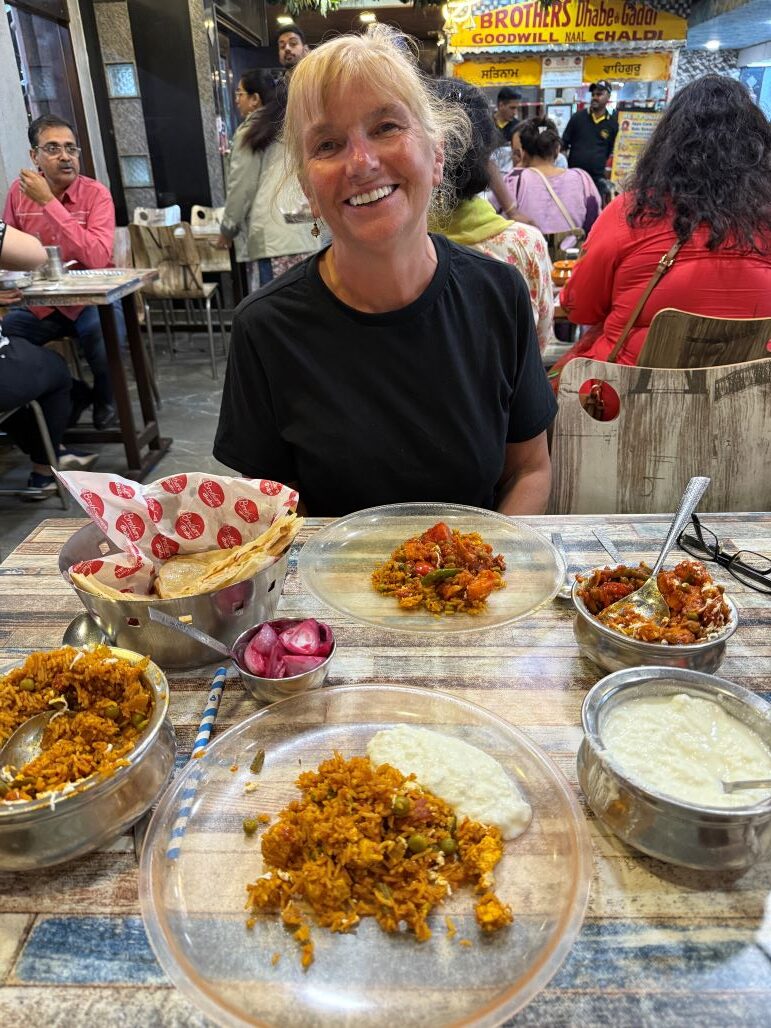
Apart from the more obvious number one eatery being the Langar within the Golden Temple, Amritsar has no shortage of other dining options. Most Western chains, such as McDonald’s and Pizza Hut, offered vegetarian-only menus, but since we spent most of our time in the centre of the city, we opted for local restaurants serving delicious Punjabi cuisine. If someone asked for a recommendation, we would undoubtedly suggest Brothers Dhaba, located just past the Partition Museum. This no-frills restaurant served extremely tasty meals, so good that we returned for a second visit. We especially enjoyed the butter naan, vegetable jalfrezi, aloo matar, and kaju masala. Another place we tried for a late lunch was Havalii Restaurant, conveniently situated near the Maharaja Ranjit Singh statue. They offered a great variety of dishes and excellent coffee.
Travellingterry Amritsar tips
- The Heritage Walking Tour is more affordable if booked through the Punjab Tourist Office and includes 14 points of interest around the city.
- The Amritsar and Amritsar Tourism both provide information about the main sites around the city as well as prices, opening and closing times. The highly recommended 12Go and IRCTC are friendly online travel ticket websites.
- When entering the Golden Temple, it’s essential to dress modestly:
- Both men and women need to cover their heads with a scarf or cloth (the temple provides scarves if visitors do not have one). Avoid wearing revealing clothing.
- All footwear needs to be removed – there are free designated areas for depositing footwear outside the temple in exchange for a numbered token – best not to lose the token!
- Keep valuables secured, avoid bringing large bags inside or excessive jewellery – although a sacred place, there are still pickpockets about.
- It’s frowned upon to eat own food within the temple complex – more to do with cleanliness and food being prepared within Sikh guidelines.
- Weekends are the busiest times, with entry into the actual Golden Temple (Sri Harmandir Sahib) sometimes taking up to three hours. Early weekday mornings tend to have the shortest queues.
- Allow worshippers to perform their rituals undisturbed and avoid stepping in front of them during prayers;
- Be respectful regarding photography, as photographing the inner sanctum of the temple is prohibited, and do not take pictures of worshippers bathing without their headscarves. Guardians will insist on deleting any prohibited photos, and with a 6’8″ Guardian holding a spear, it’s wise to comply with all rules!
- The timings for the opening and closing rituals of the holy book (Guru Granth Sahib) change every 30 days. The official website provides the times for when the holy book is carried during parts of its journey, rather than for the entire procession. Typically, these rituals begin at around 4:30 AM and 9:30 PM.
Onward Travel: Train from Amritsar to Delhi (Executive Class)
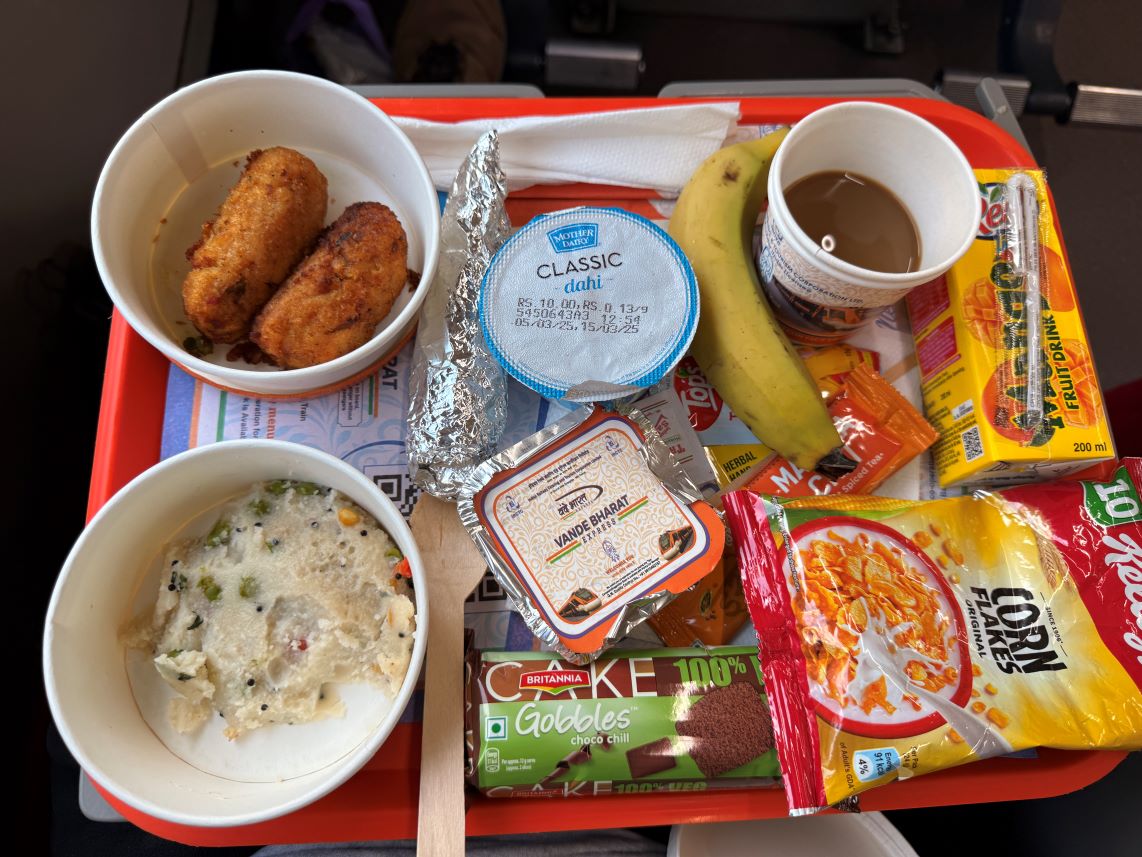
Wow – this was a classy way to travel around India! We experienced the highest class of train travel, and it was incredibly enjoyable. I was a bit disappointed that our train arrived in Delhi on time, as it meant we had to leave such a comfortable experience! For nearly six hours, we enjoyed luxury: our seats were very comfy and reclined to a sleeping position with plenty of legroom. We were served two meals, each consisting of a tray with at least twelve items, which took a while to explore and discover what each package contained. One of the highlights was a gorgeous tomato soup with croutons. The windows were spotless, and there were a couple of working USB ports as well. The ticket cost about $10 more than the outbound flight we took from Delhi to Amritsar, but this train journey was far more enjoyable and completely relaxing. What a treat!