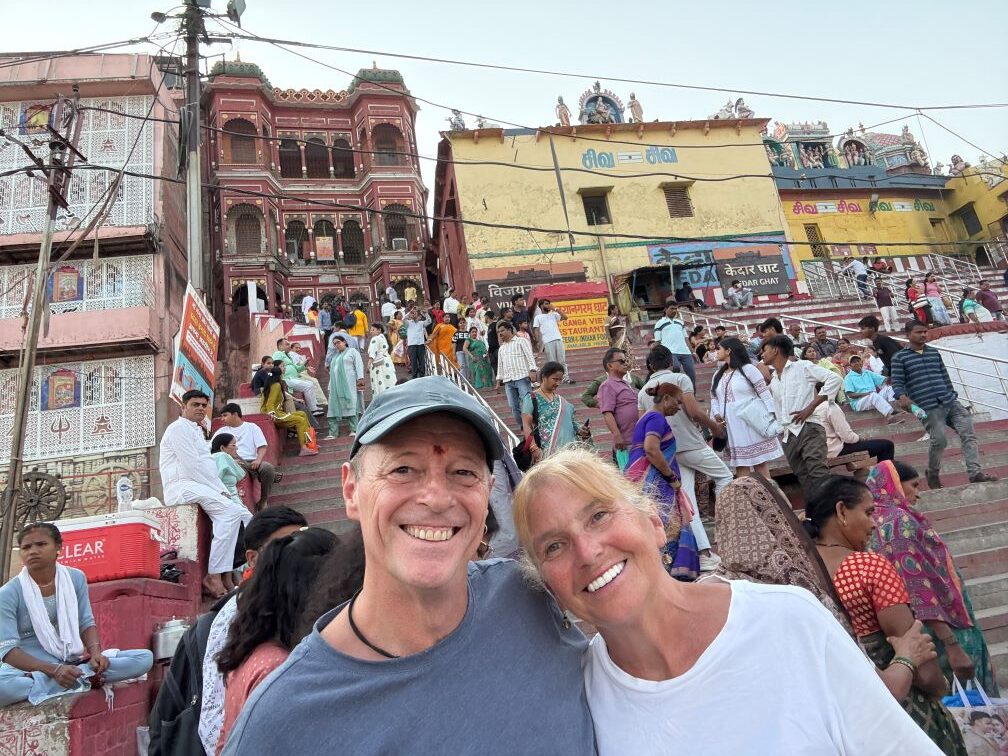
Wow! It would require a tremendous amount of ‘post’ space to fully describe Varanasi. Although it can be overwhelming at times, it is possibly the most spiritually intriguing city we have ever visited. Known as one of the oldest continuously inhabited cities in the world, Varanasi lacks typical tourist attractions. The city is often seen as dirty and polluted, boasting over 20,000 temples, with only a select few offering that impressive ‘wow’ effect. Nevertheless, our experience was unforgettable. This was my second visit – my first was 30 years ago – while for Lorna, it was her first. On both occasions, it was impossible not to feel a deep emotional and spiritual connection.
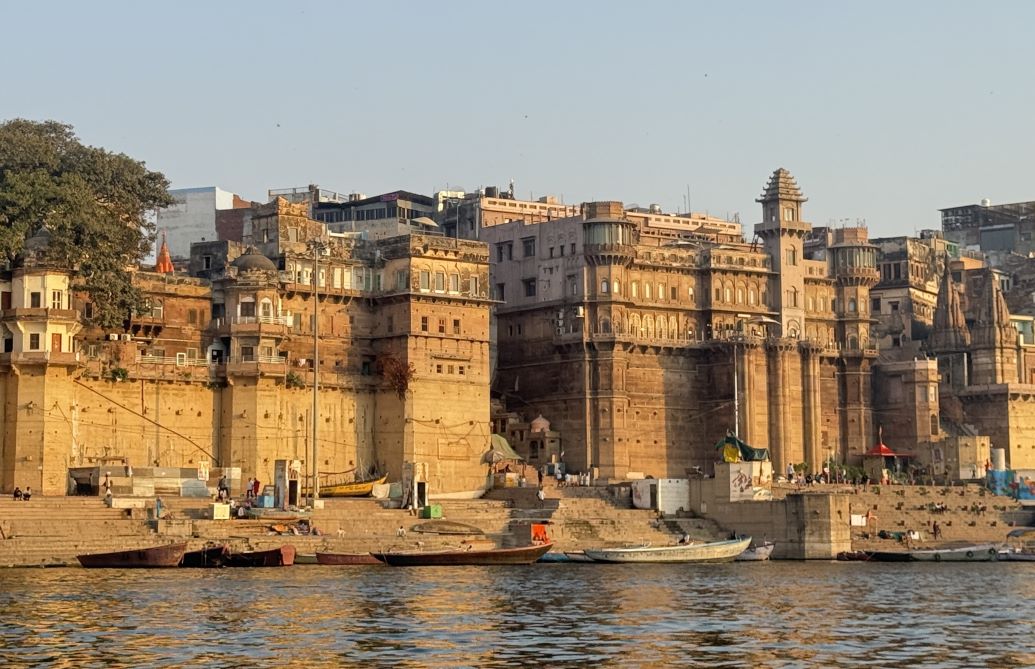
On the banks of the Ganges River (the 5th most polluted river in the world) lies India’s holiest city, Varanasi. Millions of Hindus visit the city on a pilgrimage at least once in their lifetime to wash away their current and previous sins. Many other Hindus come here to die and to be cremated with their ashes scattered into the holy river with the hope of attaining Nirvana. This belief is particularly strong among elderly people and holy men, who think that dying in Varanasi and being cremated soon after can break the cycle of death and rebirth, allowing their souls to become at one with God. This concept is known as Moksha, which represents liberation and enlightenment. To our surprise, our chirpy ‘sunrise tour’ boatman explained that there are even accommodations along the ghats offering beds to people who are expected to die within a couple of weeks!
Our Varanasi Highlights
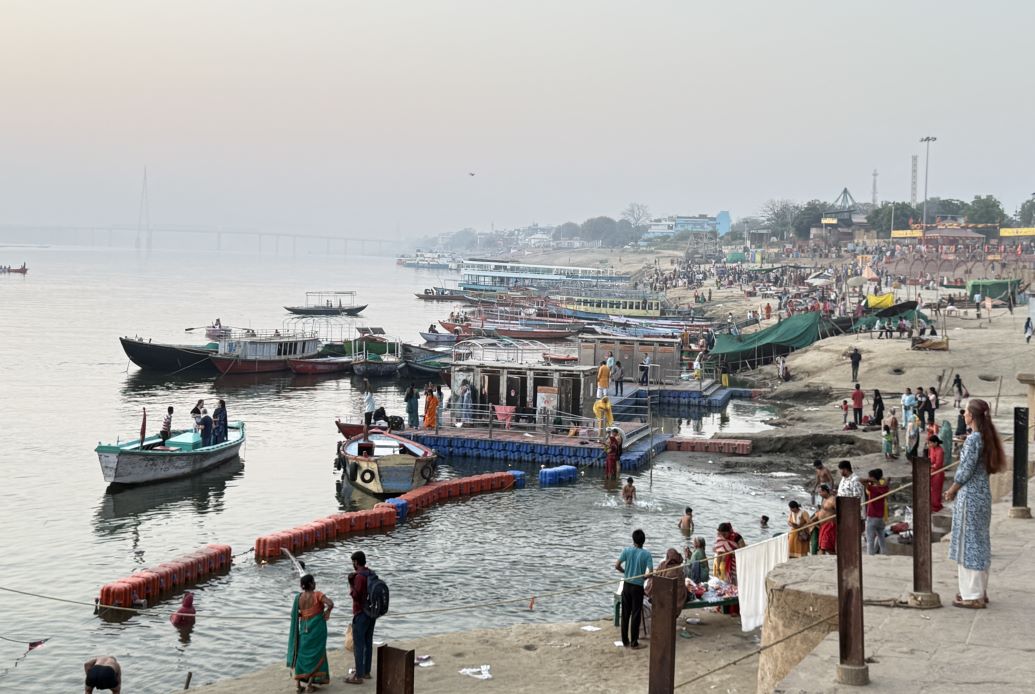
Strolling along the Ganges and through the ghats – the steps that lead down to the river – felt like stepping back into an ancient world. Each ghat was alive with activity, featuring rituals, bathing, prayers, ceremonies, boatyards, and families celebrating key life milestones, from births and recoveries to weddings and farewells to loved ones. At times, it felt uneasy to witness such intimate moments in people’s lives, but in Varanasi, the concept of ‘personal space’ has a completely different meaning.
Beyond the historic neighbourhoods and the riverside ghats, Varanasi showcases a modern side, complete with shopping malls, bustling main streets, and many Western brand outlets. This intriguing contrast encapsulated our experience in India, particularly in Varanasi, where the intoxicating energy vividly illustrated what ‘culture shock’ truly meant.
The Ghats of Varanasi
Along a 7 km stretch, there are over 80 ghats, which form the main attractions for tourists, although the lively silk industry is also worth a look. Hindus come here to perform prayers and acts of worship (puja) by the River Ganges. During our 4-day stay, we spent many hours walking along the majority of the ghats, starting at Assi Ghat and soaking in the vibrant daily life at each ghat, bustling with activity. Except for countless guides and boatmen, it wasn’t uncommon for us to be met by barbers and dentists offering their services along the banks.
Mixed feelings at the Cremation Ghats
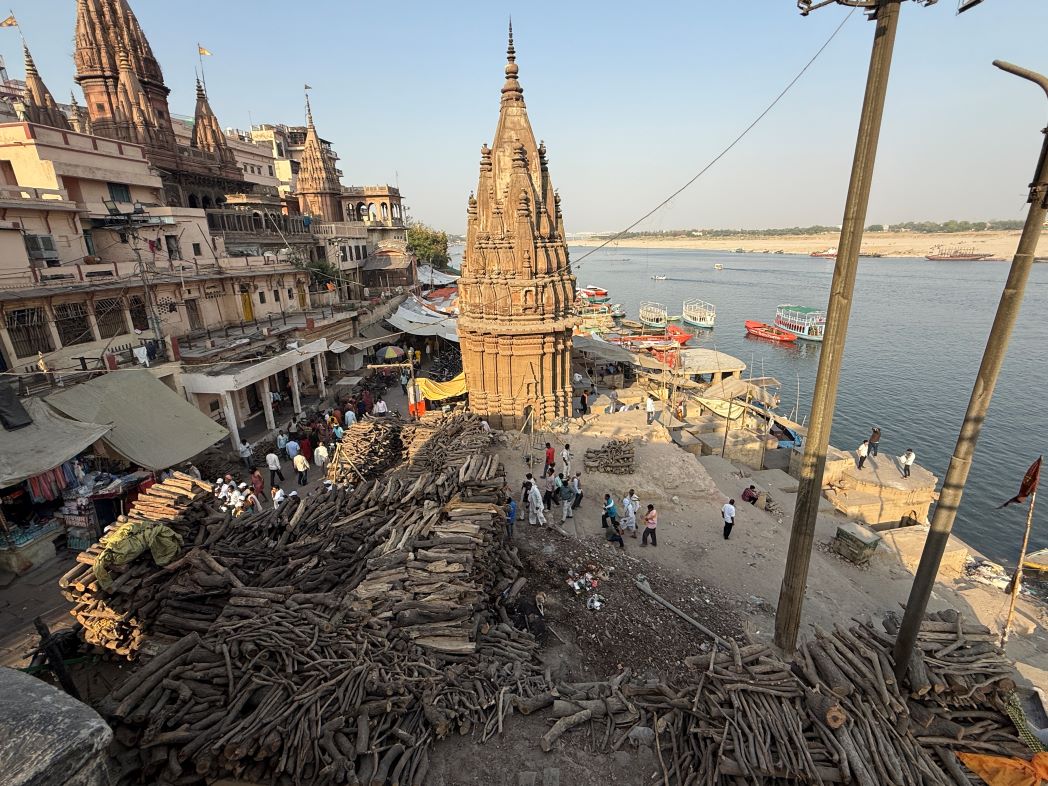
One of the most striking features in Varanasi is the cremation ghats, known as the ‘burning ghats.’ There are only two: Manikarnika Ghat and Harishchandra Ghat. Manikarnika is the busiest of the two, cremating around 200 bodies daily, both day and night. Unlike most private funerals seen around the world, cremations in Varanasi are seen as a celebration and privilege, open for anyone to witness. Bodies, wrapped in white linen, arrive on simple stretchers carried by family members and are first dipped in the River Ganges to wash away their sins. The body is then sprinkled with ghee and other oils, placed on piles of wood (pyres), and burned for up to three hours. Watching this ritual, especially in such a public space, was at times quite unsettling for us, yet there was an underlying sense of peace and tranquillity amidst the intimate surroundings.
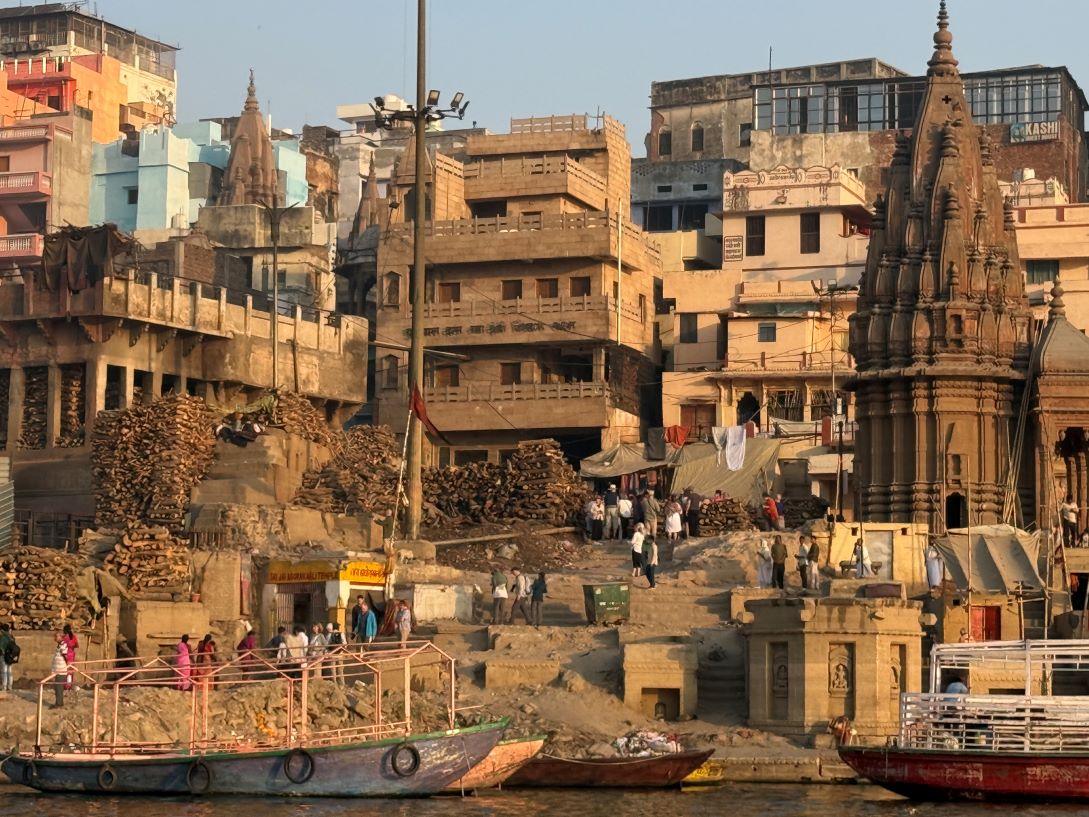
Compiled a List of our Favourite Ghats (going south to north);
- Assi Ghat: This is the first ghat along the River Ganges from the south end of Varanasi. Our sunrise tour started here, and by 5:30 AM, it was already bustling with activity due to the morning Aarti that began half an hour earlier. While this ceremony is similar to the evening prayers at Dashashwamedh Ghat, the morning ritual was much quieter and more serene. Following the prayers, a substantial yoga session drew at least 200 participants – what sight!
- Chet Sign Ghat: This regular stairway ghat led into the river, but at the top housed a stunning 18th-century red-brick fort, showcasing a mix of Mughal and Rajput architectural styles. This fort, with its crumbling walls and huge gates that evoked a sense of grandeur and resilience, was once used to protect the city from the British, but now in a state of disrepair.
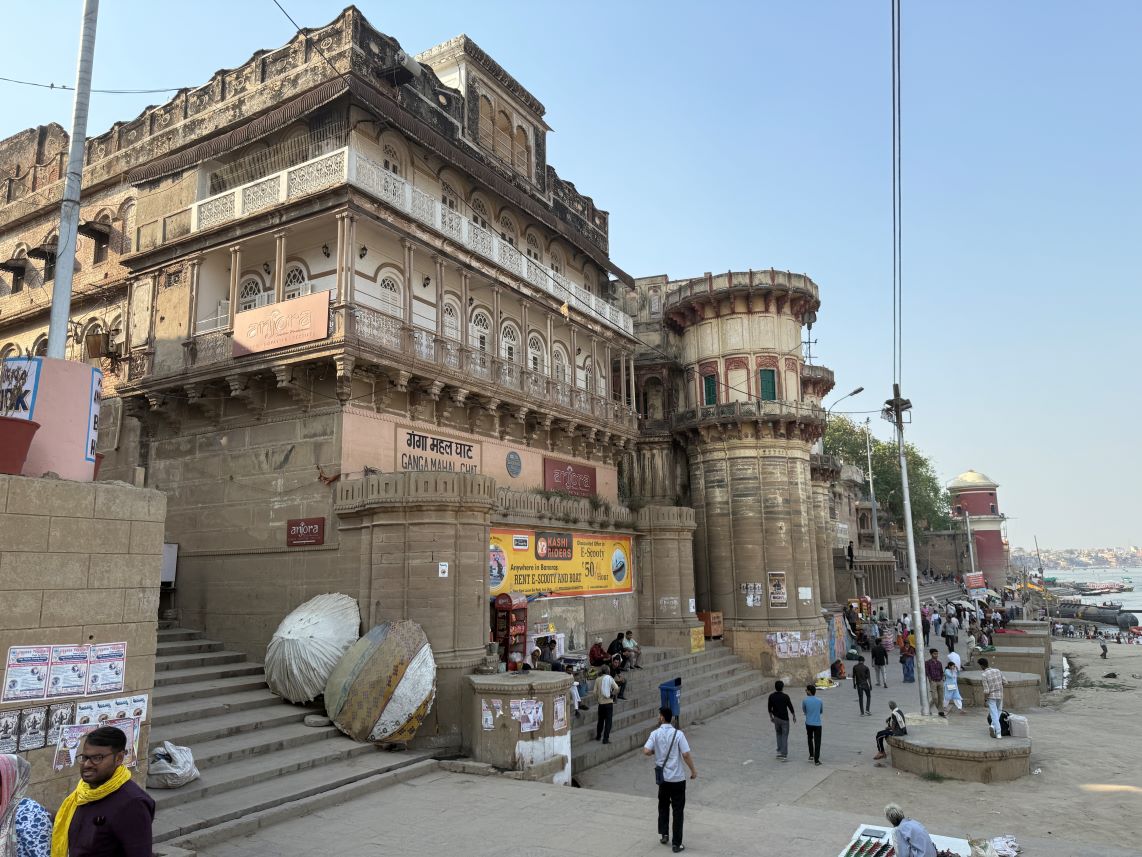
- Pandey Ghat: This is the spot where the local washermen, known as dhobi wallahs, manage Varanasi’s laundry. Although washing clothes in the Ganges is prohibited, the tradition persists. While we didn’t observe many sarees hanging to dry or a plethora of shirts displayed on lines, we did notice a few women vigorously beating dirt out of garments on stone slabs by the riverbank.
- Darbhanga Ghat: Among the ghats, several palaces were once owned by affluent families, and the picturesque Darbhanga Ghat, set against the backdrop of the old Bijrama Palace hotel, showcased Varanasi’s rich cultural history.
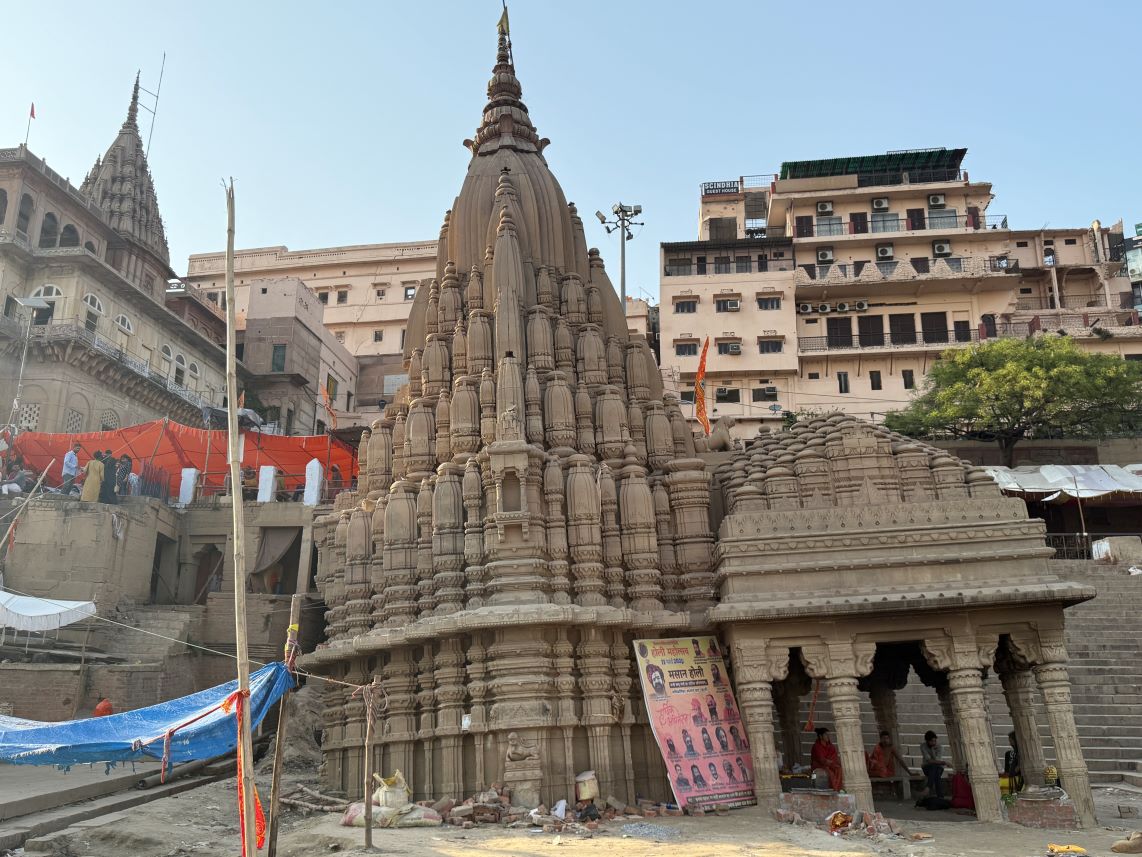
- Scindia Ghat: This was probably one of our favourite ghats, if not the most memorable. Right behind Manikarna Ghat is Scindia Ghat, notable for its tilted and partly submerged Shiva temple, which collapsed due to its excessive weight and soft foundations.
Took a Sunrise Boat Ride
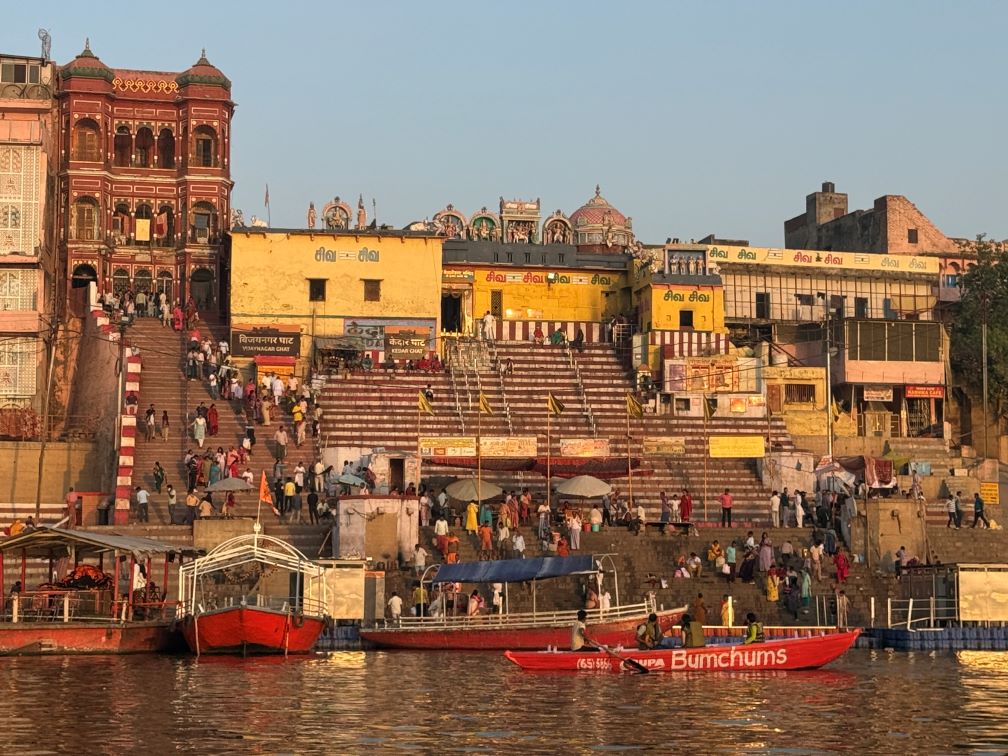
The sunrise boat trip along the River Ganges and watching the ghats come alive was definitely worth waking up at 4:15 AM. Thousands, if not tens of thousands, of Hindus flocked to the 7 km stretch of the ghats to perform morning prayers, make offerings to the Goddess Ganga, and participate in bathing or yoga. The weather was clear, and the sight of the sun rising over the eastern banks of the Ganges, illuminating the buildings and palaces with a reddish-orange glow, was breathtaking. Even the reflection of the sun on the water was sublime. We sailed from Assi Ghat to Manikarnika Ghat and back, witnessing numerous rituals and preparations for pyres, as well as some that had already begun. Speechless, we were staggered to see people washing their clothes and bathing no more than 50 metres from the alighted pyres.
Attended Evening Aarti at Dashashwamedh Ghat
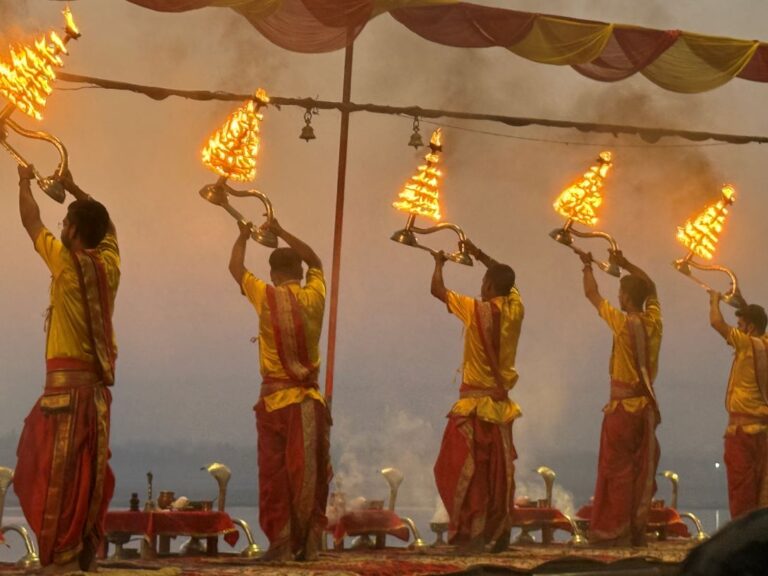
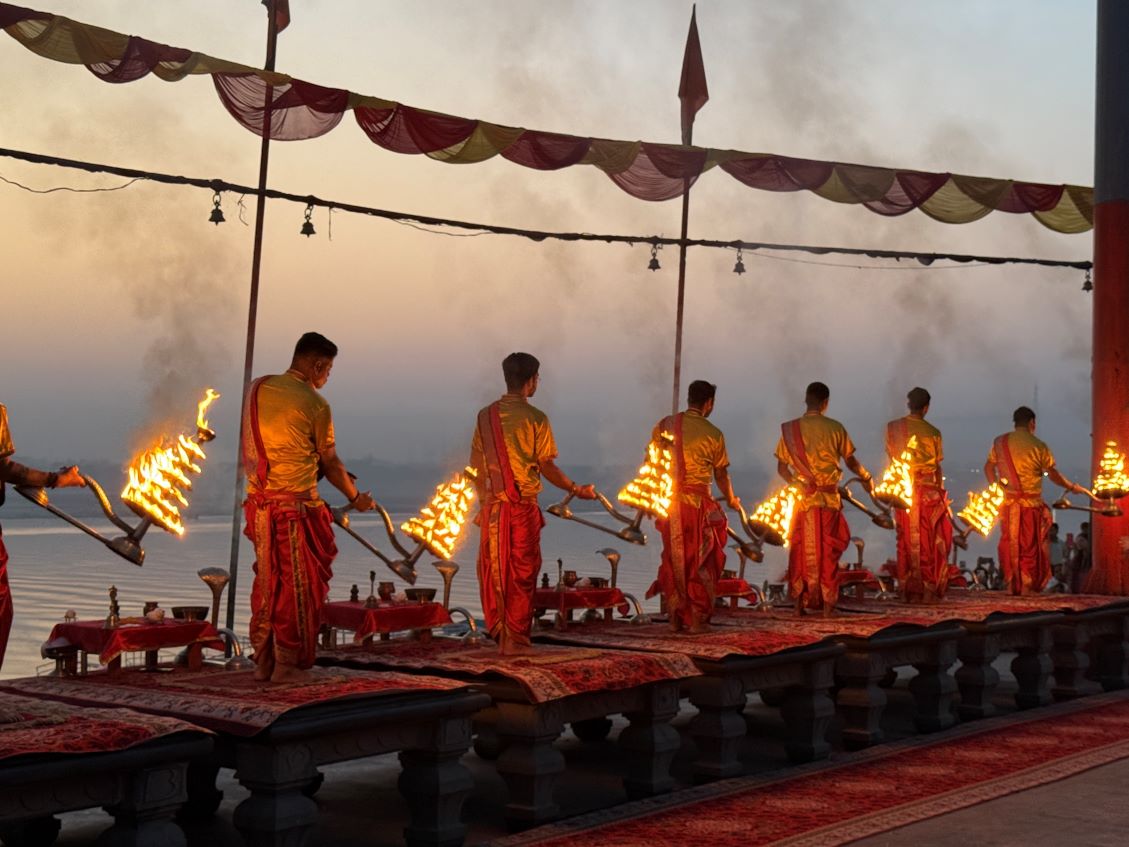
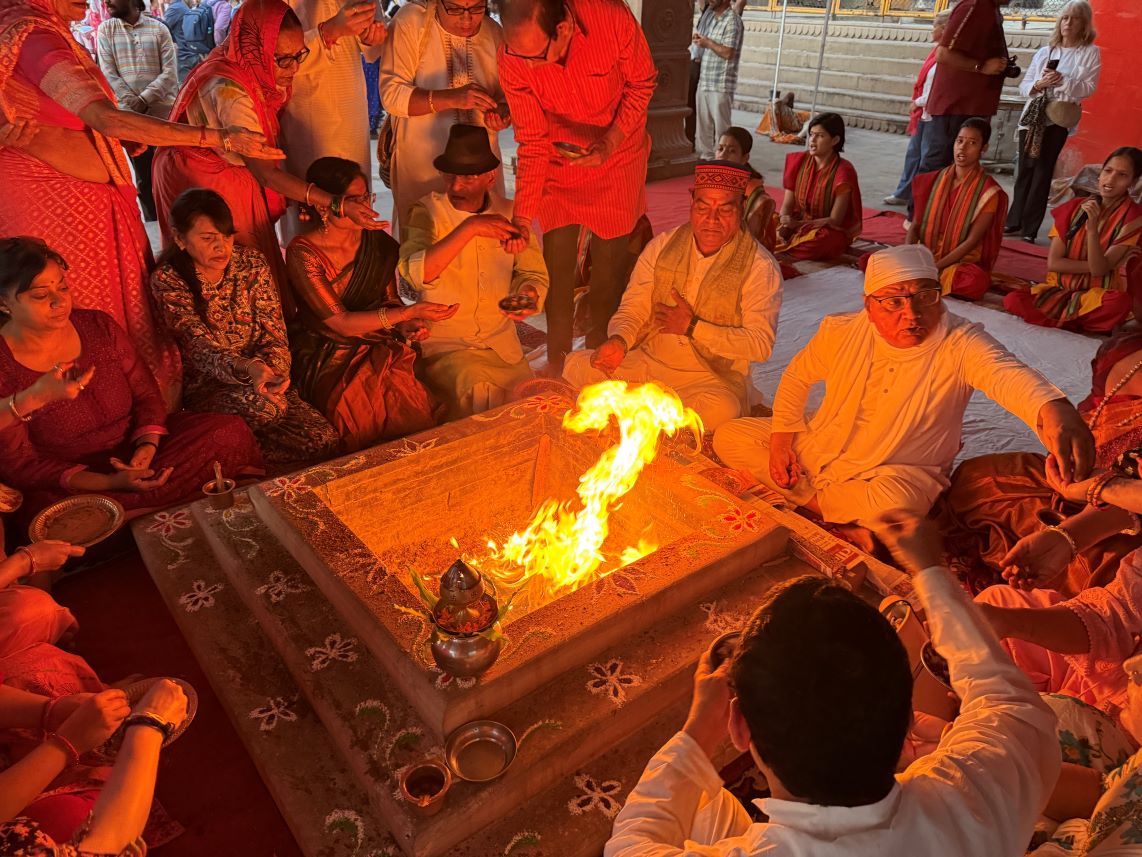
Dashashwamedh Ghat, one of the holiest and oldest ghats along the Ganges, was one of the top places for us to witness a Hindu ritual. According to Hindu mythology, the ghat was created by Lord Brahma to welcome the city’s founder, Lord Shiva. However, for us, this ghat was special for the elaborate and elegant evening ceremony that took place. It is called Ganga Aarti (Ceremony of Light) and occurs every day at sunset. During this ritual, evening prayers were performed by young priests, always moving in a clockwise direction with precise choreography. They offered prayers to the Ganges River and light from brass oil lamps (deepas) to the Hindu God of Fire, expressing gratitude for the light from the sun.
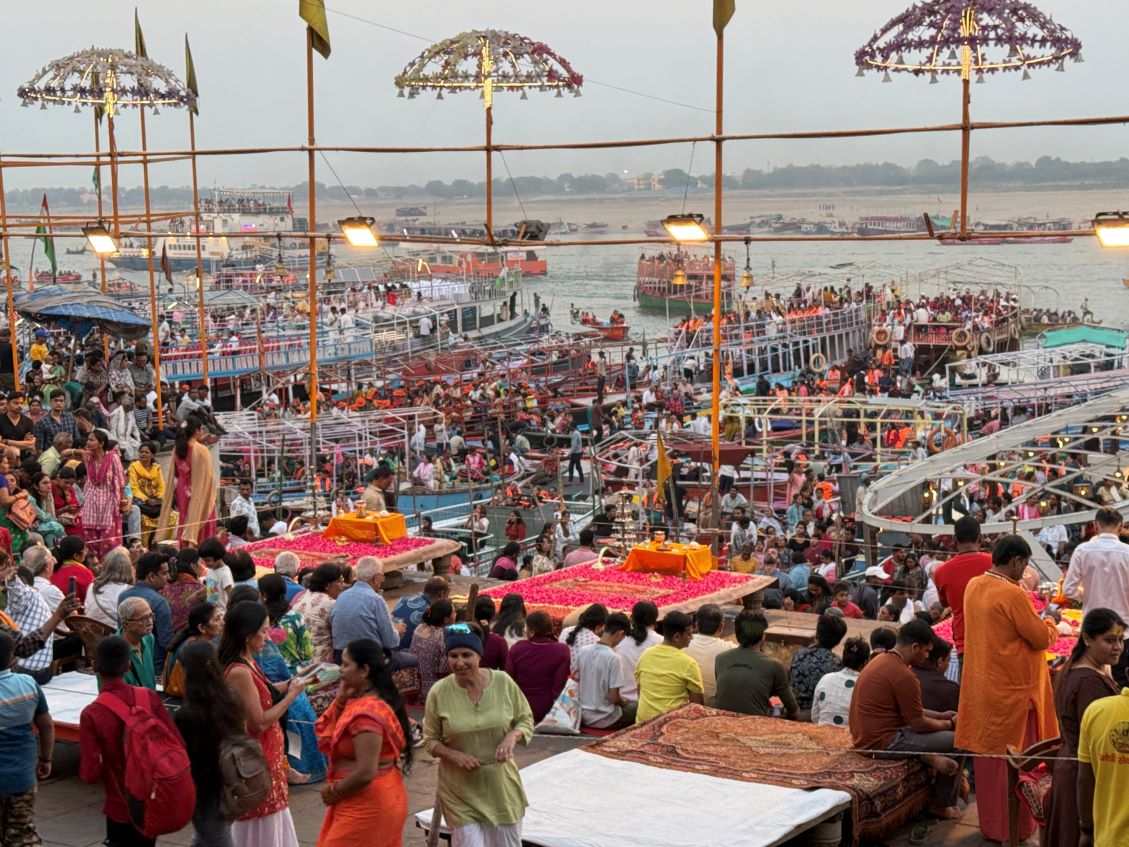
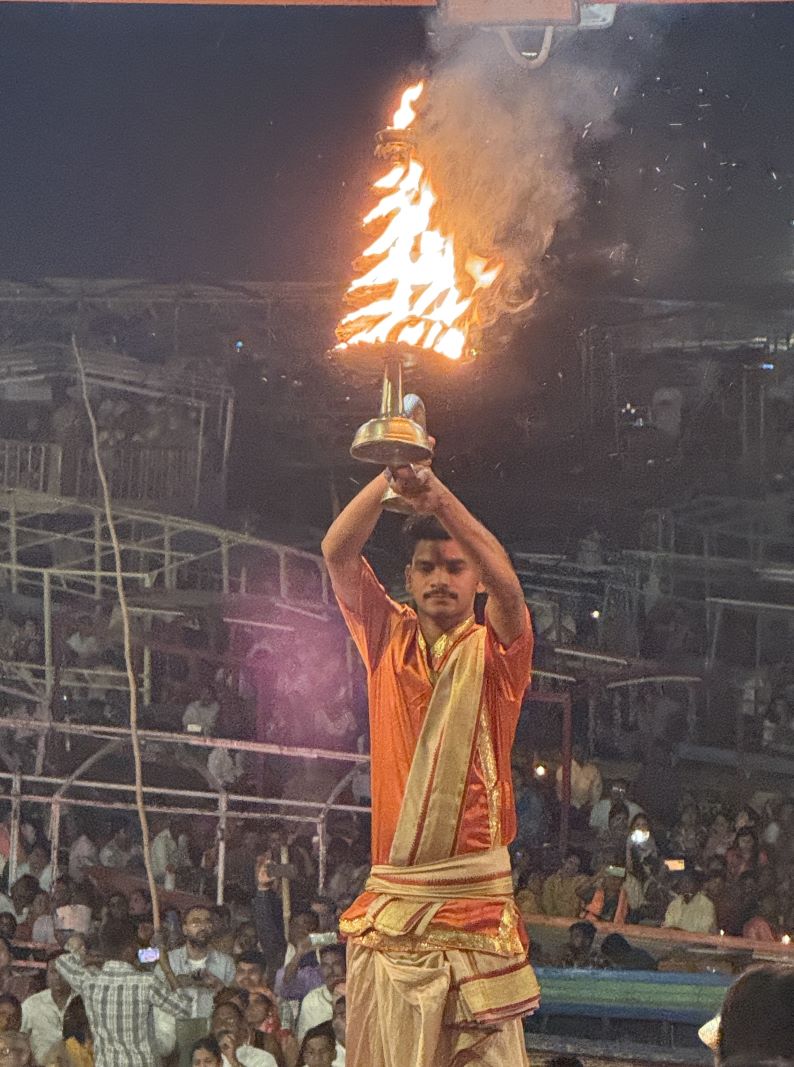
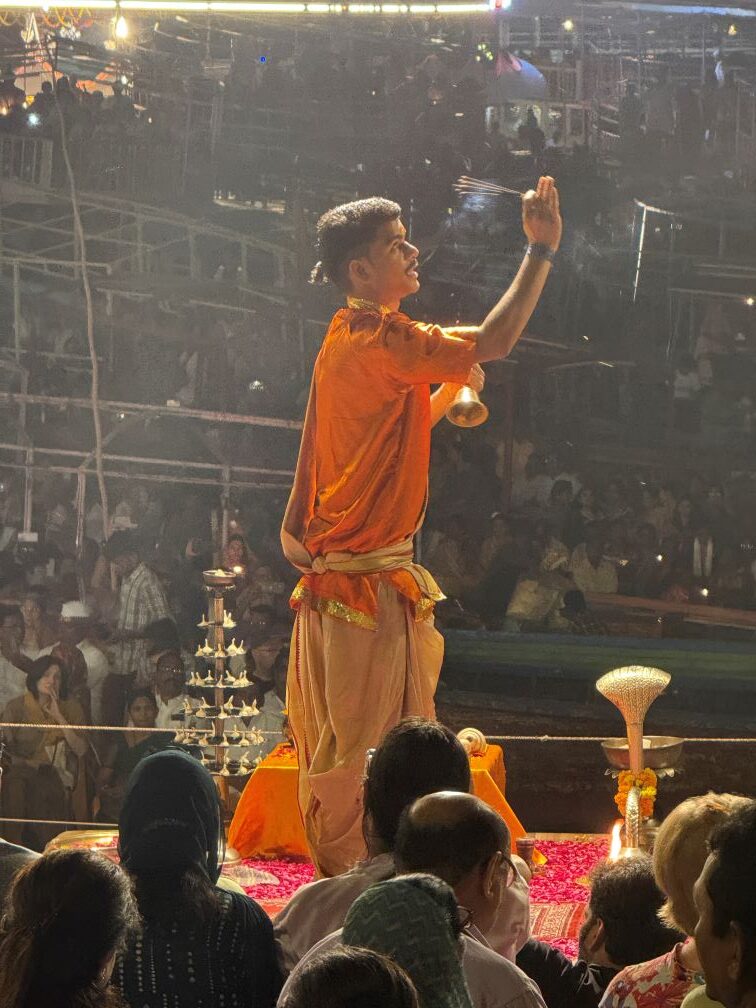
The air around us was filled with the fragrance of incense and smoke, accompanied by continuous chants and mantras. The atmosphere was further enhanced by the sound of ringing bells, clashing cymbals, beating drums, and the blowing of conch shells, all creating a mystical ambience that was hypnotically mesmerising.
The scene, with thousands of devotees chanting mantras to the priests and many boats vying for prime viewing spots, was made more special as passengers lowered lotus flower candles into the river to seek blessings. It highlighted the privilege of witnessing something so meaningful to millions.
Met a few Sadhus
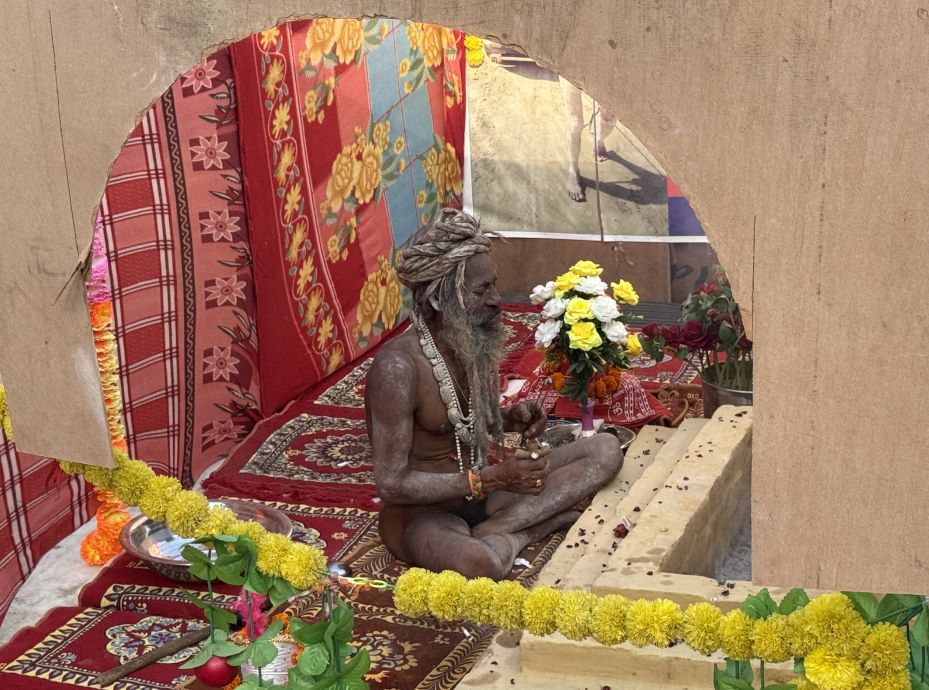
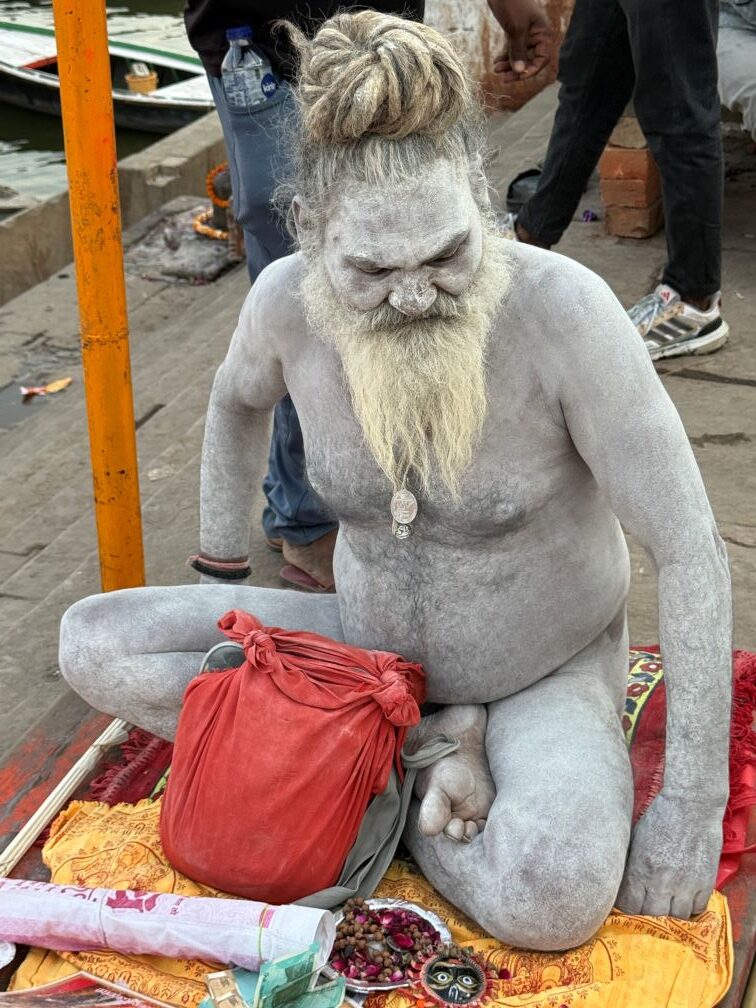
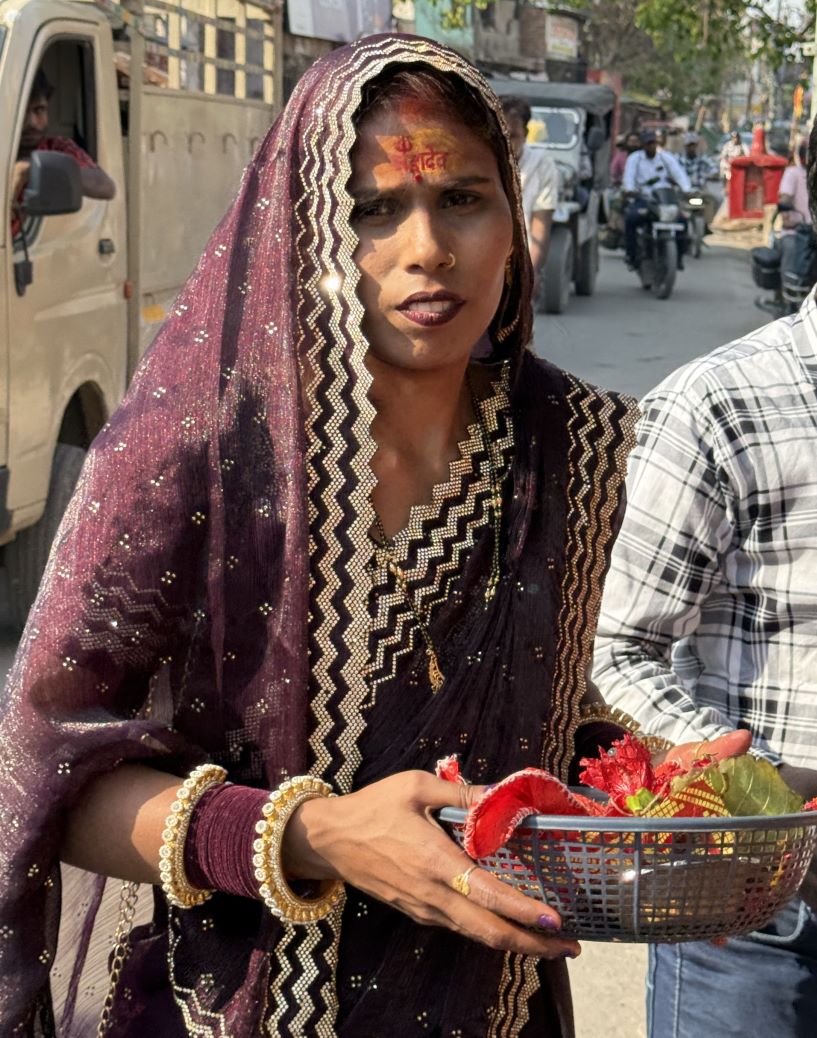
In the old part of Varanasi, particularly along the ghats, we encountered numerous Sadhus. These holy men, who have renounced all material possessions and family ties, lead celibate lives. Dressed simply in orange attire, they devote themselves to prayers, rituals, and meditation, aiming solely for enlightenment and liberation from the cycle of reincarnation, ideally achieving a direct path to heaven. Many were eager to have their photos taken (often for a set donation of 100 INR!), yet we noted that some appeared glassy-eyed, especially those who invited us to share their hash pipe. It was quite shocking to witness some completely naked and covered in the ashes of the dead. These individuals, known as ‘Naga’ Sadhus, joyfully danced or chanted among onlookers while worshipping their chosen deities through prayer.
Rickshawed Around Varanasi
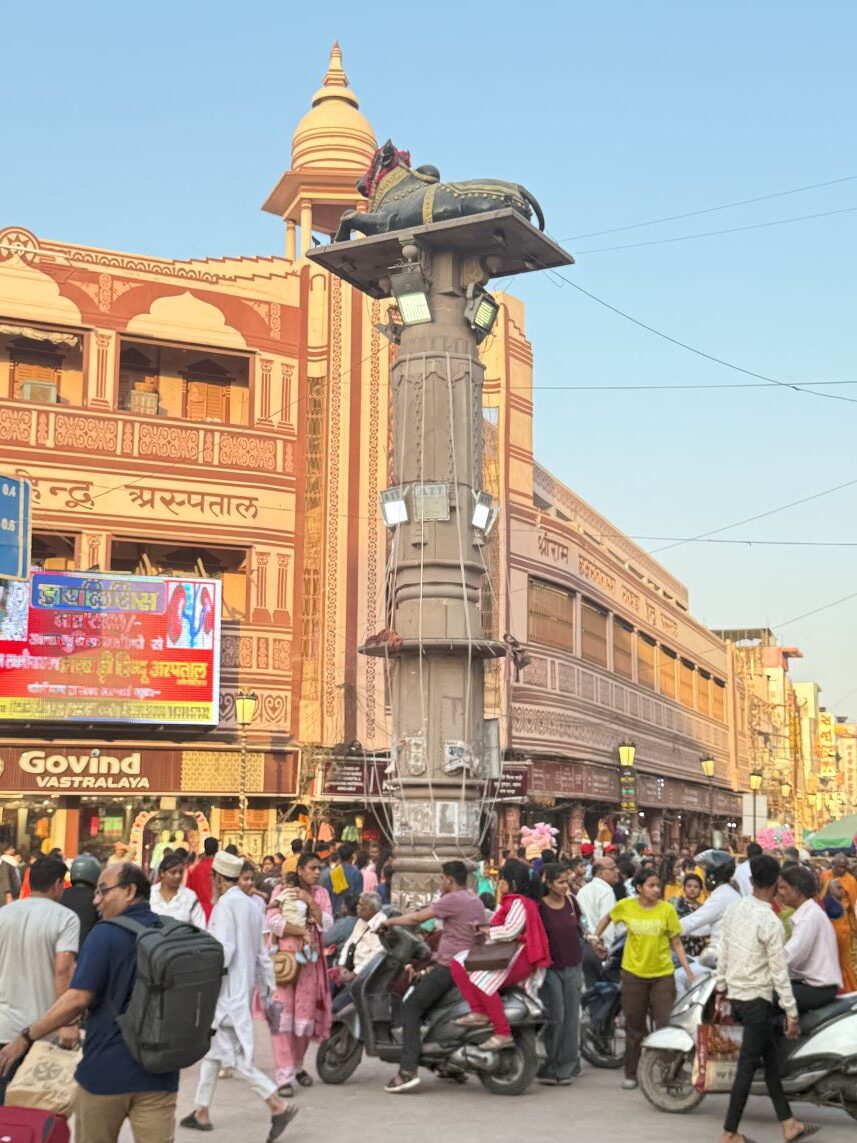
Typically, we don’t discuss our city navigation experiences, but in Varanasi, it’s a noteworthy topic as it turned into an adventure of its own. Given that our hotel was located 5 km from the ghats, we relied on tuk-tuks, rickshaws, or, when the one-way traffic system was active and some roads were closed, we chose a cycle rickshaw. The traffic was extraordinarily hectic – arguably the most chaotic we encountered in India. It surpassed the congestion in Jakarta and Hanoi; at least those cities had traffic lights! Here, vehicles created a symphony of noise, with car horns honking, bicycles ringing, brakes squealing, and endless disputes among drivers. The noise was relentless and, at times, overwhelming, especially considering the numerous near-collisions we witnessed – often counting them on both hands after just 1 km! To exacerbate the situation, fumes and pollution permeated every street and alley, where we frequently saw people carelessly littering their garbage without a second thought.
Visited Varanasi’s most Interesting Temples
There are temples at almost every turn in Varanasi, with estimates showing over 20,000 – incredible! The Kashi Vishwanath Temple is the oldest and most popular, known as one of the 12 holy Shiva temples in the world. However, we decided to skip this one because, along with the $10 entrance fee, we were also required to hire a guide and queue alongside thousands of pilgrims to access the main temple. Instead, we explored many others – too many to recall their names or locations, except for a few notable ones such as the quaint yet bustling Annapurna Devi Mandir, where people prayed to the goddess of food and for a well-nourished life. Another was the striking Durga Kund Mandir, known for its vibrant red colour and more tranquil atmosphere, where it is believed that prayers to the Goddess Durga would protect the city from harm and evil.
Explored Sarnath – The Birth of Buddhism
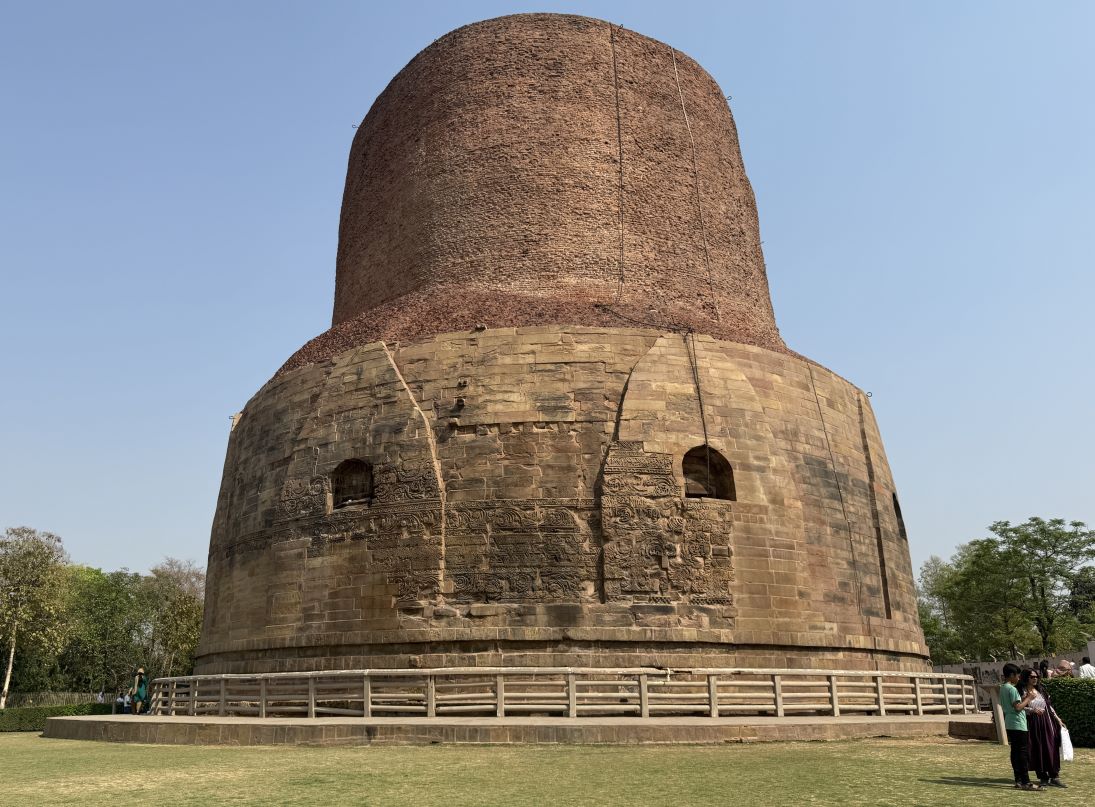
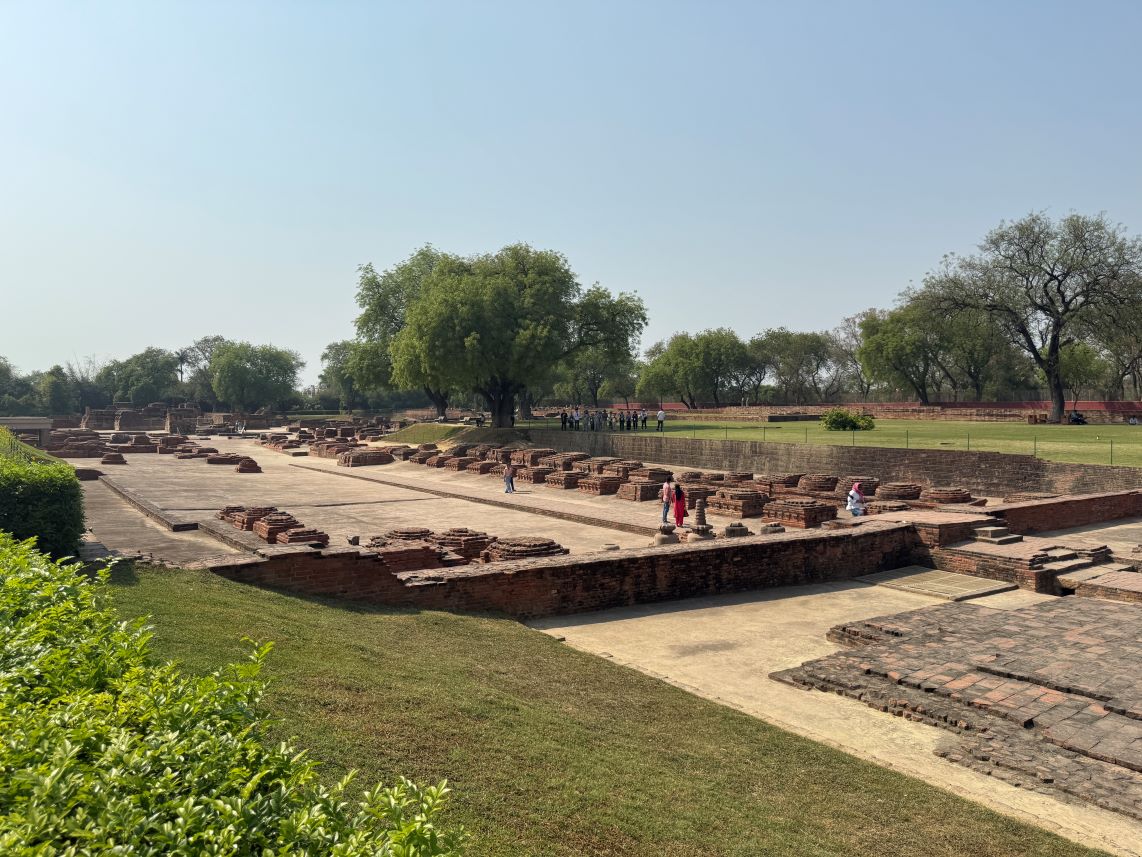
On our second-to-last day in Varanasi, we ventured 12 km north to Sarnath, one of the four most sacred sites for Buddhists. This is the location where Lord Buddha delivered his first sermon of peace to his five followers around 500 BC. Consequently, Buddhism flourished in this region of India, and Sarnath has become a vital symbolic site for Buddhists. The main attraction here is the ruins of an ancient city, with modern brickwork constructed to give an idea of the size and layout of the original monasteries, shrines, and courtyards that were destroyed by Muslim invaders in the 12th century. It wasn’t until 1830 that archaeologists uncovered Sarnath’s remnants and began excavating. The centrepiece of the ruins is the remarkable Dhamek Stupa (built in 500 AD), which marks the spot where Lord Buddha delivered that pivotal sermon. This towering 43-meter solid stone structure is revered by Buddhists worldwide, drawing in tens of thousands of pilgrims each year, who show their respect by walking around the stupa multiple times in a clockwise direction while praying and chanting.
Marvelled at Mulagandha Kuti Vihara
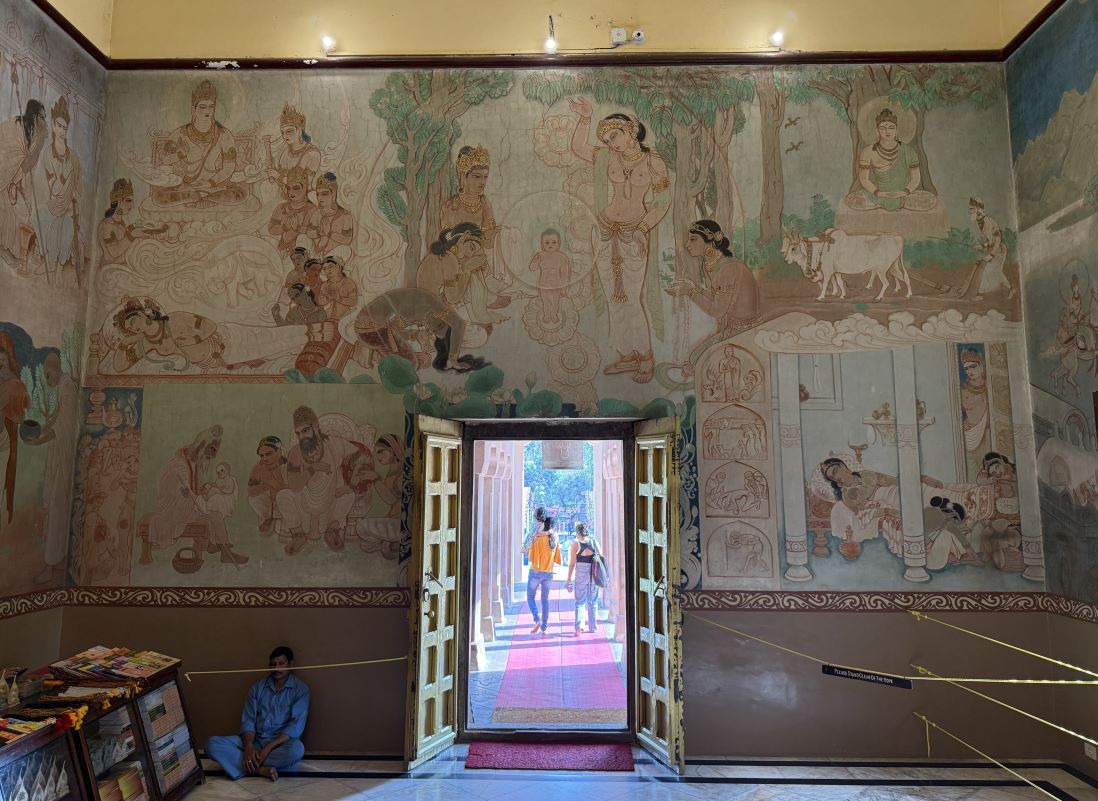
Next to the Dhamek Stupa is the Mulagandha Kuti Vihar (monastery and temple). Inside, the temple is decorated with stunning frescoes that depict the story of Lord Buddha. Even as non-believers, we were mesmerised by the vivid imagery, which conveyed the narrative without the need for written explanations. Next to the temple stands a Bodhi tree, planted in 1931 during the temple’s construction. It is believed to have grown from a sapling of the original tree in Bodhgaya, India, where Lord Buddha attained enlightenment.
Impressed with the Exhibitions at Sarnath’s Archaeological Museum
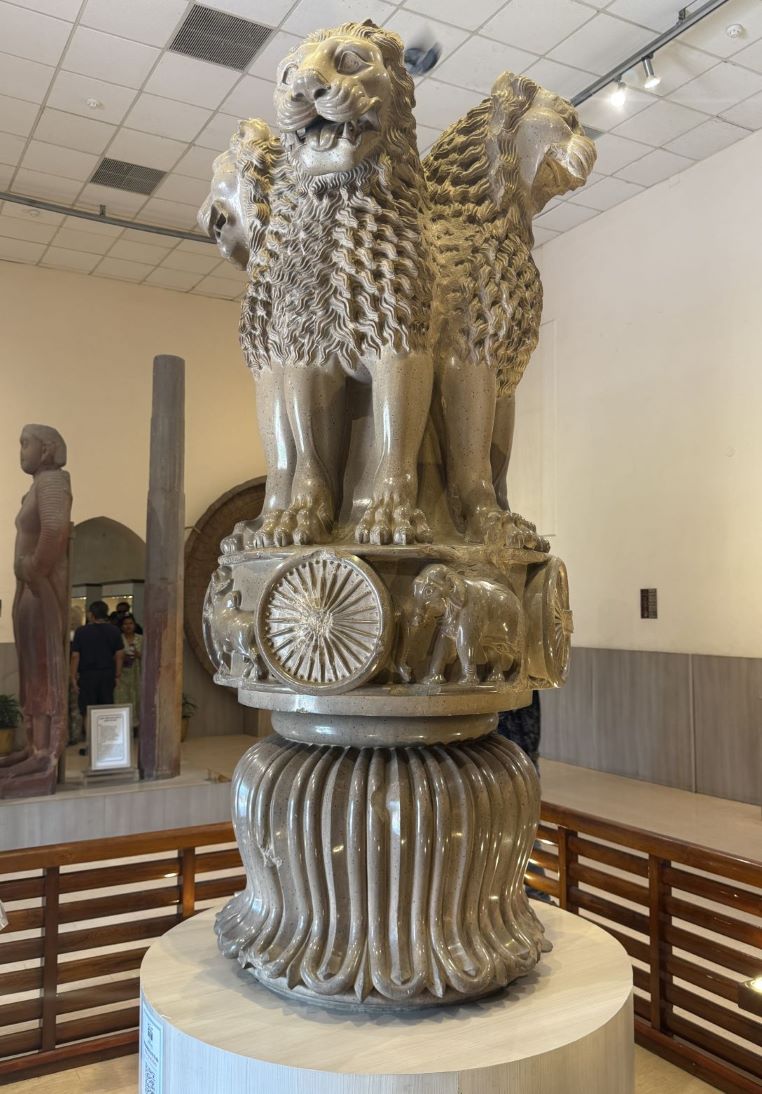
Although we generally aren’t fans of archaeological museums, fearing they would be filled with rows of pots, plates, and coins, our hotel manager in Varanasi highly recommended visiting the one in Sarnath. To our amazement, we found it surprisingly engaging. Located just outside the entrance to the ruins, the museum’s main highlight is the Lion Capital of Ashoka (250 BC), carved from a single piece of sandstone that once crowned a pillar in the ancient city next door. It also showcases the circular emblem (Dharmachakra), the most important symbol of Buddhism, representing the Buddha’s teaching of the law. The museum features a captivating array of beautifully preserved sculptures and artefacts, allowing us to appreciate the craftsmanship involved in creating such exquisite works of art.
Other Places we Explored in Varanasi
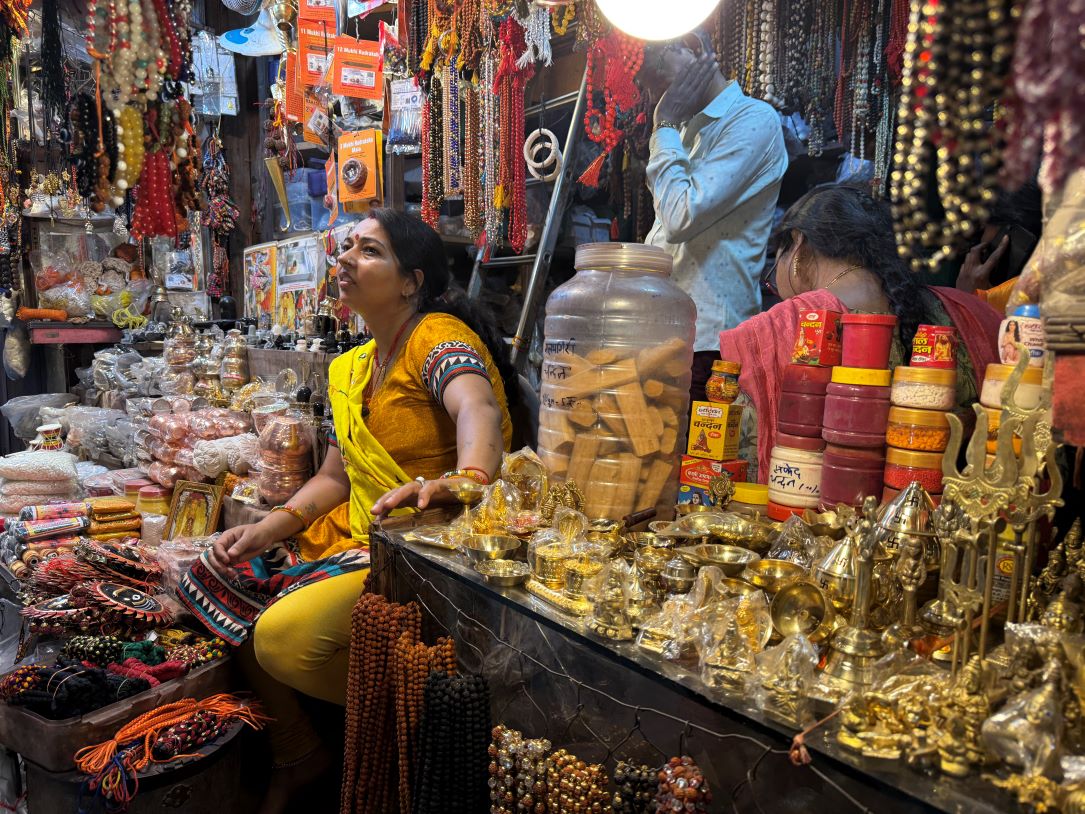
The labyrinth of back streets, especially around Dashashwamedh Ghat, was captivating to explore. We made our way through a maze of narrow alleys filled with elderly homes, wood vendors, shrines, temples, small saree shops, street food stalls, and numerous holy cows obstructing our path. We were also met with strong, unpleasant odours, including urine, incense, burnt litter, and animal droppings. In a striking moment, we even witnessed a funeral procession passing just inches from us, with a body wrapped in orange cloth on a stretcher. Though we primarily roamed the alleyways, we found vibrant street art along the ghats that celebrated the spirit of the holy city, which was a pleasant surprise.
If we had more time, we would have explored the following places and activities;
- Alamir Mosque (towering over Panchganga ghat is Varanasi’s biggest Mosque, built in the 17th century).
- Shree Gauri Kedareshwar (located at Kedar Ghat, an atmospheric sacred temple, fairly dark inside with very wet floors, home to many Shivlings).
- Prayagraj (a long day trip recommended for; viewing spiritual melas, the underground temple of Patalpuri Temple and the home of Nehru, whose house served as a headquarters for the Independence movement).
Accommodation in Varanasi
Like all cities in India, Varanasi offers accommodation to suit a variety of budgets. It’s possible to find everything from basic guest houses along the ghats to the luxurious 5-star Bijrama Palace Hotel at Darbhanga Ghat. Interestingly, and perhaps unexpectedly, there are a couple of highly recommended dormitory-style hostels in and around the old part of the city, in particular Mother Hostel and Moustache Varanasi, both of which are clean, comfortable and could easily be considered as a homestay rather than a hostel.
We opted to stay a bit further from the ghats, in the more contemporary Mahmoorganj district. Our hotel, Coco-Cabana (yes, that’s really its name), turned out to be excellent. The apartment-style accommodations were affordable, offering a good range of breakfast options, and set in a quiet area of the city. From this location, everything was easily reachable, with the train station just 4 km to the east and the ghats 5 km to the west. Choosing to stay away from the crowded ghats was wise, as that area was congested, dirty, and noisy, making it a relief to retreat to a more serene environment at night.
Eating in Varanasi
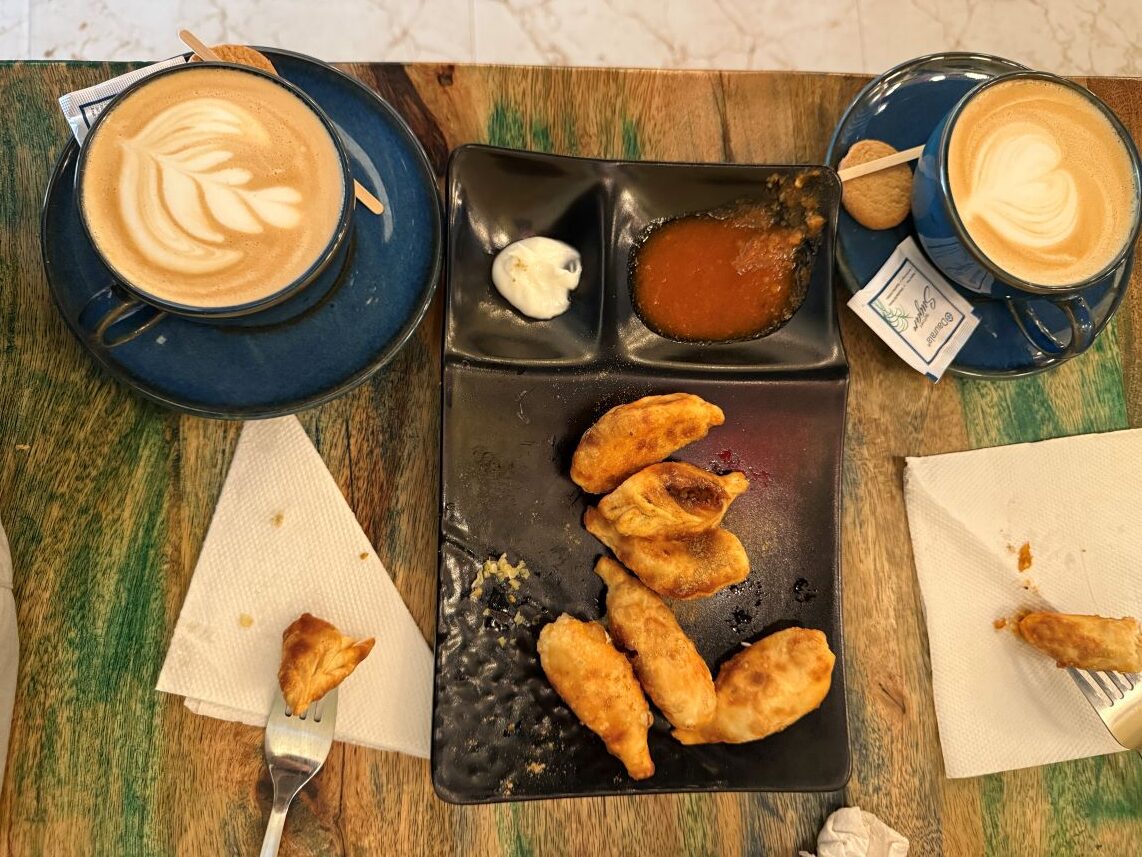
There were plenty of places to choose from, and the further away from the ghats, the more choices in western-style eateries there were. Unfortunately, we cannot vouch for many restaurants in Varanasi, simply because we tried one place and returned there three times. We cannot rate The Coriander Blend highly enough. The portions were generous, the ingredients fresh, and the menu had an extensive range of choices. The fried momos, honey potatoes, and aloo paratha were exceptional, and the coffee and desserts were a real treat.
Travellingterry Varanasi tips:
- We resisted offers of “follow me for a better view,” knowing that those who led us would expect money in return.
- We heard a few scamming stories of boatmen asking for 100 or 150, later claiming they meant euros or dollars.
- We used mosquito repellent frequently, especially near the riverbanks and train station.
- The pollution and fumes around some parts of the city were quite bad, making us wish we had packed face masks.
- Power cuts were common in Varanasi, so our smartphone torch came in handy when walking narrow streets at night or when needing to get up during the night.
- Tickets for various attractions around Sarnath can be online for a reduced price.
- Useful websites: Without becoming overloaded with information, Ghats in Varanasi provides a manageable overview of all the ghats and the Varanasi Authority provides suggestions for places to visit in the city.
Onward travel: Flight from Varanasi to Aurangabad
The distance between these two cities was too long for us to travel on an overnight train journey: approximately 26 hours! So we opted for a flight via Mumbai with Indigo Airways – the same airline we used from Delhi to Amritsar. No thrills airline, just gets passengers from A to B with the usual additional costs for seats, luggage and an exorbitant charge for coffee and bottled water! After a three-hour layover at Mumbai airport and coming to terms with the transfer between airport terminals, which involved a 10 km coach journey through the suburbs of Mumbai, our connecting flight soon landed in Aurangabad. Long day but with no sights to see, it was a welcome break from the daily forts, ghats, palaces and train stations!