In 2023, Aurangabad was officially renamed Chhatrapati Sambhajinagar, yet it is still commonly known as Aurangabad, earning the nickname “the city of gates.” This sprawling industrial city is home to a large community of university students. Historically, as the name suggests, it served as the capital of the last Mughal emperor, Aurangzeb, from 1653 to 1707. During this period, it produced remarkable landmarks, including Bibi Ka Maqbara, a mini Taj Mahal, as well as some impressive fortified gates, some of which caught our attention usually in the form of road roundabouts. While the city has a predominantly Hindu population, it is also renowned for its Islamic gastronomy and silk textiles, particularly the world-famous Paithani sarees made from locally grown himroo fabric.
Our Aurangabad Highlights
Our two-night stay in Aurangabad primarily served as a base to explore the UNESCO World Heritage Sites of the Ajanta and Ellora Caves, Bibi Ka Maqbara Mausoleum, and Daulatabad Fort. However, just our luck, we booked a two-day road trip in advance, only to find out that we could have arranged the same service for nearly half the price if we had hired a taxi locally upon arrival!
Amazed at the Ajanta Caves
Located about 110 km northeast of Aurangabad, the Ajanta Caves consist of 29 caves that line a green horseshoe river bend. These caves were once home to Buddhist viharas (monasteries) and chaityas (worship halls) constructed between 200 BC and 500 AD, and represent some of the earliest religious structures in India. The caves’ detailed and rare murals provide a wealth of information about Indian culture, faith, fashion, and customs from nearly two thousand years ago. To provide more protection from marauding bandits and the elements, Buddhist monks abandoned Ajanta around the 8th century, relocating to the newly established Ellora Caves. Overgrown and untouched for 1,200 years, Ajanta was discovered by British Captain John Smith in 1819 while he was on a tiger-hunting expedition.
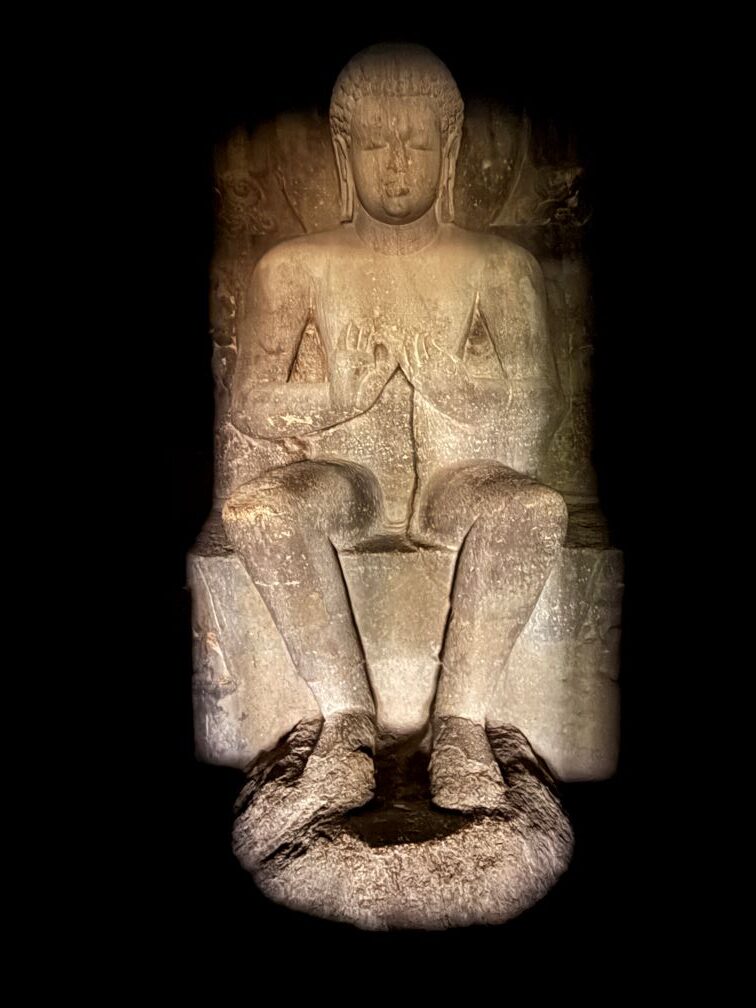
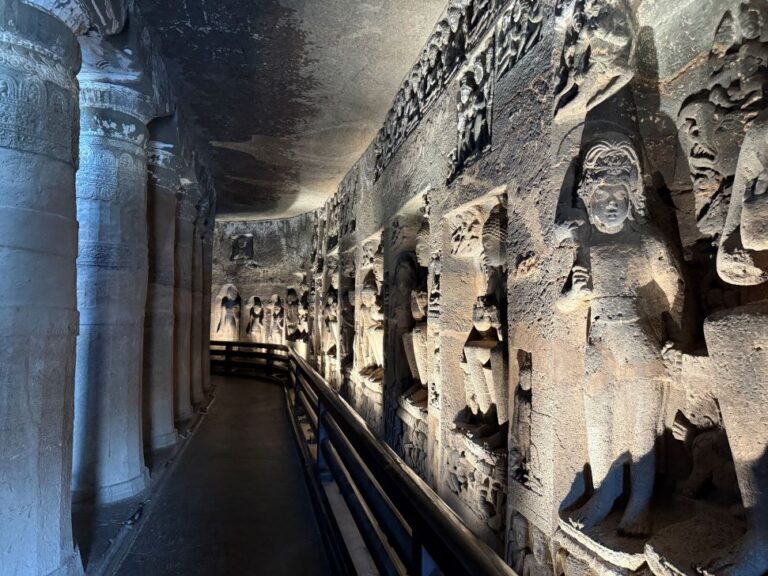
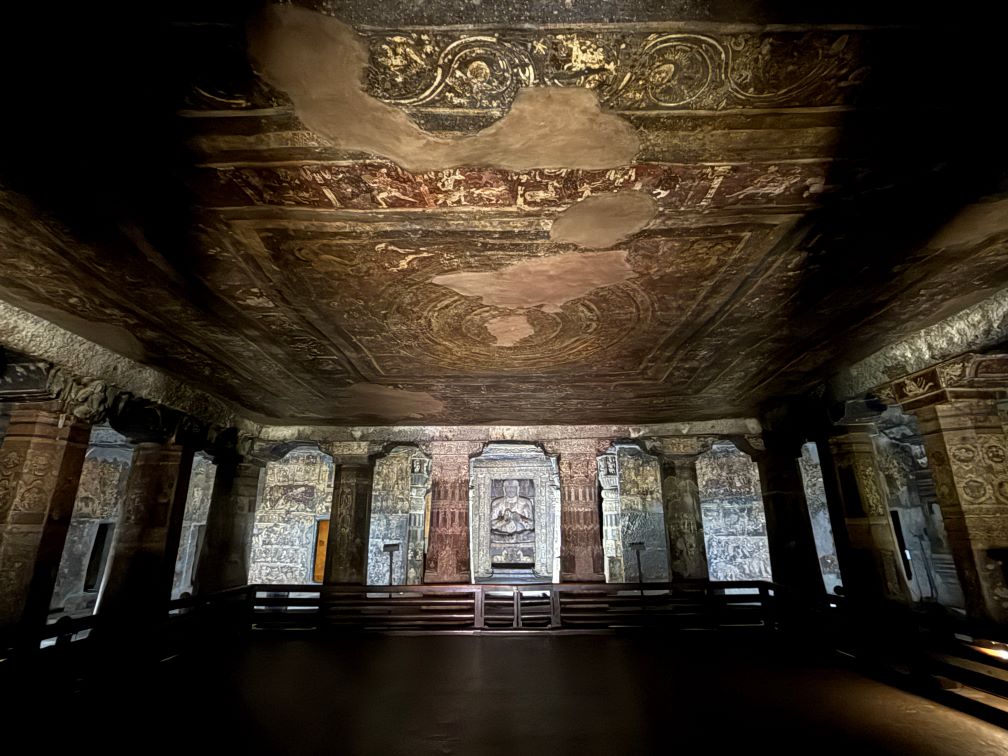
While exploring the caves, we were not only impressed by the architectural brilliance but also felt fortunate to witness these well-preserved structures that have endured through the ages. Each cave featured rows of columns embellished with murals and sculptures on the walls, with many housing a large stone Buddha seated in the lotus position within a beautifully ornate alcove. The frescoes, more accurately referred to as temperas (a mix of pigment and emulsion), displayed exceptional artistry, vividly illustrating the mythical tales of the Buddha’s past lives, along with various depictions of animals, plants, and celestial beings.
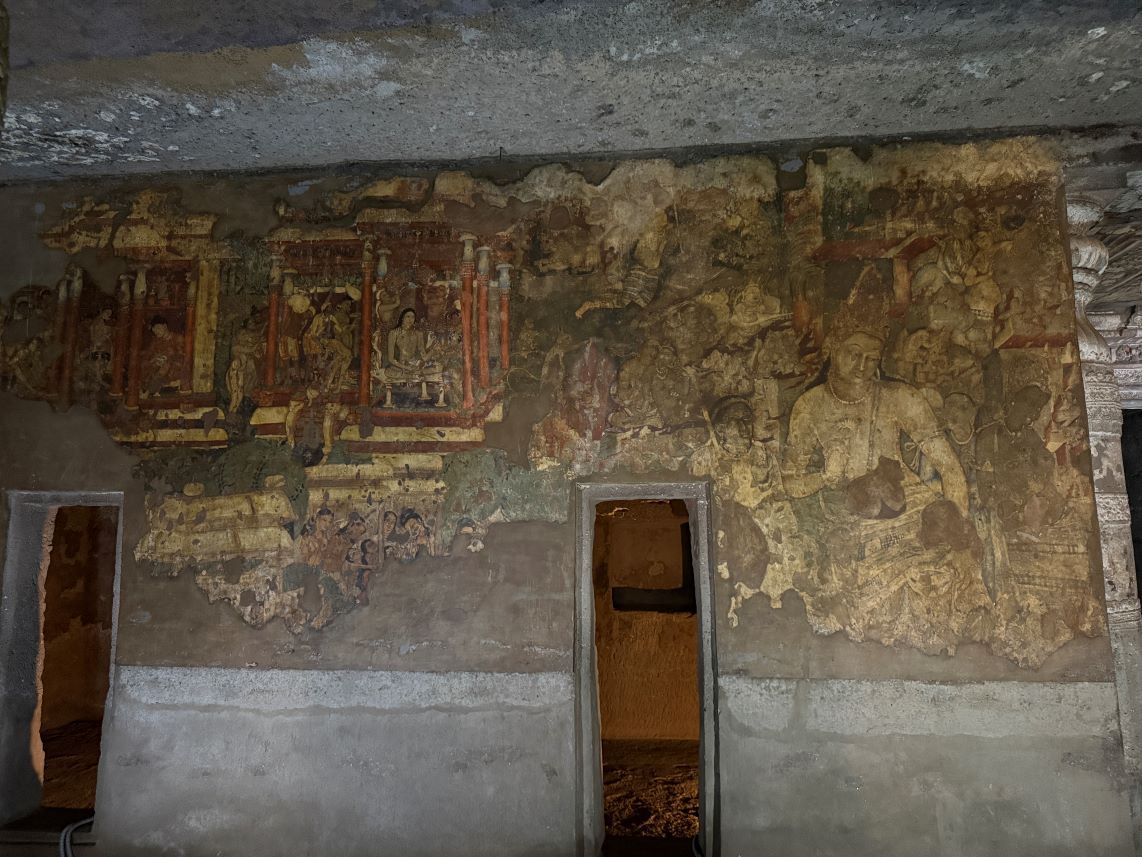
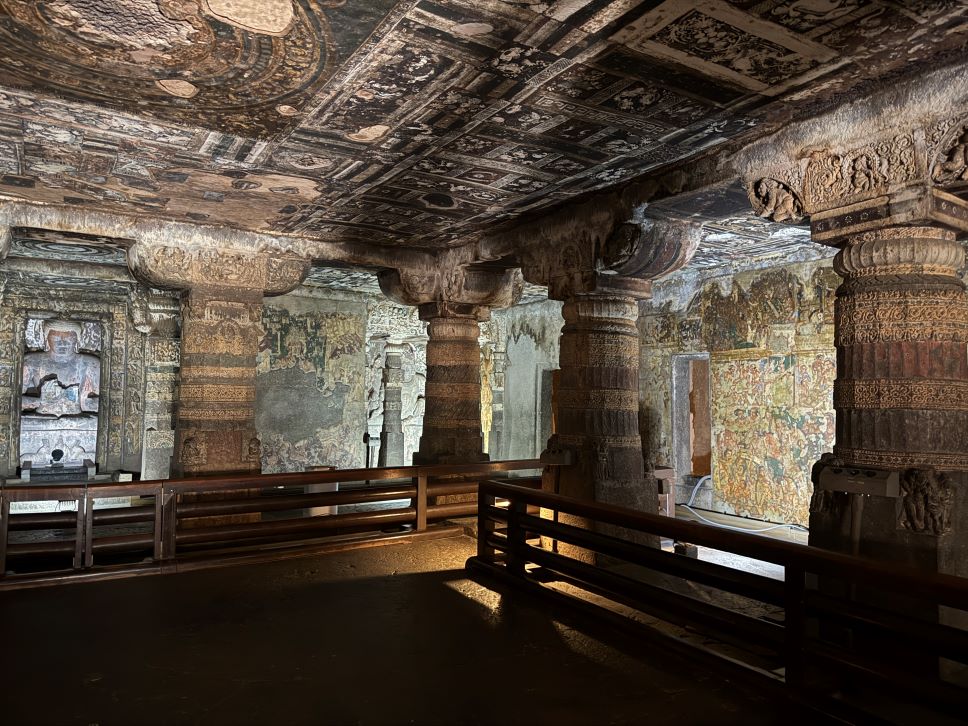
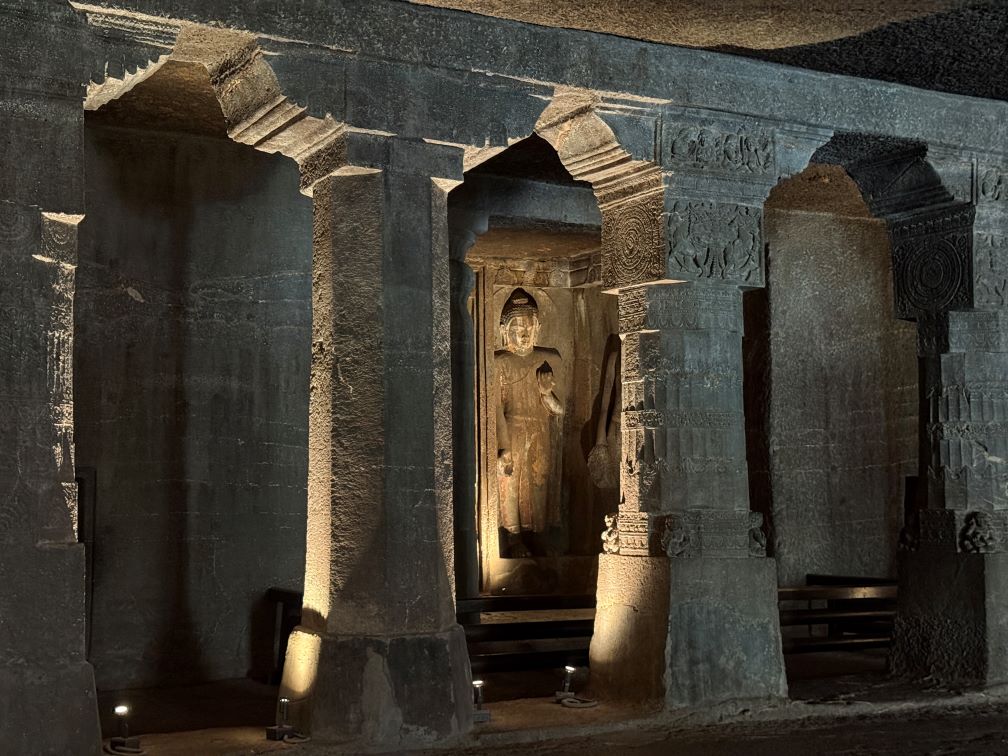
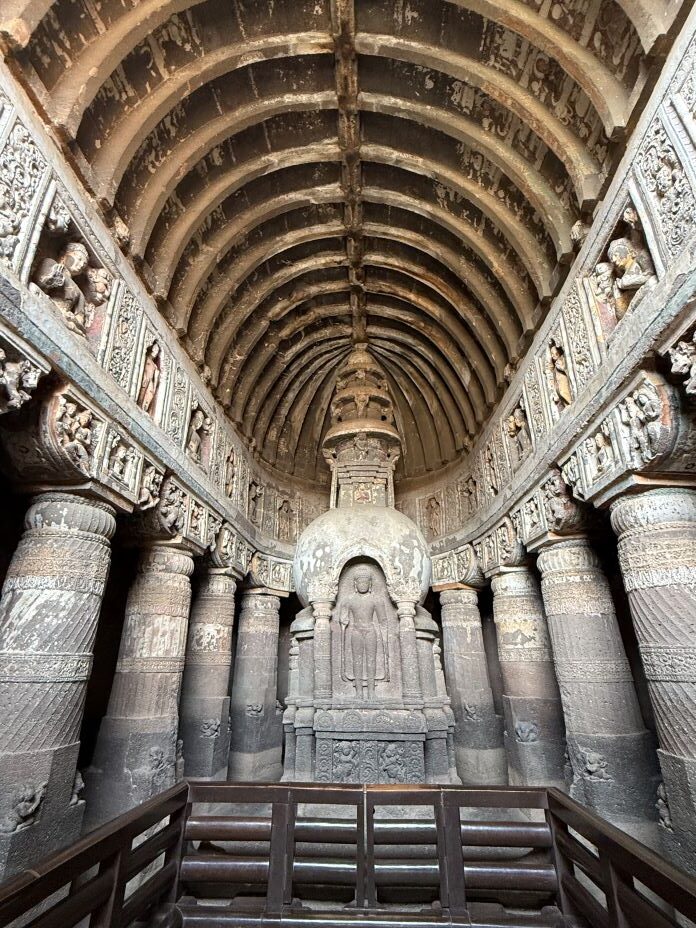
The monks who created these murals started by smoothing the rough walls with plaster, then painted using colours sourced from nature, such as red from volcanic rock and blue from lapis lazuli. Our favourite ancient fresco was located in Cave 1, showcasing a meticulously detailed bodhisattva, followed by several other caves adorned with stunning ceiling frescos depicting lotuses, fruits, geometric designs, and human figures. Cave 4 was distinctive with its bare, unembellished rocky ceiling that supported a large Buddha shrine shrouded in shade, 20 metres in. In its time, it served as a temple for undisturbed meditation – or, as we joked, the perfect spot to consider where to buy our next bottle of water! Caves 9 and 10 were remarkable, featuring impressive stupas and sculpted columns arranged around a central apse, reminiscent of a modern cathedral layout. Finally, Cave 26, richly painted and showcasing a beautifully preserved reclining Buddha in his death scene, served as a fitting conclusion to our day.
Explored the incredible Ellora Caves
Ellora Caves, an hour’s drive from Aurangabad, is another UNESCO World Heritage Site monument with 34 Hindu, Jain, and Buddhist caves all cut into the hillside, including one of India’s finest structures: Kailash Temple (Cave 16), claimed to be the biggest monolithic sculpture in the world.
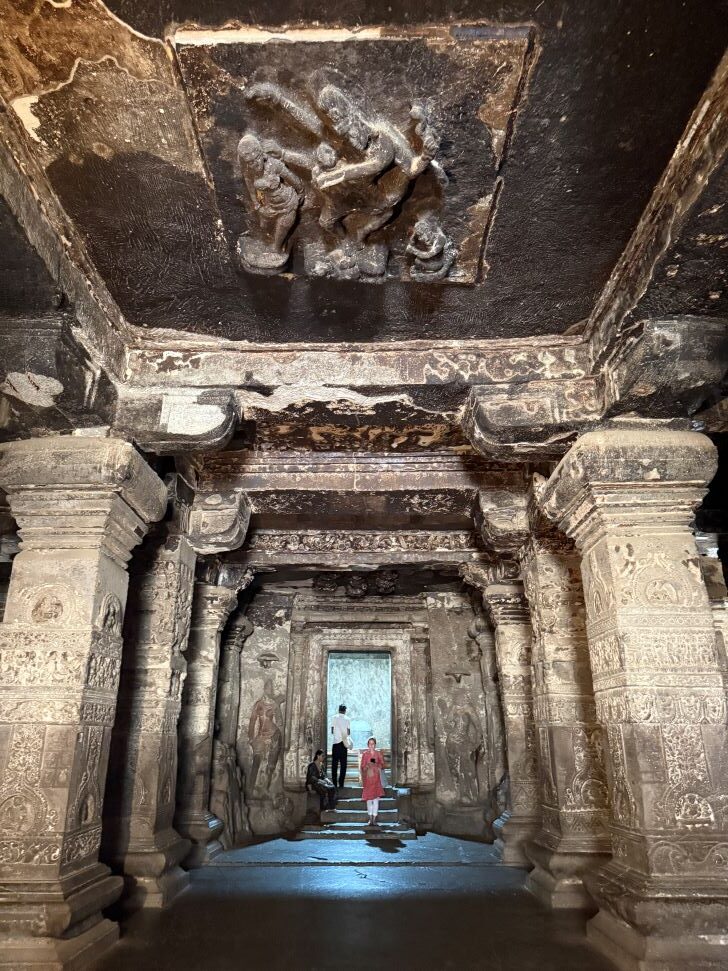
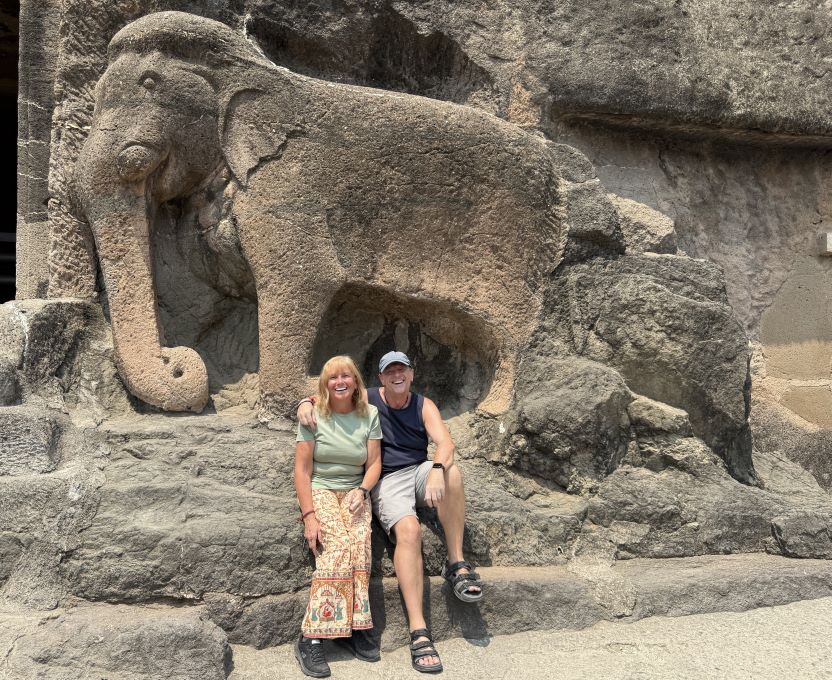
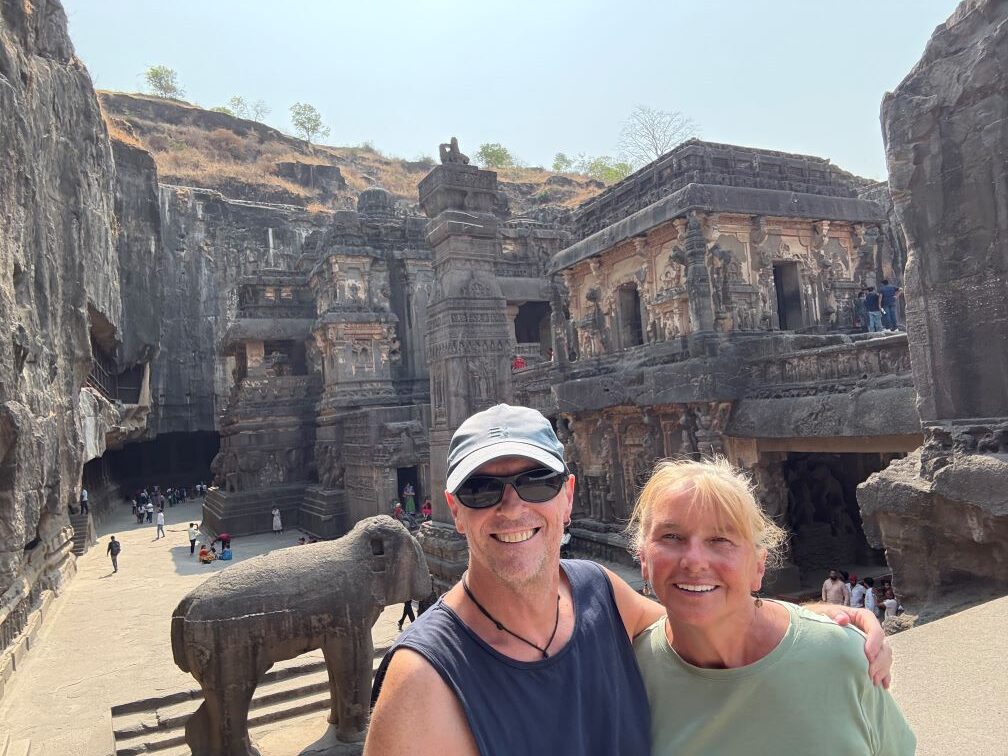
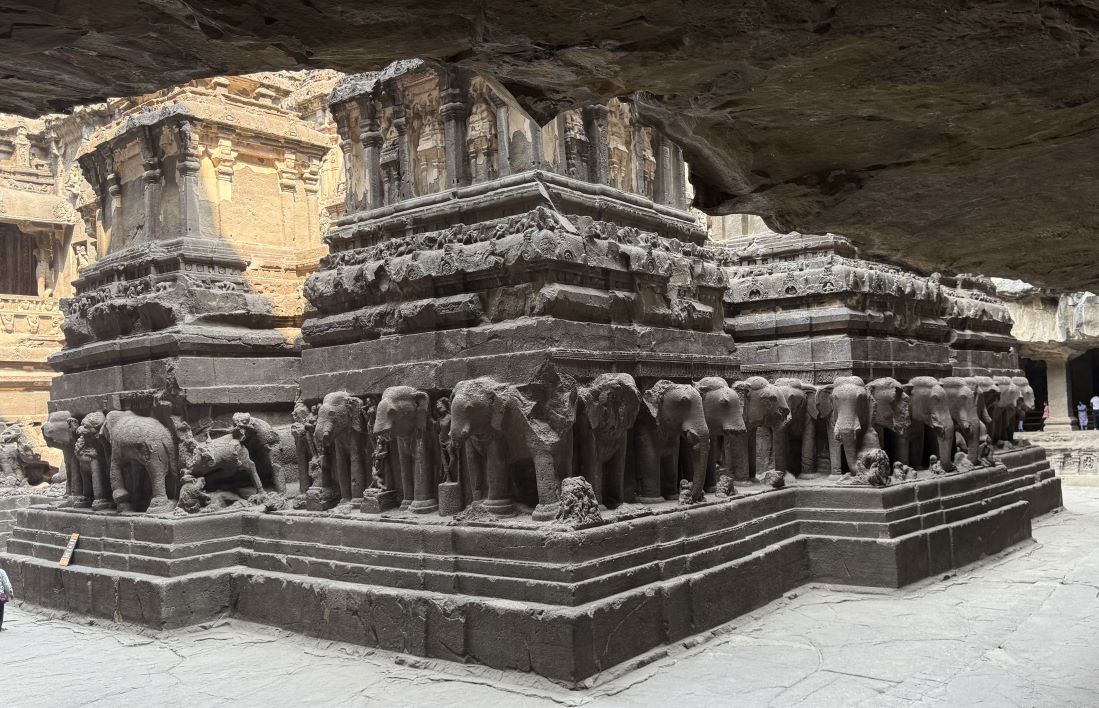
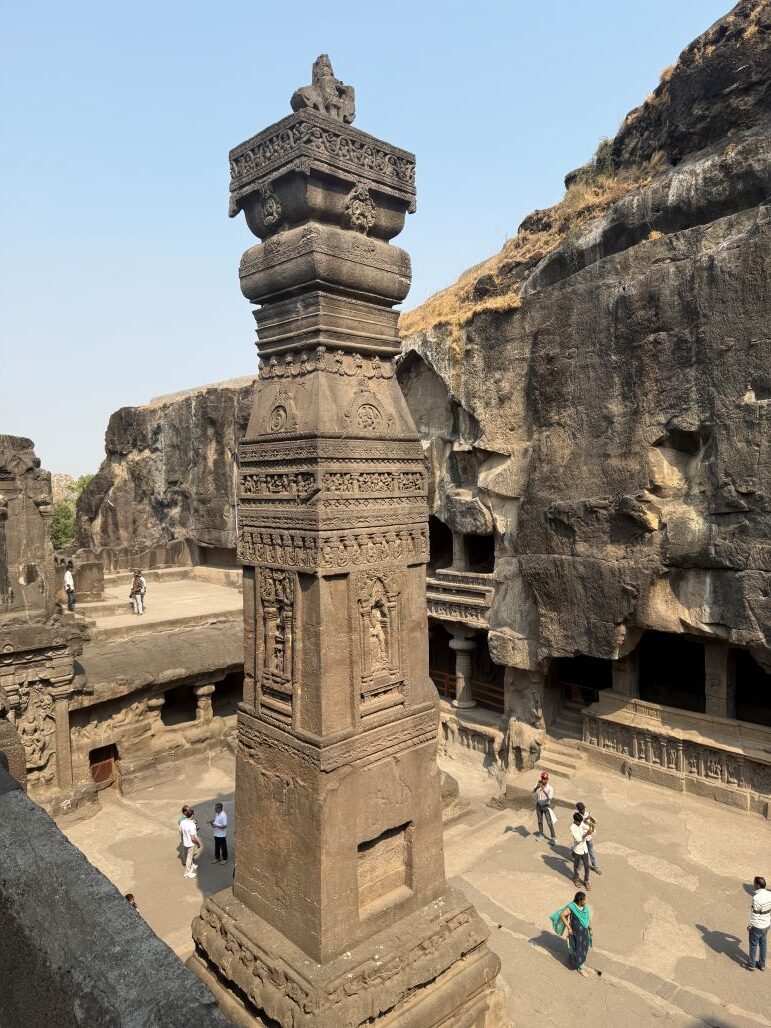
The magnificent Kailash Temple (cave 16), adorned with intricate carvings of Shiva and numerous other deities depicted in friezes that narrate stories from the Ramayana along covered walkways, was a truly spectacular sight. The life-sized stone elephant near the entrance left us in awe! Standing in the courtyard and gazing up at the elaborately carved pillared hall and the pyramid-like tower that housed the main Shiva shrine left us marvelling at this incredible engineering achievement. Constructed from the top down and carved deep into the hillside, it was astonishing to consider that 7,000 artisans spent 14 years burning rock to create fissures and then used handheld pickaxes and hammers to excavate three vertical trenches 80 metres deep, removing about 200,000 tonnes of rubble. Massive stone cubes were left in the courtyard, which artisans then carved to form the temple structures. Truly remarkable!
On either side of the Kailash are clusters of Buddhist (600-800 AD) and Jain cave temples. Each cave featured something unique: Cave 2 boasted plain Egyptian-influenced pillars and a seated Buddha facing the sunset; Cave 5 was home to Ellora’s largest vihara (Buddhist monastery), measuring 18m wide and 36m long; Cave 10 had ribs carved into the chaitya’s (worship hall) ceiling stonework; and our favourite is the impressive three-storey Cave 12, accessed through its courtyard, with the shrine on the top floor containing a large Buddha flanked by his seven previous incarnations.
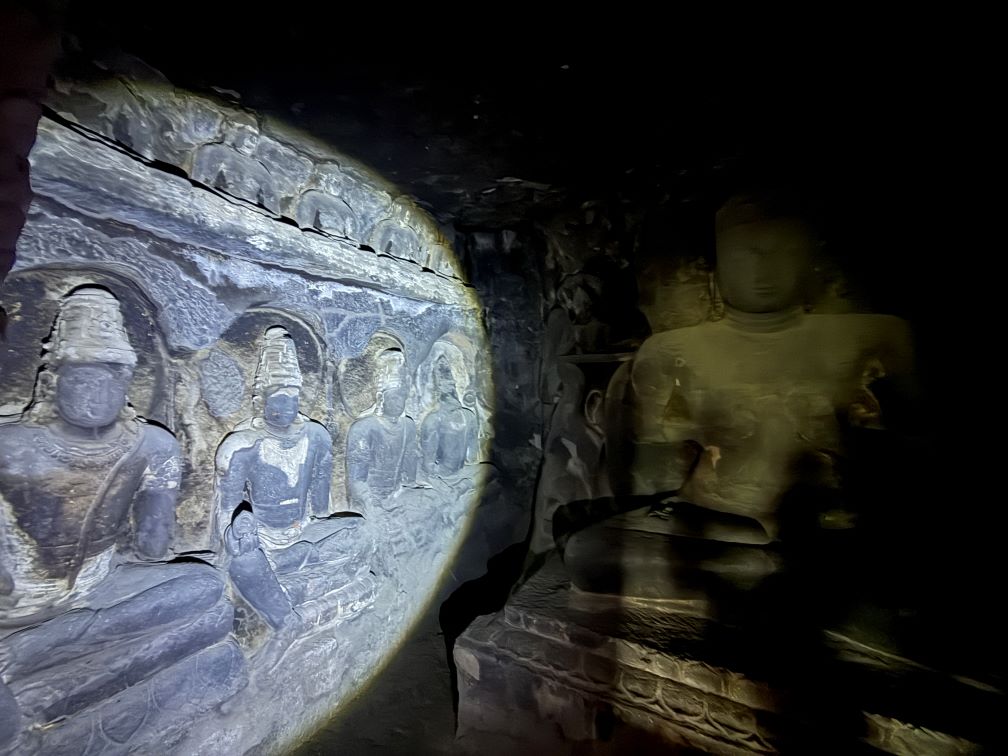
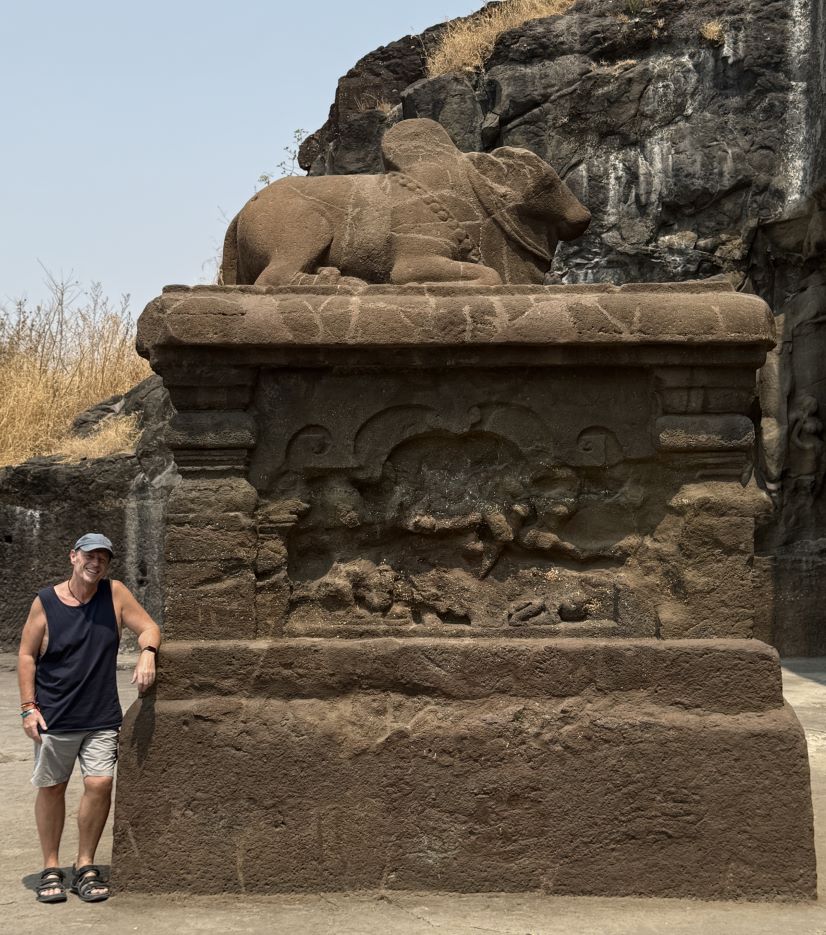
We found the Jain caves equally fascinating. Although smaller in size, they often featured more frescoes painted on the ceilings and walls. We were particularly impressed by the detailed paintings in Cave 29, where large sculpted panels depicted scenes connected to Lord Shiva and his celestial marriage to Parvati. Unfortunately, the path to the recommended Caves 30 and 32 was closed for repairs. We could have used a golf buggy to cover the additional 1 km, but by that point, after visiting the Ajanta Caves the previous day, we were quite “caved out” and weren’t too disappointed!
Climbed the impenetrable Daulatabad Fort
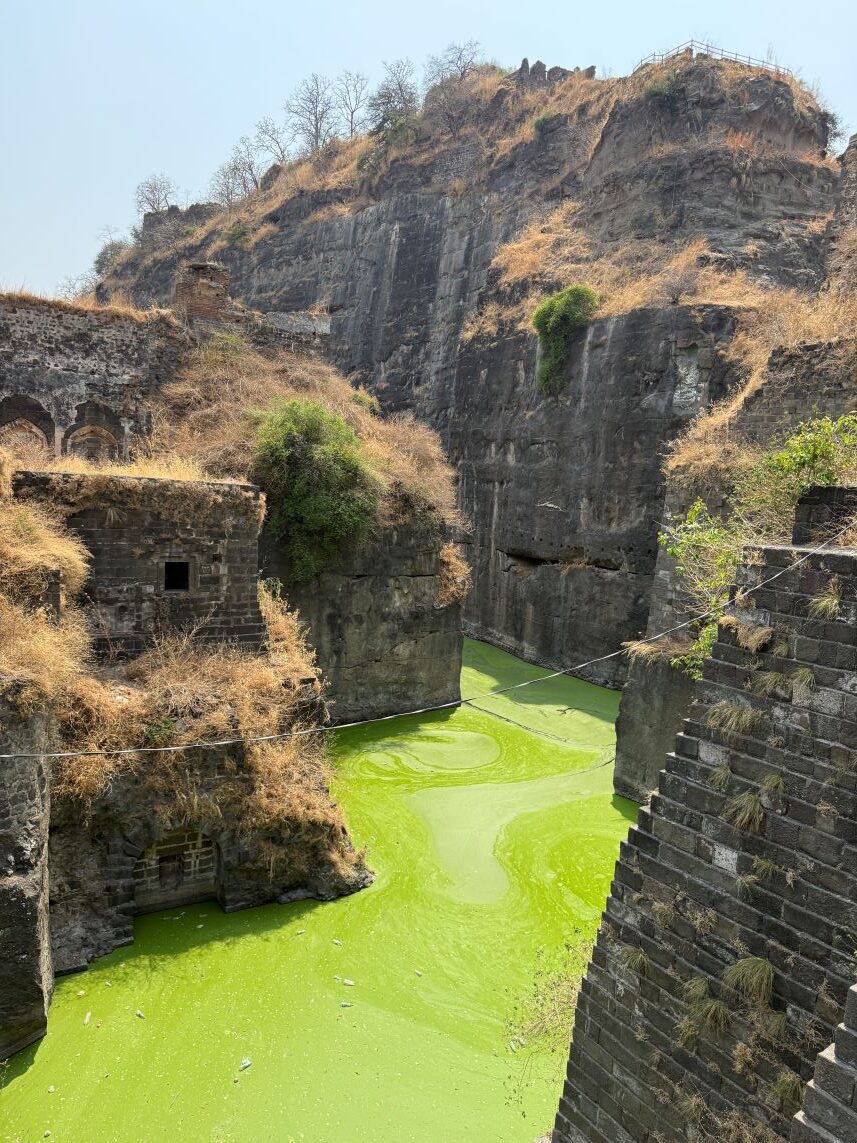
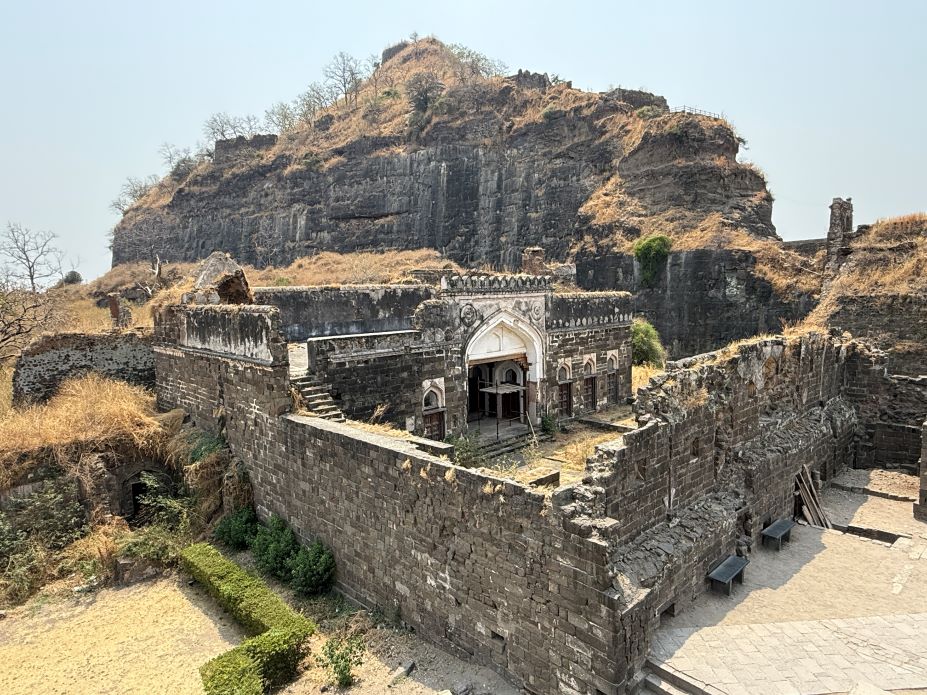
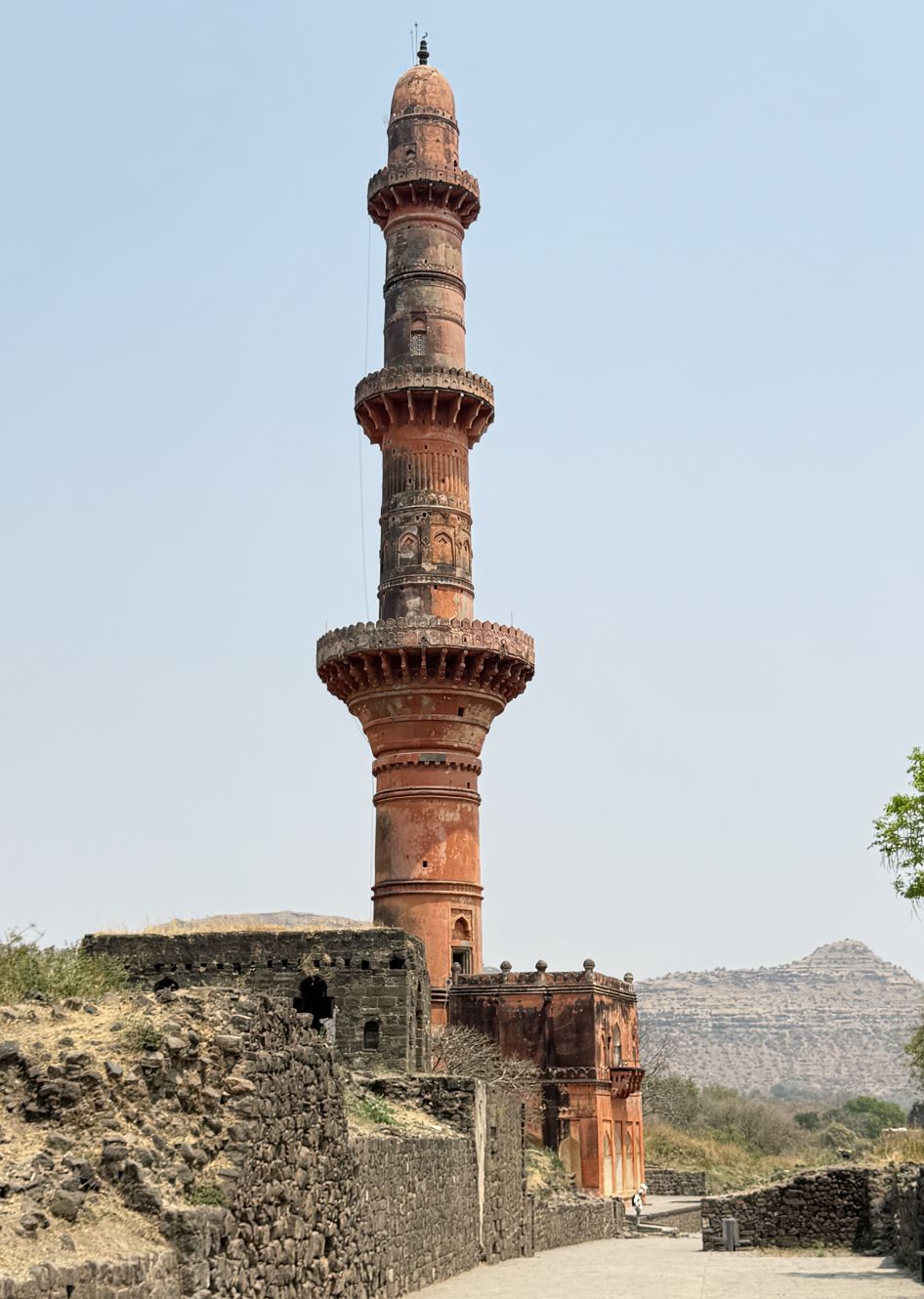
The hike to the summit of the ruined yet majestic Daulatabad Fort was definitely worth the effort, despite the sweat, tears, and aching limbs along the way! Perched 200 metres above street level, the fort was initially built by the Yadava kings in the 12th century, featuring 5 km of reinforced bastions. It was later reinforced by Sultan Mohammed Tughlaq in 1328, making it virtually impregnable for enemies to conquer. The climb to the top was certainly not a breeze, but the panoramic views from the hilltop and the impressive medieval architecture kept us motivated. What made the ascent particularly thrilling were the Andheri (dark), steep, and winding passages designed to mislead enemies, which we found spooky but at the same time, fun to navigate.
Enjoyed strolling around Bibi Ka Maqbara
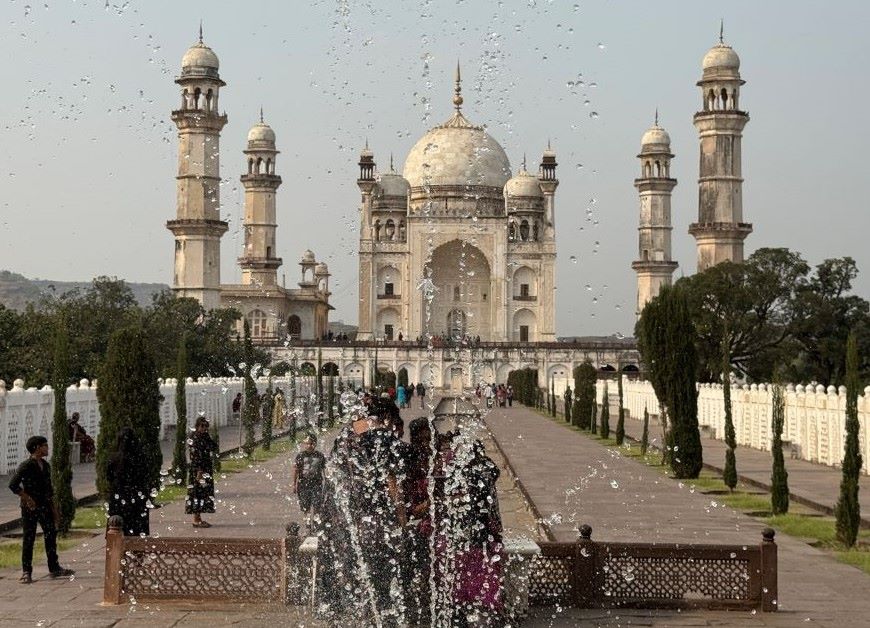
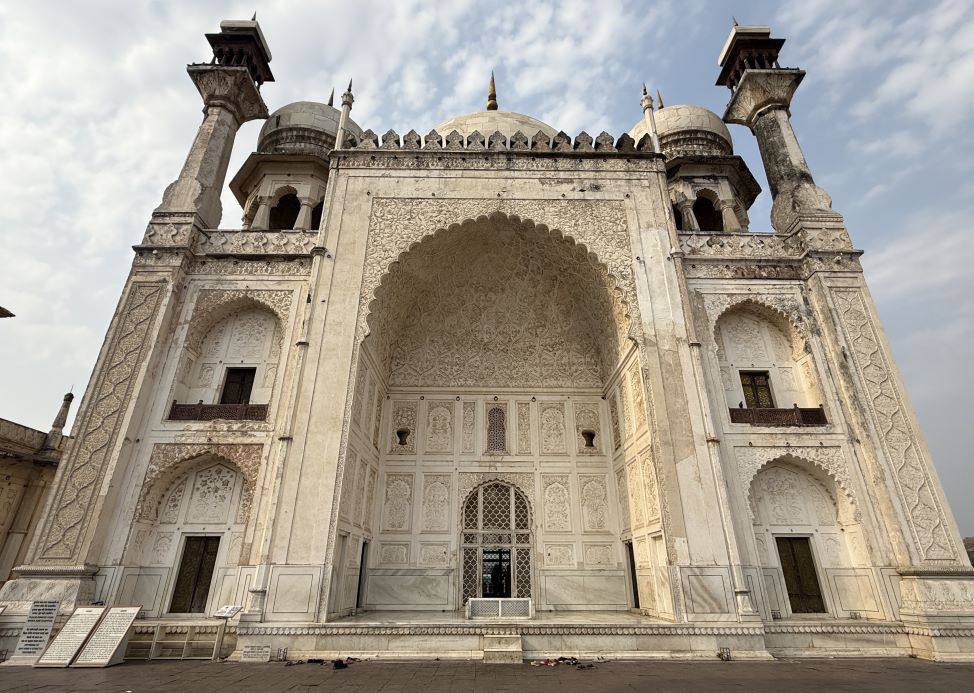
The mightily impressive Bibi Ka Maqbara, locally called the Taj of Deccan or, as our taxi driver referred to it, the ‘Poor Man’s Taj,’ was the last stop on our two-day tour of Aurangabad. Built by Aurangzeb’s son Azam Shah in 1679 as a mausoleum for his mother Rabia-ud-Daurani, its likeness to the Taj Mahal in Agra was uncanny.
There were numerous open areas ideal for taking fantastic photos, including a white marble bench reminiscent of “Diana’s Bench” at the Taj. If requested, officials would even activate a couple of fountains for added ambience. Strolling around the upper terrace and entering the tomb was as breathtaking as the grand one in Agra, adorned with intricate Mughal designs that featured geometric marble carvings and floral motifs on the ceilings and walls. As we walked clockwise around the interior of the dome, we admired the tomb itself, which was draped in vibrant cloths and surrounded by a remarkable amount of money tossed in by visitors. While the beautifully manicured lawns surrounding the dome invited a leisurely walk, we were somewhat let down by the overall state of the complex. There was quite a bit of litter, and the towers (minarets) and structures on the tomb’s base were awfully discolored, which took away from the tomb’s genuine beauty.
Ajanta Caves summed up India
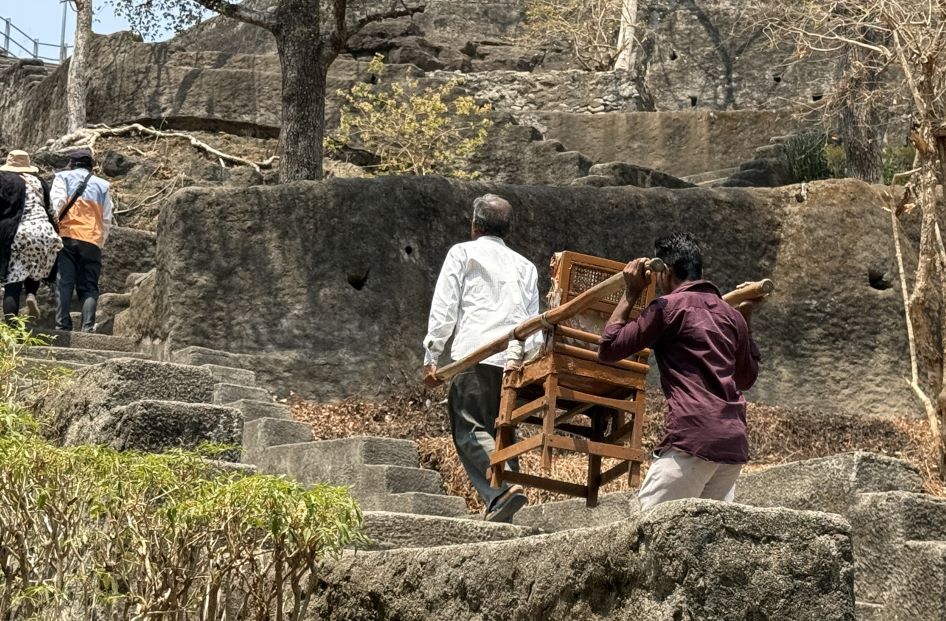
Our experience in Ajanta amusingly encapsulated our DIY trip to India. First, the two-hour taxi ride on the way there and back was far from comfortable, as we navigated through roadworks, potholes, detours, and massive trucks overtaking at the most inconvenient moments. Upon reaching the caves, we were met with an entrance fee for the ‘Amenity’ section of the complex (30 INR), which led us through a labyrinth of persistent vendors before finally boarding a shuttle bus (the only mode of transport allowed to reach the caves) that took us the last 4 km. Following that, we then faced another entrance fee of 600 INR to enter the long line of caves. Apart from most officials at each cave’s entrance who expected a tip (29 of them!), there were also portable chair carriers eagerly seeking clients who appeared a smidgen out of breath, and hundreds of langur monkeys on the lookout for a snack to steal. On our return journey from the caves, we encountered the same hawkers who had remembered us, recalling our previous promises to visit their stalls while we attempted to evade them on the way up. Yikes! Yet, it’s this kind of absurdity that deepened our affection for India.
If we had more time, we would have explored the following places and activities:
- A himroo handloom factory (a traditional textile factory using looms to produce handmade silk and cotton shawls and stoles adorned with intricate motifs).
- Panchakki (a structure built in 1624 that functions similarly to a watermill. It was originally used to grind flour and now transports water through 11 km of underground clay pipes around the city).
- Tomb of Emperor Aurangzeb (Aurangzeb’s last wish was to have his tomb made simple, without any extravagance, so that his wife’s tomb at Bibi-Ka-Maqbara becomes the more attractive of the two).
Accommodation in Aurangabad
Aurangabad is a major gateway to Ajanta and Ellora, making accommodation easy to find. There are plenty of options that cater for a range of budgets, including a couple of 5-star luxury hotels. Around the train station appears to be the best choice, with many establishments willing to negotiate a good price. To be fair, we did not spend much time in our hotel, as most of the days were spent driving along dusty roads, exploring ancient sights and feeling sweaty and clammy throughout! So we decided to have a splurge and indulge ourselves with some homely creature comforts. Amarpreet AM Hotel Kollection fitted the bill, with its large rooms, 24-hour hot water, early morning breakfasts, and a terrific communal grassy garden.
Eating in Aurangabad
We may not be the best source for recommendations regarding where or what to eat in Aurangabad. After each exhausting day of our two-day tour, we typically chose the nearest restaurant, glanced at the menu, and opted for familiar dishes like biryani and aloo paratha, often paired with pakora or samosa, and washed down with a Kingfisher beer.
That said, we heard that most mid-range to high-end hotels with attached restaurants offer meals that include mutton, chicken, and, unusually, beef. There are also a few interesting underground bars with a ‘spit and a sawdust’ atmosphere, predominantly attended by men. While we didn’t face any issues, it’s certainly not the type of place for solo female travellers to visit alone.
Travellingterry’s Aurangabad Tips
- Travelling to Ajanta and Ellora can both be visited in one day from Aurangabad. While it’ll be a long and exhausting day, it is possible. Ellora Caves (closed on Tuesdays) open at 6 AM, while Ajanta Caves (closed on Mondays) open at 9 AM; both sites close at sunset.
- There are refreshments/cafes just inside both cave entrances, but nothing else when walking around them.
- The smartphone torch came in handy when exploring the inside of the caves, as there were many dark entrances to all sorts of nooks and crannies.
- For foreign visitors, the entrance fees are as follows: Ajanta and Ellora – 600 INR each; Daulatabad Fort – 300 INR; Bibi Ka Maqbara – 300 INR. If tickets are purchased online, a 50 INR discount is available per site.
- Our 2-day itinerary was as follows: Day 1 – Ajanta Caves (including 4.5 hours of driving time), Day 2 – Ellora Caves, Daulatabad Fort, and Bibi Ka Maqbara (including 2.5 hours of driving time).
- At Daulatabad Fort, we set aside 2 to 3 hours – it is quite vast.
- Auragabad tourism and the Archaeological Survey of India are useful websites with up-to-date opening and closing times, online ticketing, and other suggested attractions within the city.
Onward Travel: Flight from Aurangabad to Mumbai
We flew with Indigo Airways once again, and as always, they were efficient, courteous, and on time. After a late evening flight, we were particularly pleased with how quickly our luggage arrived at the carousel in Mumbai. Since we were too tired to take the Mumbai metro to our hotel, we opted for an airport taxi, which cost a mere $11 for the 32 km ride that took about 1.5 hours. We could not imagine any airport taxi in Europe charging such a reasonable price for that distance.