Situated at an altitude of 800 meters, Dushanbe offers stunning views of the lush rural landscape and grassy fields, framed by snow-capped mountains. The city has experienced rapid growth and is home to numerous lakes, parks, and fountains, with a vibrant array of colourful lights illuminating the streets at night. Since gaining independence in 1991, Dushanbe has replaced many Soviet-era structures with beautiful Tajik-style buildings, creating an impressive skyline and a welcoming atmosphere for travellers looking to relax before embarking on their next adventure in Central Asia.

As I strolled along Dushanbe’s grand boulevards, it was astonishing to think that less than a century ago, it was just a small town known primarily for its weekly bazaar. The city started to transform significantly following the establishment of a railway line in 1929 and was renamed Stalinabad until 1961, when it reverted to its original name, Dushanbe. Throughout this era, it functioned as the capital of the Tajik Soviet Socialist Republic, playing a key role as an industrial and administrative hub for the country’s cotton and silk production.
My Dushanbe Highlights
Although Dushanbe may not have an abundance of spectacular sights, it still offers a few ‘wow’ moments and is perfect for relaxing, especially after a challenging hike in the Fann Mountains. During my week-long road trip along the Pamir Highway, I found Dushanbe to be a wonderful place to refresh, unwind, and recapture some comforts. The city’s compact size makes it easy and enjoyable to explore on foot, with most attractions just a short walk away.
Relaxed in Rudaki Park
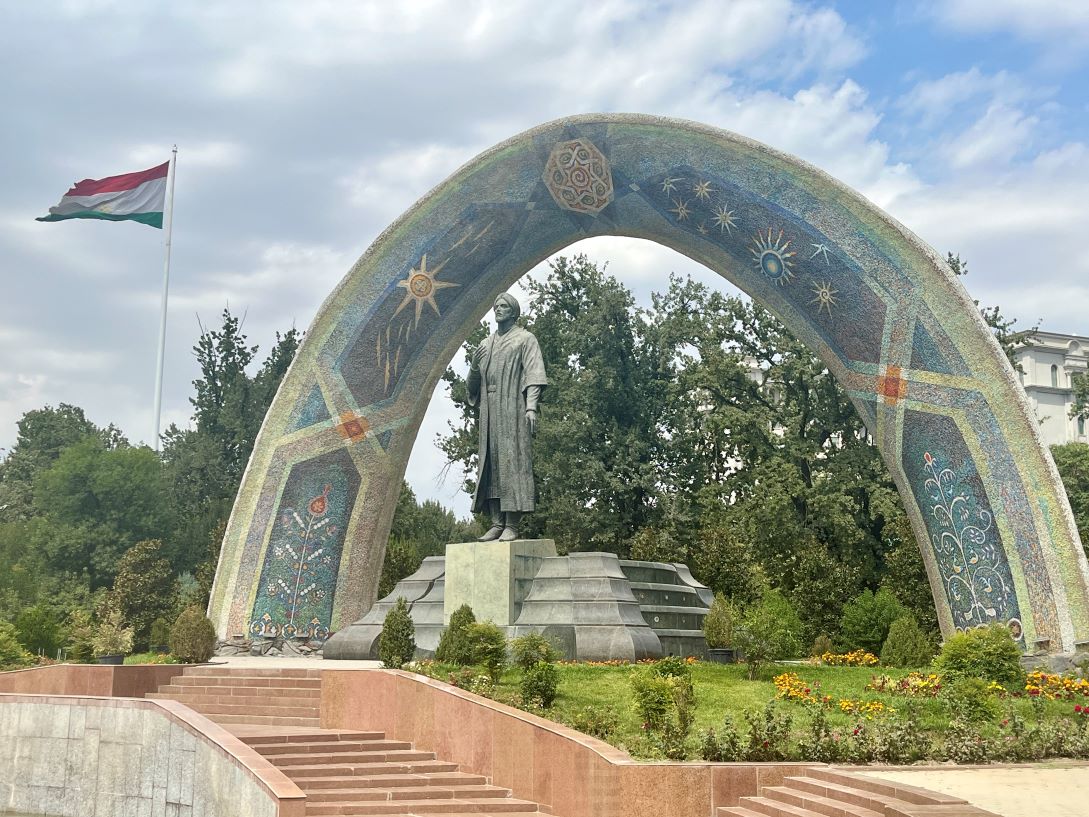
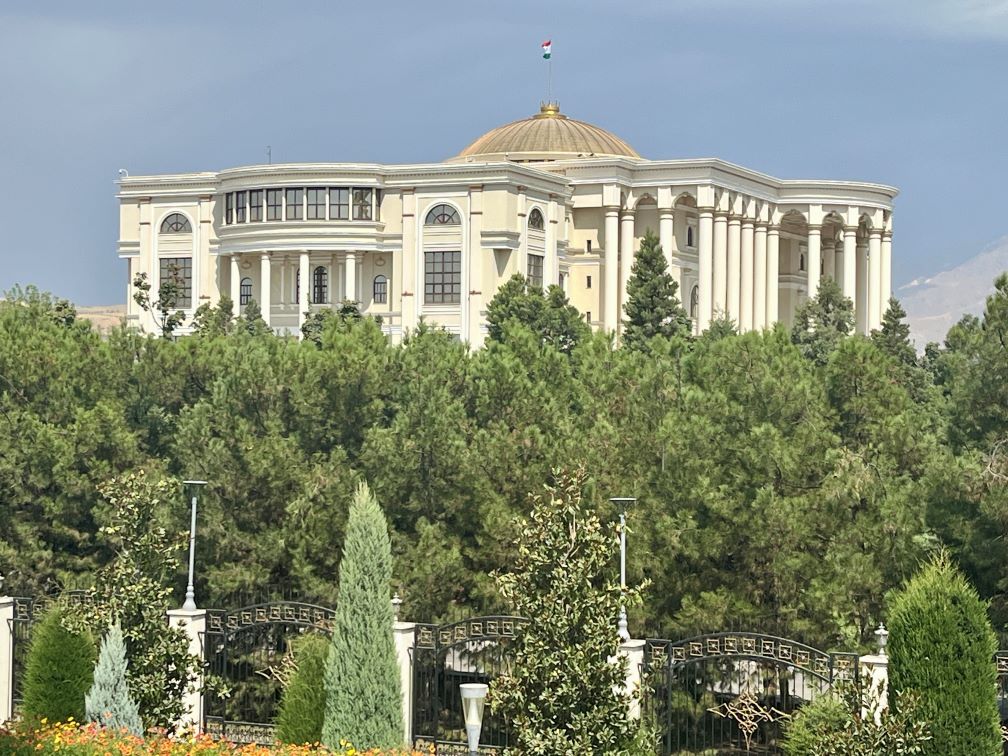
One striking feature of Dushanbe is the many well-maintained parks that dot the city, all kept clean and inviting. These parks serve as wonderful spots to relax and take in the serene surroundings. A standout is Rudaki Park, located in Dushanbe’s centre, surrounded by vibrant flower beds, mature tree canopies, monuments, statues, and several fountains and small lakes. From various vantage points in the park, visitors can enjoy contrasting views of the city’s older and newer architecture. The park is also home to a statue of the renowned 10th-century Persian poet, Rudaki, often referred to as the “father of Tajik literature.” At the southern end of Rudaki Park lies the impressive Palace of Nations, locally known as the “White House,” which serves as the presidential residence. Nearby stands the beautiful Parchan Monument, characterised by a slender, regal white and gilded pillar that commemorates Tajikistan’s independence.
Watched the sunset in Victoria Park
Another memorable experience was taking a leisurely walk through Victory Park at sunset. Unlike Rudaki Park, which is dedicated to celebrating the arts, Victory Park symbolises resilience and pride, featuring a moving World War II monument, illuminated beautifully at night, along with circular stone murals depicting soldiers in battle and a large Russian tank ominously overlooking the city.
Admired Tajikistan’s Flagpole
Upon my arrival in Dushanbe, I was surprised to discover one of the tallest flagpoles in the world. Standing at 165 meters tall and weighing over 700 kilograms, it held the record as the tallest flagpole upon its completion in 2011 until Saudi Arabia built a taller one at 171 meters in 2014. Today, it ranks as the fifth-tallest flagpole globally and will probably drop further in the coming years.
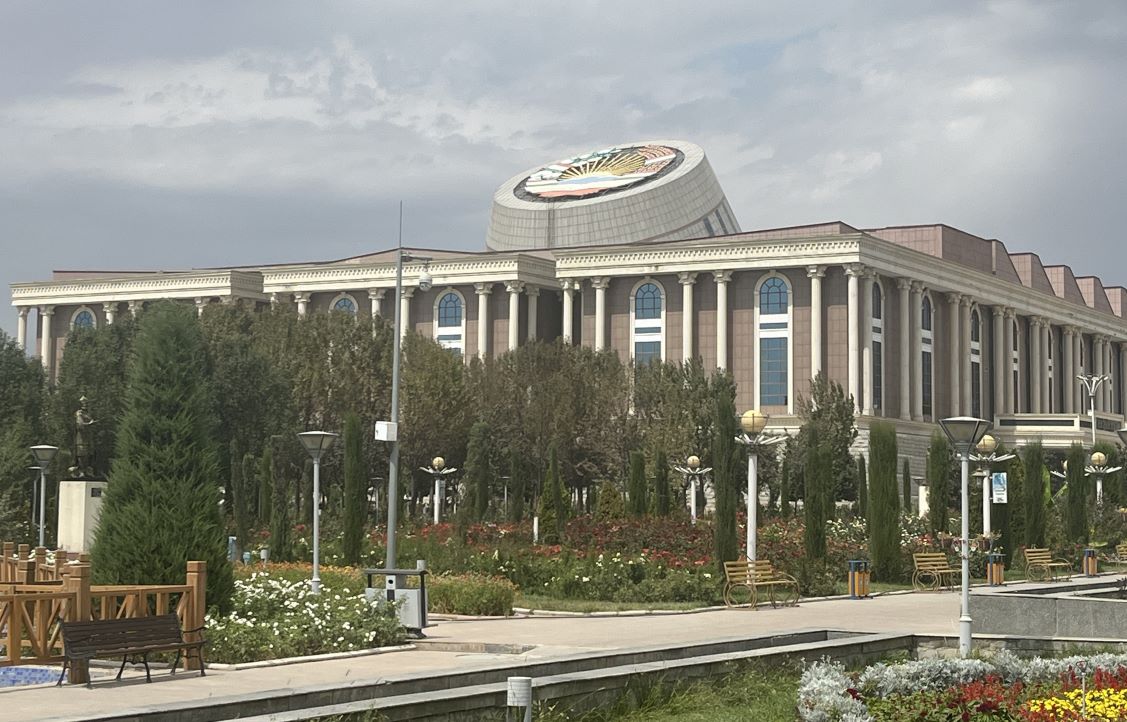
Built to celebrate Tajikistan’s 20th independence anniversary, this flagpole is located in the northern section of Rudaki Park, in front of the national museum. It’s a delightful location to enjoy a coffee or cold drink while watching the water fountains perform their synchronised displays, as flagpole onlookers admire with national pride.
Came face to face with the great Ismail-Somoni Statue
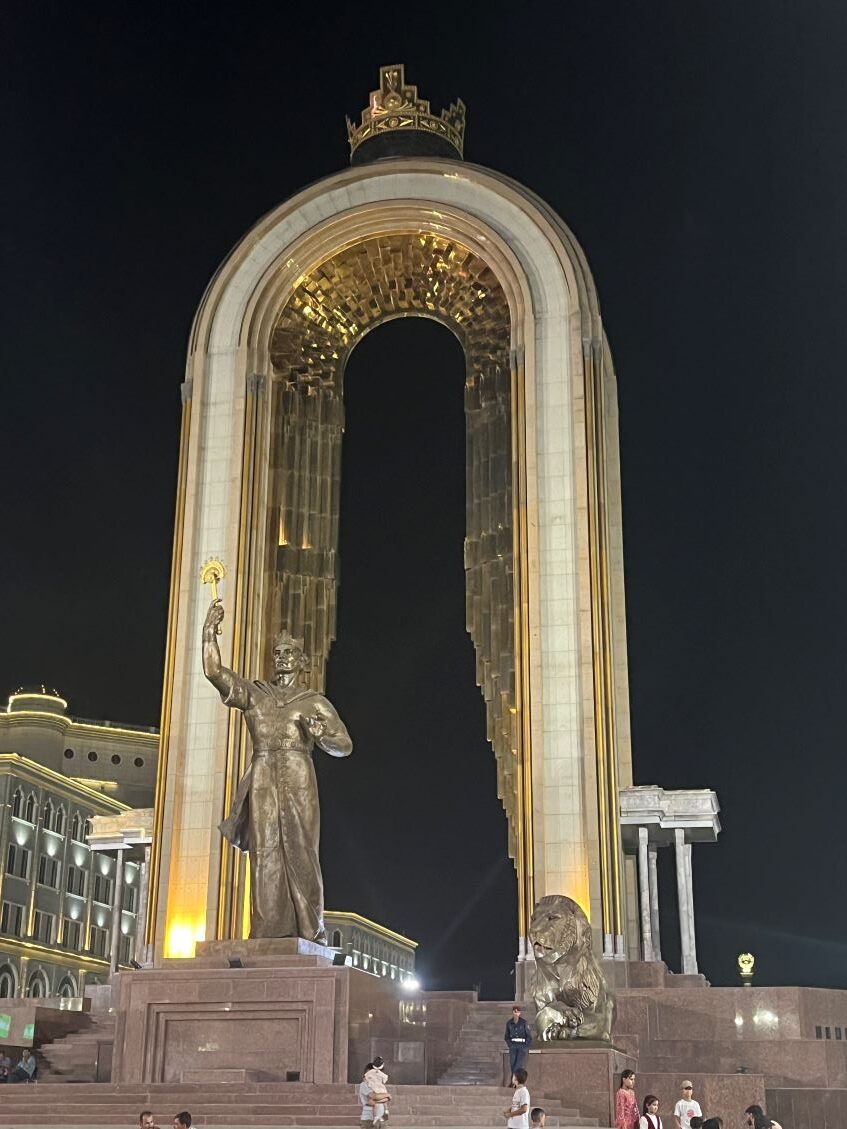
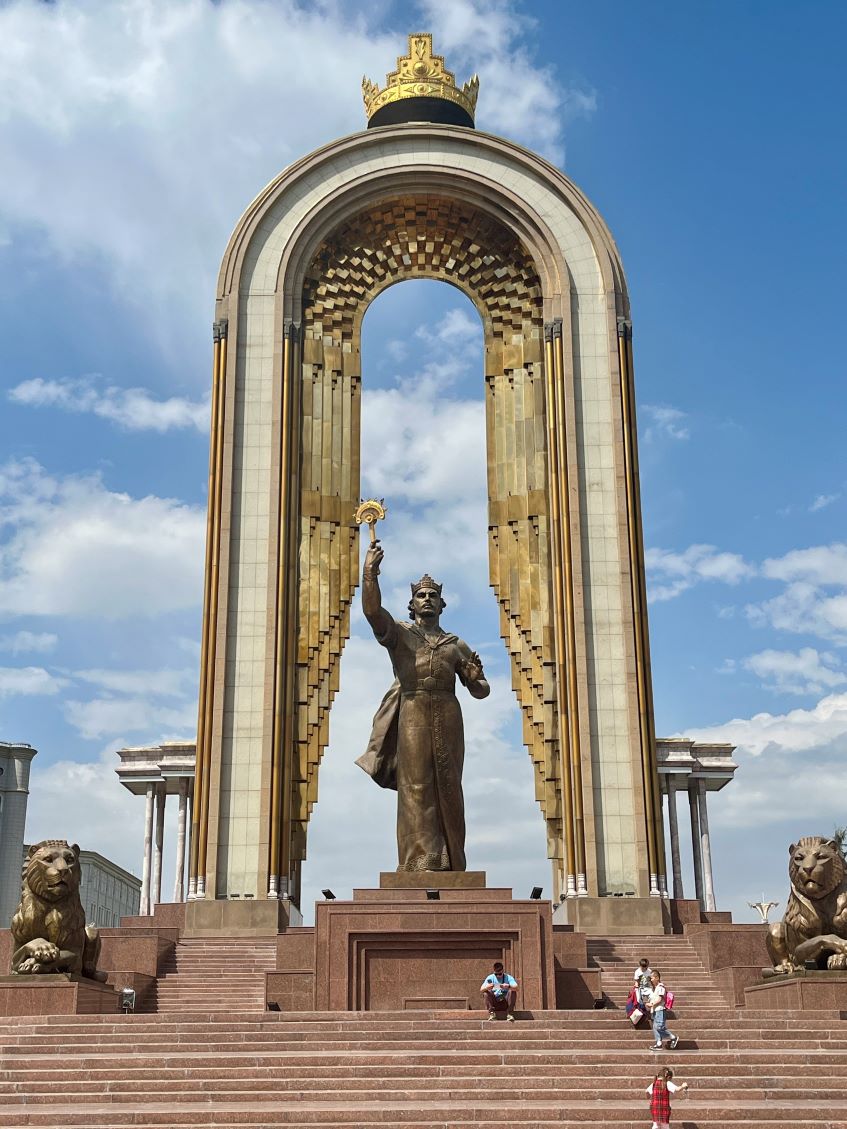
In the northeastern corner of Rudaki Park at Dusti Square (Friendship Square) stands one of Dushanbe’s most iconic and revered landmarks: the Ismail Somoni monument. Tajikistanis view Ismail Somoni as the most significant leader of the Samanid States, which spanned much of Central Asia during the 9th and 10th centuries AD. Honoured as a national hero, Ismail Somoni was born in Tajikistan and dedicated himself to the preservation and prosperity of his homeland. Even today, he is among the most highly regarded historical figures in Tajikistan, with the country’s currency named after him – the Tajik Somoni.
Walked along Rudaki Avenue
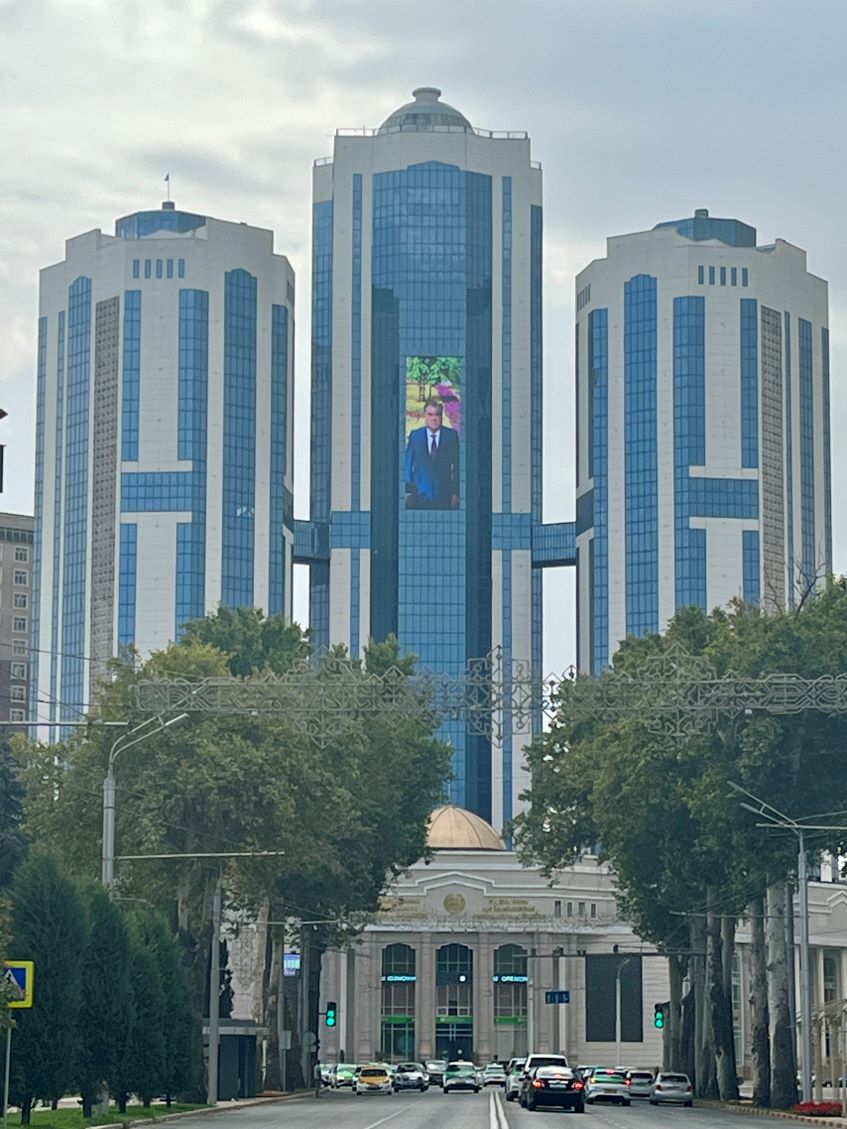
Rudaki Avenue, previously known as Lenin Avenue, is the main artery of Dushanbe and offers a delightful setting for a stroll northward from the Somoni Statue, where you can discover various locally designed Tajik shops and restaurants. The avenue becomes vibrant in the evenings as families and friends gather to socialise amid the beautifully lit streets and notable buildings. Significant landmarks along Rudaki Avenue include the newly built Parliament building, located just across from the Ismail Somoni Statue. This structure, designed in a Tajik architectural style and funded by China, features a striking white marble facade and a dome that rises 70 meters high, accommodating an assembly hall with 1,500 seats. Adjacent to Rudaki Avenue is Sheroz Street, home to several noteworthy government buildings, some reflecting traditional Tajik design while others are characterised by the raw, block-like structures of Soviet ‘brutalist’ architecture.
Drank in the World’s Biggest Teahouse at Nuvruz Palace
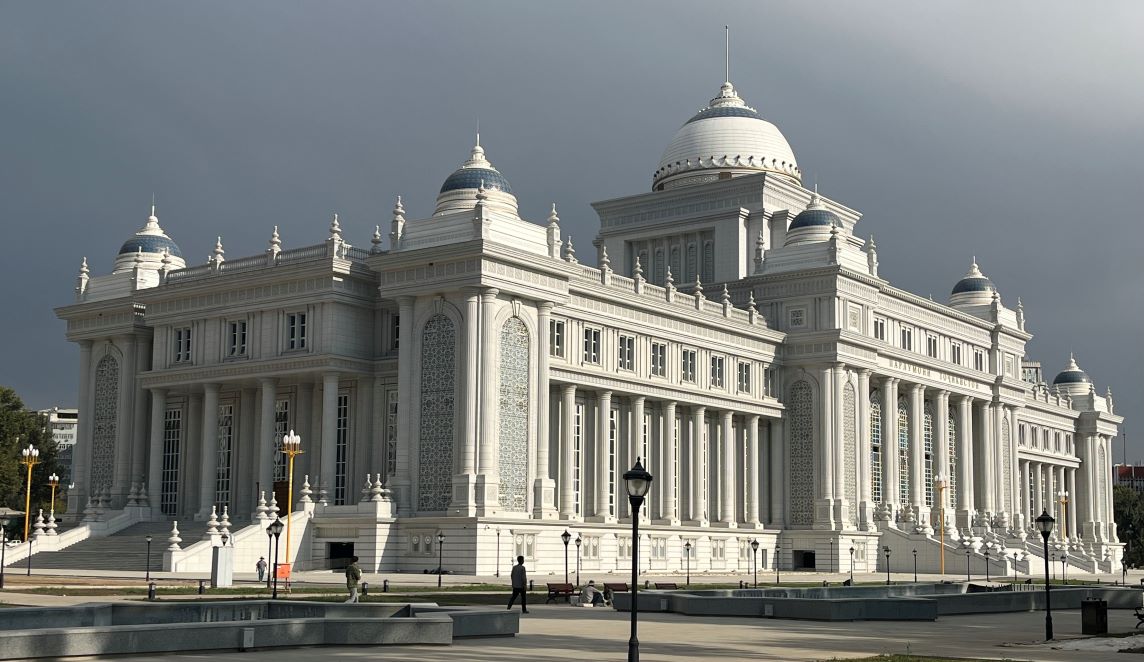
Situated to the west of Central Park, near Komsomol Lake, is the Navruz Palace, the world’s largest teahouse. Initially constructed as a traditionally designed Tajik teahouse for the city, it quickly transformed into a grand establishment. Now, the palace functions as a conference centre and banquet hall for official events, hosting prominent figures like Russian Premier Vladimir Putin and other affluent guests who can afford its rental fees.
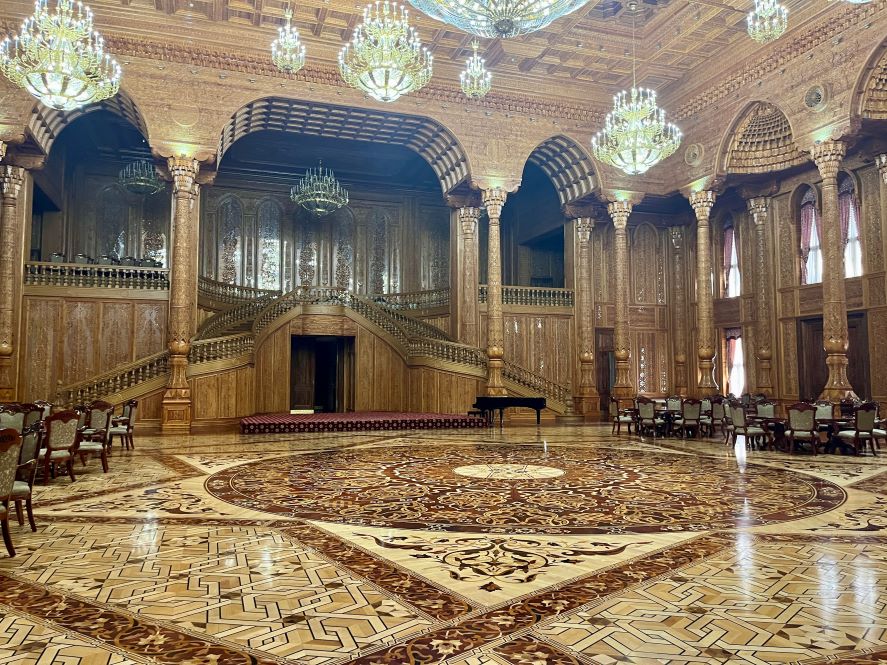
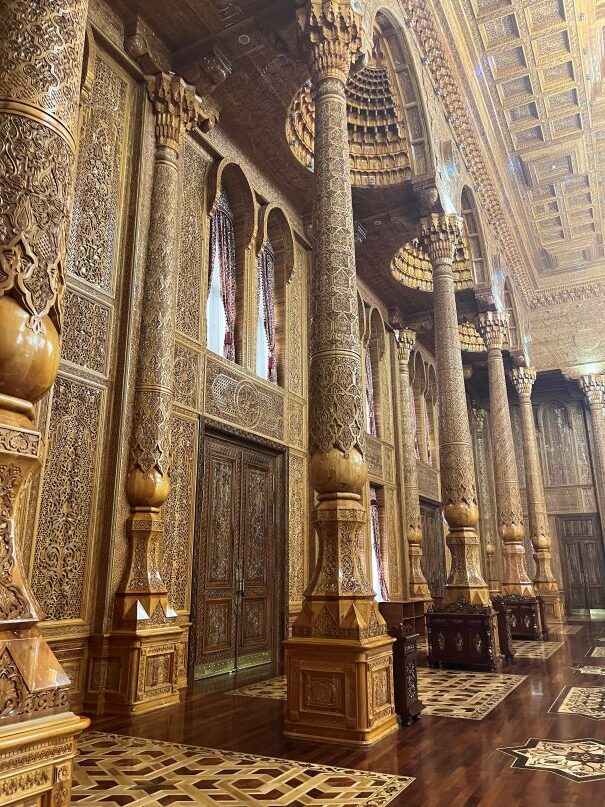
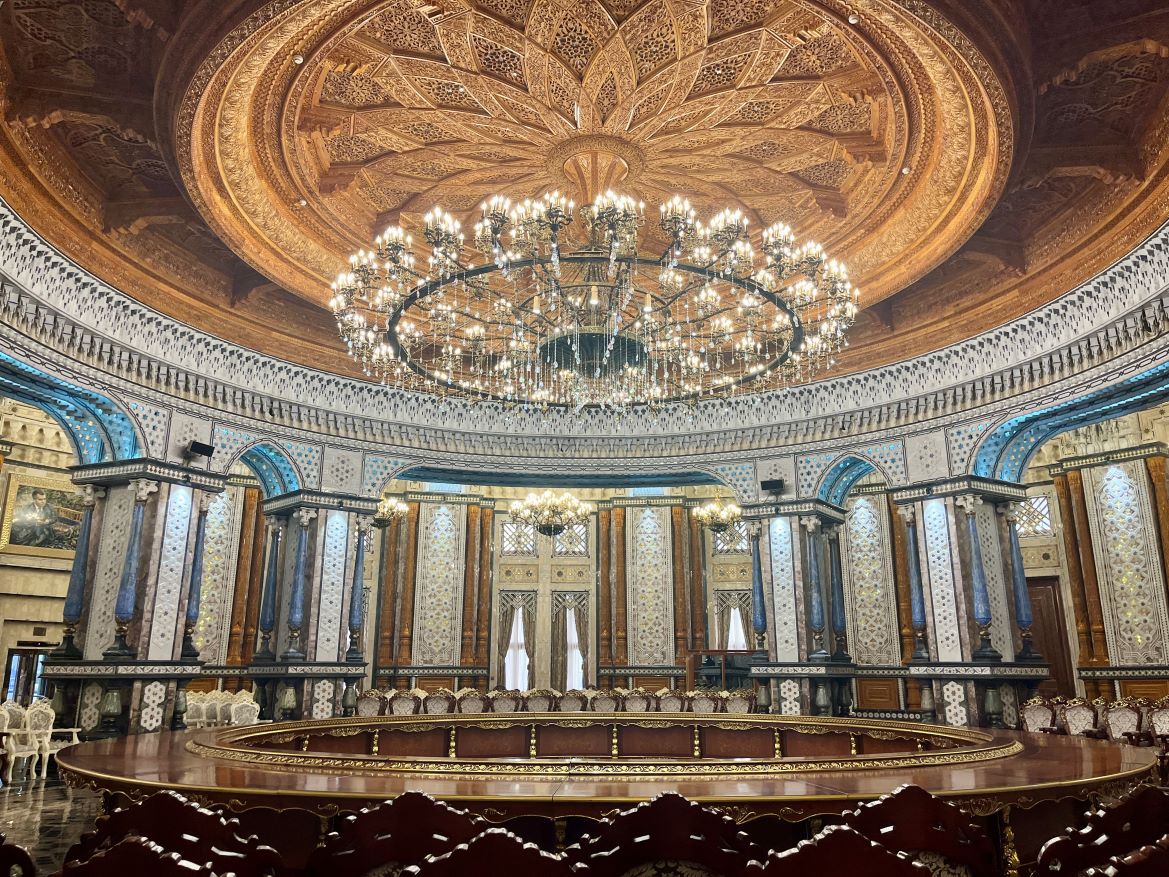
Inside, I was captivated by the elegantly adorned mirrored halls embellished with stunning motifs, including inlaid marble and finely crafted wooden pillars built without any metal nails. Additional amenities include an art gallery, a restaurant, a movie theatre, and even a bowling alley and snooker room. To see the various rooms, I had to join a guided tour, but admiring the intricate architecture from outside, along with the beautiful pavilions, fountains, and decorated columns, was just as impressive.
Took a Walk Around Komsomol Lake
Komsomol Lake is a beloved location for the residents of Dushanbe, and based on the number of locals enjoying the area, it seems to be the most popular attraction in the city. The man-made lake and its surroundings are ideal for family outings, featuring an amusement park and a zoo nearby, as well as various water activities on the lake itself.
I took a leisurely 30 to 40-minute walk along the scenic lakeshore, which provided a refreshing escape from the busy city centre and allowed me to reflect on the wonderful tour of Navruz Palace. I noticed several swimmers, but the muddy shoreline didn’t entice me, so I opted for a soda and a sambusa (a pastry filled with vegetables) instead!
Startled at the Ismoli Somoni Bridge
From Komsomol Lake, I crossed the Varzob River via the Ismoil Somoni Bridge, which features a remarkable fence on both sides of the road. This striking metal structure resembles a dragon with a curving spine, standing out magnificently, especially when illuminated at night, even though it appears somewhat out of place and serves no particular purpose, except as a useful windbreaker.
Close to the bridge is the impressive Wall of Great Tajik Writers, constructed in the mid-1980s to honour distinguished authors of Soviet-Persian literature. It showcases 11 life-sized sculptures in 9 very large niches. However, it’s somewhat misleading since only 2 of the 11 figures were actually born in Tajikistan; the others came from Iran, Afghanistan, and Uzbekistan.
Climbed Istiklol Tower
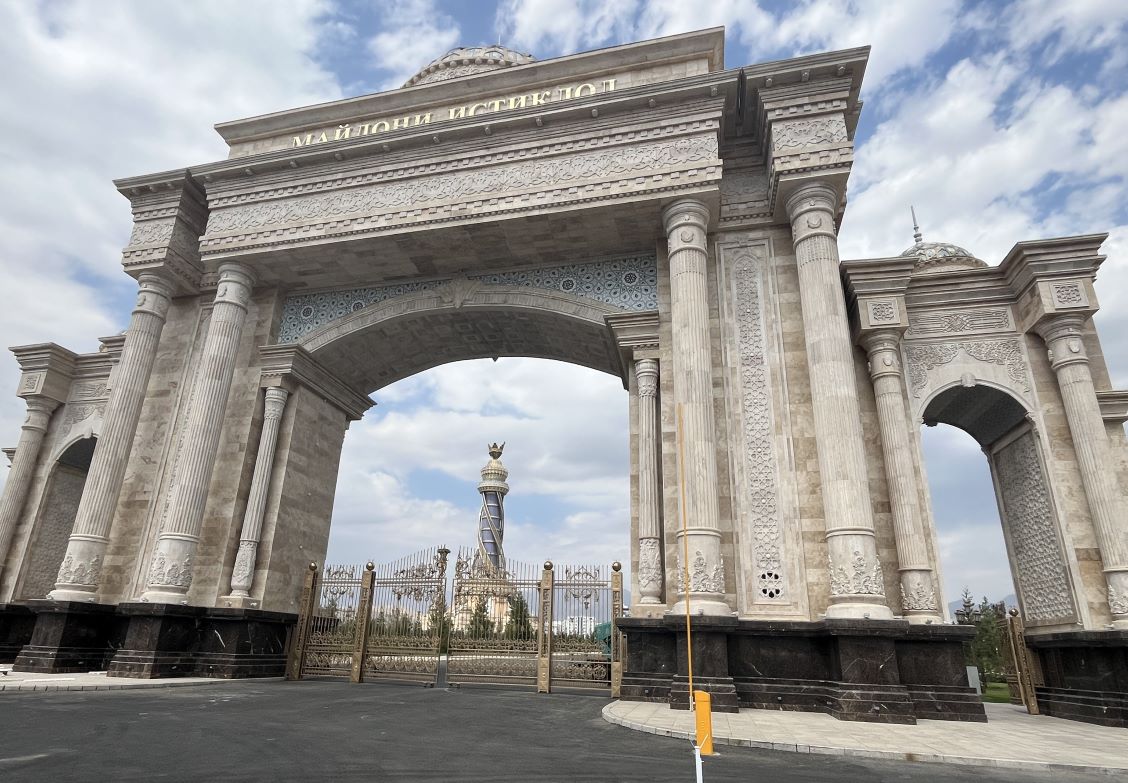
North of the city lies Istiklol Square and the striking Istiklol Tower, built in 2022 to celebrate the 31st anniversary of Tajikistan’s Independence. Standing at 122 metres tall, the tower symbolises the nation’s growing strength and prosperity.
The first two circular levels of the complex feature exhibitions highlighting various facets of life in Tajikistan, covering themes from agriculture and politics to art and cuisine, all with English captions. Surprisingly, not a single exhibit depicted people with disabilities or any type of social struggle; rather, they showcased a very buoyant population enjoying life in Tajikistan. After riding the lift to the 14th floor, I was treated to breathtaking panoramic views of the city from the viewing terrace.
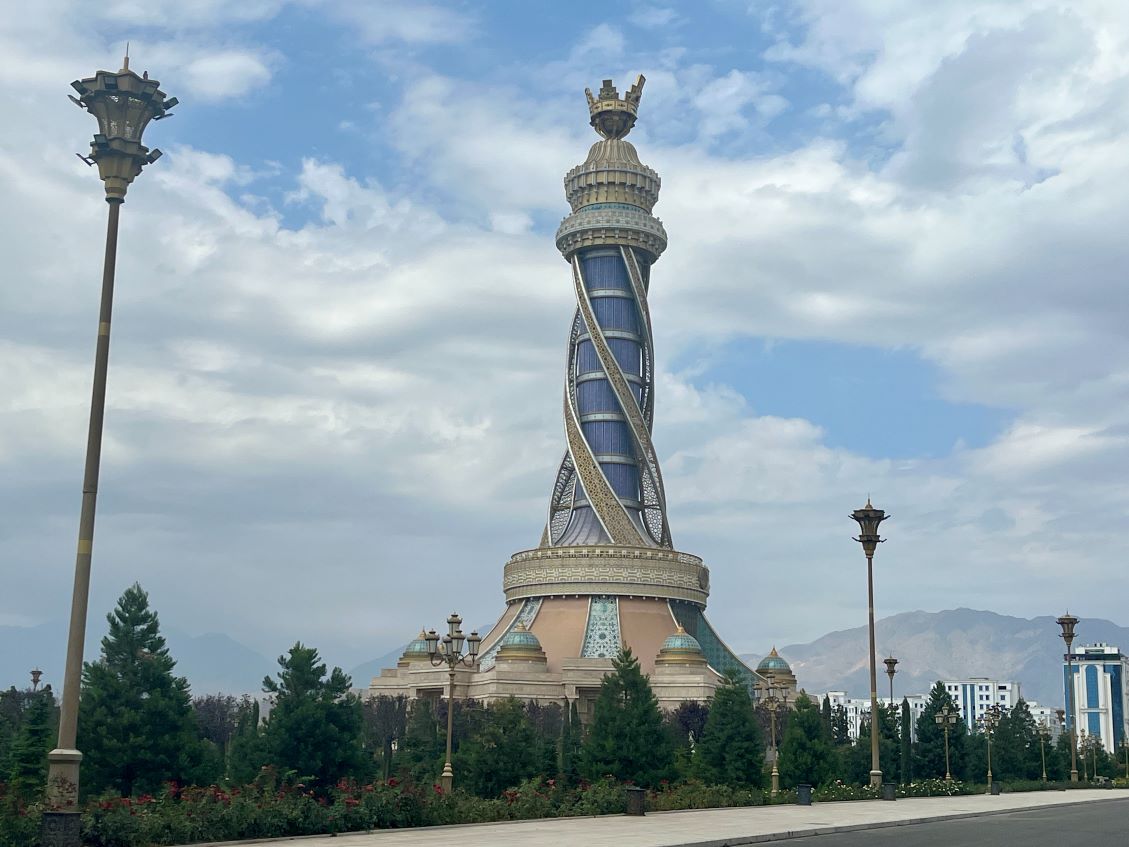
Interestingly, during my visit, I was the sole visitor in the entire complex. Although I was free to roam, I was closely followed by several cheerful young curators, who seemed to split their attention between their social media accounts and keeping an eye on me, literally standing within a few meters of my side!
Visited the National Library
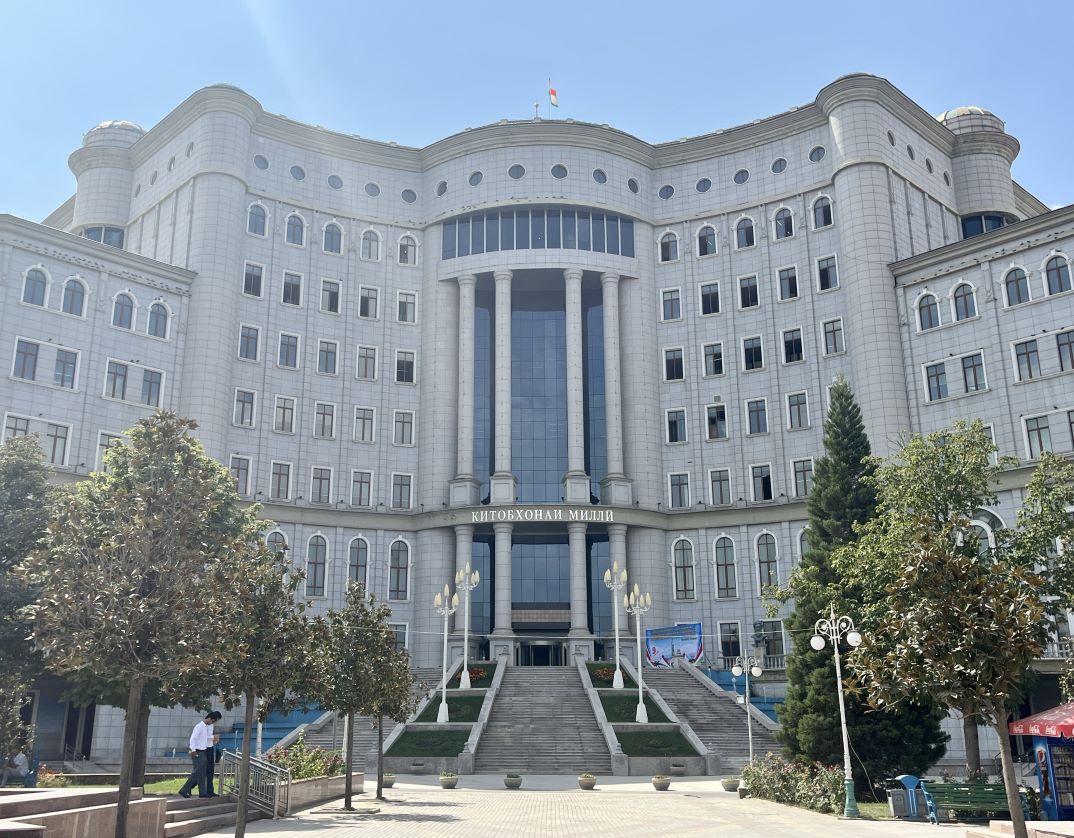
I originally planned to visit the National Museum of Tajikistan, but got distracted by the creatively designed National Library. Built for $40 million, the library is shaped like an open book and is home to over 3 million books, making it the largest library in Central Asia. As a foreigner, I was only allowed to explore deeper into the library with an administrative guide and after making a monetary donation. The tour turned out to be really interesting with a very proud curator who led me – more with pointing fingers and gestures, than words – around beautifully decorated wooden rooms designed for specific texts, such as engineering, braille, children’s literature, and medical resources, as opposed to the open-plan libraries commonly found at home. I was also fascinated by browsing through stacks of old pre-independent Soviet-style newspapers that were in the process of being digitised. As for the National Museum… I’ll have to plan another visit for that.
If I had more time, I would have explored the following places and activities:
- The National Museum (interesting exhibits on the history and culture of the Republic, as well as displays showcasing the flora and fauna in the region).
- Iskanderkul Lake (located 2.5 hours from Dushanbe, the picturesque views, nestled between mountains, would make it an ideal spot for relaxation and hiking).
- Seven Lakes in the Fann Mountains (a series of beautiful alpine lakes stretching over 14km with countless hiking trails available in the area).
Accommodation in Dushanbe
Dushanbe offers a range of accommodation options, including various hostels and a select few business hotels. However, the most favoured options tend to be family-run guesthouses and mansion hotels, which are nestled in gardens and serve a selection of hearty home-cooked meals for breakfast and occasionally dinner. The numerous hostels in the city are fantastic spots to meet other travellers and team up for excursions into the Fann Mountains or along the Pamir Highway, with hostel owners typically assisting in finding suitable drivers. I stayed in the characterless Vantan Dushanbe Hotel, but I highly recommend choosing the Green House Hostel. Though it’s located a bit outside the centre, it remains busy, clean, and is filled with helpful travel information. The hostel offers both private rooms and dorms at budget-friendly rates.
Eating in Dushanbe
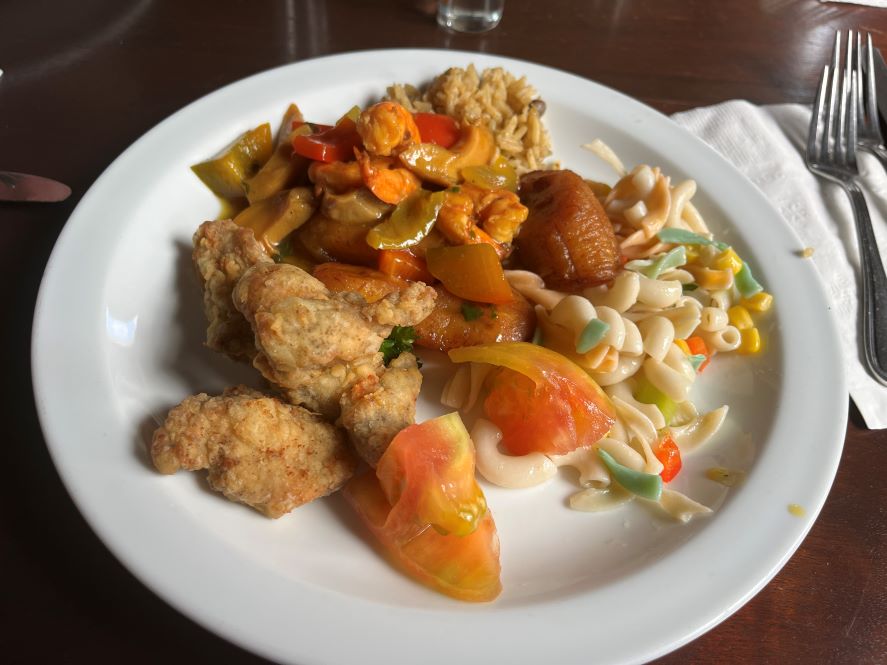
As a relatively small city, Dushanbe has a more limited variety of dining options compared to larger Central Asian cities. However, there are still plenty of cosy cafes and a good number of restaurants serving local dishes, along with familiar fast food options like pizza and burgers. Surprisingly, I noticed that Plov (rice cooked with meat or vegetables, onions, carrots, garlic, dried fruit, and a generous amount of oil) wasn’t as commonly found here as in other regions of Central Asia, yet Laghman, a dish of meat and vegetables in a broth with thick noodles, tomatoes, onions, garlic, and various spices, was available at every street corner! I highly recommend the local speciality of Tajikistan, vegetarian Kurutob, which consists of pieces of flatbread soaked in warm yoghurt and topped with tomatoes, onions, and herbs – it’s truly delicious.
Travellingterry Dushanbe tips:
- Tajikistan’s borders, particularly at Penjikent, have a habit of closing without notice. I always kept one eye on potential changes by checking Gov.uk and Smartraveller. The very good travellers forum on Caravanistan is also very useful
- If travelling onwards to the Pamir Highway, Visit Alay is the best source for tours and advice.
- Travelling around Central Asia, I collected more logistical information about Tajikistan, in particular Dushanbe, when I connected with travellers I met on the road. Very useful indeed.
- As most onward journeys involved road trips or hikes along ‘sensitive’ bordering countries, it was important to ensure that my travel insurance had relevant coverage.
- A strange tip, but I’m glad I continued using Chapstick when in Dushanbe. Although the city is not classified as ‘high altitude’, my road trip around the Pamir Highway beforehand definitely was, and apparently, lips do take a day or 2 to adjust or acclimatise to varying heights.
- There are not many official websites for Dushanbe, more for Tajikistan, but there are a couple to get started, such as Tourism Development Centre and Travel to Tajikistan.
Onward Travel: Dushanbe to Samarkand (Uzbekistan)
To get to Samarkand, I needed to travel overland to Penjikent (4 hours) and then take a taxi for the last 12 km to the border. To pick up a shared taxi to Penjikent, I got a taxi from the city centre to a parking lot in the suburb of Chorbogh, about 15 km north of Dushanbe. I arrived in Chorbogh by 8:30 am, and quickly found my shared taxi, which wasn’t difficult as all the drivers were hollering out their destinations and eagerly approaching any potential passengers. My taxi filled up within 10 minutes, and it turned out to be the most enjoyable shared taxi ride I’ve ever had, featuring singing, sharing of snacks, and friendly banter via the use of Google Translate. The views of the rivers below were breathtaking as well.
Most passengers disembarked at Penjikent, just under 30 minutes from the border, but fortunately, for an additional $2, the driver took me straight there, sparing me the trouble of finding another taxi or bus. Crossing the border was straightforward; there was no waiting, and the process on both sides was efficient. However, I did find it a bit frustrating to wait nearly 1.5 hours at the Uzbekistan border for my taxi to Samarkand to fill up, as there seemed to be more taxis than passengers!
