Santa Ana, located 65 km from the capital, is the second largest city in El Salvador. The city’s colonial centre, Parque Libertad, features a prominent Cathedral that can be seen from every corner. However, the real attractions are the day trips from Santa Ana, which offer opportunities to climb volcanoes, explore quaint villages that seem stuck in the 20th century, and enjoy stunning mountainous landscapes.
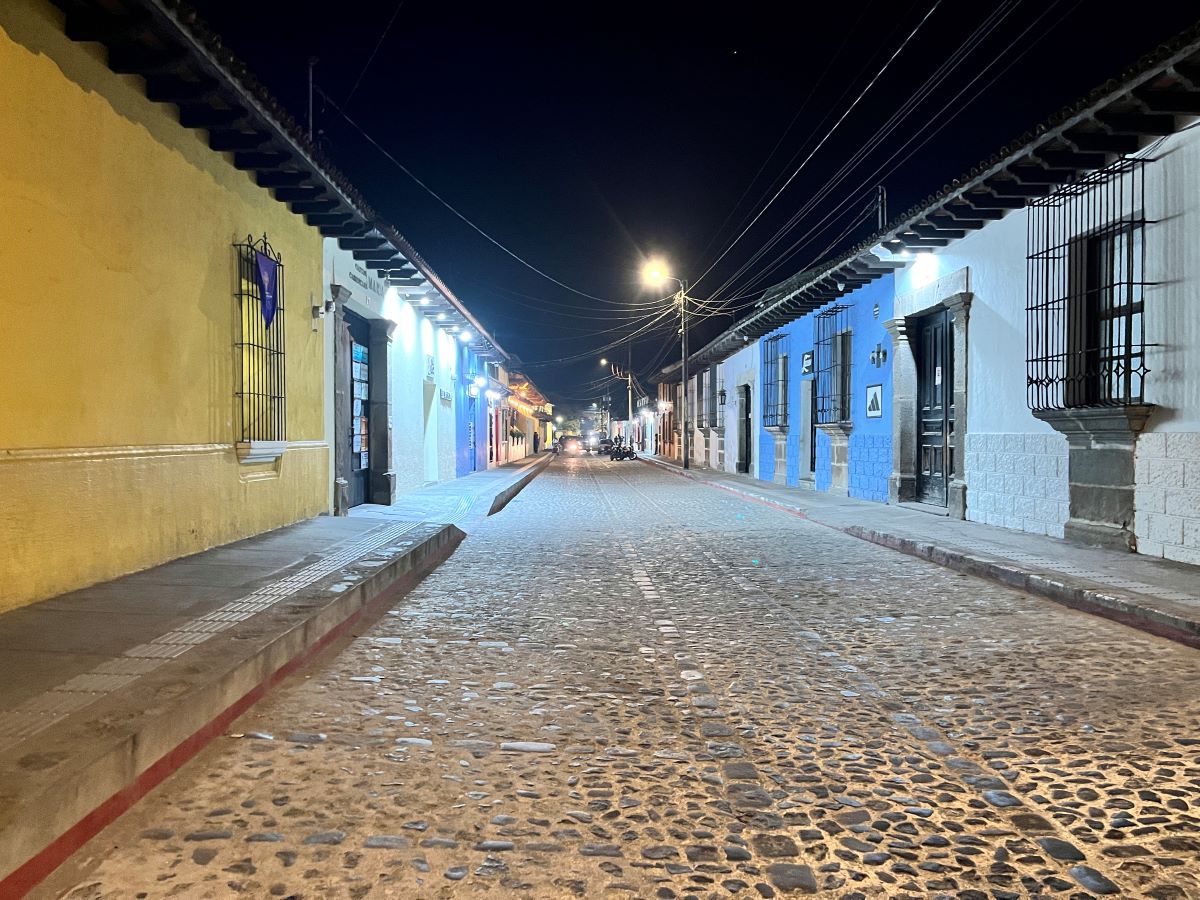
Contrastingly, outside of the square, the atmosphere felt quite different, with many areas appearing unattractive and neglected. When the markets and shops closed for the day, a deserted and eerie vibe took over, creating a sense of caution. Except for Parque Libertad, it was completely dark by 8 PM. There were no streetlights, and many homes inside seemed to be lit with dim lighting or lamps, with the distant sound of a TV coming from behind steel front doors.
My Santa Ana Highlights
During my four full days in the Santa Ana region, I engaged in a wide variety of activities. Along the way, I met some wonderful, friendly, and welcoming locals who introduced me to the delicious world of pupusas!
Climbed Santa Ana Volcano
I needed to plan this hike carefully, as transportation to and from the starting points was limited. Together with a few other travellers, I took the 07:30 local bus from the bus station in Santa Ana to the start of the hike at Cerro Verde Park, which took about 1¾ hours. Officially, we were supposed to wait until 11:00 for officials to assign mandatory guides, but since there were a lot of tourists that day, we set off by 09:30 after paying $10 each for the park entrance and guide.
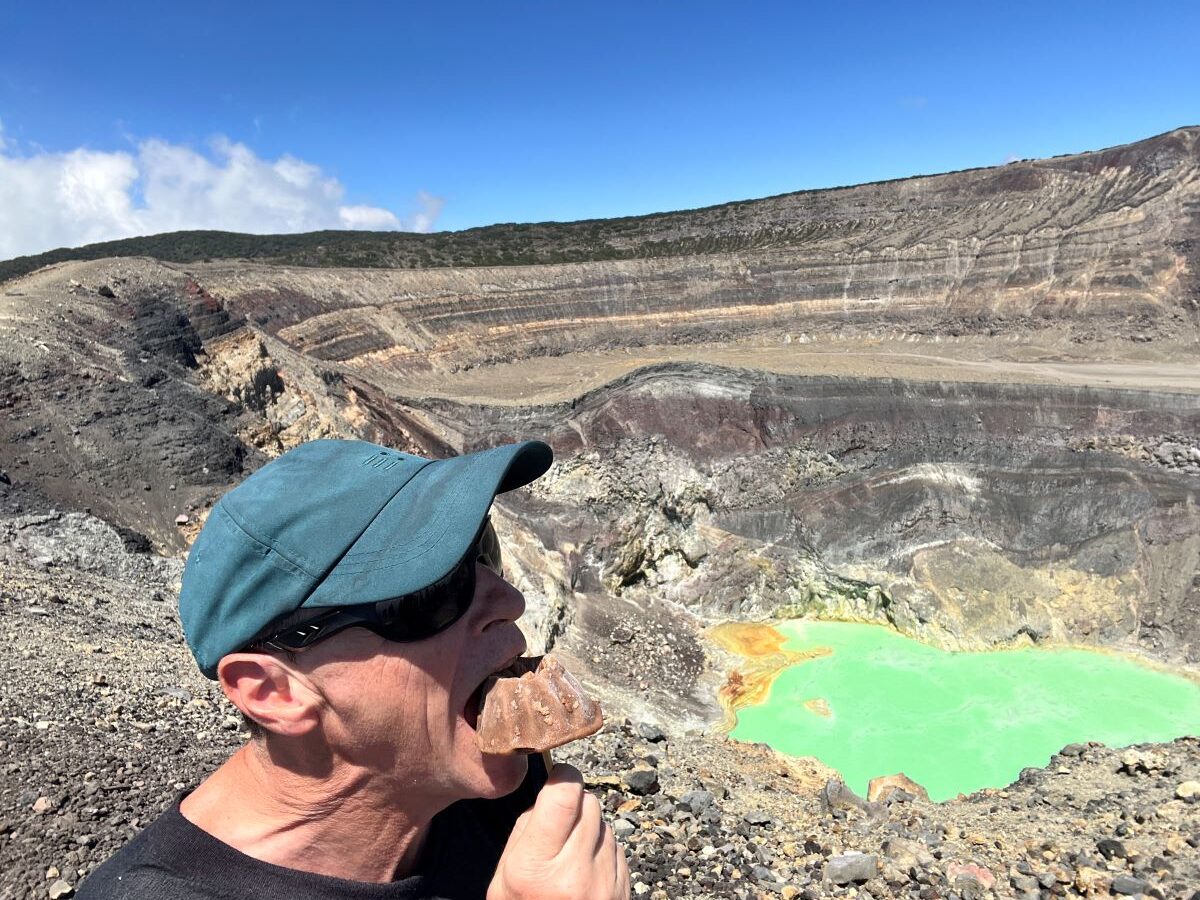
The hike itself wasn’t difficult and was nowhere near as challenging as Acatenango in Antigua, Guatemala. However, it was a consistent ascent along twisting, stony gravel paths with occasional boulders to navigate. By 11:15, we reached the summit, and the views of the crater’s green lake below were spectacular. From the top, I could see for miles in every direction, though there was always a faint whiff of sulphur. Looking deep into the crater, I noticed water vapour rising from the depths of the caverns, reminding us all that the volcano was still very much active!
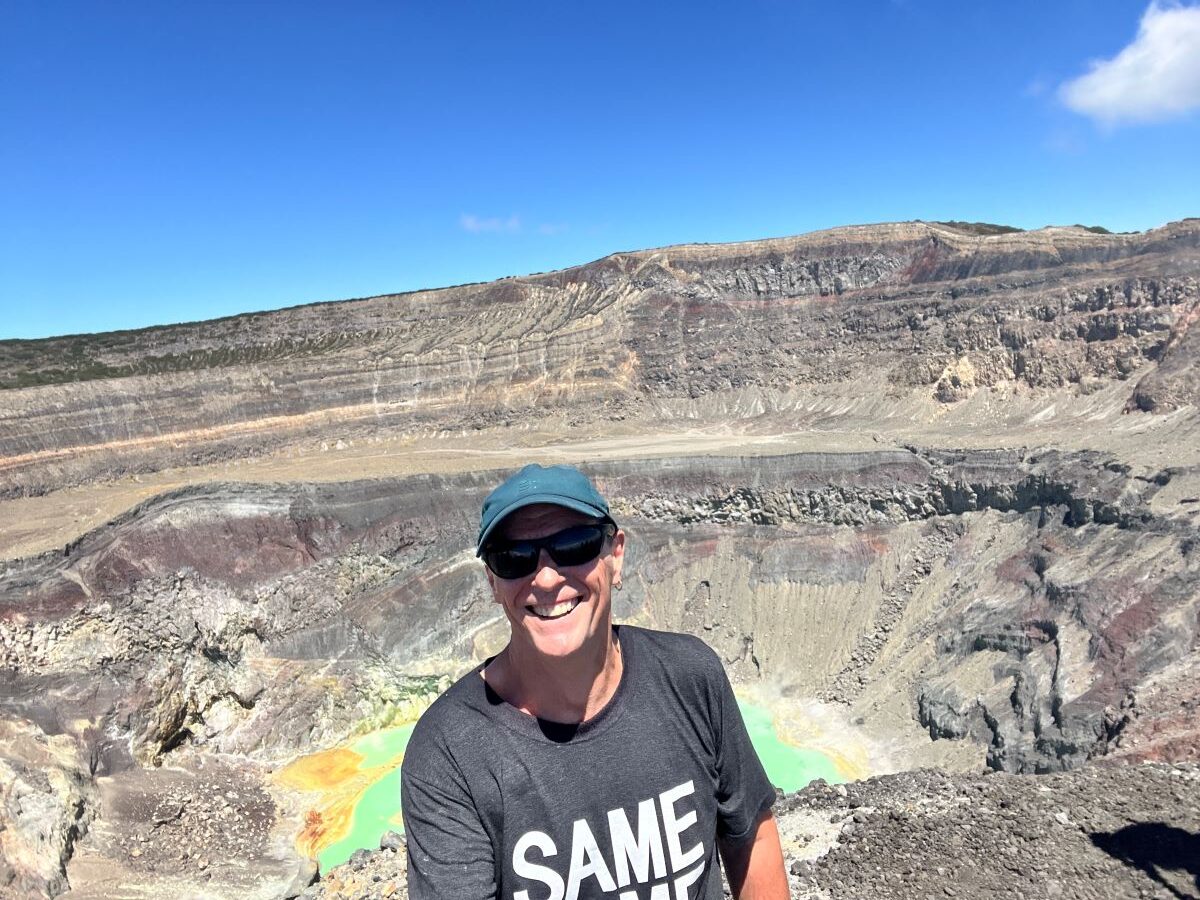
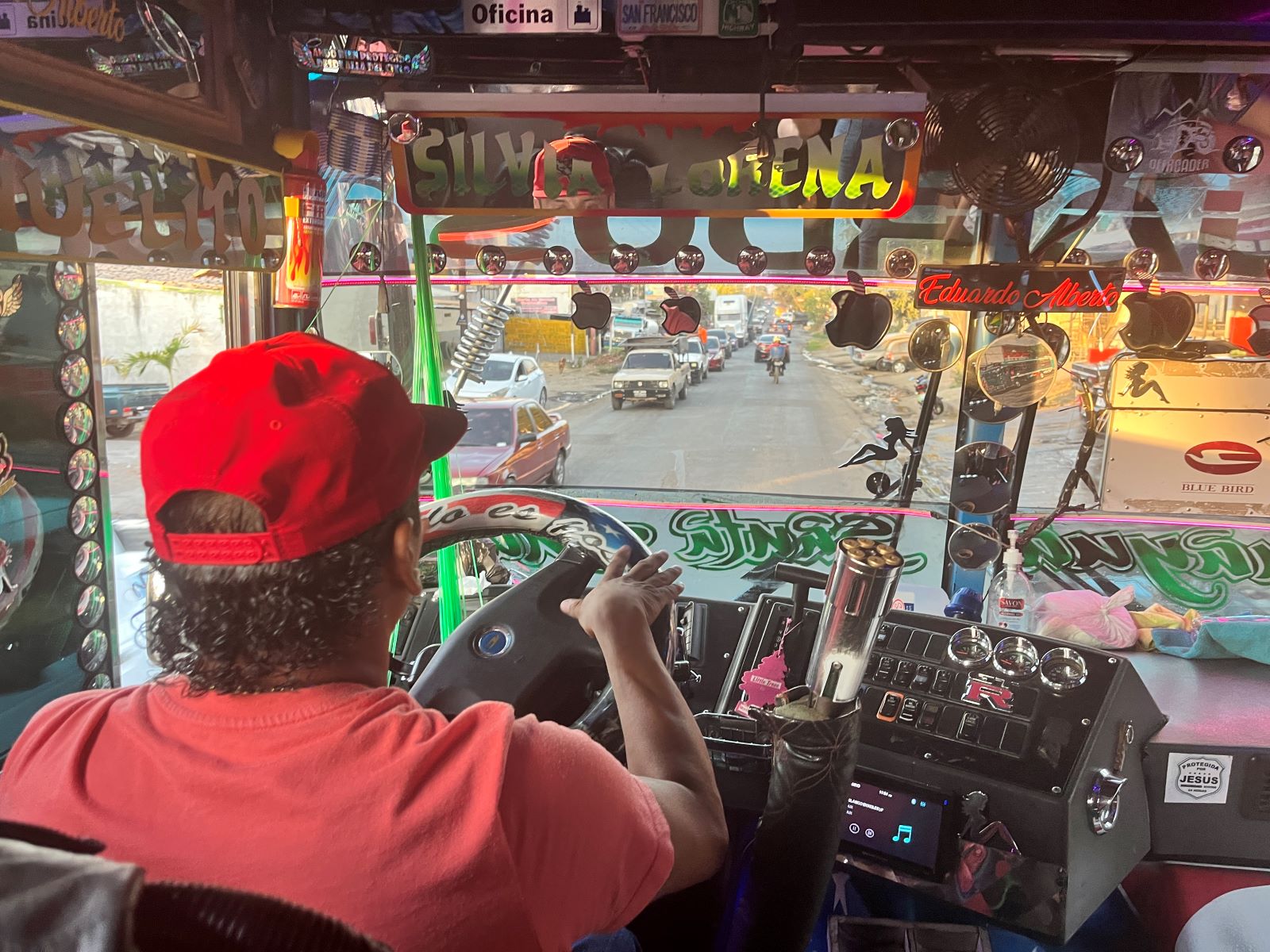
After an ice cream (apparently, it’s the thing to do when at the top), and an embarrassing trip over a few loose rocks where I landed flat on my backside – along with 50 pairs of eyes staring at my misfortune, I began the hour’s descent. I boarded the late 1 PM chicken bus (it arrived at 2:30 PM) back to Santa Ana, which this time took twice as long as the driver stopped every minute or two to pick up, drop off or just chat endlessly with locals.
Explored the city with a guided Free Walk
I joined a very good ‘free’ walking tour group, where I learned about the city’s history, visited local markets, and tasted unique regional fruits along with refreshing horchata – a creamy drink made from milk or drained rice, sugar, cinnamon, and almonds. After sampling a couple of Salvadoran salad dishes, we visited a coffee shop, where we had to knock on an obscure plain door to be let in! Inside, my ‘V60’ coffee beans were weighed to ensure the correct amount was used before it was brewed.
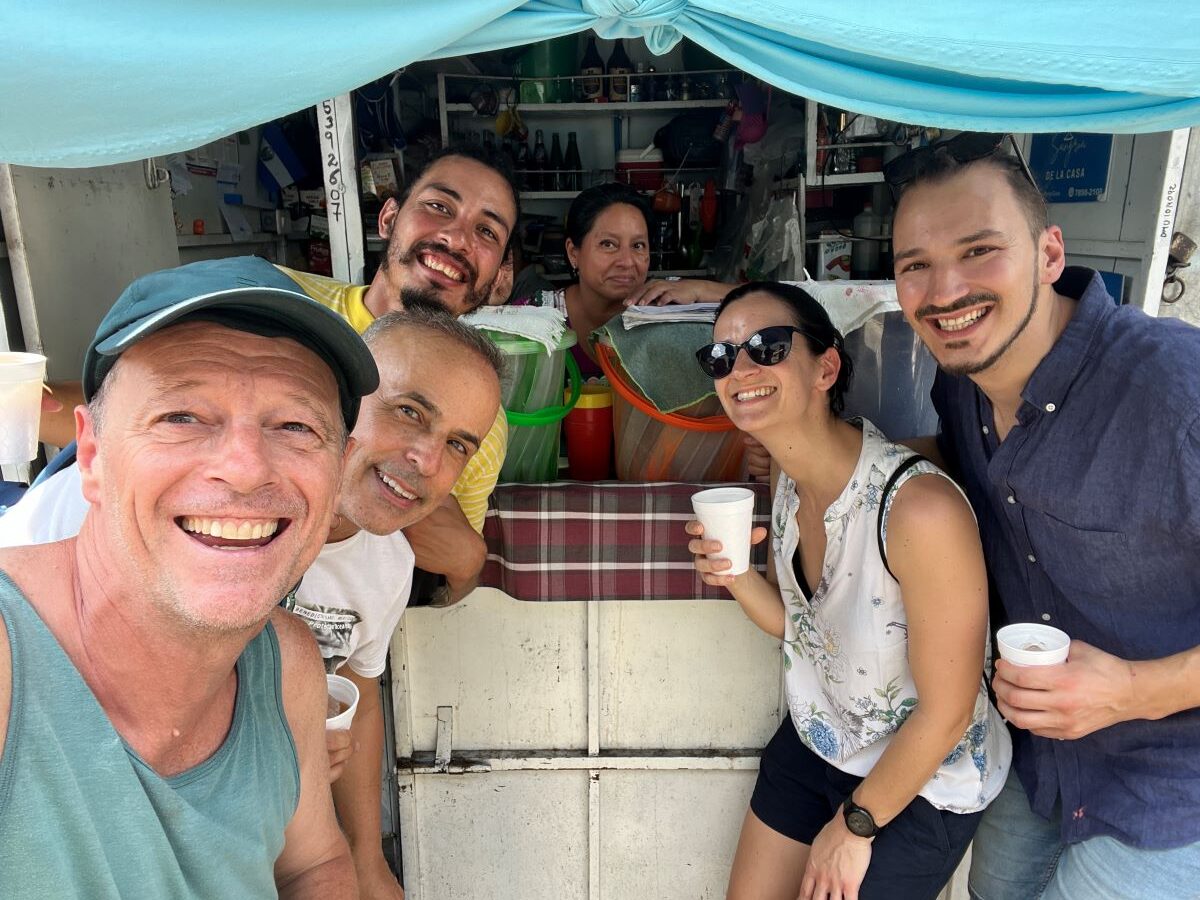
During our visit to the café, our guide shared intriguing insights about life in El Salvador, particularly before and after gang incarcerations. His personal experiences and future aspirations captivated us, especially when he discussed the noticeable decline in the number of Salvadorans with tattoos compared to other Central American countries. He explained that tattoos in El Salvador have historically been used to mark gang members, with specific designs linked to their crimes. This association has led to a significant drop in tattoo prevalence, as many locals now fear detention, even for tattoos that aren’t gang-related.
Followed the Ruta de las Flores (Route of Flowers)
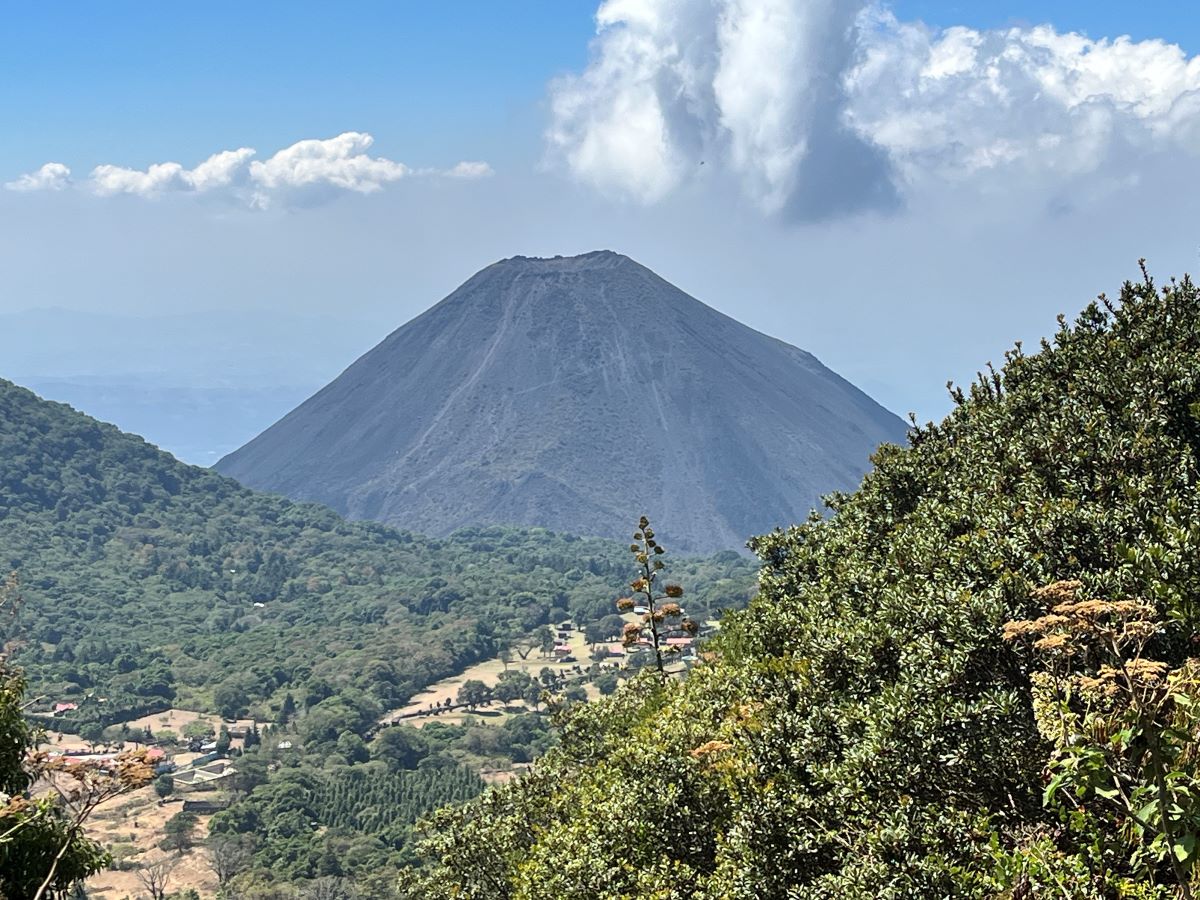
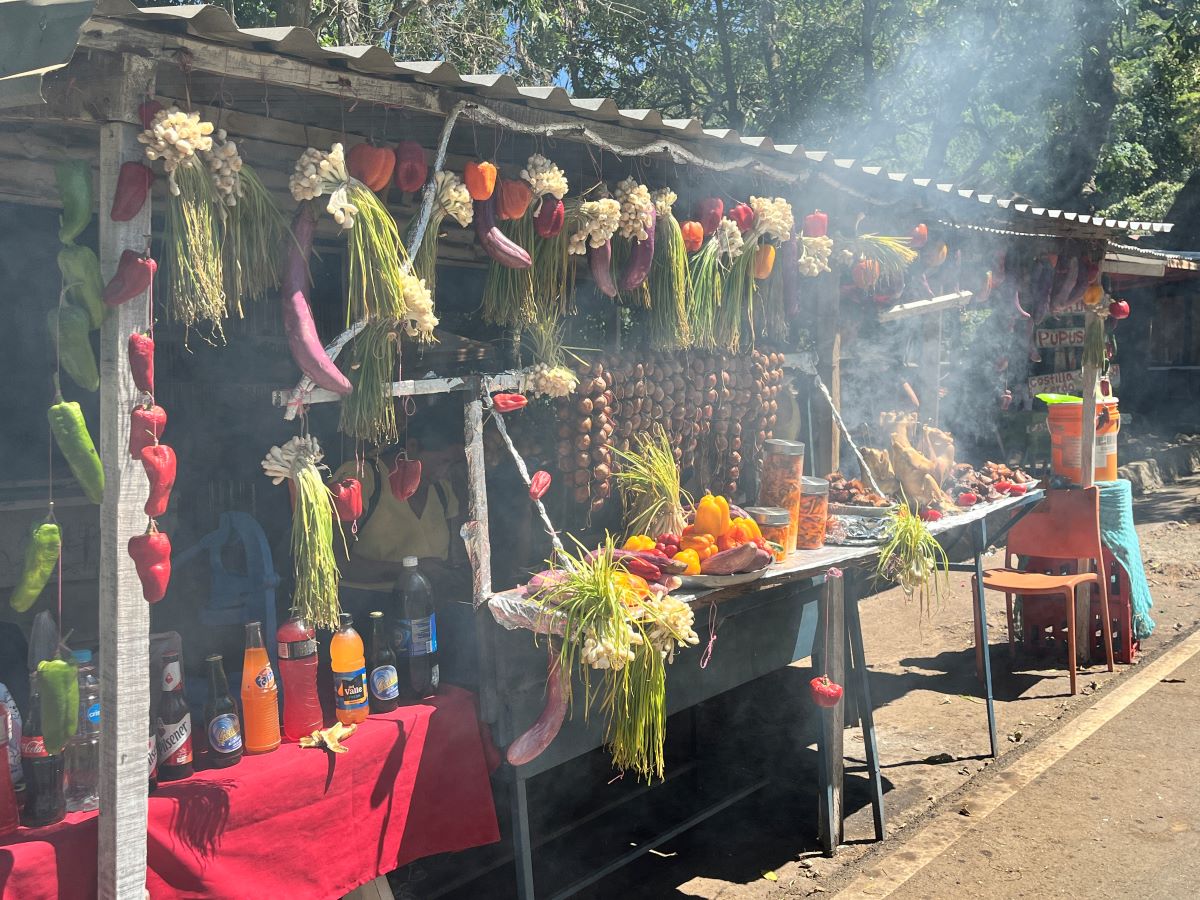
Renowned for its charming rural life and dramatic landscapes, the Ruta de las Flores is a region where a main road connects seven small towns between Ahuachapán and Sonsonate in the western highlands, south of Santa Ana. This long, winding road meanders through lush green hillsides and coffee plantations. During spring, vibrant flowers bloom in every corner along the route, with volcanoes in the distance that stand ominously over the colourful towns.
Heading to the furthest town first, I managed to get to all four in this order: Ahuachapán, Ataco, Apaneca and Juayúa, which is quite impressive as I used local buses rather than hiring a car or driver for the day, and at a fraction of the cost.
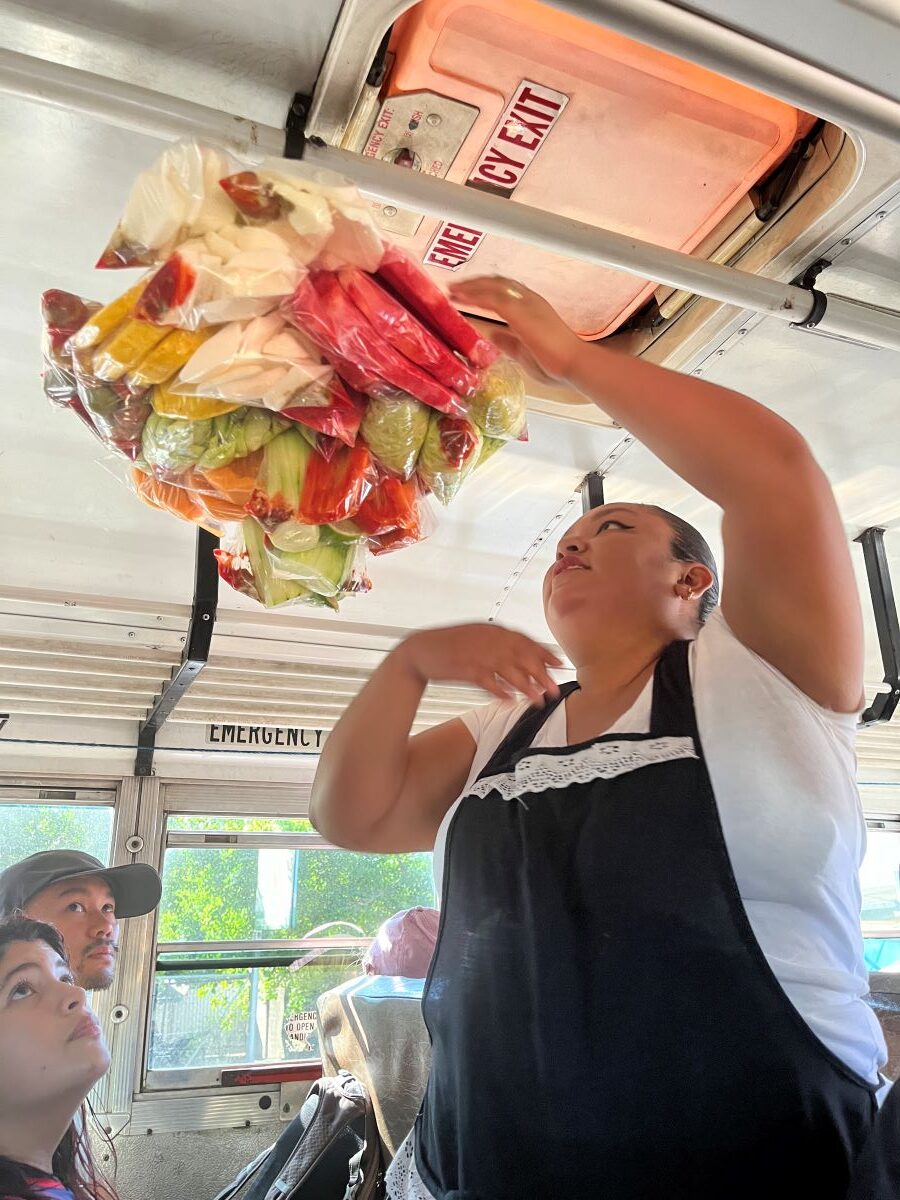
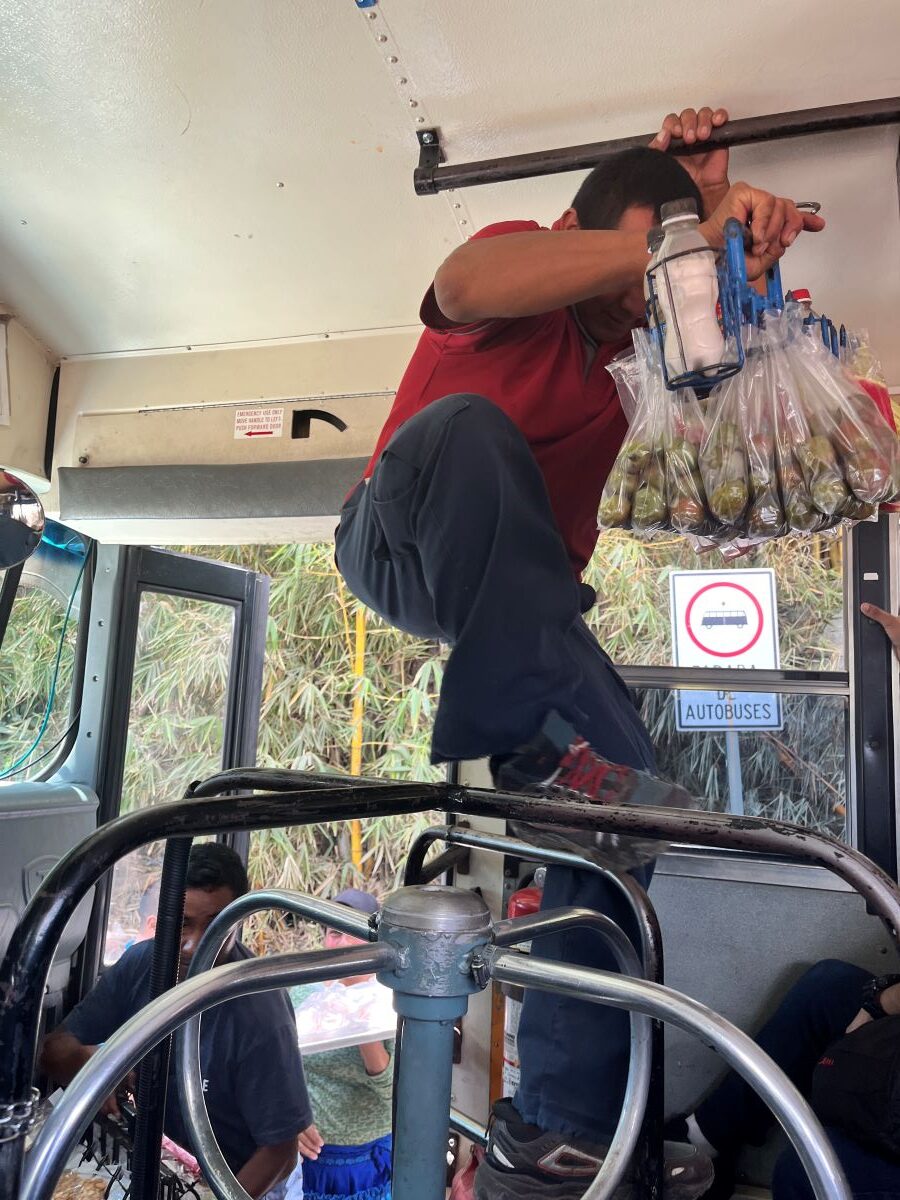
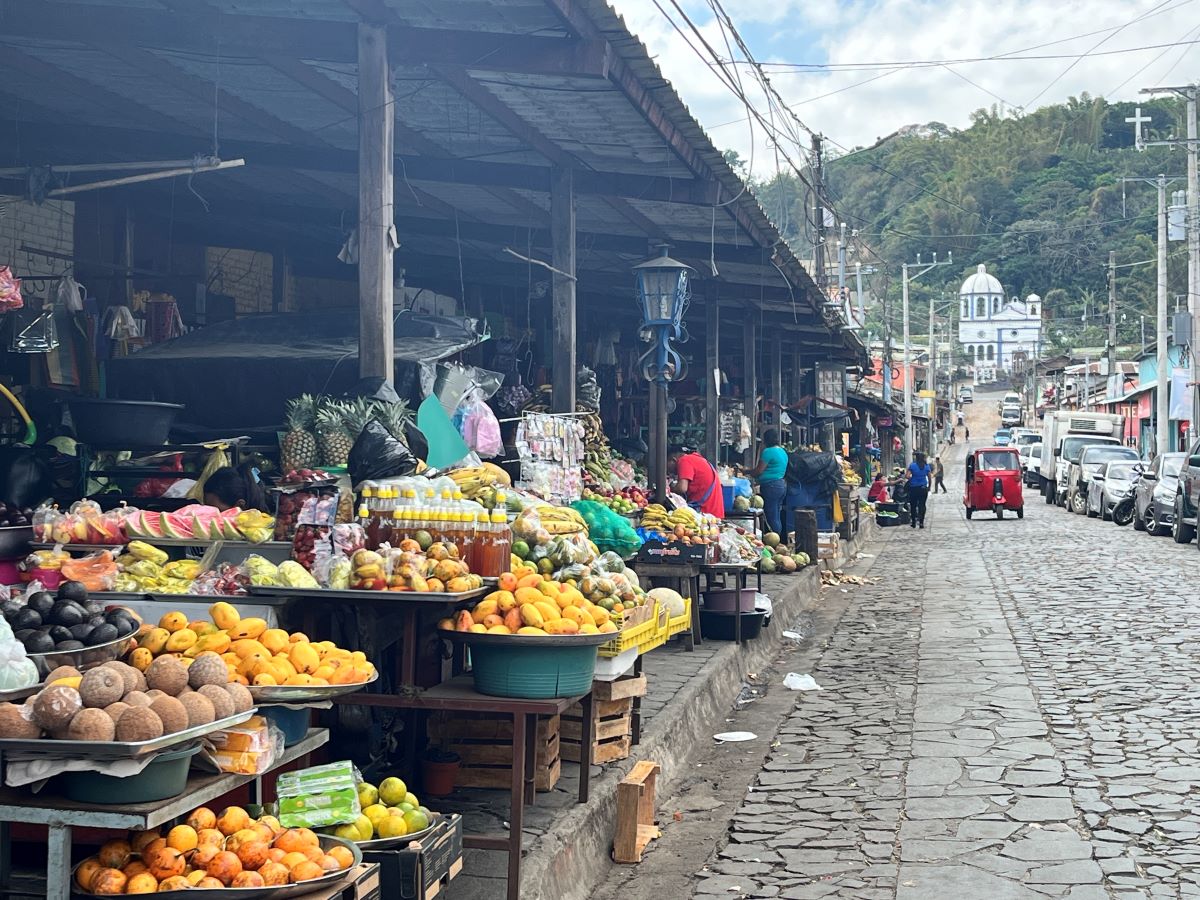
Ahuachapán – After taking the #210 bus from Santa Ana (which took about an hour and cost $0.50), I arrived in Ahuachapán and wandered around a busy, vibrant market. It was fascinating to watch the daily commerce unfold, but there was not much else in town to maintain my interest. I hopped on the #249 bus to continue to the next town, heading back in the direction of Santa Ana.
Ataco – This is the second-largest town on the Ruta de las Flores and one of the most popular. Ataco has a laid-back atmosphere with plenty of places to eat, drink, and stay. The cobblestone streets, colonial-era buildings, and surrounding mountains created a perfect setting for my first pupusa of the day. Unfortunately, the entire main square was being renovated and completely surrounded with corrugated steel. However, I did become totally absorbed in the colourful murals blanketing the walls of the building in the centre of town, and the unique handicrafts sold by local artisans in shops nestled in streets like something from the wild west. Later, I found out that there was a mirador (viewpoint) just outside of town, but for some unknown reason, I missed it!
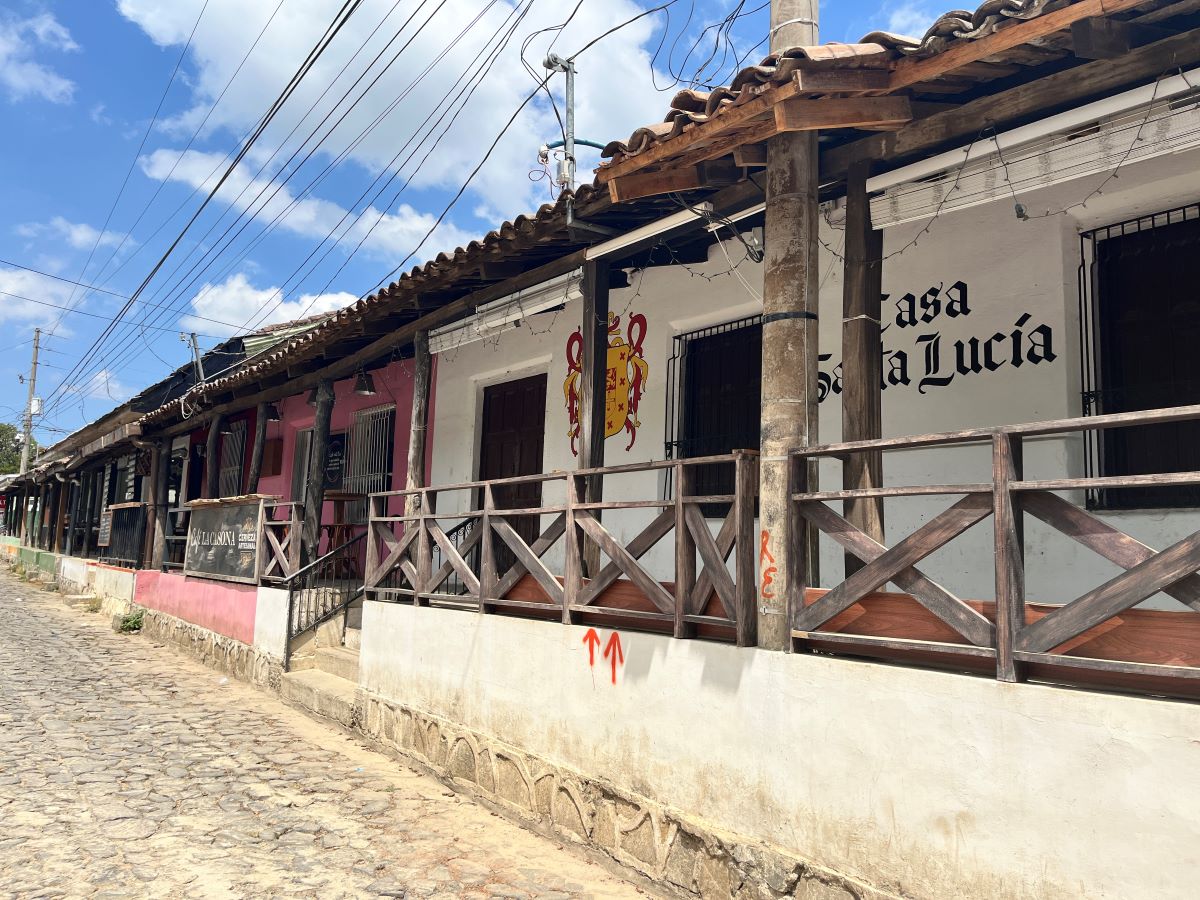
Apaneca – Twenty minutes further, I arrived in another vibrant coffee town, more known for its adventure activity centre. The vibe here was different from Ataco, with a more industrial feel, but it was still worth strolling along the cobbled streets and passing adobe houses (homes made from mud, clay, straw, and dried into a brick-like material).
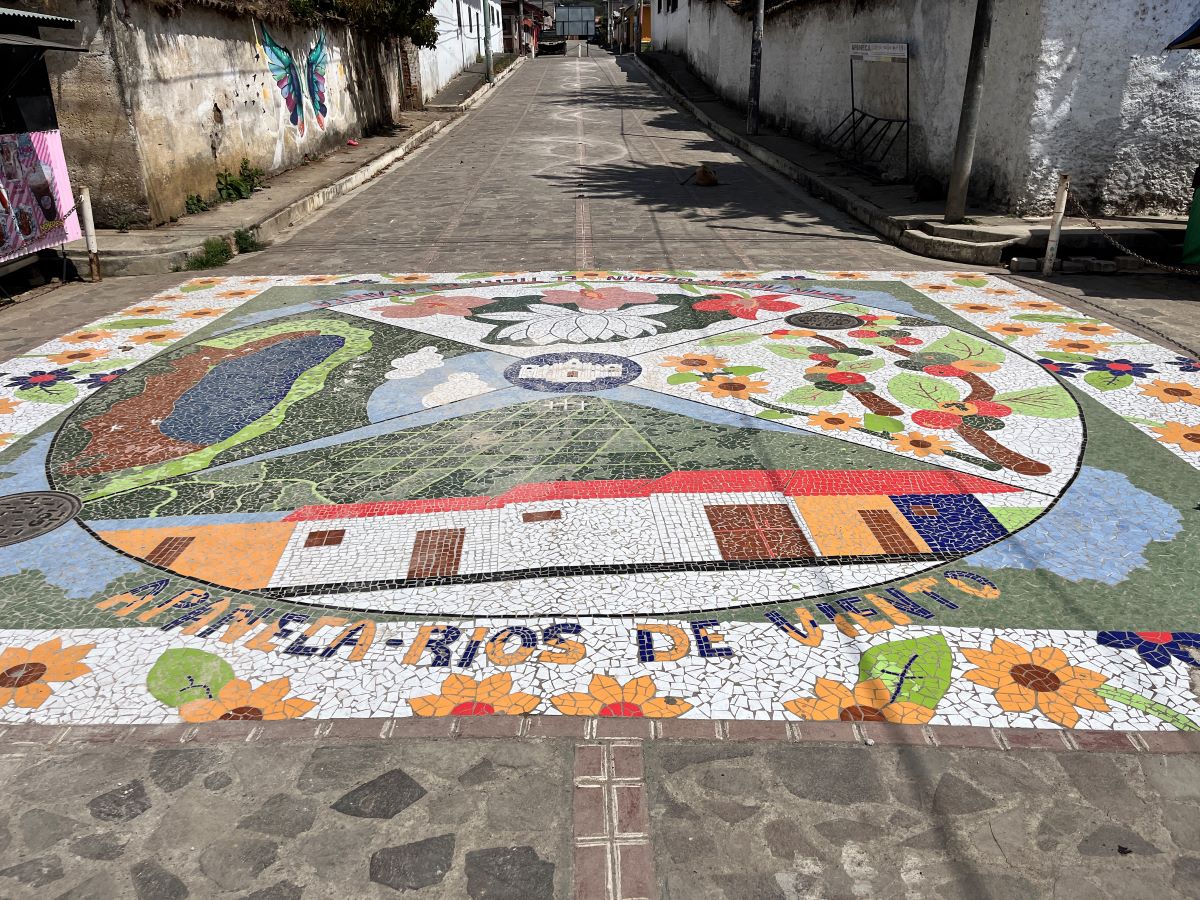
The beautiful Iglesia San Andrés in the town centre was once the oldest church in the country until an earthquake in 2001 reduced it to rubble. It has since been rebuilt to resemble its original appearance. Just a few minutes walk from the church, along the main streets, stands an unusual but colourful mural in the middle of the road at an intersection – a very creative positioning for a mural.
Juayúa – This was my last stop and the largest settlement along the Ruta de las Flores. It’s probably the most popular colonial town, known for its attractive cobblestone streets and its weekend food festival, which unfortunately was not happening during my visit. Instead, I explored the town and its vibrant central square. I also visited the colonial Iglesia Cristiana Josue Juayúa, which featured a statue of a black Christ on the crucifix instead of the traditional white figure, a decision made by the Spanish colonialists to avoid scaring the local people who were unfamiliar with white skin.
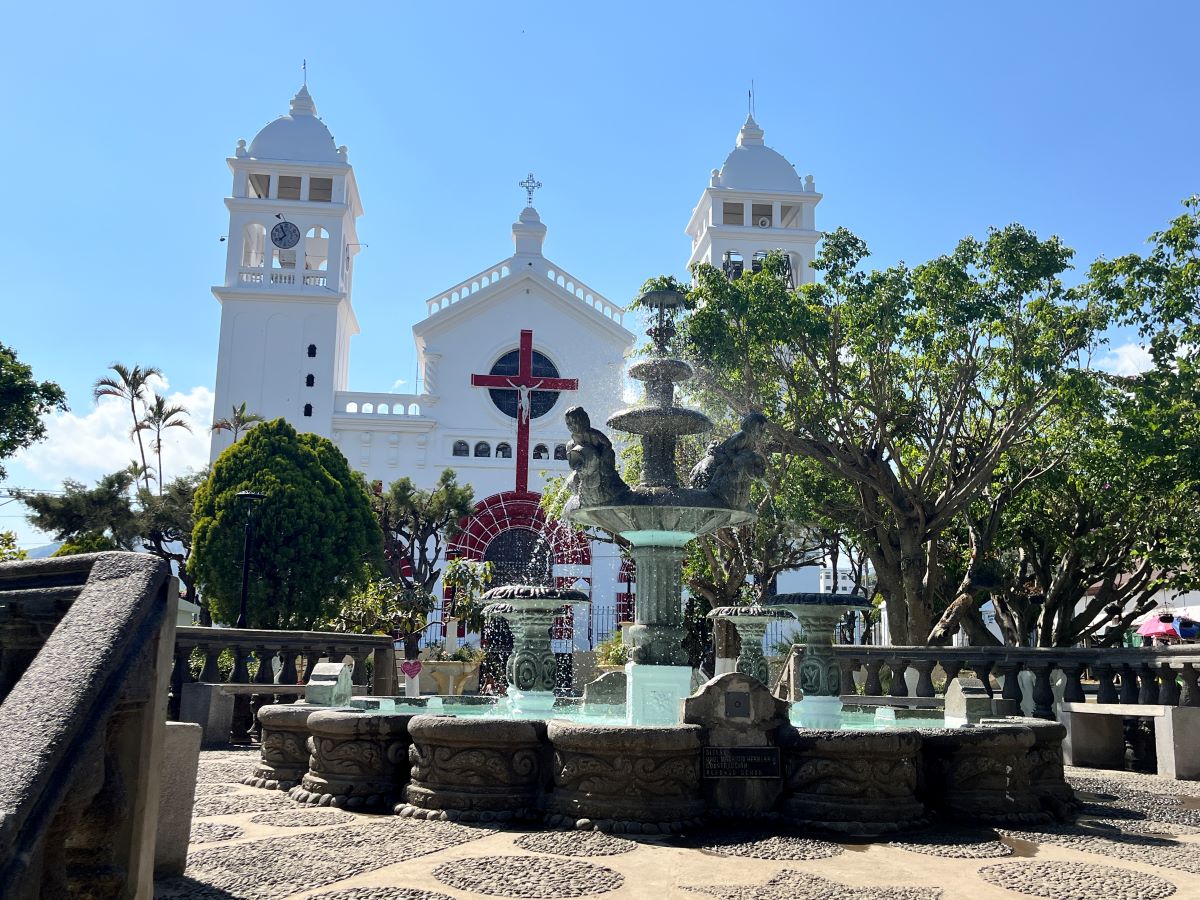
The return journey on bus #238 back to Santa Ana was quite an experience! The bus was packed with market trolleys, sharp elbows, shopping bags, and loud music blaring from the front speakers near the DJ, sorry… I mean, the driver! Unexpectedly, just 2 kilometres from Santa Ana, we hit such heavy traffic that he pulled over and told everyone to get out and walk. It certainly made for a long day!
Scaled the Cathedral de Santa Ana
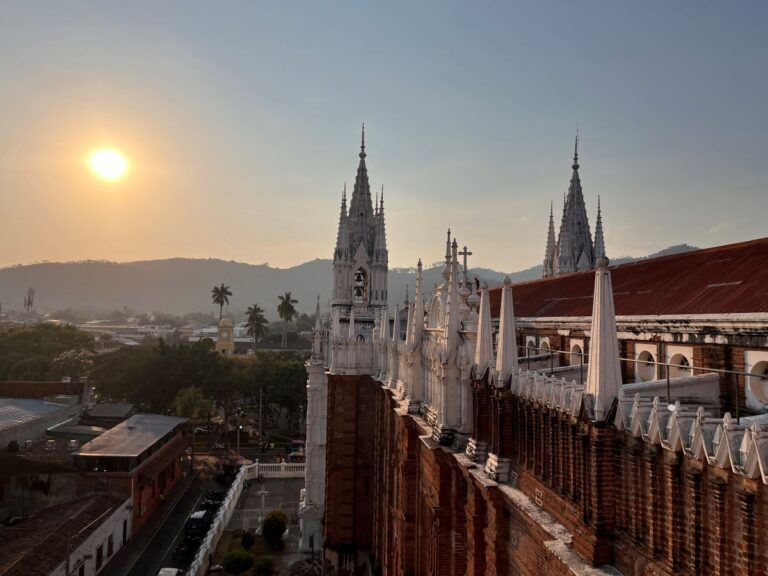
The most notable sight in Santa Ana is the Gothic-style Cathedral, which features towering white spires and ornate mouldings along its façade. Inside, the pillars and tall archways are a striking mix of grey and pink blocks. This architectural style is unique throughout all of Central America.
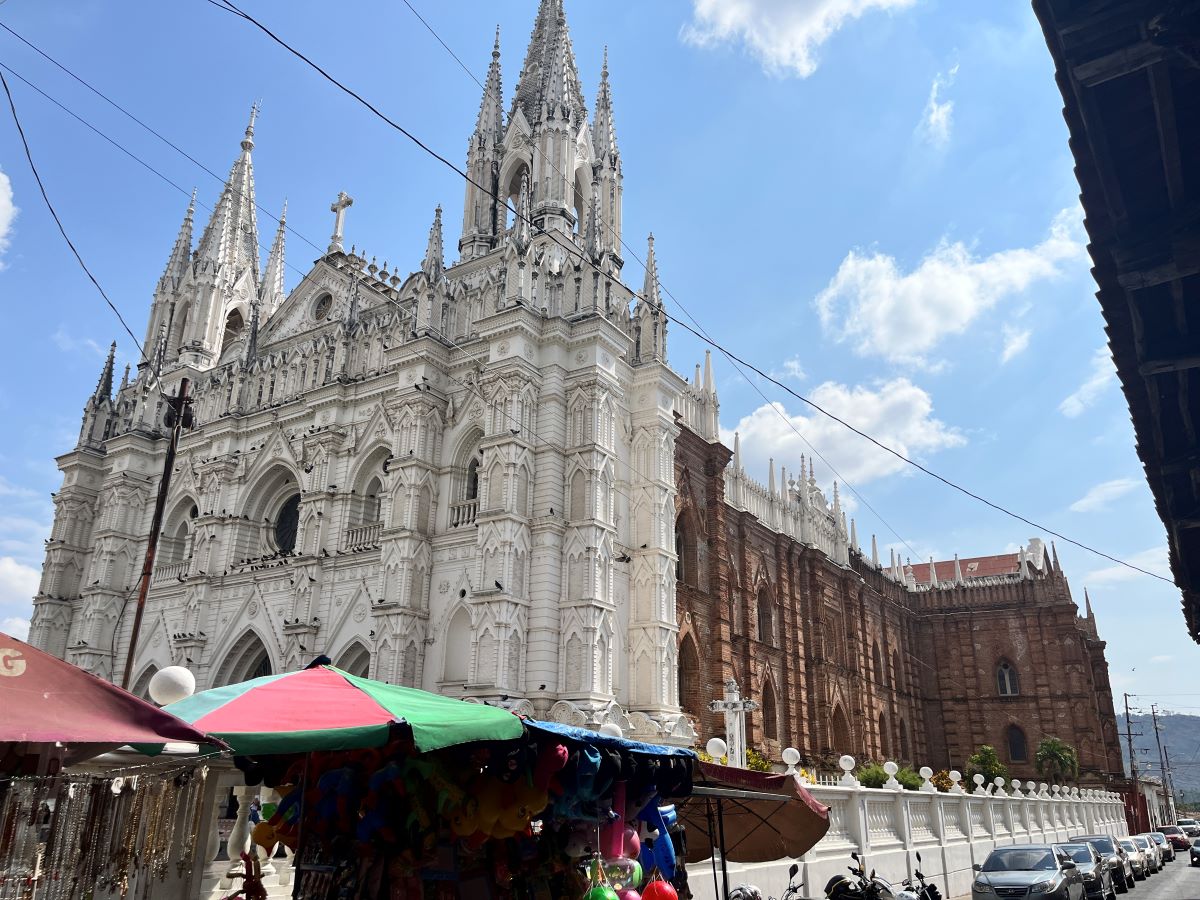
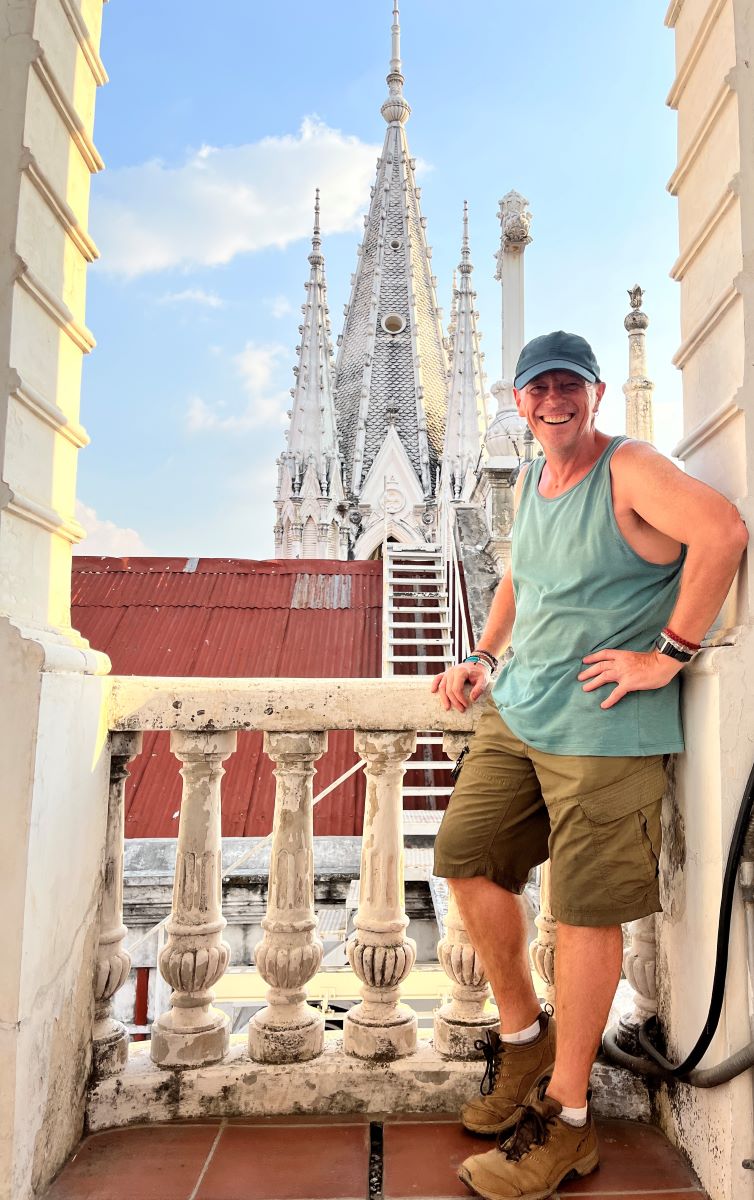
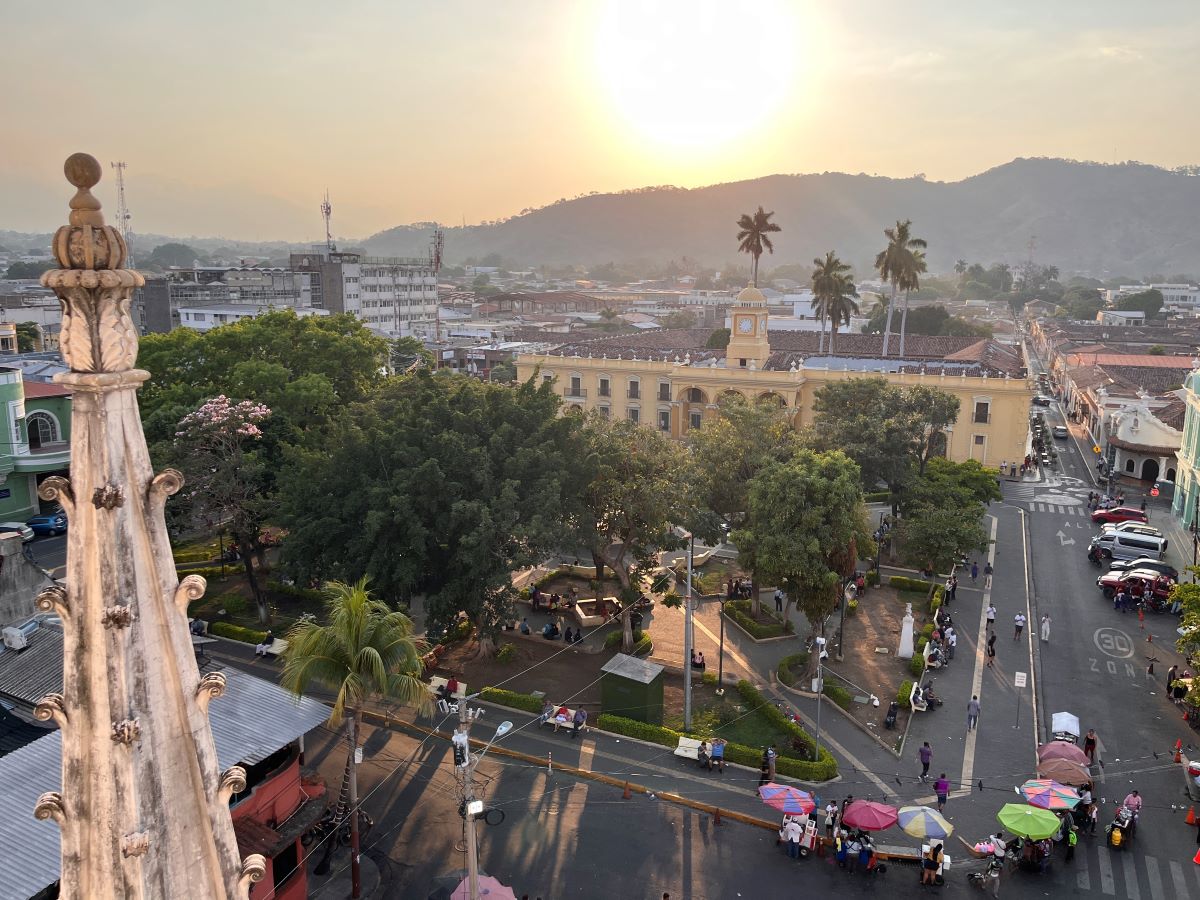
One of the most incredible experiences was walking along the Cathedral’s rooftop, where I got an up-close view of the iconic white steeples and enjoyed stunning vistas over Parque Libertad, the city, and the surrounding landscapes.
Other attractions around Santa Ana
Parque Libertad is a popular gathering place for families and friends to socialise and enjoy food and drinks along the colonnaded pavements surrounding the square. With many smiling locals, street food vendors, and plenty of benches, it’s an excellent spot to watch an ‘extremely happy’ bunch of people enjoying life.
I also found the crumbling ruins of the abandoned Mariano Mendez Art School interesting to explore. While there were no artworks to see, the historic architecture remained intact, featuring decorative motifs on the arches and many columns still standing. After visiting the busy Parque Libertad, this peaceful place offered a tranquil atmosphere. Entrance is free, but instead of collecting a ticket in Parque Libertad as I should have, the guard on duty kindly allowed me to enter.
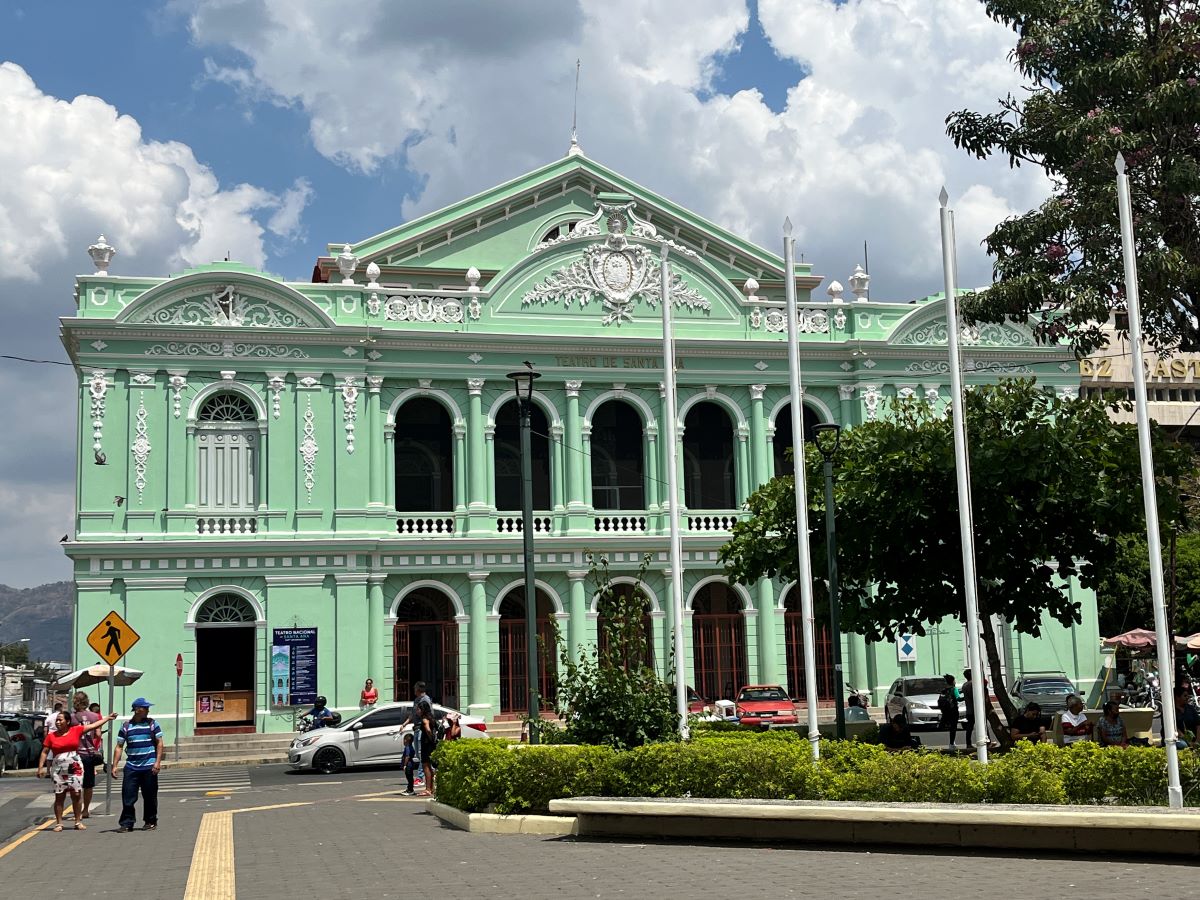
The Teatro Nacional de Santa Ana, located at Parque Libertad, is an opulent Renaissance-style building once funded by a tax on coffee beans. This venue served as an entertainment hub for the elite during Santa Ana’s economic peak during the early part of the 20th century. A true epitome of wealth, culture, and excess, it boasts stained-glass windows and elegant marble staircases. In 1933, it was converted into a movie theatre, but today it hosts live performances that are much more affordable for local residents.
If I had more time, I would have explored the following places and activities:
- Lake Coateque (an enormous volcanic caldera filled with blue water, accessible from Captain Morgan’s hostel via a patio).
- Tazumal (explored Mayan ruins – Tazumal meaning ‘pyramid where victims were burned!’).
- Pupusa cooking class (making the dough, cook the pupusas, and prepare various fillings).
Accommodation in Santa Ana
Santa Ana may not be the best place to find quality 4-star and 5-star hotels; instead, it offers a variety of guesthouses, apartments, and numerous hostels. I stayed at the excellent Hostel Casa Verde, which was set in a great location, with comfortable rooms and dorms, and a superb kitchen, including a rooftop swimming pool and lounge area.
Maybe a hint of the country’s history or current situation, but inside the hostel’s metal entrance door, there was a clear warning: “Please, guest – do not open the door when you hear the bell.” The receptionist emphasised this during check-in. Despite this warning, I had a peaceful stay, and with the added bonus of the on-site restaurant serving up delicious breakfast, with a different menu every day.
Eating in Santa Ana
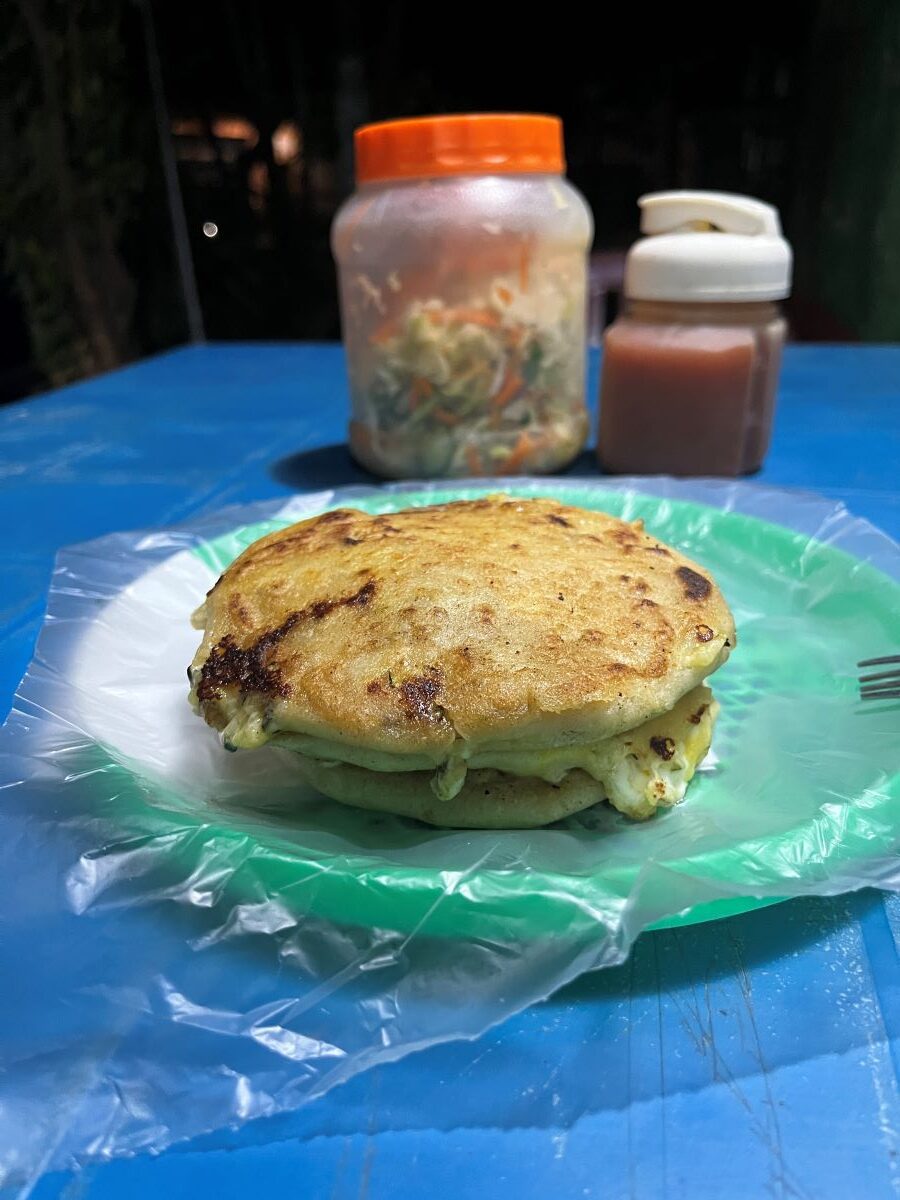
Apart from preparing meals at my hostel, I found that El Salvador’s national dish, pupusas, is undoubtedly the best when made in Santa Ana compared to anywhere else in Central America. These delicious pockets of dough, made from corn or rice flour, are filled with various tasty ingredients and are often served with spicy tomato salsa or tangy coleslaw. I developed a particular fondness for the combinations of cheese and zucchini, as well as avocado and peppers. They were so good that at one sitting, I ate five of them! Another great option around Parque Libertad was the many street food vendors selling popular soy-meat hot dogs (panes chucos) and family-run restaurants that offered a wide variety of tostadas.
Travellingterry Santa Ana tips
- Juayúa is a great place to visit at weekends when it hosts a weekly food festival.
- Useful Santa Ana websites include Guruwalk, which offers excellent guided walking tours (for a donation), as well as Tourism in El Salvador and Visit Centro America. However. the best source for information is in one of the many hostels around the city. They can provide bus timetables, opening/closing times for the city’s attractions, and information on joining one of their affordable tours.
- Although the Government is successfully addressing gang violence, Santa Ana still has sketchy areas where social issues and poverty are prevalent. For this reason, I did not take any valuables out with me – just cash and smartphone, and on some days, not even a day pack.
- Streets are dimly lit and virtually deserted at night, creating a spooky, shady vibe. It’s not the best place to wander solo for long distances across town at night, but if the journey is necessary, it should always be with other companions or in a taxi, ensuring the letter “A” is at the beginning of its registration to confirm it’s official.
- El Salvador’s official currency is the dollar, but it’s always a good idea to arrive with small bills, as larger bills ($50 and $100) are difficult for locals to break.
Onward Travel: Santa Ana to San José (Costa Rica)
Since it was the day of the mayoral elections, all transportation in El Salvador was free. This initiative was to encourage people to travel to regional polling booths to vote. Therefore, the 120 kilometres I travelled to San Salvador Airport became quite a mission as it required taking two early morning buses; one local and the other, bus #201, into the capital – along with what felt like half of El Salvador’s ‘voting’ population! After that, I had a 35-minute dash across a somewhat eerily quiet city to catch the #138 Airport Bus. Phew!
Strangely, it worked out cheaper to fly to Panama, and then back to San José, than a direct flight from San Salvador to San José! The flights were fine, with perhaps more free snacks/drinks than those distances flown in Europe, but COPA Airline certainly didn’t like the look of my rucksack straps and insisted the pack go in the hold, even though it was well below the 10kg allowance.