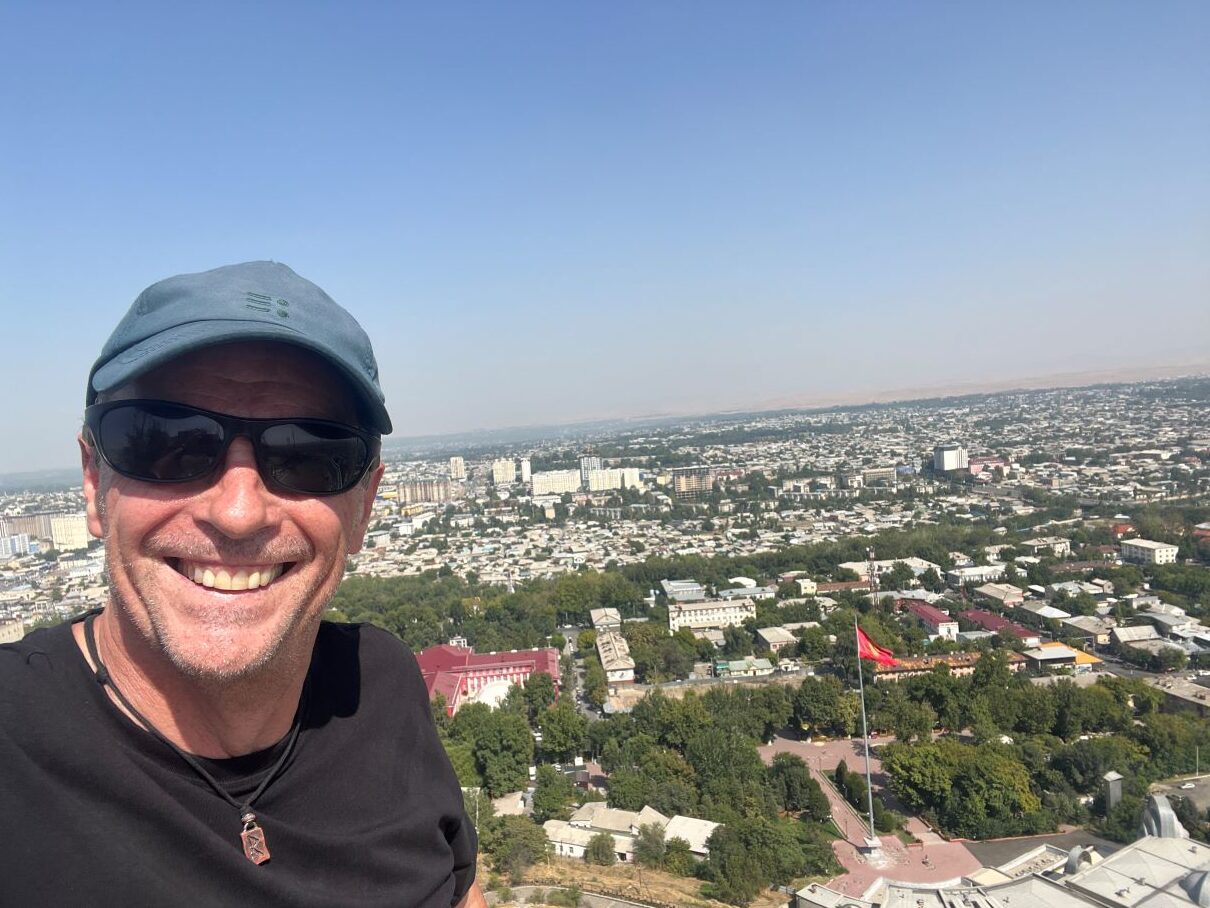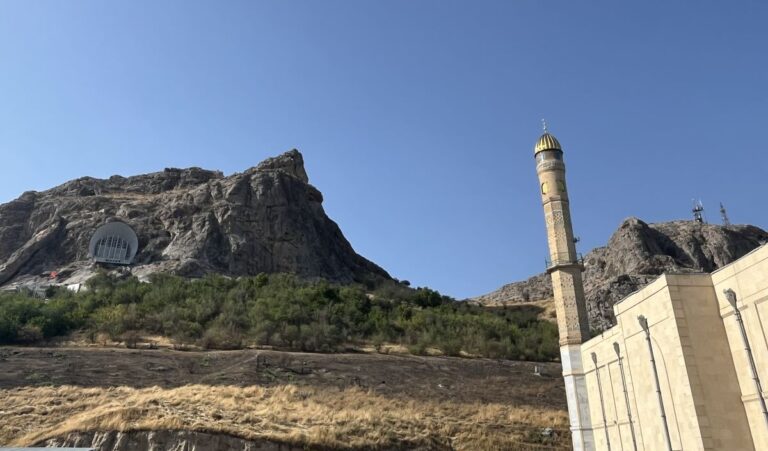
I spent 2 days exploring Osh, Kyrgyzstan’s second-largest city after the capital, Bishkek. It’s unique in Central Asia because of its five-headed mountain crag as its focal point. While the city may lack significant architectural landmarks, its compact and welcoming atmosphere offers a refreshing change from the bustling commercial cities I had previously visited in Central Asia. Additionally, Osh serves as a launching pad for amazing outdoor adventures in nearby national parks and as a gateway for arrivals and departures to China and Uzbekistan, as well as access to the exhilarating Pamir Highway.
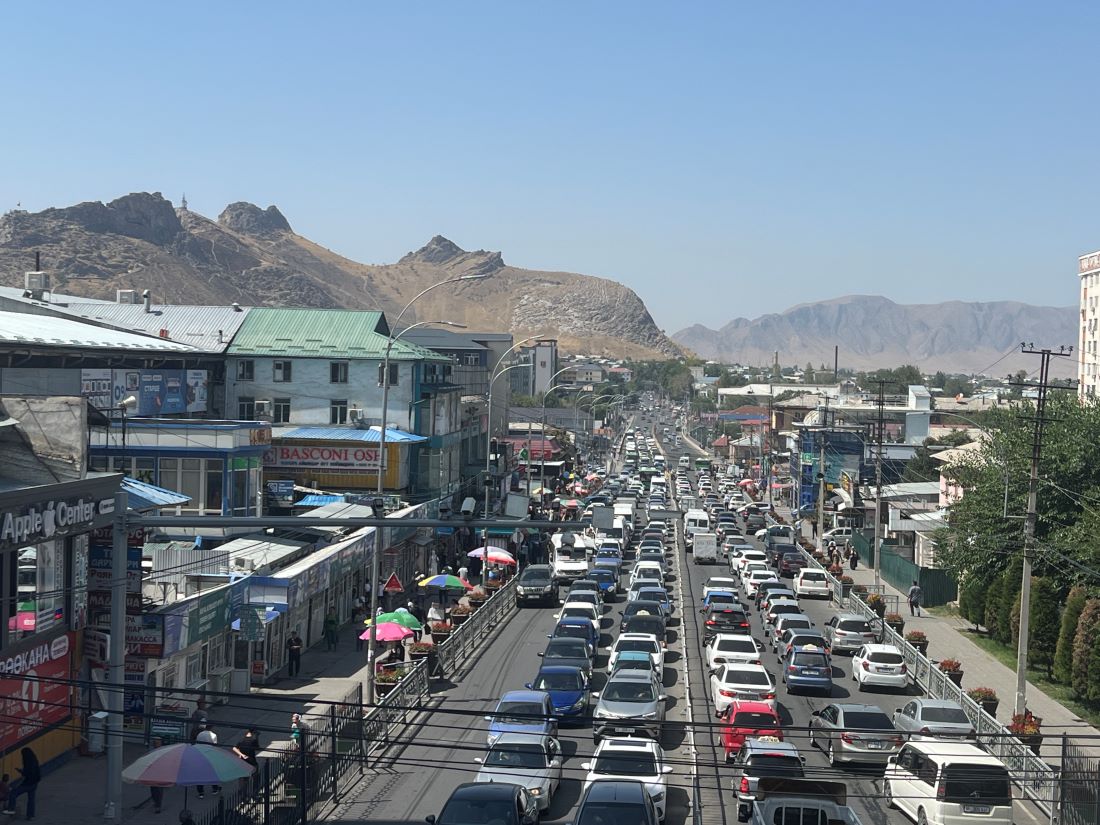
As a major transport and commerce hub along the ancient Silk Road, Osh has been influenced by various rulers and kingdoms throughout history, including King Solomon (900 BC), Alexander the Great (300 BC), the Mongols (13th century), Babur from the Mughal-Indian dynasty (15th century), and later, being absorbed into the Kokand Khanate (18th century) before falling to Russian forces in the 19th century. It is no surprise that this strategically located city has become one of Central Asia’s most demographically diverse regions, with 44% of the current population being Uzbek.
My Osh Highlights
Most of the sights in Osh are centred around the magnificent Suleiman Too mountain, located north of the city centre. Since many attractions are clustered in the centre, it’s quite easy to navigate the city on foot, meet and interact with locals, and learn about Kyrgyz history, culture, and especially its food scene.
Hiked to the top of Suleiman Too
A great place to begin my tour of Osh was the UNESCO World Heritage Site of Suleiman Too, which marked a halfway point on the Silk Road connecting Europe and China. This historical and religious complex highlighted its significance to modern-day Osh and offered spectacular city views.
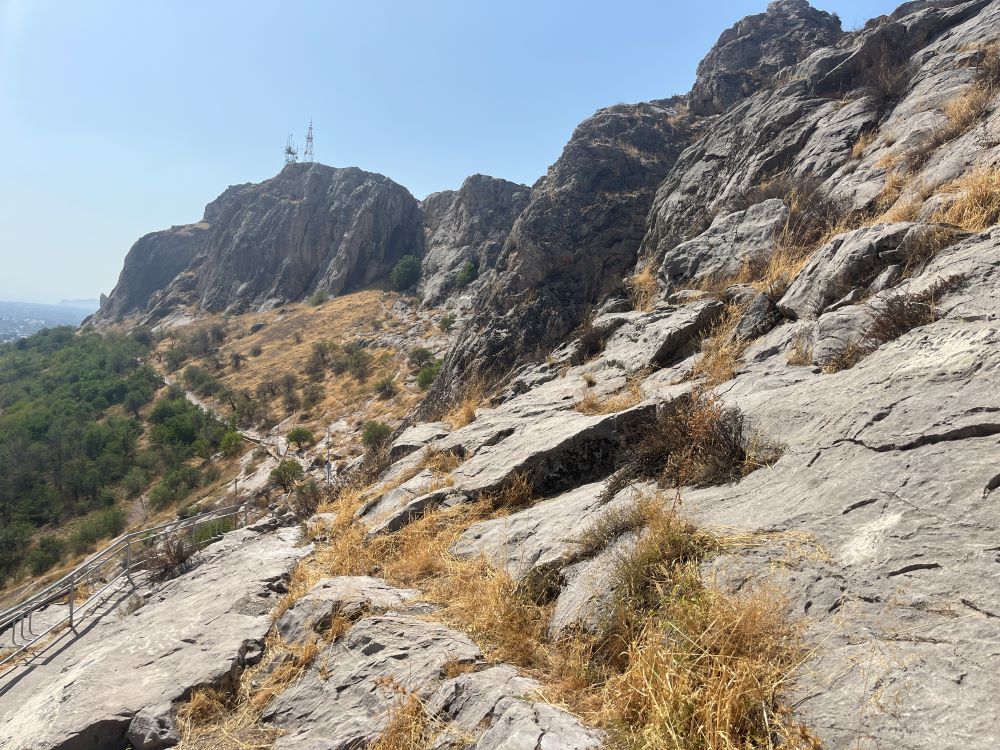
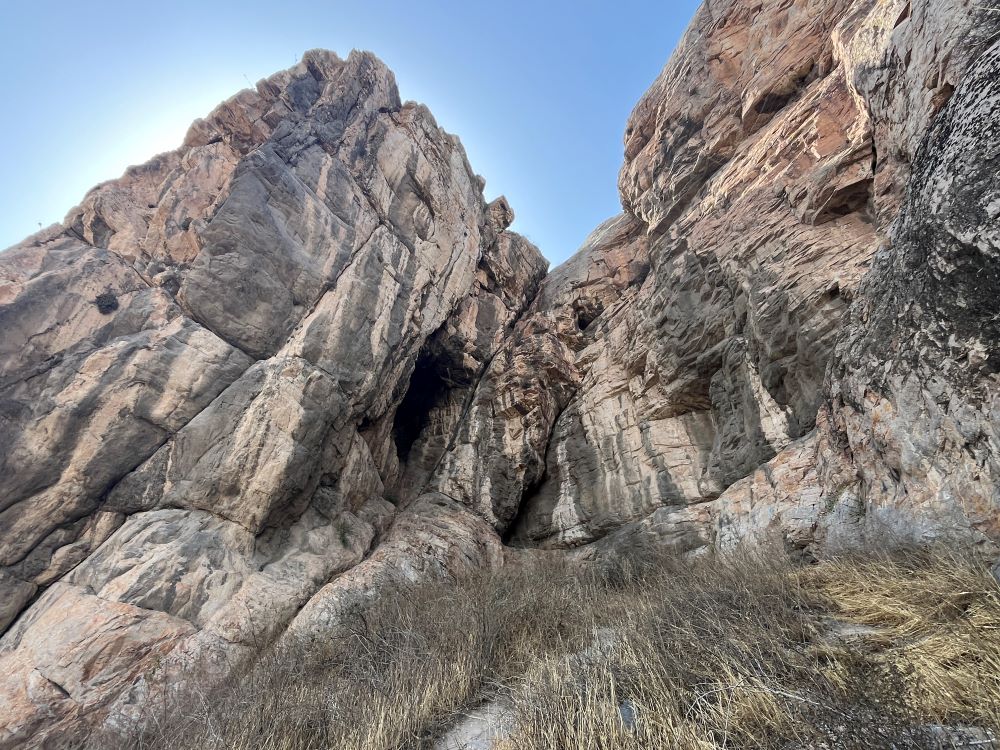
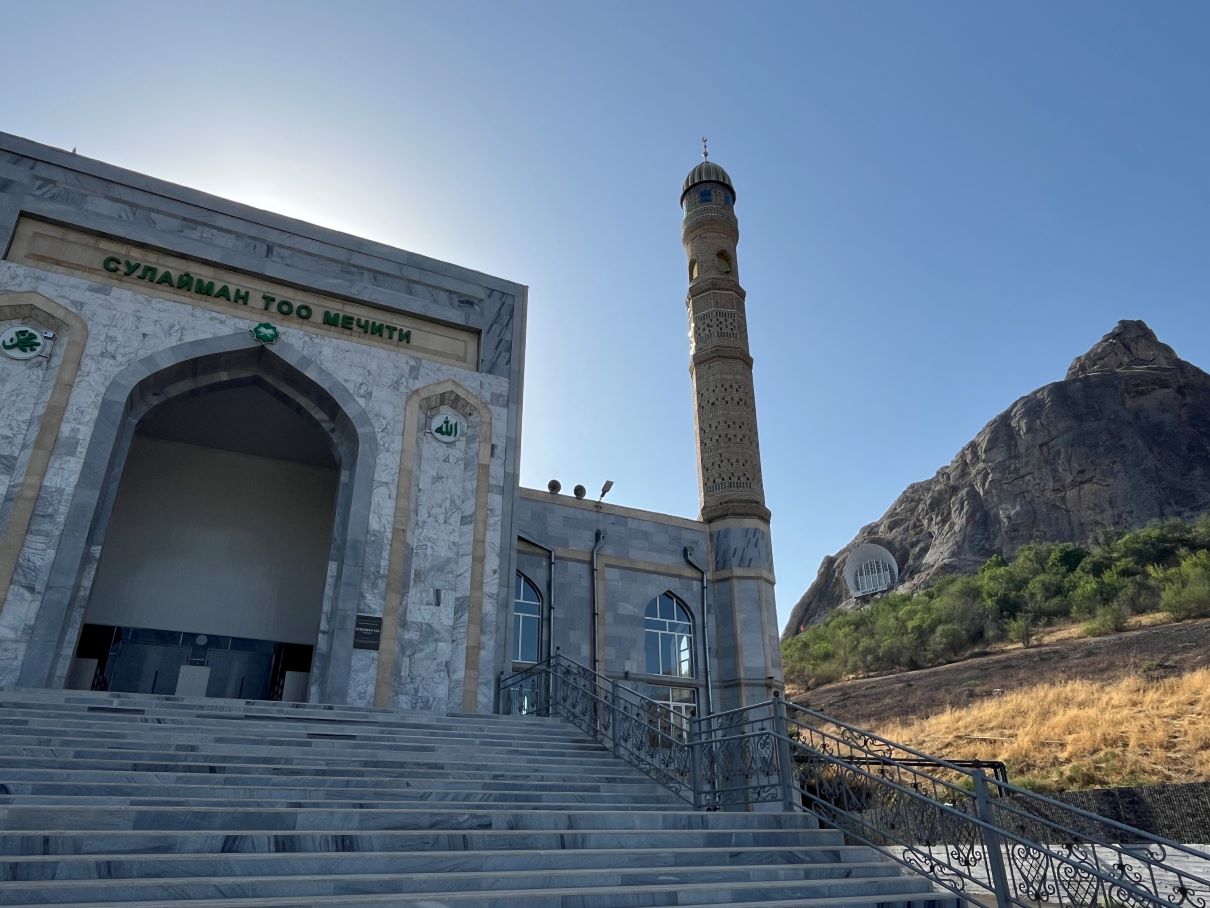
Suleiman Too has five peaks or slopes, and two 16th century reconstructed mosques. One, called Dom Babura, is a small building built upon a small prayer room used by 14 year-old Zahiruddin Badur (founder of the Mughal Empire) back in 1497. A walking trail starts from the entrance at Kurmanjan Datka and is dotted with notable caves holding pre-Islamic and Islamic prayer relics, religious sculptures, and petroglyphs.
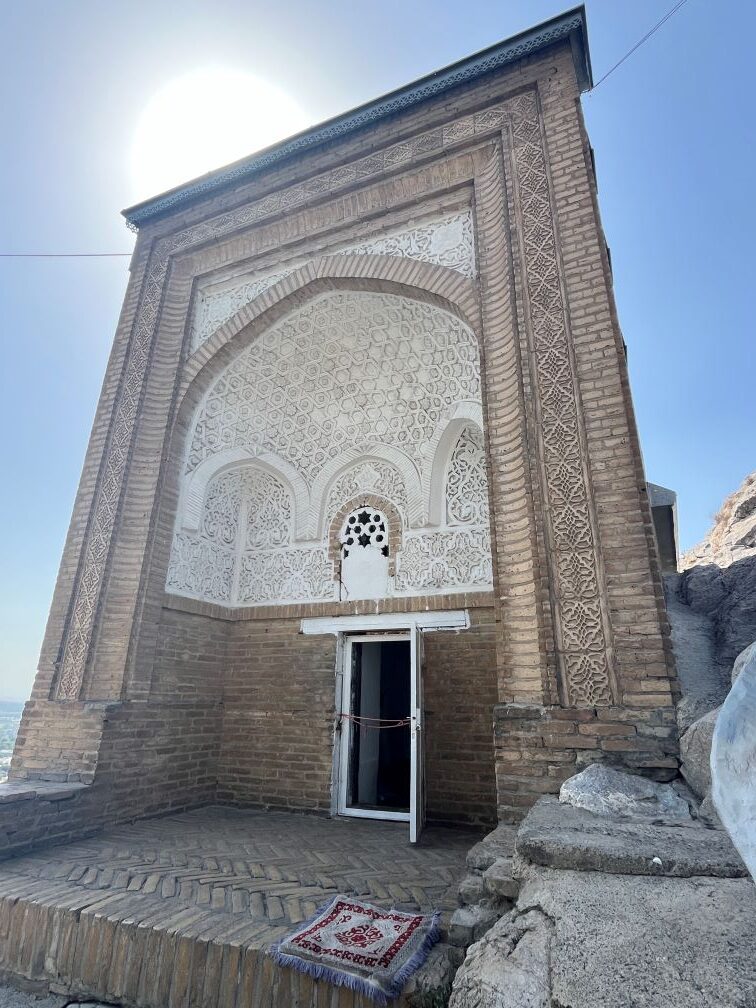
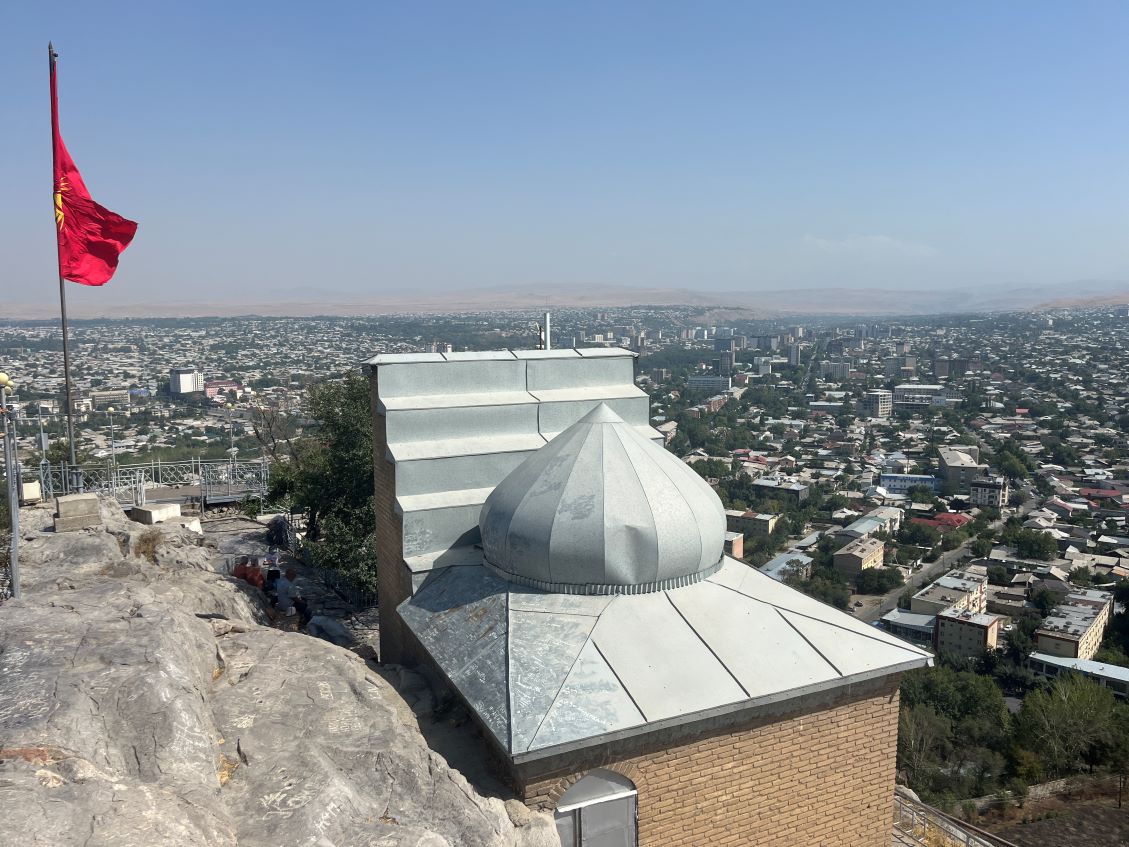
As one of Central Asia’s most sacred mountains, Suleiman Too is viewed as a pilgrimage site, as many believers claim that Prophet Mohammed once prayed here. Visiting this sanctified landmark is believed to bring cures for ailments such as back pain, and there is also an interesting infertility cave where smooth rocks are worn down by young women sliding down in hopes of enhancing their chances of pregnancy.
Visited the extra-terrestrial Cave Museum
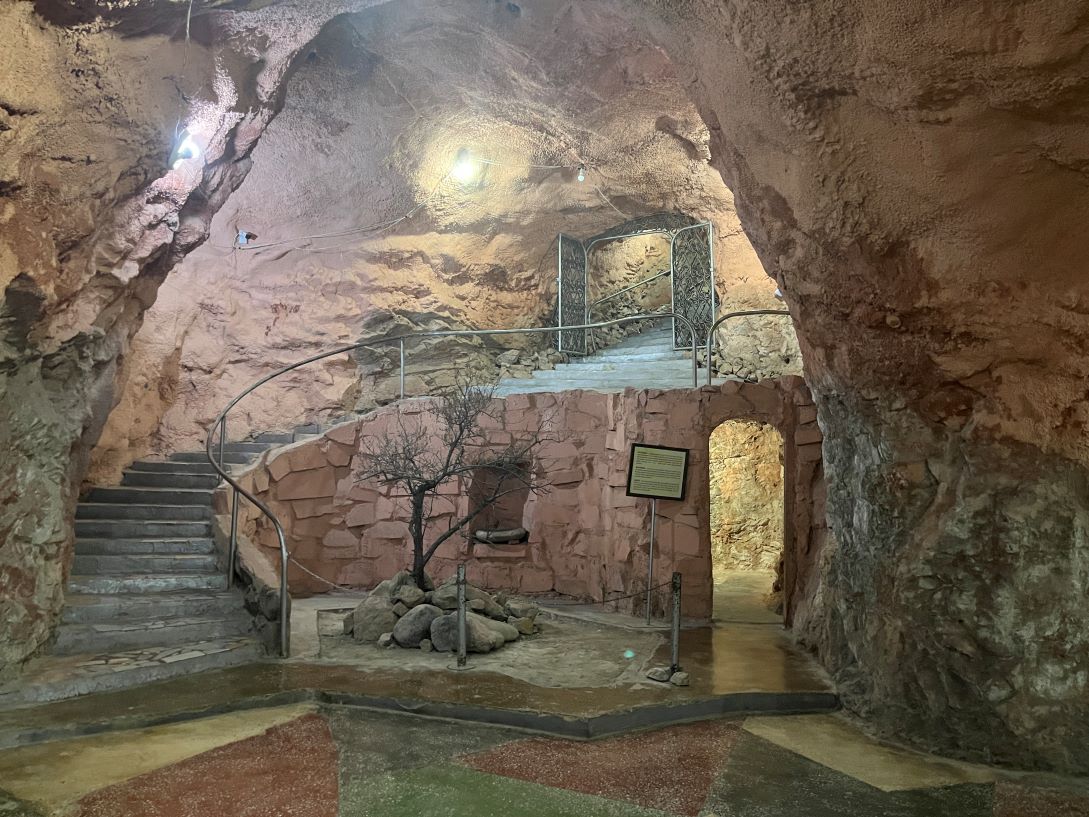
Resembling a UFO entrance or a flamboyant metallic bonnet sticking out, the Cave Museum is a unique and somewhat incongruous spot to visit. Impressively, the museum is carved directly into a natural cave in the mountains, so the walls inside are of actual rock.
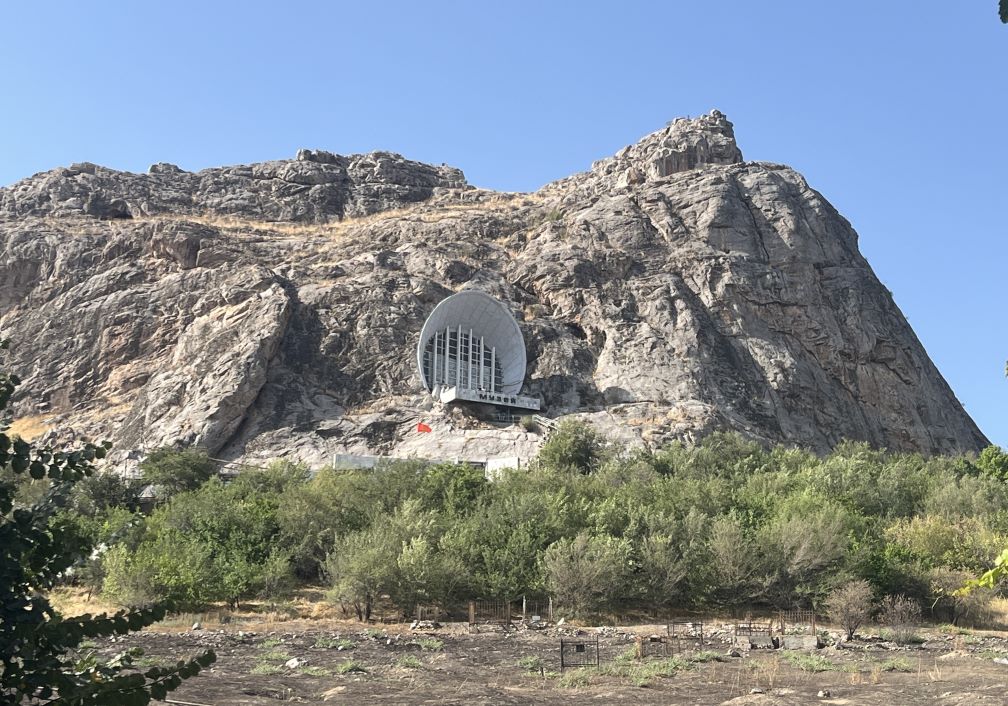
The museum is split over two floors and 13 rock-formed rooms filled with thousands of archaeological and ethnographic artefacts, sculptures, paintings and handicrafts. Although some mannequins appeared jaded, the glass-cased displays effectively illustrated the cultural and religious significance of Suleiman Too. There was an excellent exhibition on the top floor showcasing the mountain’s excavation process, along with a breathtaking panoramic view of the city.
Browsed the busy Jayma Bazaar
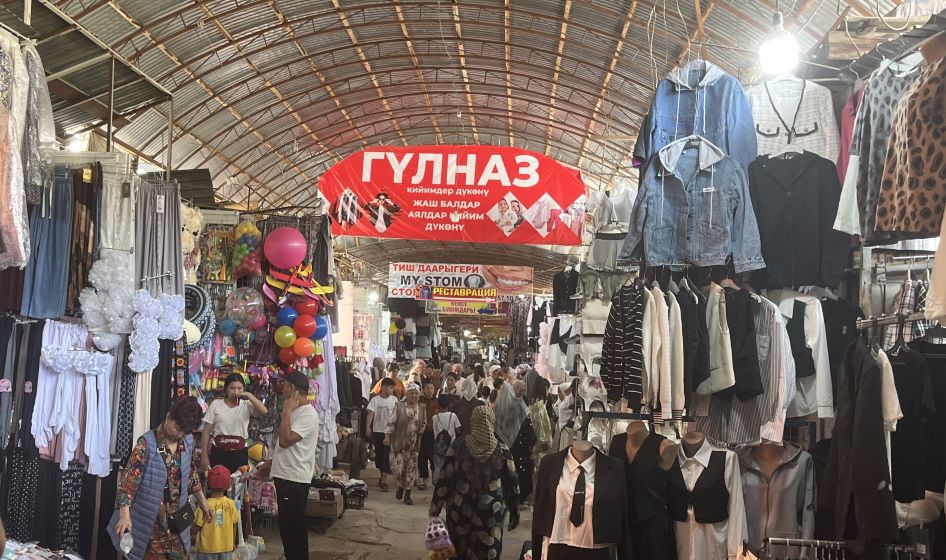
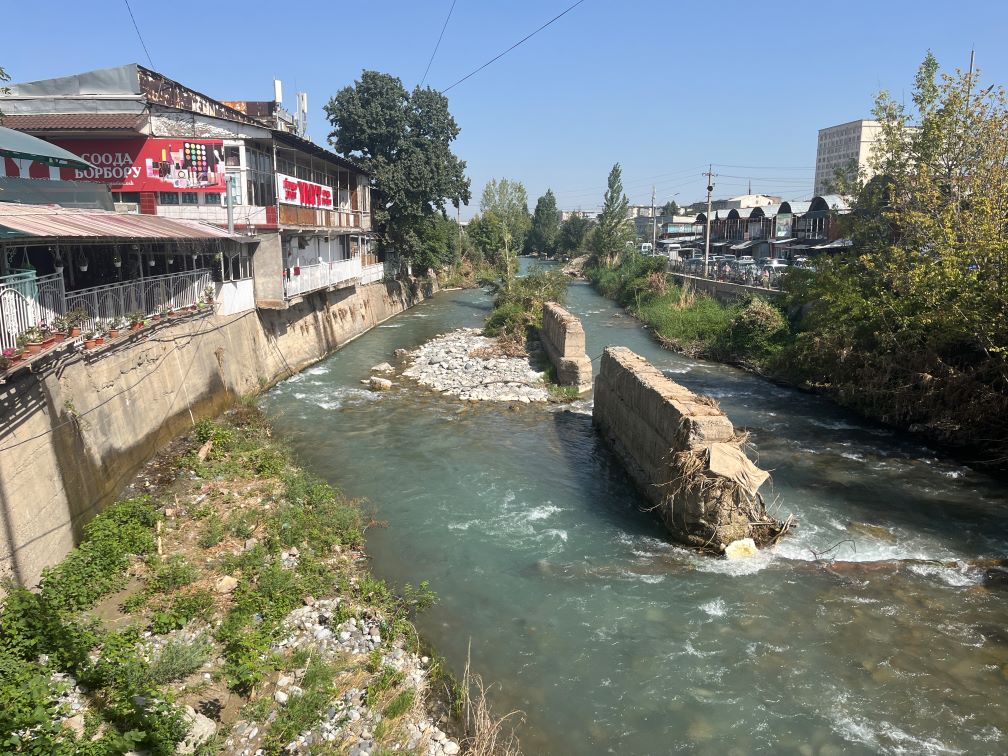
The Jayma Bazaar is simply awesome. For nearly 2,000 years and over 1km in length, this market stretches across the old city centre, following the contours of the Ak Buura River. It’s a fascinating, bustling hub of commerce where I spent an infinite amount of time wandering through its maze of alleyways, taking in the smells, sounds, and sights of local Kyrgyz people passionately negotiating the best price for their purchases. Being one of the oldest bazaars in Central Asia, it was undoubtedly one of my favourite experiences in Kyrgyzstan.
Found Central Asia’s tallest statue of Lenin
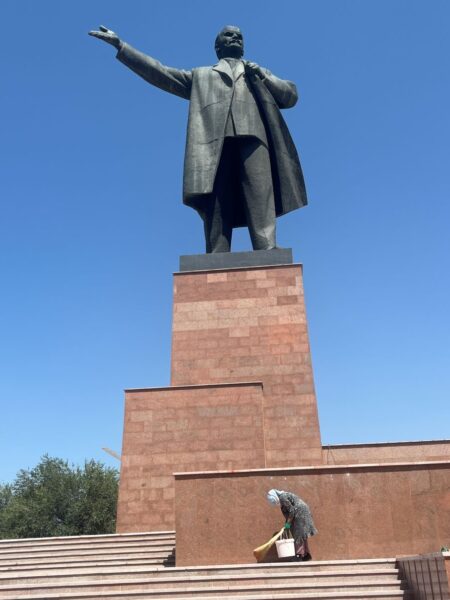
I was surprised to find a 30-metre high statue of Vladimir Lenin – the first head of the USSR. With his arm raised in protest, he stood proudly overlooking Central Square and City Hall. Unlike other newly formed Central Asian republics, Lenin’s statue in Osh was not removed after the fall of the Soviet Union. On the contrary, the statue occupies a prominent place in the city because many people in Osh (and in other parts of Kyrgyzstan) retain a sense of nostalgia for the Soviet era, particularly among the older generations.
Visited a 3-storey Yurt
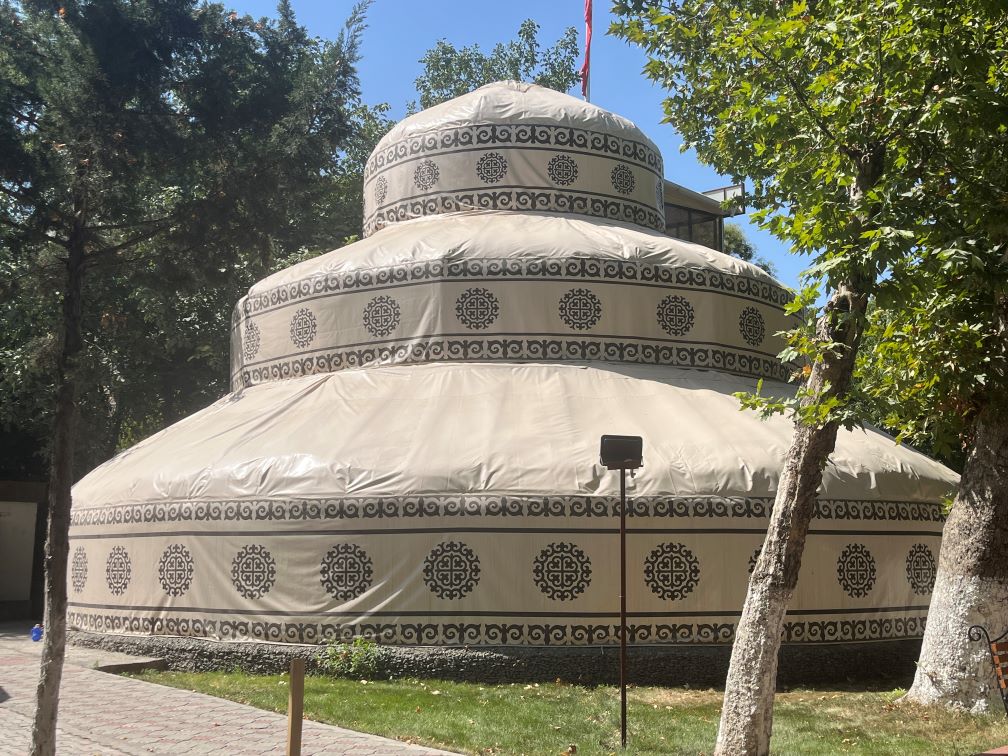
One notable and interesting building I visited in Osh was the world’s only three-story yurt, located in Alymbek Datka Park. Inside the yurt, there was an exhibition about nobleman Alymbek, who fought for Kyrgyz tribes in his quest for independence during the Russian Tsarist occupation. His wife, Kurmanjan, later played a significant role, leading Kyrgyzstan to make a peace agreement with the Tsars, which helped protect the lives of tens of thousands of people. Unfortunately, I found the museum inside to be somewhat unkempt. With limited information on the cultural items displayed, it felt more like a gift shop than a museum. However, the exterior design of the yurt was quite impressive.
Strolled along Navoi Park
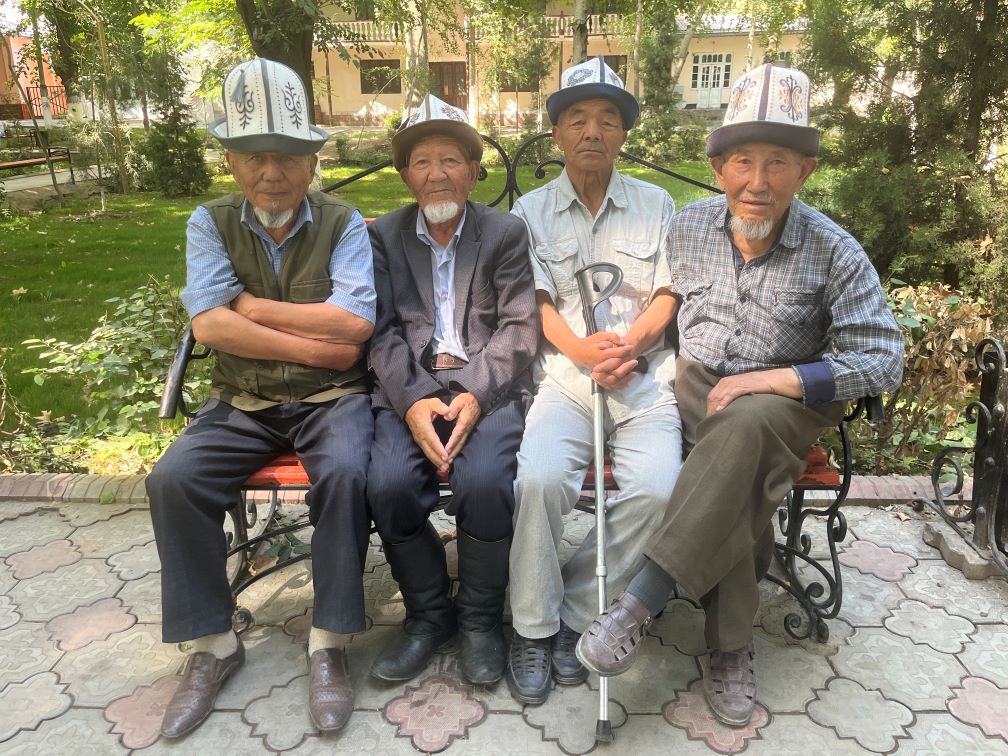
The leafy, lush green space of Navoi Park appears to stretch the length of Osh but only follows the Ak-Buura River from Jayma Bazaar down to the National Stadium. I loved strolling through this friendly park when exploring various attractions, particularly in the evening en route to my night’s food feast! Navoi Park is also a popular spot for families, making it a great place to watch elderly men wearing traditional kalpaks (high-crowned hats) playing Tajik-style board games or simply chatting. The park features a playground area, amusement rides, and charming cafes that line the banks of the river.
Stumbled across Soviet Murals
While exploring Osh, I noticed the numerous murals adorning the sides of what appeared to be old Soviet apartment blocks, likely constructed in the 1970s and 1980s. During the Soviet era, murals were used to convey ideologies, adding decorative designs to the otherwise plain apartment walls. The murals I encountered provided fascinating insights into life during the Soviet Union era, and surprisingly, some of the murals were in relatively good condition.
If I had more time, I would have explored the following places and activities:
- Ancient town of Uzgen (55km from Osh – 11th Century mausoleum complex, with Islamic architecture similar to that found in Uzbekistan).
- Kyrgyz Ata National Park (40km from Osh – Ideal for day hikes with stunning mountainous landscapes).
- Alay Valley (hiking destination for single and multiple-day treks with numerous trails passing; lakes, gorges, spectacular alpine scenery and traditional yurts along the way).
- A Foodie Tour (especially as Osh had the tastiest food in the whole of Kyrgyzstan).
- Animal Bazaar on Sunday Mornings (one of the largest animal markets in Central Asia, where sheep, cows and horses are auctioned).
Accommodation in Osh
Osh offers a wide range of hotels, hostels and guesthouses suitable for all budgets. A useful contact for great homestays is the office: CBT Osh/Alay. While they primarily provide tours for the Pamir region, they can also assist with accommodations in Osh. I stayed in the TES Hotel, which featured comfortable, tidy rooms set around a quiet, shady garden. The informative staff and cosy atmosphere made it a popular choice among backpackers and cyclists, especially those preparing for multi-day outdoor activities outside the city.
Eating in Osh
Osh boasts a fantastic food scene and is often considered the best in all of Kyrgyzstan. I enjoyed a delicious chicken shashlyk (kebab) with lepeshki (flatbread), and on my second night, I had an amazing plov served with chicken, vegetables, spices, and rice, accompanied by a refreshing salad of tomato, cucumber, and dill—it was both tasty and filling
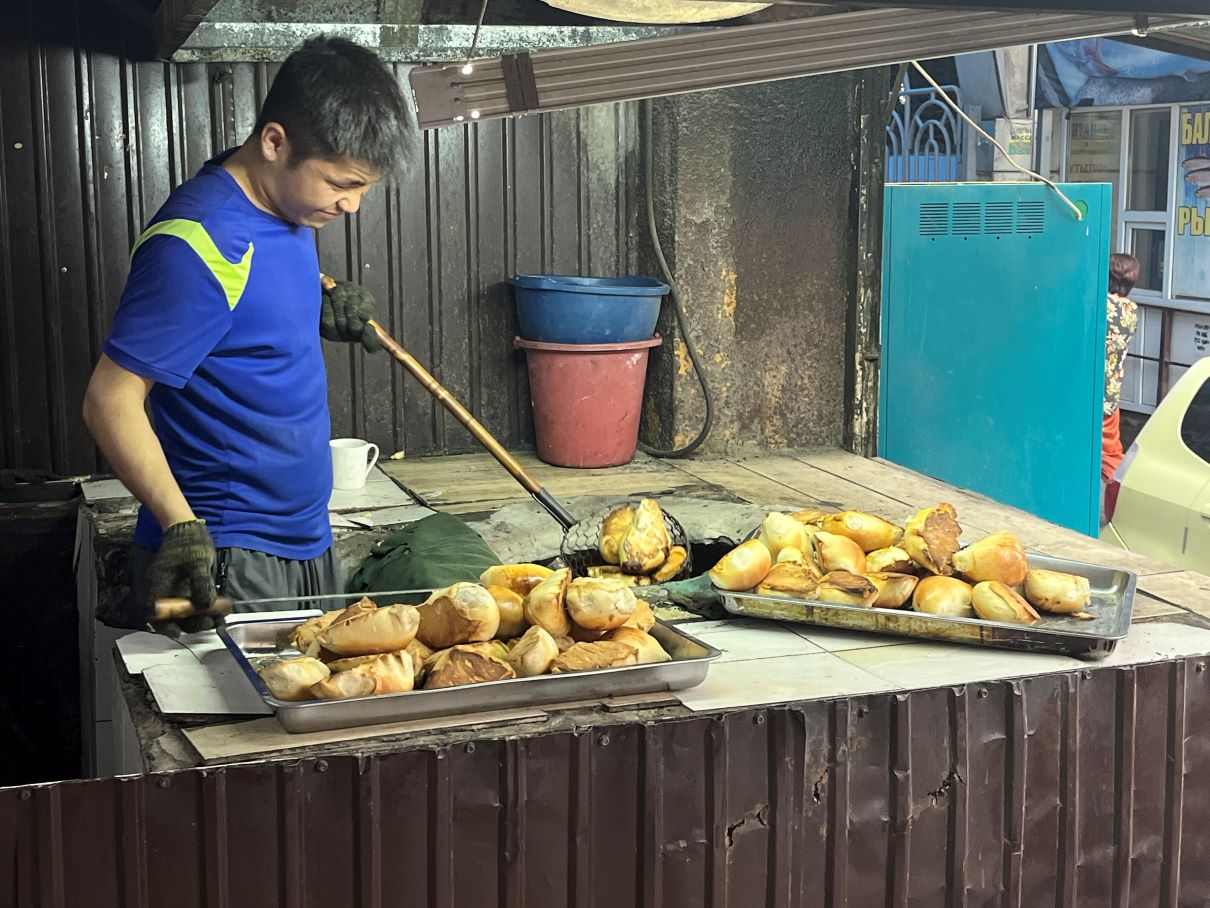
For lunchtimes, I snacked in the markets on the delicious Samsa (potato cooked with onion and spices wrapped in pastry), which is sometimes baked inside a clay tandoor oven and comes out way too big for a snack – more like the size of a British Cornish pasty! I also tried Maida Manti (potato dumplings) for the first time in Central Asia, and within an hour, I had to go back for more – totally yummy. I can now see why the Osh Foodie Tour is such a popular tour among travellers.
Travellingterry Osh Tips
- Osh in Kyrgyzstan and Dushanbe in Tajikistan are great starting and finishing cities for the Pamir Highway road trip.
- Osh is quite small and compact with everything within walking distance.
- There are a few money exchange booths along Masalieva Street near the junction of Monueva Street that offer very good rates of exchange for the dollar and other currencies used in other Central Asian countries.
- Taxis via the Yandex app are incredibly cheap, and useful for trips to and from the airport and to the start of nearby trekking points.
- Destination Osh and Visit Alay are great websites to start planning the exploration of Osh and further afield.
Onward Travel: Pamir Highway Tour
Check this post: Pamir Highway Tour. My personal experience of this awesome, iconic road trip travelling along the border of Afghanistan, staying in the friendliest homestays, and exploring the old Silk Road, passing sublime landscapes that just took my breath away.