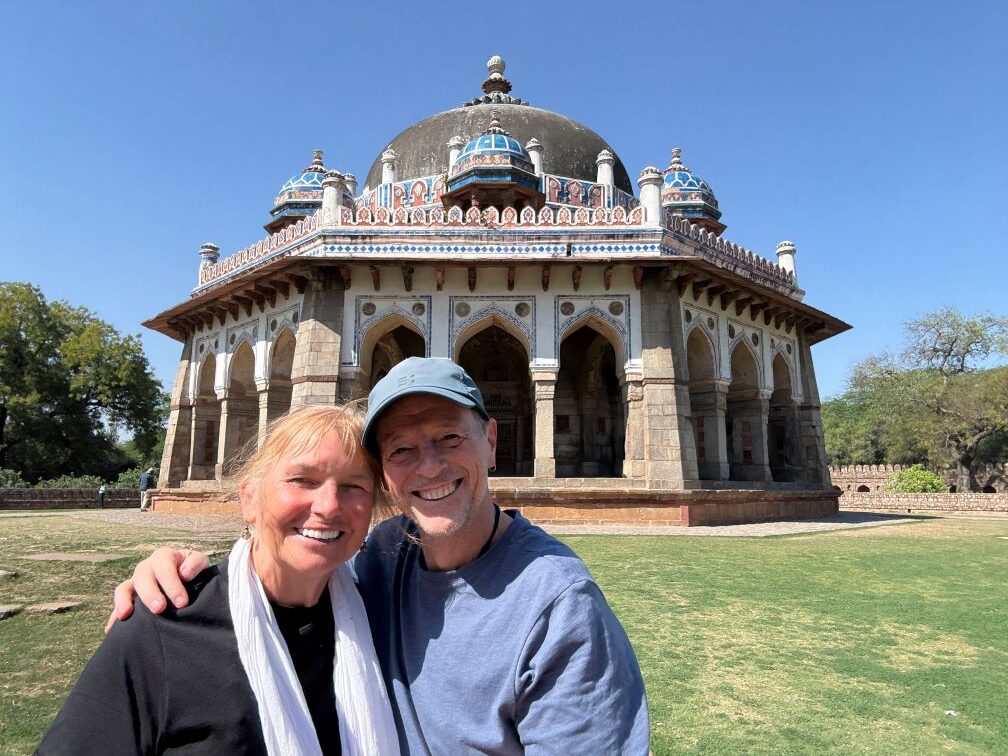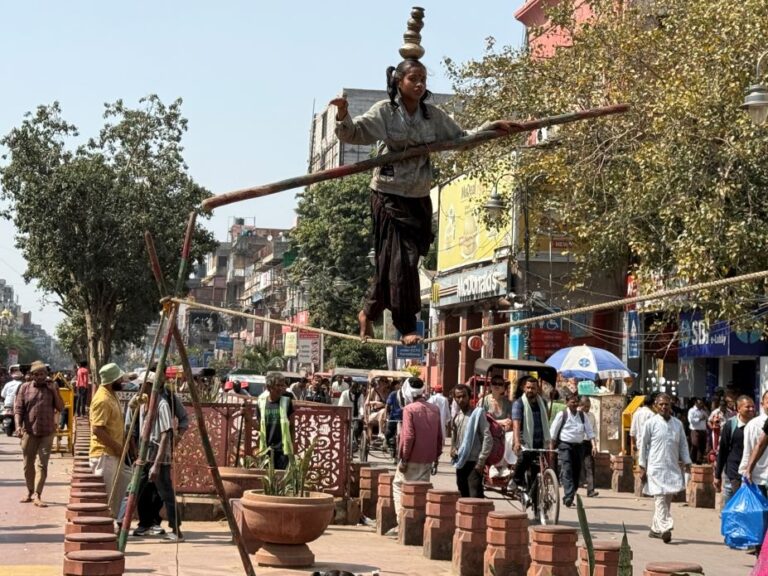
Delhi is rich in culture and history, and definitely worth exploring for a few days. The city is bustling and overcrowded, with about 30 million people, making it the second most populated city in the world. Delhi is chaotic, characterised by loud tooting horns, endless traffic jams, broken pavements and litter strewn everywhere, making it one of the worst polluted places in the world. Despite this, we stayed for 5 days captivated by its rich heritage and exhilarating experiences whilst visiting a myriad of attractions, from majestic forts, beautifully decorated mausoleums, lush gardens, unique temples and vibrant, colourful (and frenetic) markets, all of which overwhelmingly saturated our senses.
Delhi is split into many contrasting areas, but we spent most of our time exploring the main parts of Old Delhi, New Delhi and South Delhi. The city’s official name is ‘New Delhi,’ but it is commonly referred to as ‘Delhi’ by locals. As India’s capital, Delhi is one of the oldest cities in the world, boasting a diverse history and many architectural wonders, a legacy of the Islamic Mughal Empire that ruled most of Northern India from the mid-1500s to the mid-1800s.
Our Delhi Highlights: India’s Frenzied Capital City
Old Delhi is where the big architectural sights can be found. It used to be a walled city, with 15 gates, of which few remain today. It was founded by the Mughal Emperor Shah Jahan when, in 1639, he moved India’s capital from Agra to Delhi and named it ‘Shahjahanabad’’. By the turn of the 19th century, the British began to rule Delhi and rebuilt the city, creating new tree-lined neighbourhoods and impressive buildings. The improved infrastructure prompted the British Raj to shift its power base from Kolkata to New Delhi in 1911, and the city has remained the capital of India ever since.
Explored Old Delhi
It’s quite difficult to describe Old Delhi without using the three Cs: commotion, cacophony and chaos. We spent the first day and a half exploring this area, allowing all our senses to be attacked as we dodged rickshaws, tuk-tuks, motorbikes and thousands of people alongside cows, goats and dogs. While we wandered along a maze of narrow alleyways, we constantly inhaled scents of street food, incense sticks, putrefied food and many other less pleasant odours.
Admired Jama Masjid Mosque
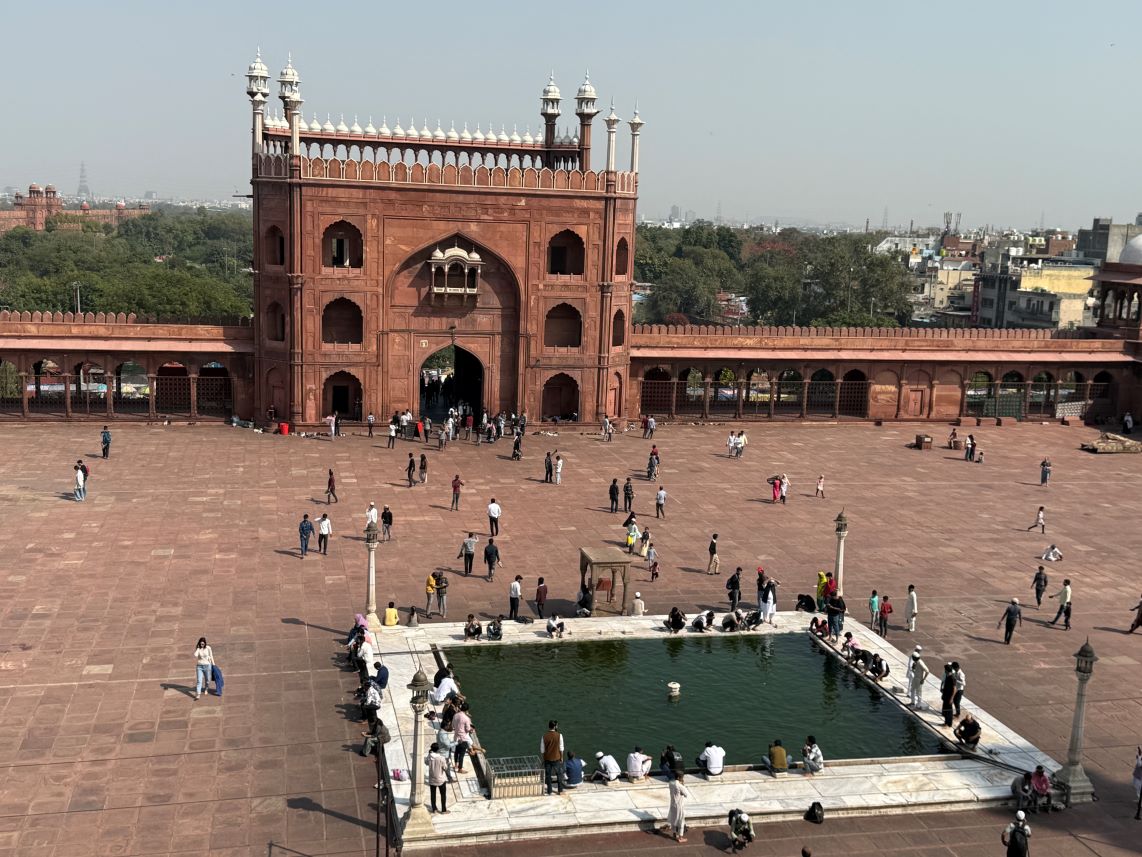
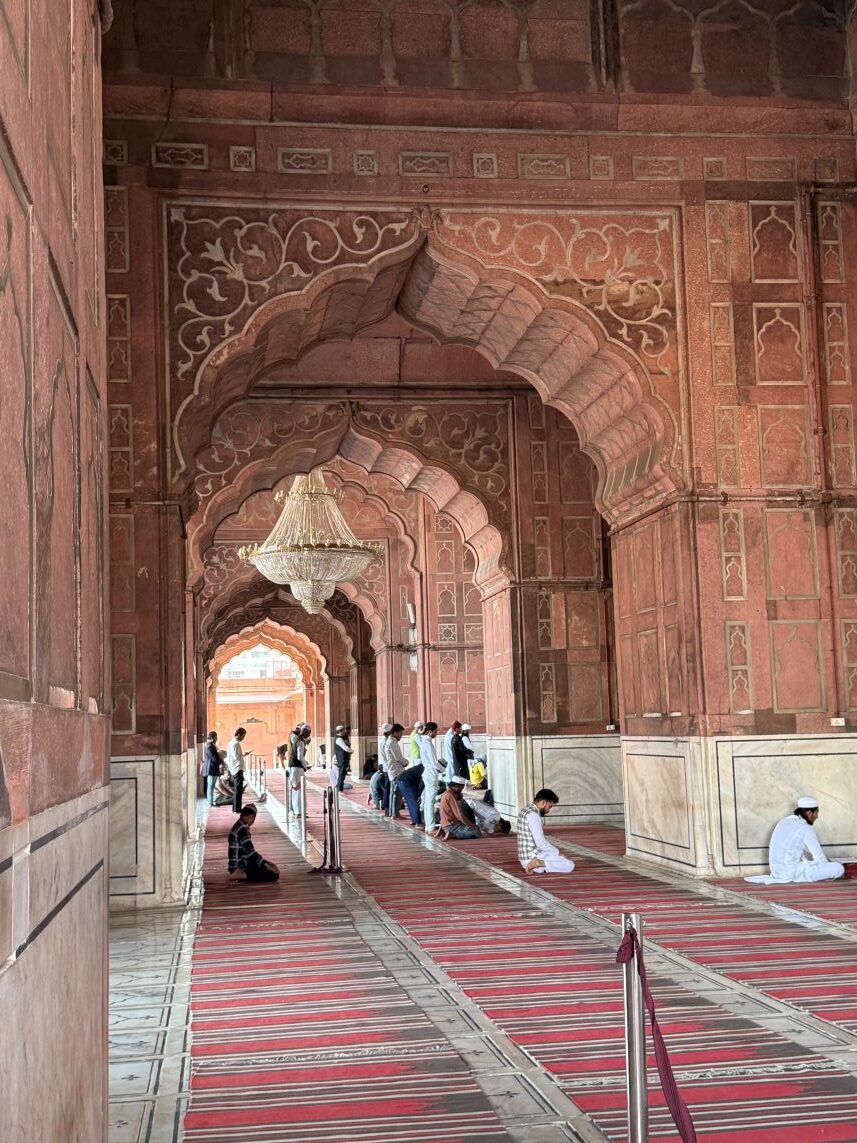
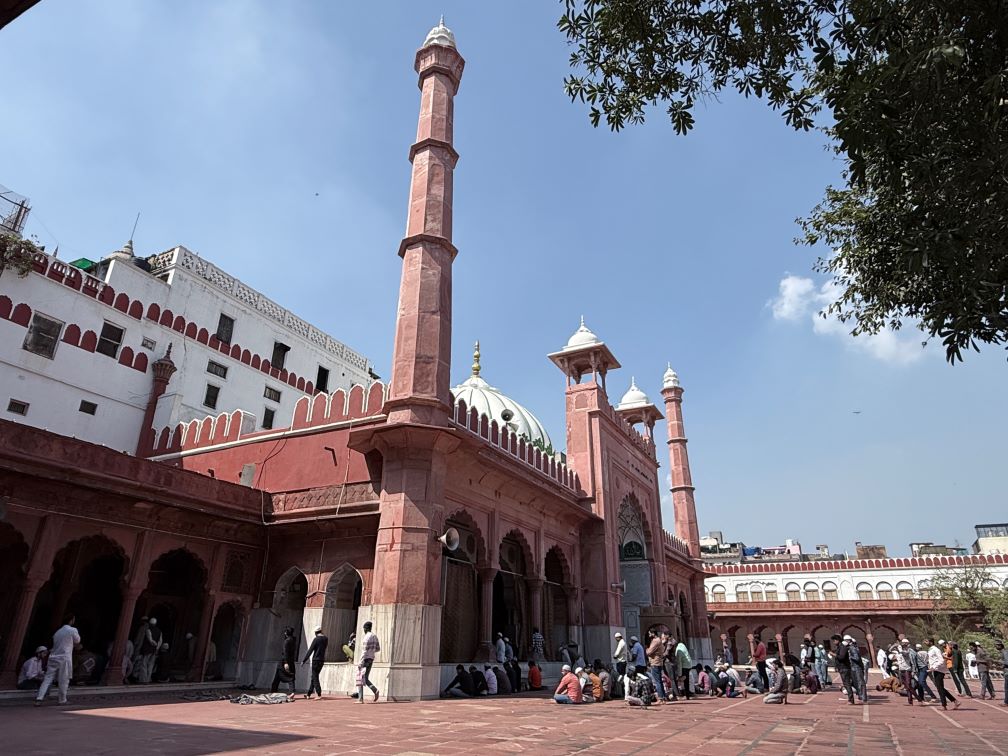
Our first stop was a 10-minute walk from the Red Fort to Delhi’s largest mosque, Jama Masjid. Completed in 1656, the Jama Masjid is a splendid structure featuring three massive red sandstone gates, three white marble domes, and two towering minarets. The large courtyard can hold up to an incredible 25,000 devotees at once. It was also Mughal Emperor Shah Jahan’s first commissioned success (although Ustad Ahmad Lahori was the actual architect), who later went on to commission the Taj Mahal in Agra.
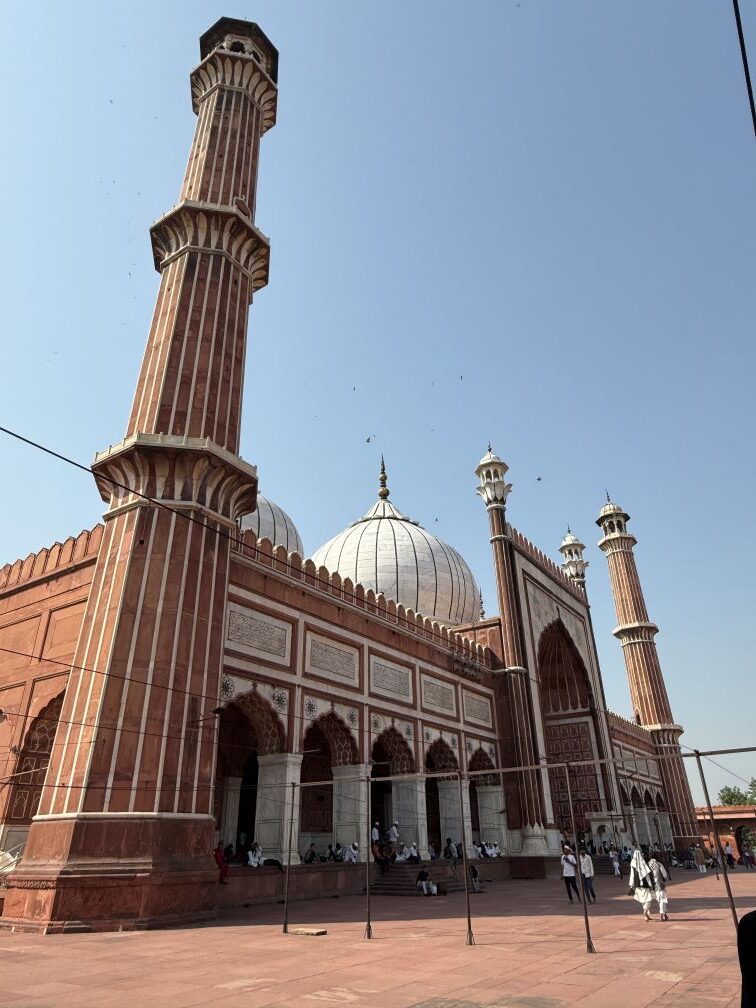
We encountered several stories about scammers demanding fees to enter the mosque or to watch over our shoes. Our experience was straightforward: we paid 300 rupees each for entry (including the camera fee) and 200 rupees to climb one of the two minarets open to the public, both with official tickets. We carried our shoes in a daypack and dressed modestly, covering our heads and wearing shawls to cover our legs and arms. No one bothered us except for the countless children asking for money outside, and the fake guides whom we simply ignored.
The highlight of our visit was climbing to the top of one of the huge minarets for breathtaking views over the city, particularly of the bustling streets of Old Delhi and the nearby Red Fort. The spiral staircase was dark and cramped, adding to the atmosphere of such an ancient building. The intricately designed interior was adorned with beautiful calligraphy and symmetrical patterns, showcasing India’s rich cultural and religious heritage.
Jaw-Dropped at the Red Fort
The Red Fort (also known as Lal Qila) is one of the most famous and popular attractions in the city, serving as a magnificent symbol of India’s rich history and architectural wonders. Built in the 1600s and commissioned by Shah Jahan (the same emperor who commissioned the Taj Mahal), and designed by Ustad Ahmad Lahori (the same architect that designed the Jama Masjid and Taj Mahal), the Red Fort was initially used as a residence for the Mughal emperors, featuring a blend of Persian, Mughal, and Indian architectural styles. The intricately carved structures and colourful gardens are hidden from public view behind fortification walls that rise to 30 meters high, enclosing an area of 257 acres and featuring an impressive red sandstone perimeter of 1.5 miles (2.4 km).
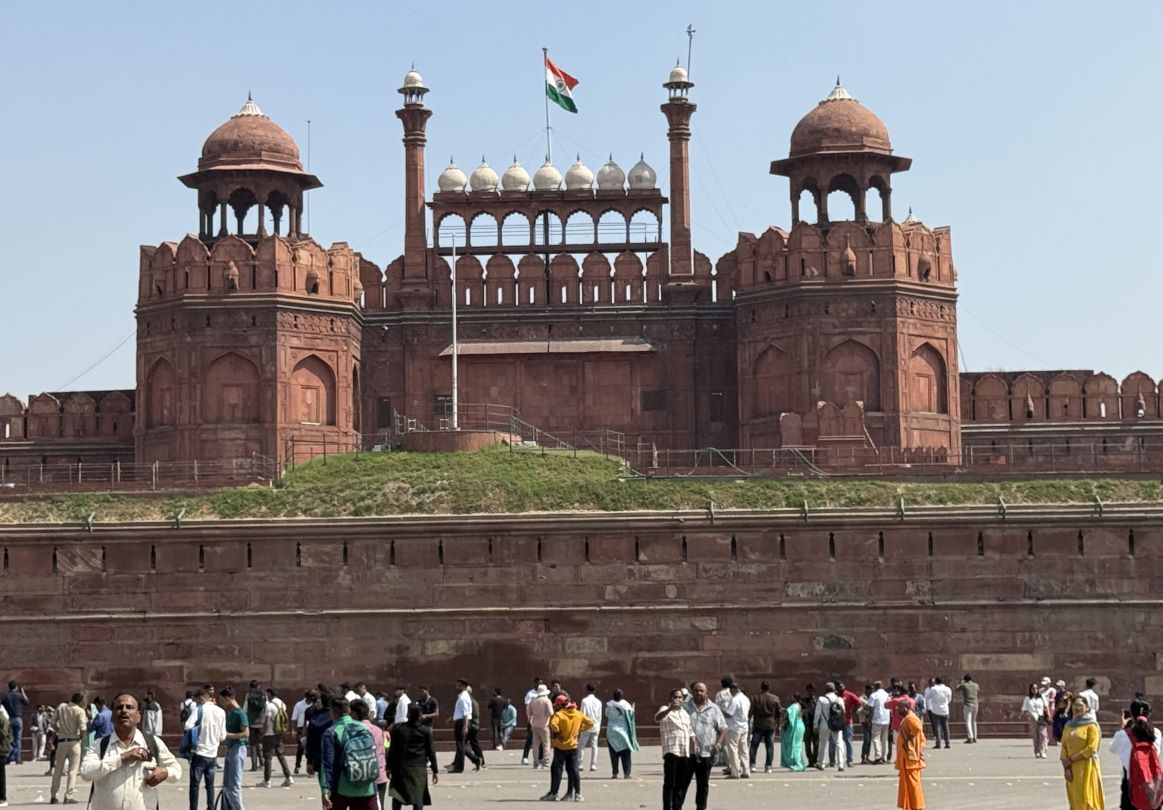
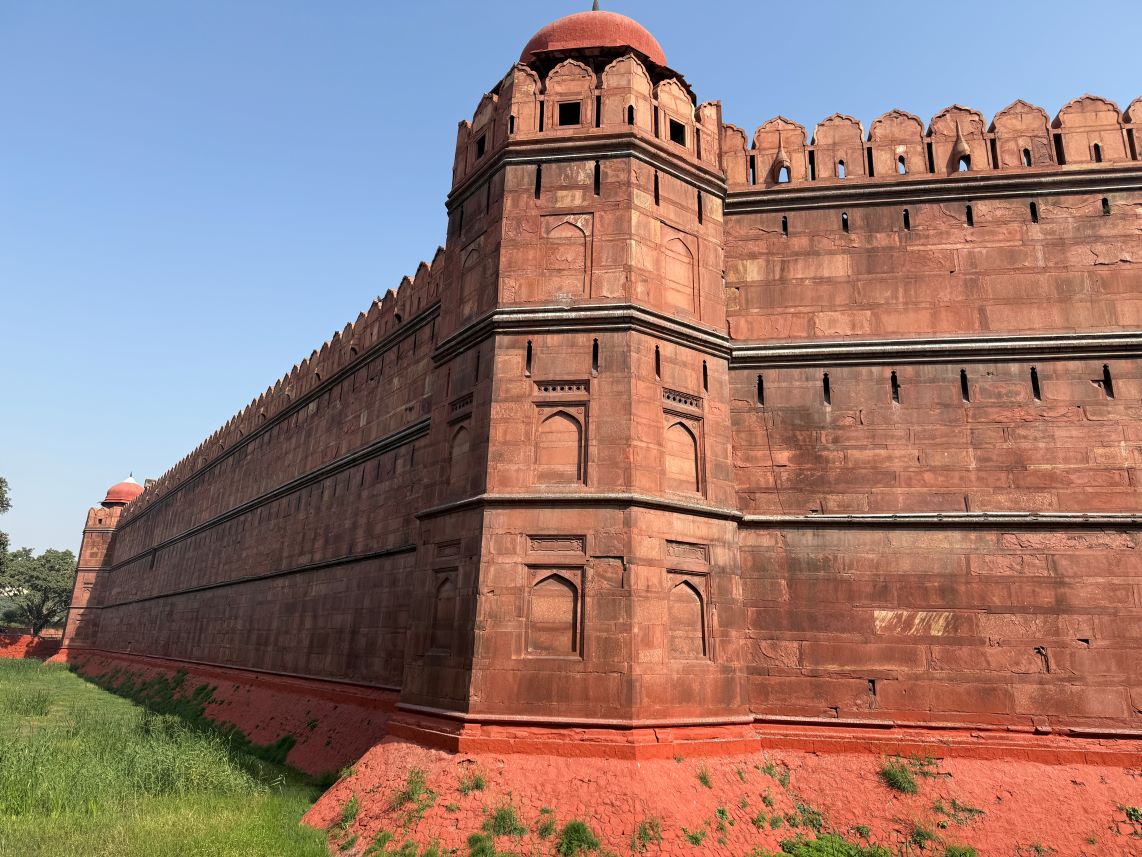
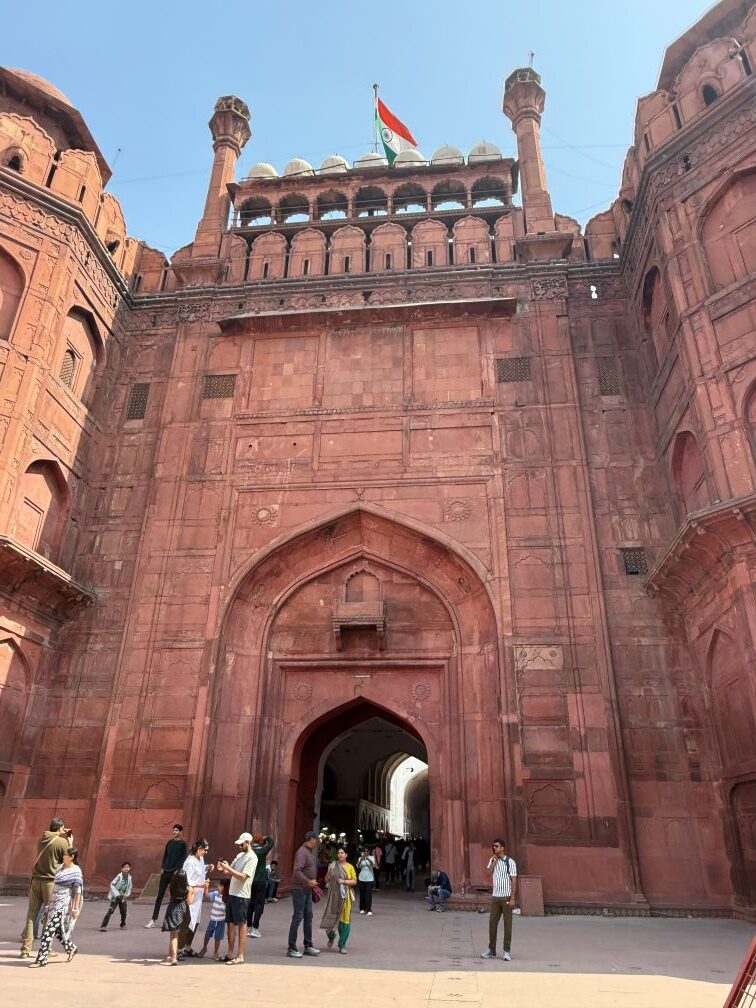
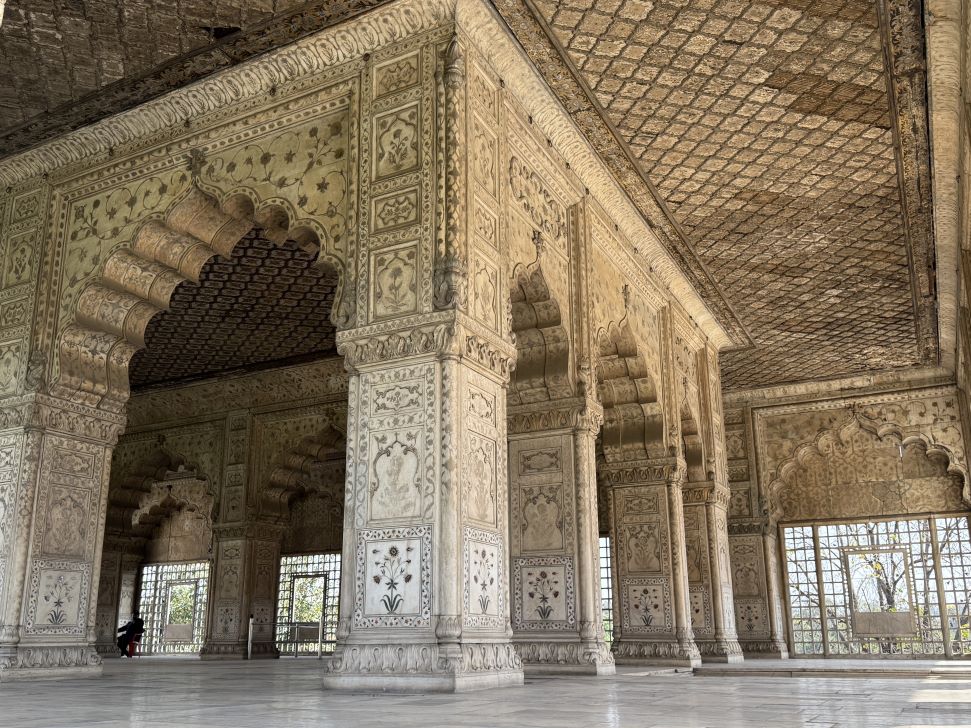
Inside the fort, we found tranquillity and glimpses of India’s imperial past. Yet surprisingly, despite its grandeur, there were only a few captivating structures within. Apart from some insightful museums, the real highlights were the impressive Lahore Gate, still riddled with British bullet holes, and the two halls where emperors held court: the beautifully decorated stone columns of Diwan-i-Am (Hall of Public Audience) and the marbled Diwan-i-Khas (Hall of Private Audience). Fortunately for us, the British preserved these structures while destroying and plundering many others throughout the 19th century!
Survived Chandi Chowk Market
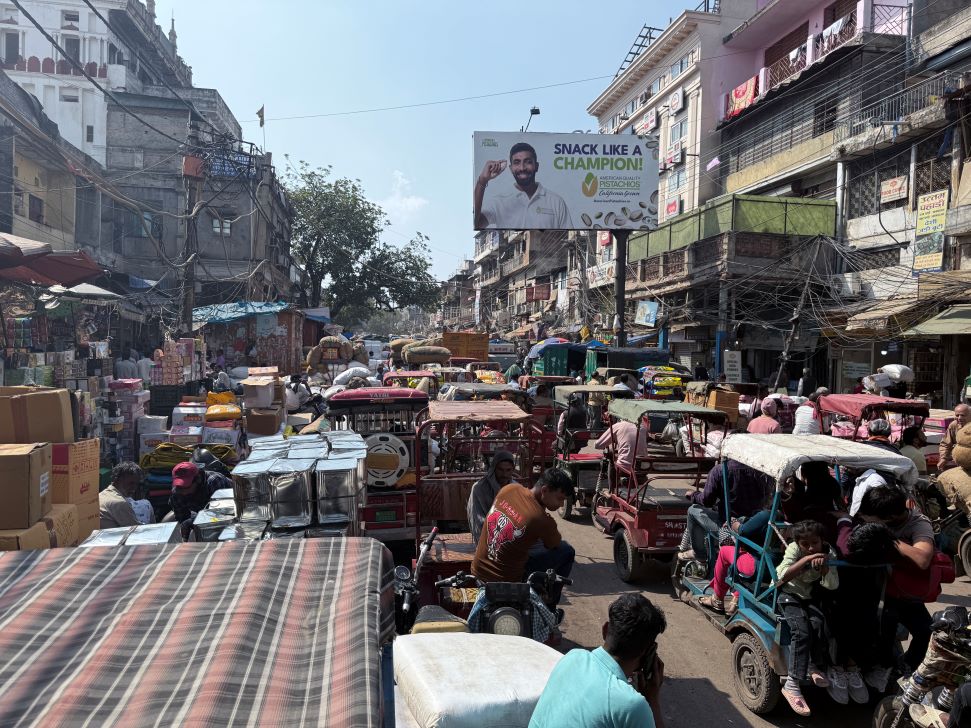
Chandni Chowk Market is a bustling, vibrant, and at times chaotic marketplace that embodies the essence of Old Delhi. Established in the 17th century, every street is a sensory overload filled with narrow lanes lined with shops and stalls selling everything from traditional textiles and jewellery to spices and street food. It literally sells everything.
It was also the ultimate culture shock! Exploring the maze of narrow alleyways and winding old streets, we would often lose our bearings as we were squeezed between swarms of rickshaws, motorbikes, and throngs of shoppers, vendors, and wholesale traders all jostling for space among the tightly packed shops and stalls. We soon discovered there was little opportunity to stand and soak in the atmosphere; if we stood still, we’d be in the way. Instead, we continued weaving through a cacophony of sounds, including Tuk-Tuk horns, rickshaw bells, shouting cart drivers, and locals negotiating for better prices. On top of this, we encountered beggars, men spitting or urinating in roadside drains, while cows wandered freely, blocking traffic and munching on the endless stream of rubbish littered freely from passersby. It felt chaotic and overwhelming, and at times, as tourists with cameras in hand, we felt completely out of place.
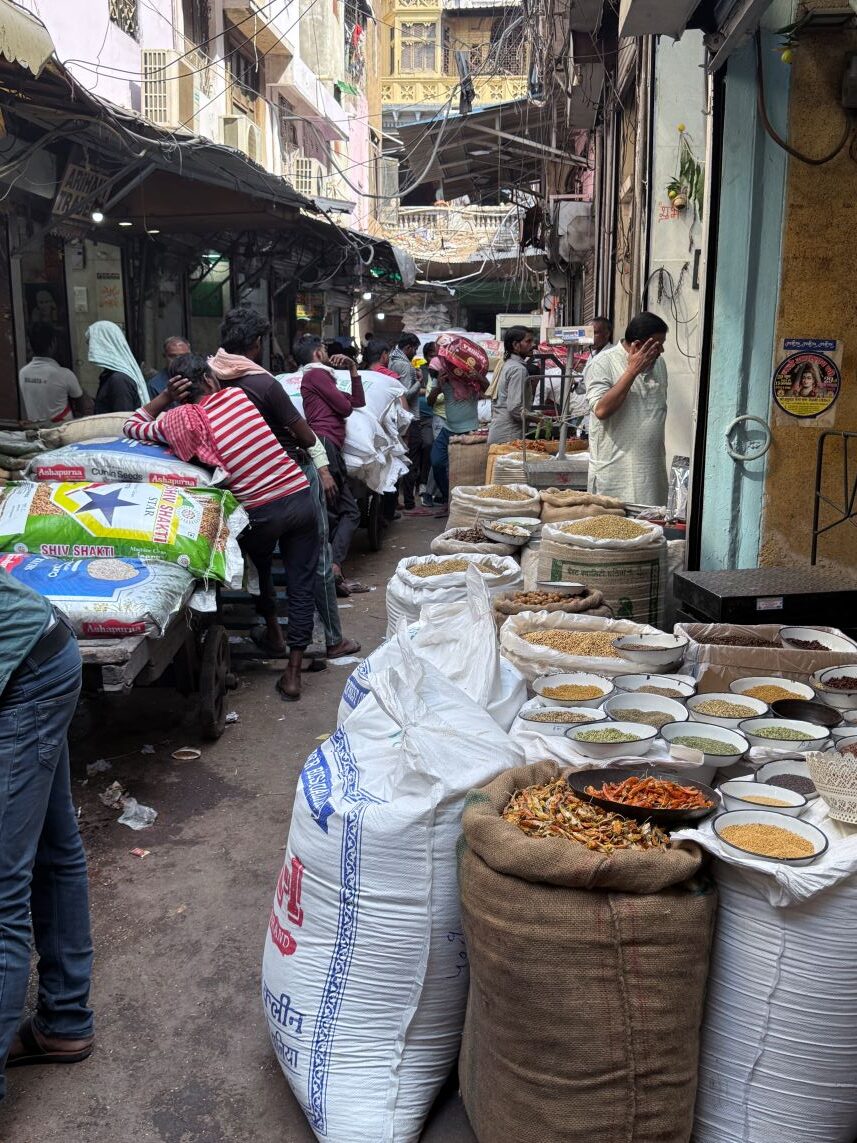
In some places, there were fetid smells of rotten food where we involuntarily gagged, while in others, the exotic scents of fruits, incense, perfumes, and sweet street food were delightful. However, it was when we explored the Khari Baoli Spice market did our senses hit astronomical heights. Walking around the sacks full of chilli and spices was not pleasant. The dust particles quickly hit the back of our throats, and along with many other locals, we were constantly and uncontrollably coughing and sneezing as we wandered around. As soon as we exited the spice market, our health returned to normal. What a bizarre experience that was!
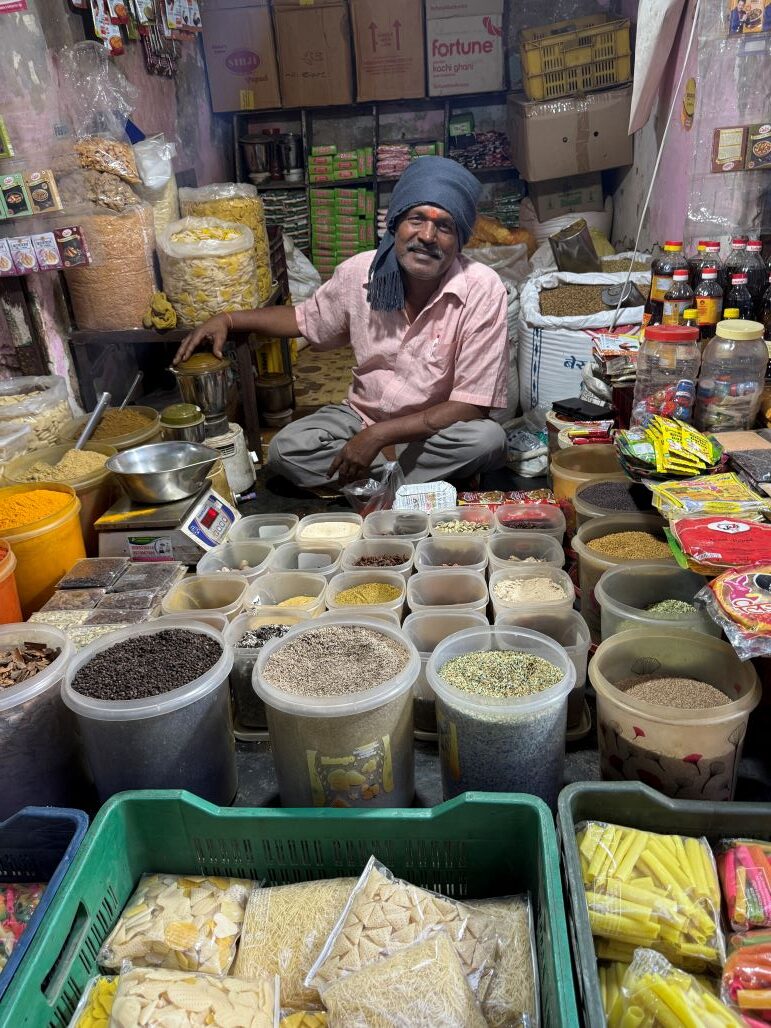
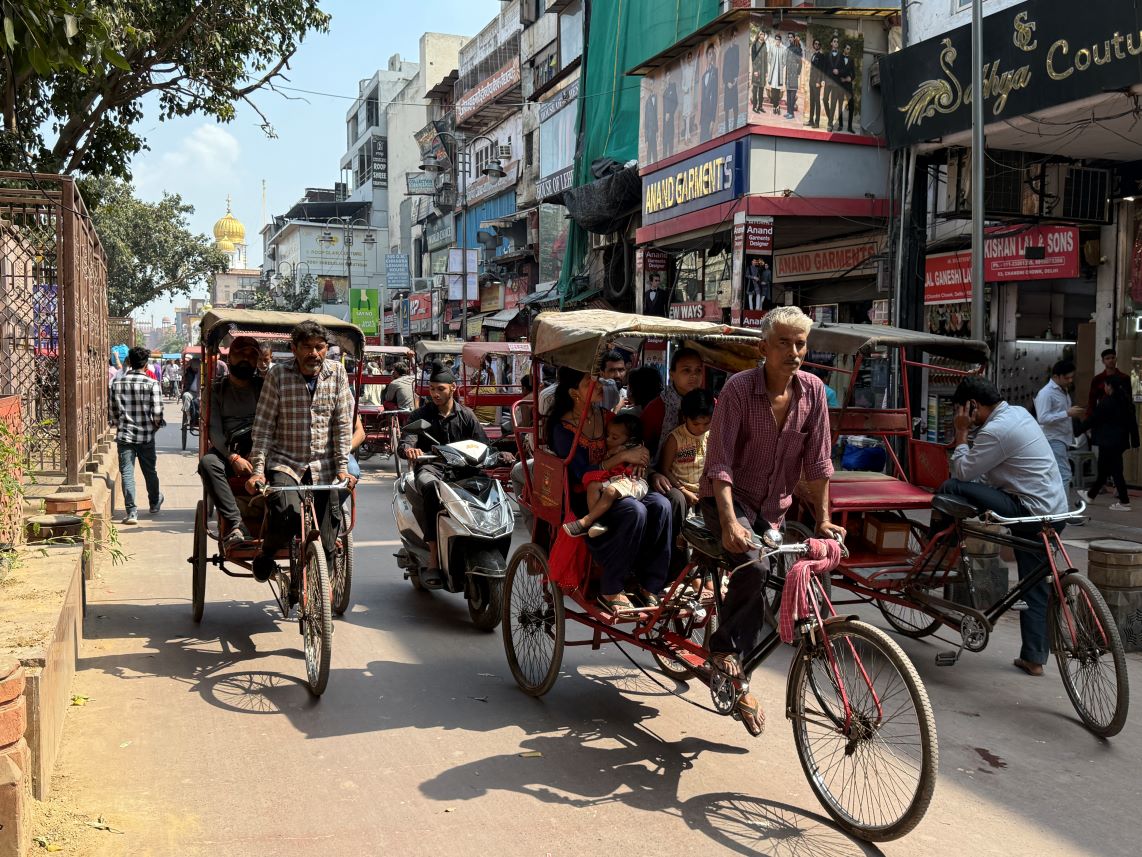
Amid the tangled overhead electrical wires, the mayhem of heavily congested and pothole-ridden streets, and the filth on the ground, the reality was that at Chandni Chowk, people continued their daily lives with smiles on their faces and energy that we could only admire and respect. It felt like stepping back in time, with an intoxicating adrenaline rush compelling us to see what lay around the next corner and whether our senses could withstand another hit. Chandni Chowk will undoubtedly remain one of our top all-time experiences.
Visited Jantar Mantar
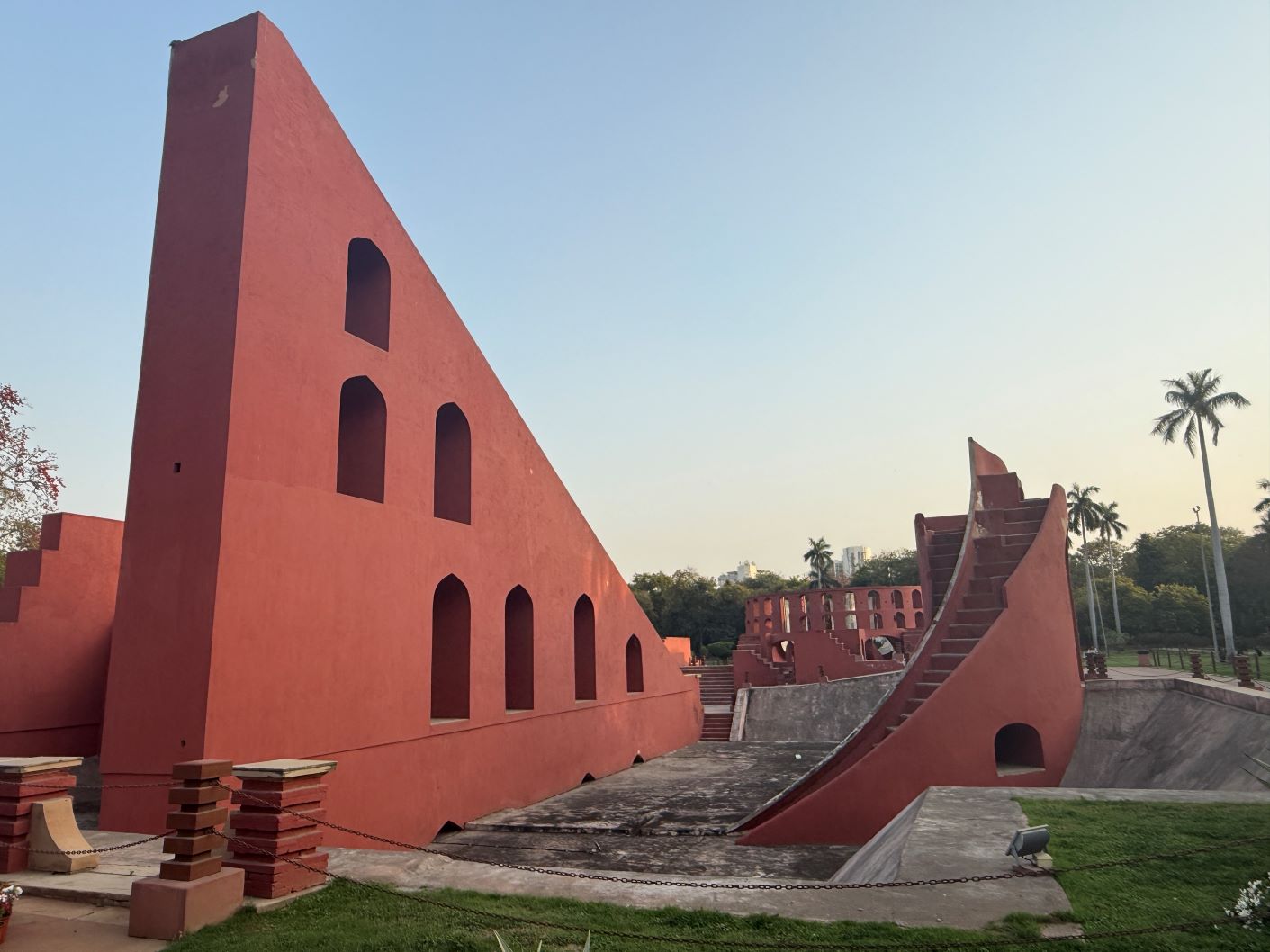
Built in 1725 by Maharaja Jai Singh, this collection of curved astronomical observatory structures was used to calibrate and monitor the movements of stars and planets. Among the structures is a giant sundial and a world-time clock. Though we were not entirely captivated by these structures, which felt somewhat like a static pink playground, we appreciated their engineering achievements and the Maharaja’s thirst for celestial knowledge.
Relaxed at Agrasen Ki Baoli
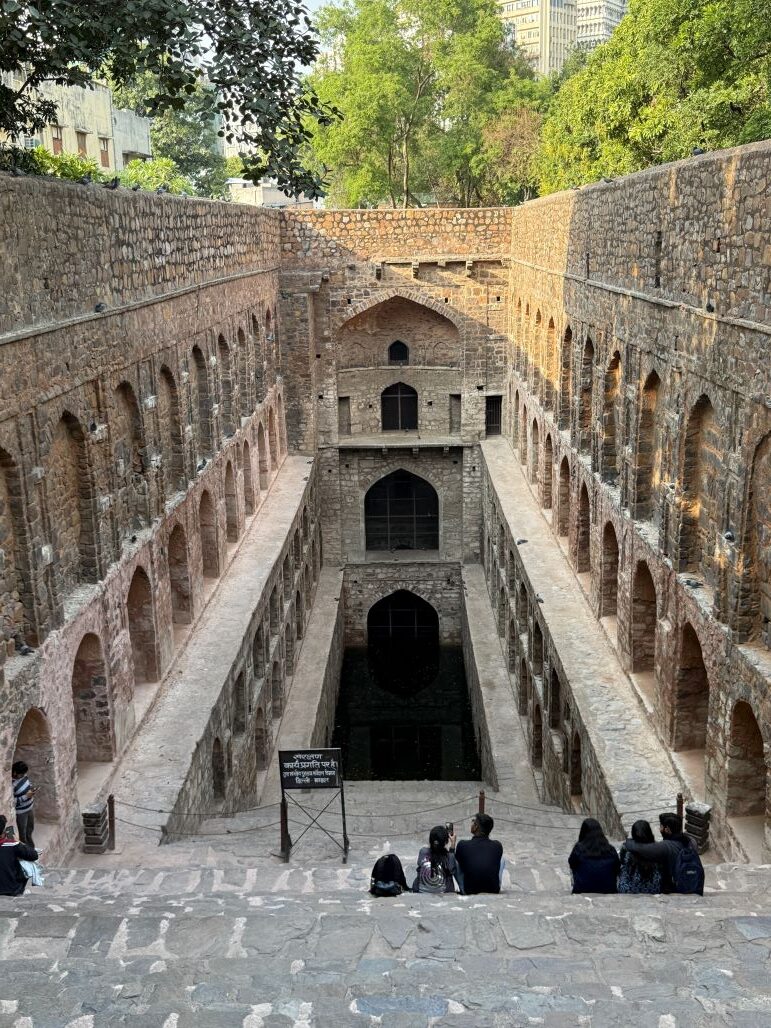
Agrasen Ki Baoli was Lorna’s favourite Delhi attraction, and with good reason. This beautiful stepwell in the heart of New Delhi, just a 10-minute walk from Connaught Place, was a great place to escape the crowds and enjoy a few moments of respite. These stepwells are no longer in use but were once utilised to collect water, with steps leading to the bottom to ensure access regardless of the water level. Today, this and other similar stepwells around the city are enjoyed by families and friends seeking a peaceful ambience and to soak up the engineering magnificence of such a structure.
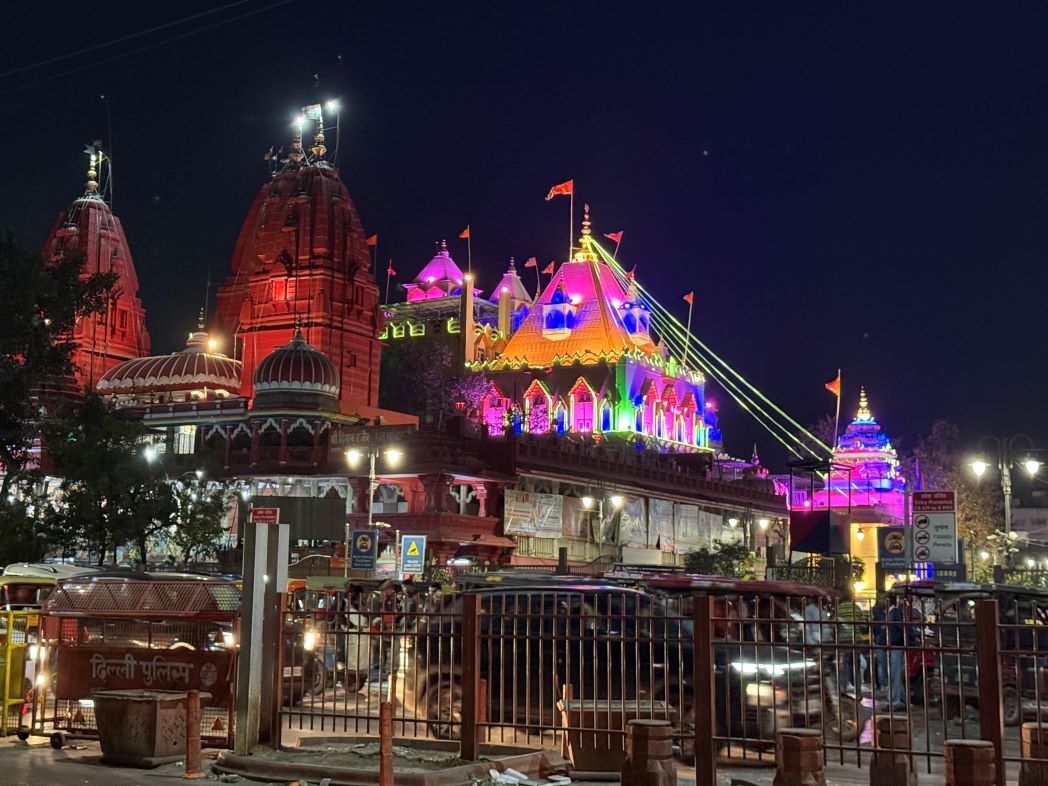
Climbed inside Jhandewalan Hanuman Temple
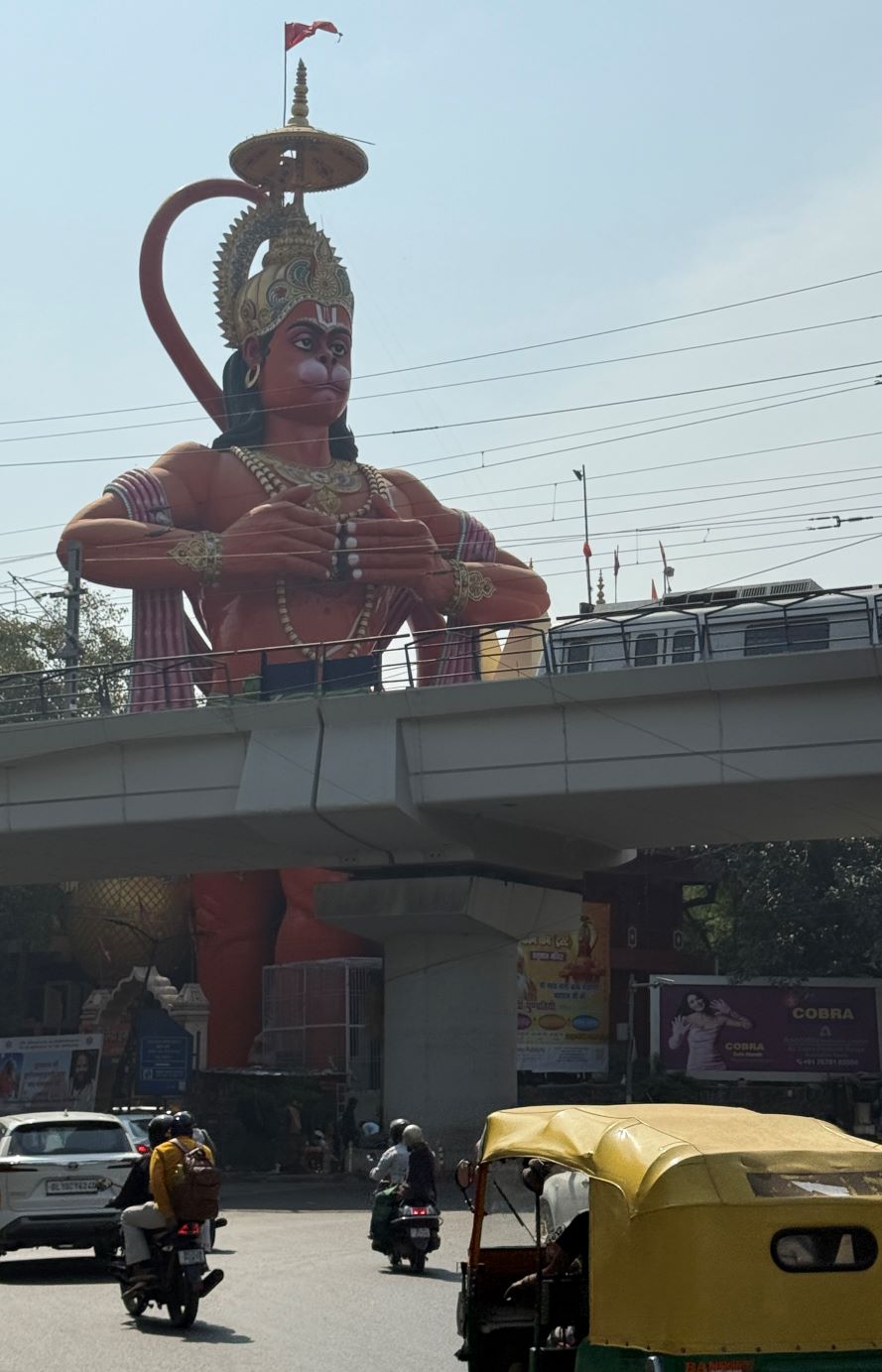
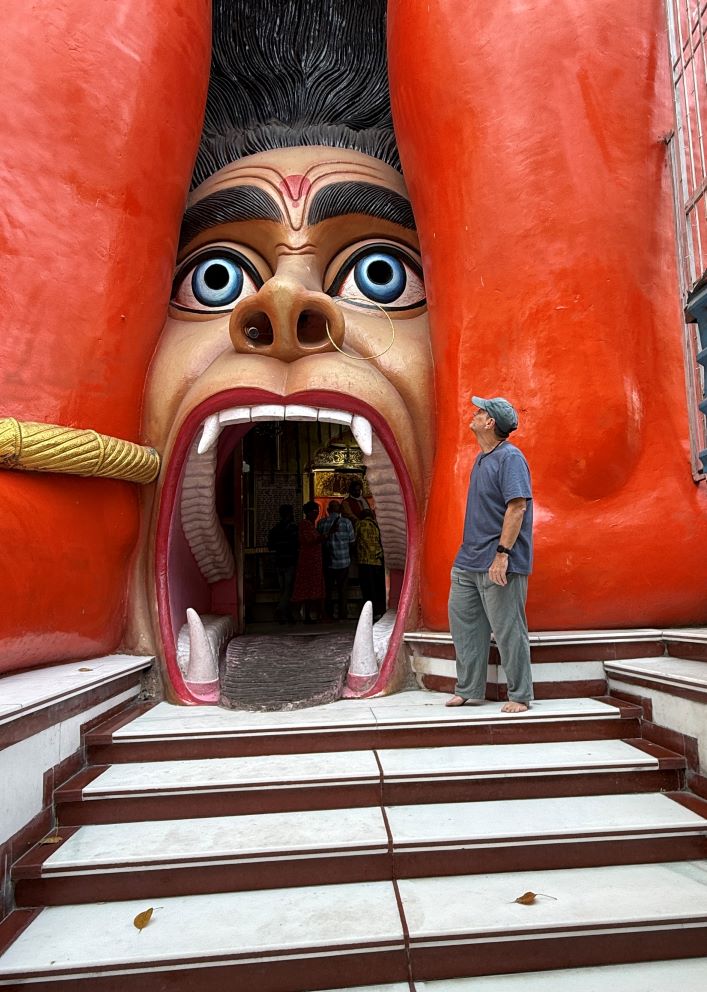
Visiting this Hanuman temple was a lot of fun. It features a massive 108-foot-tall statue of Lord Hanuman, which stands out amidst the surrounding traffic and is visible above the adjacent overhead metro line. To enter the temple, we climbed through the carved mouth of a demon that Hanuman is said to have slain. We would have loved to visit on a Tuesday or Saturday to witness the giant statue move its arms back and reveal images inside its chest during evening prayers!
Acknowledged Raj Ghat and National Gandhi Museum
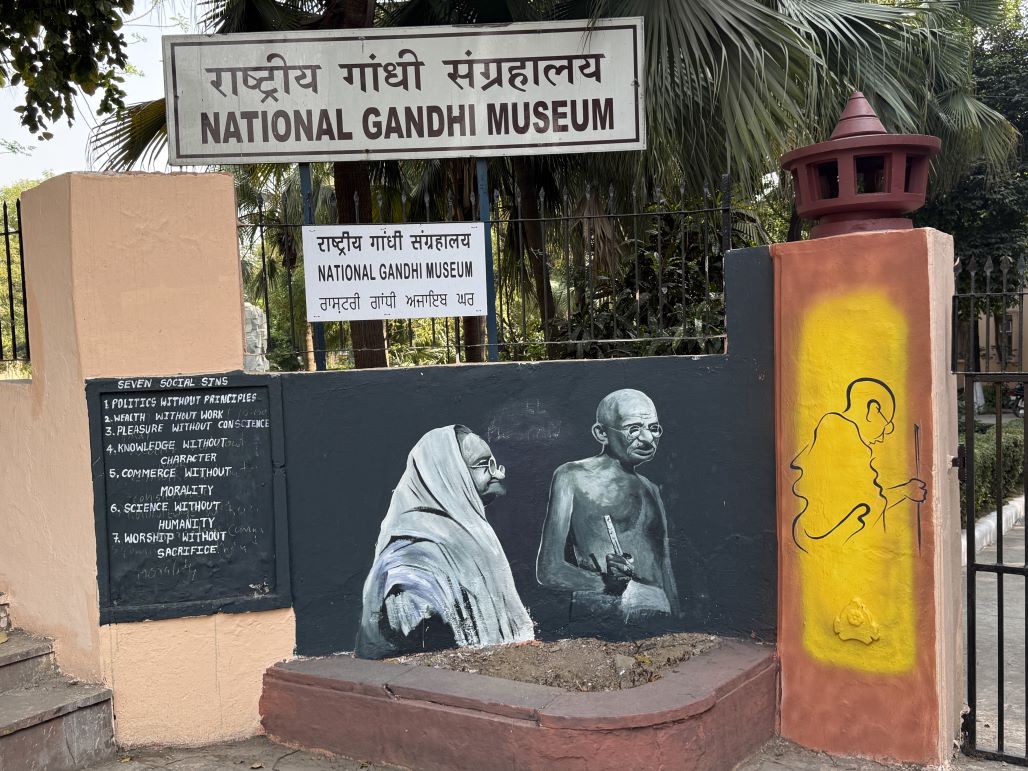
Our next venture was to visit the famous National Gandhi Museum, which left us with sobering thoughts of sacrifice, self-sufficiency, and simplicity. The museum featured thousands of documents, transcripts, proclamations, and photos that traced Gandhi’s journey from his early eventful trip to South Africa to his fight for India’s freedom and independence. It was very interesting, with most captions written in English. However, on the other side of the road was Gandhi Darshan, which had the longest and most exhaustive exhibition of Gandhi’s life imaginable. We could only think that the most ardent history buff would have the time and energy to read the countless display boards about Gandhi’s life, many of which were shown in the National Gandhi Museum we had just left.
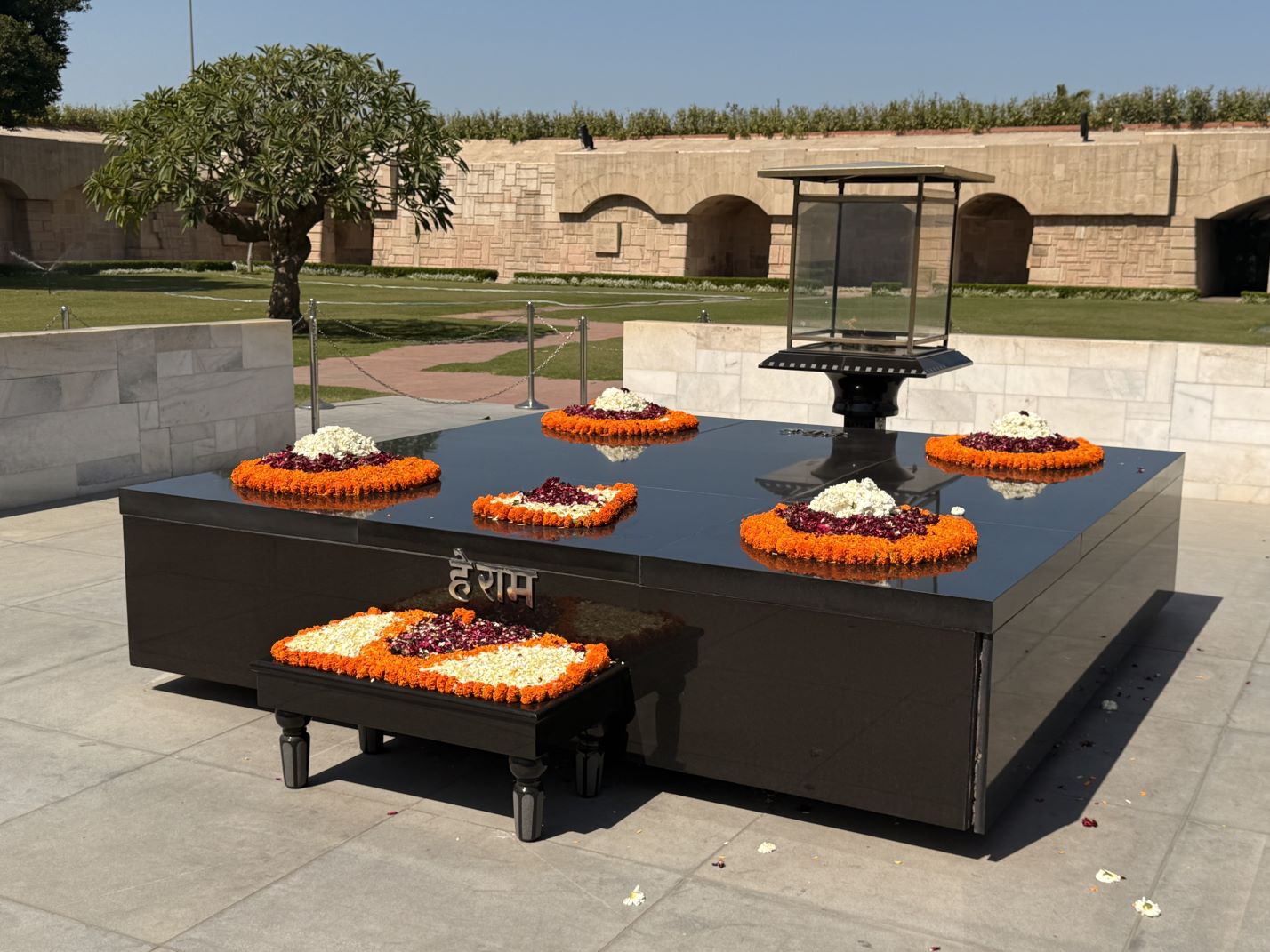
Next to Gandhi Darshan (over another road) was Raj Ghat, the memorial to Mahatma Gandhi, where his body was cremated. The memorial consisted of a small black marble platform with an eternal flame at one end. Surrounding the memorial was a peaceful, large lawn filled with people paying their respects or relaxing, perhaps taking a break from the noise and chaos of central Delhi. We had initially planned to visit Gandhi Smriti, the home of Gandhi and the spot of his assassination, but after spending a couple of hours at both the museum and Darshan, we felt that we’d learnt enough about Gandhi’s life to appreciate the impact of his life on India.
Checked out India Gate
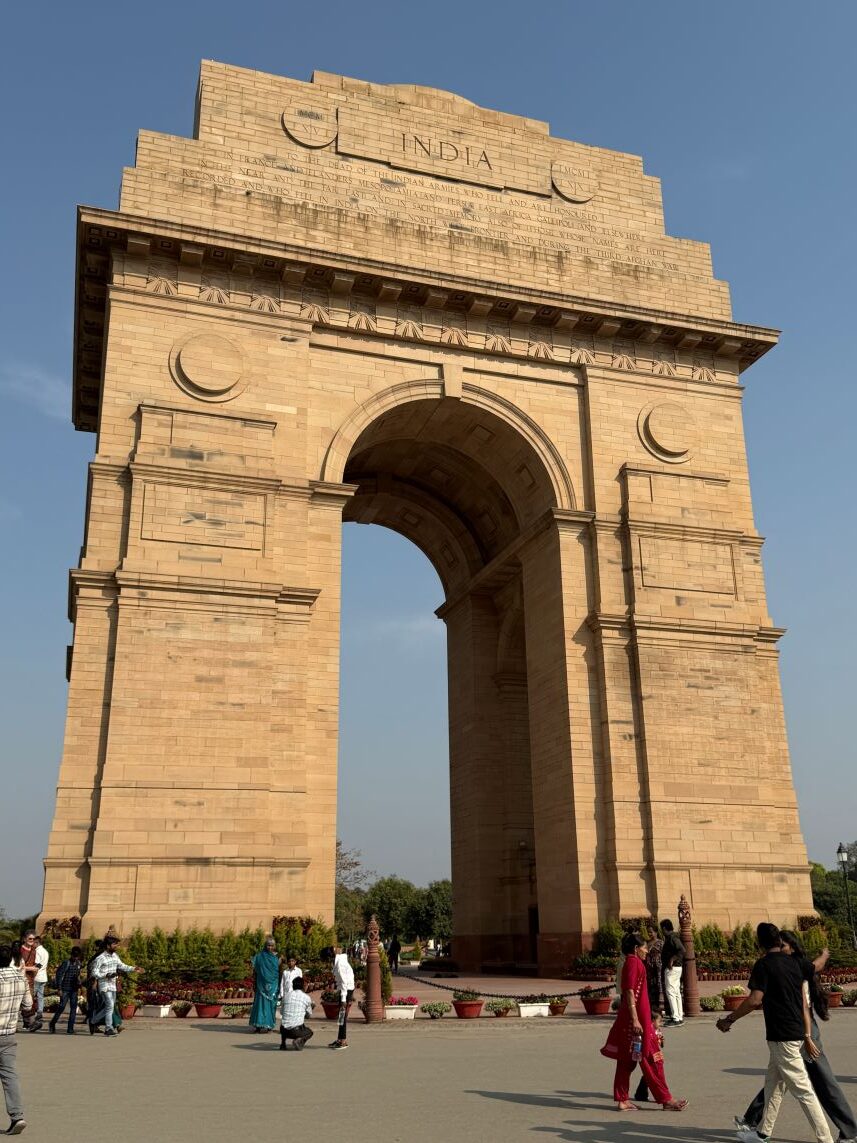
Perhaps Delhi’s most well-known landmark, India Gate rises to a height of 42 metres and stands proudly in the heart of New Delhi. Constructed as a war memorial for the 70,000 soldiers of the British Indian Army who sacrificed their lives during World War I and other battles, this arc-shaped monument is beautifully surrounded by lush green lawns where crowds stroll, chat, and enjoy family picnics. Walking through the arch, we admired its architectural structure and the 90,000 fallen soldiers’ names inscribed in the brickwork. After, we wandered further into the peaceful, respectful and magnificent National War Memorial, which honoured the fallen soldiers. Although we regretted not visiting the monument in the evening, we did pass it at night in an Uber, and it was stunningly lit up.
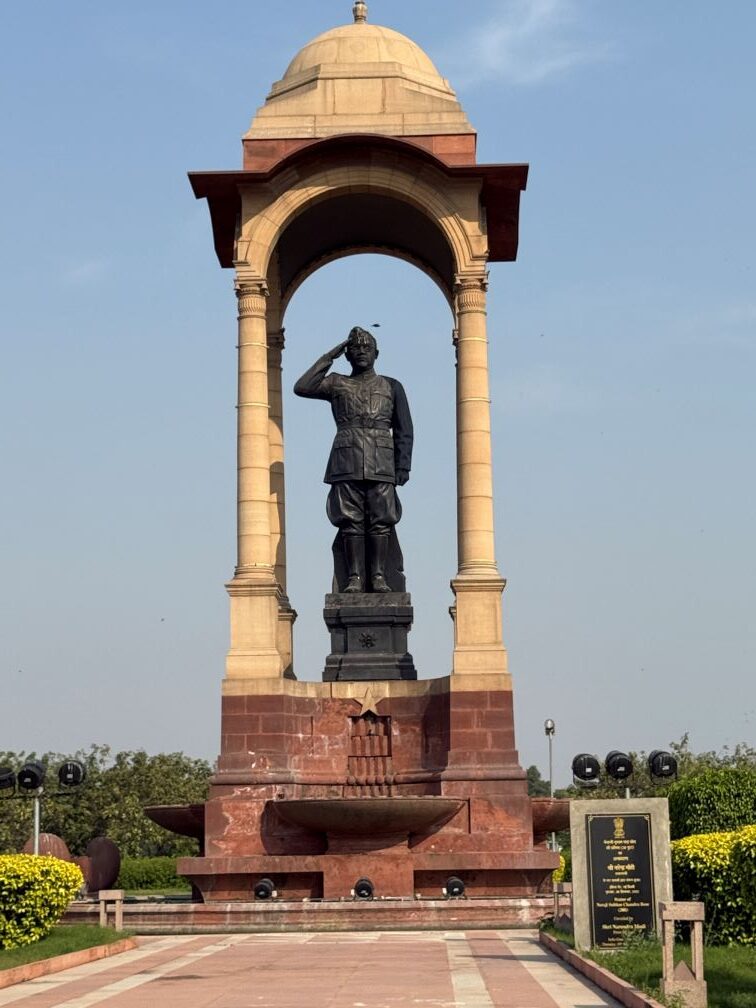
Along with the beautiful, peaceful walk along Rajpath from Central Secretariat leading to the iconic gate, there were several other monuments in the vicinity worth a minute or two. However, we would have moved on to other attractions a lot quicker if it weren’t for the many people who asked us to join their family photos and selfies. In fact, our “celebrity status” became so popular that a family queue began to form!
Had Fun at Akshardham Temple
The Akshardham Temple, dedicated to Bhagwan Swaminarayan, is a breathtaking spiritual and cultural complex that showcases one of the largest Hindu temples in the world. The temple’s pink sandstone and white marble, adorned with beautifully carved sculptures, are quite impressive. The centrepiece of the temple is its stunning central dome, surrounded by beautifully landscaped gardens, fountains, and exhibitions that depict the teachings of Swaminarayan. Being relatively new (opened in 2005), all the carvings were in good condition, but to us, it felt that the pristine condition and exhibitions involving a 4-D cinema, theatre show and a water boat ride created a somewhat manufactured Disneyland effect which continually repeated Swaminarayan teachings. Saying that, the sunset laser and water show was pretty spectacular. It was also an unnerving feeling having to leave all electronic devices, including smartphones and watches, at the well-organised entrance booths before entering. A very strange experience indeed!
Supper impressed with Humayun’s Tomb
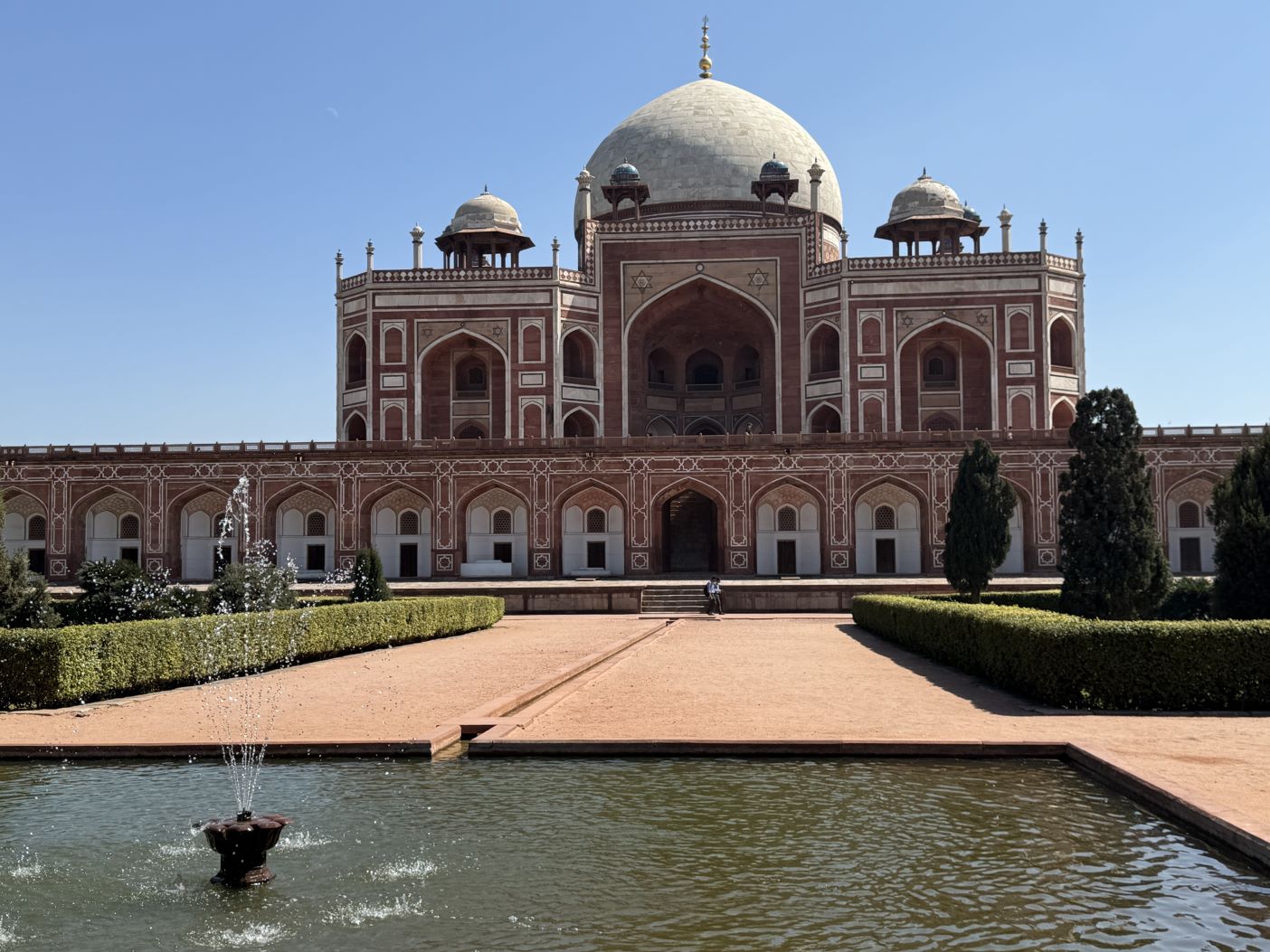
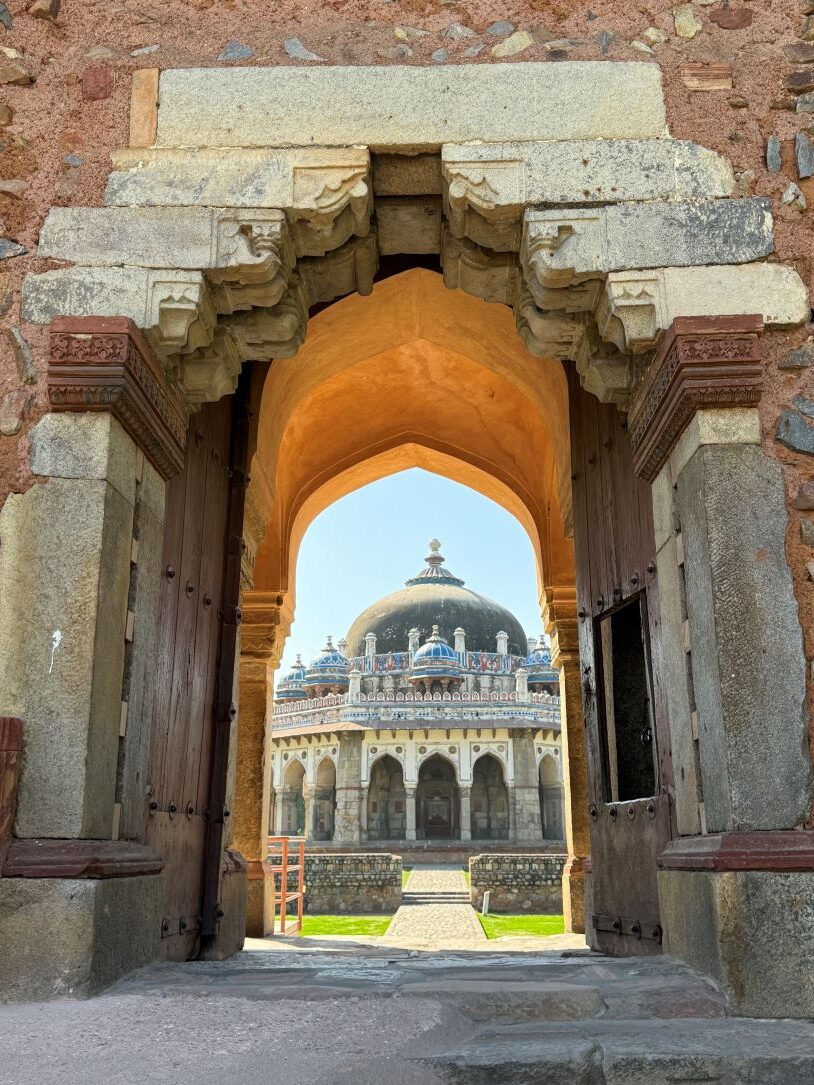
One of the best attractions we visited was the breathtaking Humayun’s Tomb, a UNESCO World Heritage site. This grand mausoleum contained the tomb of Mughal Emperor Humayun and is undoubtedly an architectural gem that stands as a testament to Mughal grandeur. Completed in 1570, the site is often considered an inspiration for the iconic Taj Mahal in Agra. Commissioned by Humayun’s wife Bega Begum, 9 years after his death, the tomb showcased a blend of Persian and Indian architectural styles, crafted from red sandstone and white marble, featuring symmetrical designs and intricate geometric patterns. Apart from the mausoleum, we also enjoyed exploring the many other royal tombs and walking around the lush, immaculately maintained gardens. We spent a lot longer here than expected – its craftsmanship and beauty were really worth it.
Strolled around Safdarjung’s Tomb
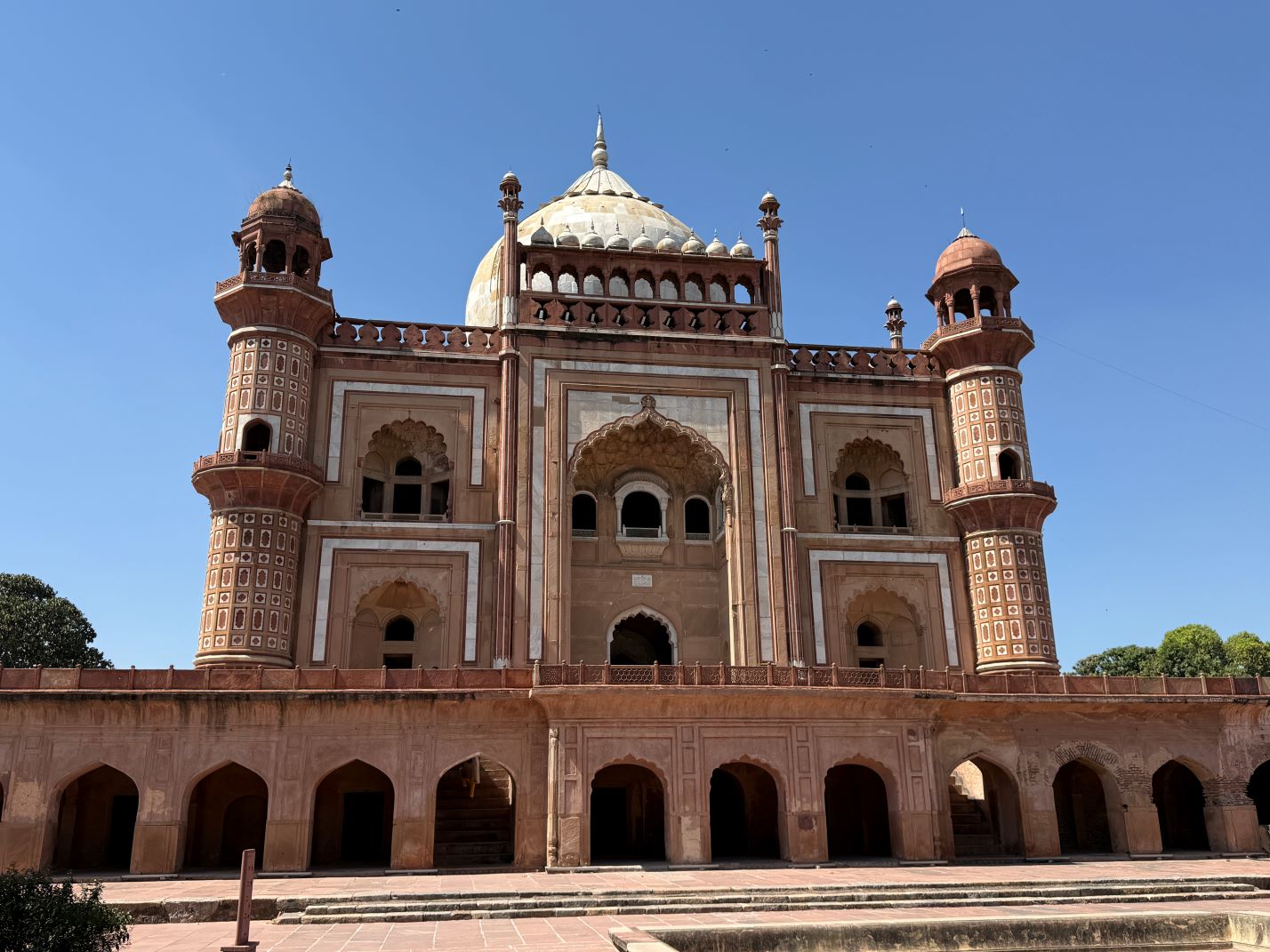
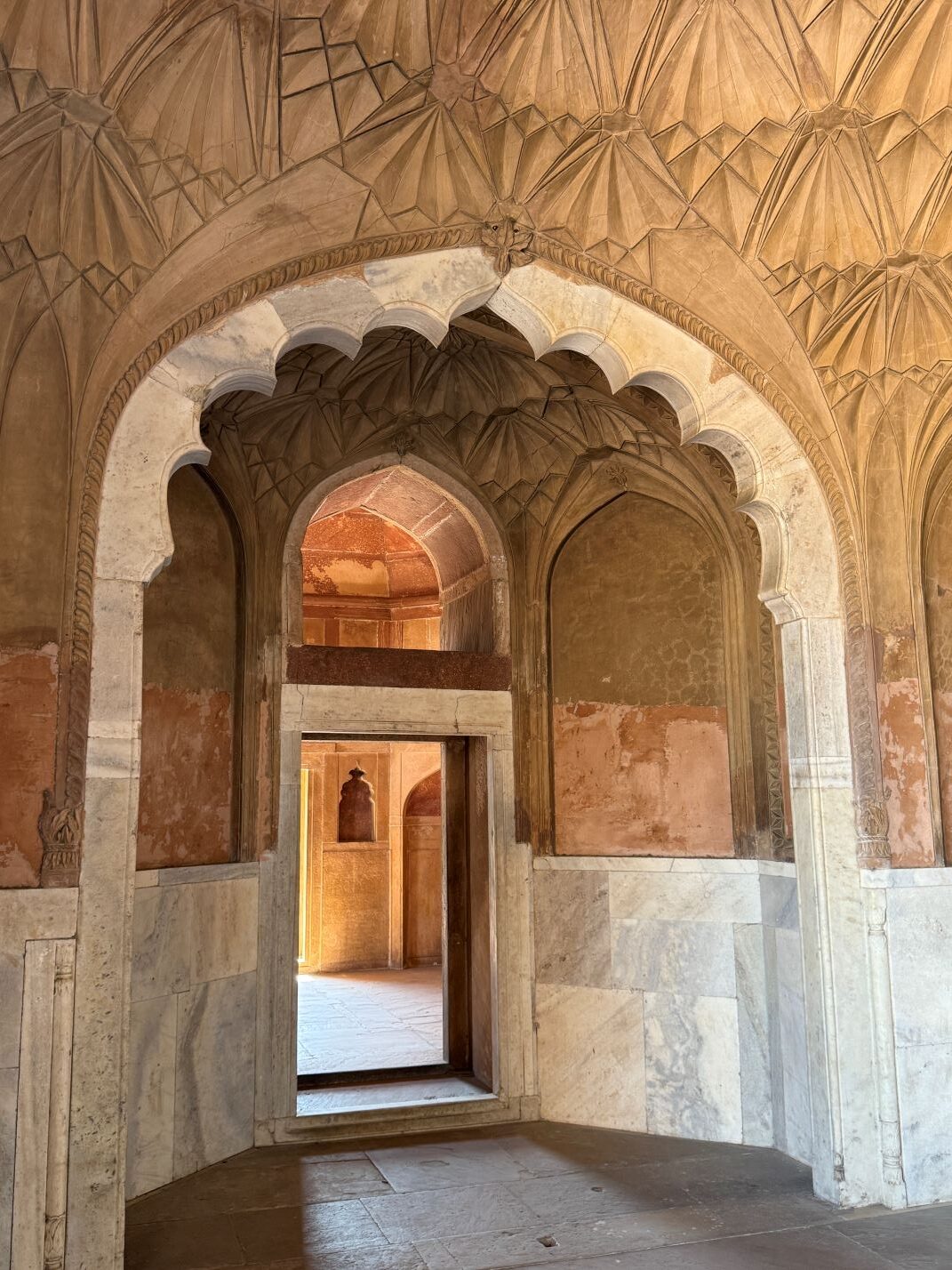
A couple of kilometres away from Humayun’s Tomb is Safdarjung’s Tomb, a grand sandstone and marble mausoleum constructed in the 1700s. Set within palm-lined gardens, it has a similar vibe to the complex surrounding Humayun’s Tomb, but on a smaller scale and with far fewer visitors. What we enjoyed about this tomb was its rugged charm, contrasting with the pristine white cleanliness of Humayun’s Tomb. With no floral designs or jewelled decorations, and featuring a weathered exterior dome, it offered a more ‘ancient’ appeal.
Wandered the ancient Lodhi Garden and Art District
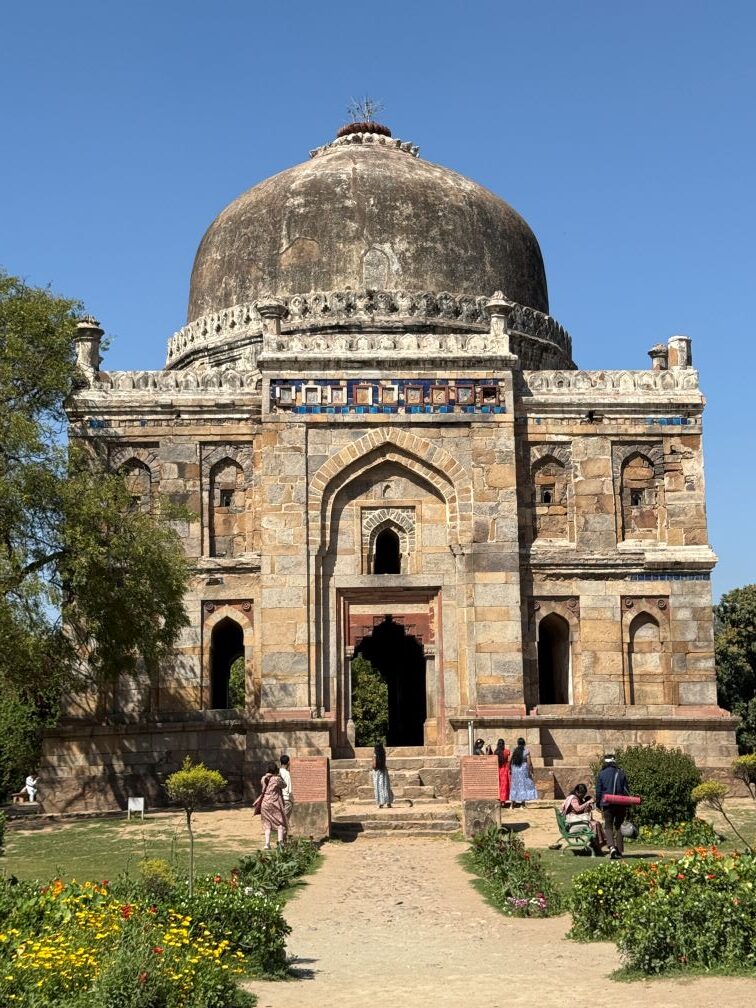
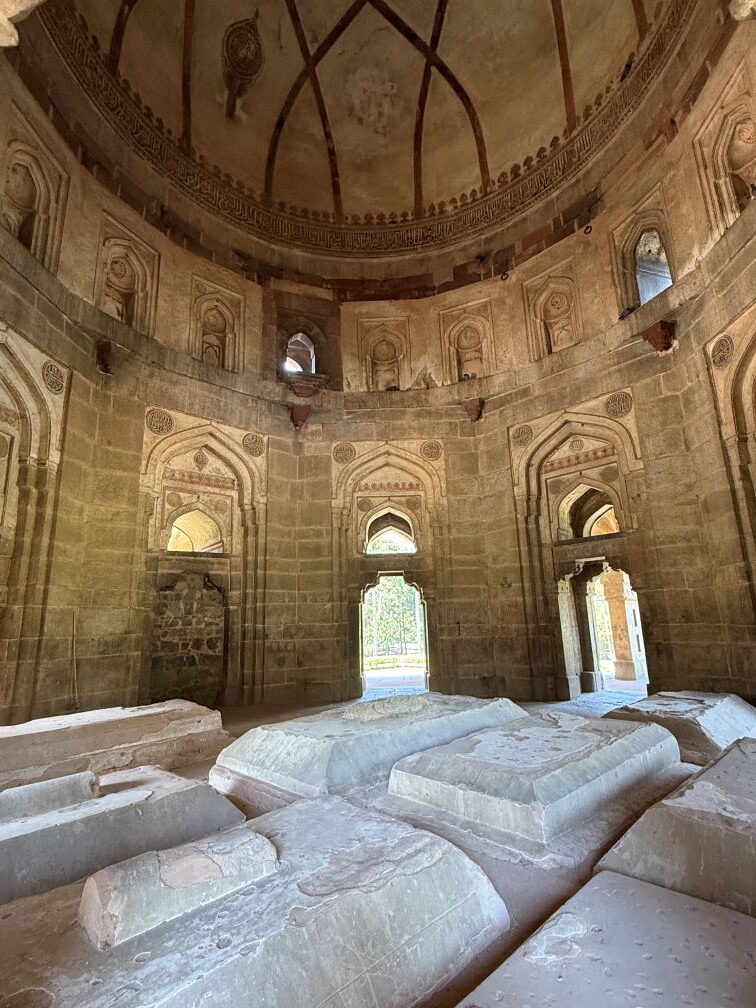
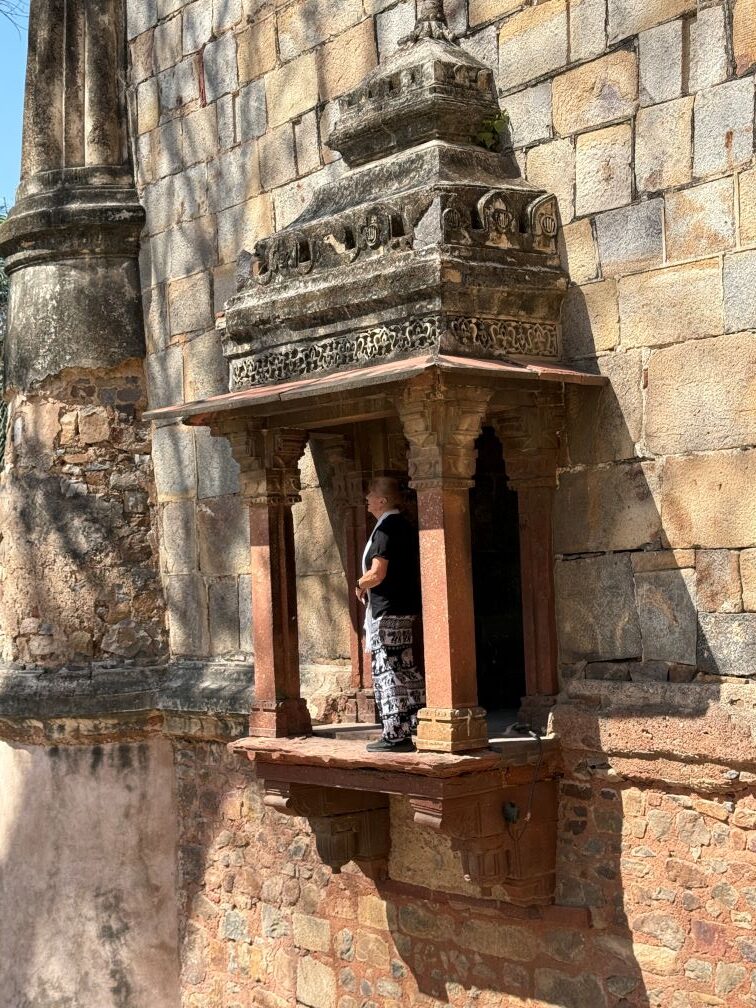
Set across 90 acres of tranquil woodlands, Lodhi Garden is an impressive city park featuring several tombs and historic structures dating back to the 15th and 16th centuries, all waiting to be explored. Hoping for a bit of respite from Delhi’s chaotic busyness outside, we arrived at the garden late in the afternoon, feeling quite tired from the day’s activities. However, the setting sun casting a warm glow on the stone structures simply inspired us to continue our exploration. Had we arrived earlier, we could have easily spent a couple of hours wandering among the monuments, watching families play cricket, enjoying picnics on the grass, and mingling with locals eager to practice their English – it truly was that kind of relaxing and welcoming place.
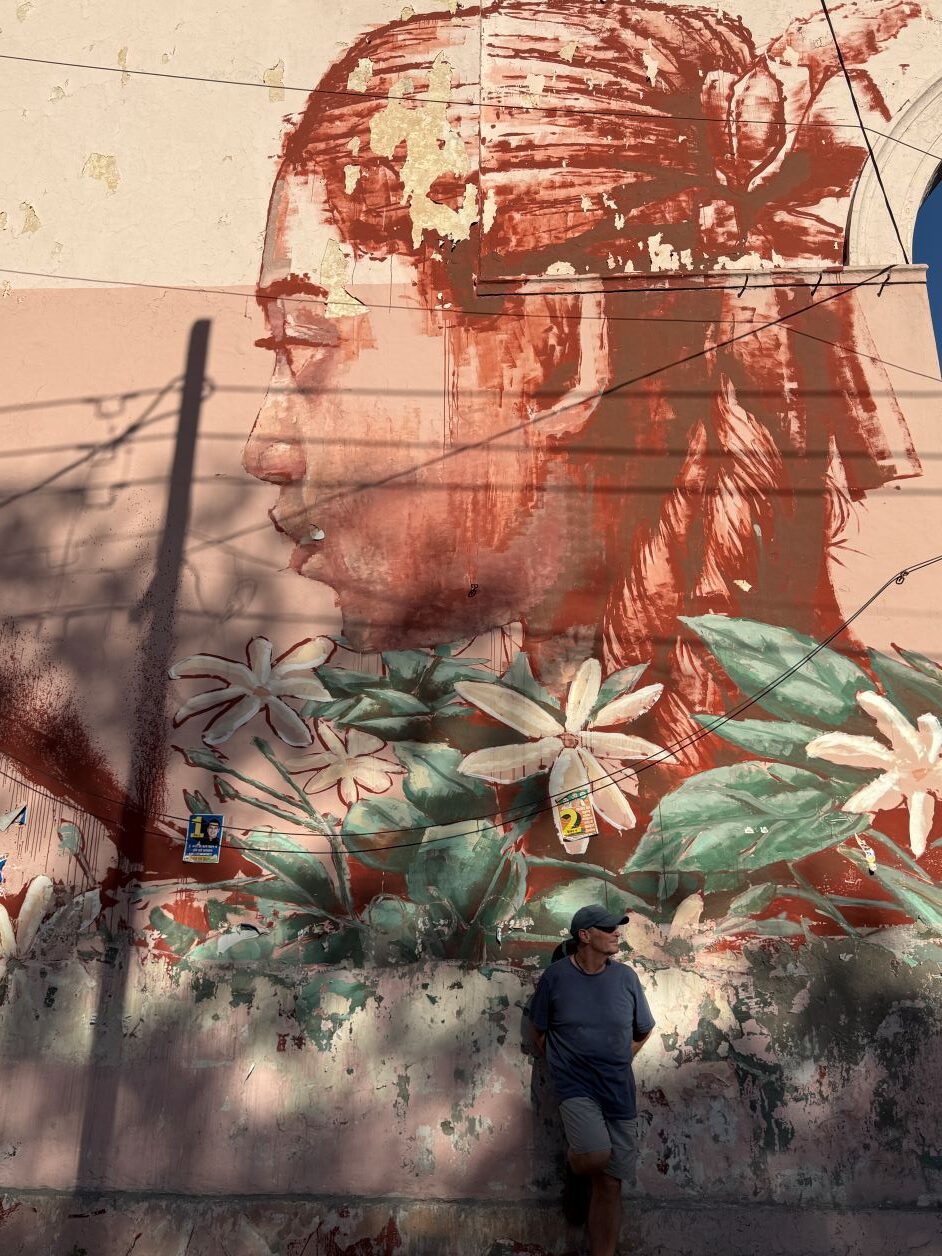
Walking 10 minutes from the garden walk our next attraction was Lodhi Art District. This lesser-known area has been transformed into a public art exhibition, featuring dozens of enormous, colourful murals adorning the sides of buildings on various streets just off the main roads. While some murals showed signs of wear and vandalism, many were well-preserved, and it was enjoyable to zigzag across the streets, being surprised and captivated by each new thematic mural. This was definitely a very interesting place to end the day.

Marvelled at the Lotus Temple
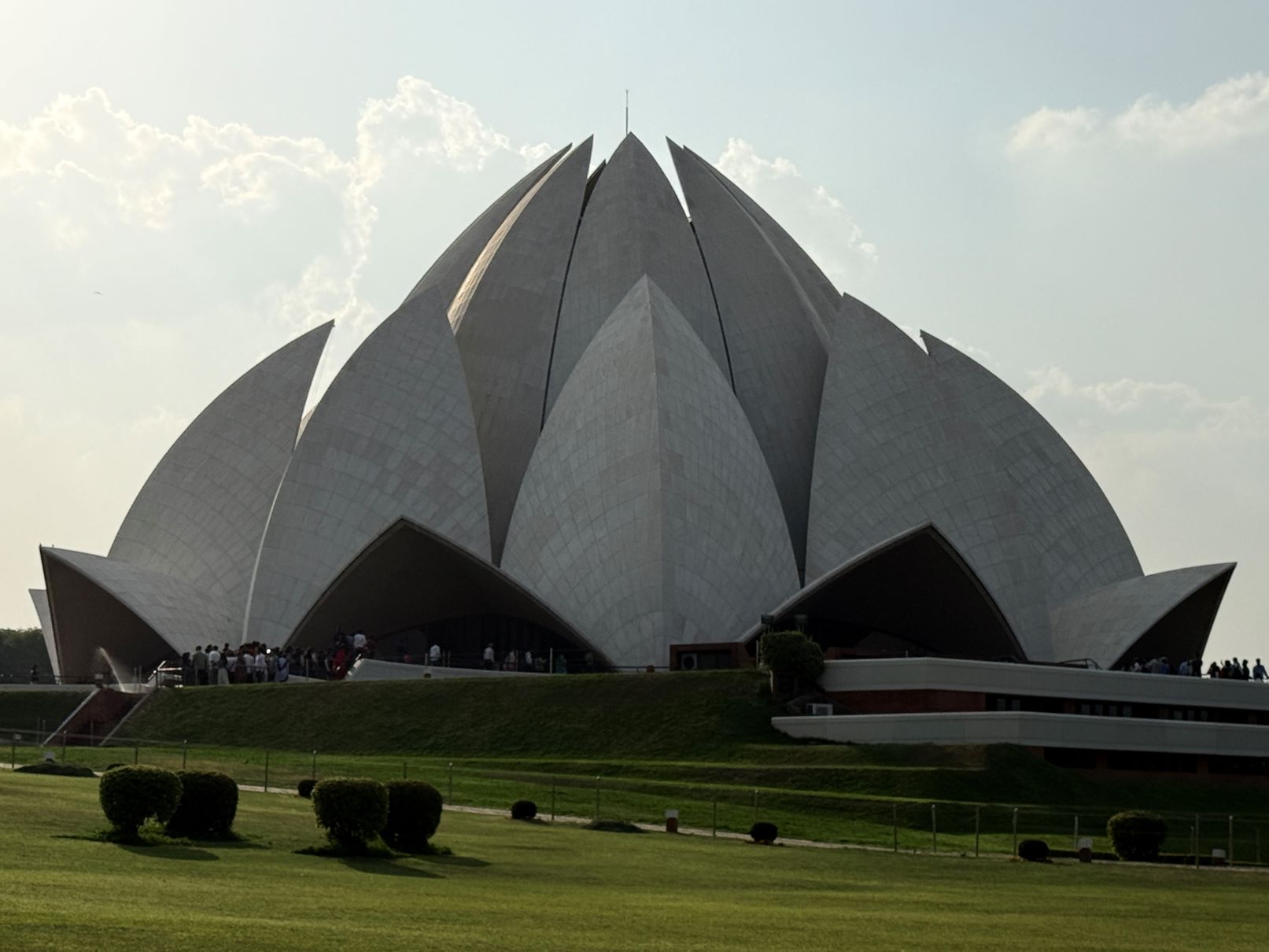
One of the most magnificent temples in India is the Lotus Temple, shaped like its namesake flower. This temple, belonging to the Bahá’í faith, advocates the idea that all people and religions are divinely united and is therefore open to everyone, regardless of their beliefs. The temple featured 27 free-standing, marble-clad petals surrounded by nine turquoise pools of water and lush gardens to explore. It is a marvellous structure by day, but at night, when it is illuminated, it is truly spectacular.
Completed in 1986, this Bahá’í temple is the only one in Asia, with six others located around the world. As a major tourist attraction, the only way to visit inside was through an organised ‘free’ tour. During the tour, along with hundreds of other tourists, we were shepherded through the complex in a very long line with strict instructions not to deviate or wander. Eventually, we shuffled into the central hall where the services would take place, and we were quite surprised by just how much natural light filtered through the strategically placed stone petals around the central structure. More importantly, though, it provided the two of us with respite from the long line of tourists, as we were given 5 minutes of ‘free time’ to explore. And to the second, it was only 5 minutes before we were ushered out, back into line and escorted towards the exit.
Chilled at Delhi’s Bohemian: Hauz Khas Village
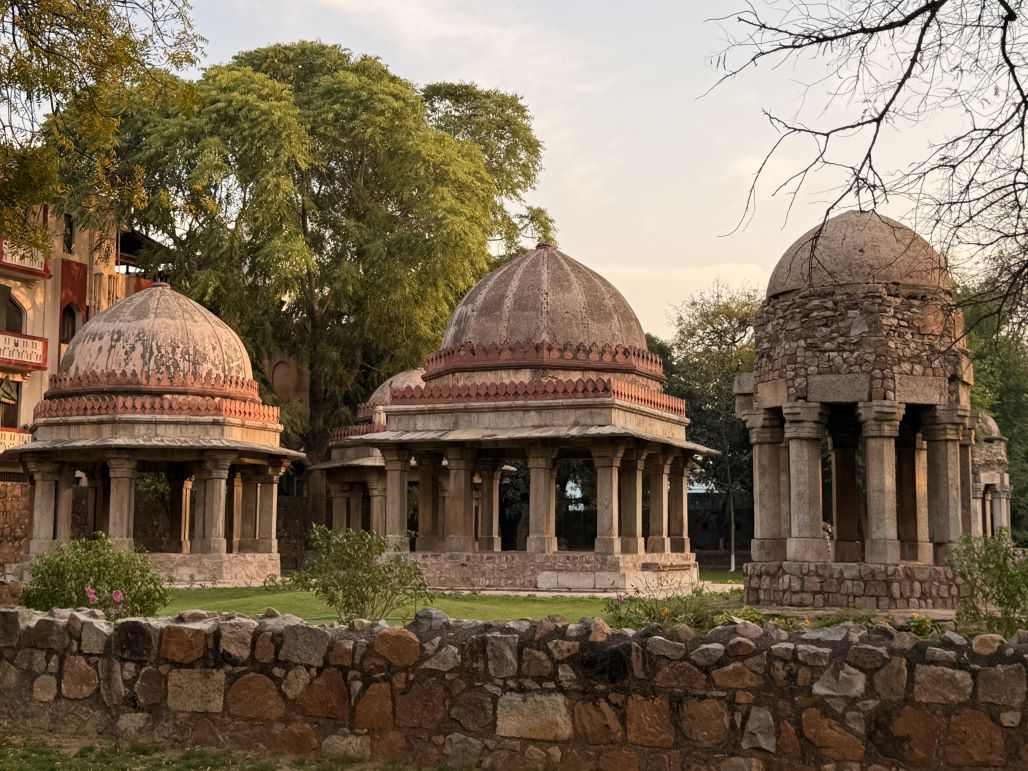
This beautiful, relaxing and historical complex is one of Delhi’s hidden gems. As peaceful as Lodi Gardens, the 14th century architectural ruins of Hauz Kauz, located in South Delhi, is a magnificent attraction to visit at the end of the day. Built around a small lake, the ancient remains of a madrasa and several tombs provided a soothing atmosphere after navigating the chaotic streets of Delhi. The beauty of this complex lies in its location within Hauz Khas Village, an artistic enclave featuring a variety of cool cafes, live music venues, spas, bookstores, and art galleries set along cobbled backstreets. We ended up staying much longer than planned, feeling completely relaxed among the chic teahouses and trendy boutiques.
Awestruck at Qutub Minar
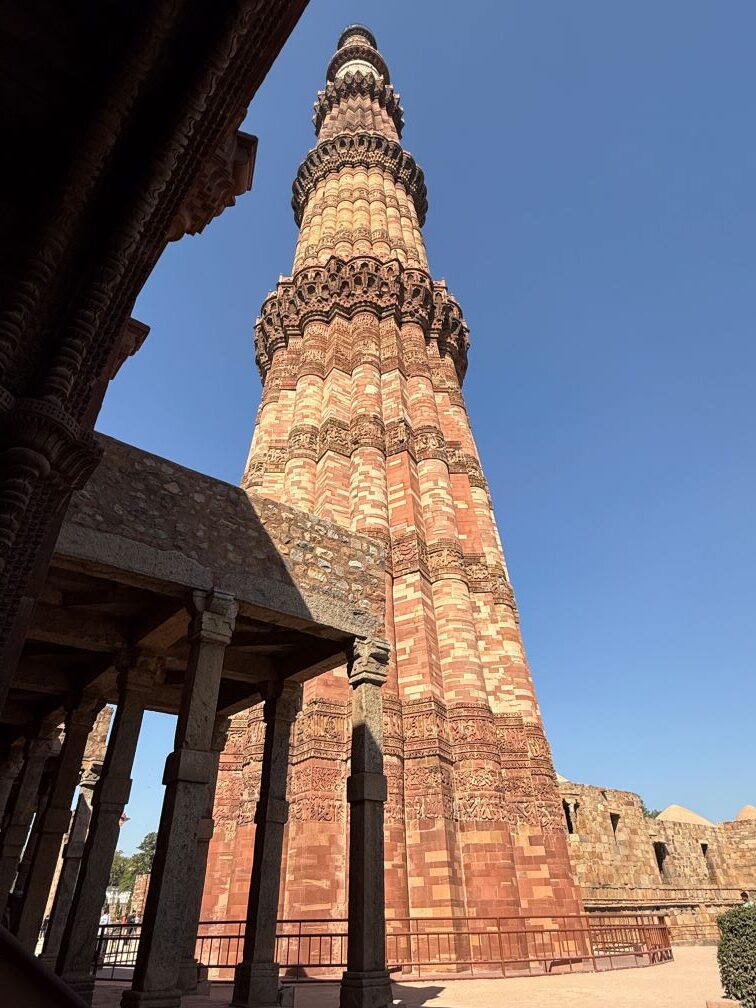
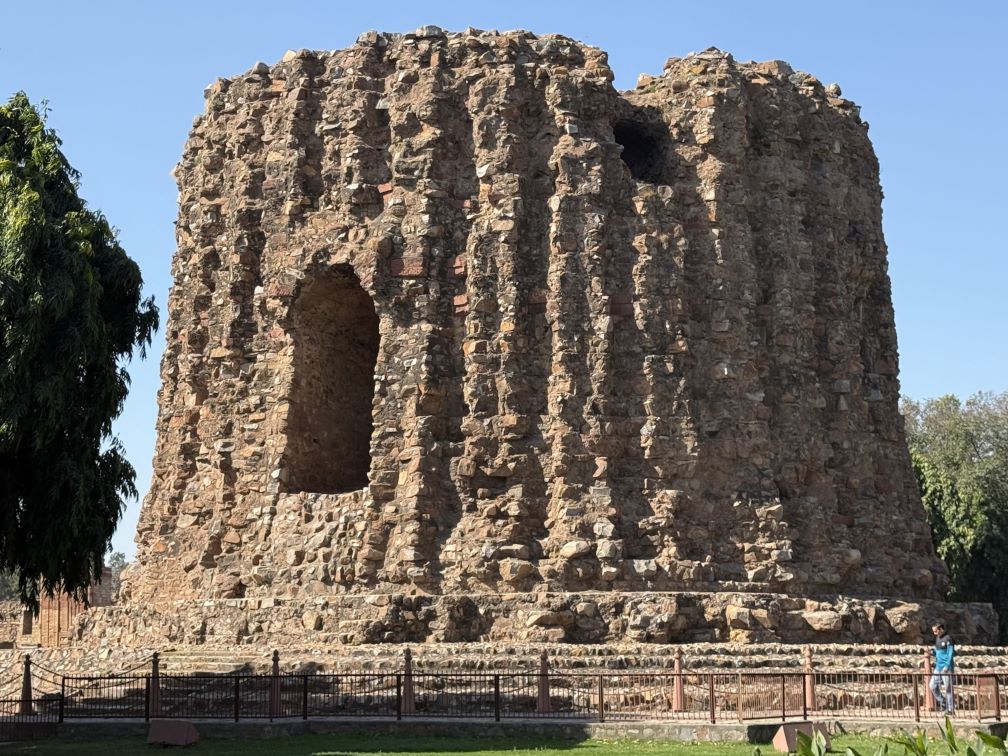
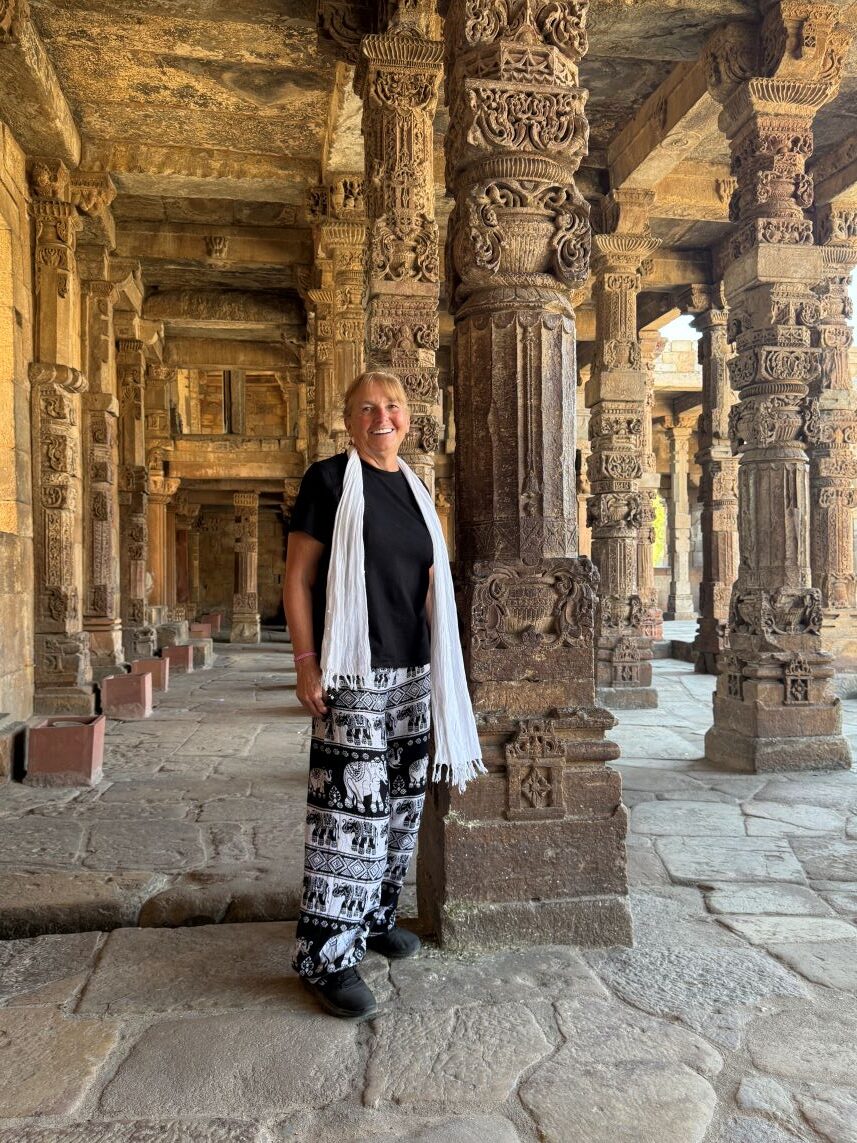
The towering Qutub Minar, standing at 73 metres, is part of the Qutub complex, a UNESCO World Heritage Site located on the southern side of Delhi. Inside, there were a few interesting ruins and structures we were keen to explore, as well as an intriguing ancient Iron Pillar, mysteriously known for its rust-resistant composition. Built in 1192 by Qutb-ud-din Aibak, Qutub Minar’s design was influenced by Persian architecture and featured beautifully intricate carvings and verses from the Qu’ran that adorned its five distinct storeys. It’s quite remarkable that, as the tallest ‘brick’ minaret in the world, it has survived unscathed for so long despite the many natural disasters throughout the centuries. Perhaps what kept us there longer were the peaceful, well-manicured garden lawns, which provided a perfect photogenic backdrop to the skilled masonry craftsmanship, as well as a welcome break from the many forts and religious structures we had explored in the days prior.
Travelled on all modes of Transport around Delhi
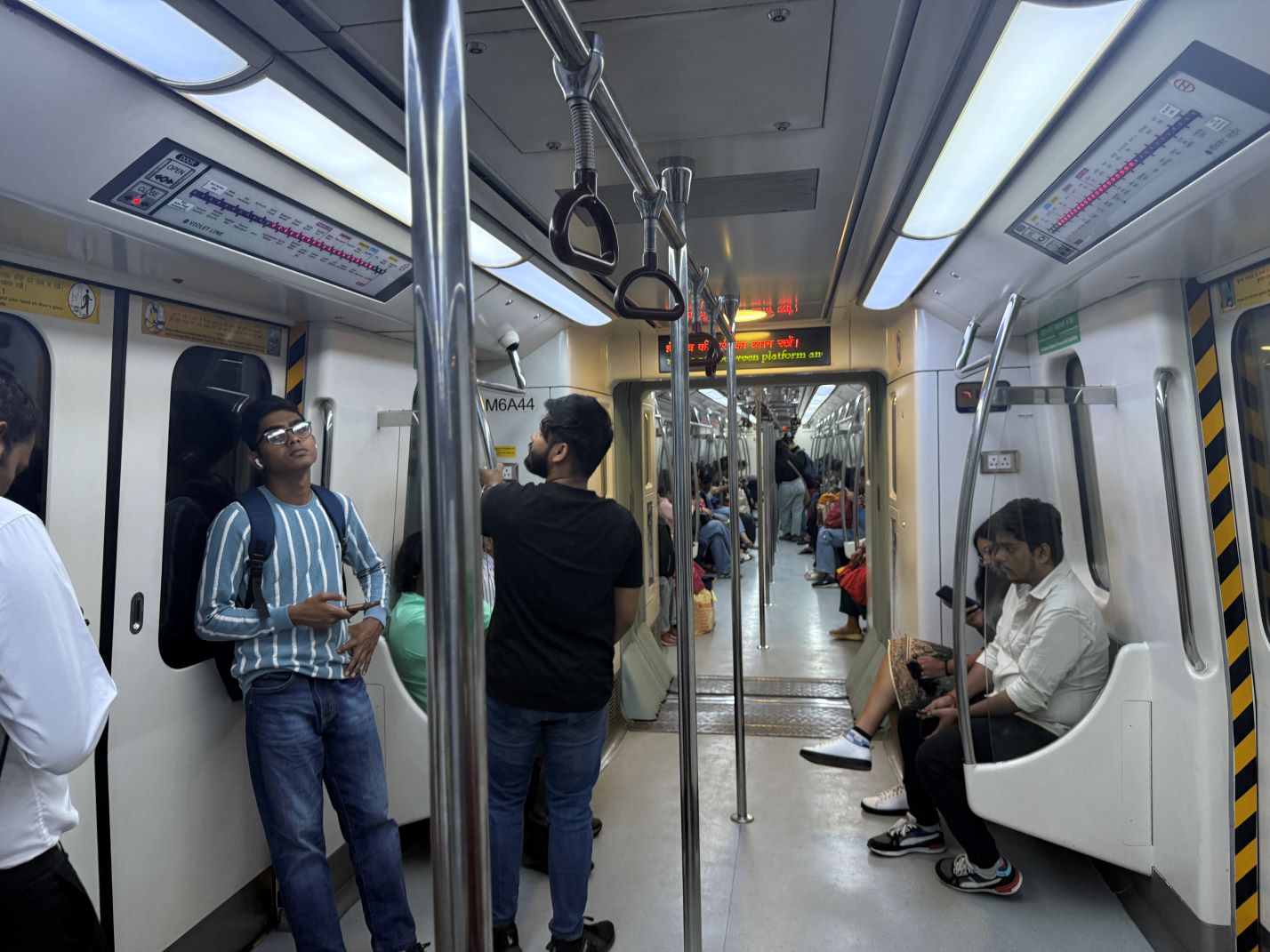
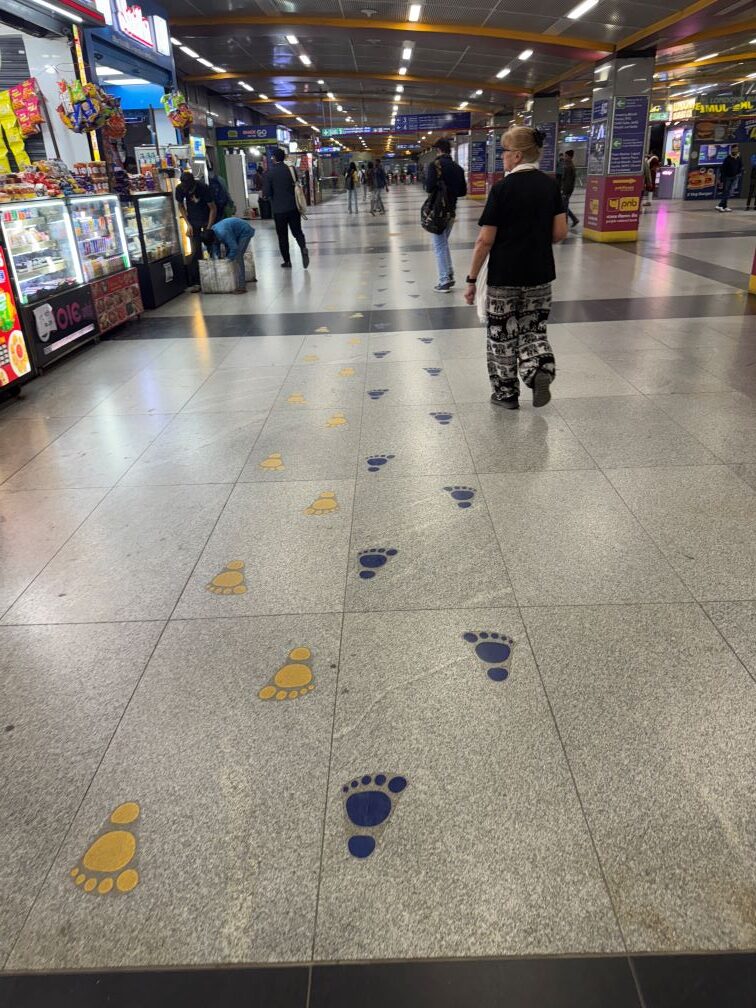
Travelling within Delhi was a fun adventure and an experience in itself. The Delhi Metro system is impressive; modern, efficient and clean, with a women-only carriage, air-conditioned, and incredibly affordable. It connects to all areas of the city, with more lines currently under construction. Some platforms have overhead screens indicating the pollution levels as well as displaying the number of people in each carriage. It was also virtually impossible for us to get lost, as everything is written in English, and when changing metro lines, we simply followed the colour-coded footprints along the floor that matched the colour of the line we needed.
Navigating through narrow lanes in a rickshaw also provides an exhilarating experience and a unique perspective on city life. The lurching motion and start-stop action while passing vibrant market stalls, aromas of street food, and the constant honking of horns and ringing of rickshaw bells created an unforgettable atmosphere. While tuk-tuks (yellow motorised taxis) speed quickly through traffic, rickshaws offer a more relaxed ride and a good vantage point when passing through markets and busy attractions.
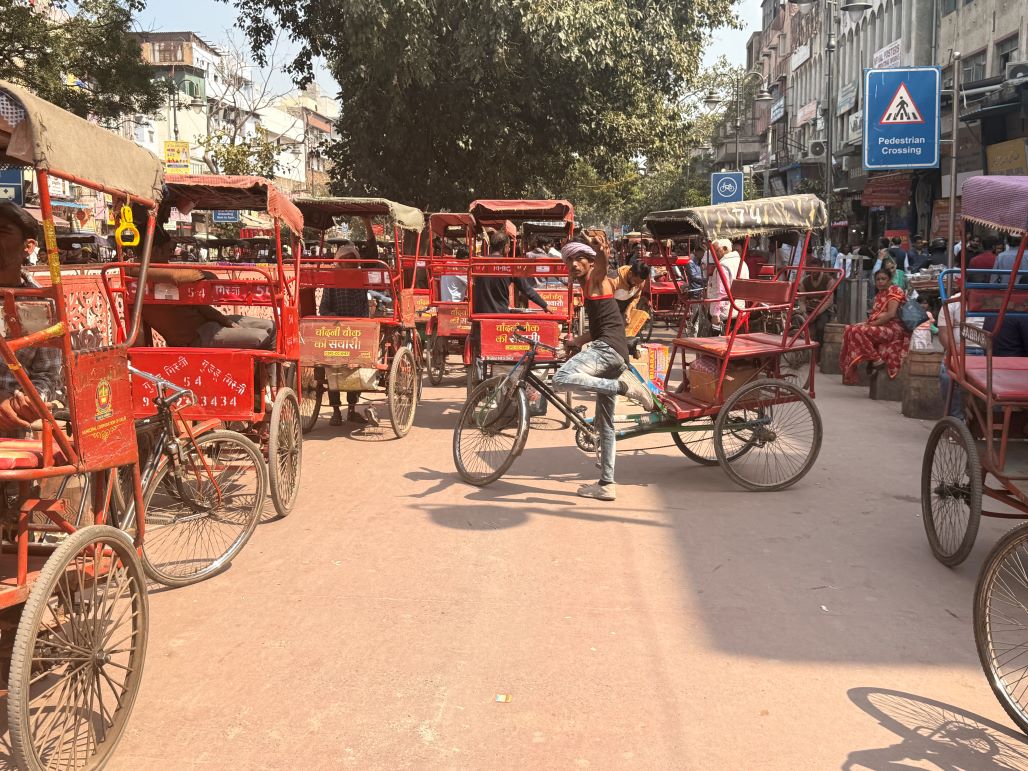
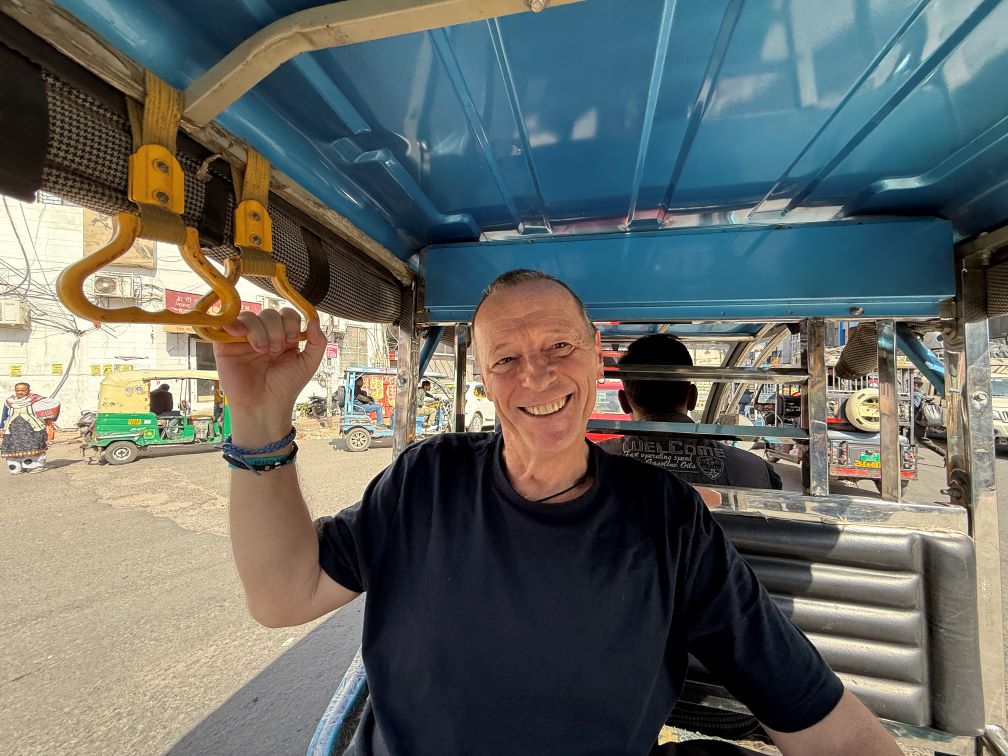
However, a downside to using rickshaws and tuk-tuks is the constant haggling over reasonable fare prices, which are expectedly never going to match what the locals pay, but after a long day of sightseeing, the negotiation can be quite exhausting. Also at traffic lights, and within heavy traffic, there would invariably be persistent beggars coming up to us. As we were in a rickshaw, it was difficult to ignore, or to give coins to some, but not to others, leading to some awkward ‘looking-away’ situations.
Other Attractions we Experienced in Delhi
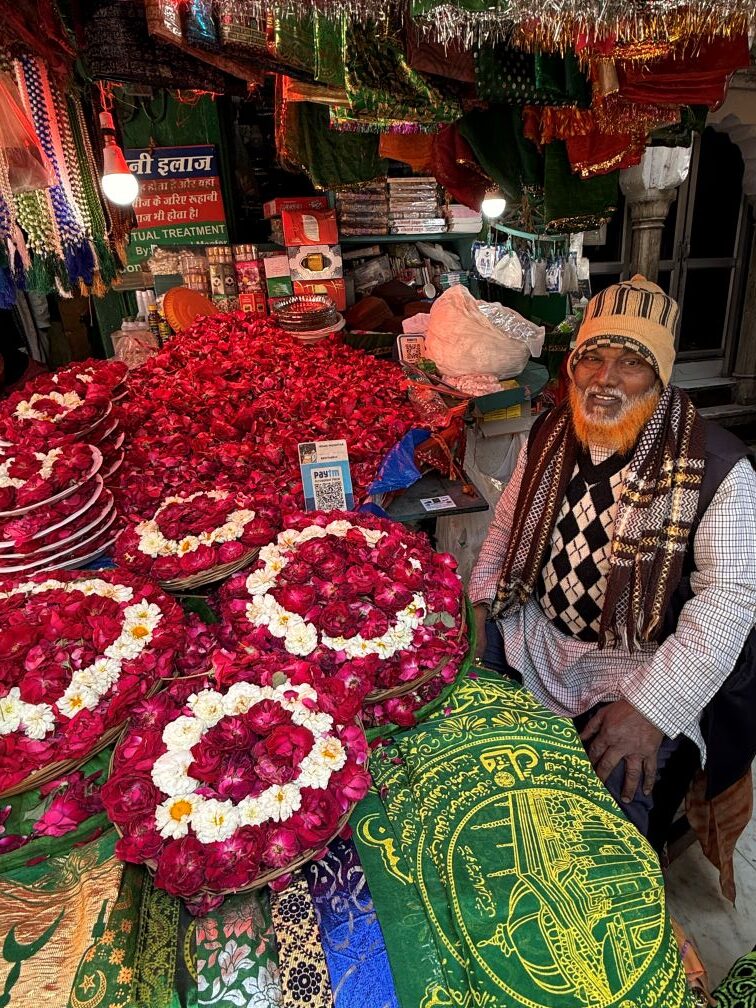
With our accommodation only 1 metro stop from Connaught Place, we had to visit the circular colonnaded ring road, with numerous high-end stores, banks, hotels and classy restaurants (including the slightly expensive coffee shops). With our hotel in the district of Paharganj, we would venture there for most of our evening meals, but it was also an interesting and bustling area, open all hours of the day, full of budget hotels, markets and restaurants where locals would dine. An intriguing, mystical place was at the Holy Hazrat Nizamuddin Dargah, where a marble shrine of the Muslim Sufi saint Hazrat Nizamuddin lies. The temple itself was interesting, but it was the zigzag pathway from the entrance along narrow, marbled corridors that was just as fascinating.
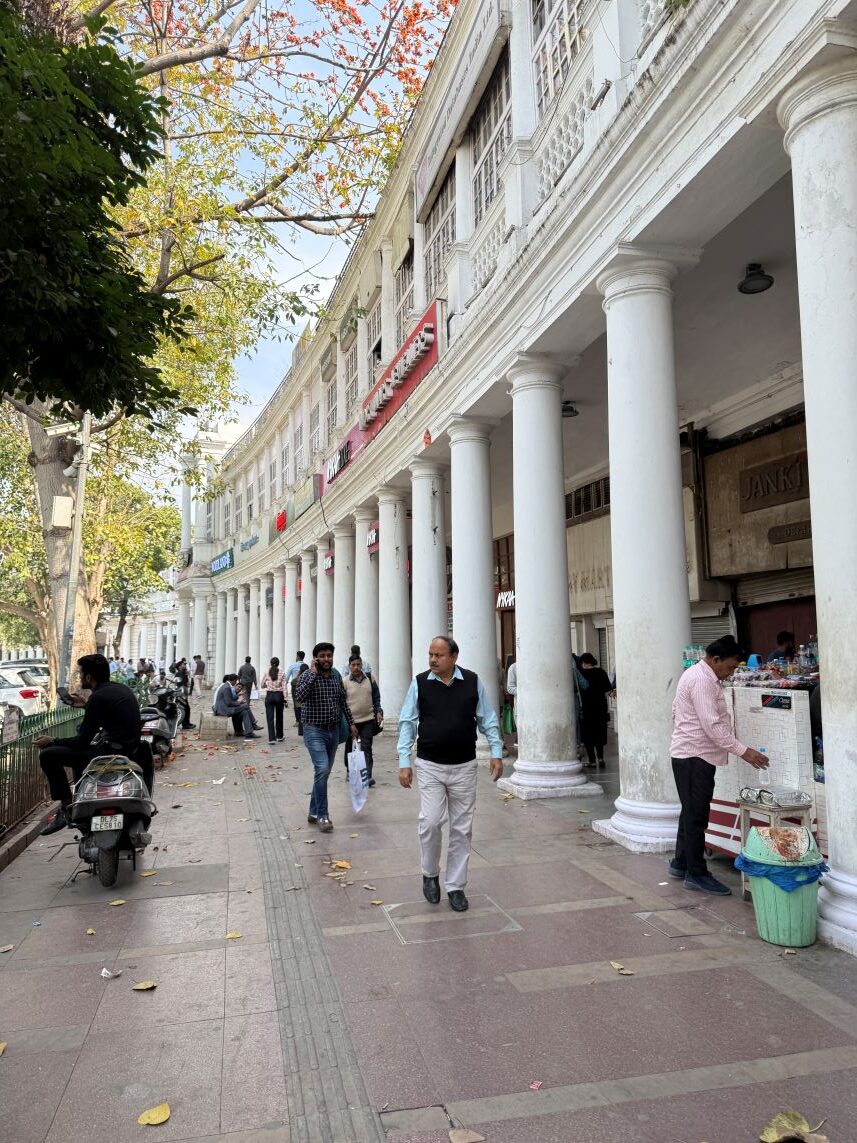
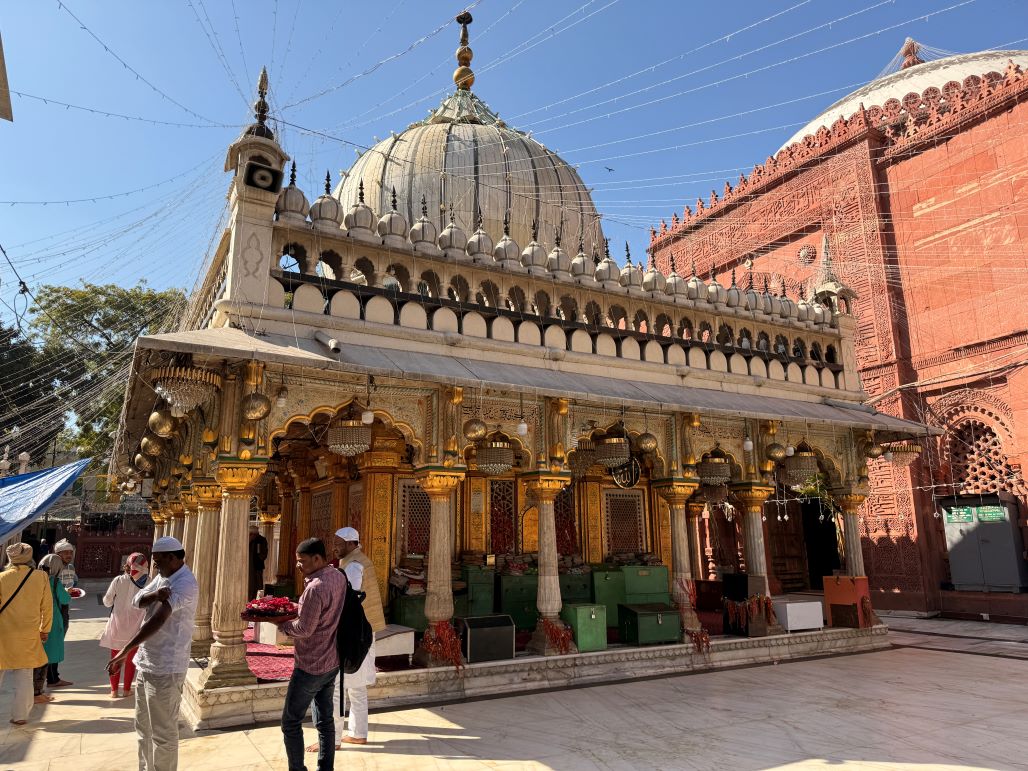
If we had more time, we would have explored the following places and activities:
- Purana Qila (Delhi’s oldest fort, 16th century, but inhabited from 300 BCE, sitting on top of the ruins of Indraprastha, an ancient city).
- Food Tour (This is really popular in Delhi, and many operators sell out quickly. It was a bit too early in our India trip for us to try street food, but they had great reviews).
- ISKCON Temple (known for the ‘Hare Krishna’ spiritual movement).
- Gurdwara Bangla Sahib Temple (Sikh Temple with its stunning golden dome and pristine white marble exterior providing tranquillity and respite from Delhi’s busy street scenes).
Accommodation in Delhi
Delhi is a sprawling city with thousands of places to choose from, ranging across all budgets. Many travellers recommend staying in the calmer, cleaner, and leafier suburb of South Delhi; however, we chose to stay in Old Delhi within the Paharganj area. It was busy and noisy but had a good variety of eateries, transport links, and a large number of foreign tourists to mingle with.
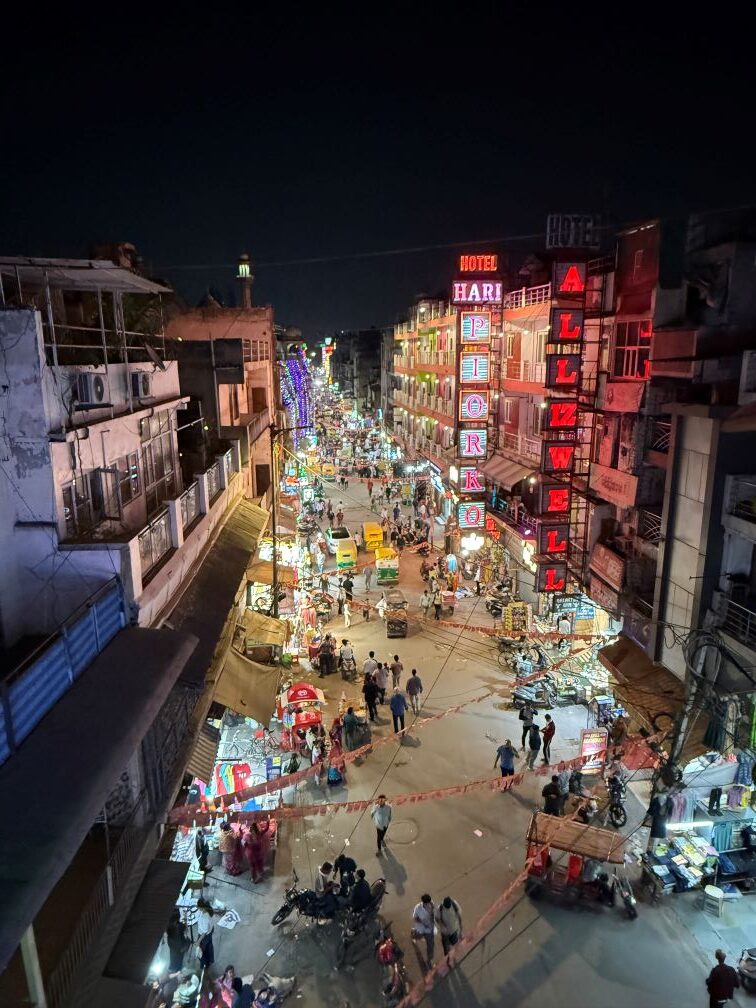
We stayed at The Prime Delhi on Chuna Mandi, which met most of our needs, although there were a few issues: a room light that seemed to turn on by itself, supposedly ‘soundproof’ walls that did not block the music from the neighbouring venue, and a gym located in the breakfast area, which was slightly off-putting when we were trying to enjoy a masala omelette while hearing grunts from a nearby bodybuilder!
Eating in Delhi
One of the highlights of our time in Delhi was the variety of food options that catered to both our tastes and budgets. The city boasts some fabulous homegrown restaurants, but for quick and familiar fast food, there are plenty of Western-style fast food options like McDonald’s, Pizza Hut, and Subway. Most of our evening meals were enjoyed around the Paharganj area, particularly at two standout places: Exotic Rooftop and Krishna Rooftop Café. Both offered delicious Indian, Asian, and European cuisine at reasonable prices and were complemented by the stunning views of the vibrant, multi-coloured streets below.
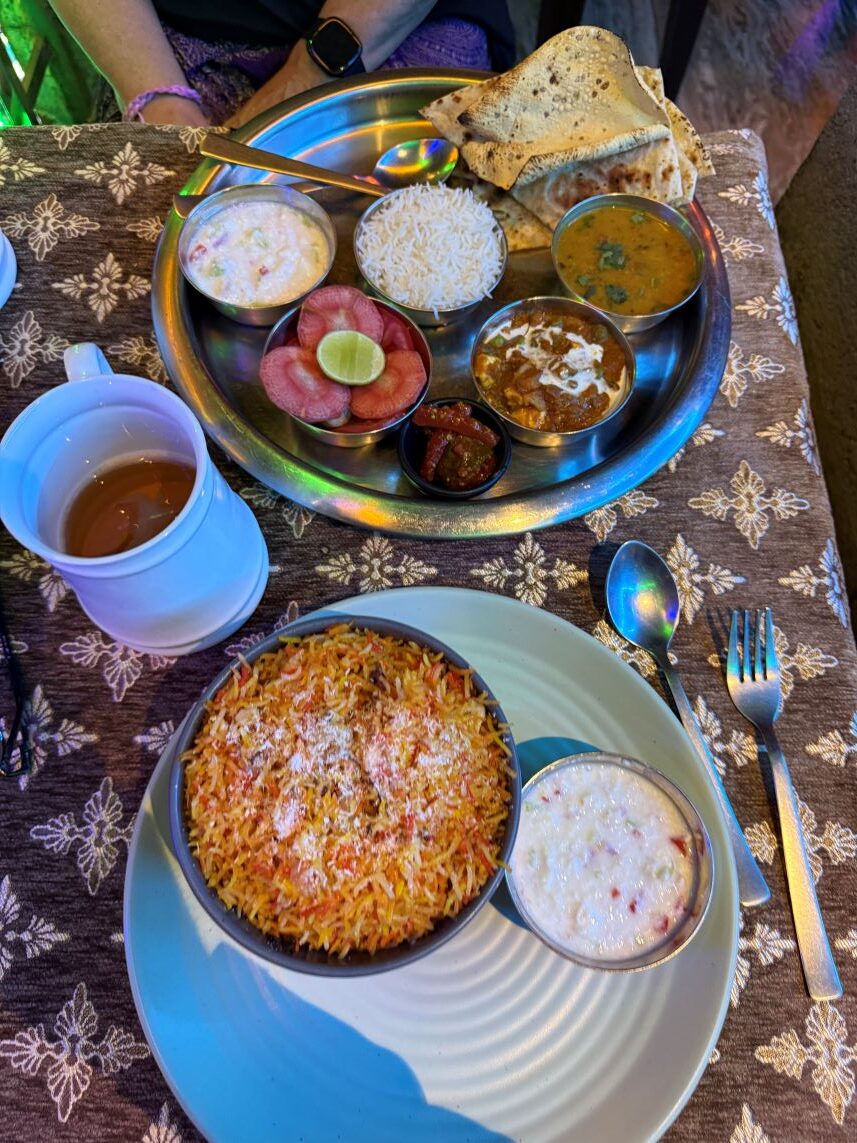
Deep in Chandni Chowk lies the famous Paranthe Wale Gali, which has been serving delicious warm, fresh bread since 1872. Nearby, the Old Famous Jalebi Wala is a go-to spot for a sweet treat and is a popular stop on food tours. Another highly recommended place is the Carnatic Cafe in the Lodhi Art District, known for its exceptional classic and speciality dosas. Again in the Lodhi area, our recommendation is inside the Habitat World Complex, home to great lunchtime eateries serving Western-style food. Although slightly pricier, the stuffed jacket potatoes here were a must-try.
Travellingterry Delhi Tips
- Old Delhi has some incredible sights, but some parts are also stressful and chaotic, which may not be the best place to book accommodation to chill and relax at the end of the day.
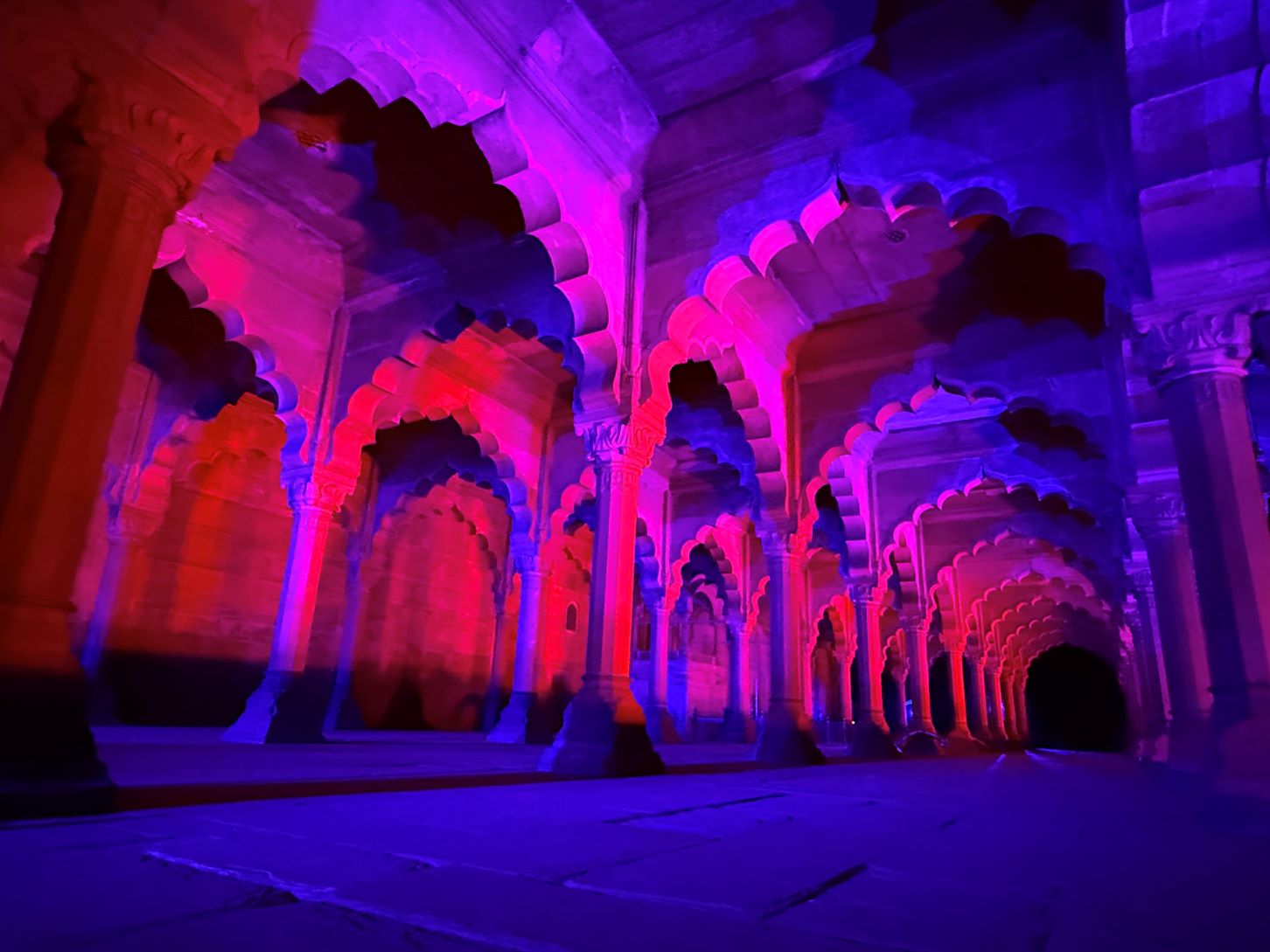
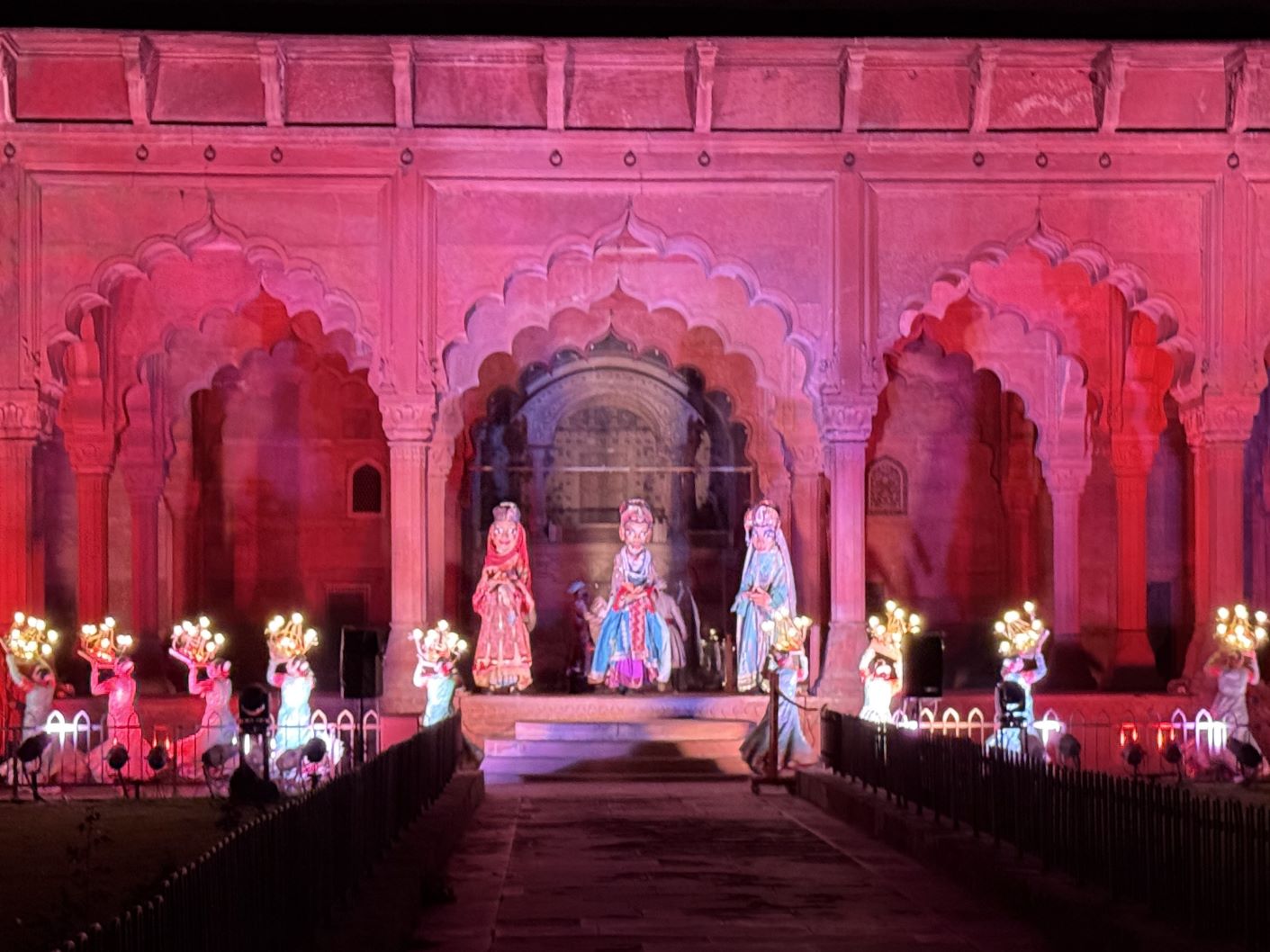
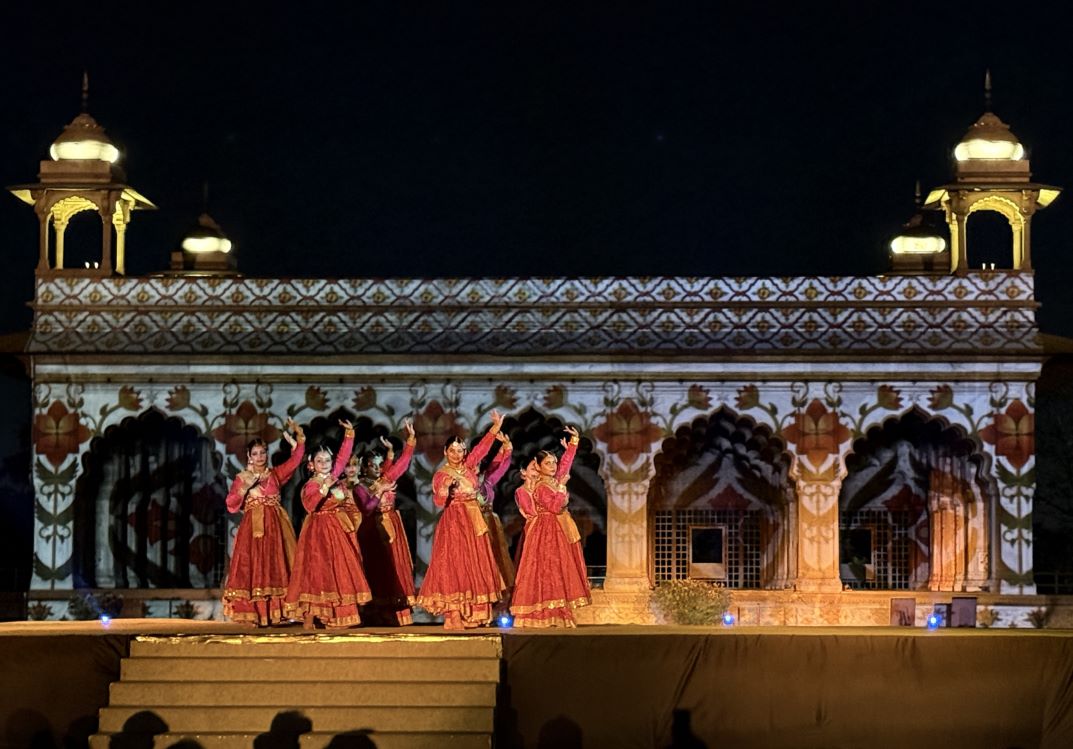
- Red Fort – sound and light show tickets with seat number allocation.
- Some sites offer a 50 INR discount if tickets are booked online. Archaeological Survey of India is a useful booking site for most major attractions around Delhi (and some other parts of India).
- Delhi’s expanding fleet of electric rickshaws offers environmentally friendly alternatives to autorickshaws and taxis.
- We found that Delhi Tourism provided the most accurate information regarding the attraction’s opening and closing times and cost
- Final advice for Delhi is don’t try to do too much in one day. There is so much to see in Delhi – it’ll take weeks to see it all. Be reasonable and realistic, planning the sights within areas, therefore less time wasted in traffic.
Onward Travel: Flight from Delhi to Amritsar
This was our first domestic flight during our trip to India. We flew with Indigo Airways, which was similar to most budget airlines operating in Europe. Delhi’s extensive metro system conveniently extends to the airport, but unlike Europe, it costs less than a dollar to travel the 18 km distance! Interestingly, throughout this flight and a couple of other Indigo flights, we never pre-booked our seats, yet we were always automatically seated together during the online check-in process. We were also happy that we didn’t order meals or snacks, as all the flights we took seemed to last a little over half the scheduled time. On this particular flight, the journey was very comfortable with an amusing moment occurring when a family decided to eat their thalis during the actual take-off and then spent the rest of the flight trying to clean sauce off their clothing.