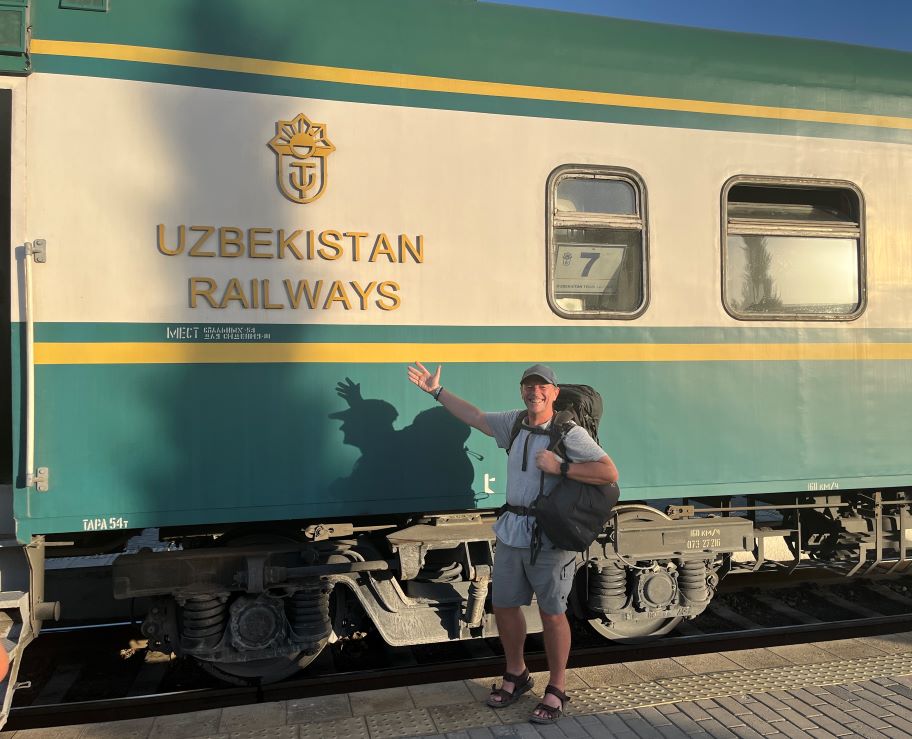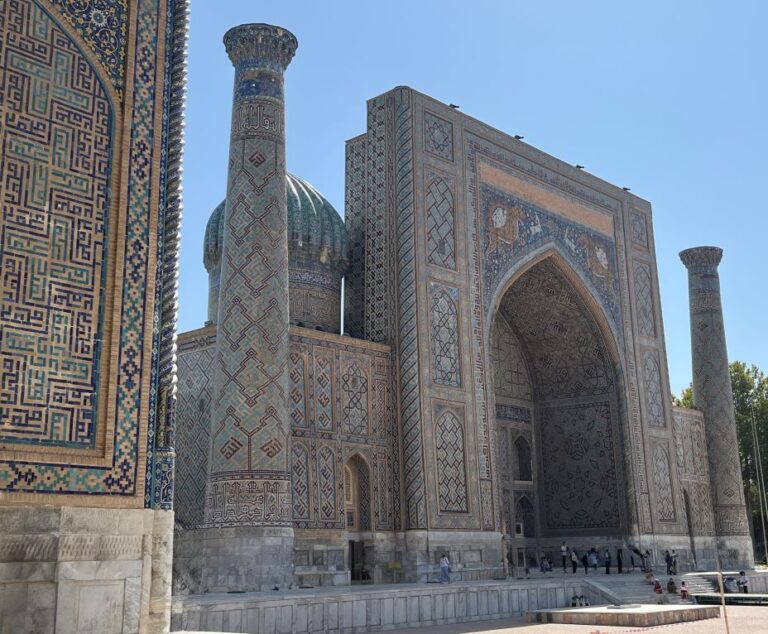
Samarkand was one of the main reasons I wanted to visit Uzbekistan. The entire city is like an open-air museum, featuring numerous sights, many of which hold UNESCO status, and conveniently grouped together in various parts of the city. Samarkand is home to some of the world’s most intricate and exquisite structures, which date back hundreds of years. These structures were designed by rulers who were passionate about creating the tallest and largest Mosques, Madrasas, and Mausoleums of their time.
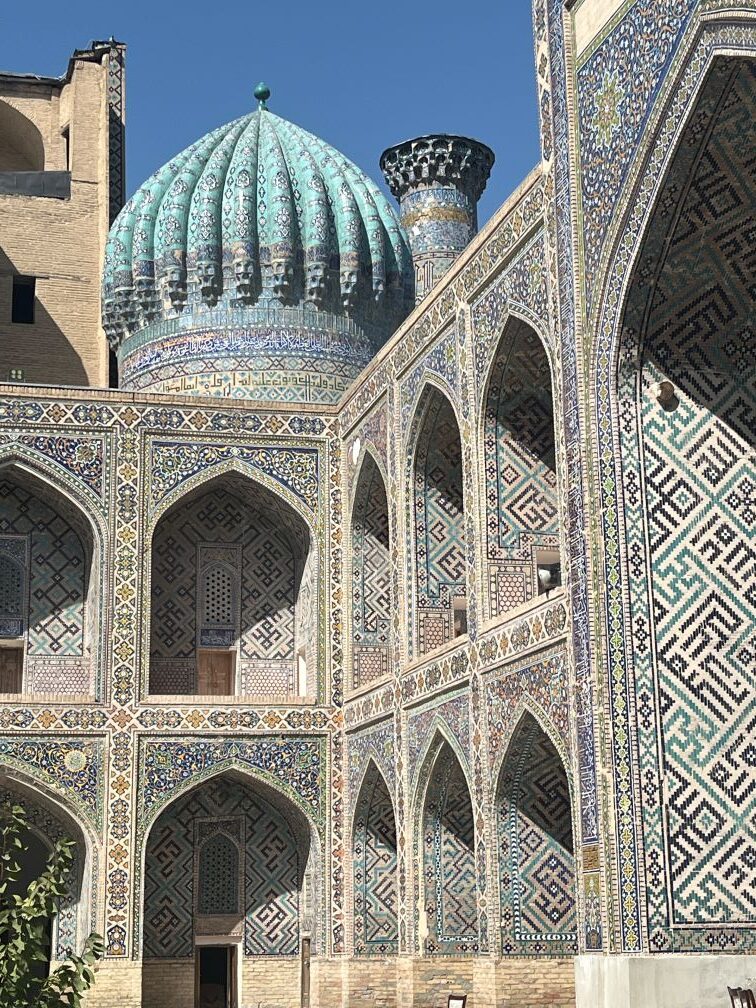
Over the centuries, the region has been controlled by various powers, including Alexander the Great, the Samanids, the Khwarezm-Shah dynasty, and Genghis Khan. Later, the Timurid Empire, founded by the Warlord Amir Timur, transformed Samarkand into the main economic and cultural centre of Central Asia, playing a pivotal role along the Silk Road and building many of the iconic structures that still stand today. The beauty of Samarkand’s buildings was so renowned that, during various military campaigns, the Uzbeks (16th century) and Russians (19th century) spared them from destruction.
My Samarkland Highlights
While the majority of sights in Samarkand are spread out, they are all within easy walking distance of one another. With numerous parks, sculpted landmarks, and cafes in between each sight, the city is an ideal place for exploration.
Astonished at Registan
The centre piece of the city, and arguably the most awesome human-made single sight in Central Asia. It’s on par with the Taj Mahal, Rome’s Coliseum and Angkor Wat – it’s that impressive. In fact, during my stay, I was drawn to Registan’s viewing platform every day, as each time the light conditions altered its appearance and offered different photographic opportunities.
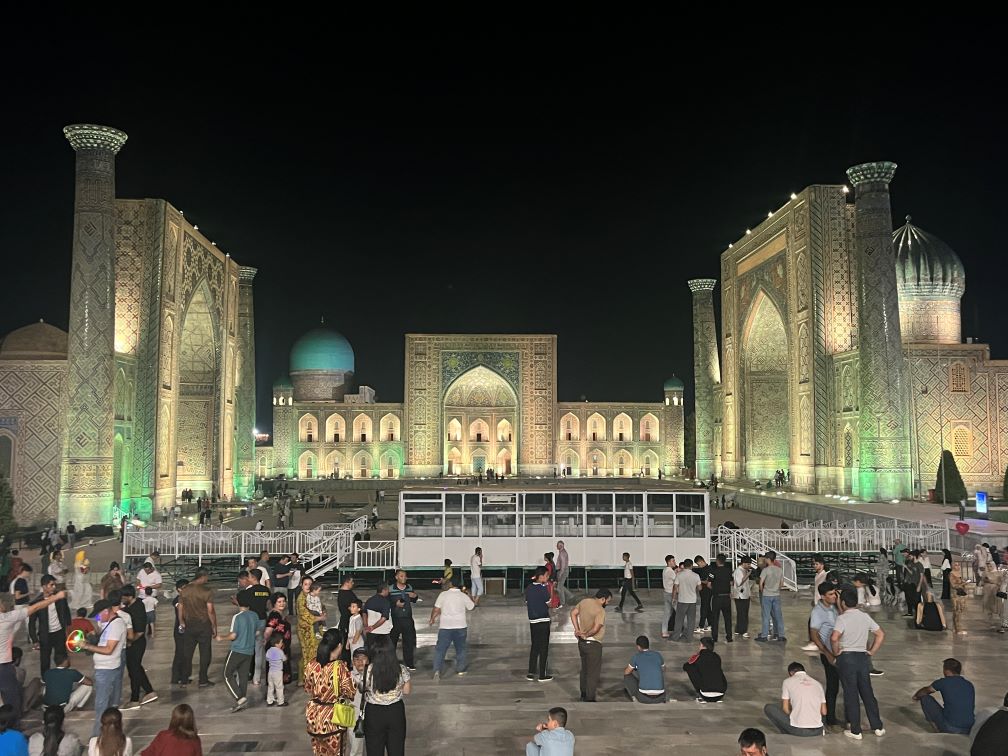
Registan features three madrasahs (Islamic schools) that face the central square, which historically served as a gathering place for trade, important announcements, special events, and public executions. Nowadays, it is bustling with tourists.
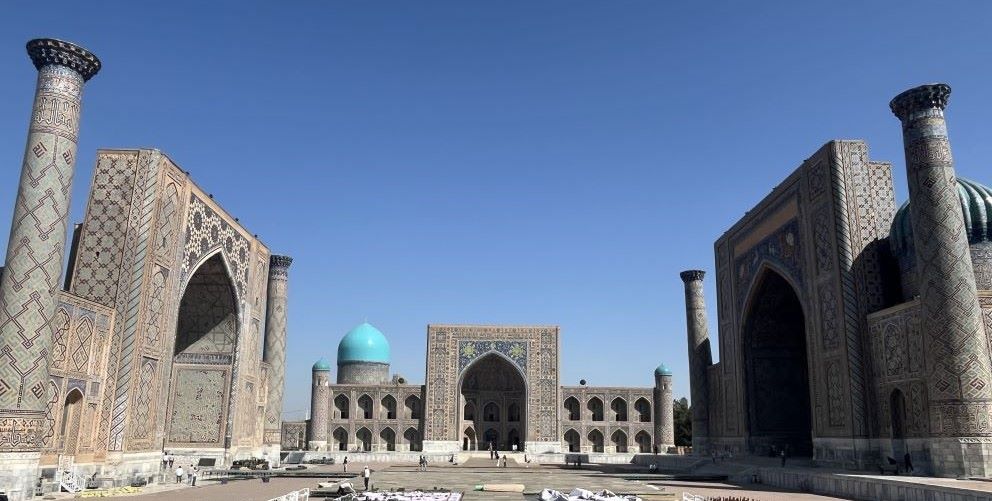
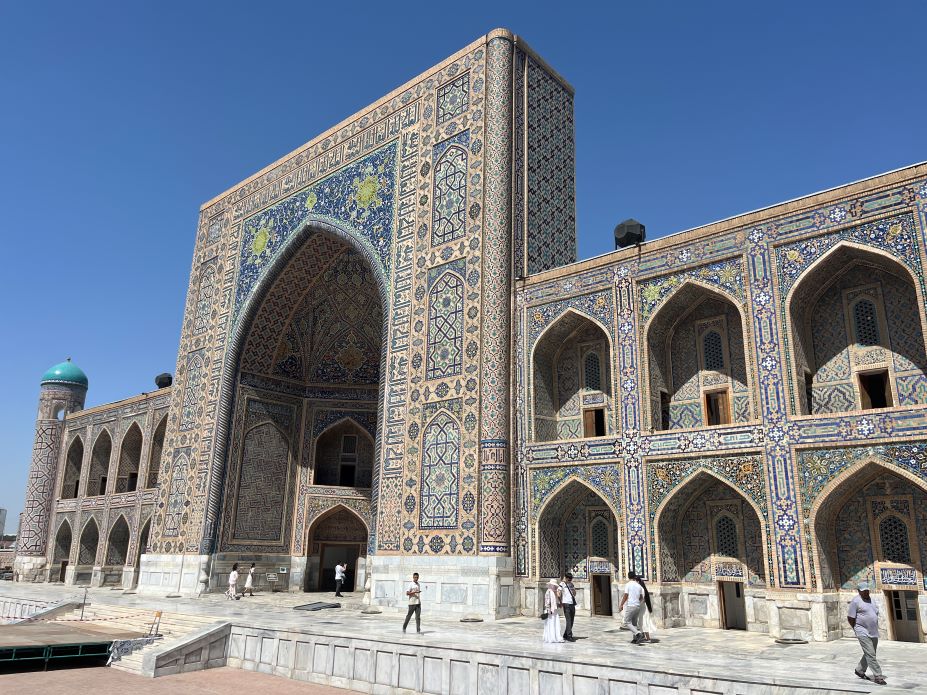
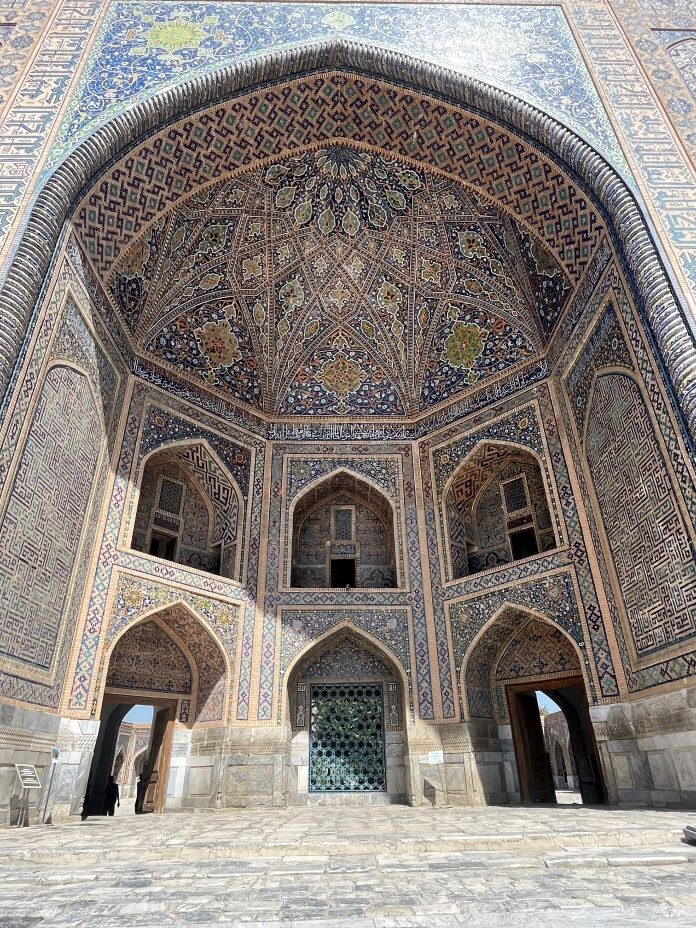
The exteriors of the three madrasahs, Ulugh Beg Madrasah, Sher-Dor Madrasah, and Tilla-Kari Madrasah, are adorned with beautiful shades of blue and white tiles arranged in geometric designs against a terracotta brick background. Each madrasah boasts a colourful dome encircled with tiled rosettes.
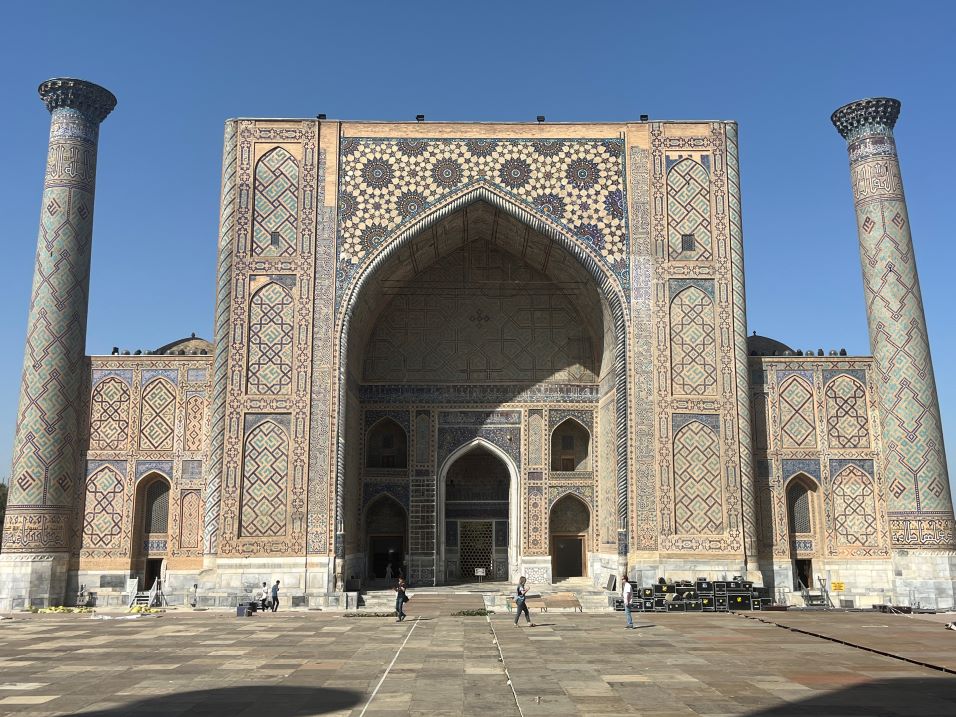
…Ulugh Beg Madrasah
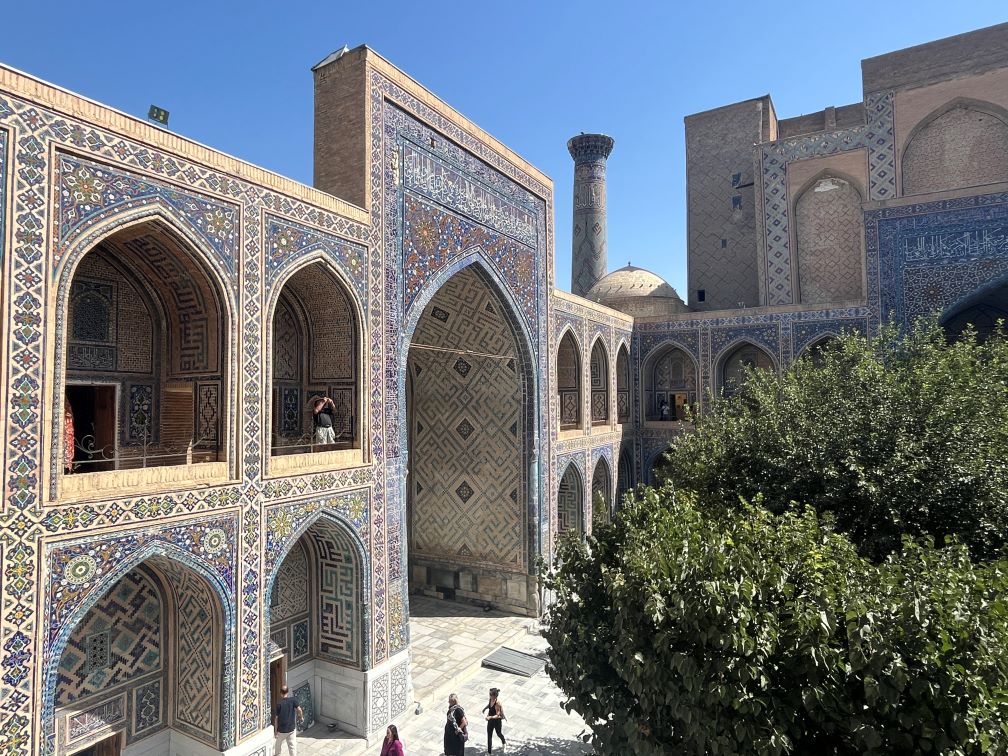
This magnificent madrasha was built in 1420 during the reign of Ulugh Beg – the grandson of Amir Timur, founder of the Timurid dynasty. When on the throne, Ulugh Beg was more of a scientist than a ruler, with a special interest in astrology and education, making this madrasah among the best universities in the world. Inside, the four walls that surround a stunning courtyard include a mosque, lecture rooms, and dormitory cells for students. Old stone staircases in each corner lead to a second level, offering great views across the courtyard and a close-up view of the intricately multi-coloured tiled walls.
…Sher-Dor (Lion) Madrasah
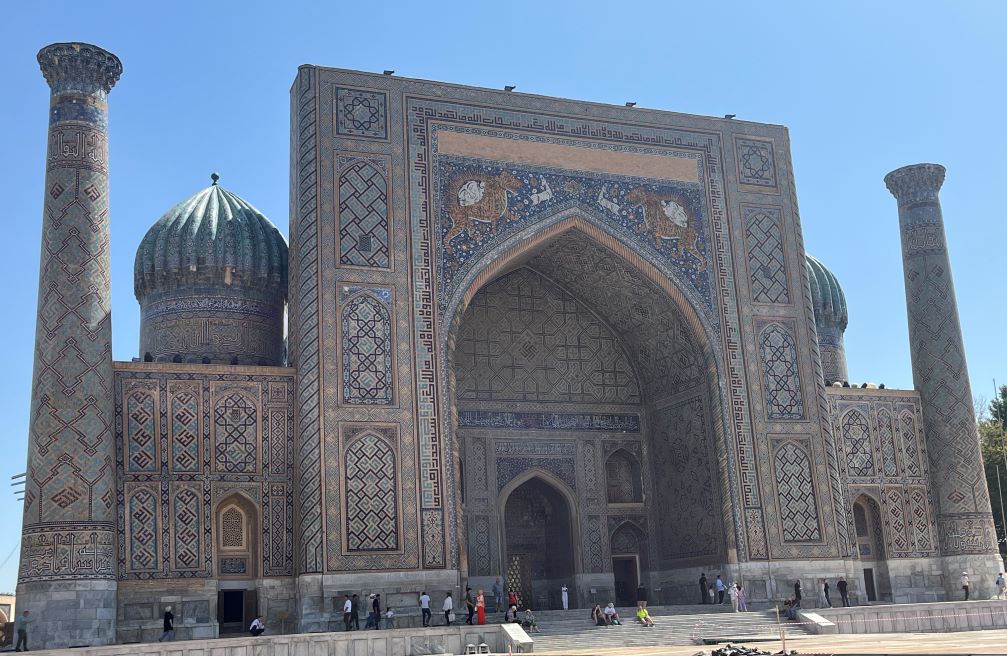
Completed in 1636 under the ruler Yalangtush Bakhodur, Sher-Dor Madrasah is located directly across from Ulugh Beg Madrasah. Its entrance portal is adorned with fierce-looking lions, symbolising strength, with the sun rising behind them. The madrasah is also beautifully decorated with various floral patterns and, similar to Ulugh Beg’s structure, it is adorned with beautifully tiled calligraphy featuring quotations from the Qur’an.
…Tilla-Kari (Gold-Covered) Madrasah
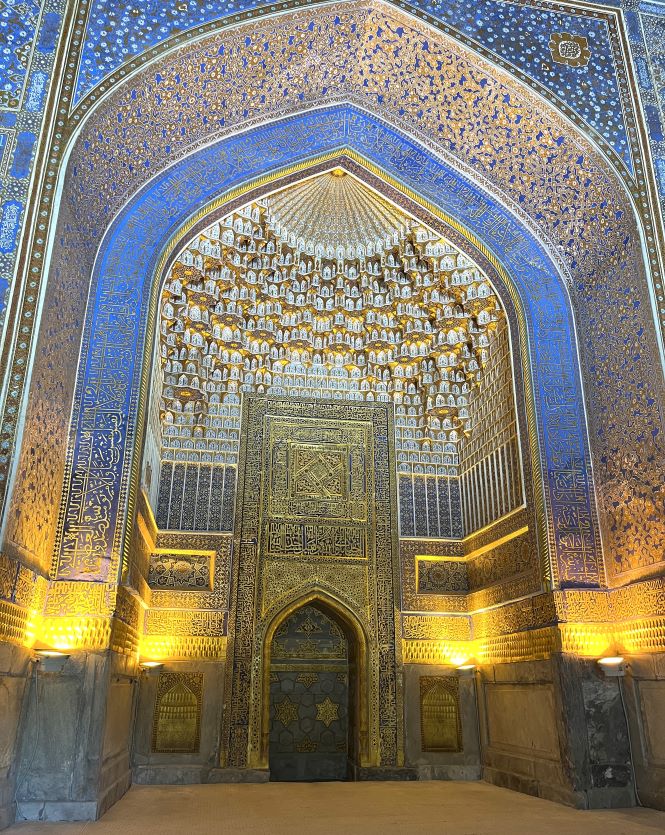
In between the two other madrasahs is the glorious Tilla-Kari Madrasah. Built in 1660, this was undoubtedly the most impressive madrasah of the three. Inside, the beautiful garden courtyard was one thing to admire, but next door, the mosque was something to behold – truly magnificent. Stunningly decorated with blue and gold, it symbolised Samarkand’s wealth. The ceiling, oozing gold leaf, is totally flat, but its tapered design makes it appear domed from the inside. The result is a breathtaking work of art. Although it was quite busy, I’ve never seen so many visitors stop in awe upon entering Tilla-Kari. It was remarkable how everyone fell silent, captivated by its beauty.
Amazed at the Bibi-Khanym Mosque
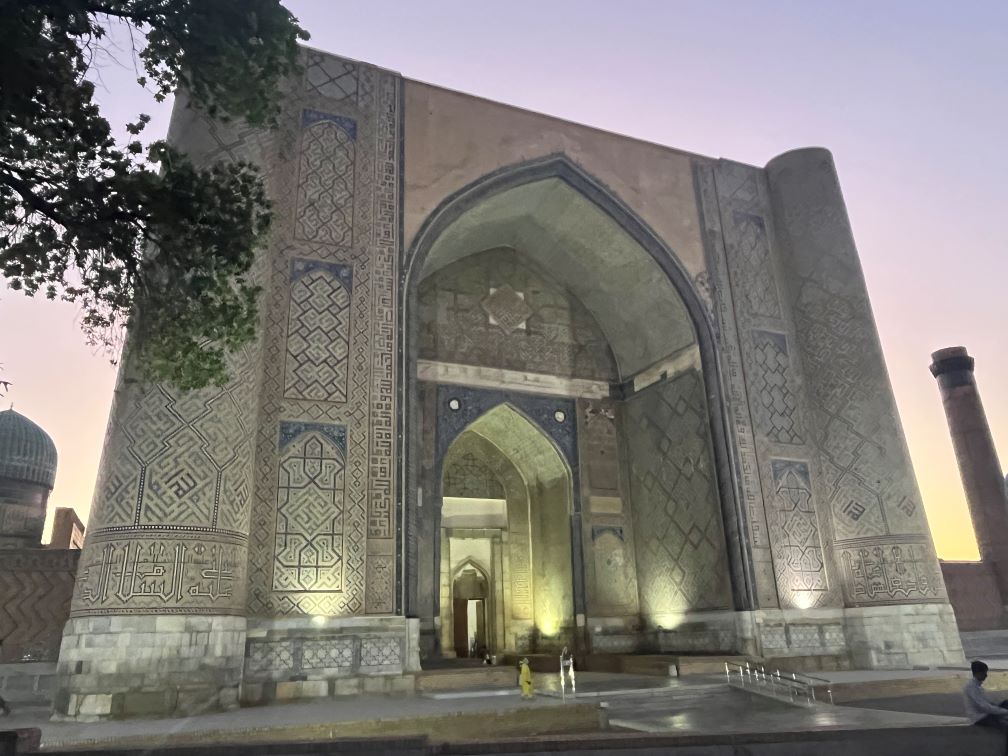
The sheer size of Bibi-Khanym Mosque took me by surprise. Once one of the largest mosques in the Islamic world, its main dome reaches 41 meters high, and the entrance portal (pishtak) stands at 38 meters. The complex is adorned with exceptionally beautiful Arabic calligraphy and a peaceful courtyard with two smaller mosques on either side, with an enormous marble Qu’ran stand that lends some scale to the place.
A very thought-provoking legend claims that when Samarkand’s ruler, Timur, was away campaigning through India in the 15th century, his wife ordered the construction of the Bibi-Khanym as a surprise for his return. However, the architect fell in love with Timur’s wife and refused to finish the job unless he could kiss her. As a result, Timur executed the architect upon discovering the mark left on his wife’s cheek and decreed that all women should wear veils to prevent temptation.
Awestruck at the Gur-e-Amir Mausoleum
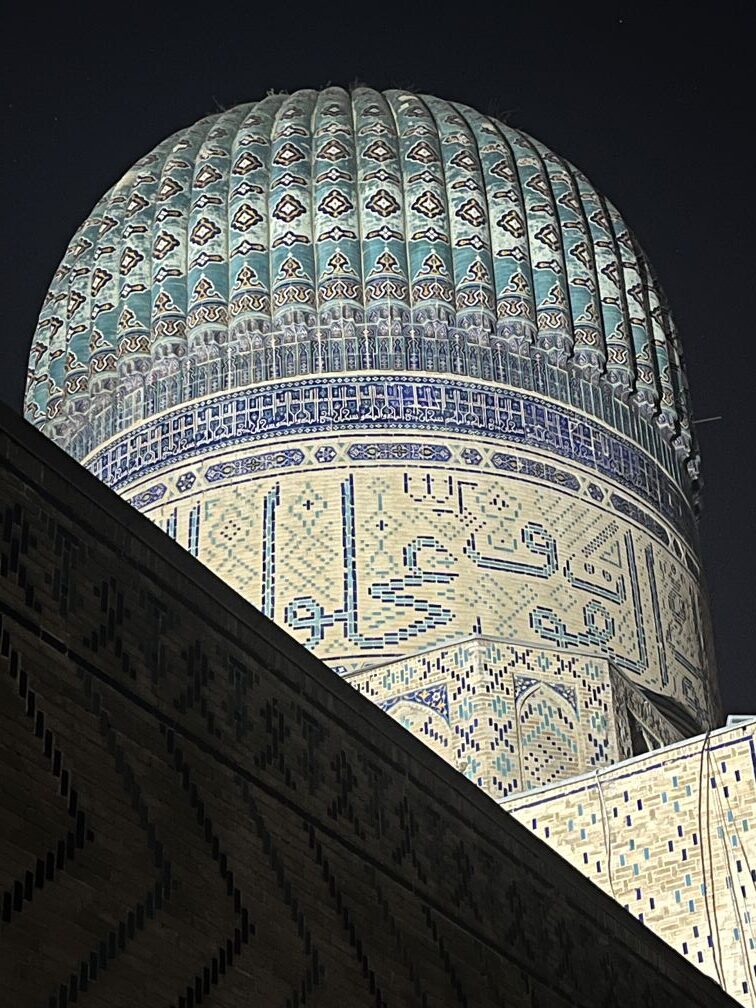
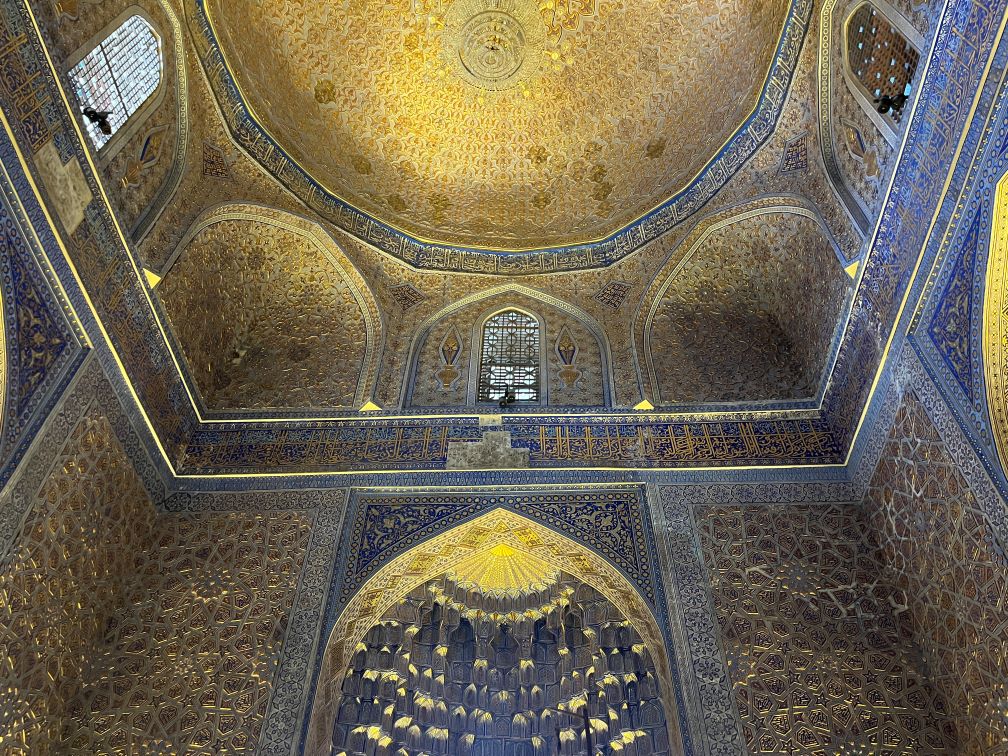
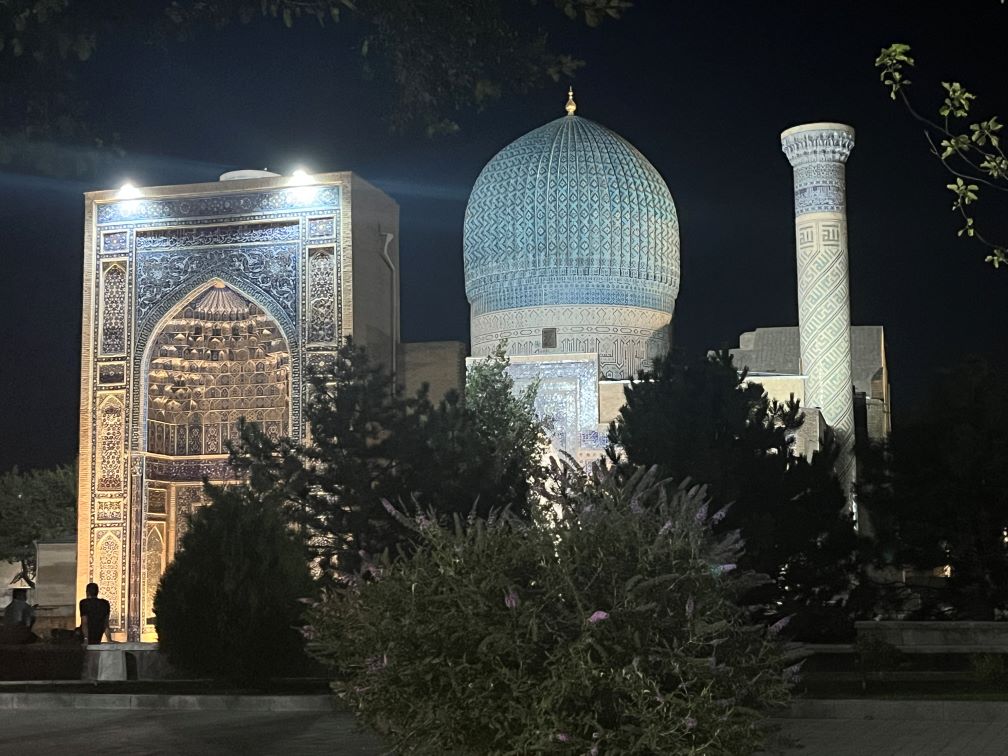
This gorgeous portal and fluted dome with varying shades of blue tiles mark the final resting place of the Great Warlord Ruler, Amir Timur, along with his sons, two grandsons and his personal teacher.
Timur’s grandson, Muhammad Sultan, was actually the reason the Gur-e-Amir complex was built, but as Timur’s death was quite sudden and unexpected, the nearest place for him to be interred was here. The architectural craftsmanship within the mausoleum is stunning. Timur’s gravestone, carved from a single piece of jade (with the actual crypt located below), gazes upward at the rosettes embedded in the ribbed dome, designed to resemble the sky. The walls are entirely covered with mosaics made of light and dark blue glazed bricks, gilding, and semi-precious stones.
Rummaged around Siab Bazaar
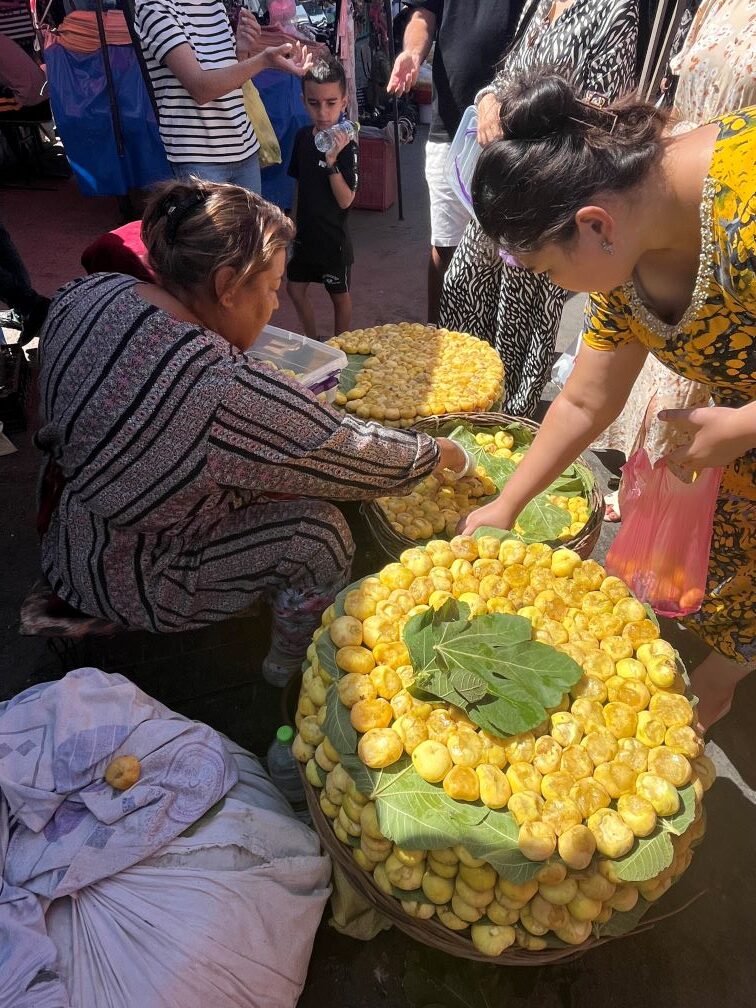
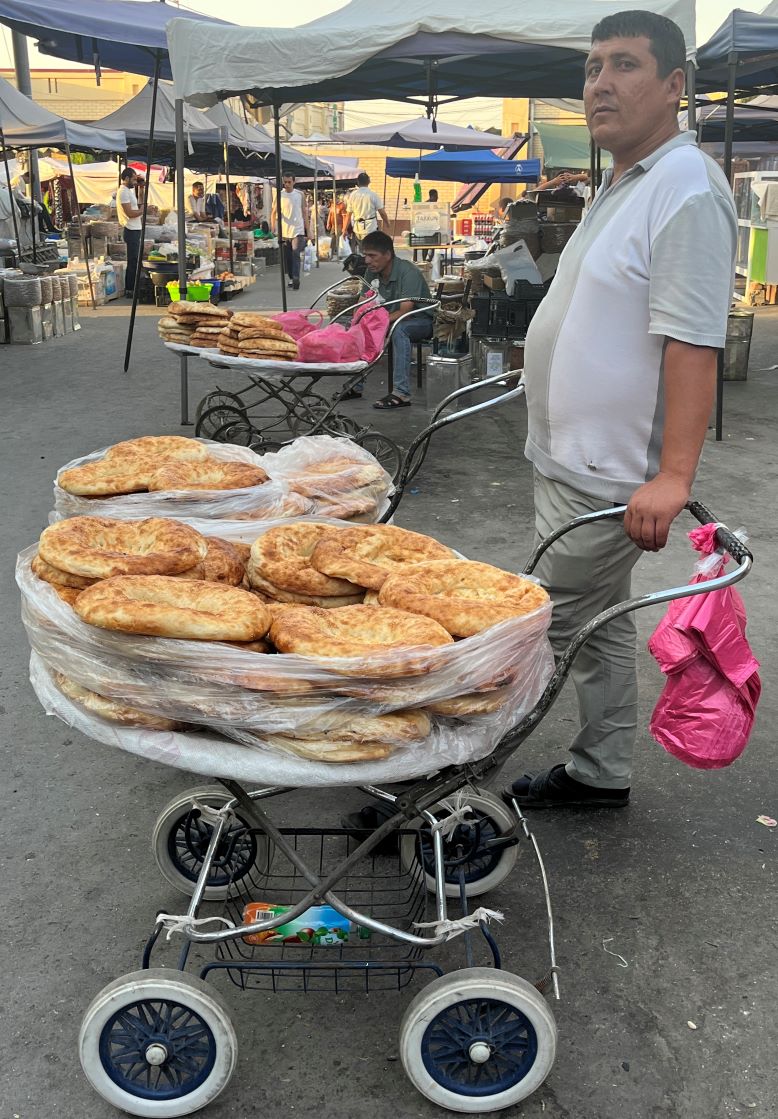
This vibrant and bustling bazaar, located right next to Bibi-Khanym Mosque, is the oldest and largest in Samarkand. Here, locals buy and sell a variety of goods, including bread, dried fruits, grains, spices, and more. There is also a section featuring skilled artisans engaged in engraving, carving, or painting their wares. I found this to be one of the friendliest bazaars in all of Central Asia. Many sellers offered taster trays at their stalls, with no pressure to buy. Some simply wanted to practice their English conversation skills, which often gravitated towards football. In fact, at the time of my visit, I enjoyed so many samples that I didn’t need to buy lunch!
Astounded at Shah-i-Zinda
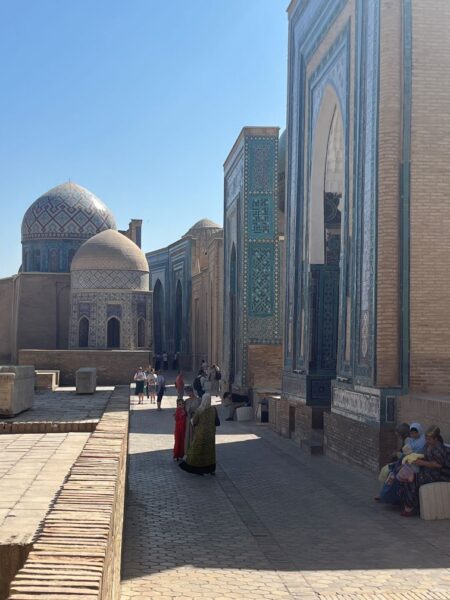
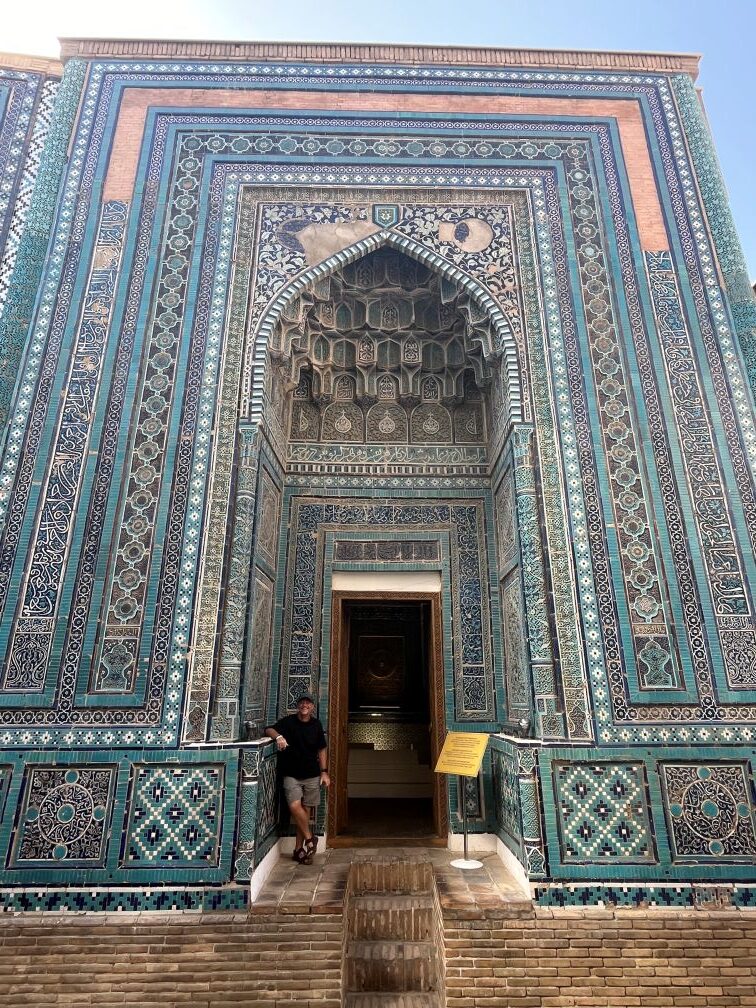
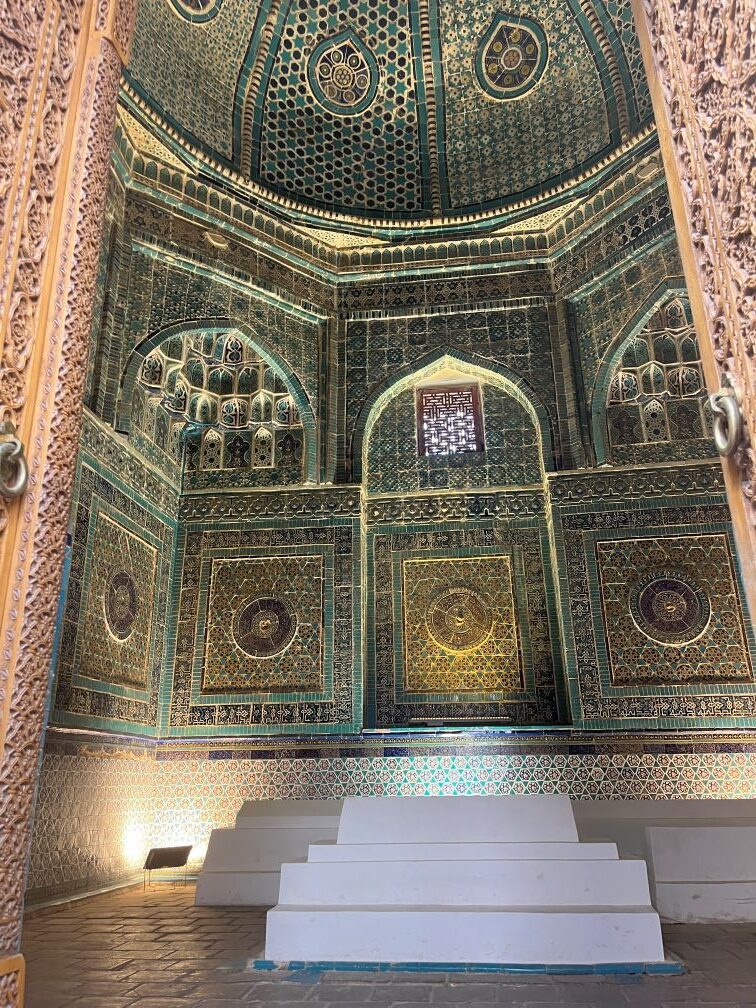
The Shah-i-Zinda, meaning ‘Tomb of the Living King,’ is perhaps one of my most memorable places in Uzbekistan. This necropolis houses a vast complex of temples, mausoleums, and ritual buildings, all lined along a narrow medieval street. These structures were built in the 14th and 15th centuries as burial sites for royal and noble individuals, including Qusam bin Abbas, a cousin of the Prophet Muhammad, who is said to have brought Islam to Samarkand in the 7th century.
Despite extensive restoration efforts in 2005, I was still captivated by the beautiful decorations inside, particularly the intricately detailed space between the exquisite multi-colored majolica and terracotta tiles, as well as the magnificent floral mosaics that adorned the walls.
Stunned by the Beautiful Hazrat Khizr Mosque
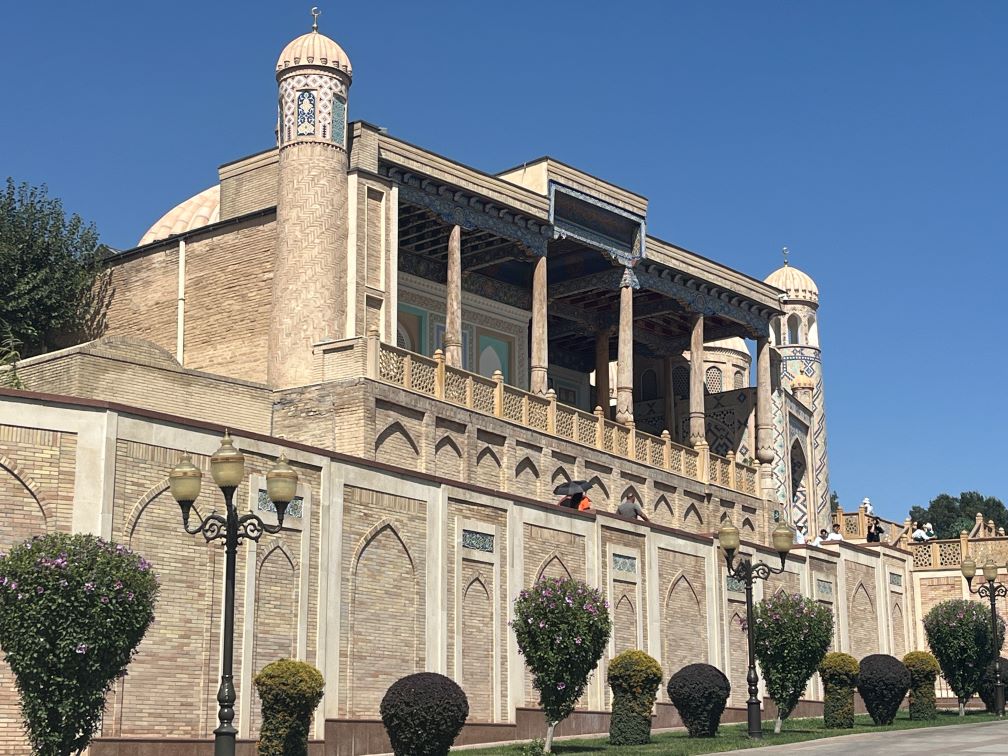
Perched on a hill, 300 metres from Bibi-Khanym, lies the Hazrat Khizr Mosque. It is located on the site of the original 8th century mosque that was burned down by Genghis Khan in the 13th century and was not rebuilt until 1854. Following a restoration in the 1990s, it has become, in my opinion, Samarkand’s most beautiful mosque. Due to its elevated location, the mosque offers breathtaking views of the city in all directions. However, the true beauty lies in the multi-colored intricately designed ribbed ceiling within the iwan (a rectangular space with one end open and three sides walled in) and the geometric tiles that adorn either side.
Impressed by Ulugh Beg’s Observatory
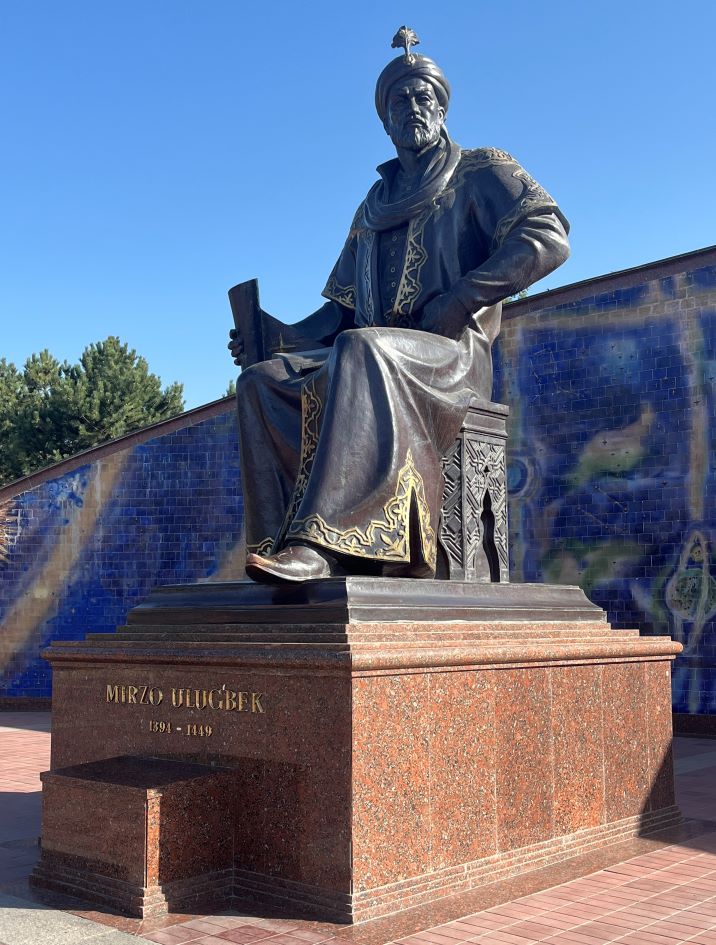
The remains of this observatory were constructed in the 15th century by the astronomer Ulugh Beg, the grandson of the famed ruler Amir Timur. On this hill, Ulugh Beg conducted astronomical observations and calculations. He was able to predict eclipses, calculate the rising time of the sun, measure the length of the year, and record the positions of up to 1,018 stars – all this, 200 years before the invention of the telescope.
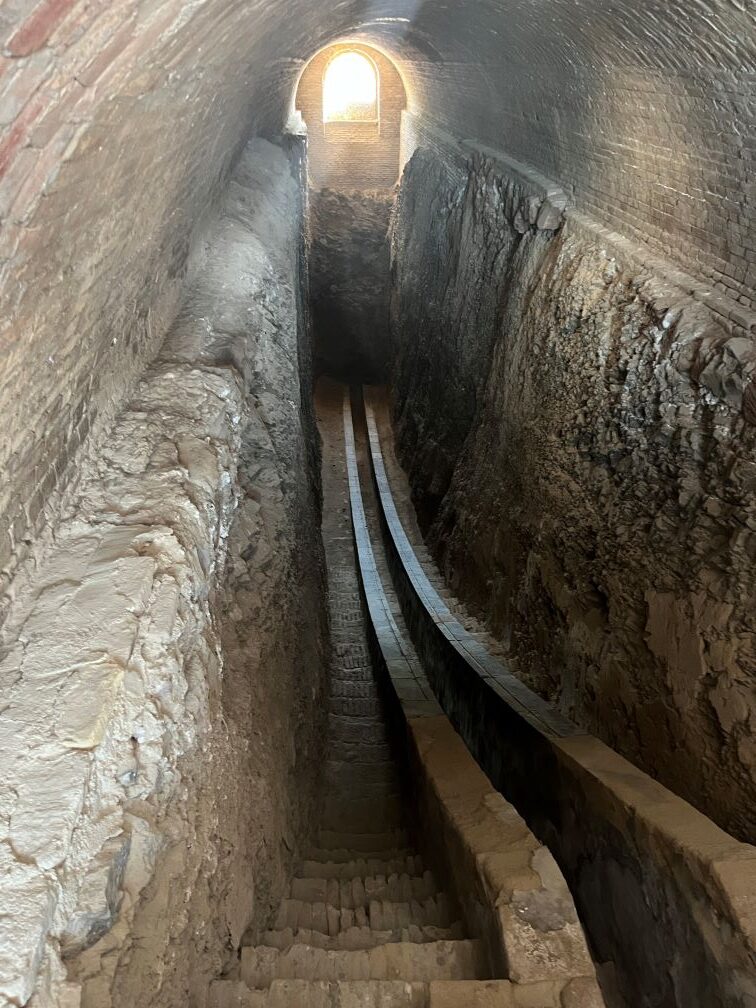
After Ulugh Beg’s death, several wars took place, leading to the destruction of much of the observatory. It was not until 1908 that it was rediscovered, nearly 500 years later. To my relief, all explanations in the museum were in English, accompanied by many of Ulugh Beg’s instruments on display, including an interesting 11 metre long curved track (Fakhri Sextant) that originally had a radius of 40 metres, once used for observing and following the stars.
Took an Evening Strolls in Samarkand’s Parks
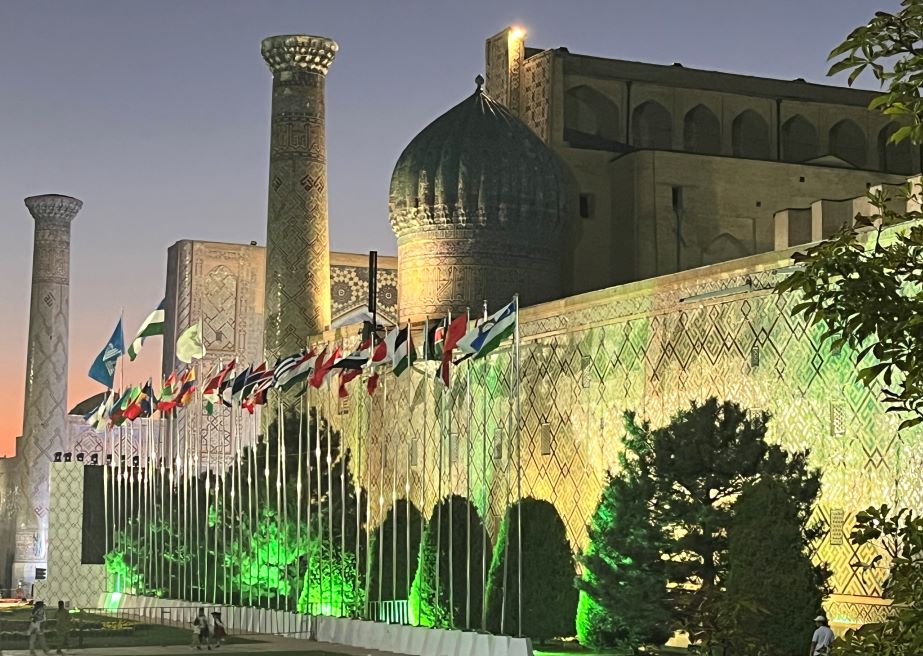
The evenings in Samarkland were a fun-filled experience. Most of the mosques and mausoleums were lit up, and hundreds of families were strolling and chatting through the many parks near Samarkand’s main attractions. In particular, the three madrasahs in Registan, where the lighting provided a spectacular effect. Evenings had a carnival atmosphere, but without the parade, with people just enjoying life, being with their friends and loved ones. In fact, during the day and in between visiting the city’s amazing sights, the well-maintained parks were great places to just sit for 10 minutes and allow the world to walk by whilst absorbing the traditions and customs of this very hospitable country.
Other Attractions I Explored in Samarkand
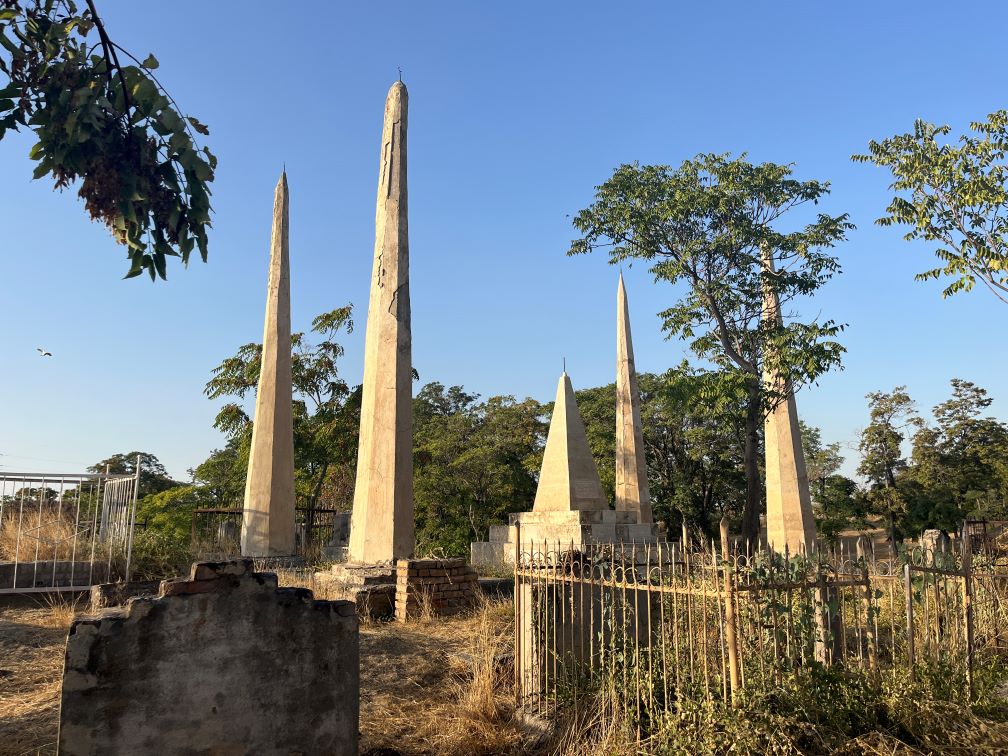
An intriguing sight was the statue of Amir Timur, seated on his throne, strategically positioned between the old Uzbek town and the Russian-designed new town. Next to the Shah-i-Zinda is the peaceful Samarkland cemetery, which was fascinating to walk through as I passed elaborate tombs of various sizes and shapes. Across the road from here was the 12th century Mausoleum of Nuriddin Basir, a revered blind Islamic theologian whose teachings greatly influenced the region during his time.
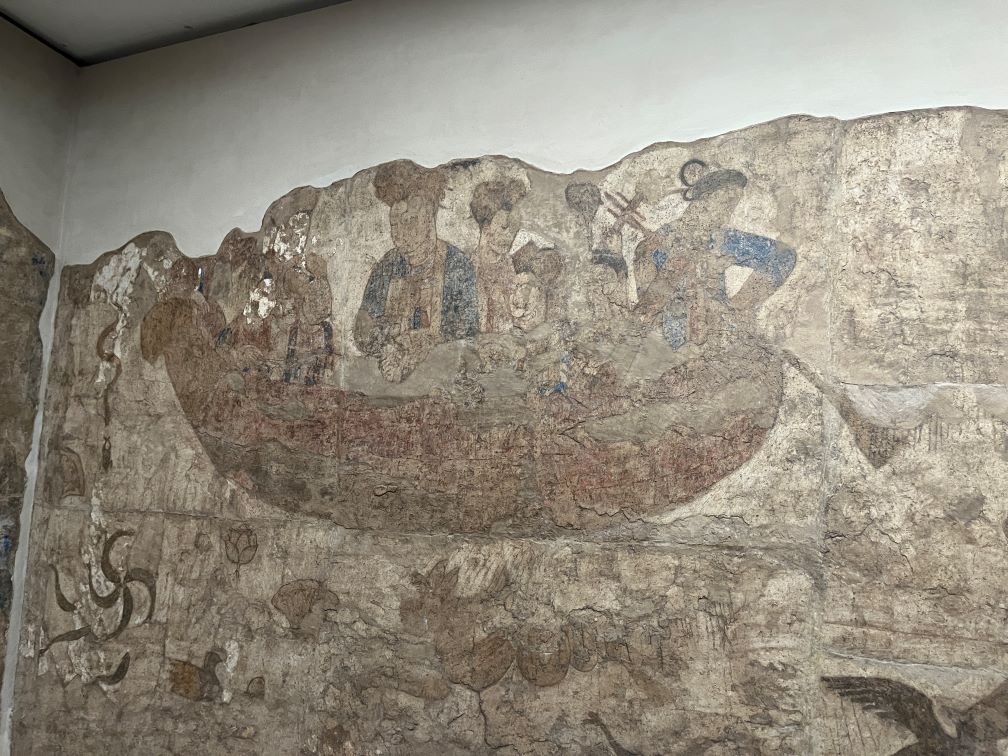
The Afrosiab excavation site reveals evidence of an ancient city that once covered 220 hectares from 500 BC to 1220 AD before being destroyed by the Mongols in the 13th century. While it now appears abandoned, with just a cluster of dirt hills and well-trodden footpaths, the history of this site is still fascinating.
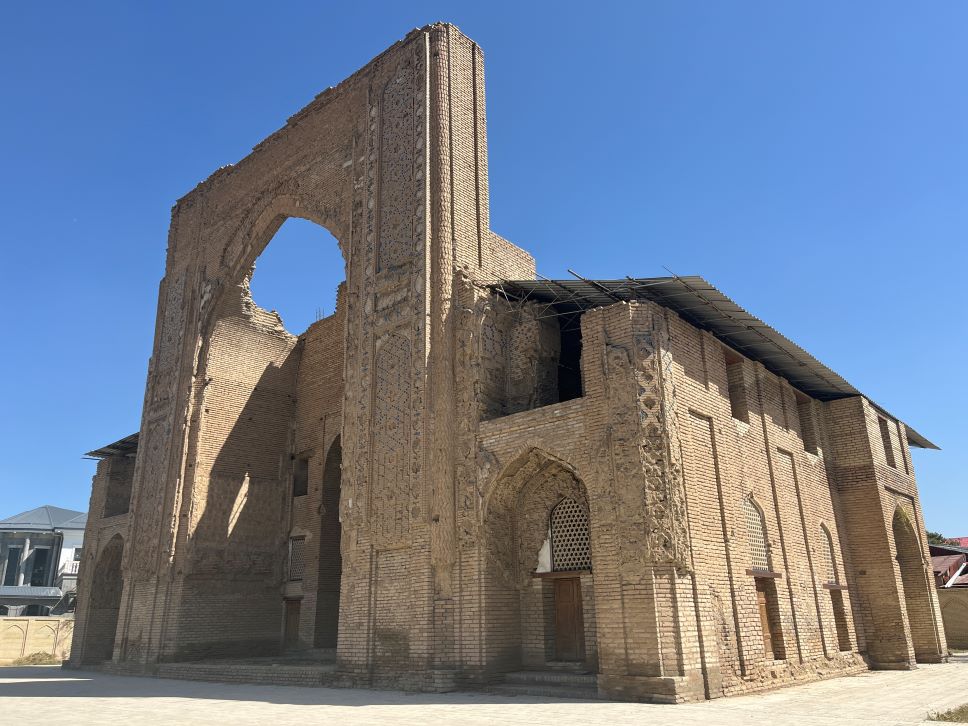
The ruins of the Ishratkhana Mausoleum are really ruined, but great to explore; however, once inside, I was greeted by flocks of pigeons above the dark, empty shell-like structure, making it feel like something out of a horror movie. The eerie basement looked absolutely terrifying, and I was relieved to find a locked gate preventing further exploration into the crypt!
If I had more time, I would have explored the following places and activities;
- Imam Bukhari Mausoleum (25km out of Samarkand, Islamic followers often visit, along with Rukhabad and Shah-i-Zinda as part of a one-day ‘Hajj’)
- Hovrenko wine factory (tasting session: Wines and Cognacs)
- The town of Shakhrisabz (90km South of Samarkand is Amir Timur’s home town and Summer Palace)
Accommodation in Samarkand
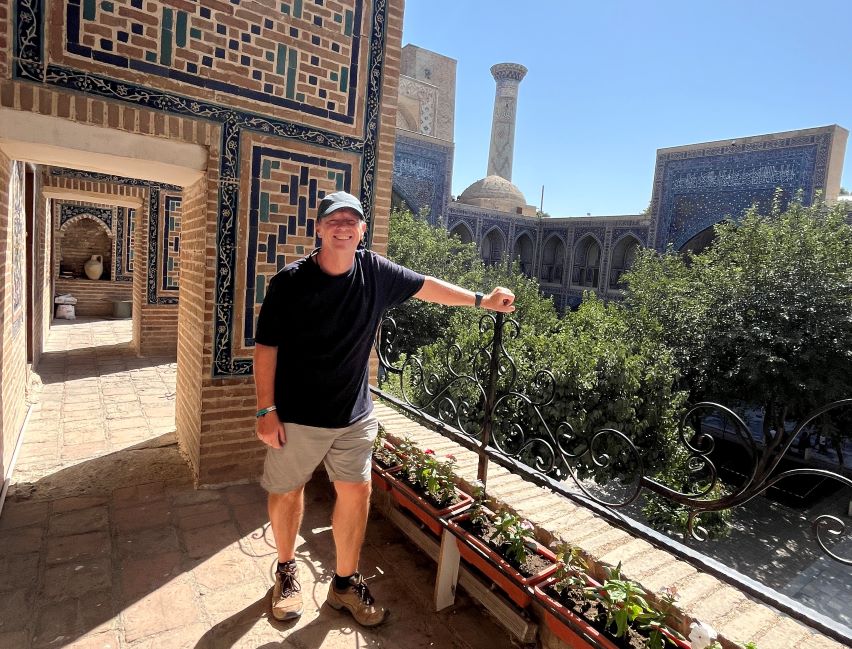
Samarkand offers a wide array of accommodation options, including hostels, Guesthouses, and plenty of four and five-star hotels; however, many do not meet the high lofty standards found in Bukhara and Khiva. Generally, the city’s hotels are more suited for tour groups than independent travellers. However, a common theme among many guesthouses that were once owned by middle-class traders is entering through authentic, intricately carved wooden doors into a courtyard adorned with antiques and mosaics, featuring a covered seating area. From there, narrow passageways lead to modern rooms that somewhat lose their initial charm.
Eating in Samarkand
Samarkand boasts a vibrant restaurant scene, especially in the newer Russian part of town. However, I preferred dining near the Registan, where there were numerous traditional Uzbek options alongside some Western fare. Interestingly, I did not encounter many fast food establishments, unlike in other Uzbek cities.
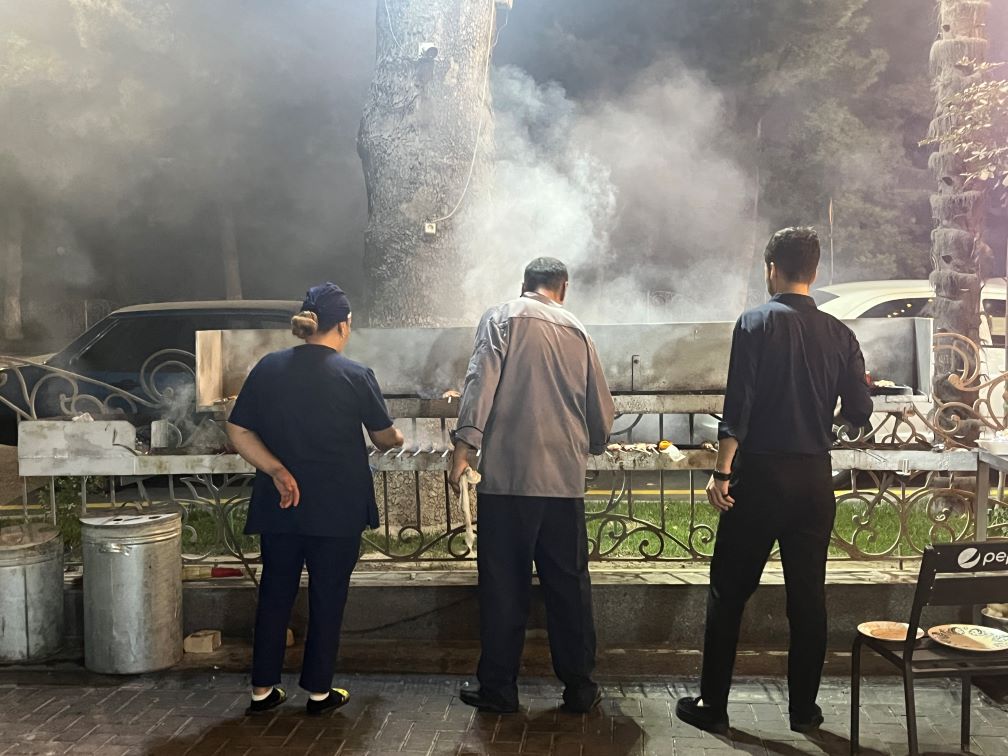
A few places I would recommend include the Cafe Magistr: a budget-friendly restaurant offering generous portions, including inexpensive pizzas, salads, and a solid Russian menu. Platan is another popular restaurant serving both vegan and vegetarian options alongside meat dishes, with the menu changing daily. My favourite spot was along Registan Ko’chasi, right in front of the famous three madrasahs. Here, I indulged in juicy chicken shashlik cooked on large street barbecues, accompanied by freshly made bread doused in herbs, a generous portion of salad, rice, and flavorful sauces – absolutely delicious!
Travellingterry Samarkand Tips
- A useful offline and free app is maps.me. Has all the features of Google Maps except the reviews.
- Here are a couple of helpful websites: The Samarkand Tourist Office https://www.facebook.com/touristinfomationcentre/, located just off Registan Square, is a great place to organize tours, including some that are free. Uzbekistan Travel (https://uzbekistan.travel/en/) provides good city overviews, and Uzbekistan Railways (https://railway.uz/en/) allows for online bookings from outside the country.
- If you exit Registan Square, you can re-enter as your ticket is valid for the entire day. This is a great opportunity to capture images of the mausoleums in different lighting conditions. I made sure to inform the security guard that I planned to return, so he wouldn’t tear my ticket. The ticket cost was approximately $6.
- It’s important to dress respectfully, as I saw a couple of travelers turned away from religious sites due to their skimpy outfits.
- After visiting the sights during the day, try to return in the evening when most structures are beautifully illuminated from the outside.
Onward Travel: Train from Samarkand to Bukhara
The train journey from Samarkand to Bukhara was a pleasant three-hour trip. Of all the trains I could have chosen, I picked a late afternoon service, and surprisingly, my seat was the bottom bunk of a second-class sleeper. Despite this, everyone was very friendly, offering to share their food and engage in conversation – so glad someone invented Google Translate! There was a restaurant carriage, but with all the bread, dried fruit, and nuts I consumed, there was really no need to find food anywhere else.