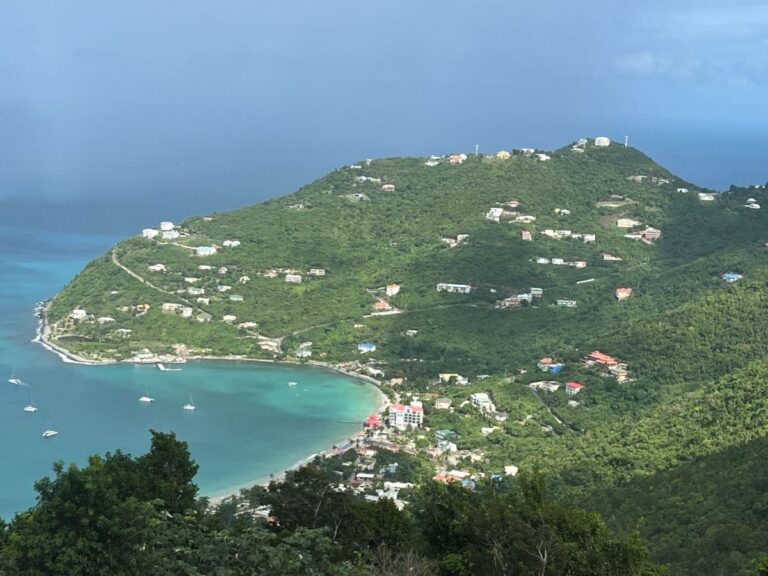
Tortola may not be the most popular Caribbean island for vacationing, but it certainly has its own charm with stunning, unspoiled beaches, vibrant marine ecosystems, ample hiking options, and colourful street art. It also serves as a convenient launching point for visiting nearby islands. Our first trip to Tortola was over 20 years ago, and we’ve noticed significant developments in its infrastructure, transportation, hotels, and paved roads, as well as an increase in tourist activities – albeit with a notable dependence on cruise ship passengers for economic support.
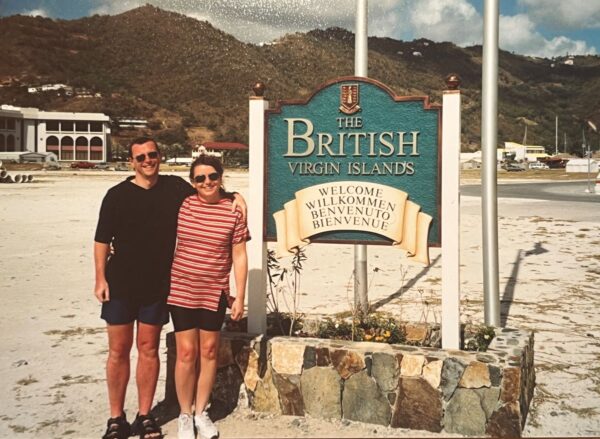
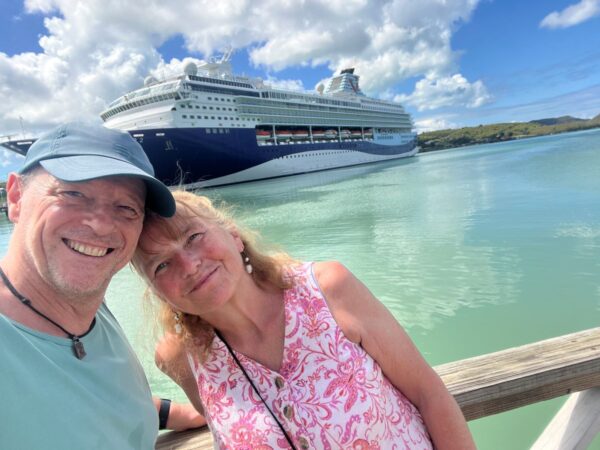
To give some perspective, Tortola is the largest of the over 50 British Virgin Islands (BVI), of which only 15 are inhabited. It measures roughly 19 km by 5 km and features a rugged spine of steep mountains, rising to 530 meters (1,740 feet) at Mount Sage. The island has a population of about 24,000, with around 9,500 residents living in the capital, Road Town. In both of our visits, the island felt very relaxed, with incredibly friendly locals and a sense of ease while exploring on our own.
Our Tortola Highlights
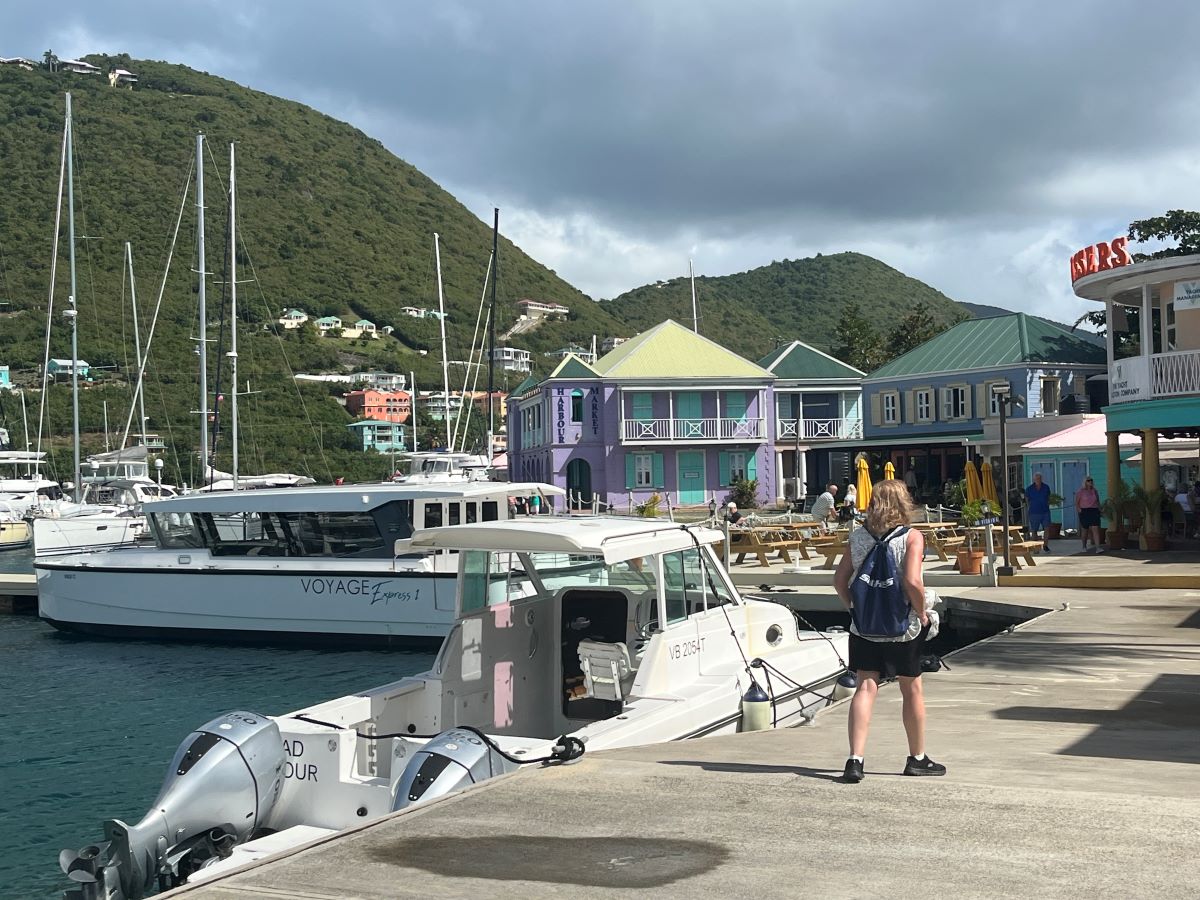
Road Town, located on the southern coast, is a frequent stop for cruise ships. At the pier’s end is Tortola Pier Park, a large artisan complex filled with souvenir shops, restaurants, bars, jewellery stores, and fashion boutiques, all housed in bright, multi-coloured colonial-style structures. The vibrancy of the island extends beyond the park, reflected in the local cuisine, fashion, and architecture, all set against lush, green forests.
Explored Road Town
We found Road Town to be a delightful place, even if it is smaller and less picturesque than other Caribbean capitals like St. John’s (Antigua), Philipsburg (Saint Martin), or Castries (St. Lucia). Nevertheless, it’s brimming with history and colour.
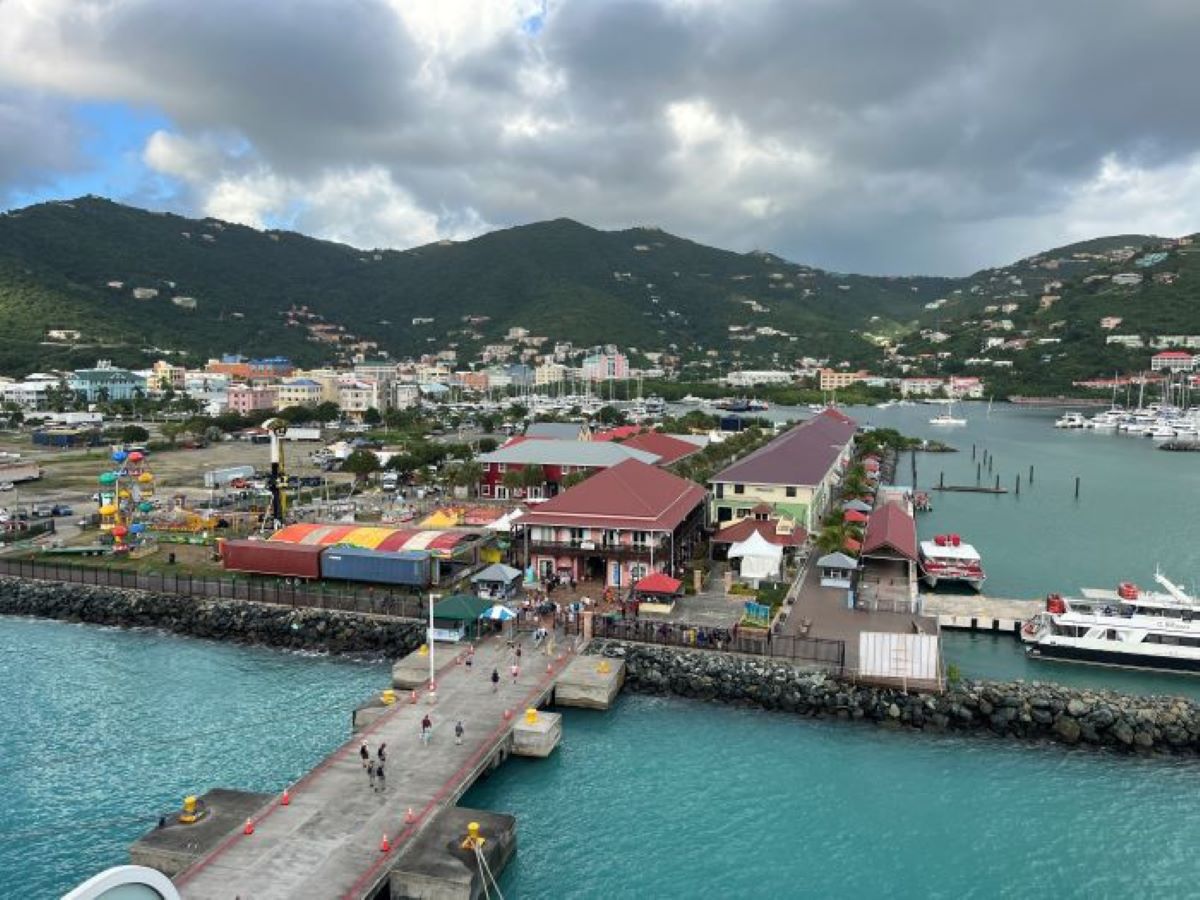
Our self-guided three-hour tour began at the Old Government House Museum, once home to former governors. This beautiful white building overlooking the waterfront featured period furnishings, paintings, and exhibits celebrating notable royal visits throughout history. As we explored the various ornately decorated rooms, we gained a deeper appreciation for the island’s heritage and pride.
Just outside Pier Park lies Crafts Alive Village, a fantastic spot to shop for locally crafted souvenirs. In colourful huts, local artisans offer items like jewellery, straw hats, beachwear, ornaments, and handmade dolls dressed in traditional garb. Saturdays are especially lively, as a farmers’ market sets up shop, selling locally grown fruits and vegetables.
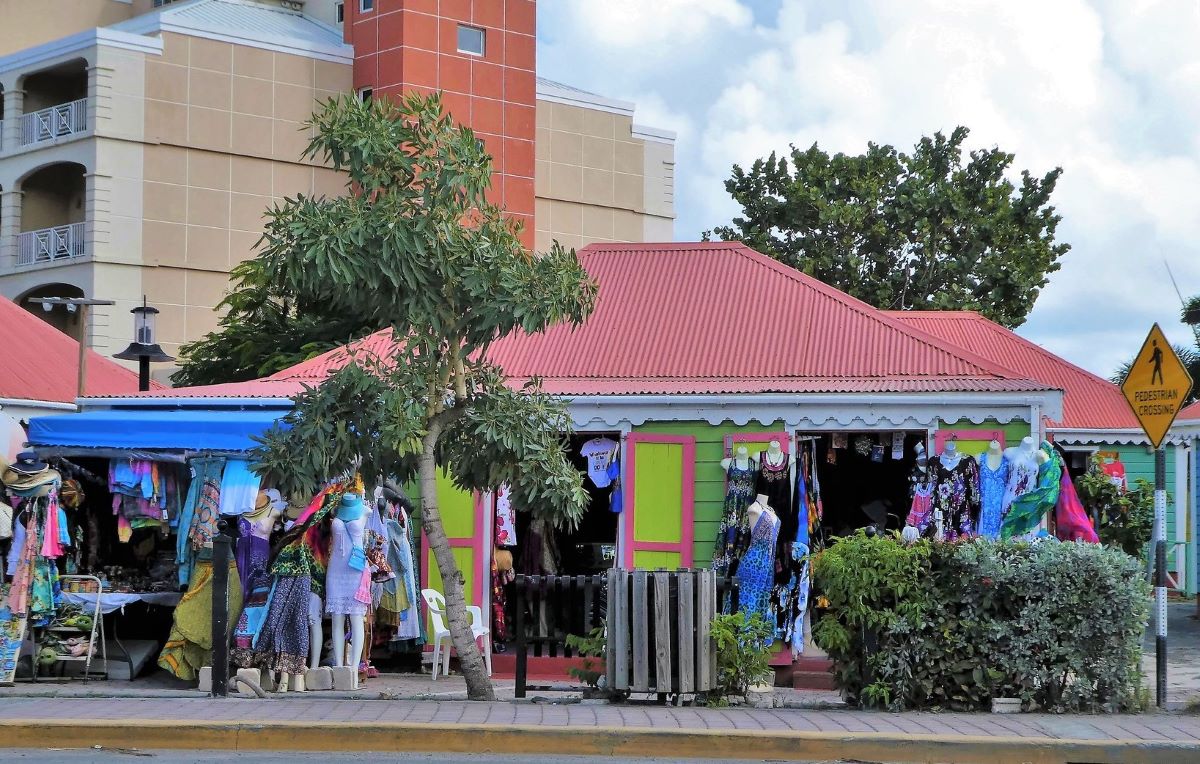
Main Street is lined with shops, restaurants, and bars that showcase Tortola’s island life. One standout is Sunny Caribbee, which offers a wide array of spices, jams, sauces, and teas. Another charming stop is Serendipity Books and Toys, featuring a selection of Caribbean-themed items.
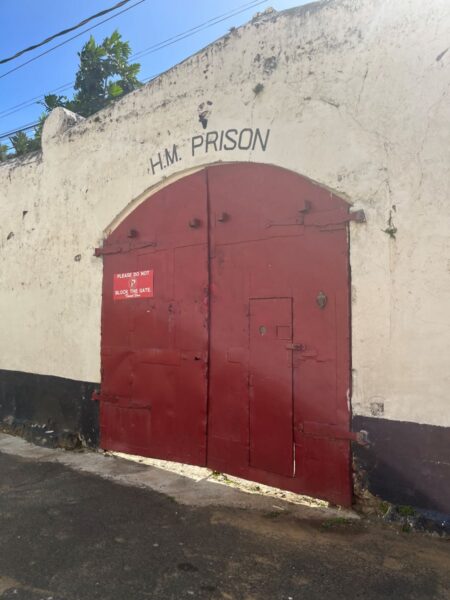
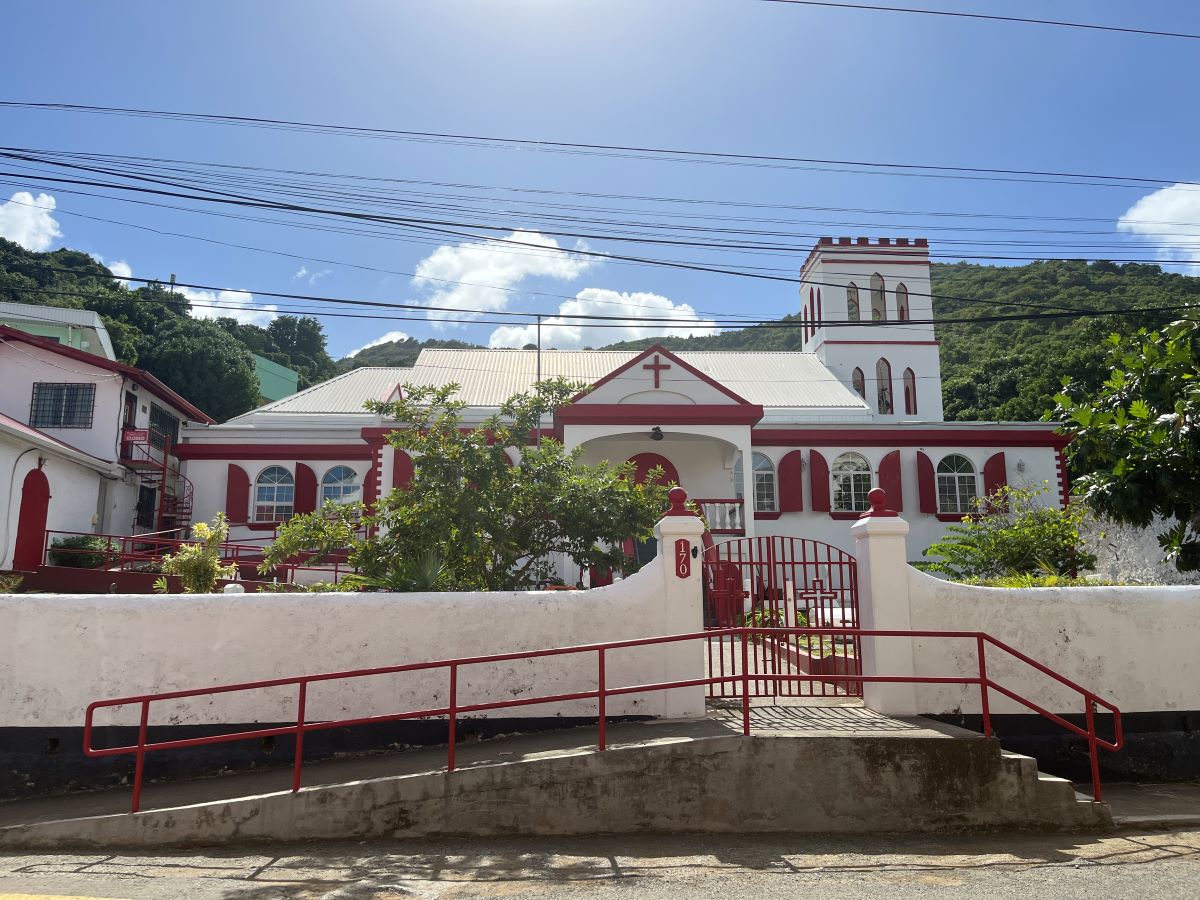
Continuing along Main Street, we encountered the lovely St. George’s Anglican Church, followed by the somewhat out-of-place H.M. Prison Museum, which is worth a quick visit. Although it appears rather dilapidated – more like ruins than a museum – the museum provides informative insights into the harsh conditions of prisoners in the 18th century, with the last inmate released as recently as 2007. If I had spent more time there, the welcoming custodian would have shared even more fascinating details.
Another notable site is the four-acre J.R. O’Neal Botanical Garden, accessed through impressive wrought iron gates. The entrance leads us down a path lined with towering royal palms, ultimately arriving at a fountain from which several other paths diverge. These paths guide visitors through a tropical paradise adorned with flower-covered pergolas, orchids, lilies, a miniature rainforest, tropical bird aviaries, and ‘The Great Lawn’, surrounded by various palm species, cacti, and exotic flowers. We even spotted a few land tortoises meandering near the wooden Chinese Bridge.
Lounged on a Beach
There are plenty of beaches around the north of the island to relax and lounge. One such place is the beautiful crescent-shaped beach of Cane Garden Bay, lined with colourful small hotels, restaurants, and shops. The bay is also sheltered from the wind, creating an ideal opportunity to snorkel, swim, or partake in other water sport activities in the crystal clear, calm waters. It is also a great place to enjoy time in one or two of the several Caribbean bars that line the white sandy beach, especially the popular watering hole of Quito’s, where musicians play throughout the day in a very idyllic position close to the water’s edge.
Although we did not visit the Callwood Rum Distillery at the southern end of Cane Garden Bay, it has received good reviews from many visitors. For over 400 years it has been producing white, spiced, and gold rum, all of which can be tasted during an informative tour, demonstrating the production process from the olden days to how it is produced today.
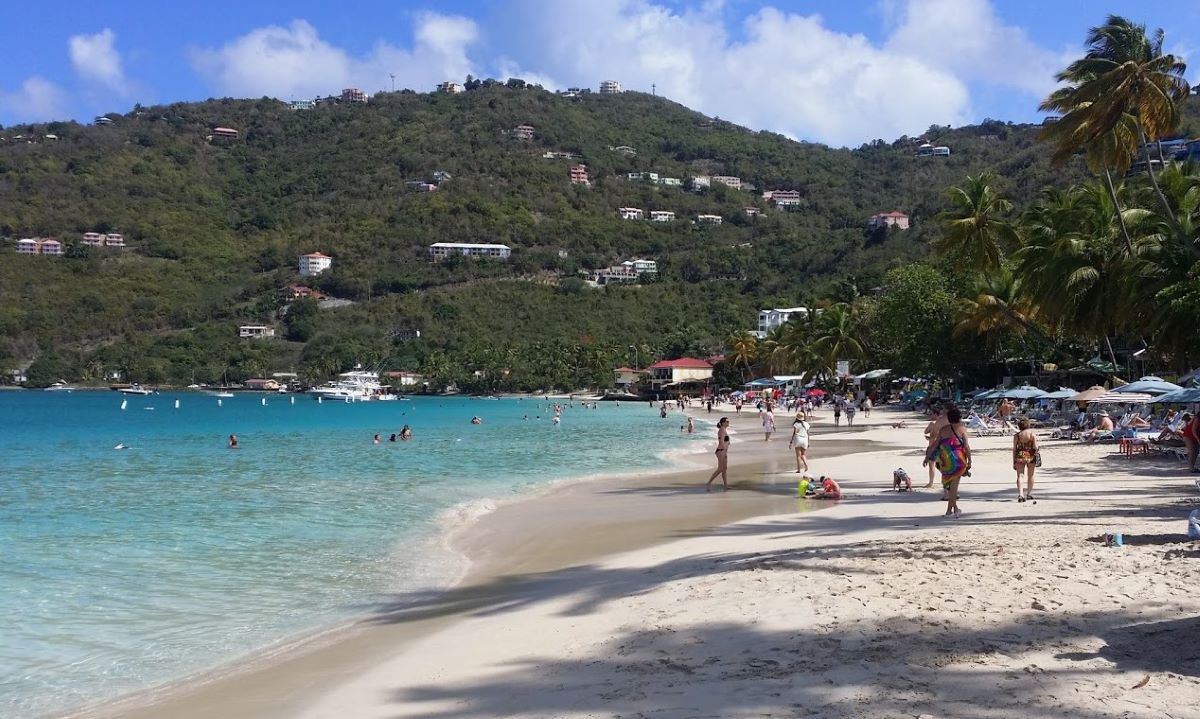
Thanks: Arnt Kristiansen / Google
The gorgeous Cane Garden Bay – great way to spend a day
Another good spot for relaxing is Brewer’s Bay Beach. It is a fairly quiet beach with a few water sport activities, but the snorkelling is excellent and a variety of fish can be spotted in the very clear reef. The unspoiled beach at Smuggler’s Cove on the western shores is less frequented due to the windy, bumpy road conditions (30 minutes from Road Town), but its seclusion is a perfect spot for a more natural Caribbean beach experience and a good chance to spot sea turtles.
Dreamed of Jost Van Dyke and Norman Island
Although we never got the chance to discover the smallest of the BVI – Jost Van Dyke, it would have only taken a 25-minute ferry ride from Tortola’s West End Ferry Terminal, making it a great day trip. As the island is less commercialised, Jost’s main draw is the seclusion and ‘untouched’ feel, creating an authentic Caribbean experience. Apart from the gorgeous stretch of sand along White Bay on the southern coast, it’s possible to venture further along trails to explore the sugar mill ruins or to take a dip in the Bubbly Pool – Jost’s natural, sea-formed Jacuzzi! Norman Island, south of Tortola, is another popular place that many tourists visit, mainly for snorkelling and diving.
Explored the Baths at Virgin Gorda
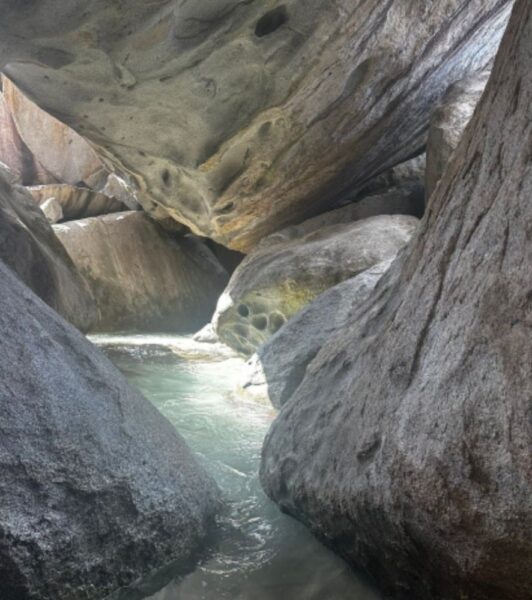
The cluster of smooth volcanic boulders and rock formations emerging from the white sand and pristine azure water pools provide an unbelievable landscape and is probably the most famous site in the entire BVI region. The baths are located on the neighbouring island of Virgin Gorda, and easily accessible from Tortola either by ferry, water taxi, or as part of an excursion.
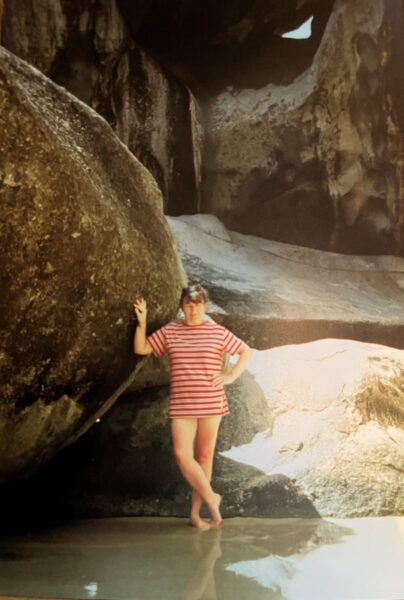
Our recent visit to Tortola included a ‘safari-style’ island tour of Tortola (see below), but over 20 years ago when we first explored the Caribbean Islands, the Baths at Virgin Gorda (now a National Park), were the highlight of our trip. As well as finding an array of small hidden beaches and walking the trails around the coastland, the main highpoint included exploring the maze of boulders, in particular the ‘Cathedral Room,’ cave, and Devil’s Bay where the calm clear pools of seawater were ideal for swimming and snorkelling, ultimately providing a sun-drenched experience.
Took an Island Tour
Tortola boasts a vibrant mountainous terrain and stunning sandy beaches that are easily accessible on foot. However, to venture further inland along the steep, winding roads that offer breathtaking views of neighbouring islands, a vehicle is necessary, or, as we did, join a half-day tour.
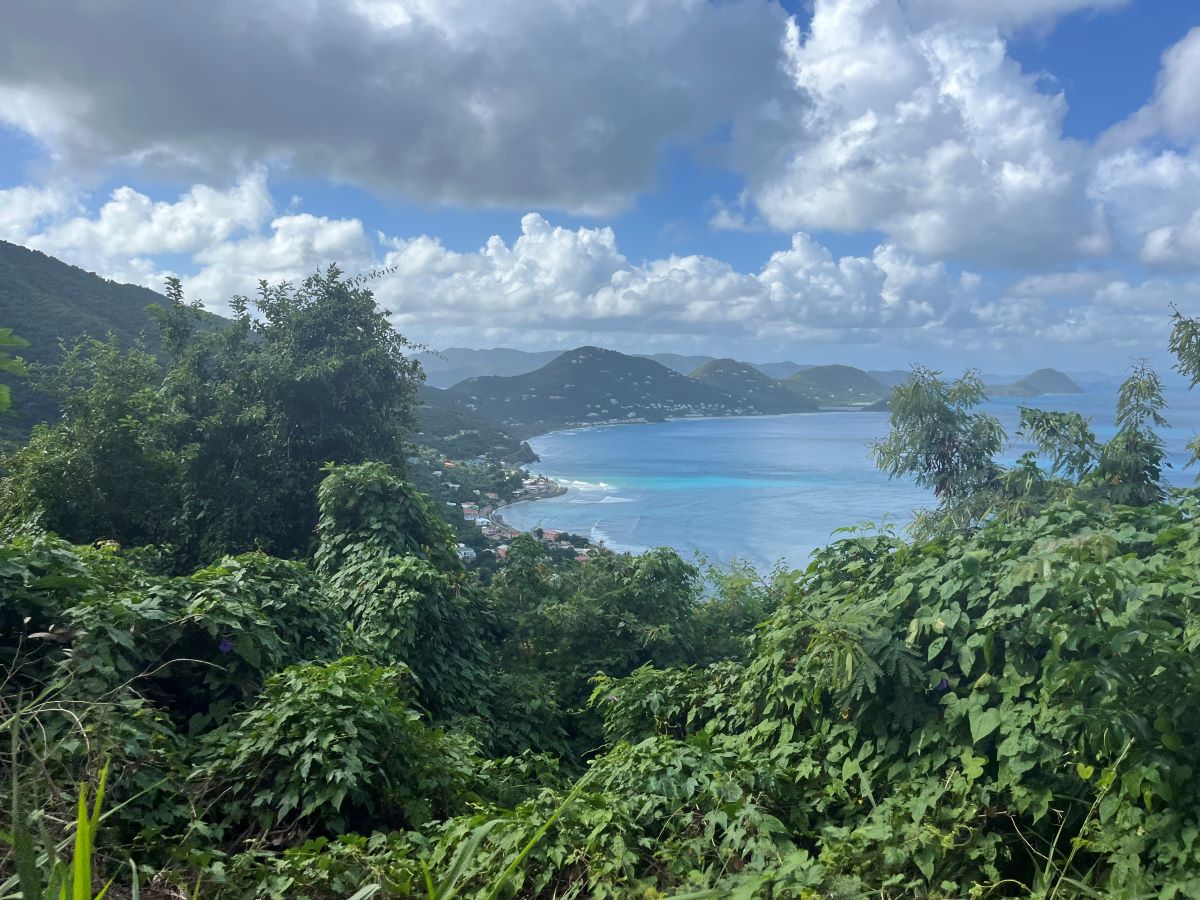
Most cruisers book this excursion while on the ship, but it’s also possible to negotiate rates and options for the sights to see with various tour agencies and private taxis at the pier. These tours generally follow the same route and usually last 3 to 4 hours. During our trip, we rode in an open-sided, safari-style tour bus that took us up steep, bumpy, hairpin roads to several viewpoints. The vistas provided incredible views of Tortola and the neighbouring Islands, featuring a striking contrast between the lush green rainforest and the azure sea – simply amazing!
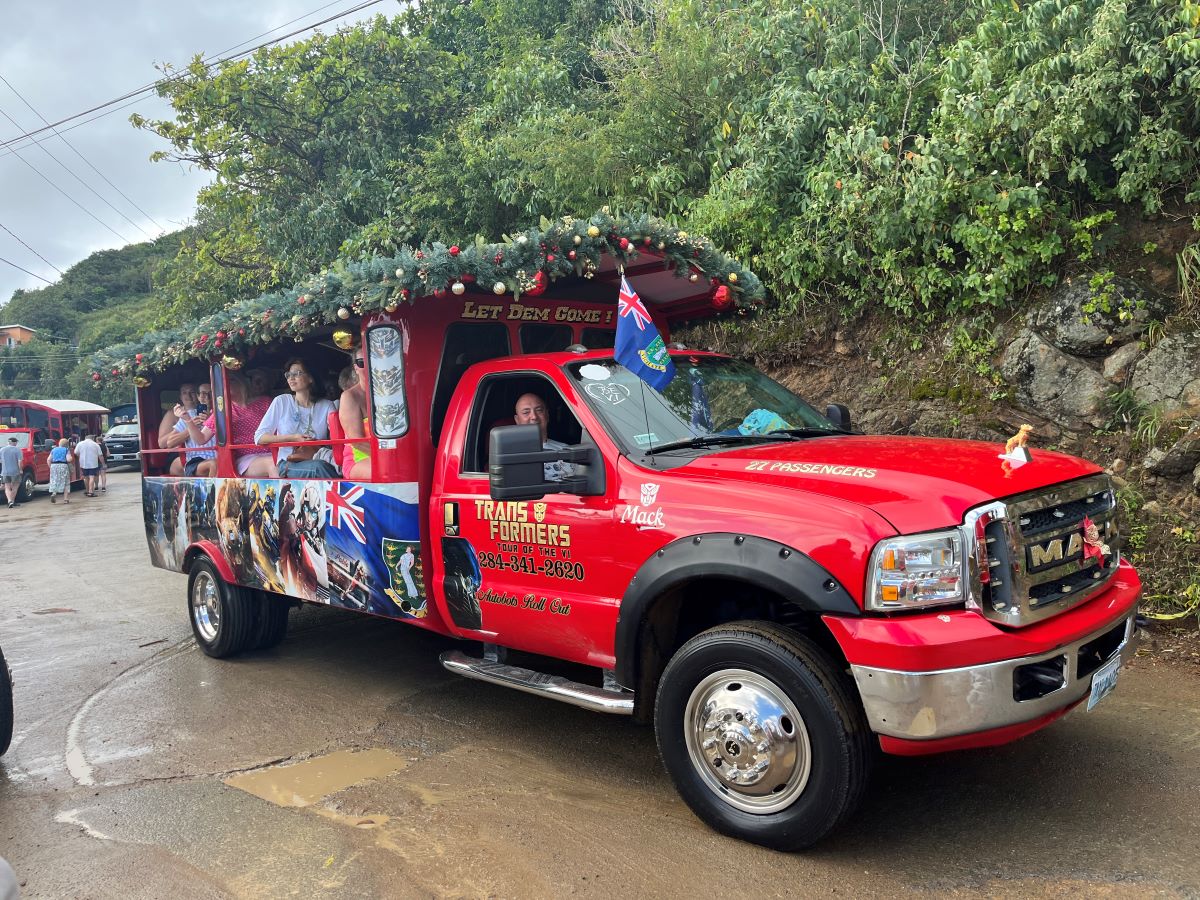
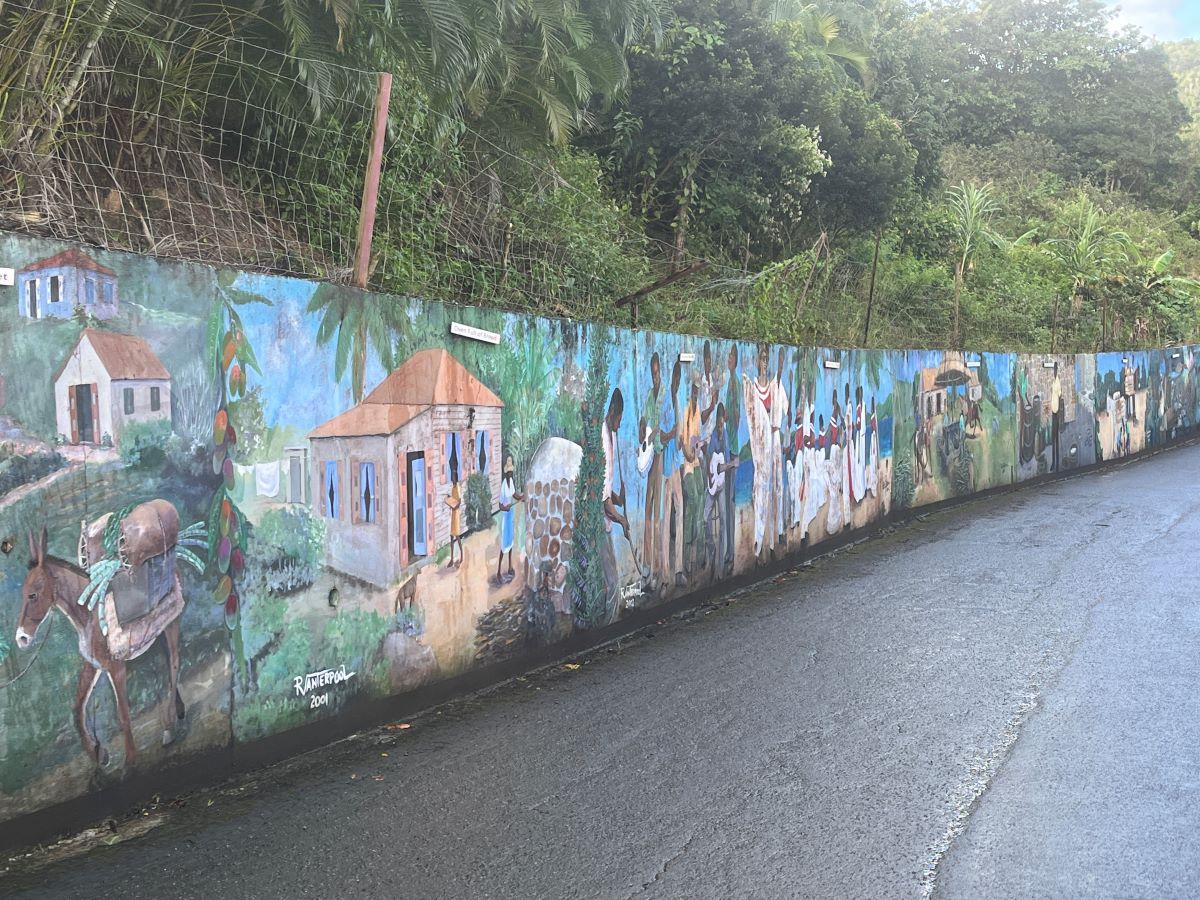
The tour included several fascinating stops, such as the Fahie Hill Murals, which depicted Tortola’s rich history. We also made a brief stop at Sage Mountain National Park. While the viewing platform was unfortunately closed during our visit, the complimentary rum samples certainly helped to compensate for that! We then enjoyed a leisurely drive down to the coast, making a couple of stops at Cane Garden Bay and Frenchman’s Cay. There, we explored the charming Soper’s Hole Wharf and Marina, surrounded by beautiful blue waters and lush green hills.
Overall, it was an ‘OK’ excursion with nothing different from any other ‘safari-style’ Caribbean island tour. However, it would have been more interesting if the guide (who happened to double up as the driver as well) didn’t have a tannoy system that kept cutting out!
Other Activities to explore in Tortola
Similar to many other Caribbean islands, there are alternative activities other than lazing out on a beach or driving around the hills. On Tortola, many tours can be arranged from the hotels or along Tortola Pier Park, which can work out as a far cheaper option than the cruise excursions, especially in a small group. If we had more time and spent a few days on the islands, apart from visiting many beaches, we would happily consider the following activities:
- Original Virgin Canopy Tour (zip-lining over the canopies of the rainforest with terrific views over Tortola and other islands)
- Hiking Tour (climb the hills of Sage Mountain (12 looped ‘forest’ trails) or Mount Alma for awesome panoramic views over the BVI archipelago each hugged by azure seas, or a cultural trek within Mount Healthy National Park which hosts windmill ruins within an 18th century plantation that once played an important part in the production of the island’s sugarcane)
- Diving/snorkelling (within the BVI National Heritage Marine Site includes the 300-foot-long Royal Mail Steamer that sank in the mid-1800s, as well as swimming alongside tropical fish, octopus, and observing coral gardens.
Accommodation and Eating in Tortola
While accommodation in Tortola and the rest of the British Virgin Islands tends to lean towards high-end villa rentals and luxurious hotels, there are also plenty of affordable options available. Boutique accommodations offer comfortable rooms, fantastic food, and a home-style experience at a much lower price. During our two-day cruise, we slept on the ship; however, we met many vacationers in various places around Tortola who had independently rented accommodation and recommended renting a car if the stay is longer than a few days.
With a seafood market right at its doorstep, enjoying fish, shrimp, lobster, and more is an essential part of the Caribbean experience in the BVI. The region is also known for its fantastic cocktails, including BVI’s official drink, the Painkiller, which is primarily made with rum and coconut. No matter where we went, we always found a bar serving food all day, whether along the beaches or in Road Town. However, we didn’t have to venture far from Tortola’s Pier Park, where plenty of eateries offered all kinds of tasty Caribbean meals as well as homely comfort food.
Travellingterry Tortola tips
- We were very much aware of our surroundings, especially in less crowded streets, but we did feel safe when exploring Road Town, although some parts did feel somewhat deserted.
- A couple of good websites we used were The British Virgin Islands and What’s In Port. Ferry times, cost and ports should be viewed online before departure from the mainland.
- To avoid attracting unwanted attention, we never displayed any valuable items and always kept our mobiles in our pockets out of sight. We carried enough cash for the day’s activities, as well as a bit more for any taxis/emergencies.
- We did our research beforehand for potential tour and market trade scams, especially when dealing with taxi drivers.
- The pace of life in the BVI is a lot different from home, so we gave ourselves plenty of time to get from A to B, and whilst waiting, we just soaked up the Caribbean vibe.