Jodhpur, located in the Thar Desert, was once the capital of the Marwar Empire. Today, it is a densely populated maze filled with markets, blue-painted buildings, historic guesthouses, and a massive, impenetrable fort. Looking back, we regret not spending more than two days in Jodhpur, as it is a fascinating city with many attractions beyond its immediate surroundings.
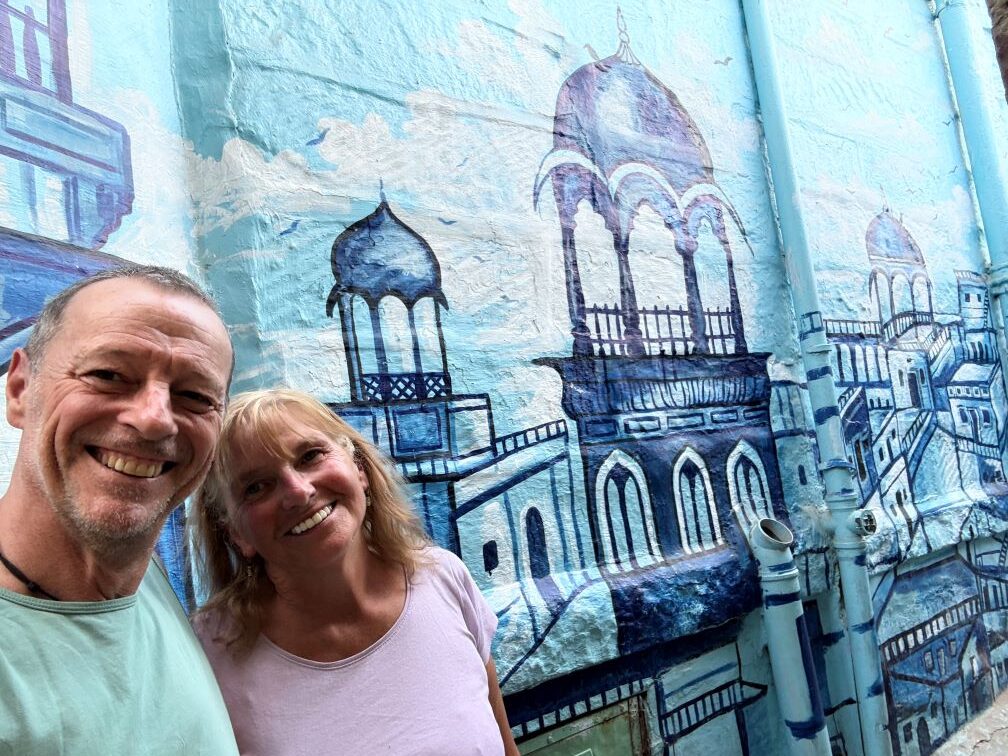
Jodhpur is often referred to as the Blue City of India because of the blue structures and street murals that adorn much of the old town, similar to Chefchaouen in Morocco. It’s worth noting that the prominence of blue in Jodhpur has likely increased due to recent restoration projects aimed at attracting tourists, especially with the addition of murals that were not present during Terry’s previous visit in 1992. However, these murals contain many culturally significant references that make them interesting to observe.
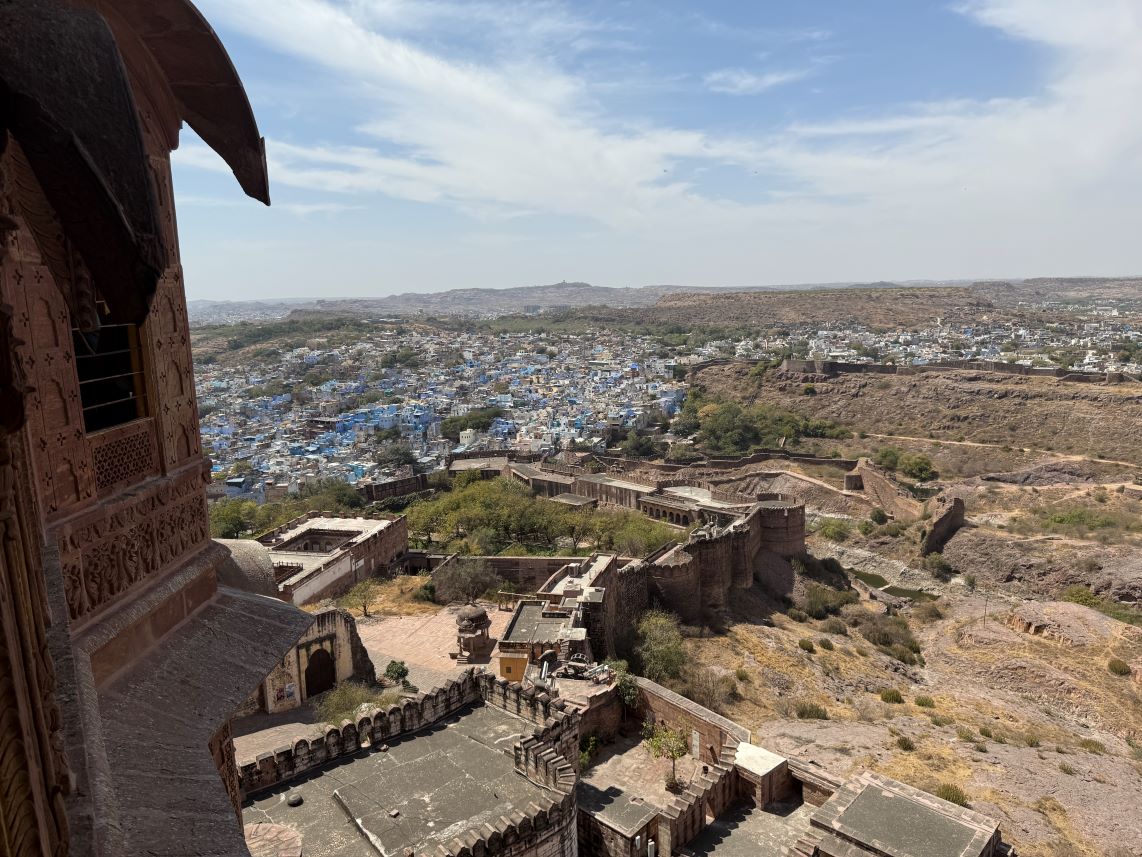
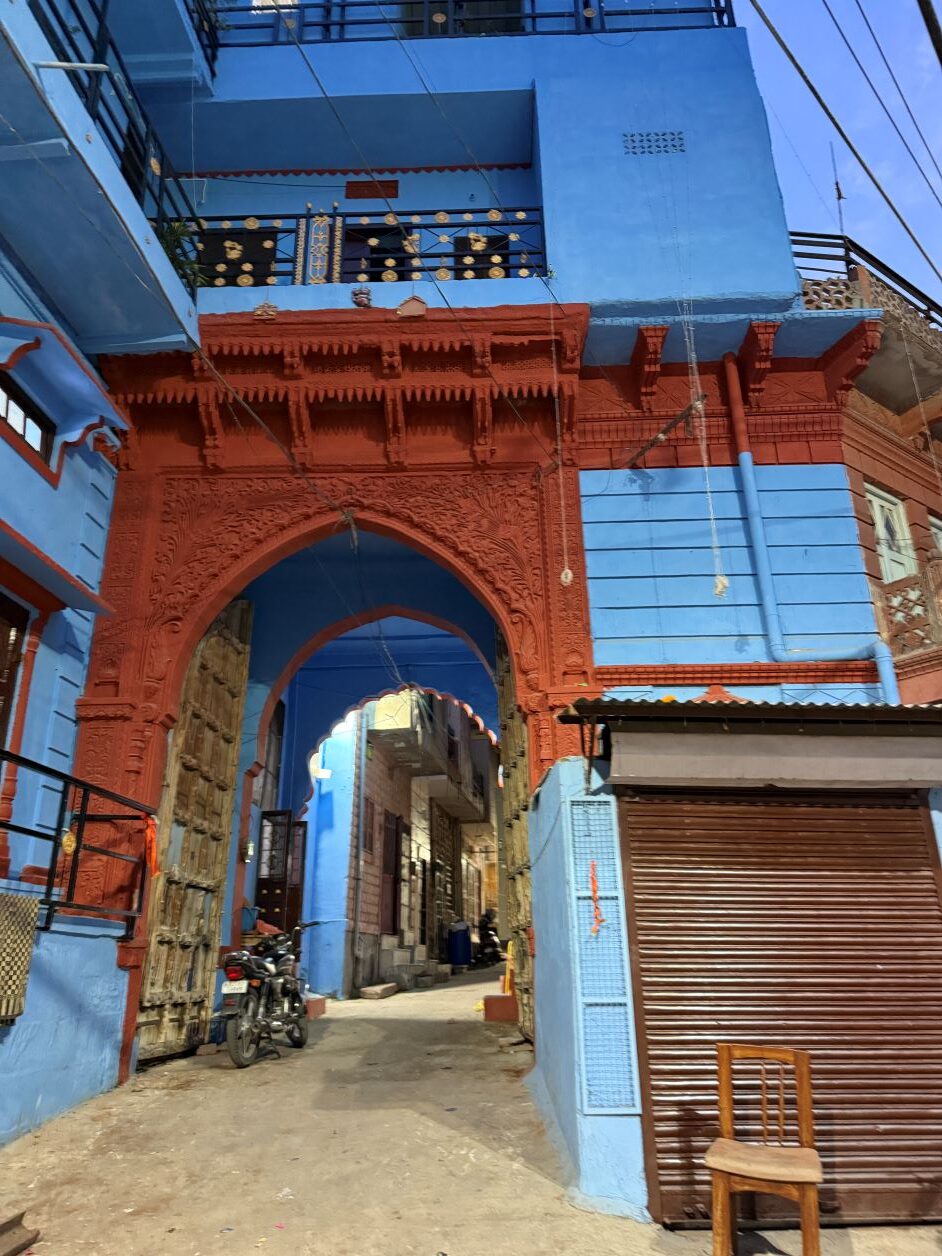
There are several theories regarding why the city used the colour blue. One theory suggests that the colour deters termites, which the city has struggled with in the past, whilst others claim that blue helps keep the buildings cool during the summer months. Our hotel proprietor mentioned that the affluent residents used blue to associate themselves with royalty. Regardless of the reason, the combination of blue and indigo creates beautiful architecture and stunning photography opportunities.
Our Jodhpur Highlights
In addition to the breathtaking viewpoints and ancient sites, we discovered that simply wandering through the streets of the city was an equally unique and unforgettable experience. The bustling bazaars, remarkable structures, and blue-painted buildings collectively created a dreamlike atmosphere unlike any other city in India. It therefore made sense for us to walk up and visit the fortress first, so we could see what makes Jodhpur such a magnificent city.
Scaled Mehrangarh Fort
Rising 400 feet above the city, Jodhpur’s most iconic landmark, Mehrangarh Fort, is one of the largest and best-preserved forts in India, covering approximately 170 acres. We were not disappointed; the entire structure was designed with grandeur, featuring beautiful courtyards adorned with intricate designs on both marble and pinkish sandstone walls, as well as domed arches.
Unusually for us, our favourite part was the museum, which housed the best-preserved courtyards. With an audio guide included in our entry ticket, we explored every room and learned about the history of Jodhpur and life in the royal family. We wandered through all areas of the palace and museum, which showcased exquisite artefacts such as sedans, armour, tents, and covered walkways, all while enjoying breathtaking views of the blue buildings throughout the city. With a coffee at the on-site cafe at either end of our visit, the three hours passed quickly.
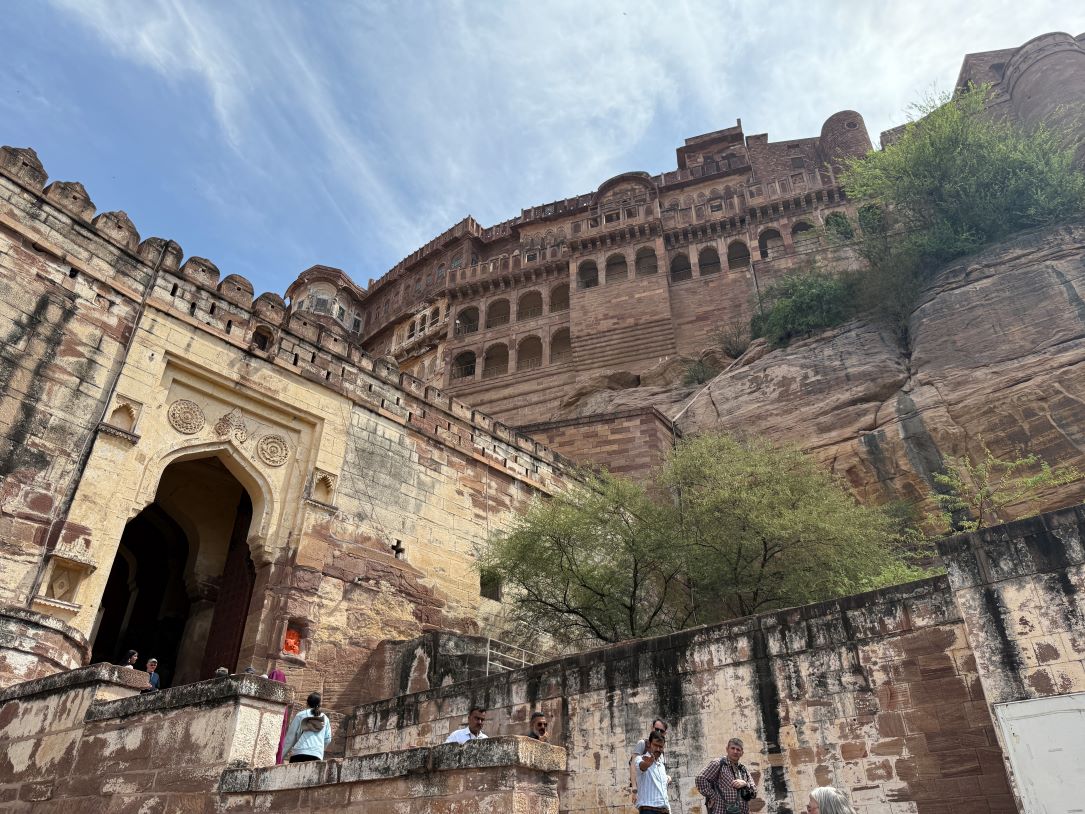
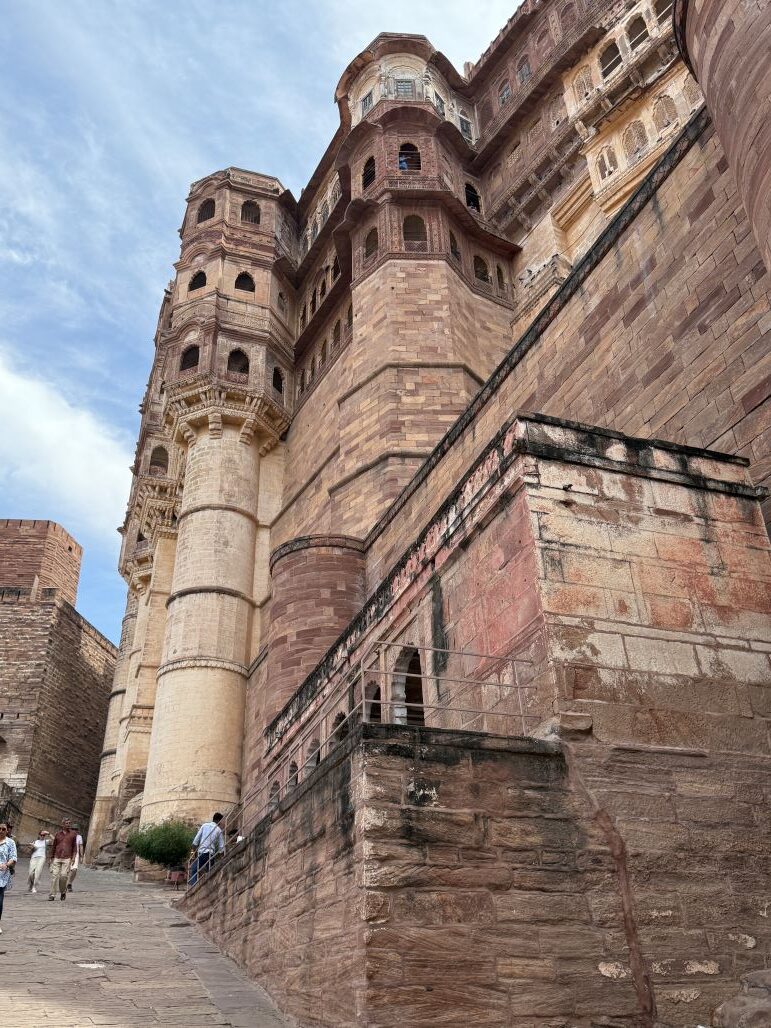
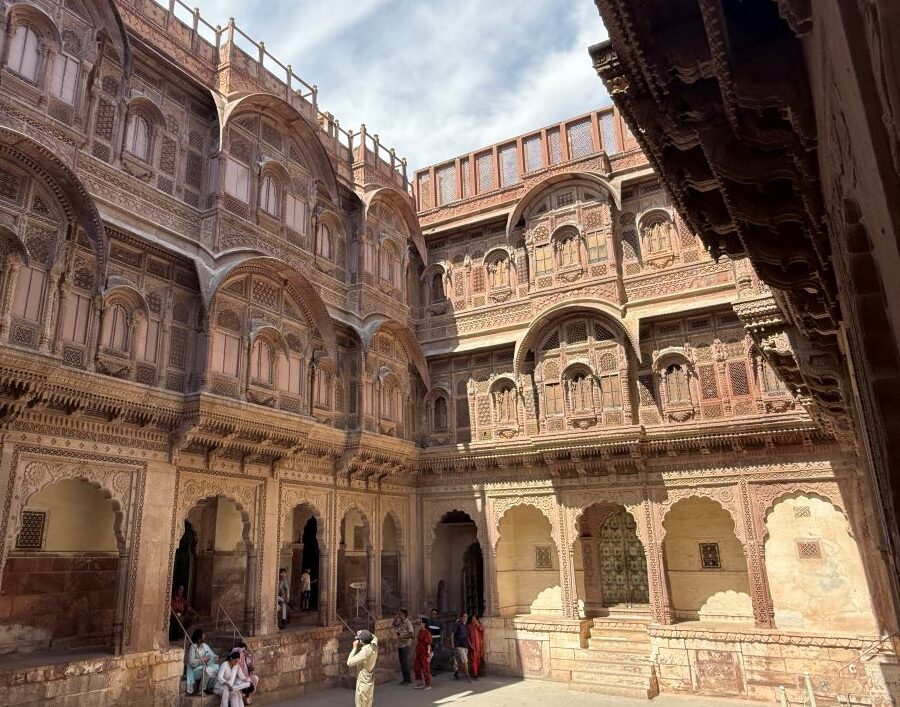
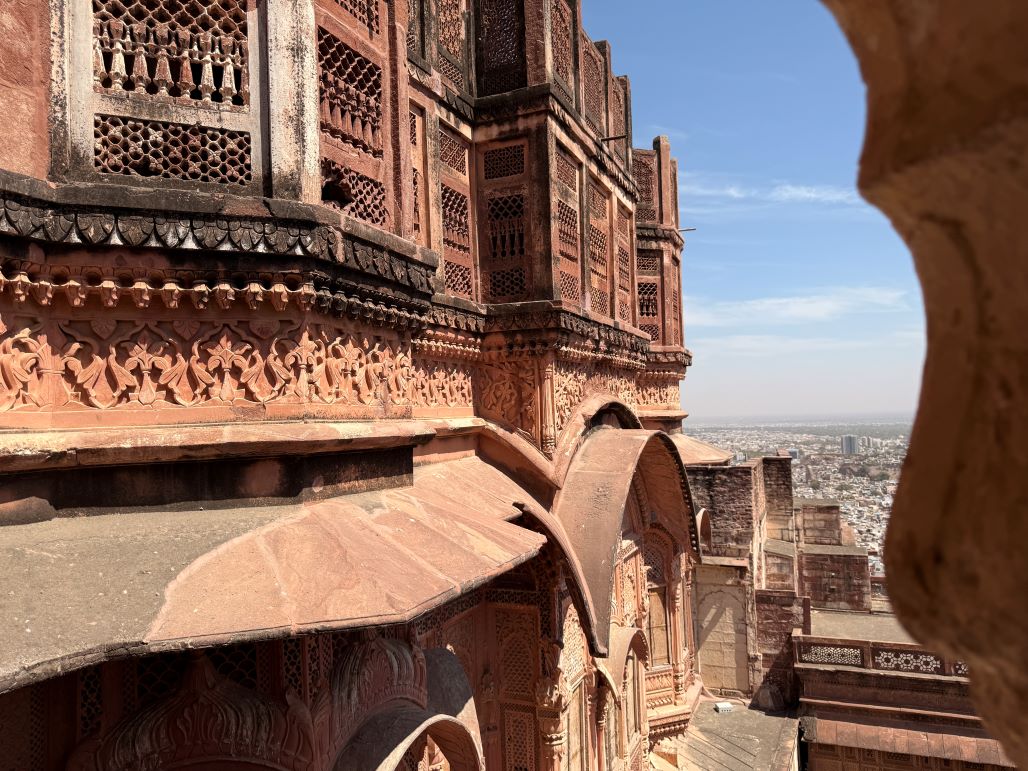
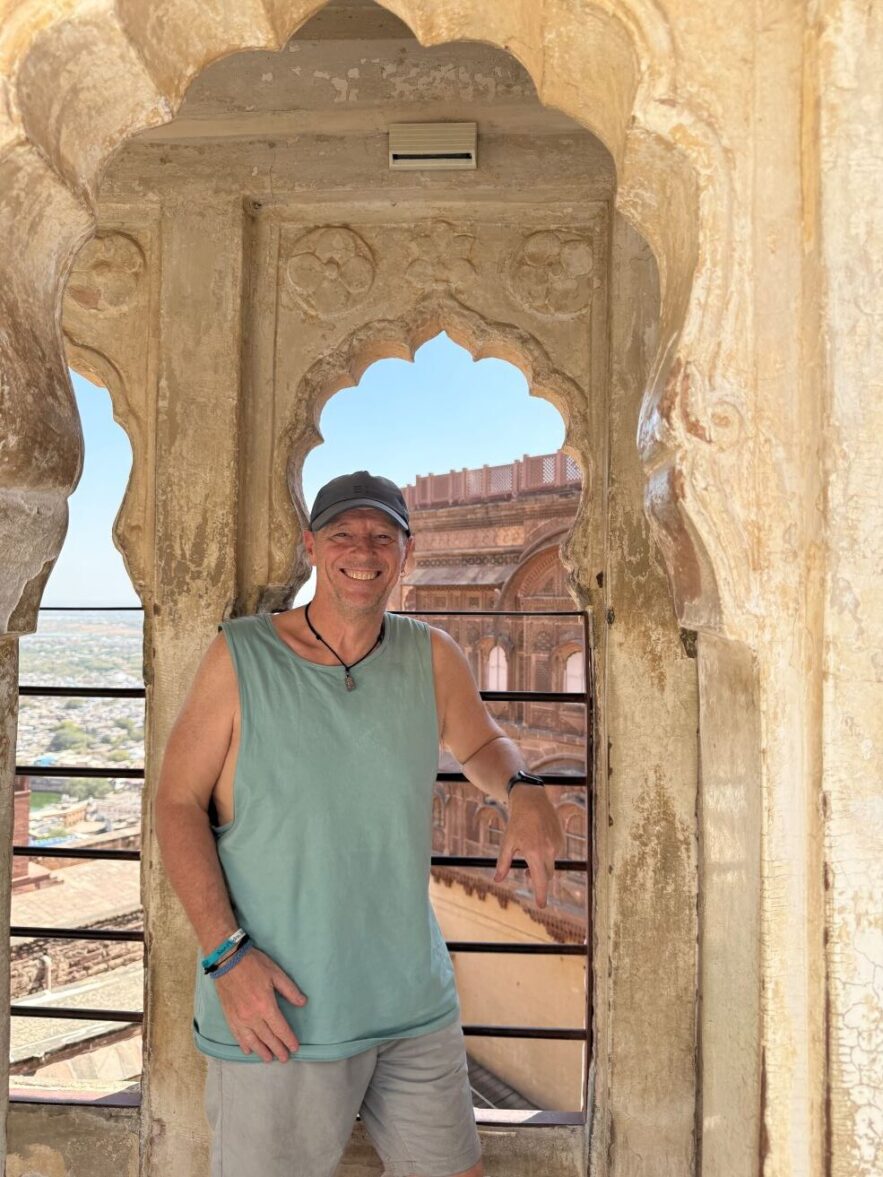
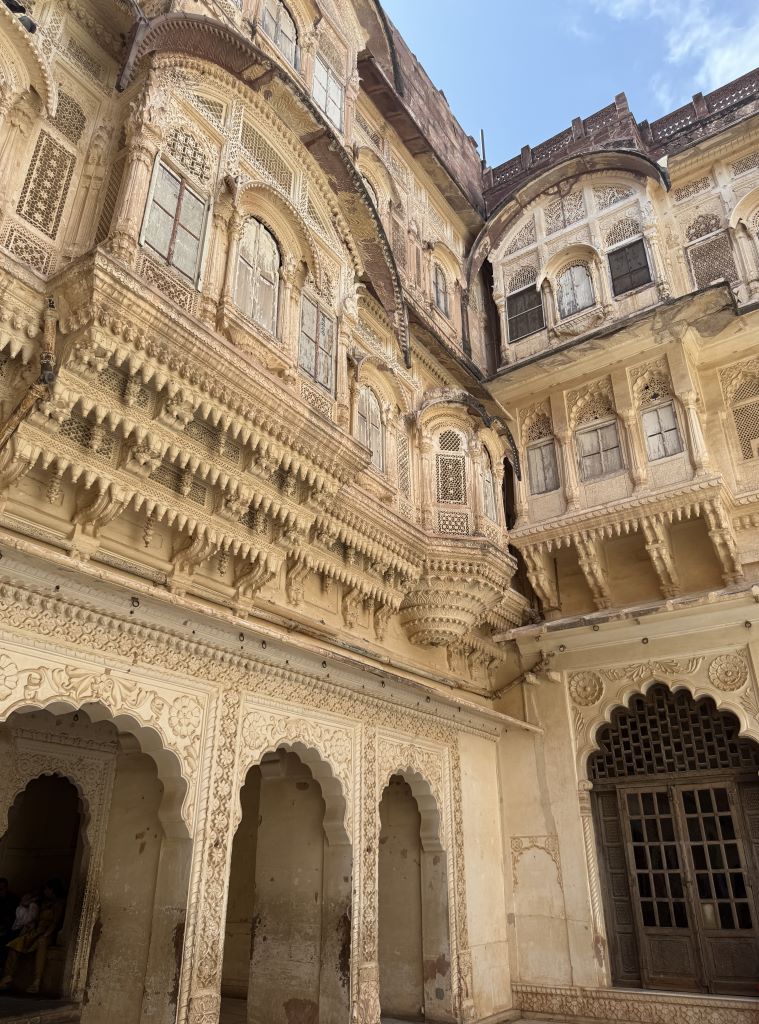
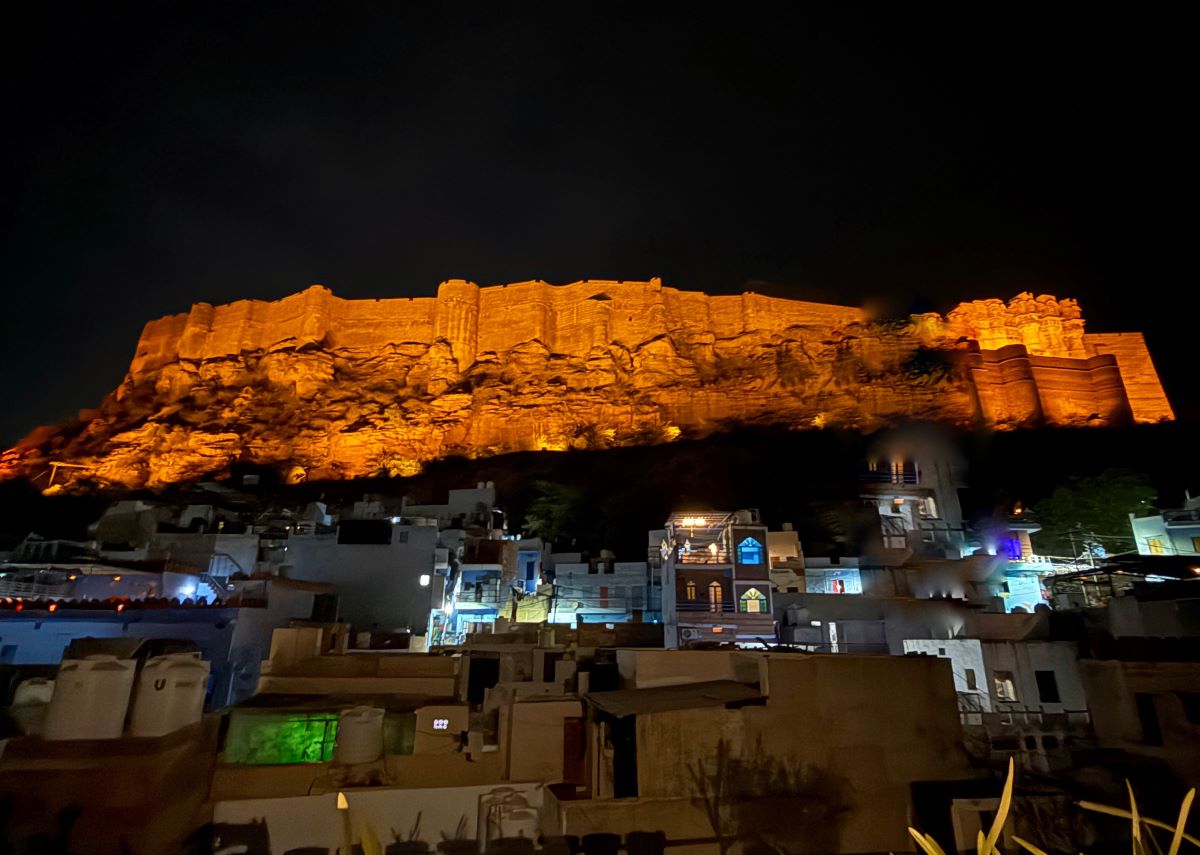
In the evening, the rooftop restaurants below the base of the fort provided a terrific vantage to see it lit up, with an orange glow spreading the length of over 200 metres and every building block luminated – it was a true spectacle and illustrated further the remarkable engineering and architectural feat.
Admired Jaswant Thada: the Taj Mahal of Rajasthan
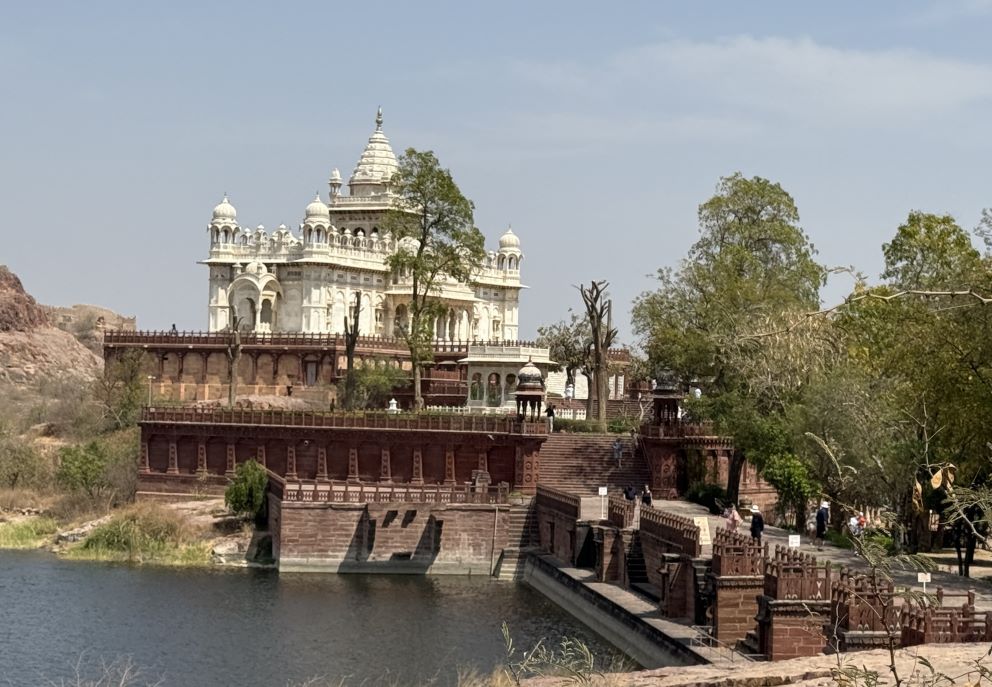
Jaswant Thada was described to us by our homestay owners as the Taj Mahal of Rajasthan. This stunning marble monument was built in memory of Maharaja Jaswant Singh II and is located just a 25-minute walk from Mehrangarh Fort. We did not visit both sites on the same day, as it was simply too hot. However, Jaswant Thada proved to be the perfect place for great photos and lasting memories, as the red desert rocks in the background made this beautiful marble temple stand out, especially with the grand staircase leading up to it.
Climbed Ghanta Ghar Within the Bustling Sardar Market
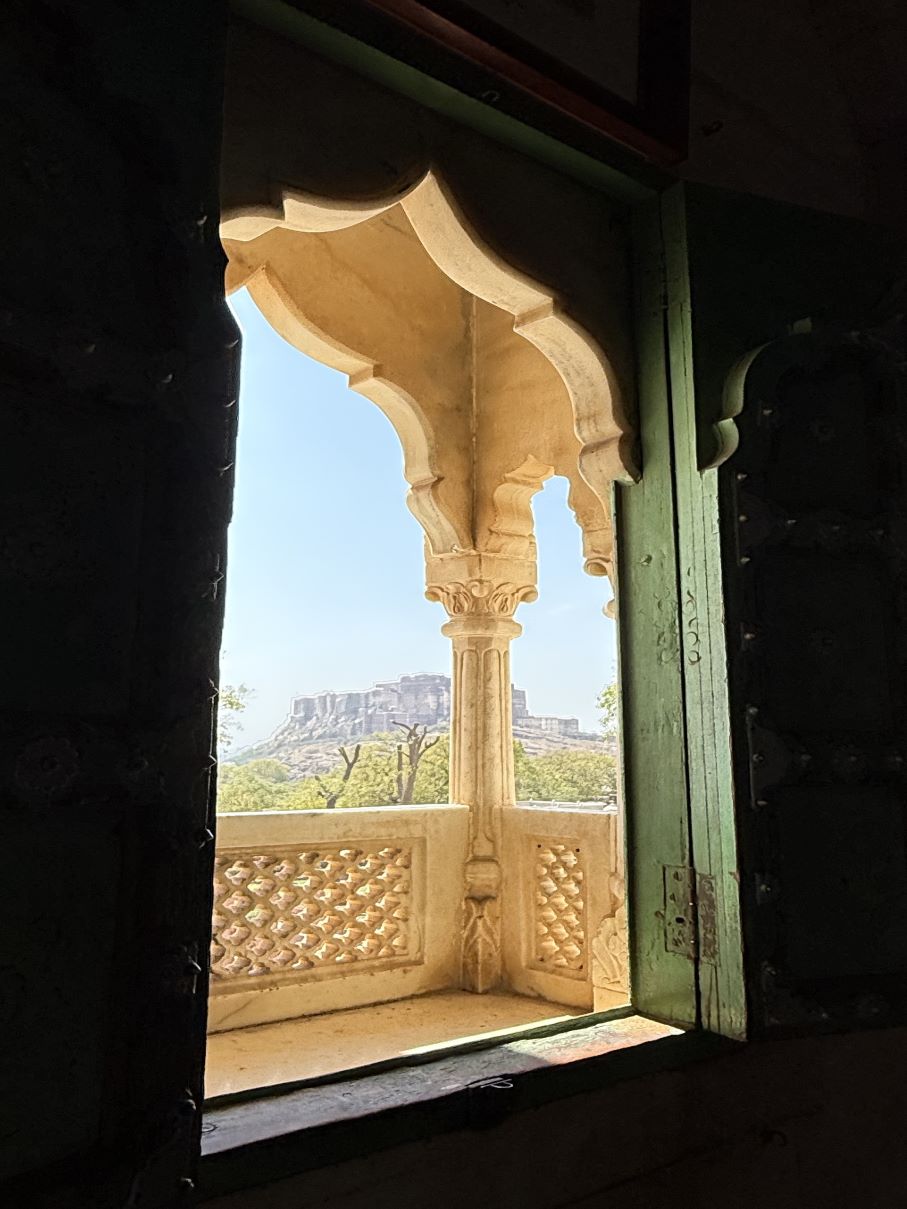
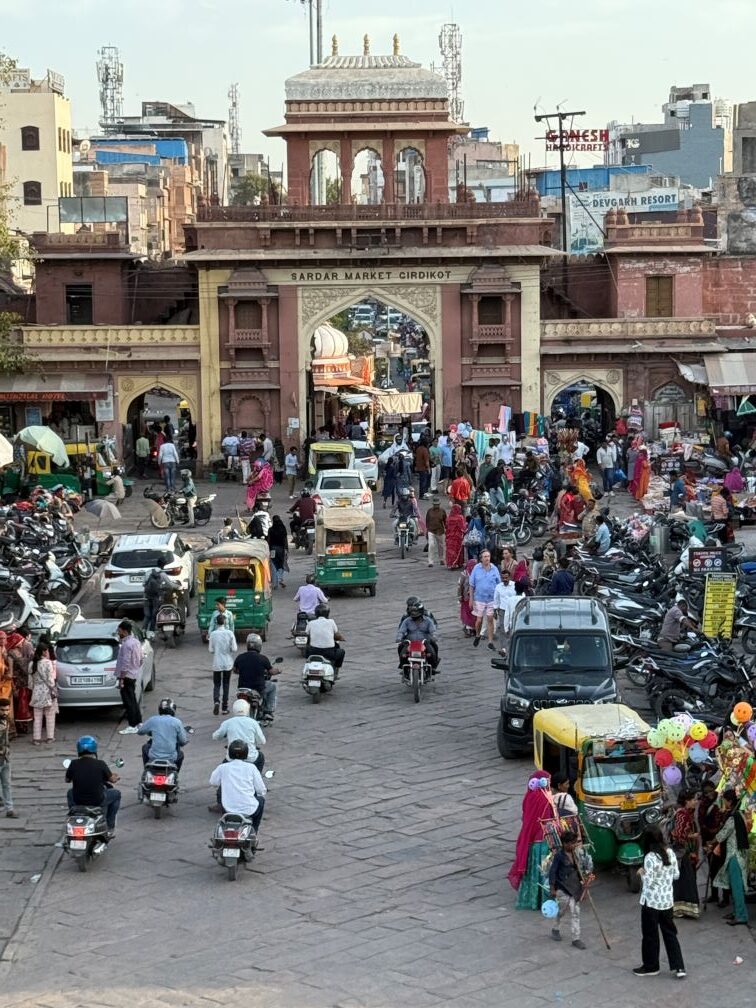
Ghantaghar, sometimes referred to as the ‘Clock Tower of Rajasthan,’ was commissioned in the 19th century by Maharaja Sardar Singh to employ Jodhpur’s poorest population. Today, it stands as a prominent landmark situated in the heart of the ancient Sardar Market. We were only allowed to climb to the third floor, but it still offered excellent photo opportunities with wonderful panoramic views of the blue city, including the old market gates and the busy street market below.
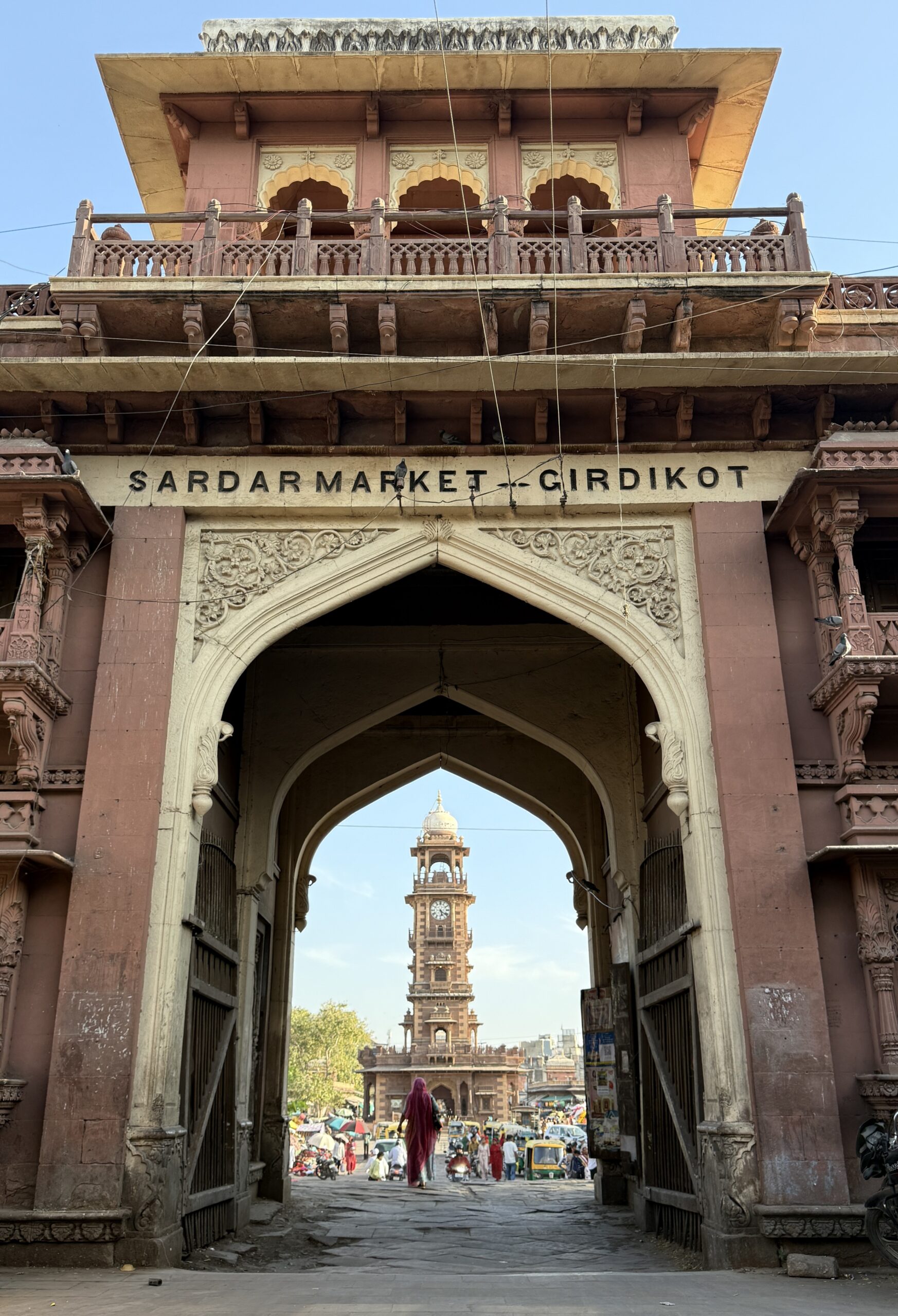
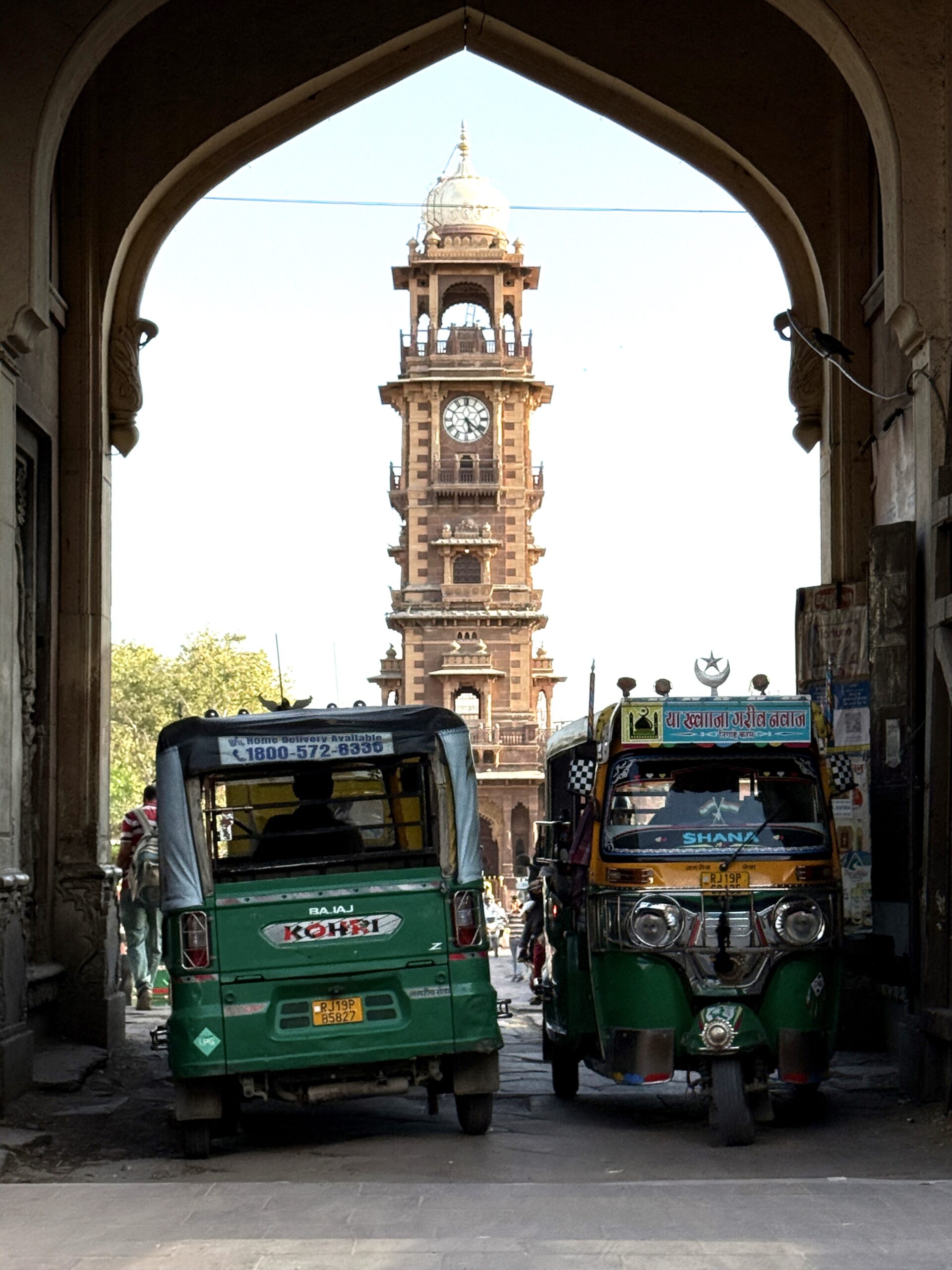
Walking around the open-air Sardar Market was pure joy. It had the usual goods for sale, such as leather products, textiles, and jewellery; however, it was the line of local fruit and vegetable sellers sitting on the pavements that caught our eye. Without stalls or chairs, these sellers laid out their decorative produce on colourful cloths, taking great pride in how they presented their goods. For us, sitting outside one of the many teashops with a sugar-free chai in one hand and a veggie samosa in the other, surrounded by the market’s vibrant colours and cows roaming the streets while listening to chattering traders, was the perfect place to watch people go about their daily business.
Mesmerised at the Symmetrical Toorji Ka Jahlra
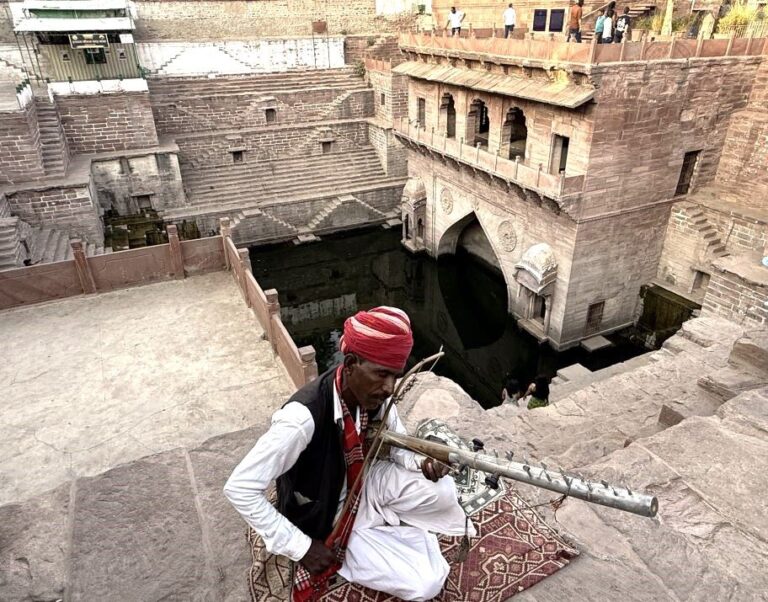
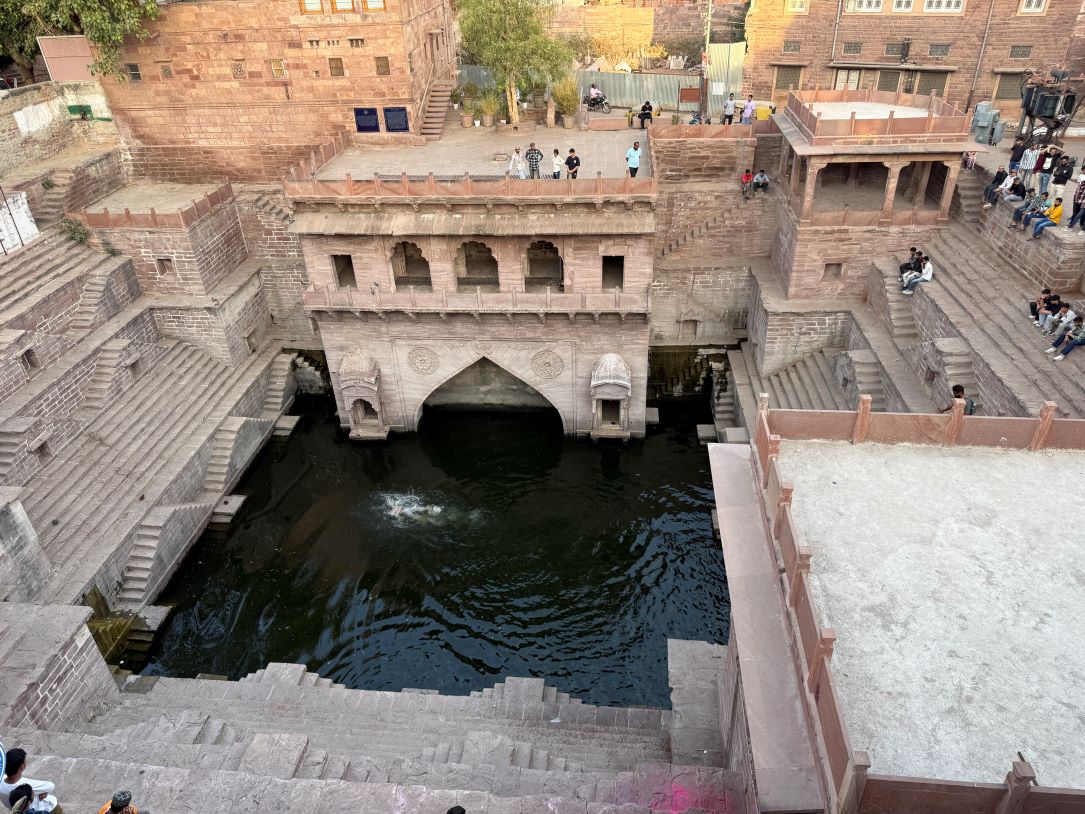
The ancient stepwell of Toorji Ka Jhalra, also known as Stepwell Square, is located in the heart of Jodhpur. It was constructed in the early 1740s by the queen consort of Maharaja Abhay Singh to help manage the city’s water supply. Only recently renovated, it revealed beautiful symmetrical staircases leading down to the well, with a depth of over 200 feet, engraved with carvings of dancing elephants, medieval lions and cows, and niches that hold sculptures of deities revered in those times. All were built with simple tools, by hand and a lot of hard work. Admiring the structure was one thing, but watching the spectacle of locals jumping from the tops of the surrounding structures into the dark pool of water at the bottom of the stepwell was something we could not take our eyes off.
Explored the abandoned Mandore Gardens
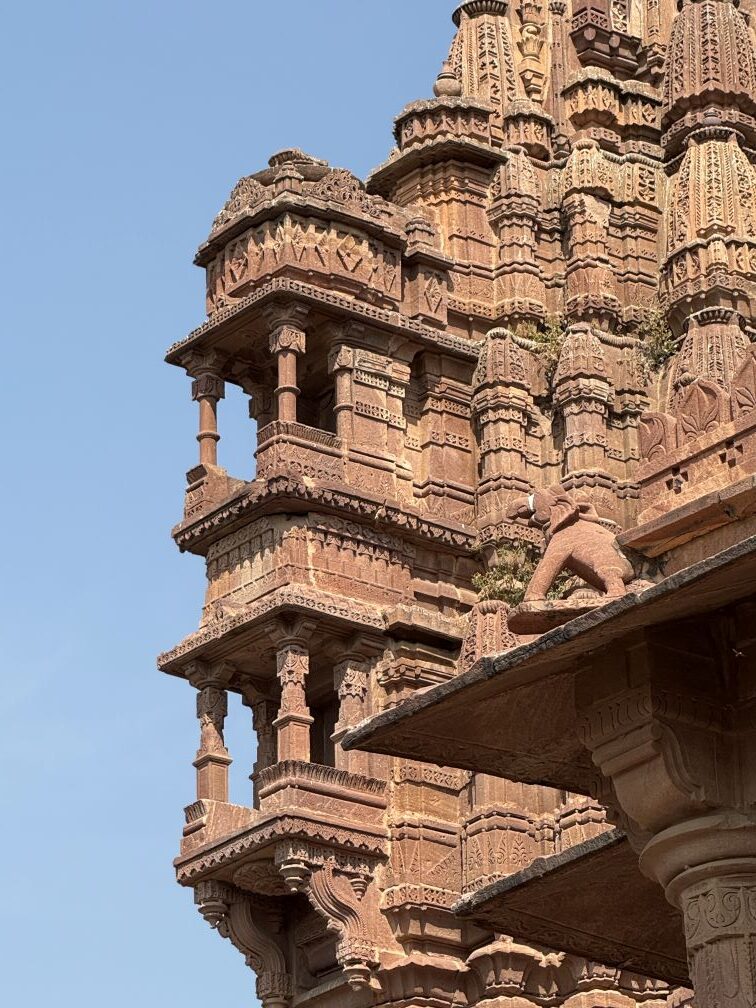
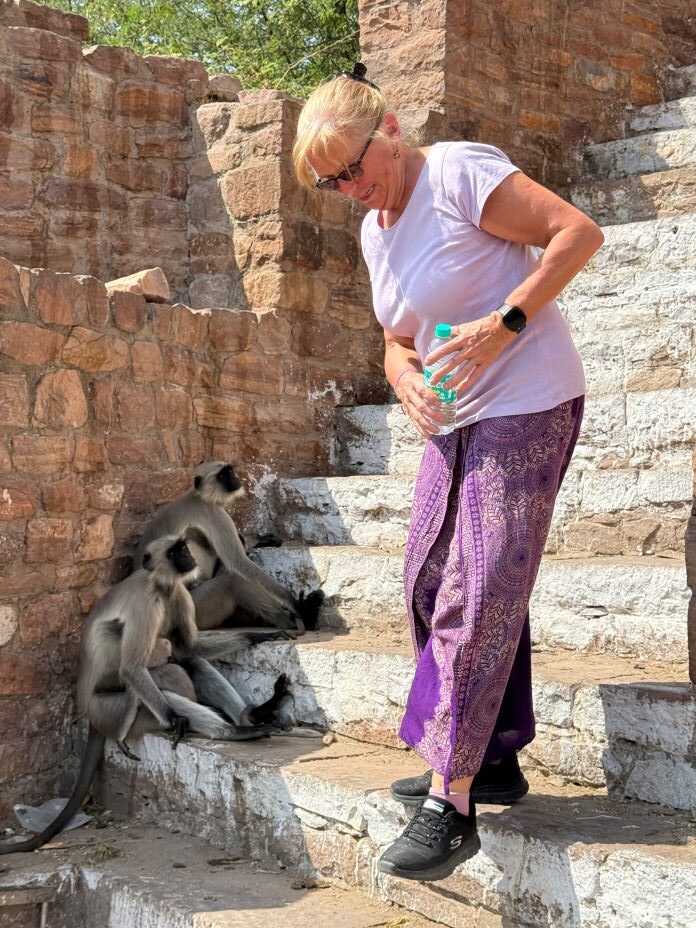
This place was intriguingly special. Only a few kilometres from the city centre and surprisingly, free to enter. Mandore used to be the ancient capital of the Jodhpur kings but was left behind when the rulers moved to Mehrangarh Fort. Nowadays, the area is filled with lush, well-kept gardens along winding paths, remarkable, decorative sculptured temples, a few hawkers, and plenty of mischievous monkeys. Although there is a museum, we chose not to enter it. Instead, we walked around the old fort walls and enjoyed incredible scenery, where the hilly, barren landscape seemed to stretch on forever. With only a couple of other tourists around the complex, we had the place largely to ourselves.
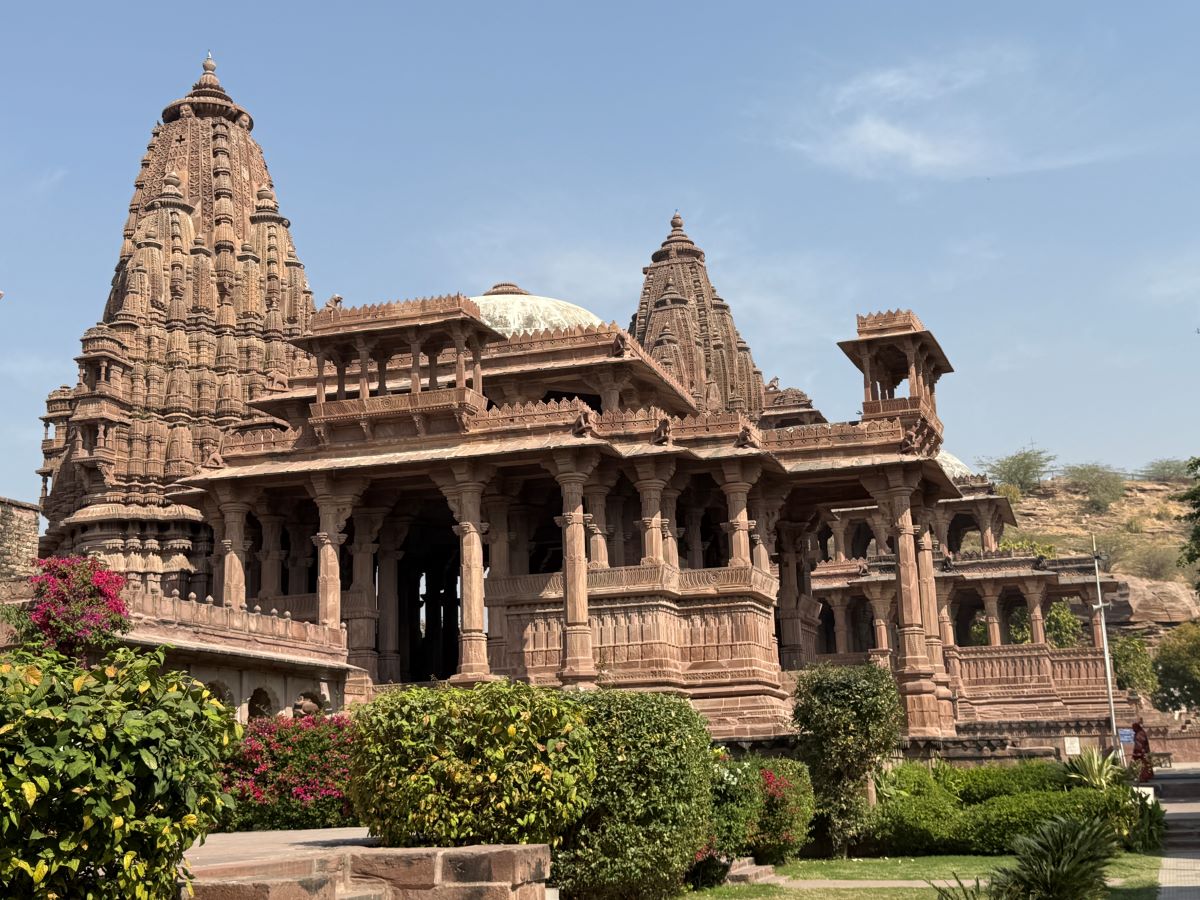
We also witnessed part of a marriage ceremony outside one of the functioning temples. Being open-minded and respectful towards different cultures and traditions, we found it difficult to accept seeing the groom lead his bride, one metre apart, whilst he held straps tied around her wrists, encircling a small shrine outside the temple multiple times. Standing proudly, the groom watched down towards his bride as she danced and chanted around his feet. Although they both seemed very happy, the image was quite unsettling, which led us for the next hour into a deep conversation about equality within marriage, including the delicate subject of housework chores!
If we had more time, we would have explored the following places and activities:
- Rao Jodha Desert Rock Park (next door to the fort and en route towards Jaswant Thada, a place to walk around the desert rocks with good landscape views).
- Maa Jwalamukhi Devi Temple (a photogenic temple, ideal with a backdrop of the fort at sunset).
- Pachetia Hill (a few minutes from Maa Jwalamukhi Devi Temple, another sunset viewpoint offering excellent views over the densely populated area of buildings painted in varied shades of blue).
Accommodation in Jodhpur
We decided to stay in the Old City, close to the stepwell and clock tower, with a rooftop view of the fort. This area was also an easy walk to the narrow alleyways at the foot of the fort, adorned with colourful murals. We could have opted for the exceptional 5-star Umaid Bhawan Palace, which offers classic luxuries with a very slim chance of encountering Gaj Singh II, the last surviving member of the Rathore clan who resides in one of the hotel wings as he manages the affairs of his ancestral home, the fort itself.
There are a couple of hostels, Zostel and The Hosteller, but they never seemed to have any availability when searching online! Instead, we stayed at the lovely mid-range Dev Kothi – Boutique Heritage Stay. We enjoyed a gorgeous room beautifully decorated in traditional amber colours, wooden furnishings, flowered murals and lovely ornaments. It also provided that amazing view of the fort we craved for and served a delicious breakfast on the terrace.
Eating in Jodhpur
Jodhpur offers a wealth of rooftop cafés and restaurants to choose from! During our two full days there, we had dinner at our accommodation, which was delicious and featured the most amazing rice and sauce dishes prepared to cater to the varied palates of each guest. We also visited the famous Omelette Shop next to the clock tower, along with several cafés around the stepwell that offered local cuisine, Pan-Asian dishes, and European fare.
Travellingterry Jodhpur Tips
- The maze-like Old City is best explored on foot, as autorickshaws may struggle to go beyond the nearest main road to the attractions and accommodations.
- It’s possible to grab a cool drink and food from the many rooftop cafes located around the stepwell, which also provide great views.
- The audio guide at the Mehrangarh Fort is included in the price of the entrance ticket and is a great addition to the experience.
- One of the best exchange rates we found in India was located just inside Mehrangarh, where money can be exchanged for cash.
- Spend time an hour or two in Amber town – the stepwell is one of the best in the country.
- Useful websites we used were the Heritage Monuments of India, which gave us discounts when buying online tickets, and Jodhpur tourism and Tripcrafters for some ideas of what to do in Jodhpur if the stay is extended to more than a couple of days.
- We booked our train tickets in advance using IRCTC, although many other travellers also recommended 12Go
Onward Travel: Train from Jodhpur to Jaipur (AC Chair Car)
Compared to the Executive Chair we booked from Amritsar to Delhi, the AC Chair Car seat was less impressive. Although classified as first class, it felt like a downgrade from our previous experience. However, it was still a comfortable journey, with a padded reclining seat, equipped with USB ports and a pull-down table, and the carriage and toilets were clean. Meals, snacks, and beverages were available for purchase but were not included in the ticket price. Overall, it was a pleasant 5-hour journey, arriving in Jaipur just 5 minutes late.
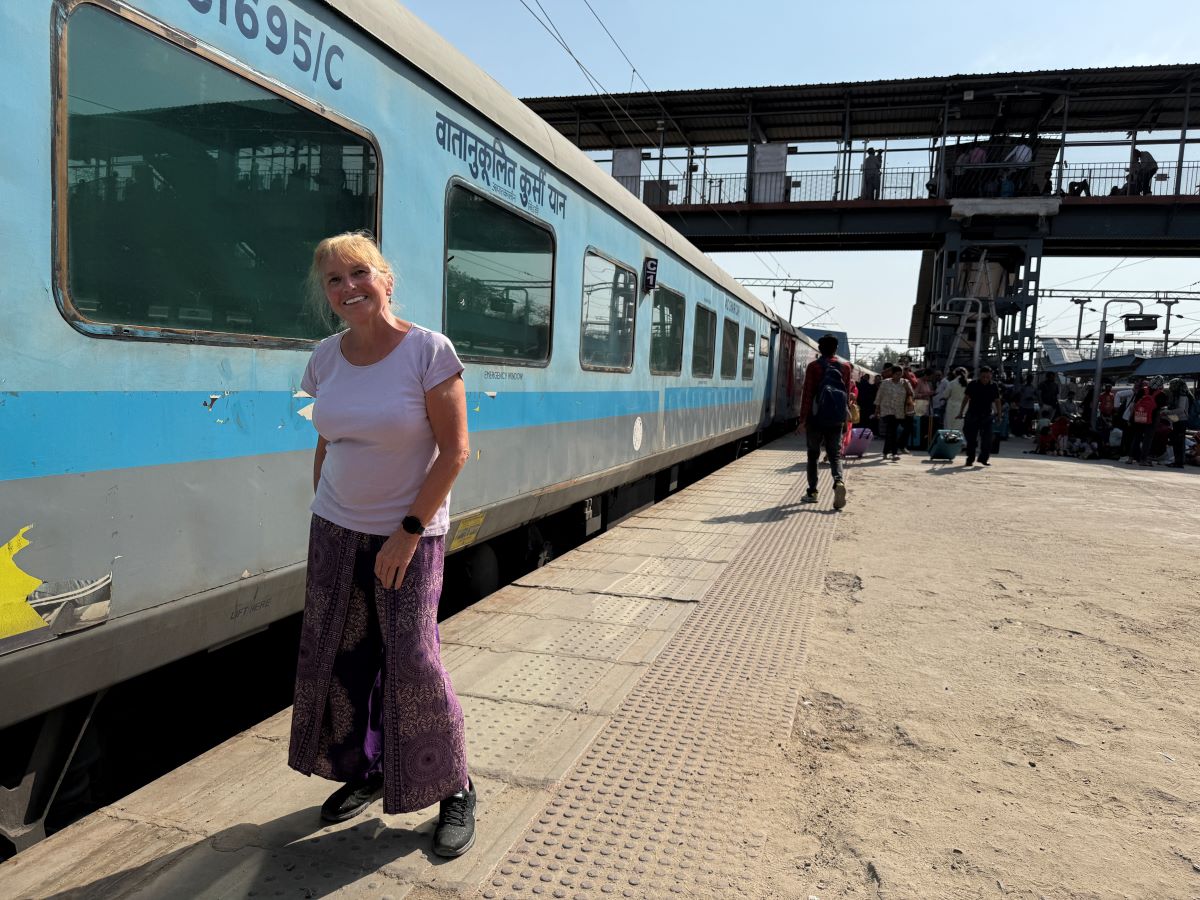
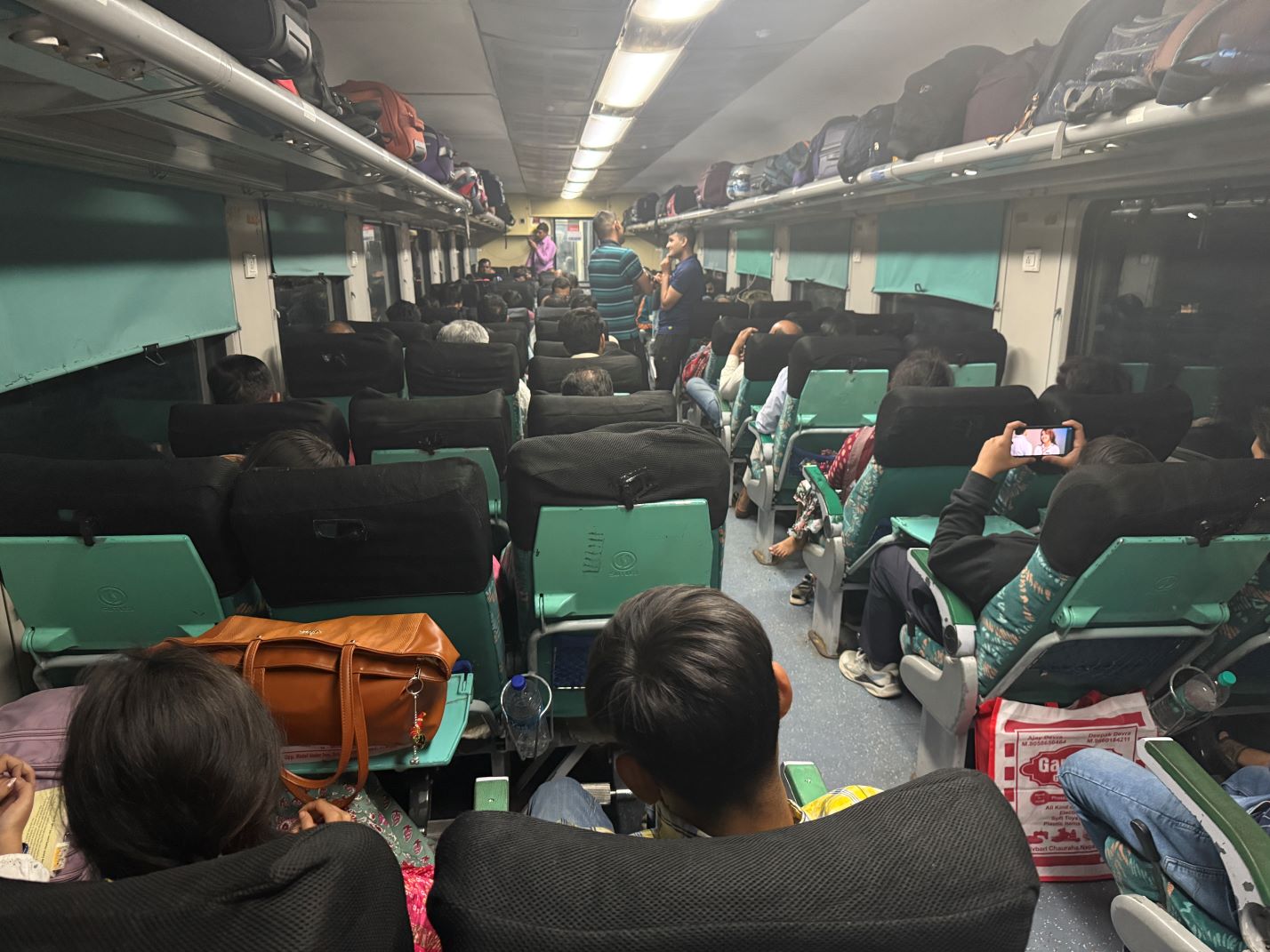
The experience at Jaipur’s train station was quite different. Arriving around 10 PM was not ideal, especially with hundreds of rickshaw drivers vying for our attention as soon as we stepped off the train. To find some breathing room, we politely declined their offers and attempted to walk along the road parallel to the station. However, with no pavement or street lights, just dark, muddy paths, we did not get very far. Eventually, we opted for a very friendly rickshaw driver who charged us three times the usual price. Although, to be fair, it was still cheaper than a local bus ticket in London!