Our trip to India would have been incomplete without a visit to Jaipur, the capital city of Rajasthan. The Old City of Jaipur is undoubtedly bustling, with crowded streets filled with iconic wonders: historic forts, colourful temples, impressive palaces, ancient stepwells, vibrant bazaars, and delicious food. However, one aspect that was far from appealing was the distances that needed to be travelled between attractions. Terry recalled from his previous visits to Jaipur in 1992 and 2005 that walking even manageable distances was challenging. The Pavements were, and still are, shabby with overwhelming traffic fumes, and crossing the roads was sometimes more a matter of luck than being safe!
Historically, Jaipur was founded by Jai Singh II, who ruled nearby Amber, located 11 km from Jaipur. He sought a new capital that could better accommodate the growing population and ensure a more stable water supply. Thus, he designed Jaipur as the first planned city in India, featuring a grid-like structure and flat terrain that improved accessibility for trade and commerce compared to the mountainous Amber. Later, Jaipur earned its nickname, “The Pink City,” when Maharaja Sawai Ram Singh painted the city pink in 1876 to welcome Prince Albert, later crowned King Edward VII. At the time, pink was seen as the colour of hospitality in India, and this gesture was meant to demonstrate the city’s warm welcome to the royal visitor.
Our Jaipur Highlights
Including the old town, Jaipur is large and chaotic, making it challenging to pack everything into our 4-day visit, especially since our second day coincided with Holi – an unforgettable experience of its own. Another challenge was finding a ‘space’ within the city for respite, away from the constant tuk-tuk horns, persistent souvenir vendors, and what seemed like millions of vehicles navigating the main roads. Despite this, our first attraction was located outside the city, leading us straight to a spectacular fort.
Astonished at Amber Fort
The imposing Amber Fort, a UNESCO World Heritage Site, stands as Jaipur’s jewel and is one of the best attractions in India. Unfortunately, our timing for the visit was not ideal. We arrived during the sweltering midday sun and found ourselves among thousands of tour groups. It would have been better to visit early in the morning, but with Holi the next day, we were unsure which sites would be open, so we decided to visit the City Palace, Hawa Mahal, and Amber Fort all in one day. In retrospect, this was perhaps too much to handle in a single day, and needless to say, it was a very early night for us!
After negotiating a return trip by tuk-tuk and enduring a two-hour wait, we finally arrived just outside the small town of Amber, about 15 km from central Jaipur. We then walked the 10-minute steep zig-zag path to the entrance of the fort (Suraj Pol), where the views over Amber Town and the surrounding hills, as well as Maota Lake at the foot of the fort and the terraced Saffron Garden in the centre, were stunning.
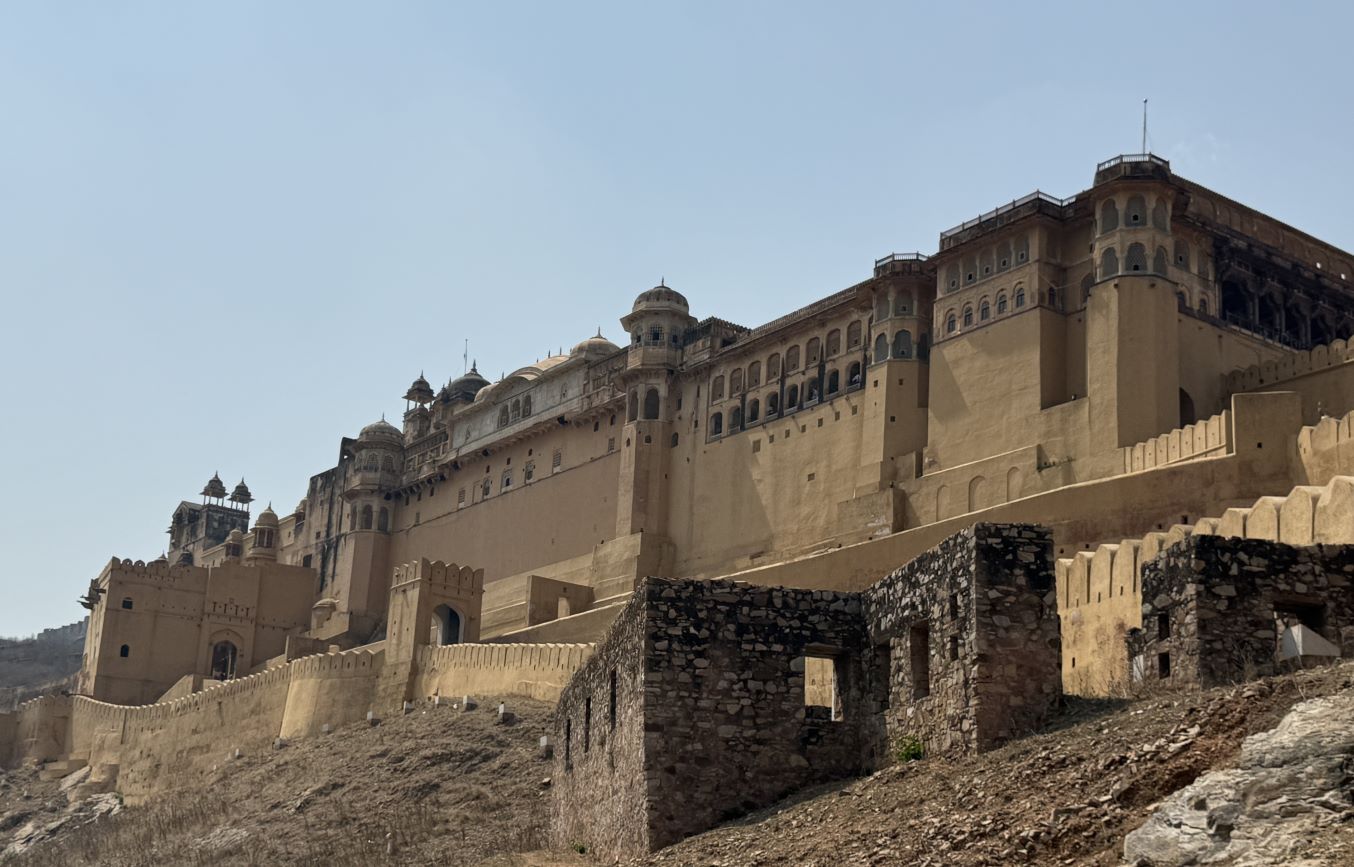
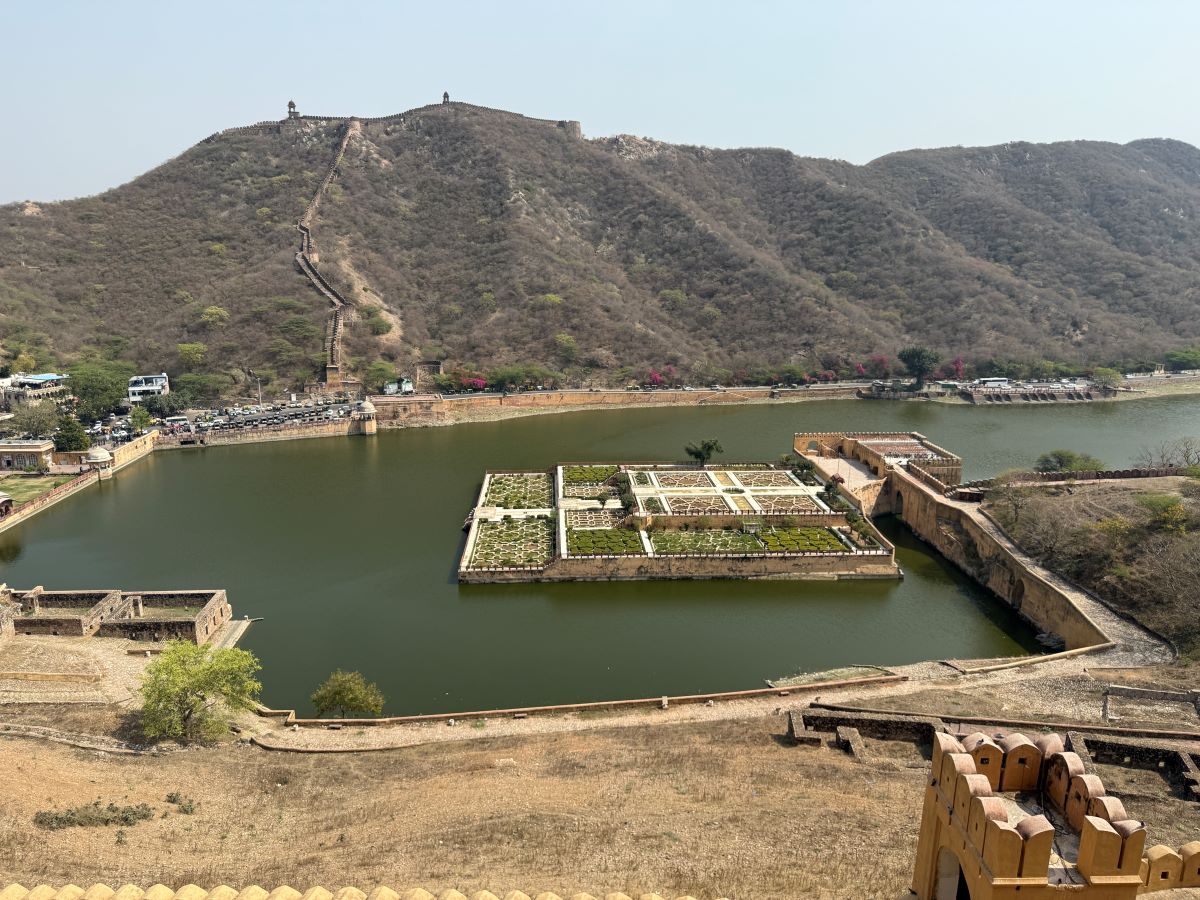
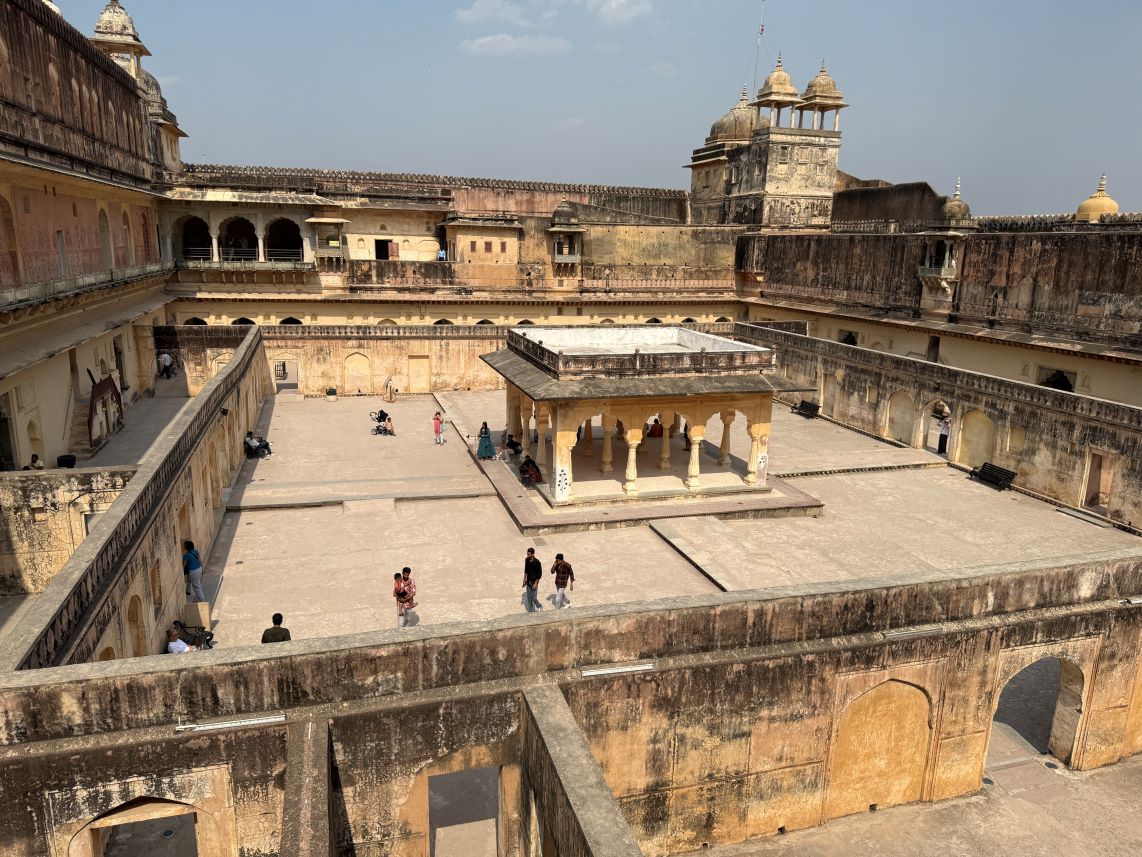
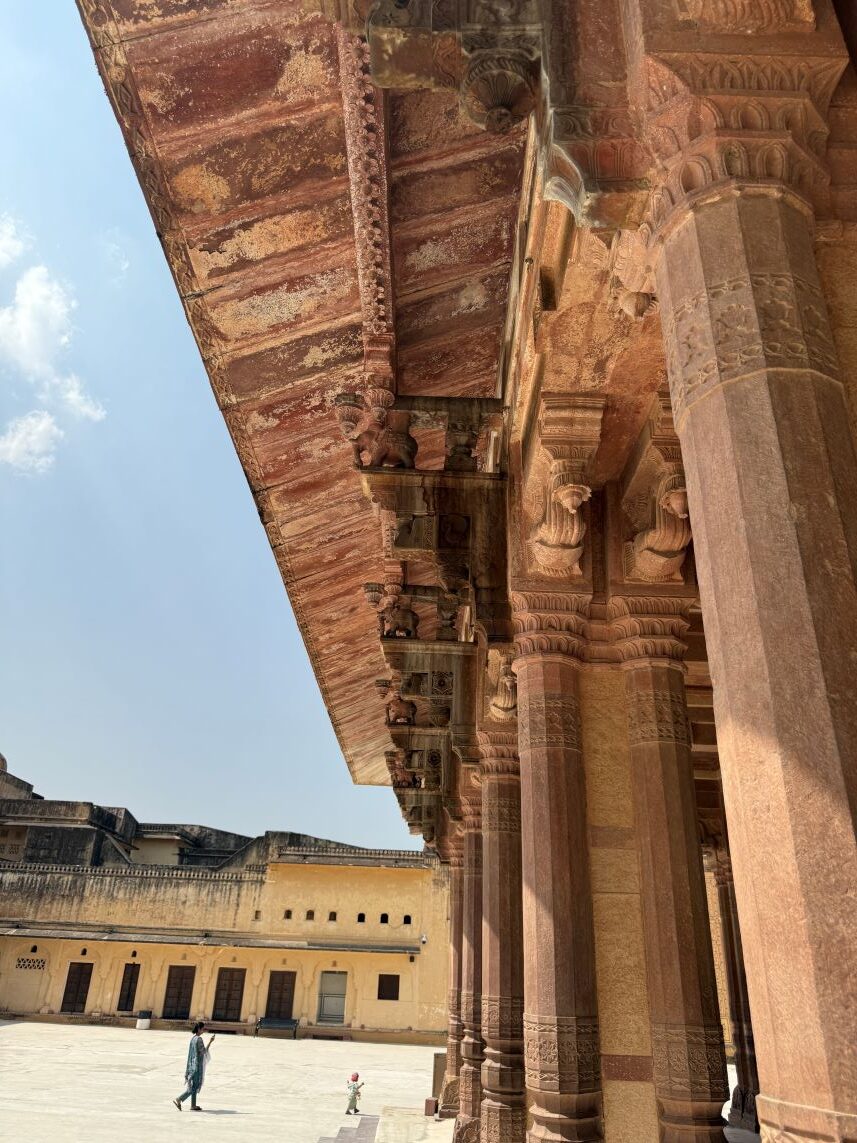
Once inside the fort, we discovered many places to explore, including underground tunnels, temples, and Diwans. Guides and audio guides were available, but the inscriptions along the way were sufficient to keep us informed of the when, what, who, etc. Like the forts in Jodhpur and Delhi, Amber Fort is rich in history and architectural beauty. However, unlike these other forts, Amber is a delight to explore, with hidden alleyways, maze-like passages, and secret rooms, each holding interesting stories in every nook and cranny.
Explored the City Palace
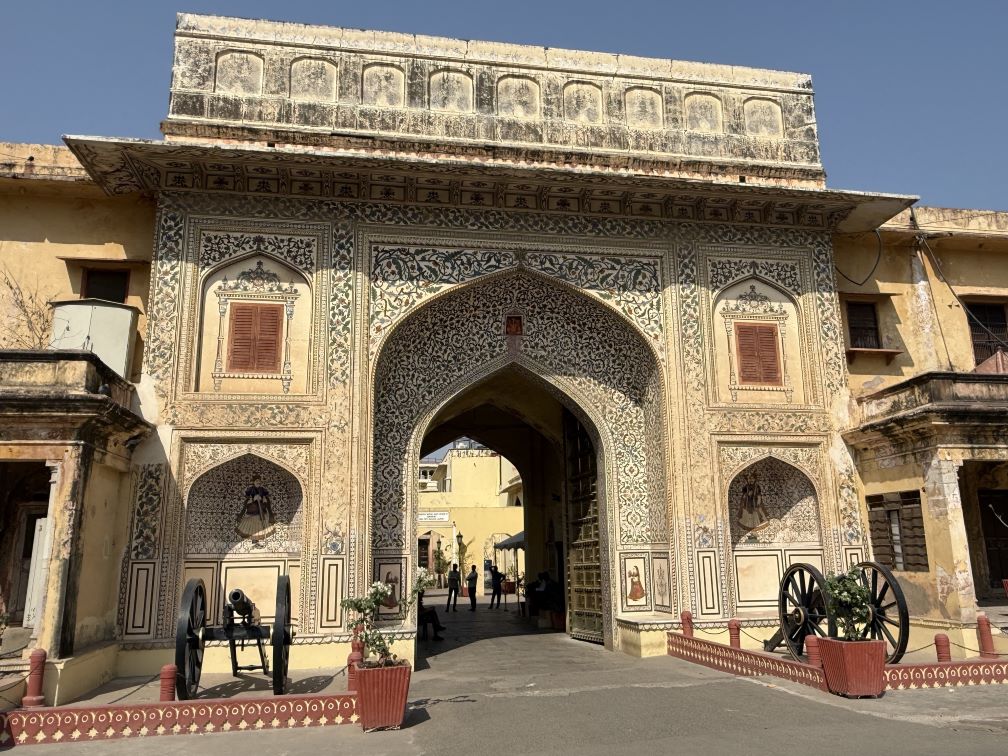
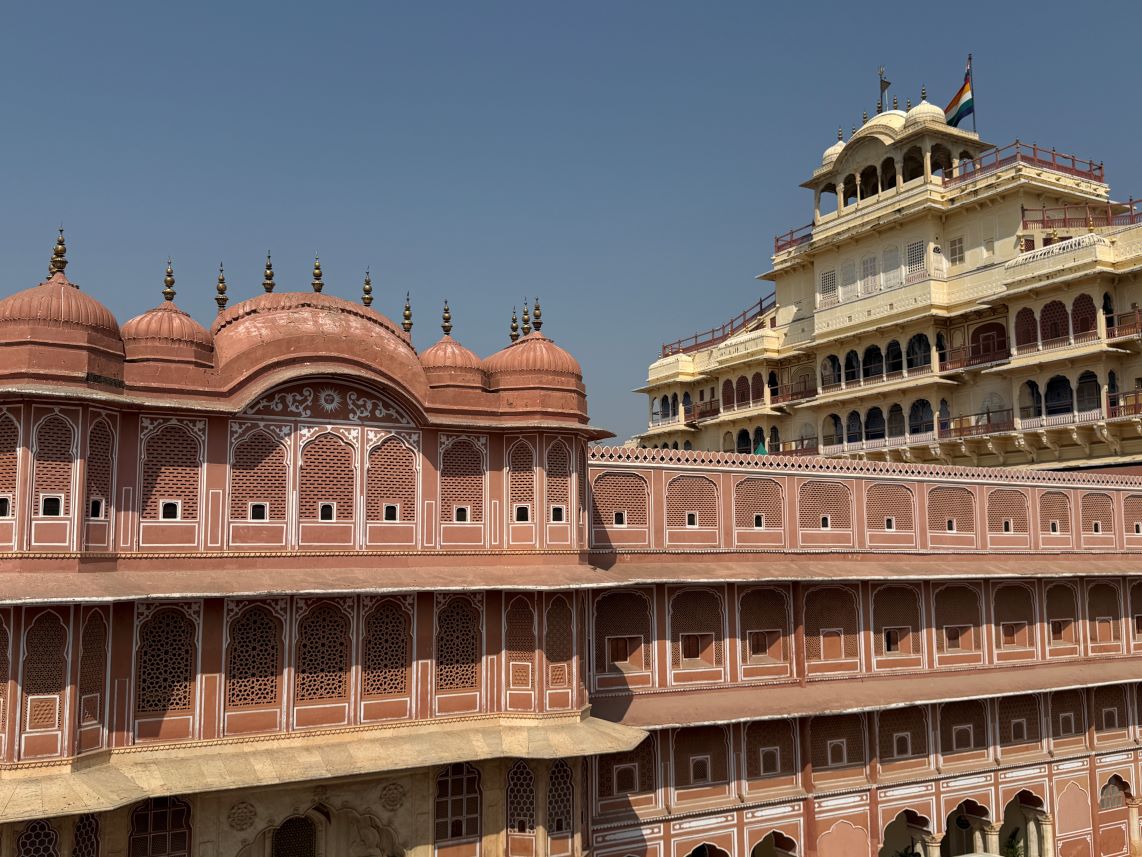
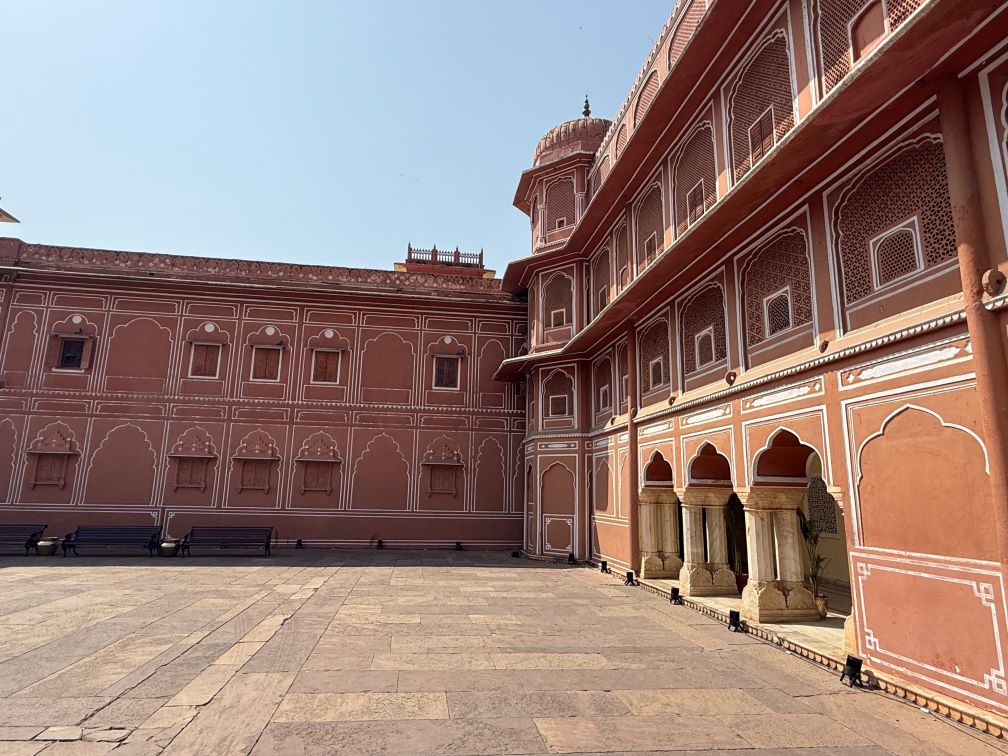
The City Palace is a ‘must-see’ attraction in Jaipur and one of India’s main highlights. Commissioned by Maharaja Sawai Jai Singh II, the City Palace showcases a blend of Mughal and Rajput architecture which served as home for the many maharajas of Jaipur. The complex comprised spacious courtyards, decorative pavilions, beautiful gardens, intricately carved temples, and several other buildings converted into galleries and interesting themed exhibitions. We spent a few hours marvelling at the opulent interiors and the extensive collection of royal heirlooms. Our favourite parts of the palace included:
- Mubarak Mahal – Initially built in the 19th century as a reception hall, this area has been transformed into a museum showcasing an exquisite collection of garments worn by the royal family, including robes, shawls, and ceremonial outfits.
- Diwan-I-Khas (Hall of Private Audience) – This marble-paved pavilion is where the maharajas would have met with their ministers. Decorated with intricate floral motifs in white and pink sandstone, this hall holds the Guinness World Record for the largest silver vessels in the world. These massive urns were used to transport holy water from the Ganges for Sawai Madho Singh II, who insisted on drinking only the sacred water while travelling in England.
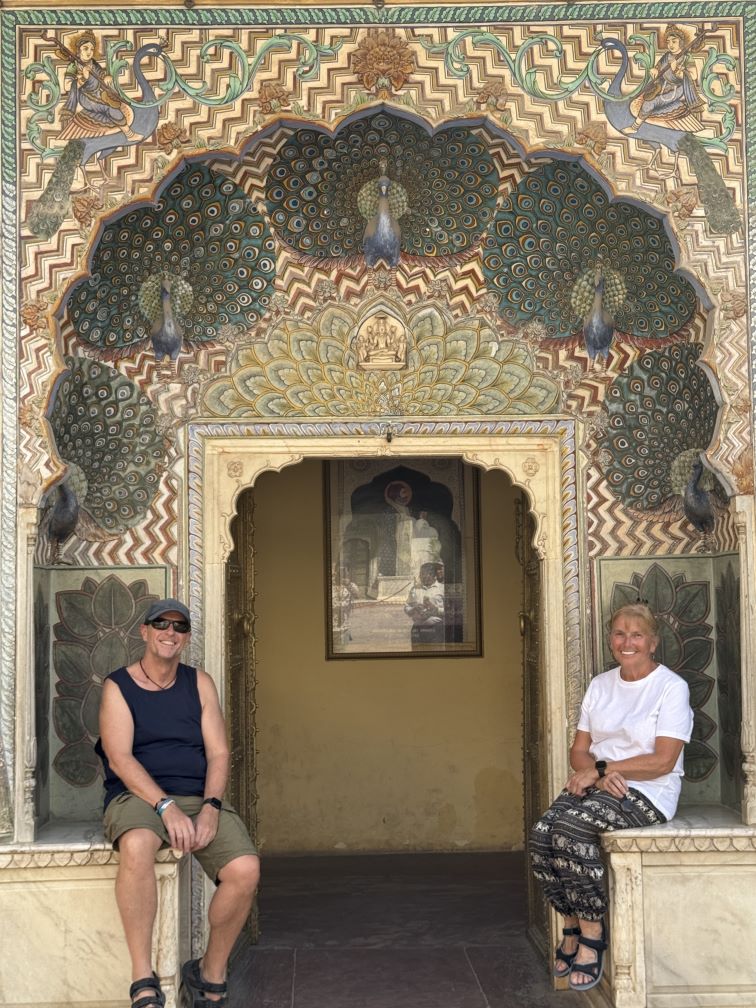
- Pritam Niwas Chowk – We found this inner courtyard to be the most beautiful part of the palace. It featured four exquisitely carved gates, each representing a different season and dedicated to a specific Hindu deity: the Lotus Gate (Summer, devoted to Lord Shiva), Leheriya Gate (Spring, devoted to Lord Ganesh), Rose Gate (Winter, devoted to Goddess Devi), and our favourite, Peacock Gate (Autumn, devoted to Lord Vishnu).
- Chandra Mahal – Where the current royal family resides, consisting of seven floors, showcasing lavishly adorned halls filled with emerald and gold-coloured stones. Unfortunately, we had to skip this part due to renovations and preparations for Holi, although officials were still happy to accept the full entry fee!
Climbed Nahargarh Fort
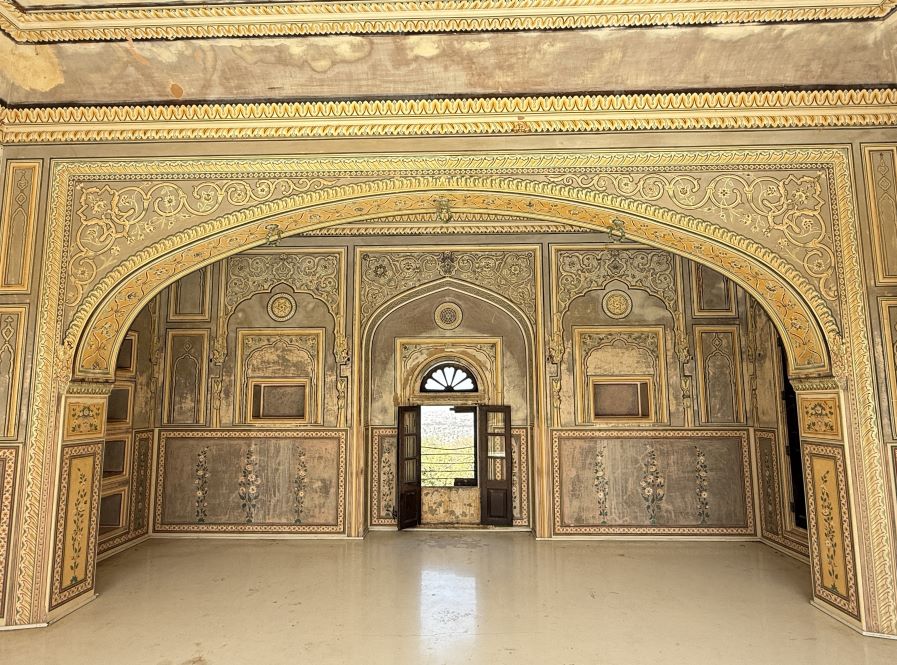
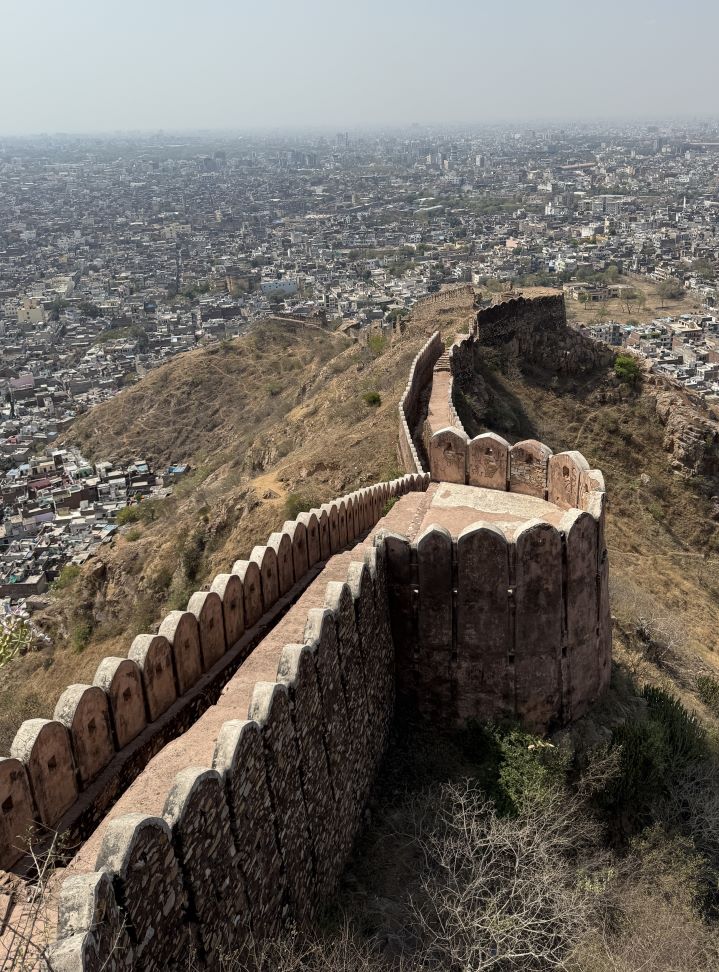
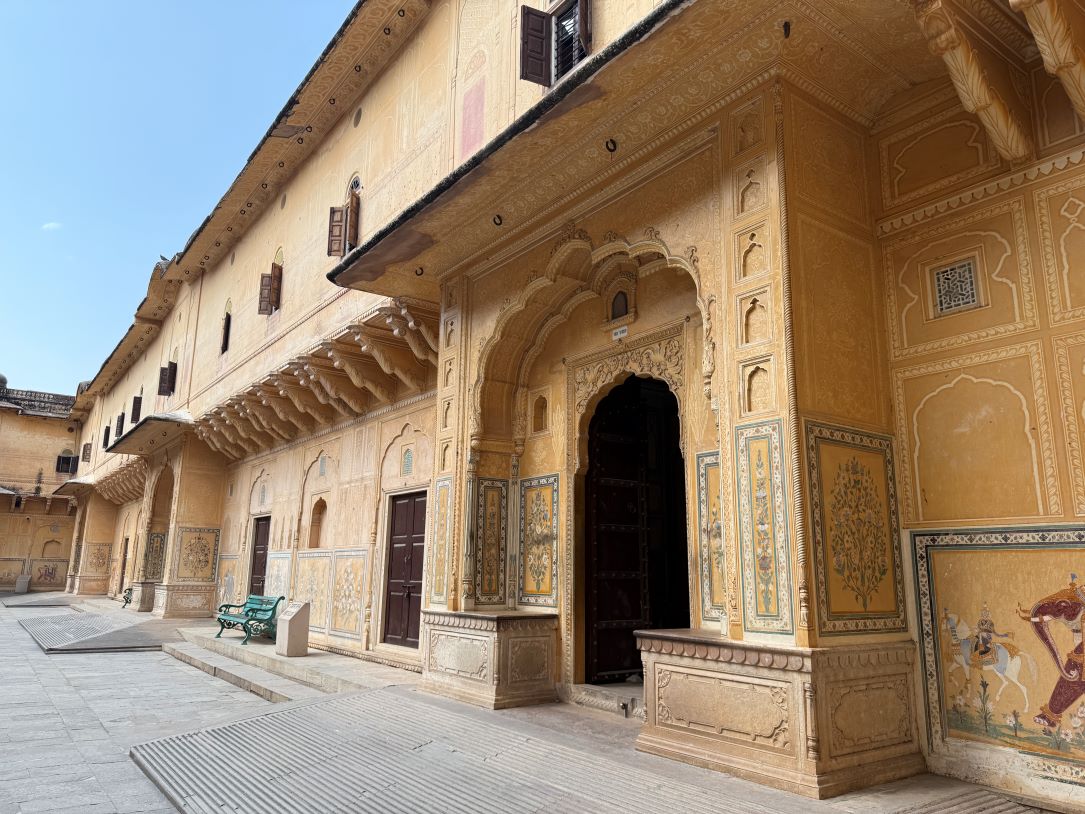
Perched high on the Aravali Hills and visible from many areas of Jaipur, Nahargarh Fort provided stunning views of the city and surrounding hills. Built in 1734, the fort is beautiful, with the original walls (1 km long) still intact. The 19th-century Madhavendra Bhawan palace, located within the fort, featured beautifully carved wooden doors, numerous rooms with mural walls, and a breathtaking rooftop that provided panoramic views. This palace was also used by Madho Singh II, among other purposes, to keep his favourite concubines away from the watchful eyes of his wives!
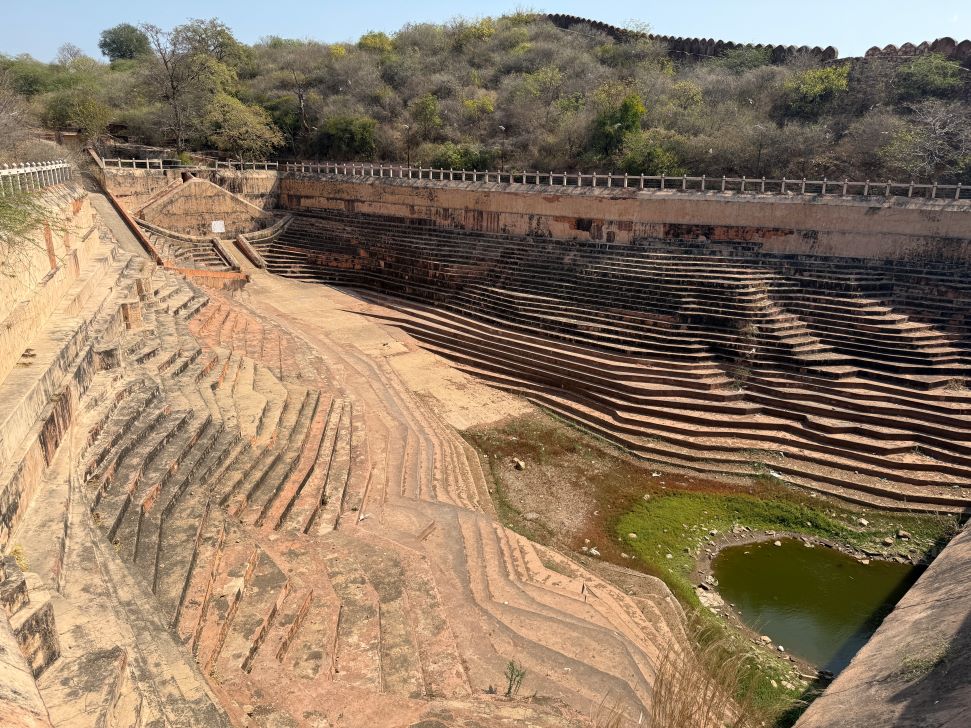
The Nahargraph Stepwell, located at the top of a steep 1.5 km cobbled road, was well worth the climb. A few feet deep, it showcased the architectural beauty and practicality of such structures in its time. The well-gained ‘world’ fame after being featured with a motorcycle stuntman doing crazy stuff in the Bollywood blockbuster movie Rang De Basanti.
Admired Hawa Mahal
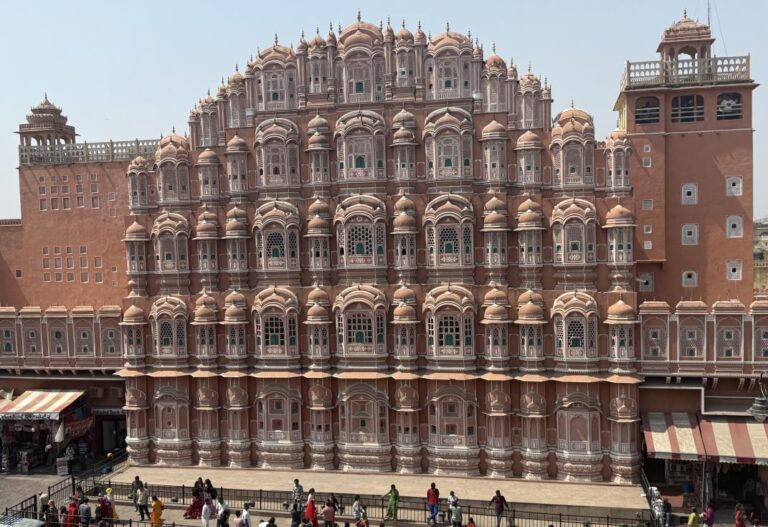
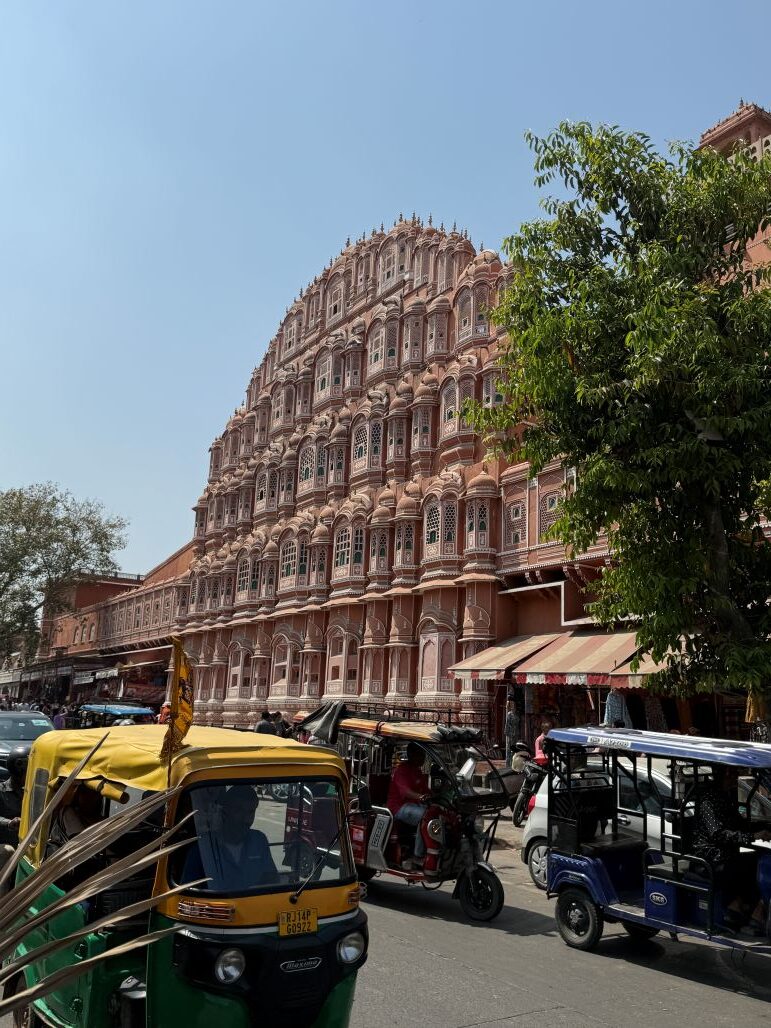
The stunning Hawa Mahal, with its honeycomb facade featuring 953 lattice windows (jharokhas), is one of the most beautiful landmarks in Jaipur, and arguably in all of India. Shaped like Lord Krishna’s crown, it was built in 1799 as an extension of the City Palace. The purpose of this architectural marvel was to allow royal ladies to observe celebrations and activities in the streets without being seen by outsiders. They would slightly open the windows to let in a breeze, which inspired the name “Palace of the Wind.”
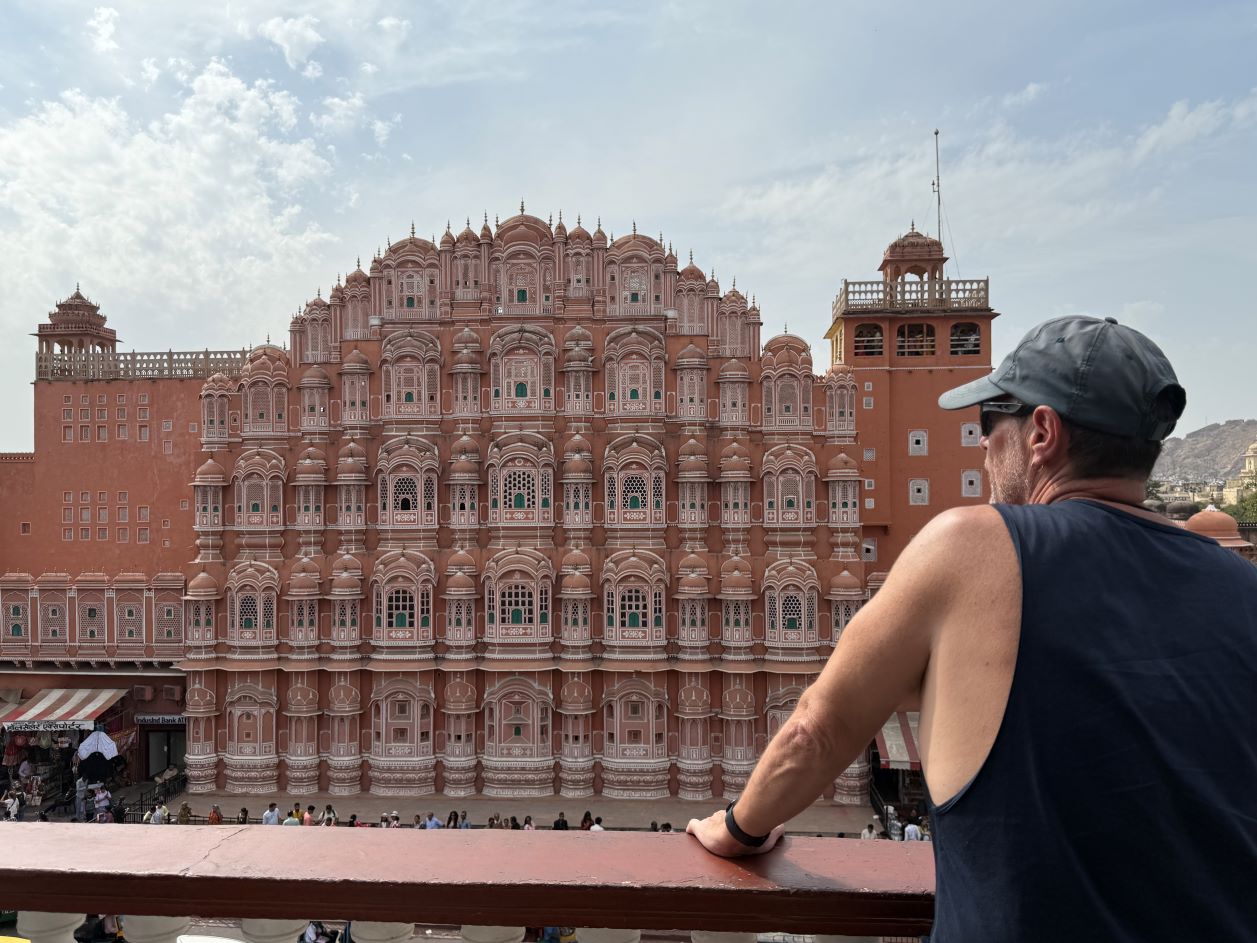
With a blend of Rajput and Mughal architectural styles, Hawa Mahal is also reputed to be the world’s tallest building without a foundation, although there is a slight curve in the structure that provides the stability required to keep it standing for over 300 years. The interior of the palace is supposedly simple and plain as opposed to the gorgeous exterior, but after Amber Fort/Palace and the huge City Palace, we were too knackered to even attempt to find the ticket booth, especially after Lorna finished her shopping spree in Sireh Deori Bazaar directly opposite Hawa Mahal! To be fair, Jaipur is a great place to pick souvenirs, and it’s not all cheap novelty items. It’s easy and fun to find authentic wood carvings, musical instruments, silver jewellery, handmade textiles, and superb cotton and silk clothing at great prices – after a bit of haggling, of course!
Mesmerised at Jal Mahal
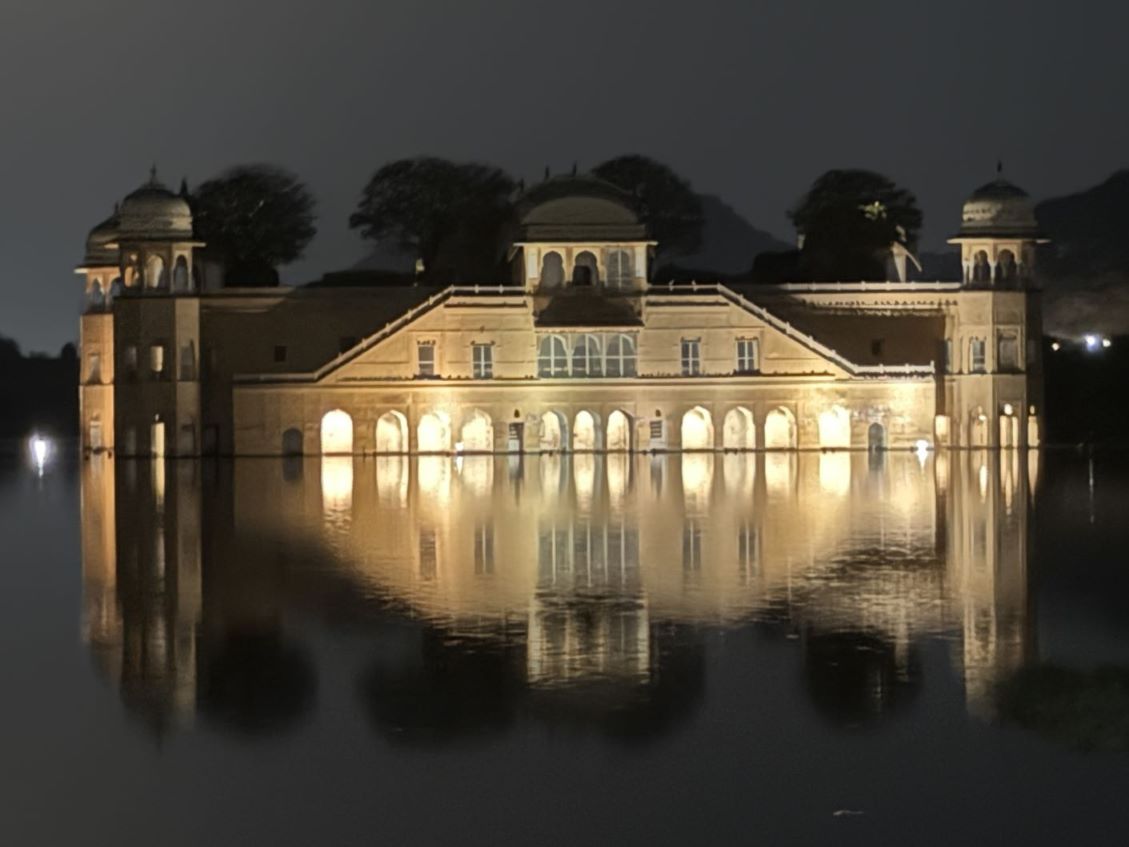
Situated in the centre of Man Sagar Lake, the serene Jal Mahal (Water Palace) looked stunning as it appeared to float on the water. Originally built in the 18th century as a hunting lodge for royalty, four of its five floors are now submerged due to the construction of a nearby dam. The lake resulted from this dam, and to preserve the palace, the pink sandstone walls were coated with a special lime mortar to prevent water from seeping into the structure. From the shore of the lake, we could only see the top floor of the palace. While close-up views are now prohibited, we certainly admired its beauty, especially during the full moon.
Visited Albert Hall Museum
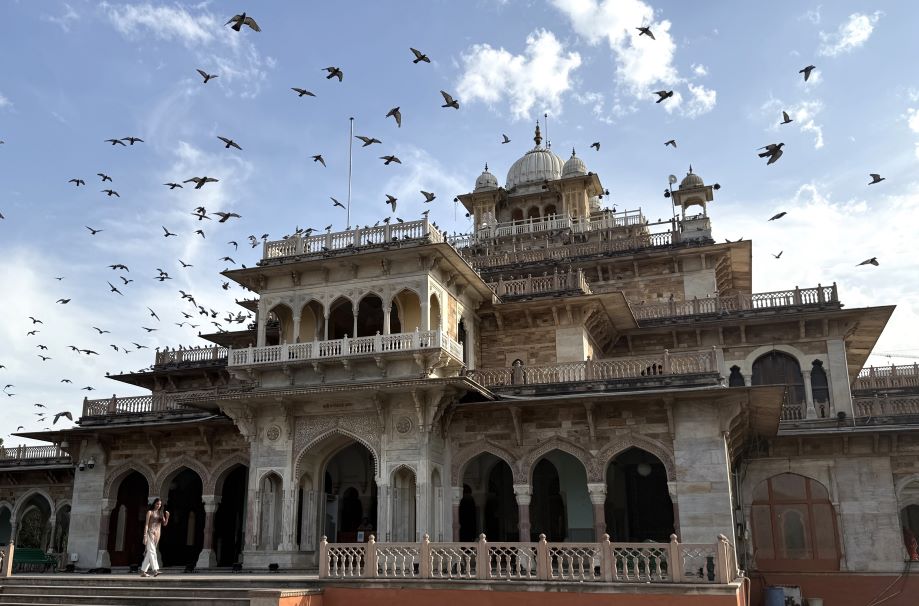
The Albert Hall, now a museum (also known as the Government Central Museum), was built to commemorate the visit of Albert Edward, the Prince of Wales, in 1876. To be honest, we found the architecture of the Albert Hall more fascinating than the collection of exhibits inside. Built in Indo-Saracenic style, the structure incorporated features from various Indian temples, with detailed murals depicting daily life during different empires in the past. If it hadn’t been so late in the day, we might have paid more attention to the vast collections of coins, armour, pottery, and jewellery, although the intricate woodwork and ivory statues did capture our attention – if only for a little while!
Marvelled at Galta Ji Temple (Monkey Temple)
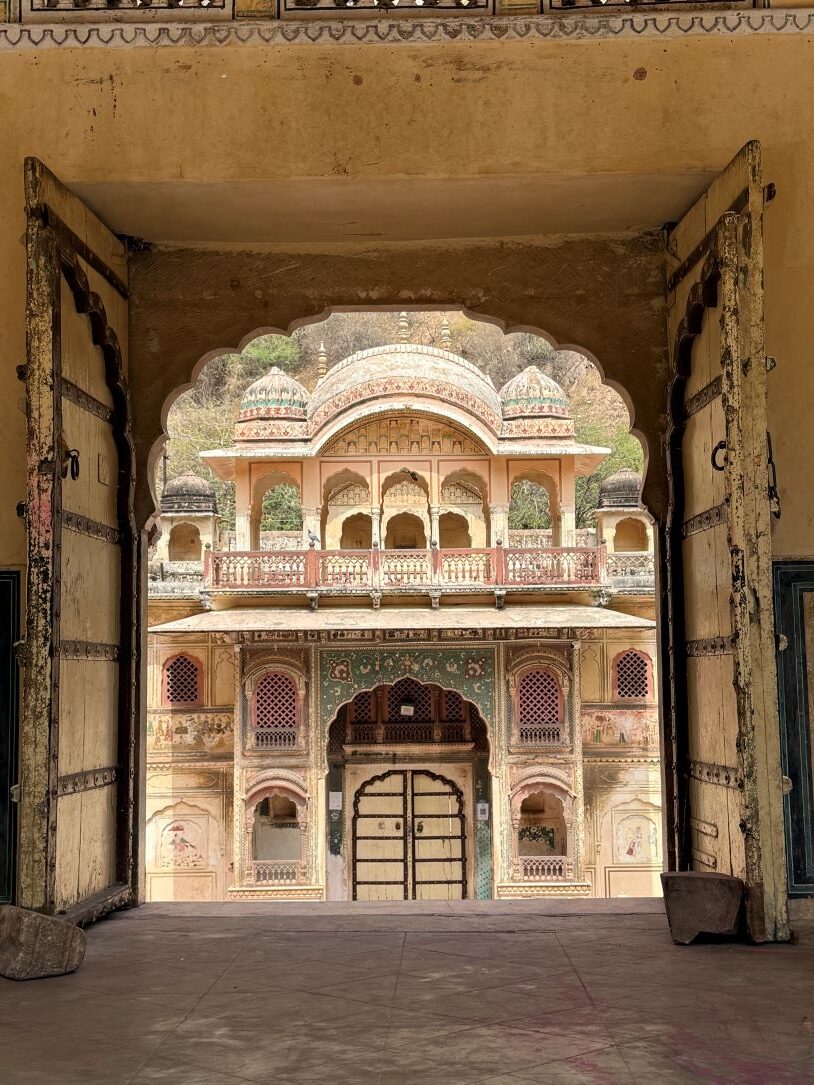
Located just under 11 km from the centre of Jaipur, lies Galta Ji Temple, commonly referred to as the Monkey Temple. It’s dedicated to Hanuman, the Hindu monkey god, making it a significant pilgrimage site for Hindu devotees. Ironically, the temple grounds are also home to hundreds of monkeys that often engage in mischievous antics. The complex consists of a series of temples spread across a hill overlooking the city of Jaipur.
This complex is extremely popular among tourists and devotees alike. We spent at least 3 hours enjoying the scenic landscape and exploring the various temples. Our journey began at Galta Gate as we ascended Monkey Mountain, walking westward and passing a string of temples. We continued over the summit and descended towards Galta Ji Temple and the Hanuman Temple. Along the way, we visited the Sun Temple, which is perched atop a hill, offering a stunning vantage point to take in the beauty of the city below.
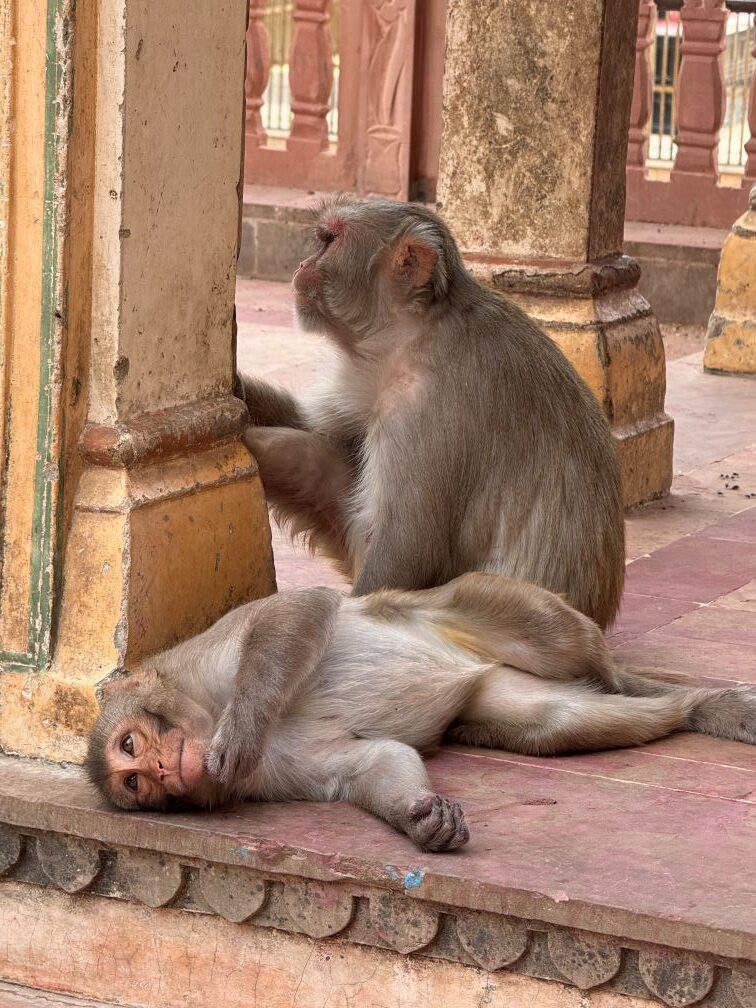
Upon arriving at Galta Ji Temple, we were greeted by monkeys everywhere, with some getting a little too close for comfort. The complex featured seven holy kunds (ponds or water tanks) filled with water from a natural freshwater spring. One of these, Galta Kund, is regarded as the most sacred. Surprisingly, we observed both men and women bathing together, hoping that the water would absolve their sins and lead them to nirvana after death. It was hard to tell how seriously they were approaching this sacred experience, as many appeared to be enjoying themselves a little too much with all sorts of frolicking, giggling and splashing – quite a contrast to the solemnity we witnessed at the banks of Varanasi.
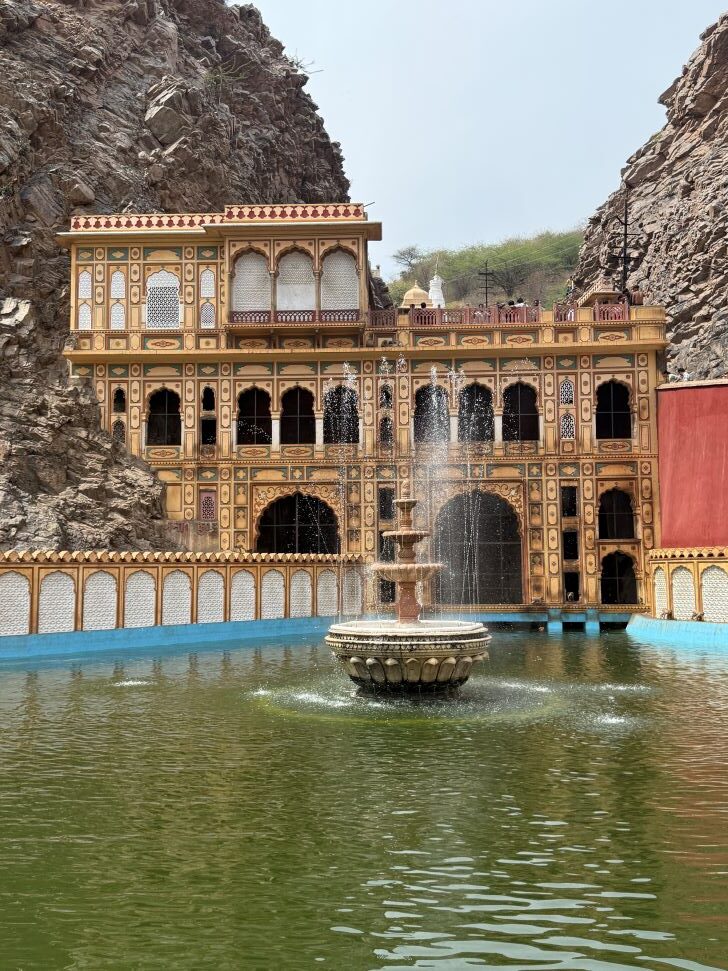
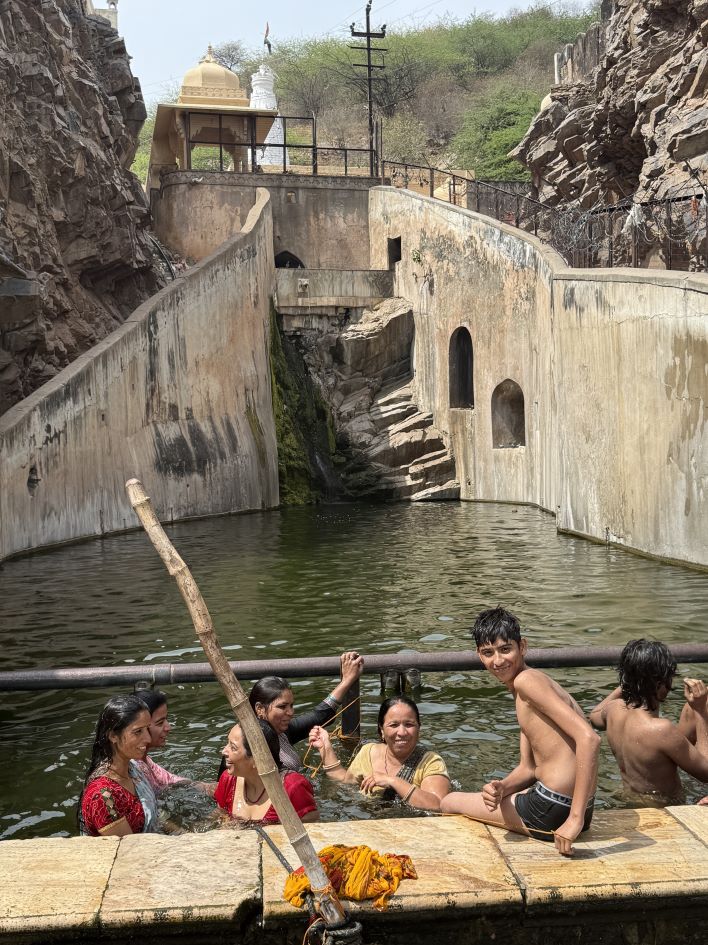
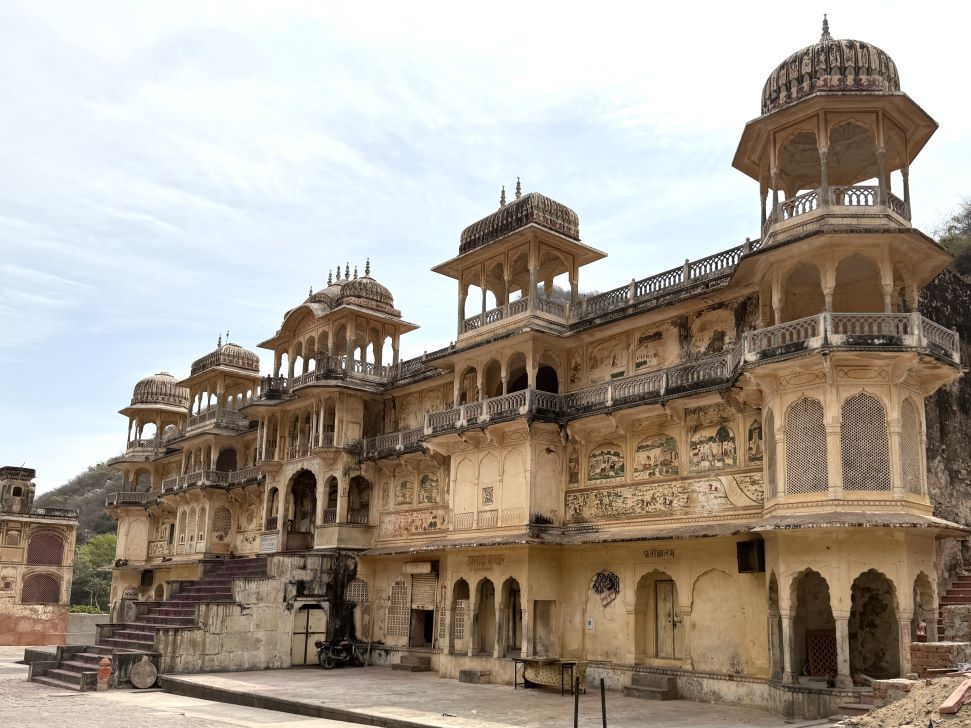
Carved from pink sandstone, the Galta Ji Temple is truly mesmerising, appearing to be enveloped by the surrounding hills and lush vegetation. The walls and ceilings are magnificently adorned with carvings and murals depicting Hindu mythology, making the temple resemble a royal palace more than a place of worship. Further along our path, we encountered the fascinating, antique-looking Shri Gyan Gopalji Temple, with its faded décor and neglected maintenance, which added to the charm of exploring nearby ruins, although the tranquillity was occasionally interrupted by the mischievous monkeys.
Amazed at Amrapali Museum
To be honest, we tend to steer clear of regional museums and art galleries, but the Amrapali Museum is probably one of the best museums we have ever visited – believe us, it’s incredible! It boasts state-of-the-art facilities that showcase beautiful handmade items from around India. The museum was founded by two friends who travelled across India, collecting unique items from various states. Much of the collection consists of jewellery, but there is also an unusual assortment of mukhnaals – gilded objects used as mouthpieces for hookahs, which come in designs ranging from fish to elephants. Also, we saw a pair of mojris, 19th-century shoes, incredibly made of silver and solid gold, encrusted with emeralds and rubies. The excellent and free, guided headsets provided insightful information about the various exhibitions, bringing many items to life.
Other attractions we visited in Jaipur
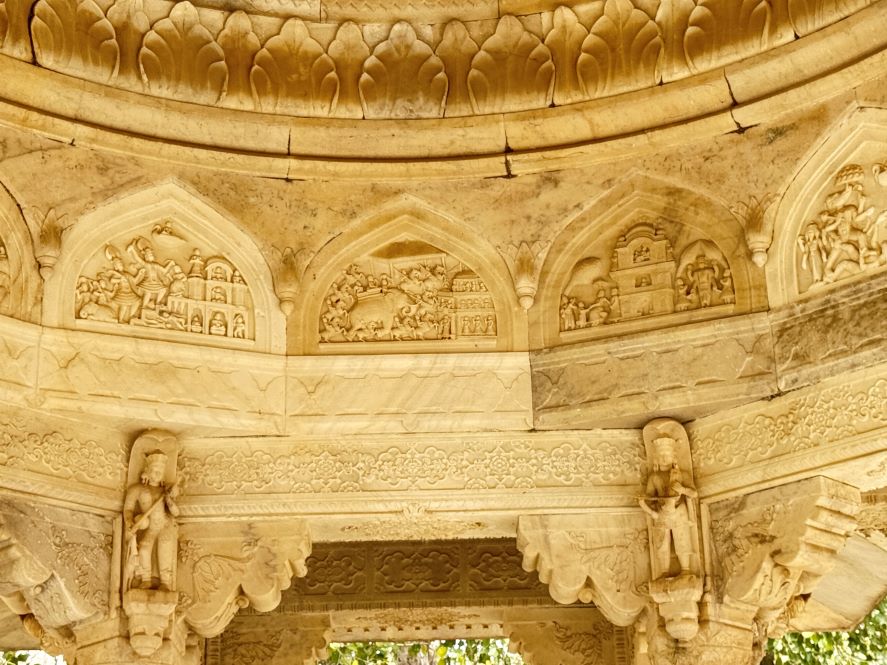
The royal crematorium grounds of Gatore Ki Chhatriyan are utterly beautiful, featuring intricately carved cenotaphs within detailed marble structures. It’s one of Jaipur’s hidden treasures, located in a quiet and peaceful spot just 2 km north of Hawa Mahal. This site provided an ideal respite from the city’s hustle and bustle, and for most of the time, we had the entire place to ourselves. For a real afternoon treat, we enjoyed masala chai at the iconic tea stall, Gulab Ji Chai Wale. Established in 1946, it is renowned for its unique chai made with pure milk, a pinch of masala, and a sprinkle of sugar. The stall is also noted for its kindness, as the founder, Gulab Ji, used to serve free tea and food to around 250 beggars every day, a legacy his grandson continues today.
Enraptured in Holi Celebrations
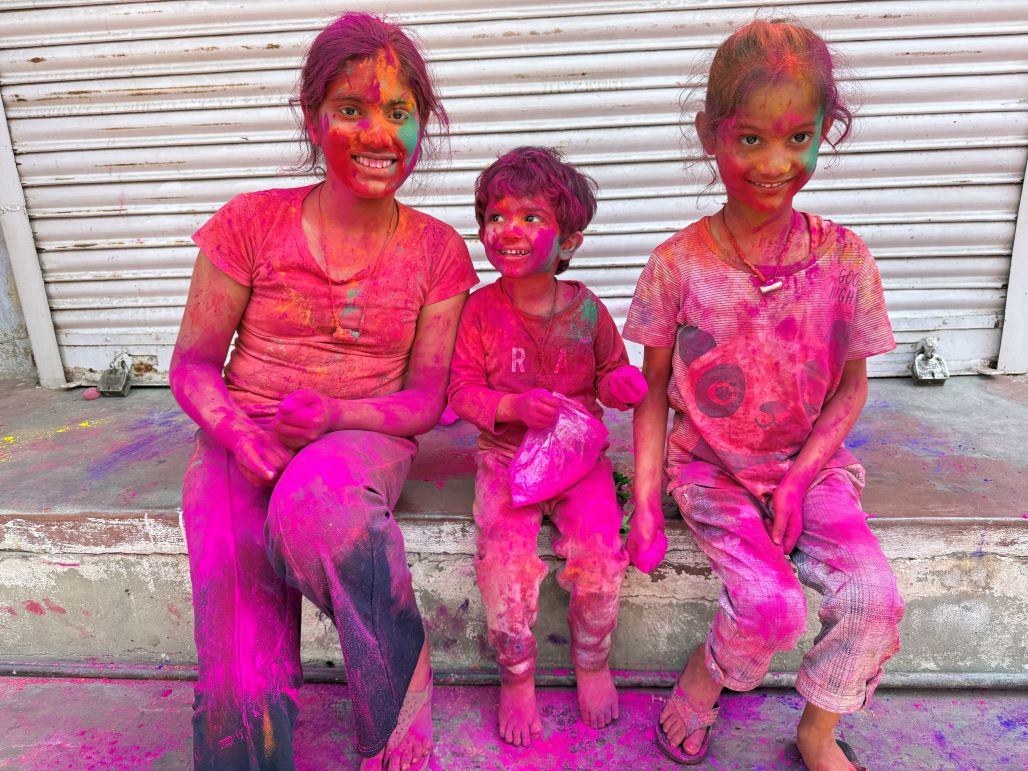
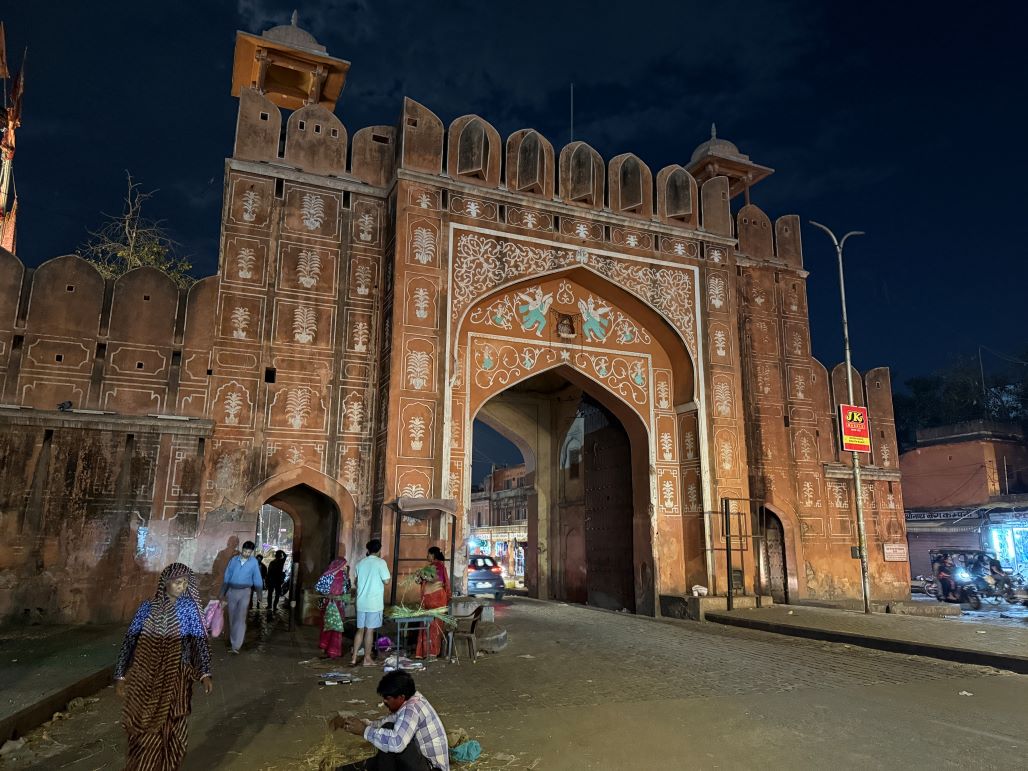
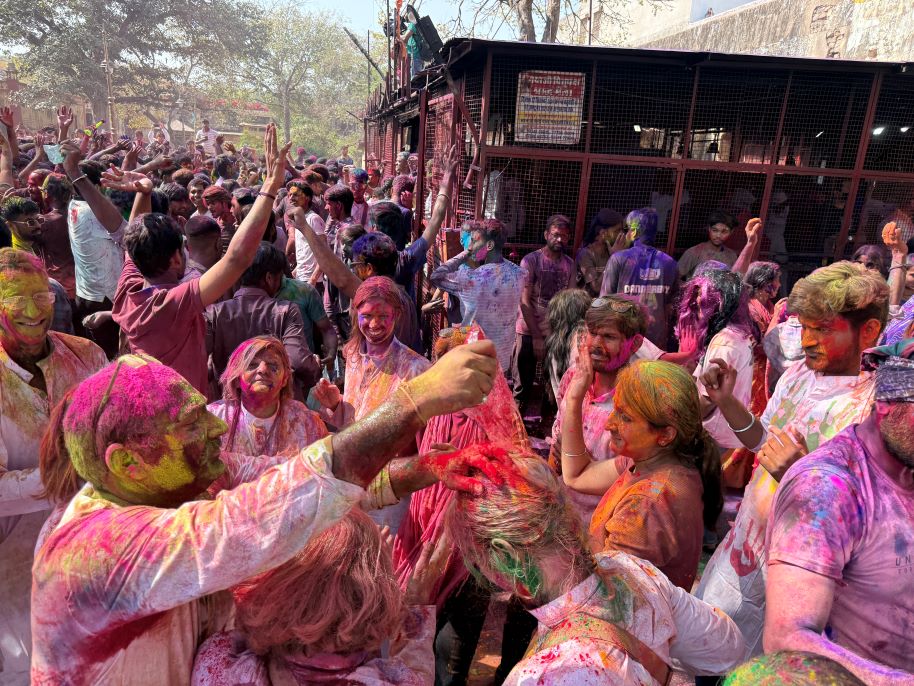
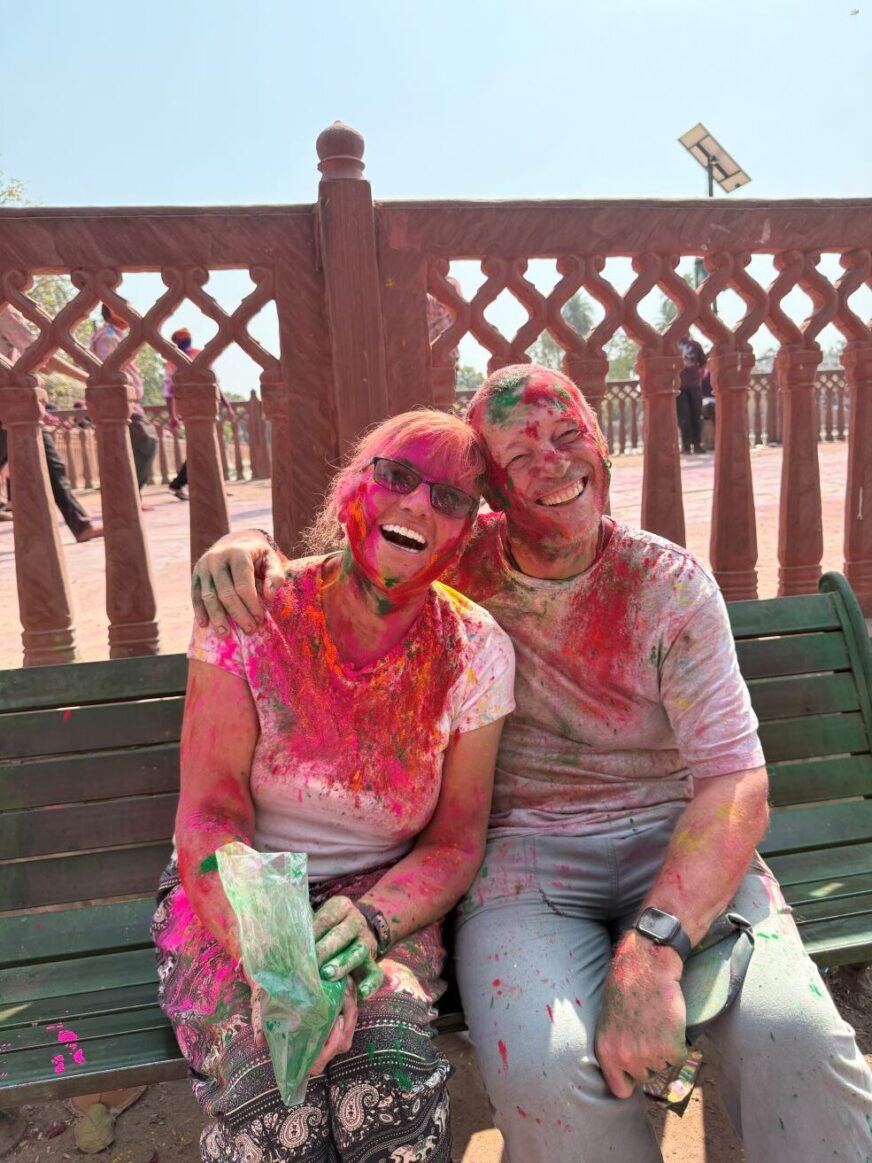
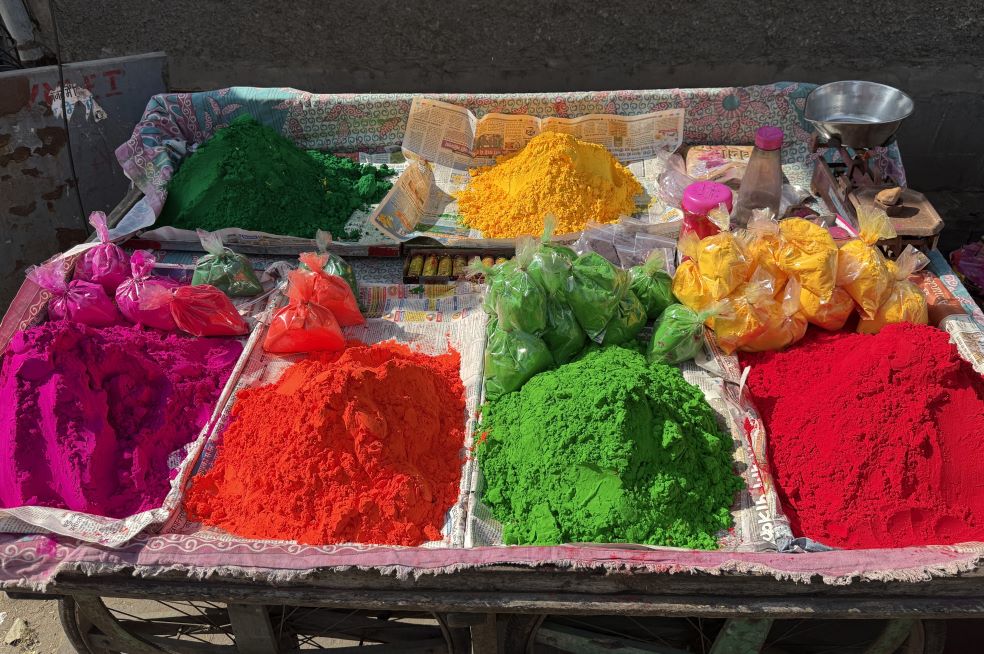
One of the most memorable experiences during our trip to India was participating in the Holi celebrations in Jaipur. The entire city came alive in welcoming the arrival of spring, symbolising new beginnings, forgiveness, and the victory of good over evil. Known as the festival of colours, Holi features the throwing of coloured powder as a joyful expression of love and friendship.
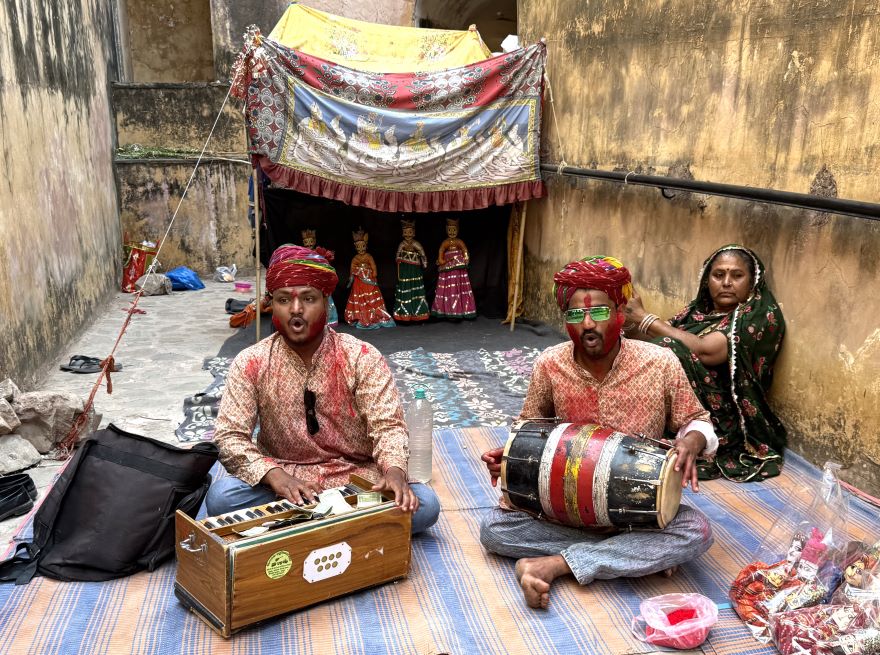
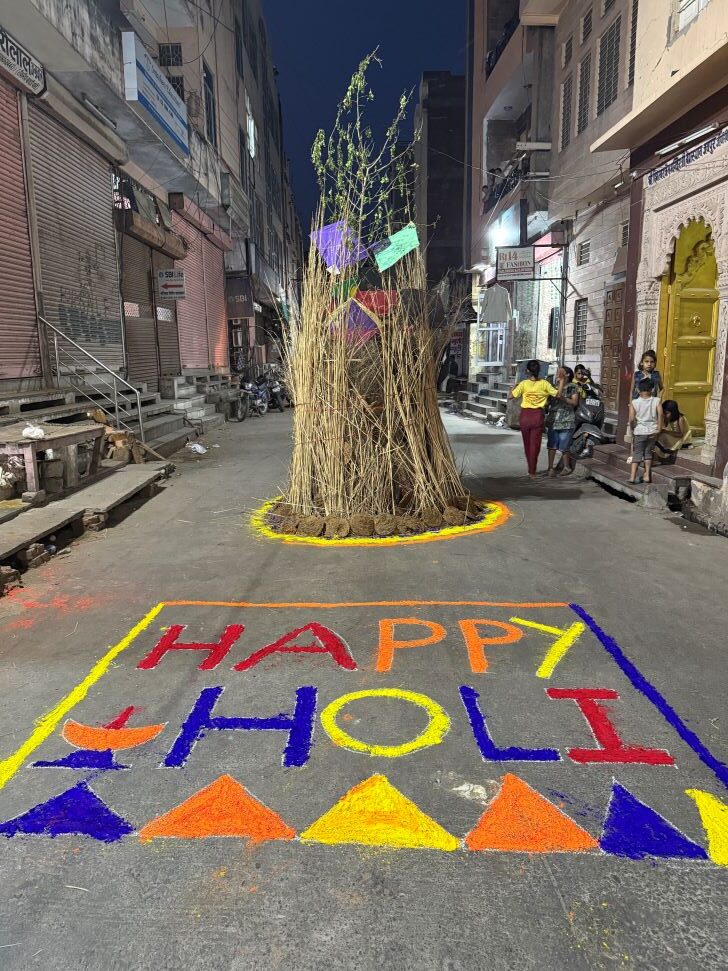
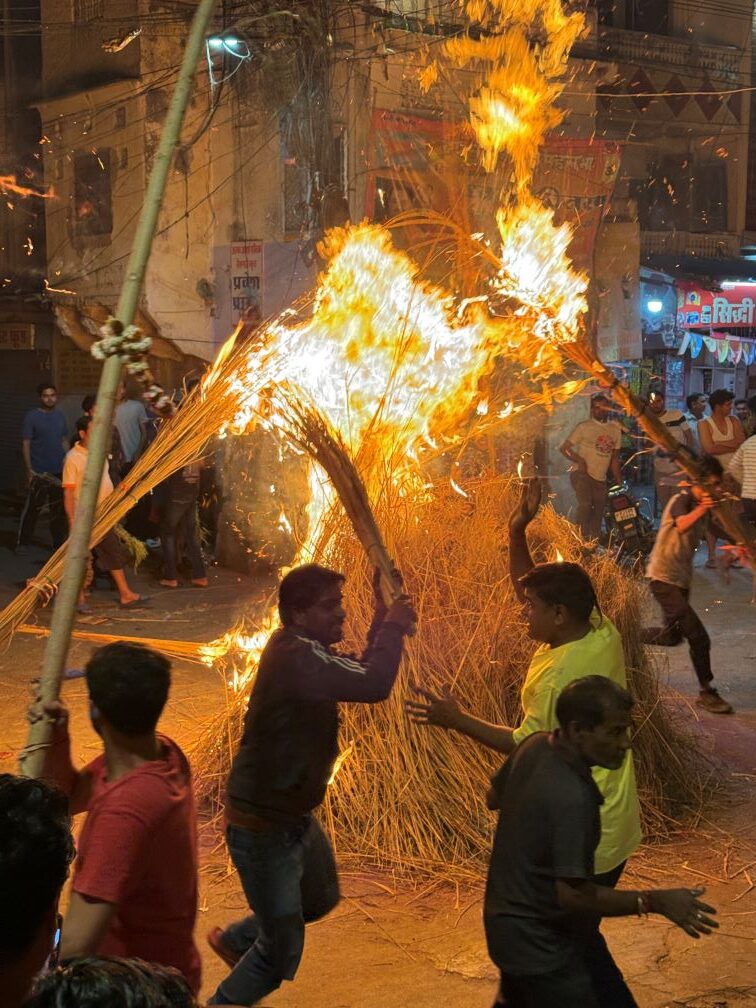
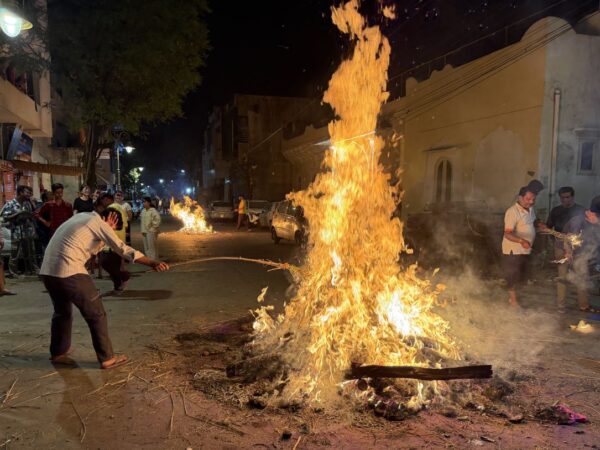
The night before Holi, bonfires were built in every street from dried leaves, twigs, light wood, and some pulses, topped with an effigy of the demoness Holika, which was then set alight to purify all evil. At around 11:00 PM, the first fire was lit at the City Palace, signalling that others should follow suit. From the street outside our hotel, we could see at least 20 bonfires in all directions, yet there must have been thousands throughout Jaipur. After the locals walked around the fire praying, they took pieces of it back to their homes to celebrate with their families, eating sweets and smearing ash on their loved ones’ foreheads.
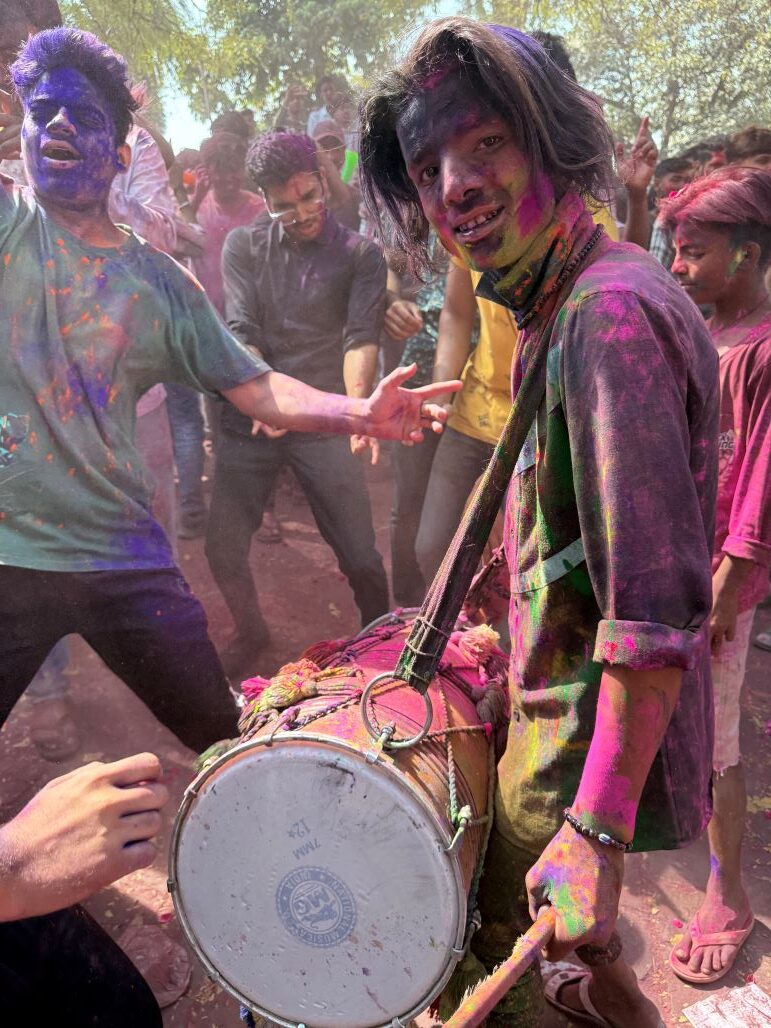
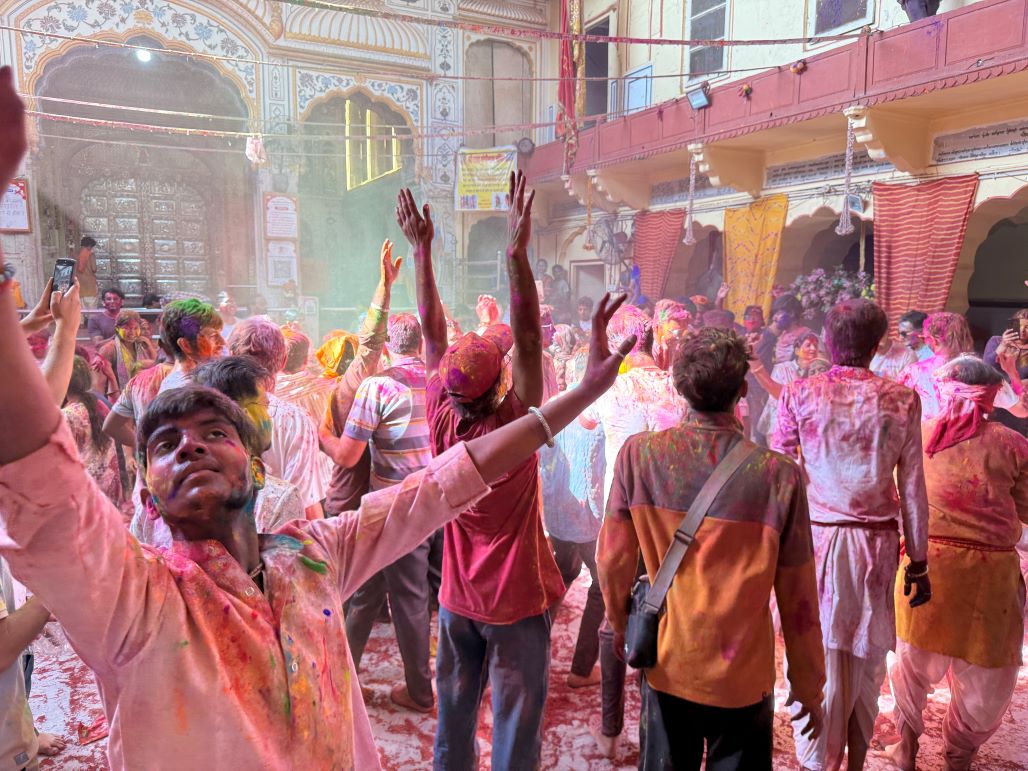
The following morning was wild. From early in the day, the streets, cars, and tuk-tuks were awash with vibrant coloured powder. By midday, the entire population was covered from head to toe in a multitude of colours. Everyone was in a joyous mood, singing, dancing, eating, and making friends. On the way to the main celebrations at the Palace, we visited some temples. Inside, the atmosphere was electric, filled with a rainbow of colours as everyone threw and smeared powder on each other while dancing to the beat of drums. At the Palace, celebrations were in full swing, with even louder ‘popular’ music and a greater abundance of powder. By 4:00 PM, the festivities ended, and miraculously, the souvenir shops reopened, restaurants began selling food, and tuk-tuk drivers continued to overprice tourists. As for us, we began a three-day cleansing ritual; even four weeks later, when we returned home, we still found traces of powder in our clothes!
If we had more time, we would have explored the following places and activities:
- Panna Meena Ka Kund (an ancient stepwell located about 800 meters away from Amber Fort, famous for its picturesque, perfectly symmetrical stairways – very Instagrammable).
- Jantar Mantar (the oldest and largest open-air astronomical observatory in the world, housing over 19 structures used to observe the positions of celestial bodies, including the world’s largest sundial).
- Patrika Gate (serving as Jaipur’s 9th Gate at the entrance to Jawahar Circle Gardens, this structure features nine architecturally designed pavilions, each nine feet wide, in vibrant pastels. A musical fountain begins its show at 7 PM each night).
- Jaigarh Fort (architecturally plain and simple, built purely for defence purposes. It offers unobstructed views of Amber Fort and is home to the world’s largest cannon on wheels).
- Bhangarh Fort (located 1-2 hours from Jaipur and features atmospheric fort ruins at the foot of the Aravalli Mountains. The site includes abandoned temples and fortifications, accompanied by plenty of cows, monkeys, and peacocks).
Accommodation in Jaipur
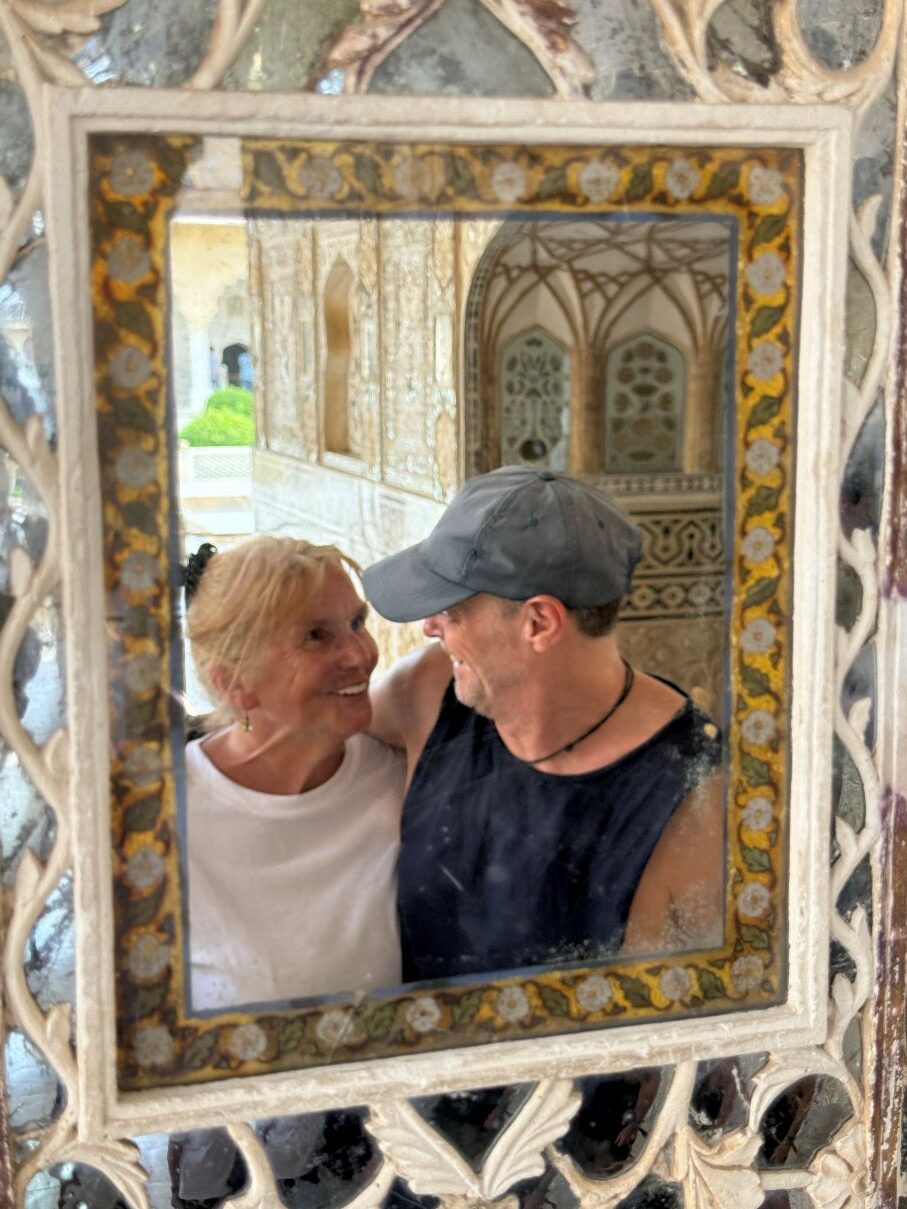
We stayed at Khatu Haveli, a heritage property located in Chandpole Bazar. Although it was situated in an area prone to street noise and a bit farther from the main attractions, we found this did not detract from our experience. The Khatu is steeped in history, with memorabilia displayed around the courtyard and great views of Nahargarh Fort and the city from the rooftop terrace. Staying in the Maharaja Suite felt like stepping back in time, with authentic furnishings, multi-coloured glass windows, and beautiful glass mosaics depicting Rajput scenes.
Bani Park is well-known as the best area to stay in Jaipur. It is a tranquil and safe residential neighbourhood and is considered the centre of haveli accommodation (traditional Indian mansions built around a courtyard). Another recommended area is C Scheme, which is within easy walking distance of major attractions. For budget travellers, Zostel Jaipur Hostel, a two-time winner of the ‘Best Hostel in India’ award, is situated in the city centre near Hawa Mahal. With a bit more cash to splash, the luxury Taj Rambagh Palace, once the home of the Maharajah of Jaipur, offers 5-star service including an on-call butler.
Eating in Jaipur
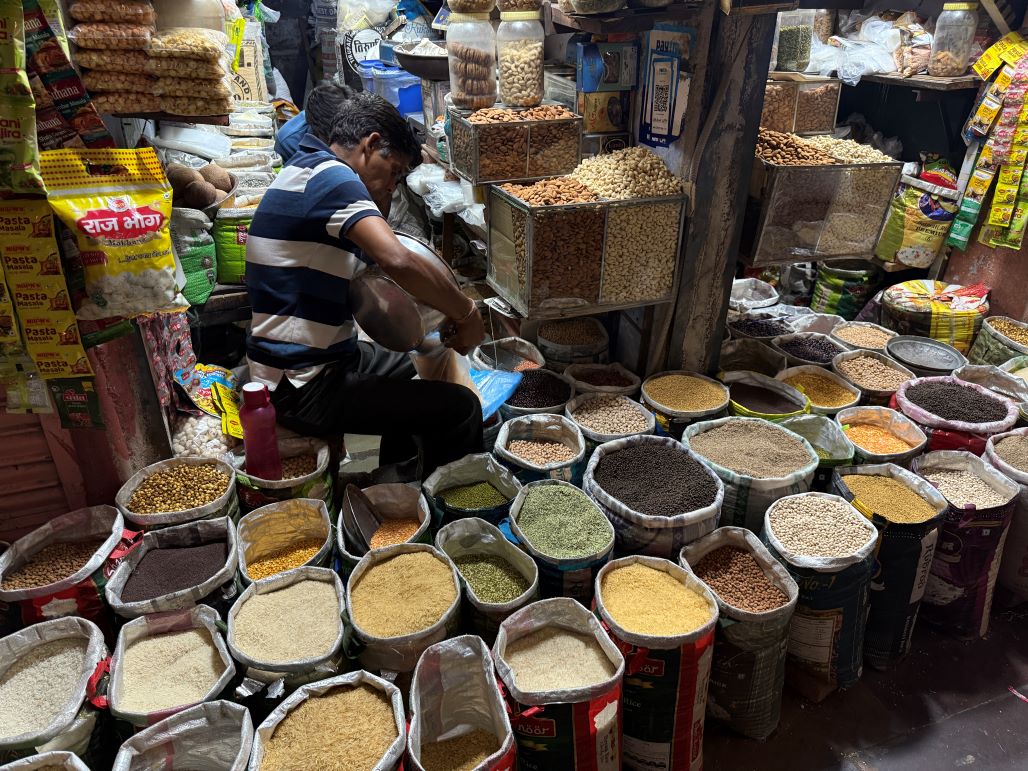
Jaipur boasts a wide variety of dining options to suit every budget, including Western fast food outlets and many pizza joints. While we tended to steer clear of street food during our visit due to minor tummy issues, we did try a few stalls towards the end of our stay, ensuring that the food was fresh and hot. One restaurant we particularly enjoyed was Muhammedi Palace in the Chandpole district, known for its cleanliness, good variety of vegetarian and non-vegetarian meals, and decorated heritage rooms to dine in. It offered generous portions at affordable prices and friendly service.
Opposite the Hawa Mahal, we visited two great cafes: The Tattoo Cafe and Wind View Cafe, both providing unobstructed views of the beautiful red and pink sandstone palace. These cafes were ideal for a coffee break or a snack and even offered a tasty varied breakfast menu. Other travellers recommended the Hawk View Restaurant for international cuisine and great rooftop views, as well as Old Green Tandoori Dhaba near Chameli Market, known for classic Indian dishes at budget-friendly prices. For a splurge, Hotel Arya Niwas or Govindam Retreat offered delicious tandoori dishes, Rajasthani thali, and live music.
Travellingterry’s Jaipur tips:
- Check the opening times for Jaipur and Amber Fort; both locations get crowded with tour groups after 11:00 AM.
- Instead of buying individual tickets, consider purchasing a composite ticket that includes multiple attractions to save on costs.
- At Amber, we followed narrow passageways – they always led to something interesting.
- Visitors with mobility issues should find the palace accessible but will need extra support at the fort.
- Local buses run from Jaipur (Badi Chopar) to Amber Fort; although it may take longer than a taxi or autorickshaw, it’s a fraction of the cost.
- Spend time in Amber town – there are a few things of interest, especially a beautiful stepwell.
- The Archaeological Survey of India offers discounts if tickets are booked online, and between Jaipur Travel and Jaipur Heritage they both provide overviews of the attractions in and around Jaipur, with costs and timings.
Onward travel: Train from Jaipur to Udaipur (AC 1st Class sleeper)
This was probably our most demanding journey between the two cities. Our trip began with a harrowing auto-rickshaw ride from our hotel to Jaipur train station for our 11:00 PM train to Udaipur. The ride was nerve-wracking as we weaved through night-time traffic, dodged thousands of pedestrians (due to the absence of pavements), and navigated bumpy, potholed roads while hanging onto our luggage for dear life.
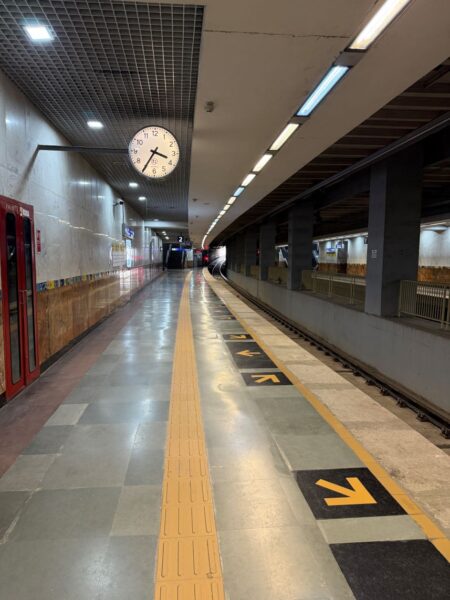
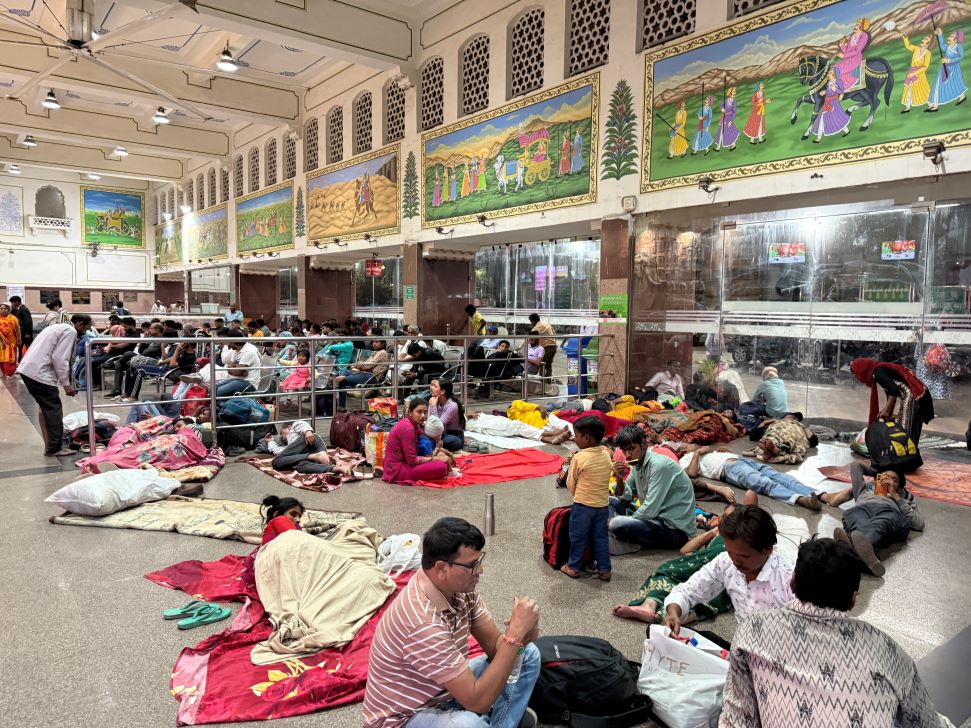
At the train station, we were greeted by a chaotic scene, people crowded around the ticket booth unable to form a queue, families sprawled on the platforms, and litter scattered across the dirty floors, including red paan stains.
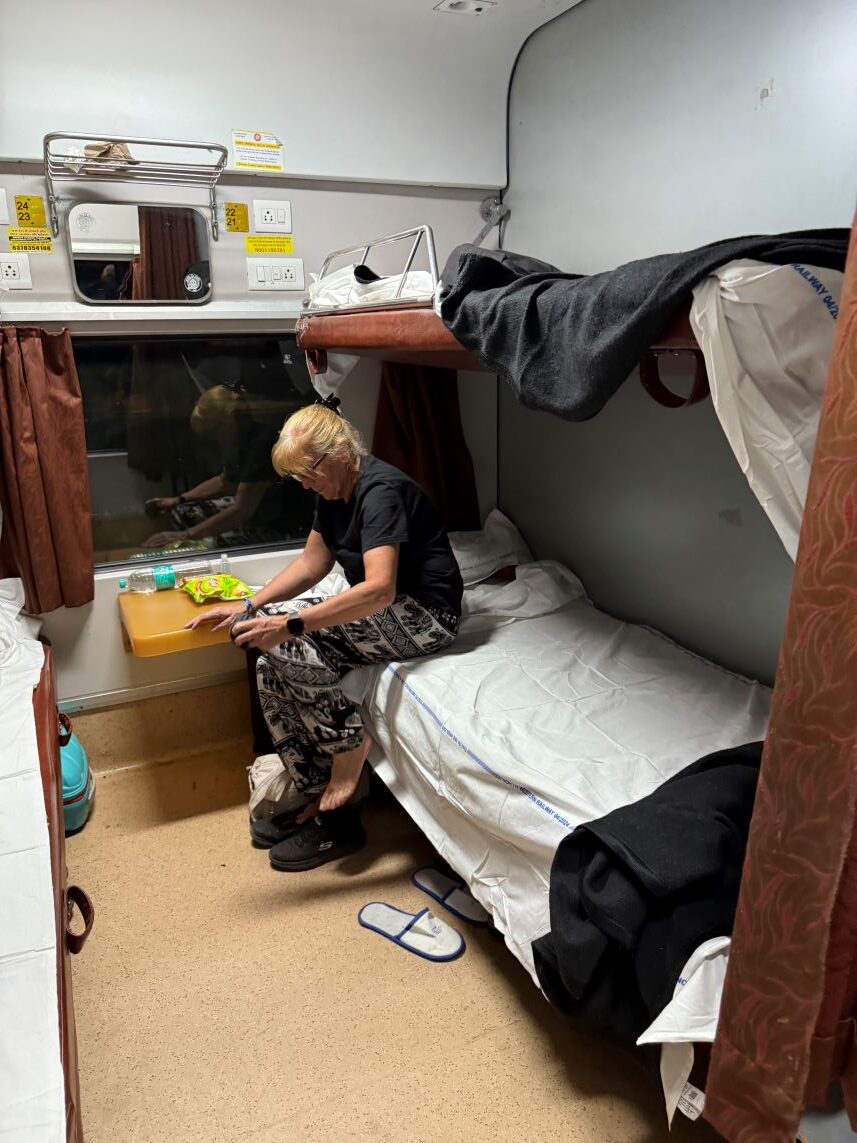
We booked our tickets online a couple of months in advance with IRCTC, although we could have used 12Go. However, we had to wait 12 to 18 hours before departure to go back online and view our allocated bed numbers and carriage details, which always happened to be carriage number ‘H1’ (1st Class sleeper carriage). In this carriage, there were 4-bed and 2-bed (coupe) compartments intermittently dispersed. On some rail journeys, it’s possible to book a coupe at the booking stage, but we soon discovered after a couple of overnighters, that if we embarked at the station from where the train started its journey, we were allocated a coupe; however, if it was a ‘through’ train—meaning that our journey started midway on the train’s route—we were placed in a 4-berth compartment, and that is exactly what happened on this train from Jaipur.
After being given a package containing clean bed sheets and pillows, we discovered that we were sharing our compartment with two other ‘quiet’ men. While it felt a bit awkward to have no privacy or security, everything turned out to be safe. Terry was comfortable on the top bunk, resting his head on a bumpy pillow which included passports, money and credit cards, but Lorna, somewhat expectedly, struggled to sleep on the bottom bunk. When we awoke, the two men had gone, presumably having disembarked at an earlier station, and all our belongings, as well as ourselves, were still intact.