Claimed to be Central Asia’s holiest city, Bukhara is one of the most captivating ancient cities I have ever had the pleasure of visiting. In every direction, buildings span 1000 years of history, with many parts of the city remaining unchanged for decades (even centuries). Unlike Samarkand, where the old city has merged with the new, Bukhara’s old town has barely changed since the pre-Russian days, where it’s become an architectural wonderland, full of madrasahs and minarets, a huge royal fortress, remnants of a once-vast market complex, and over 140 protected buildings.
My Bukhara Highlights
The structures in Bukhara seemed more ‘authentic’ and rustic than those in neighbouring Samarkand. Restaurants and accommodation options exhibited more character, with many hosts embellishing their spaces with artefacts or antiques that reflected the city’s vibrant history, which includes Genghis Khan and subsequent rulers, as well as influences from the Soviet period.
Visited the Ark
Bukhara’s Ark is the most ancient and celebrated structure in the city, showcasing its imperial grandeur with origins dating back to the 5th century. Emirs lived and governed their territories from the Ark until 1920, when the Russian Red Army ordered its destruction. Although approximately 80% of the Ark’s area lies in ruins, some of the lavish royal quarters have been transformed into museums. These museums display artefacts from various Silk Road trading hubs, including items from royal stables, storage tools, and the Emir’s throne room. At the top of the entrance ramp is the 17th-century Juma (Friday) Mosque, notable for its exquisite wooden columns with stalactite carvings. Narrow passageways lead to the expansive Reception and Coronation Court, where the last coronation was held in 1910.
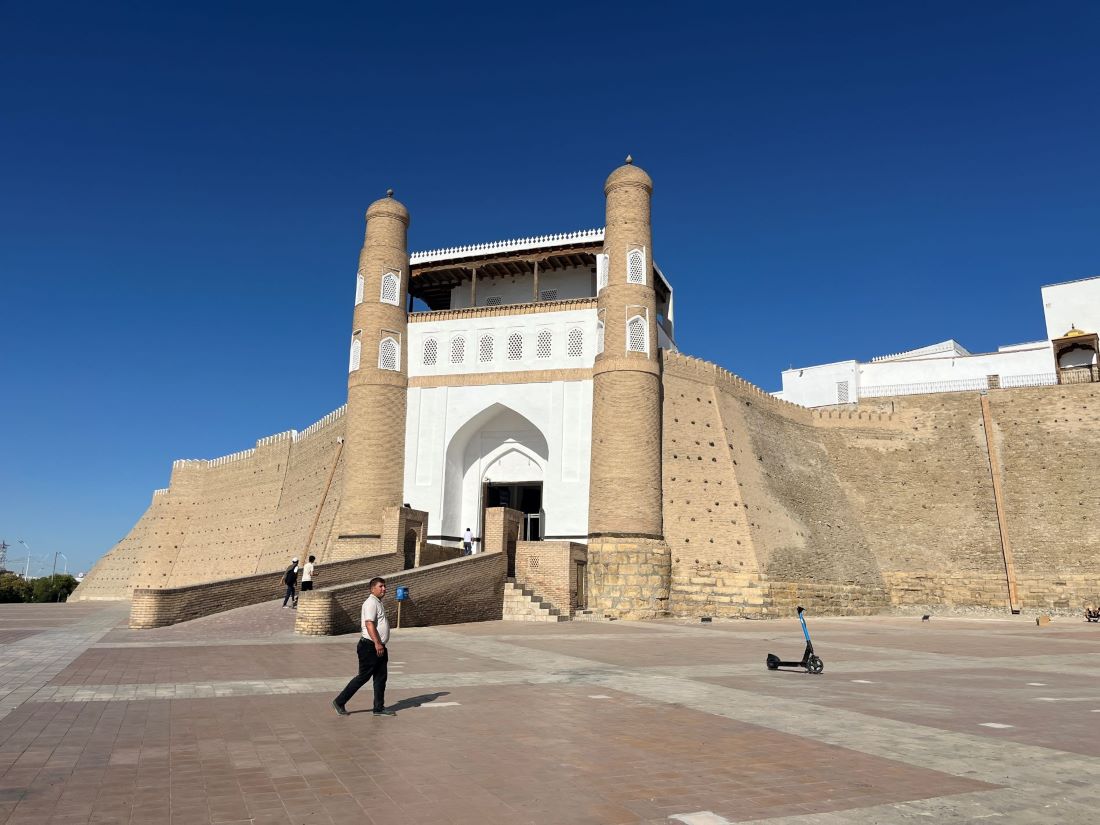
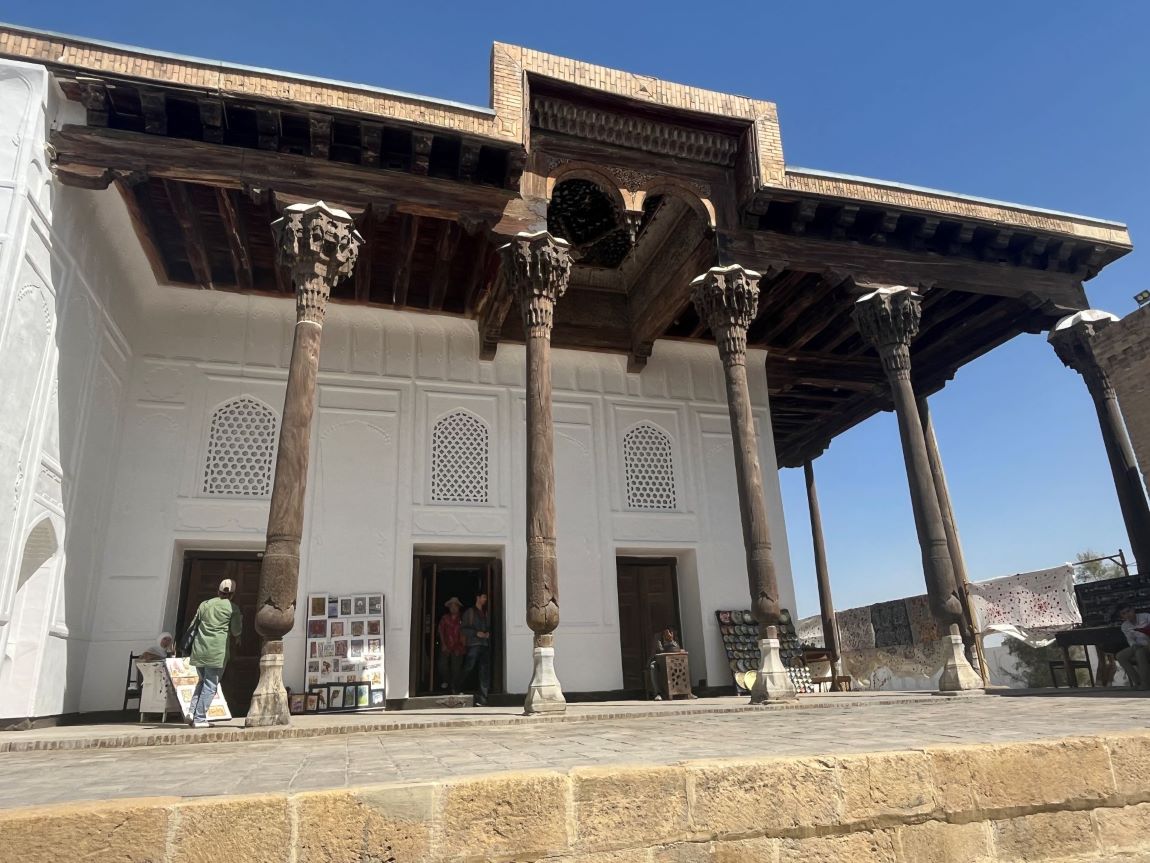
One downside of visiting the Ark is the large crowds, especially from tour groups. The tight spaces and narrow walkways can get very crowded, noisy, and chaotic, making it difficult to take that ‘perfect’ photo. in hindsight the ideal times to visit would have been around an hour after opening or just before closing.
Walked around the Ark
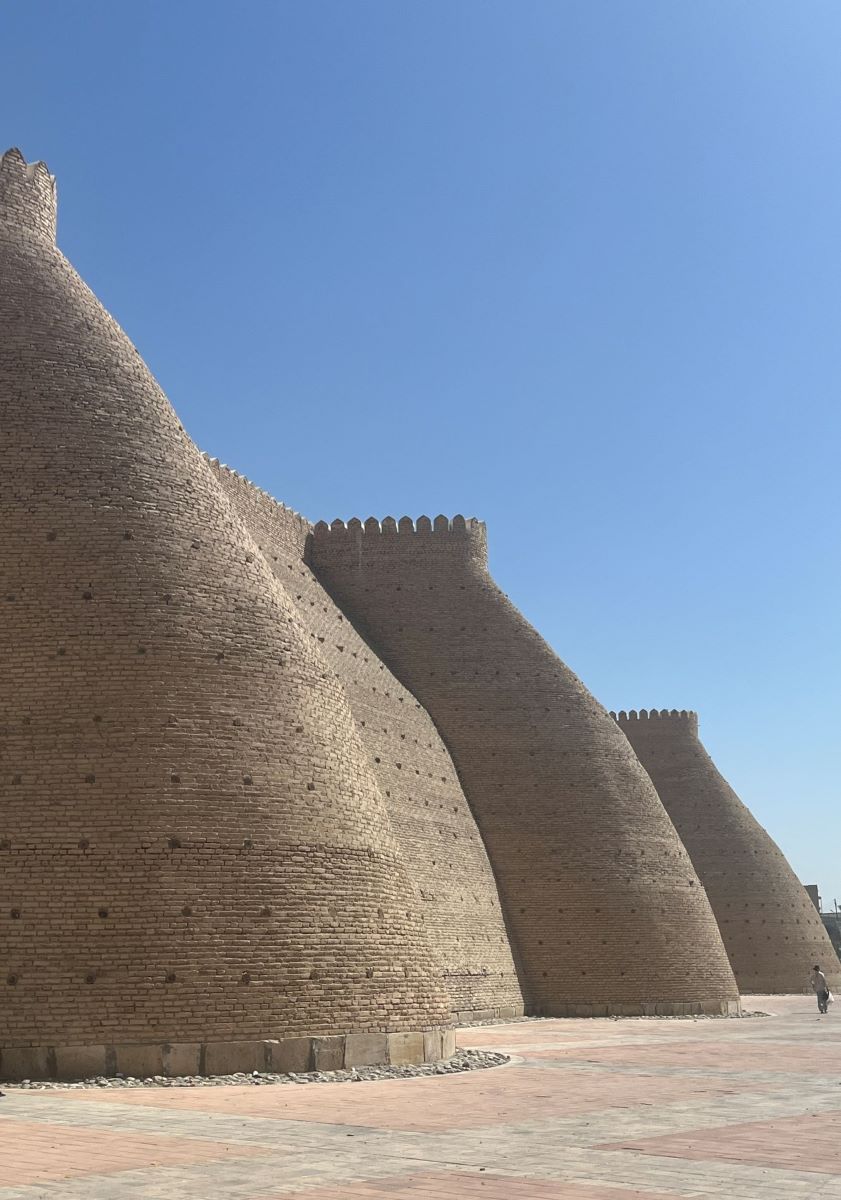
After escaping the crowds, I yearned for a quiet walk away from the masses. While strolling around the exterior of the Ark, I stumbled upon some fascinating narrow streets adorned with mud-walled buildings and was captivated by the Ark’s impressive architecture. The walls soar to heights of up to 20 metres, enclosing an area of nearly 10 hectares. I can only imagine how pointless it would be for an army to attempt an assault on this stronghold, as they would need to conquer the defensible round plinths strategically situated along the perimeter wall.
Horrified at Zindon Prison (known as the ‘bug pit’)
At the rear of the Ark is the Zindon Prison, which houses some of Uzbekistan’s most gruesome historical displays, illustrating the cruelty of the Emir. Notably, British officers Charles Stoddart and Arthur Conolly were imprisoned here, enduring lengthy confinement in a deep pit. In 1838, during a visit with the Emir, Stoddart breached etiquette by failing to present gifts and broke protocol by riding to the citadel instead of walking. As punishment for these infractions, he was thrown into a 6.5-meter-deep pit that could only be accessed by a rope, teeming with various rodents and other creepy-crawlies. Captain Conolly sought to secure Stoddart’s release when he arrived in 1841, but the Emir, convinced that Conolly was part of a British conspiracy to overthrow him, also imprisoned him. Tragically, in 1842, after they had dug their graves, both men were beheaded. Charming!
Admired the Hoja Zayniddin Mosque
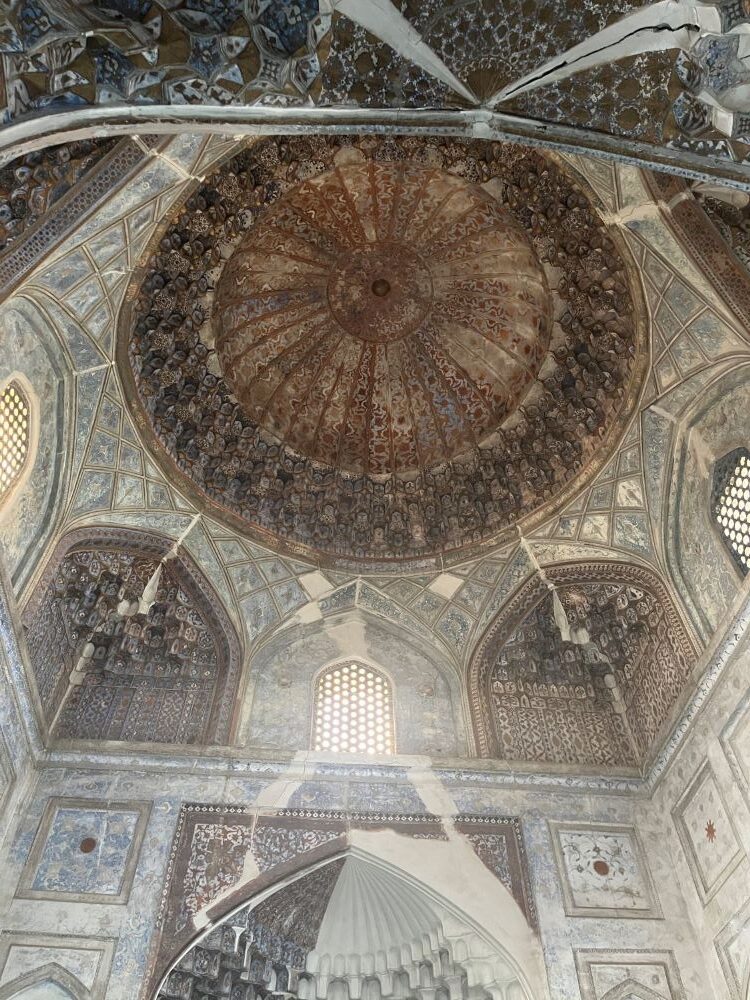
Across from the Ark stands the Hoja Zayniddin Mosque, an awe-inspiring place of worship with a stunning interior dome adorned with exquisite frescoes. I was truly taken by the impressive aivan (portico) supported by elaborately carved wooden pillars, along with the beautiful mosaics and intricate plasterwork (ghanch-work) that embellished the structure.
Impressed with the Bolo Hauz Mosque
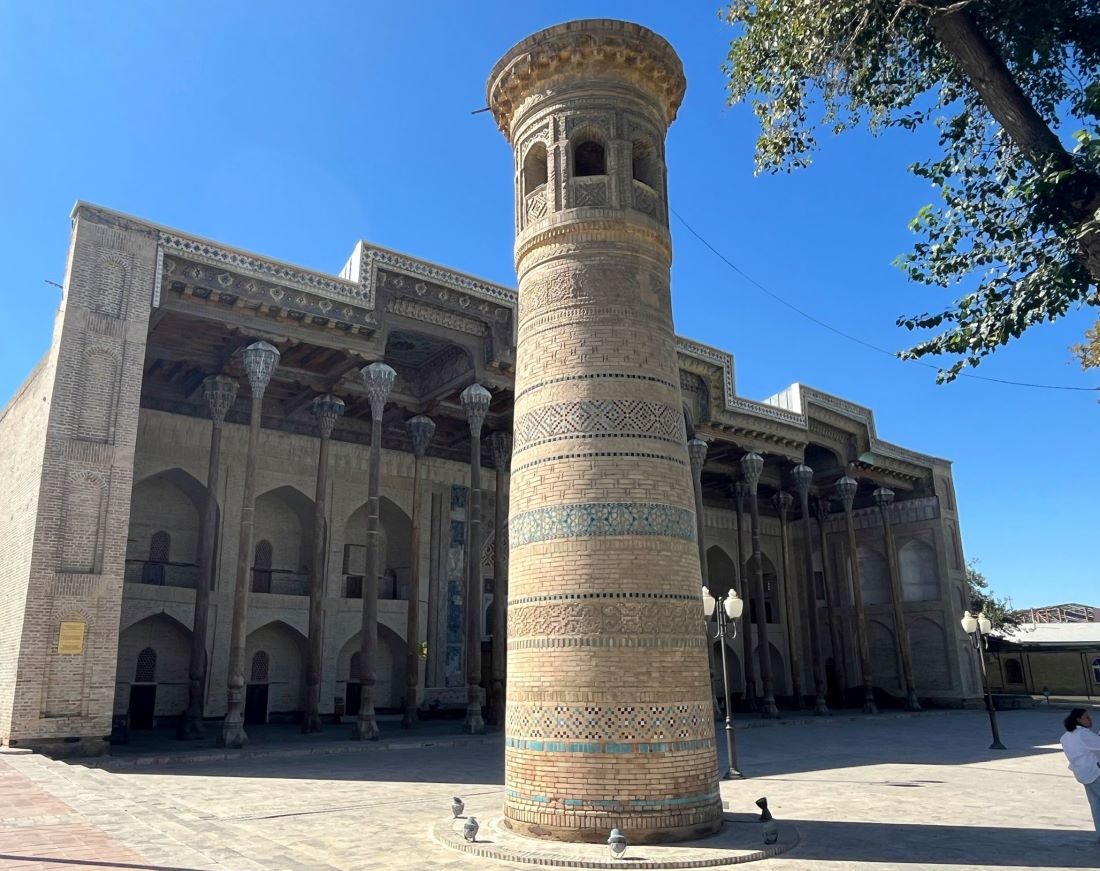
Situated beside a pool and just across the road from the Ark, the stunning Bolo Hauz Mosque, which dates back to the 17th century, boasts a rich history as the Emir’s official place of worship. Its architecture bears a resemblance to the Hoja Zayniddin Mosque, characterised by white walls and 20 intricately carved wooden pillars supporting the aivan. The adjacent pool enhances the serene oasis ambience of the mosque. From the Sukhov Observation Tower, the lovely minaret alongside the mosque appeared stunning at sunset, glowing with a golden-sandy hue.
Climbed the Sukhov Observation Tower
I use the term “climbed,” but it’s more accurately described as “elevated” by a lift. Originally constructed as a water tower in 1920, it has now been converted into an observation deck right across from the Ark. This location boasts one of the highest viewpoints in Bukhara, offering a fantastic aerial perspective of the Citadel. It also provided a wonderful chance to capture the beautiful orange glow that blankets the city at sunset… and it certainly did not disappoint.
Strolled through Samanidov Park and the busy Kolkhoz Bazaar
Located just a short distance from the Bolo Hauz Mosque, Samanidov Park offers a tranquil, Soviet-style atmosphere. Although it lacks standout features aside from a few statues, pathways, and some questionable amusement rides, the park is abundant in shade, providing a welcome escape from the tourist hustle. Apart from numerous stalls selling fresh fruit and refreshments here, it is a great spot for people-watching and discovering some of the lesser-known mosques, mausoleums, and madrasahs nearby.
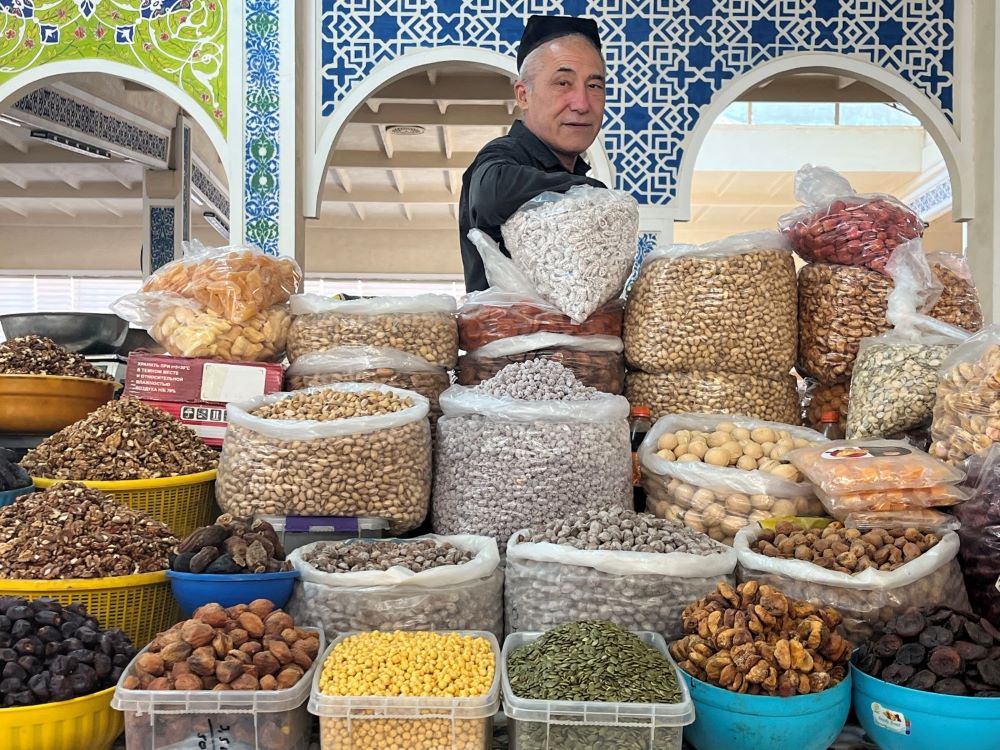
To the north of the park lies the wonderful Kolkhoz Bazaar, an absolute must-visit for snacks. Since Uzbekistan is one of Central Asia’s largest exporters of fruits and nuts, there was an abundance of fresh produce to enjoy, including some tasty potato samsas. However, having tried Kurut (hard salty cheese balls made from fermented milk) in Kyrgyzstan, I decided to give these stalls a wide berth!
Mesmorised at the Kaylon Mosque & Minaret and Mir-i-Arab Madrasah
Among all the sights in Bukhara, the following three religious buildings were quite extraordinary.
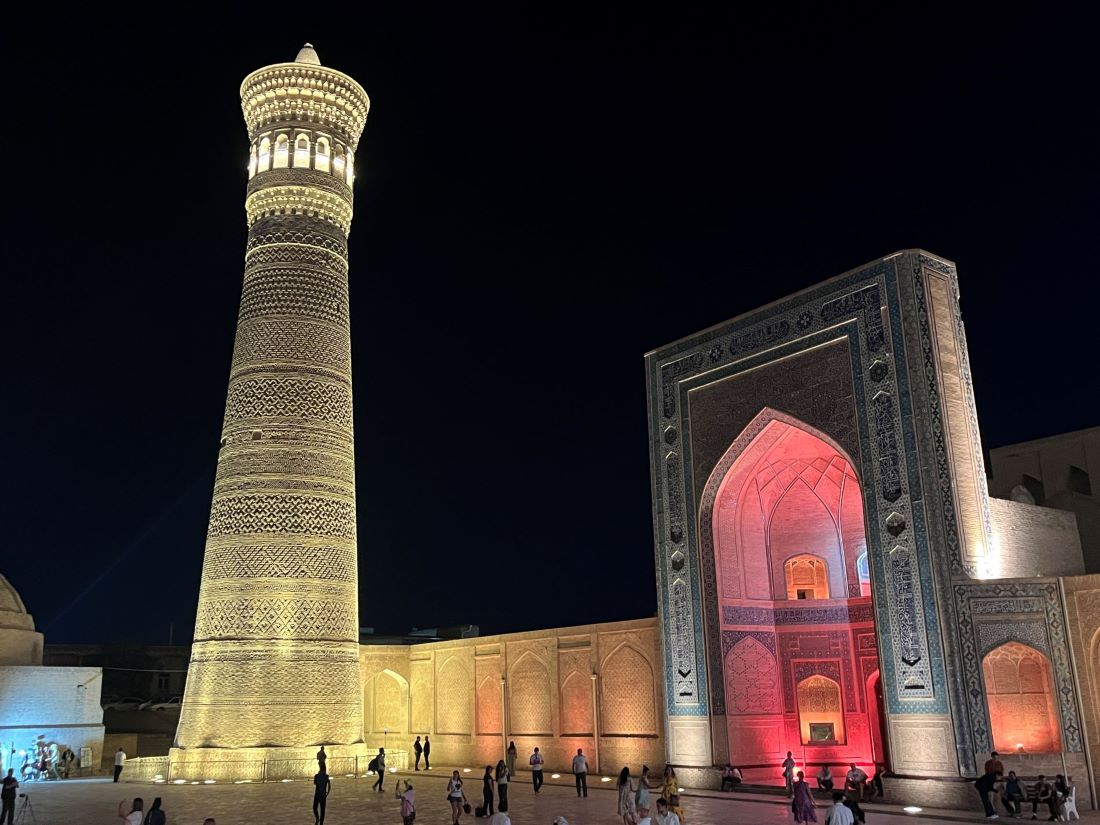
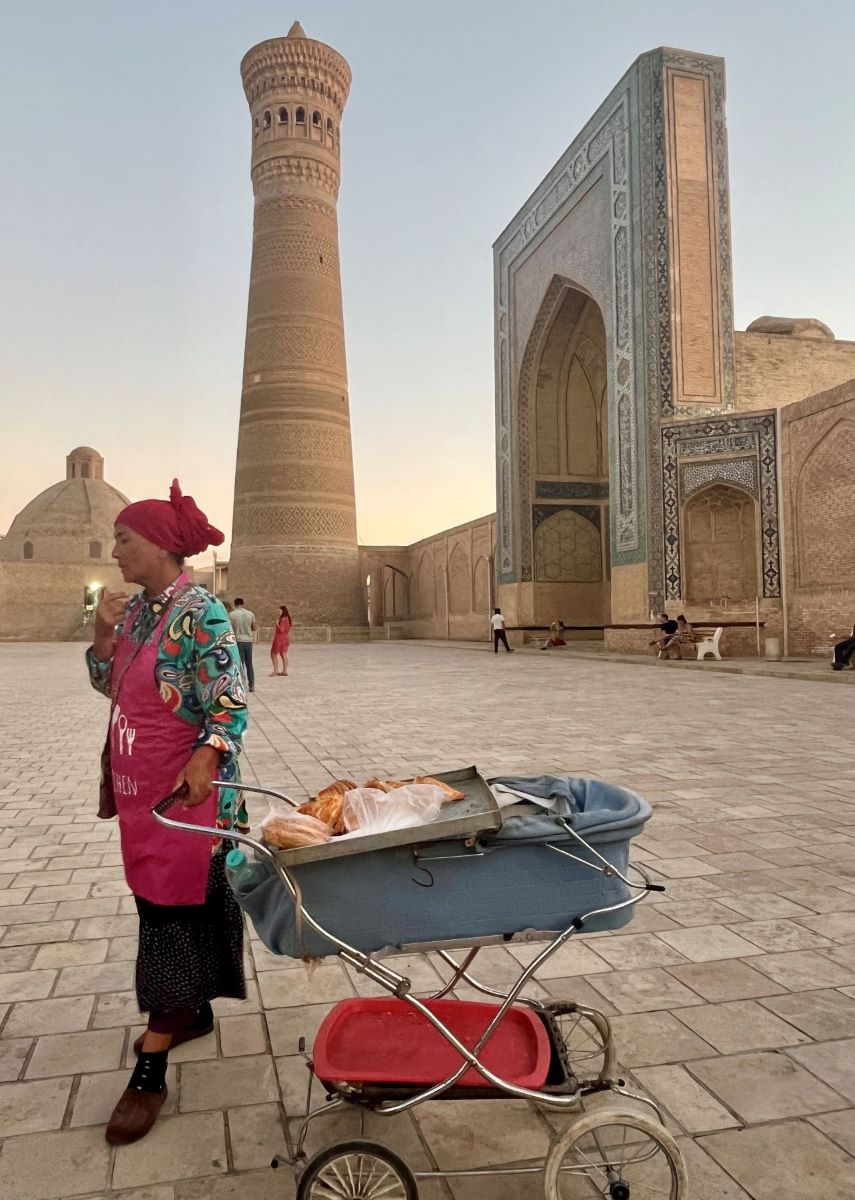
The Kaylon Mosque is an impressive edifice; upon its completion in 1127, its minaret was recognised as the tallest structure in Central Asia. Legend has it that Genghis Khan was so taken by its grandeur that he spared it from destruction while his forces ravaged the rest of the city. The Kaylon Minaret towers at 47 metres and features 10-metre deep foundations, which are said to have been reinforced with reeds as an early method of earthquake resistance. It’s remarkable to note that the Mosque can accommodate up to 10,000 people and was transformed into a warehouse by Soviet generals at one point. Thankfully, after gaining independence, it was restored to its rightful place as a house of worship.
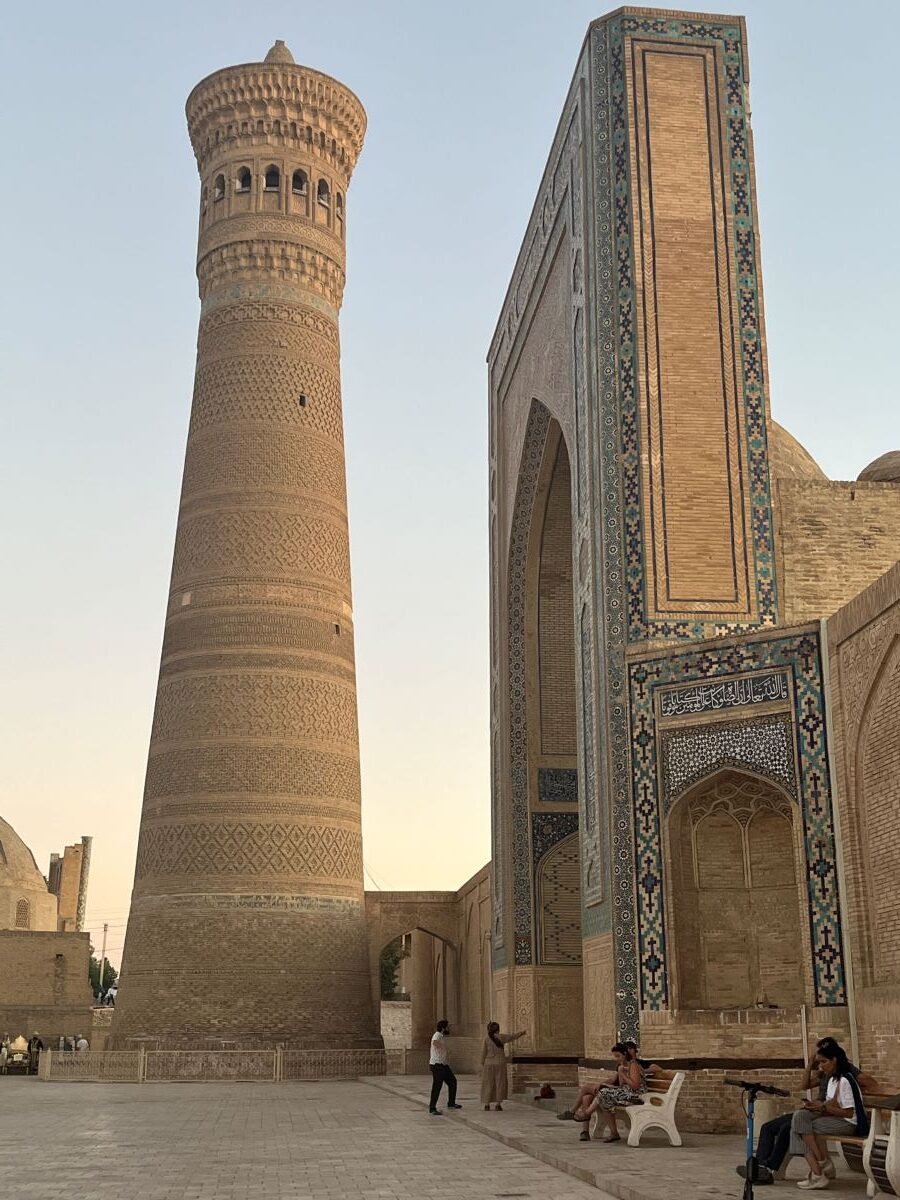
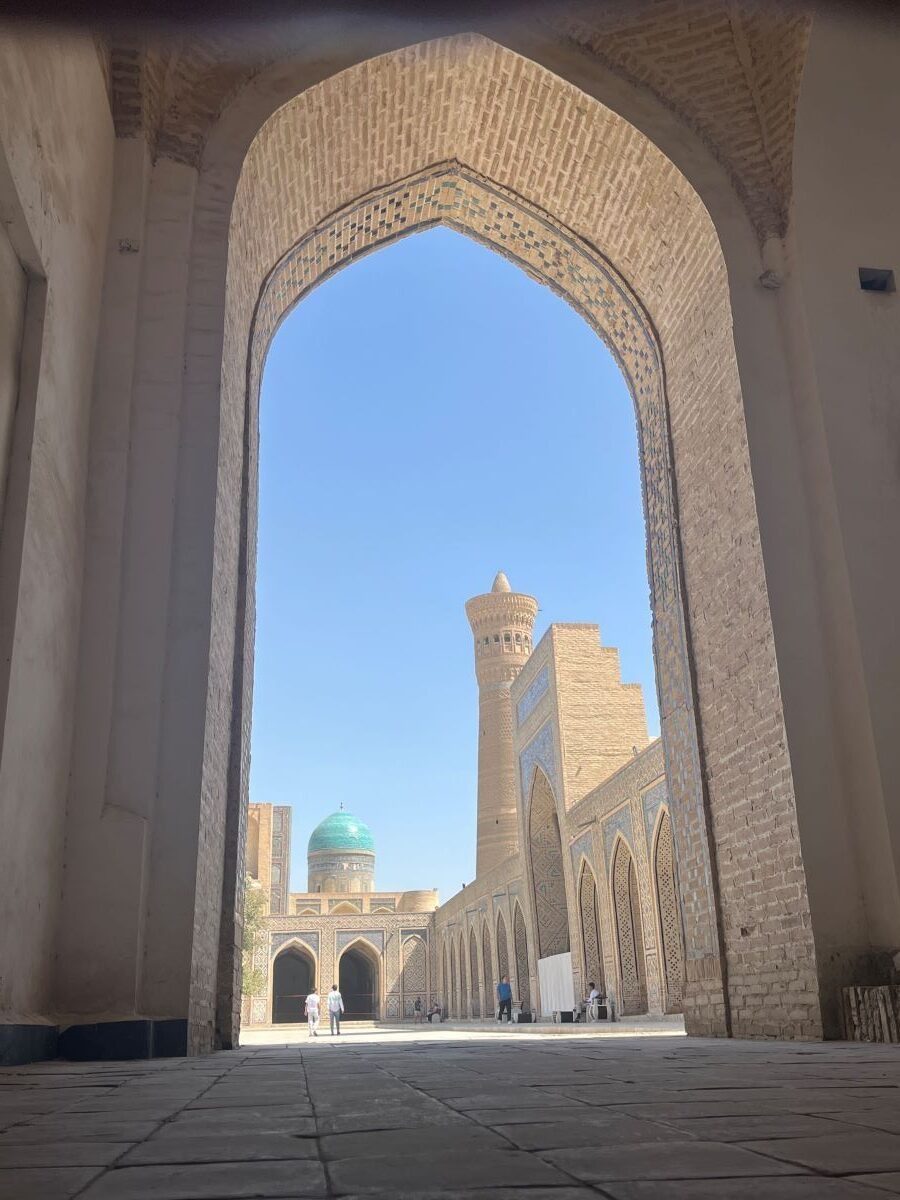
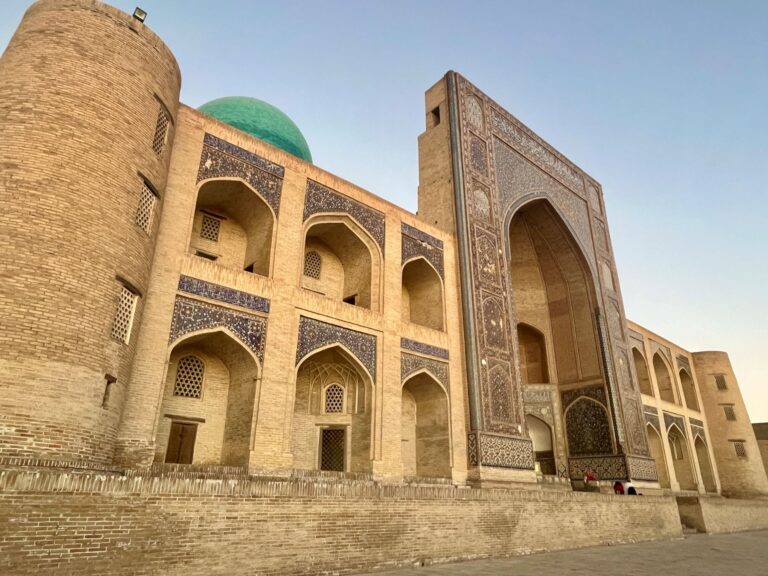
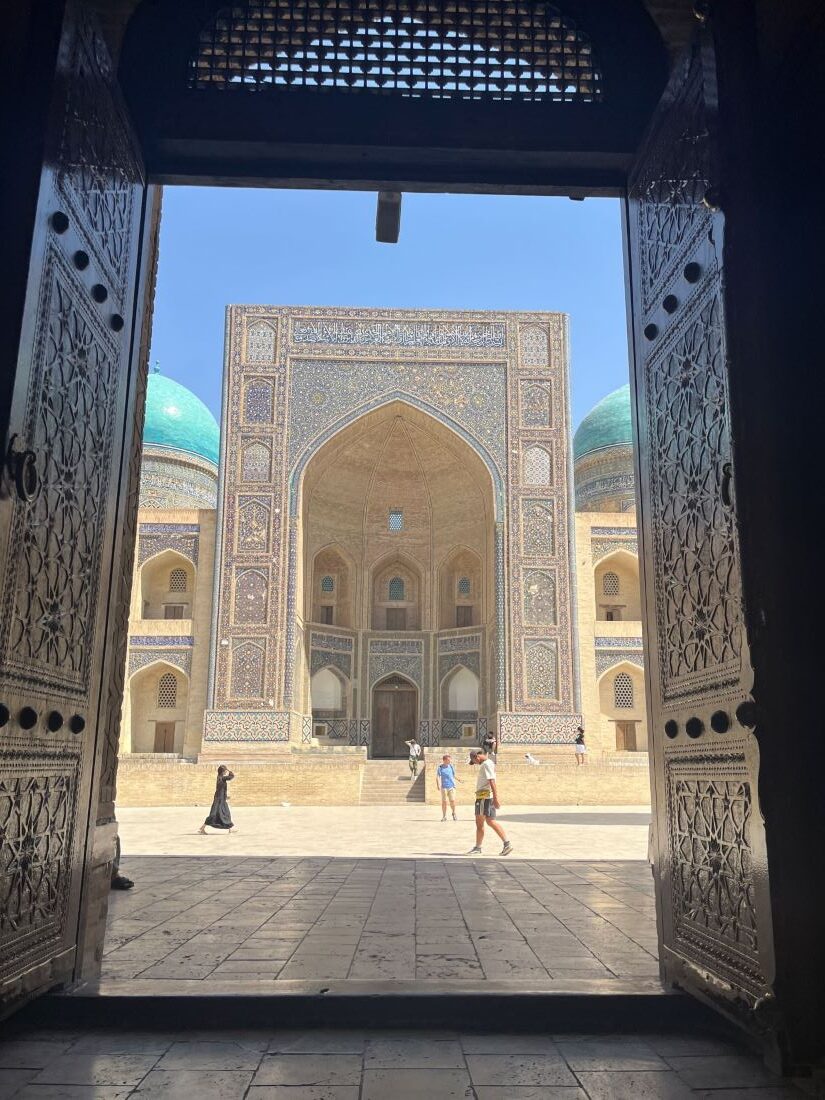
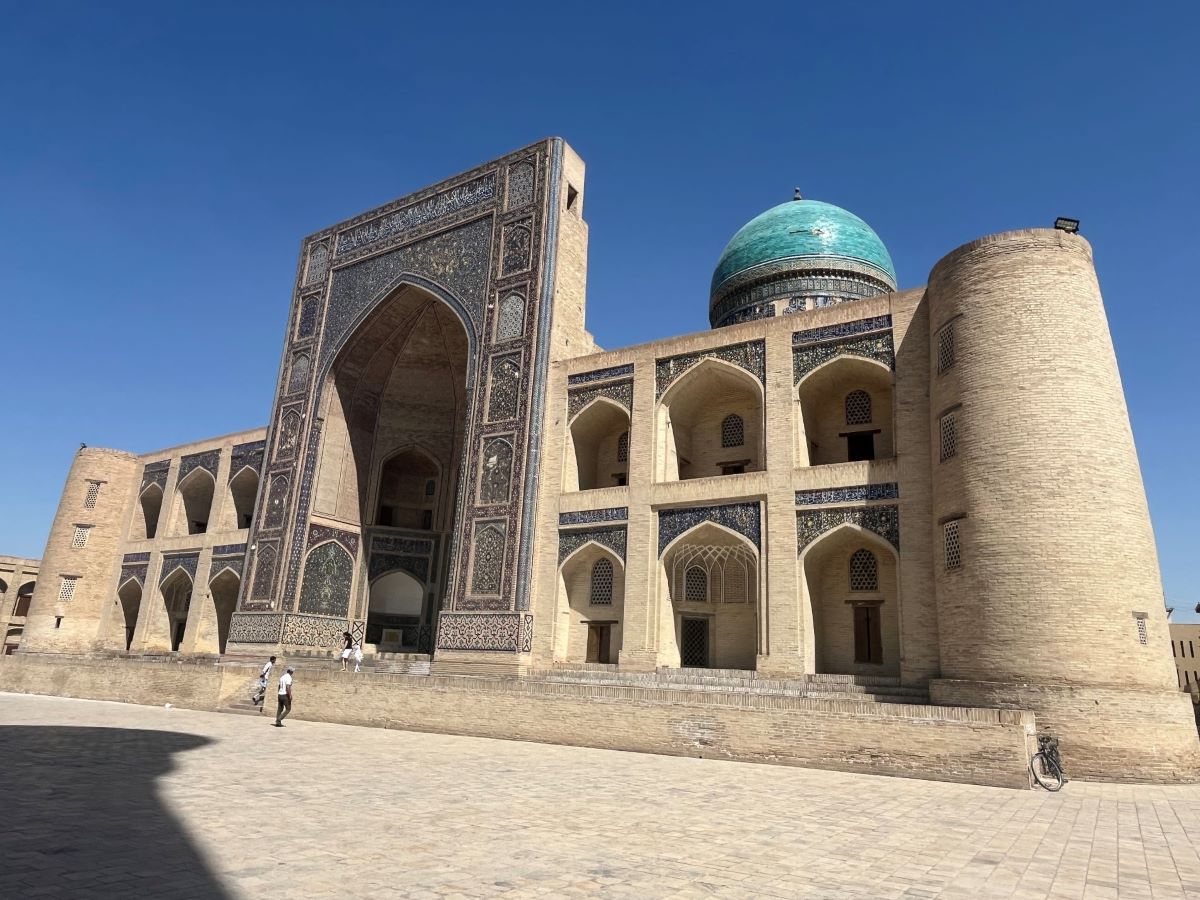
In my opinion, among the three buildings, the Mir-i-Arab Madrasah is the most spectacular, adorned with beautiful tilework at its entrance and two vibrant blue domes on either side. At sunset, the reflective tiles blend with the orange hues, illuminating all three structures, creating a breathtaking sight. The experience was even more delightful when I returned the next day to enjoy a pot of green tea at a nearby rooftop café.
Wandered the city’s backstreets
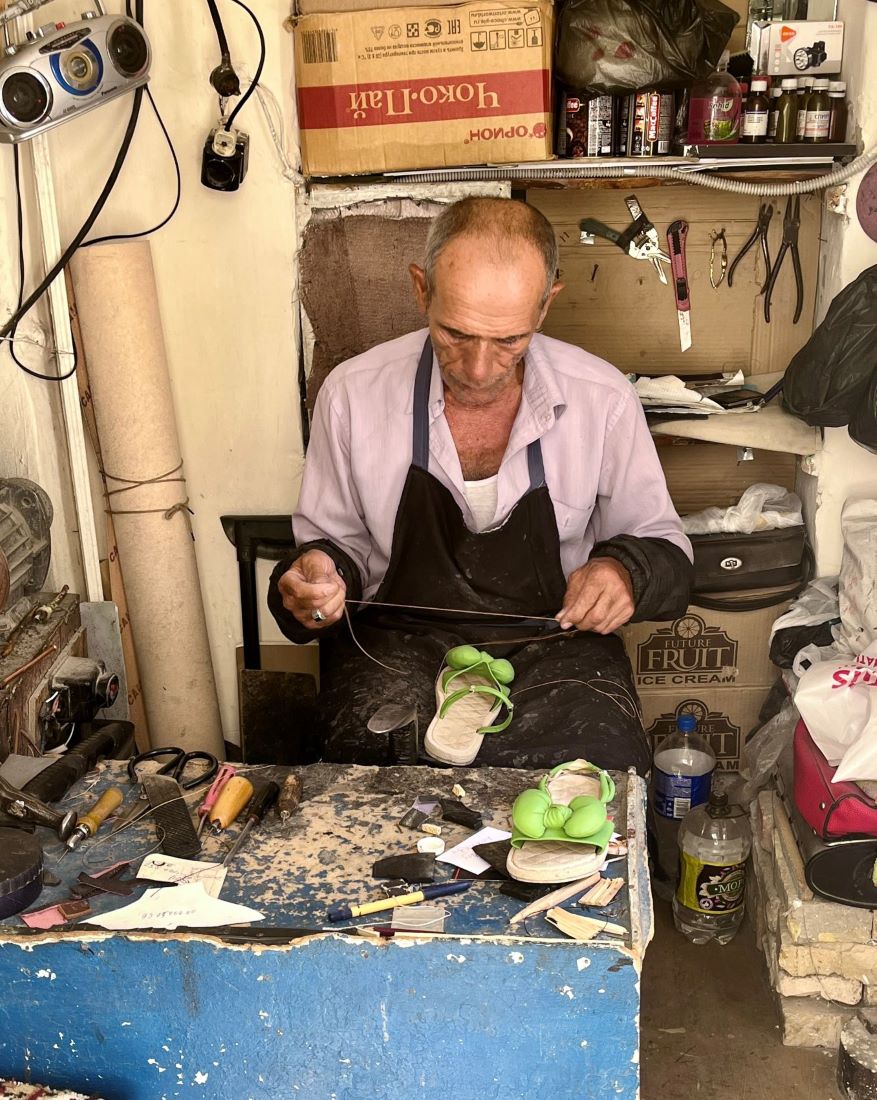
One of my favourite activities in Bukhara was exploring the city’s backstreets. With a history spanning over 2,000 years, the old town, recognised as a UNESCO World Heritage site, offers pristine examples of medieval Central Asia around every corner. As a significant religious and trading hub along the Silk Road, Bukhara has evolved through the centuries while maintaining many of its mosques, madrasahs, and workshops, all nestled within a winding network of alleys. This setting provided an excellent opportunity to observe locals in their daily routines and discover structures in various states of preservation.
Explored lively Lyabi-Hauz
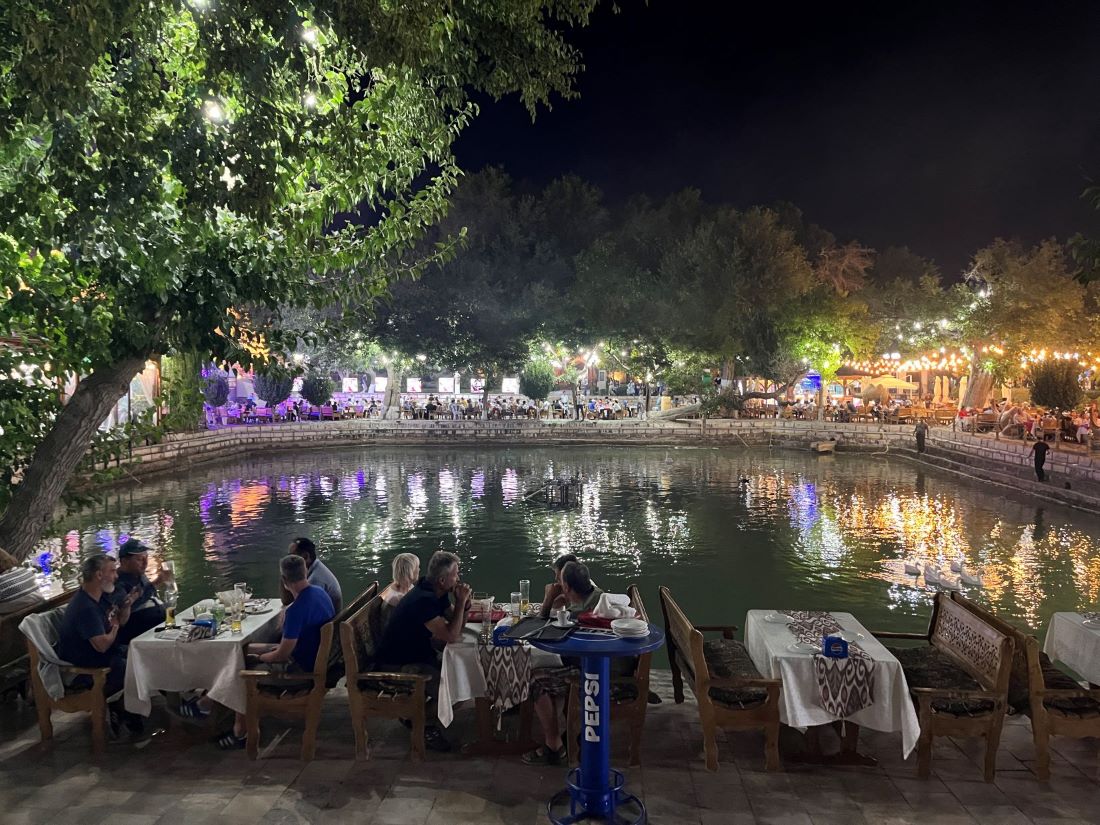
Bukhara radiates from Lyabi-Hauz, a plaza centred around a pool constructed in 1621 and shaded by mulberry trees. Historically, it served as a space for locals to unwind, enjoy tea, and discuss the day’s issues. Nowadays, this serene image has largely diminished, as local entrepreneurs have taken advantage of the growing tourist trade. Although there is an amusement park feel, especially in the evenings, Lyabi-Hauz still maintains an ancient old-world style with many gorgeous covered markets on all sides. The alleyways leading from the plaza are of equal interest, which snake around many smaller mosques and crumbling madrasahs.
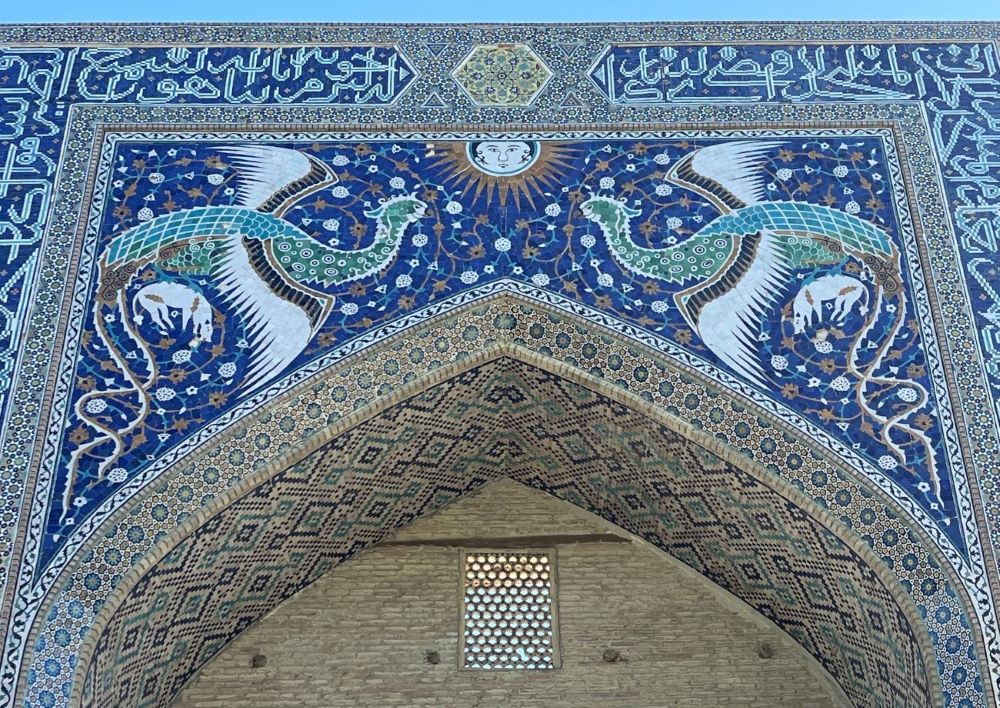
I found the Nadir Divanbegi Madrasah, located on the eastern side of Lyabi-Hauz, particularly intriguing. Initially built as a caravanserai and later converted into a madrasah, it now hosts craft and carpet stalls. However, what truly caught my attention was the breathtaking tilework on its exterior, depicting a pair of peacocks with lambs beside a sun resembling a human face. It’s quite unique, considering this would contravene the Islamic prohibition against depicting living beings.
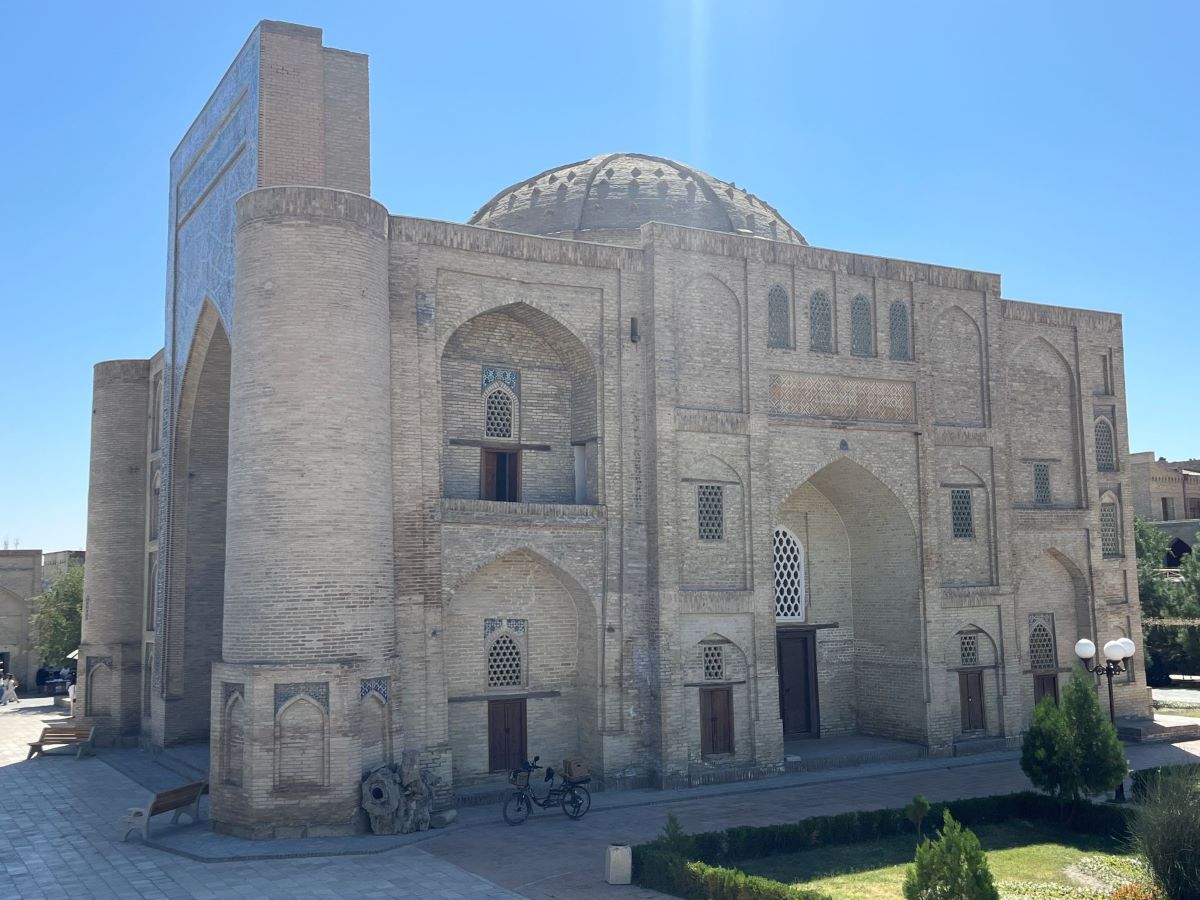
Among the many attractions near Lyabi-Hauz, a few truly caught my attention. A prominent highlight is the statue of Hoja Nasruddin, a semi-mythical “wise fool” from Sufi folklore, whose amusing statue seemed to attract every camera-wielding visitor! On the western edge of Lyabi-Hauz, the Nadir Divanbegi Khanaka features a breathtaking multi-coloured façade and displays captivating photographs, ceramics, and various exhibits showcasing the rich history of old Bukhara.
Enjoyed the puppet demonstration
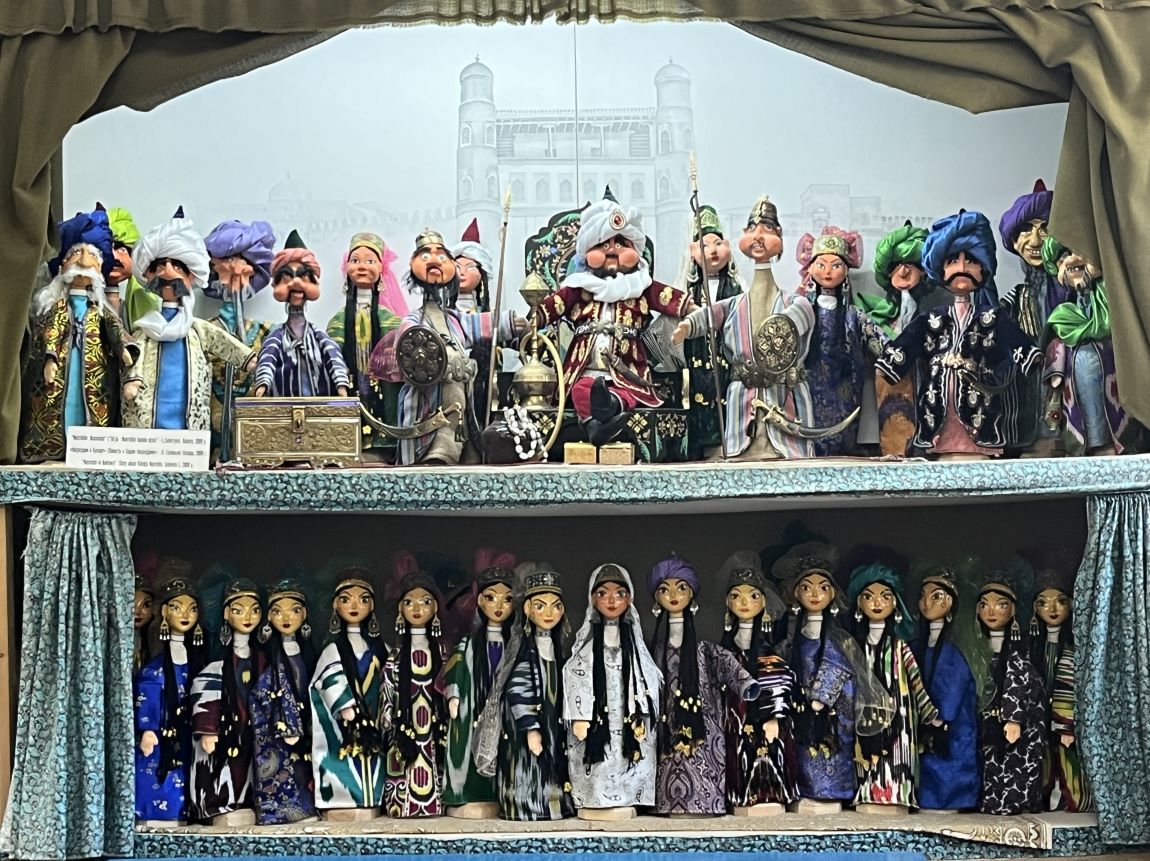
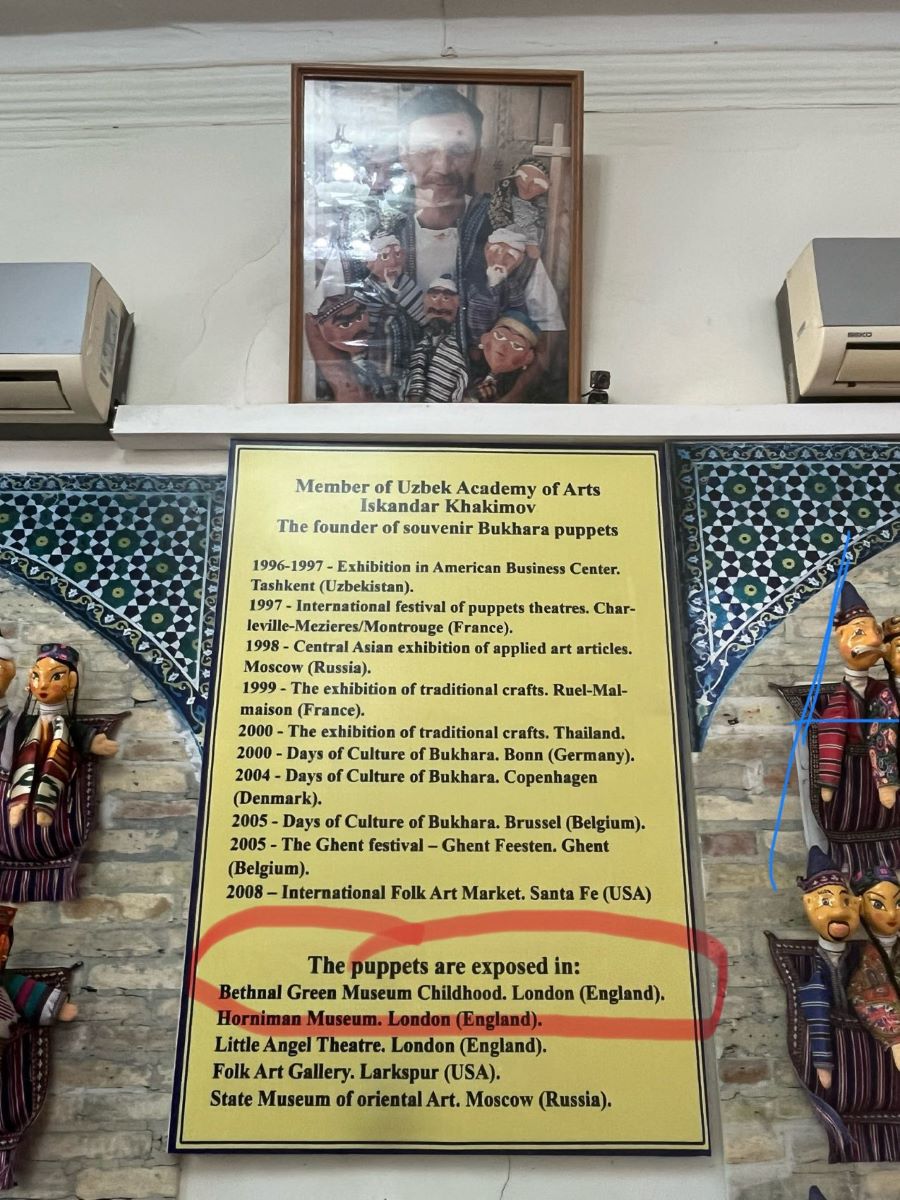
As I wandered the backstreets of Lyabi-Hauz, I stumbled upon a captivating museum dedicated to the history and craft of Bukhara’s famous puppets. There was even a mini-show by a puppeteer who cleverly matched the puppets’ appearances to the faces of visitors, making it both entertaining to watch and fun to participate in. Inside the museum, I discovered a display that highlighted various locations worldwide where the museum’s artisans have showcased their puppet exhibitions. One notable mention was the Young Victoria and Albert Museum (formerly the Museum of Childhood) in Bethnal Green, London, which is conveniently only half a mile from the school where I worked for 22 years. What a small world!
Climbed Chor Minor
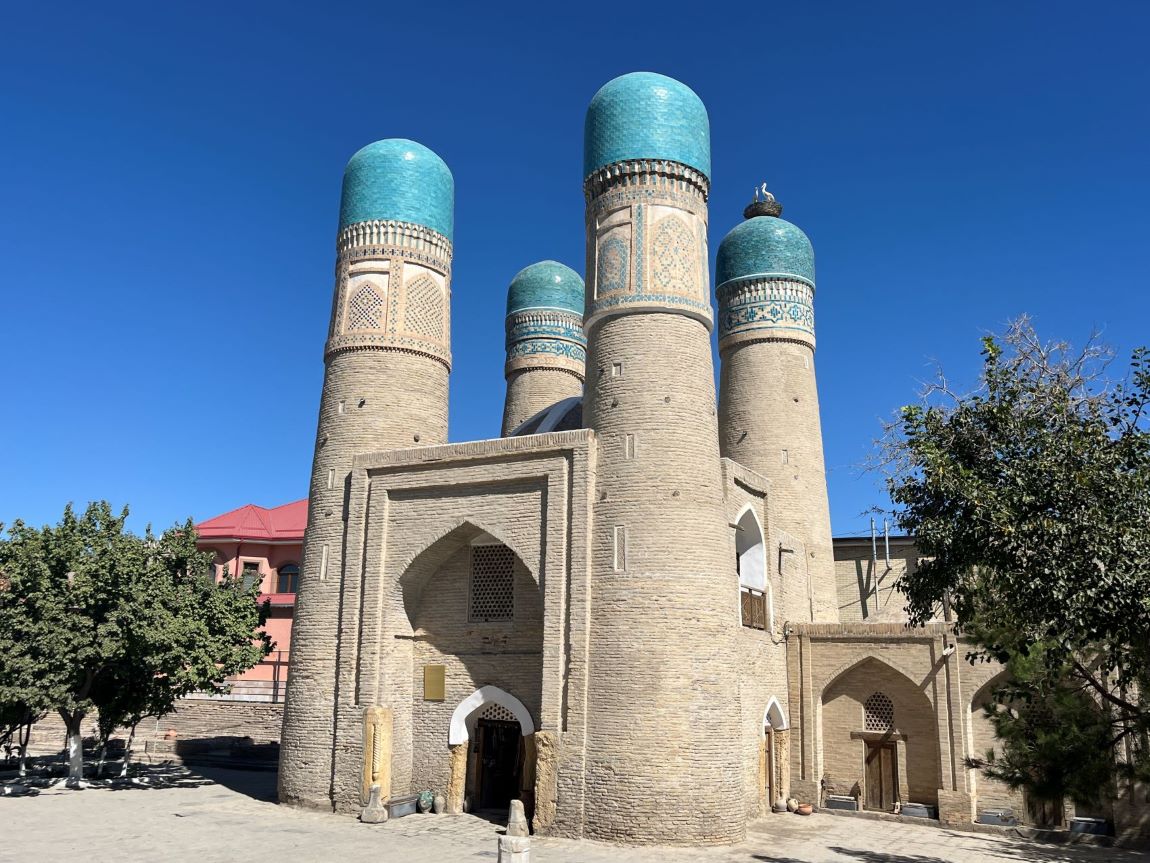
Another iconic landmark in Bukhara is the picturesque, Indian style Chor Minor. This former gatehouse of a madrasah is distinctive for its four decorative towers of equal height instead of traditional minarets. I climbed to the top and was delighted to find myself face to face with these charming ‘minarets,’ along with two large plastic pelicans perched atop one of the towers, which seemed quite odd for such a majestic building!
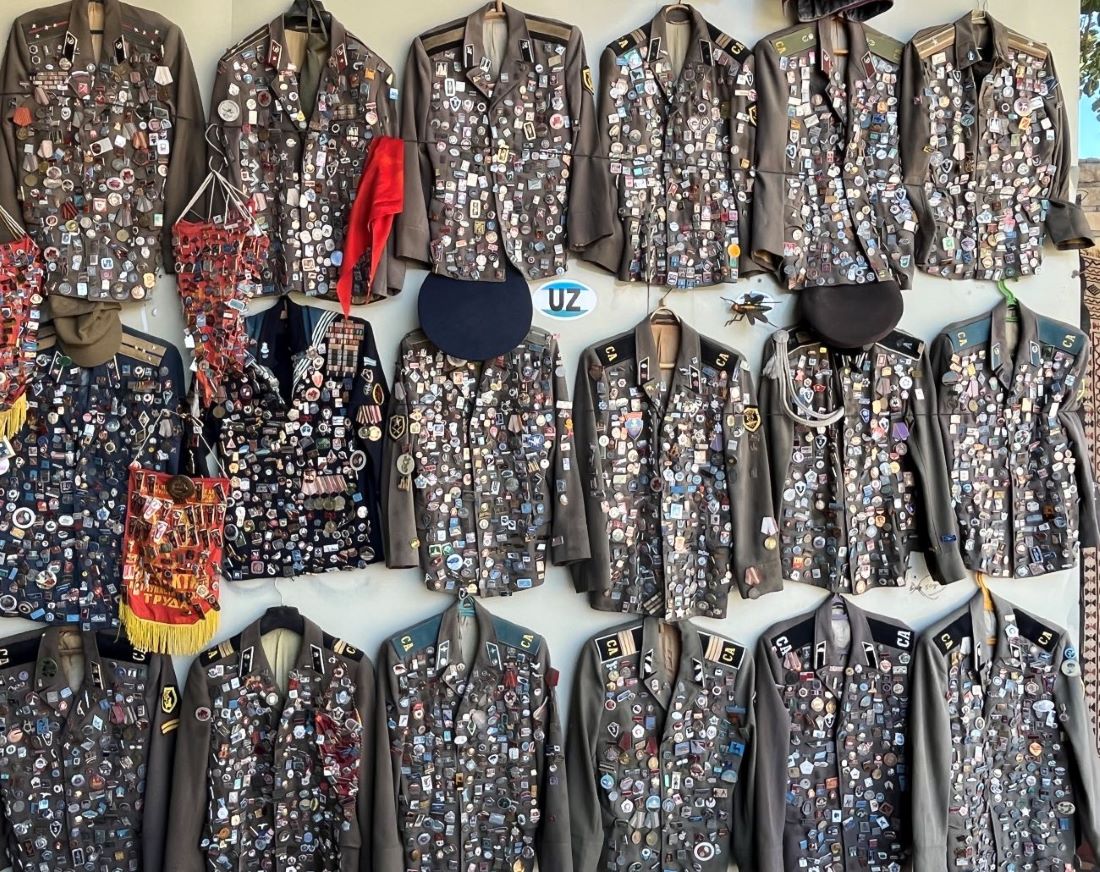
Opposite the Chor Minor, I came across some fantastic souvenir stalls that offered a range of intriguing Soviet memorabilia, including uniforms, badges, medals, and black-and-white photographs of Bukhara during its occupation by the Soviet Union. These finds were as fascinating as anything else I had encountered in Bukhara.
Learnt about Bukhara’s Jewish history
Similar to Samarkand, Bukhara once had a significant Jewish population that made up 7% of the city’s total residents before the end of the Soviet Union. The Jewish community played a major role in Bukharan commerce, holding a prominent position in society despite facing deep-seated discrimination. Today, only about 350 individuals from this community remain.
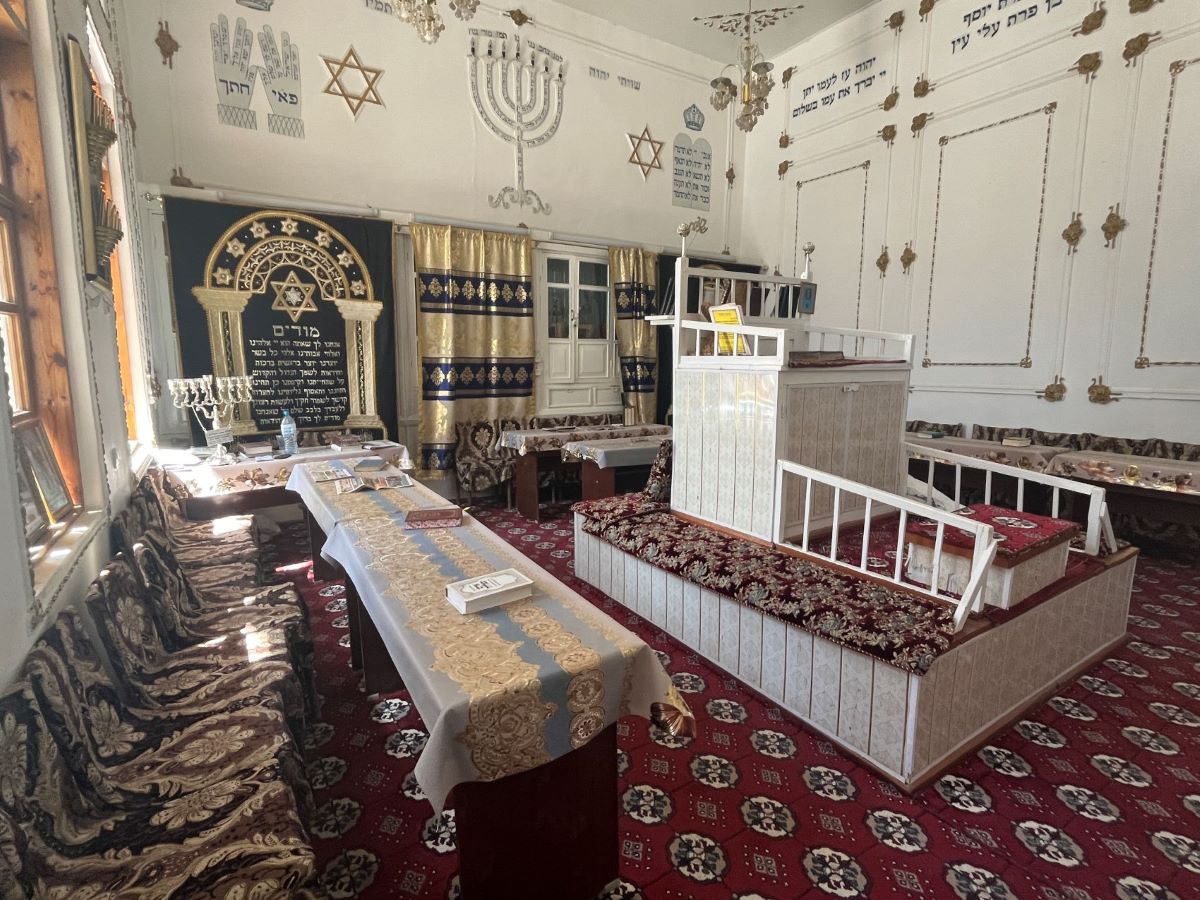
A legacy of Bukhara’s Jewish population can be found just south of Lyabi-Hauz around the Jewish Community and Synagogue, an area that was historically the heart of Bukhara’s Jewish community. At the time of my visit, there was a very friendly curator (although he could have been a very chilled-out Rabbi!) who was happy to let me wander around inside the Synagogue as well as, in particular, proudly showing me photos of Hillary Clinton’s 1997 visit.
Conjured images at Magok-i-Attari Mosque and the Museum of Carpets
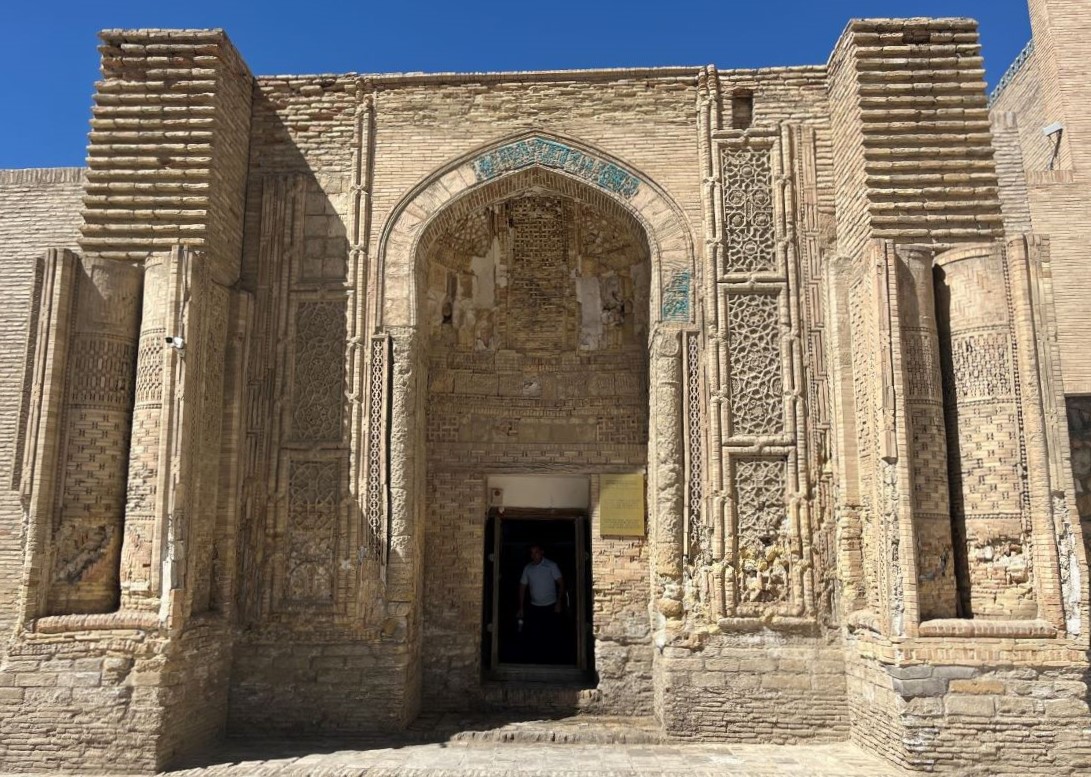
Nestled between two covered bazaars in the northwestern corner of Lyabi-Hauz is Magok-i-Attari, the oldest mosque in Central Asia. Originally constructed in the 9th century and restored in the 16th century, it once hosted a herb-and-spice market; today, it serves as a fascinating carpet museum, laden with a rich history.
Evidence suggests that this site is the holiest in Bukhara. During the 1930s, archaeologists discovered remnants of a Zoroastrian temple dating back to the 5th century, and even older remains of a Buddhist temple beneath the mosque’s foundations. Remarkably, up until the 16th century, it also functioned as a synagogue in the evenings for Bukhara’s Jewish community. Exploring the museum and its architecture evoked a sense of the cosmopolitan tolerance that once characterised Bukhara. Another intriguing tale is that the mosque reportedly survived Genghis Khan’s devastating invasions because the city’s inhabitants ingeniously buried the entire site beneath sand.
Amazed at the Spectacular Abdul Aziz Khan and Ulugbek Madrasahs
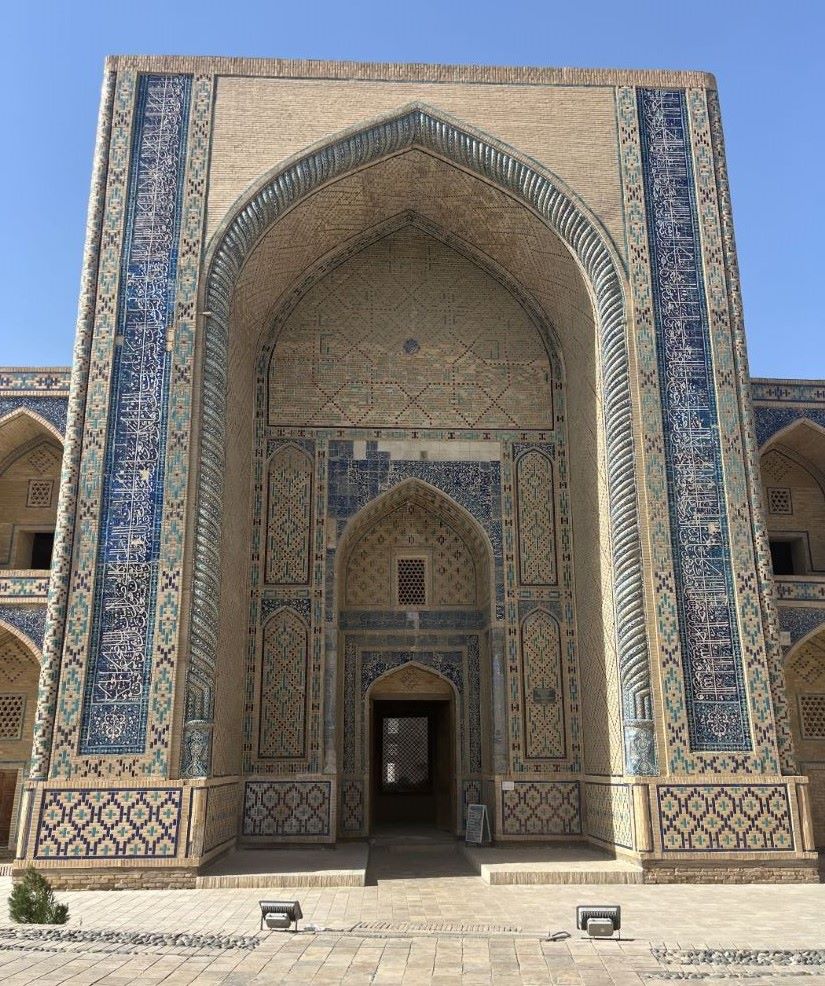
Facing each other, the Abdul Aziz Khan and Ulugbek Madrasah exemplified the architectural brilliance of ancient Bukhara and were truly breathtaking.
Built in the 14th century, the blue-tiled Ulugbek is Central Asia’s oldest preserved madrasah. Although the interior is empty, its design became a blueprint for many subsequent buildings. I was mesmerised by the geometric simplicity of its architecture and the bright blue tiles that adorned its portal, giving it a slight lean that also added to its charm.
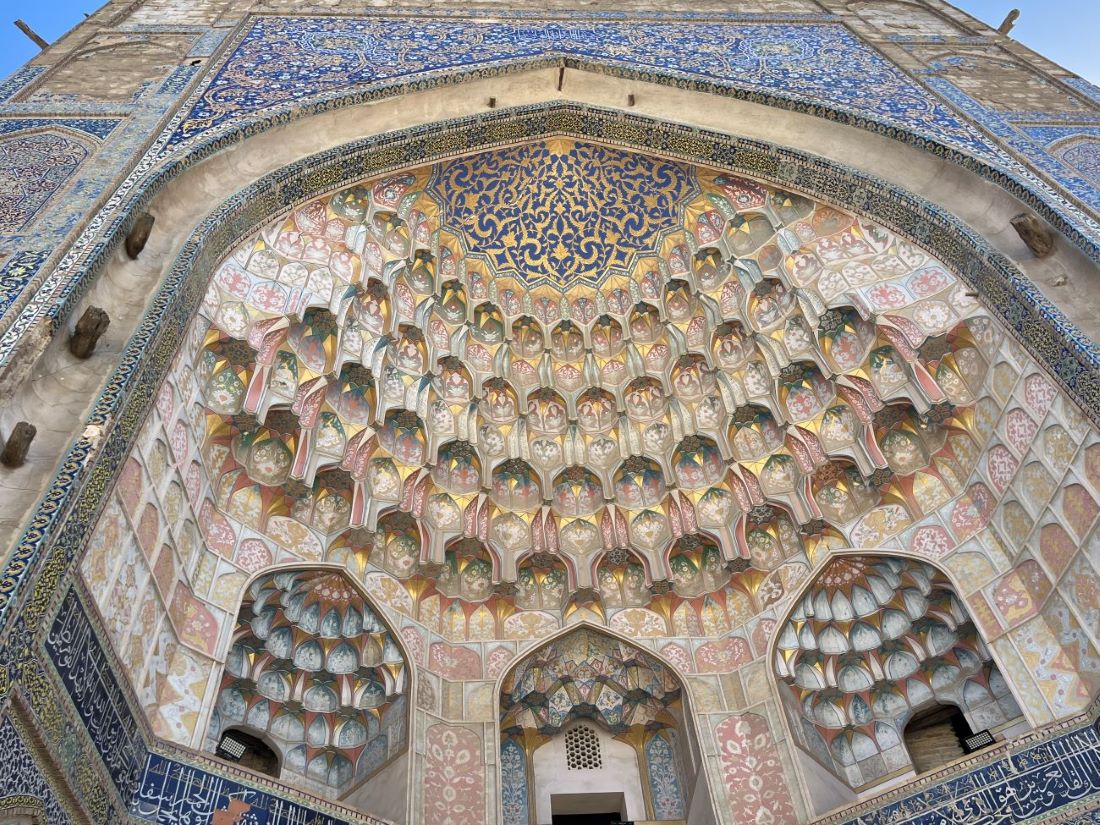
The enormous Abdul Aziz Khan was built in the 16th century in competition with its neighbour, Ulugbek. Apart from the numerous souvenir stalls, there is a prayer room, used now as a museum of wood carvings with incredible ghanch (alabaster) stalactites hanging from the ceiling. There is also a room in the corner of the courtyard with its original paintings and an ornate fireplace, which was just as interesting.
Immersed myself in the Photo Gallery
Across from the 16th century Gaukushan Madrasah, in what was once the Olimjon Caravanserai, there’s a quaint private photo gallery. This space features hundreds of captivating photographs showcasing ethnic groups in Uzbekistan, capturing scenes from their everyday lives over the past century. Admission is free, and while there’s an encouragement to purchase a photo, I felt no pressure to buy anything, which made my extended visit even more enjoyable.
Ambled around the Bazaars
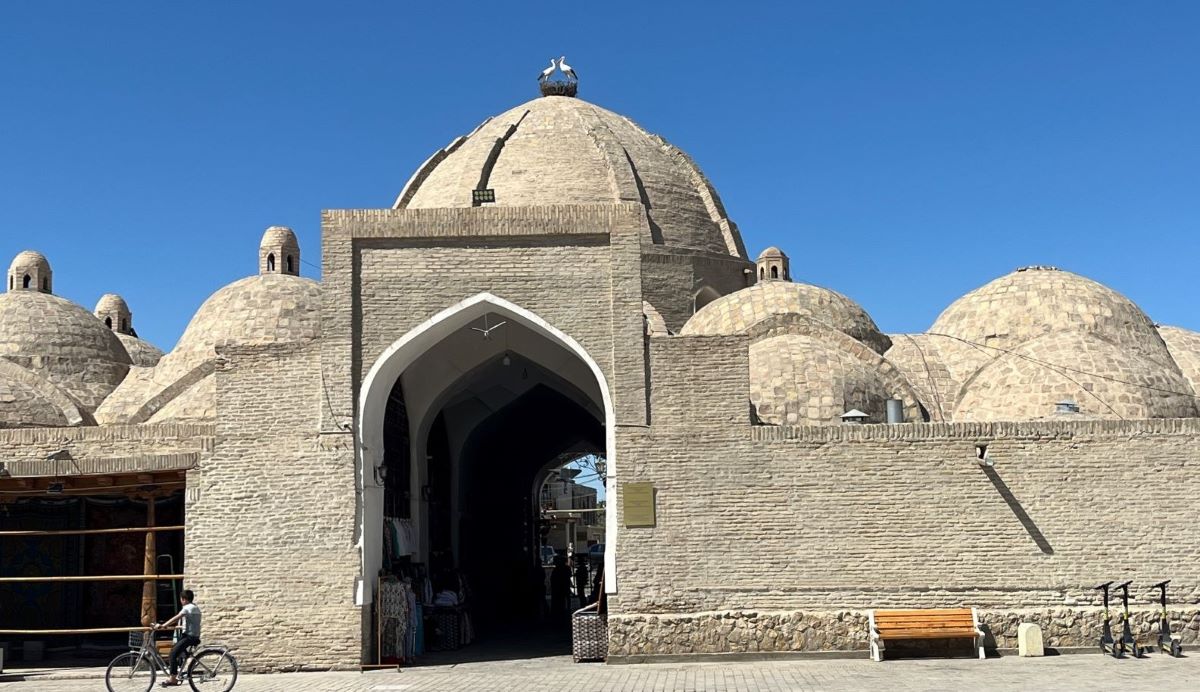
To the west and northwest of the old city, I explored three multi-domed bazaars, which were fascinating to wander through. Historically, these bazaars were part of a larger trading network, each focusing on a specific product. For instance, Taki-Sarrafon was dedicated to money exchange, Taki-Telpak Furushon specialised in cap making, and Taki-Zargaron was known for jewellery. Though they now primarily sell tourist souvenirs, it was intriguing to envision the bustling commerce that used to occur under their domes.
If I had more time, I would have explored the following places and activities:
- Khoja Kalon Mosque (no tiles, just a plain structure in isolation from other buildings).
- Emir’s summer palace (opulence and grandeur galore).
- Jewish cemetery (many tombs going back centuries).
- More aimless wanderings in the backstreets.
Accommodation in Bukhara
Bukhara provides a wonderful mix of affordable and luxury accommodations, but for a true taste of the city’s character and history, traditional bed and breakfasts and boutique hotels are the best options. Many of these establishments once belonged to wealthy families and feature entrances through beautifully carved wooden doors. Guests enter into a courtyard and navigate narrow corridors that lead to traditionally decorated rooms, passing by an array of antiques and stunning mosaics.
Eating in Bukhara
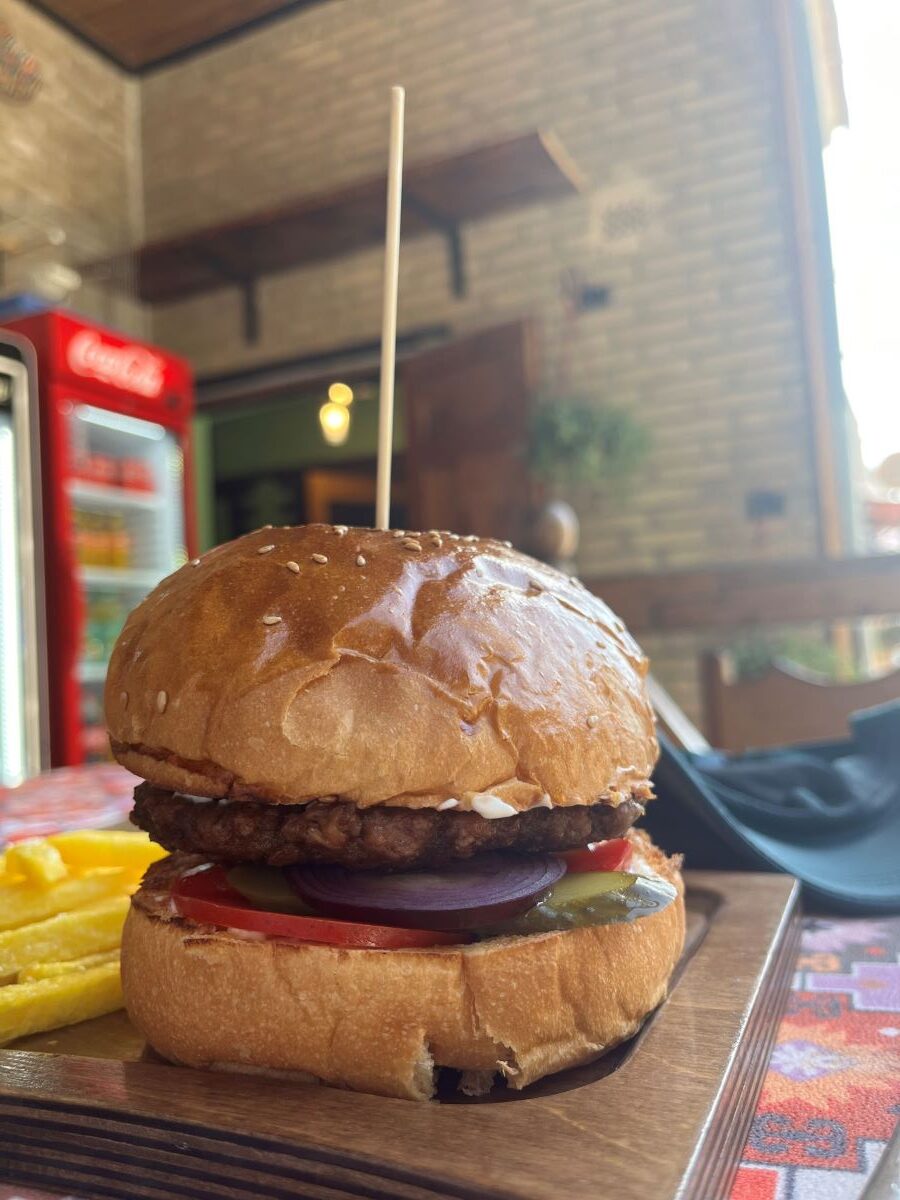
When it comes to dining, the quality and variety of restaurants haven’t quite matched up to the accommodations available. There are typical offerings such as Western fare, shashlik, and plov, with many bed and breakfasts and boutique hotels serving meals either in their courtyards or attached restaurants. Kolhoz Bazaar is a great spot for snacks from wonderful hole-in-the-wall eateries. Around Lyabi-Hauz, there are several tourist-oriented restaurants, including some fast food options. For a splurge, The Old Bukhara restaurant is worth a visit, with its lovely open-air setting surrounded by lit-up madrasahs and mosques creating a unique atmosphere. The chicken shashlik there was incredibly flavoursome.
However, like many places in Uzbekistan, mobile payment can be hit or miss, so it’s wise to carry cash or a credit card when dining out.
Travellingterry Bukhara Tips
- It’s essential to respect local customs, especially by dressing modestly when visiting religious sites.
- I found Bukhara to be very safe for walking, whether during the day or night. I also met a few solo female travellers who felt the same. However, like all destinations around the world, it’s best to be aware of the surroundings without drawing unwanted attention to any luxuries worn.
- Trains in Uzbekistan are clean, comfortable, and quite affordable compared to European services. Booking seats or beds online is fairly straightforward, but it’s best to do so early, especially during peak season.
- Food in Uzbekistan, particularly in Bukhara, tends to be meat-heavy. Kolhoz bazaar is a fantastic place to find fruits, nuts, bread, and pastries for snacking.
- All the main attractions are within walking distance of one another, but if a taxi were needed, I would avoid the drivers loitering near Lyabi-Hauz, as they tend to charge exorbitant prices.
- Useful informative websites are the National Uzbekistan Tourist Centre and Caravanistan. Inbetween Travels provides great explanations on the different trains available, and e-tickets can be purchased via eticket.railway.uz or 12Go
Onward Travel: Train from Bukhara to Margailon
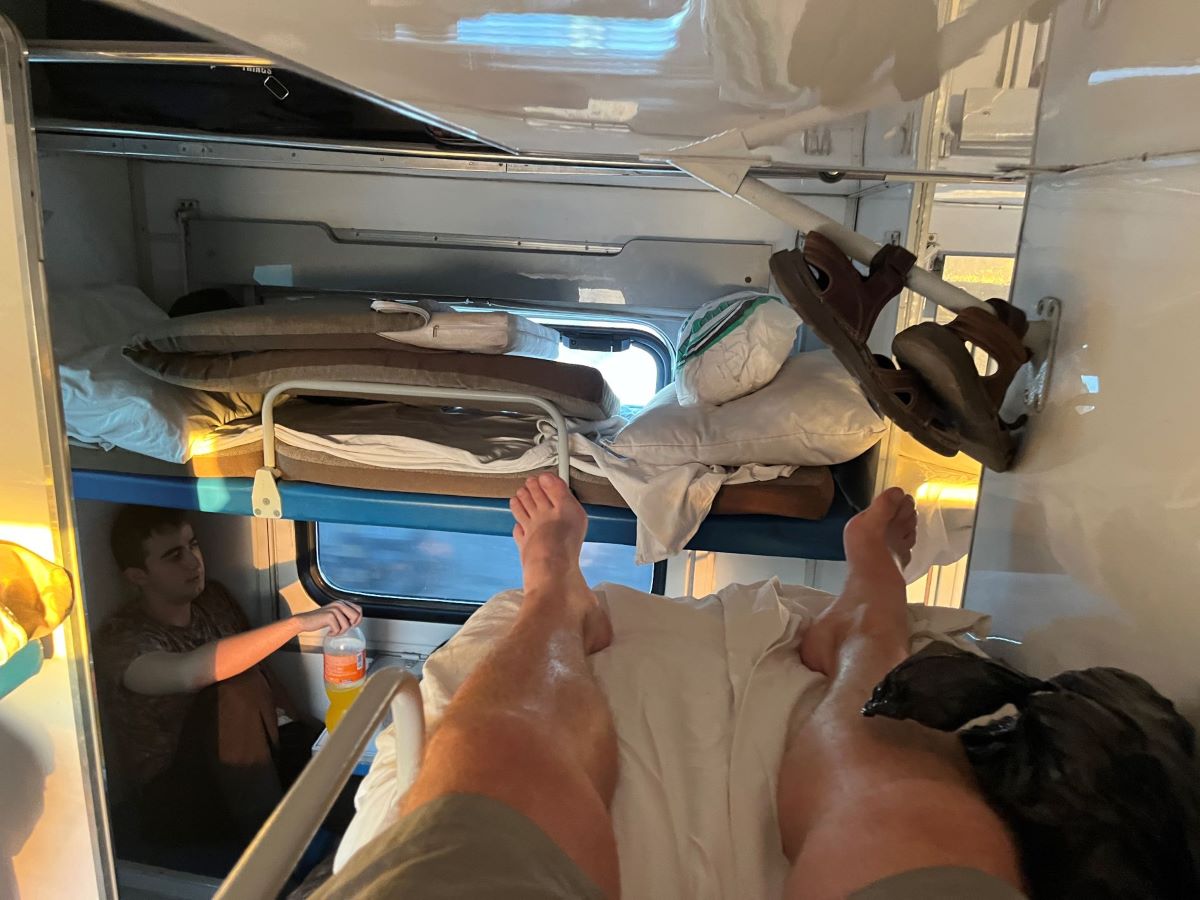
The 14-hour train journey from Bukhara to Margailon in a second-class sleeper was not the most comfortable overnight experience I’ve had! I chose the top bunk, but it felt quite cramped as opposed to the bottom one, which appeared more spacious. Climbing up was a bit challenging since the safety bar for the top bunk wouldn’t fold down, and making my bed was difficult with six card players occupying the lower bunk.
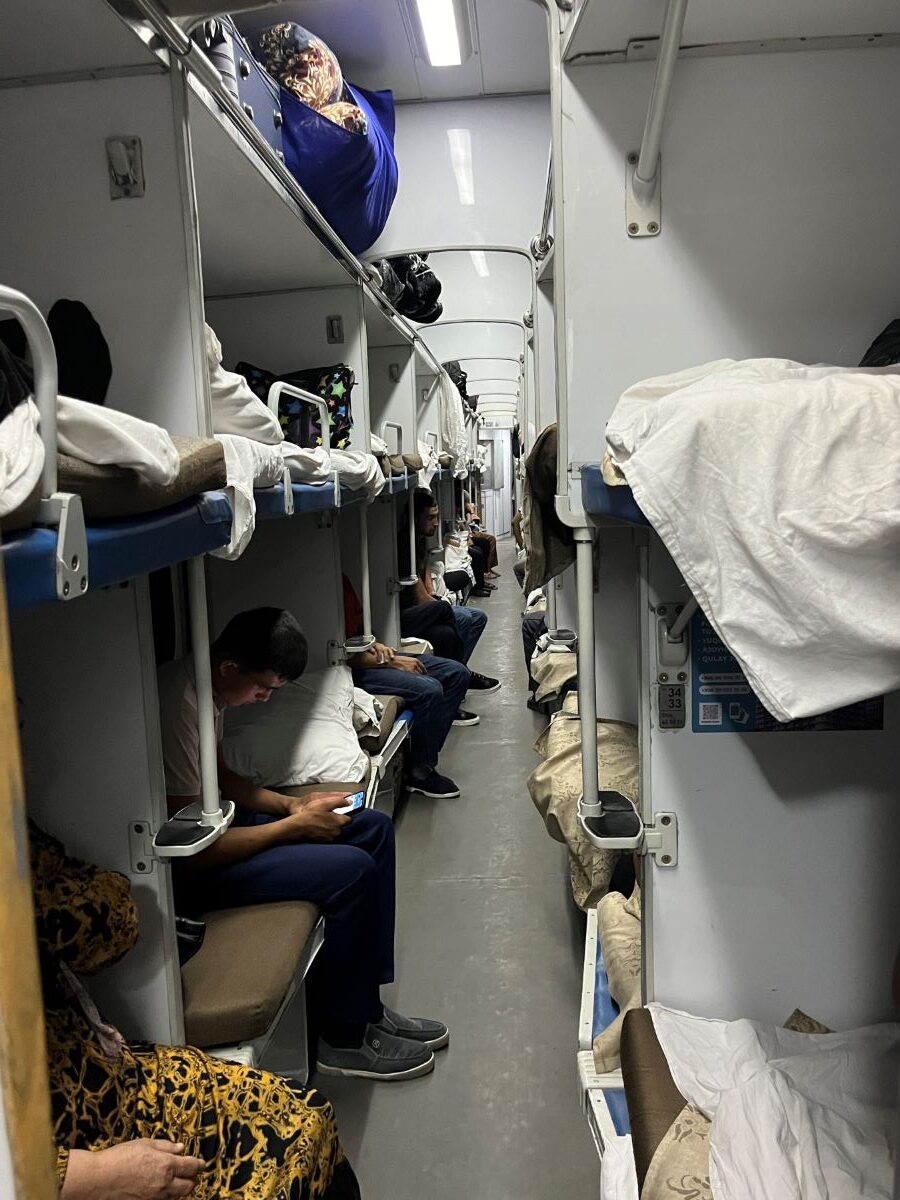
Once I settled in, I realised that the space was quite snug, making it difficult for me to sit up properly. Additionally, an annoying draft was coming in from the broken window at the top! Despite the limited space, the train was very clean and equipped with modern amenities. Most of the other passengers, except for the six card players, were friendly and chatty; we shared snacks and even helped me ’embarrassingly’ make my bed. In hindsight, opting for the bottom bunk would have been a better choice.